Citadel Archive: Eden Prime
Commander Shepard finally gets to play this game('s tutorial). Failed Field Analysts: Saren Arterius. [L]

September 2026 note: This article already anticipates several later tightenings. Its refusal to treat every dialogue-wheel selection as a morally significant event points toward the later distinction between ordinary specification and qualifying contraction. Its strongest Saren analysis—the difference between a closed path and a high-resistance path—survives, but later reachability language makes the test stricter: a path is reachable only when the actual field supports a viable sequence of transitions for the bearer. A vanishingly imaginable route is not automatically live, and sufficiently severe resistance can make a nominal option effectively unreachable. Saren's error is therefore not that he ever acknowledges overwhelming resistance; it is that he treats apparent Reaper inevitability as established closure without adequate warrant, while indoctrination is simultaneously degrading his capacity to assess the field independently. Later Harm work also clarifies the responsibility discussion: Saren can be a locus harmed through contraction of agency and still be a causal vector of severe harm, while blame and responsibility require separate analysis. The article's “What X Closed / What X Opened” boxes are best read as partial transition profiles, not complete verdicts. Finally, the Powell/Manuel/beacon material foreshadows later provenance work: damaged, socially ugly, or poorly translated evidence can still preserve a real correction path, but preserving evidence does not mean inflating its certainty or confusing witness lineage with proof.
The previous Citadel Archive somehow ended at the start of the game.
That was not the plan, exactly. The plan was to begin a decision-by-decision Modal Path Ethics playthrough of the Mass Effect trilogy.
But Mass Effect opens by asking who Commander Shepard is, and then the article ran around in circles of deliberation and research to choose the wrong sex, a boring class, a bad childhood, and a traumatic career profile before the Commander had even been allowed to walk down a single hallway.
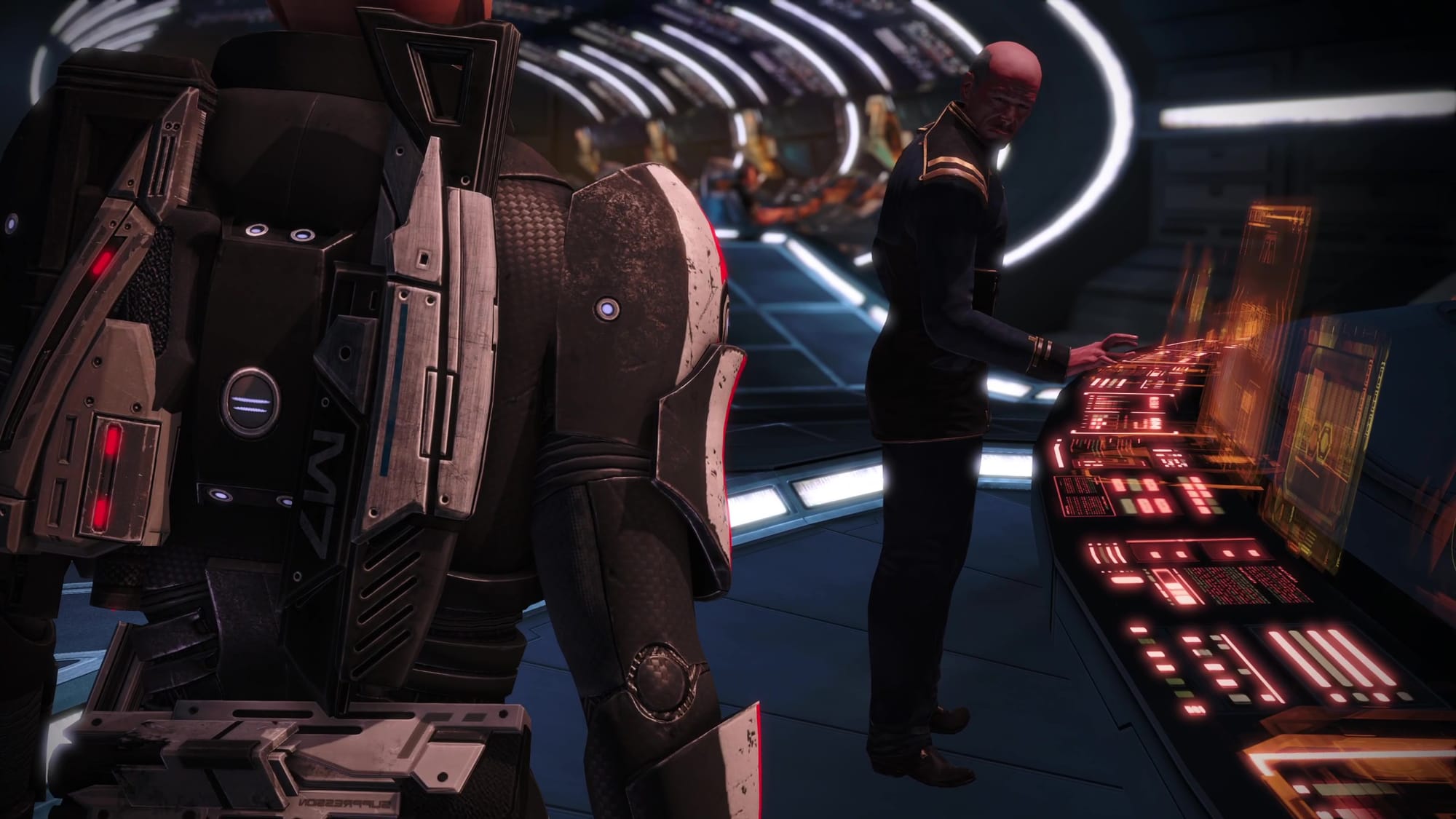
This is because Mass Effect is not really just a story about choices. This is Bioware's magical machine for arranging choices into a fictional field that remembers what the player did.
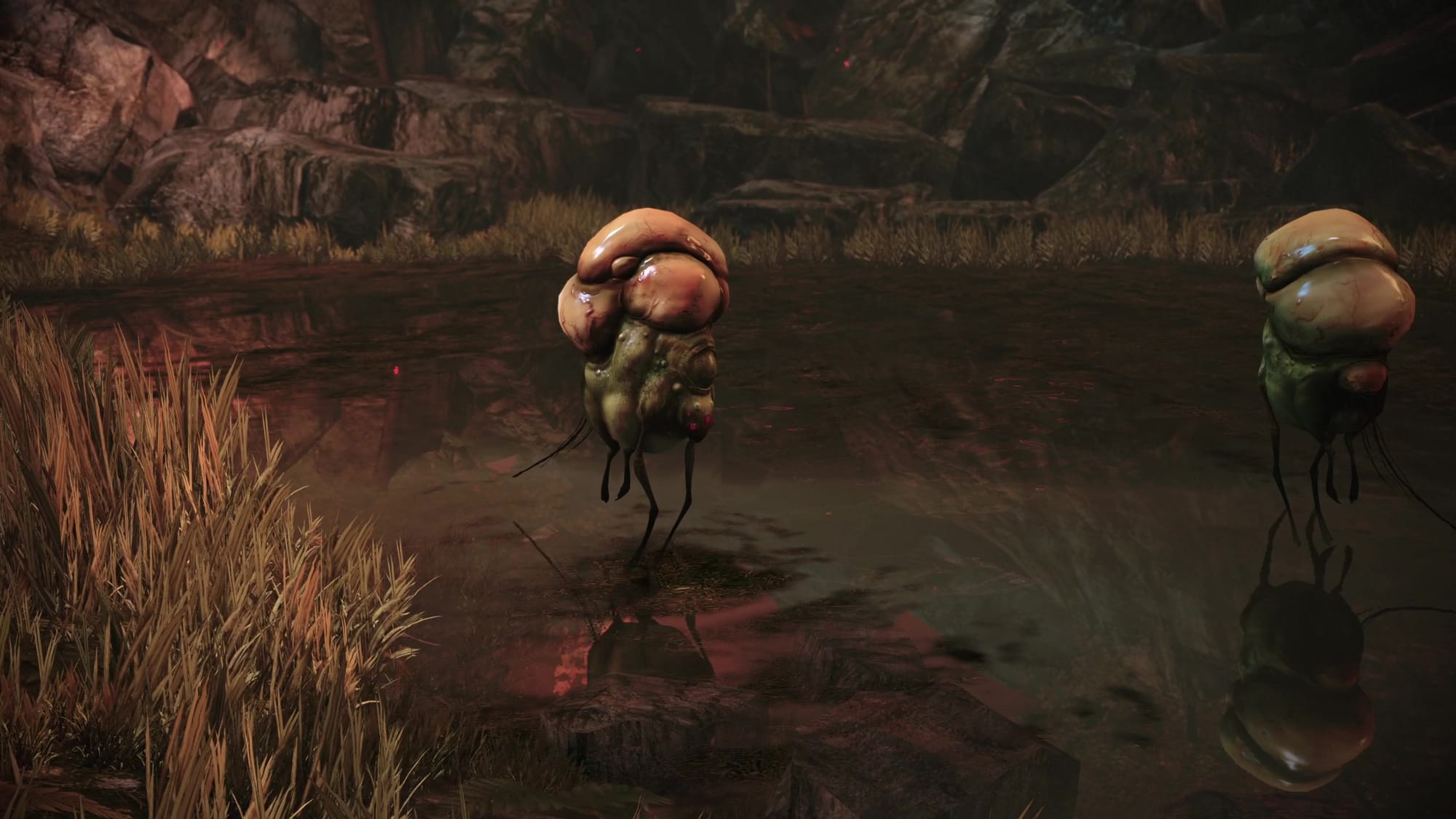
That machine now has our Shepard:
- John Shepard
- Engineer
- Colonist
- War Hero.
Very original.
I did give him a John Cena face code, though, so we have that.
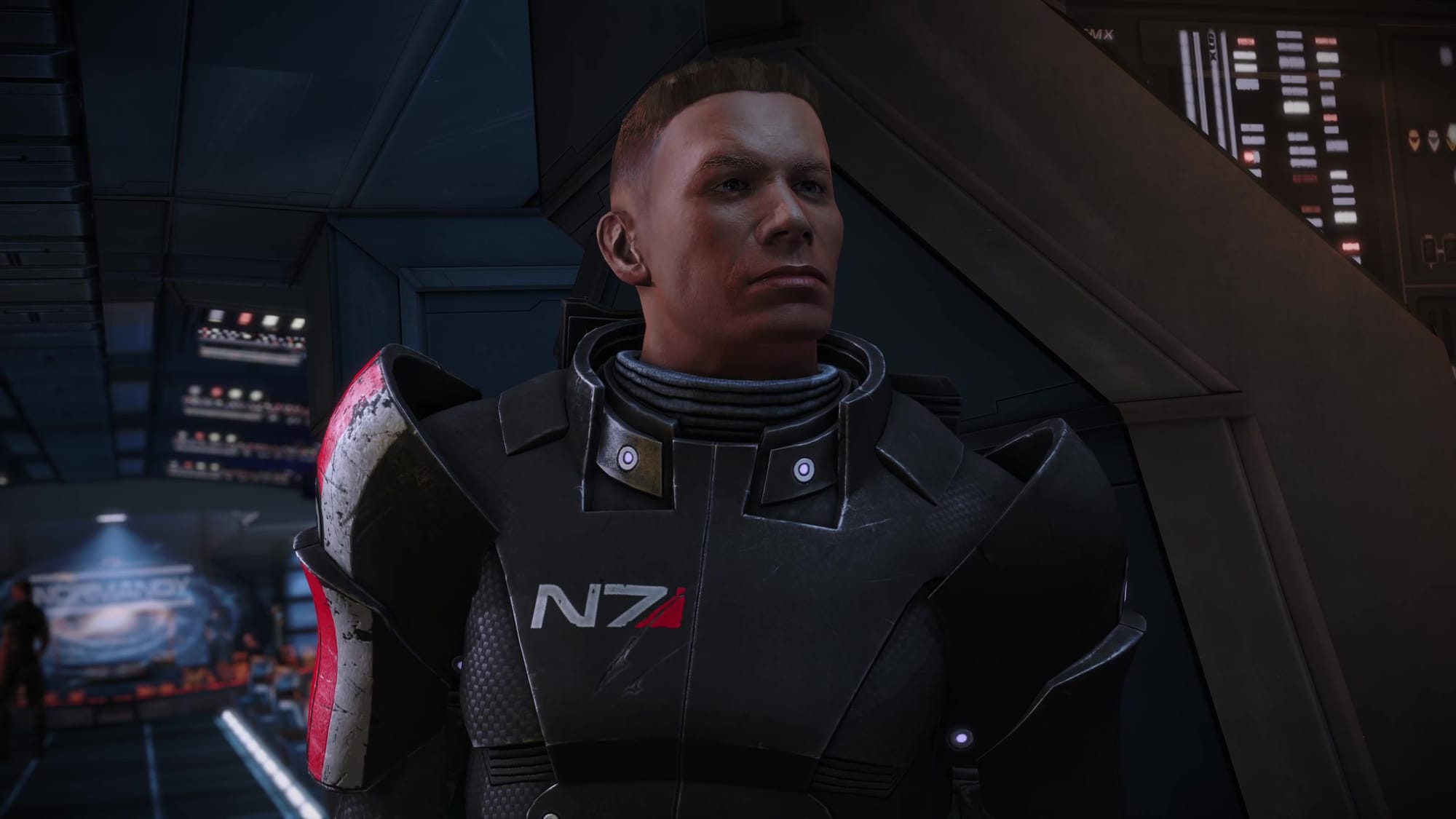
- John Shepard is the recognition interface most players historically bring to the trilogy.
- Engineer preserves the one class-specific morality intervention in the trilogy, which is still waiting for us in Mass Effect 3 like a tiny ethical bomb somebody hid in the downloadable content.
- Colonist means Shepard survived Mindoir, a human colony destroyed by batarian slavers when he was sixteen.
- War Hero means Shepard later held Elysium, another human colony, against a batarian-led assault and kept that field from closing.
So the first real mission of Mass Effect does not send a blank heroic soldier to a random tutorial planet.
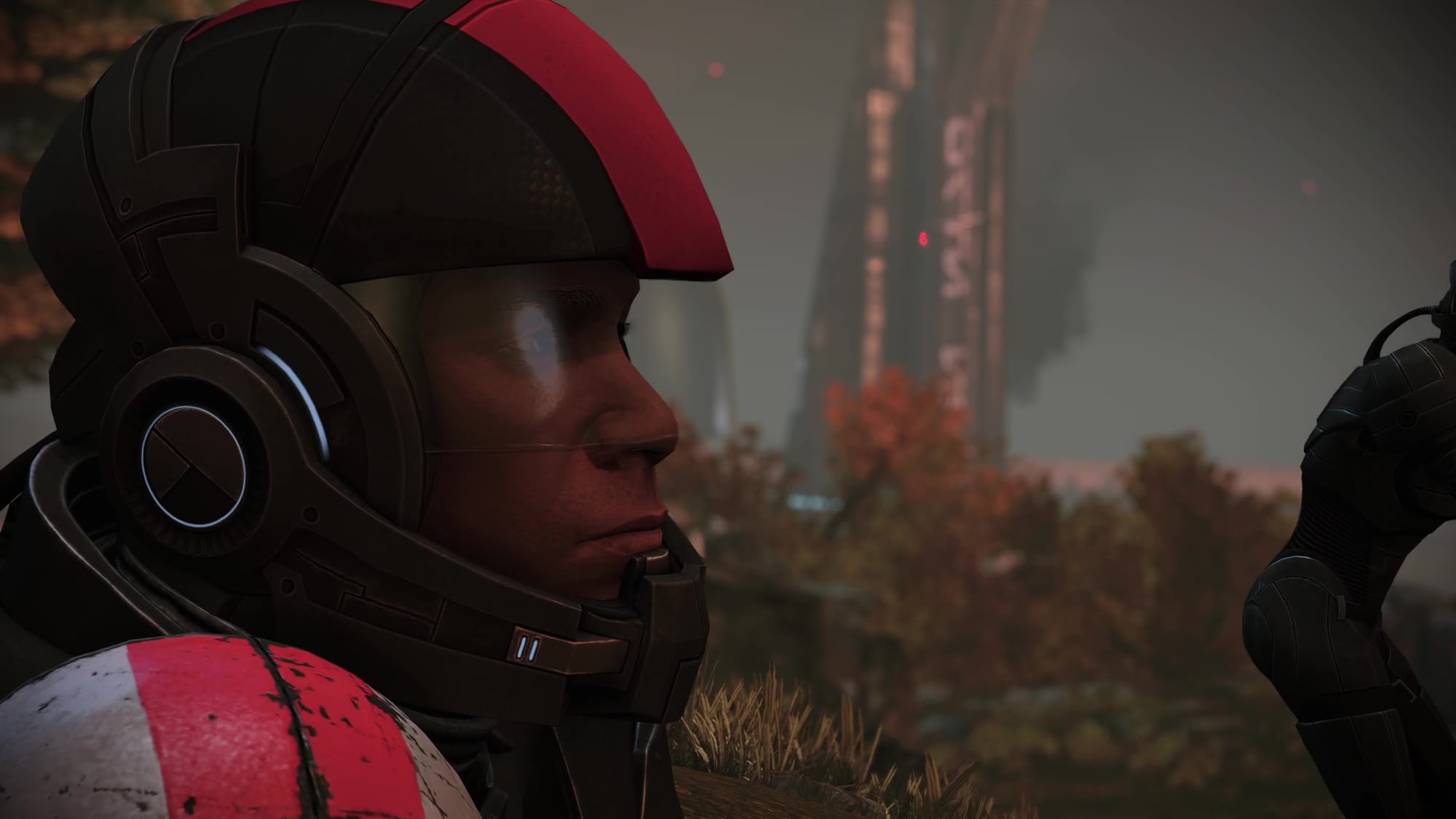
After our three-button labor, it now sends a man formed by one fallen colony and one saved colony toward a third colony before anyone aboard the Normandy understands that any colony at all is already under attack.
That colony is where the trilogy begins:
Eden Prime

We are going to move through it very quickly.
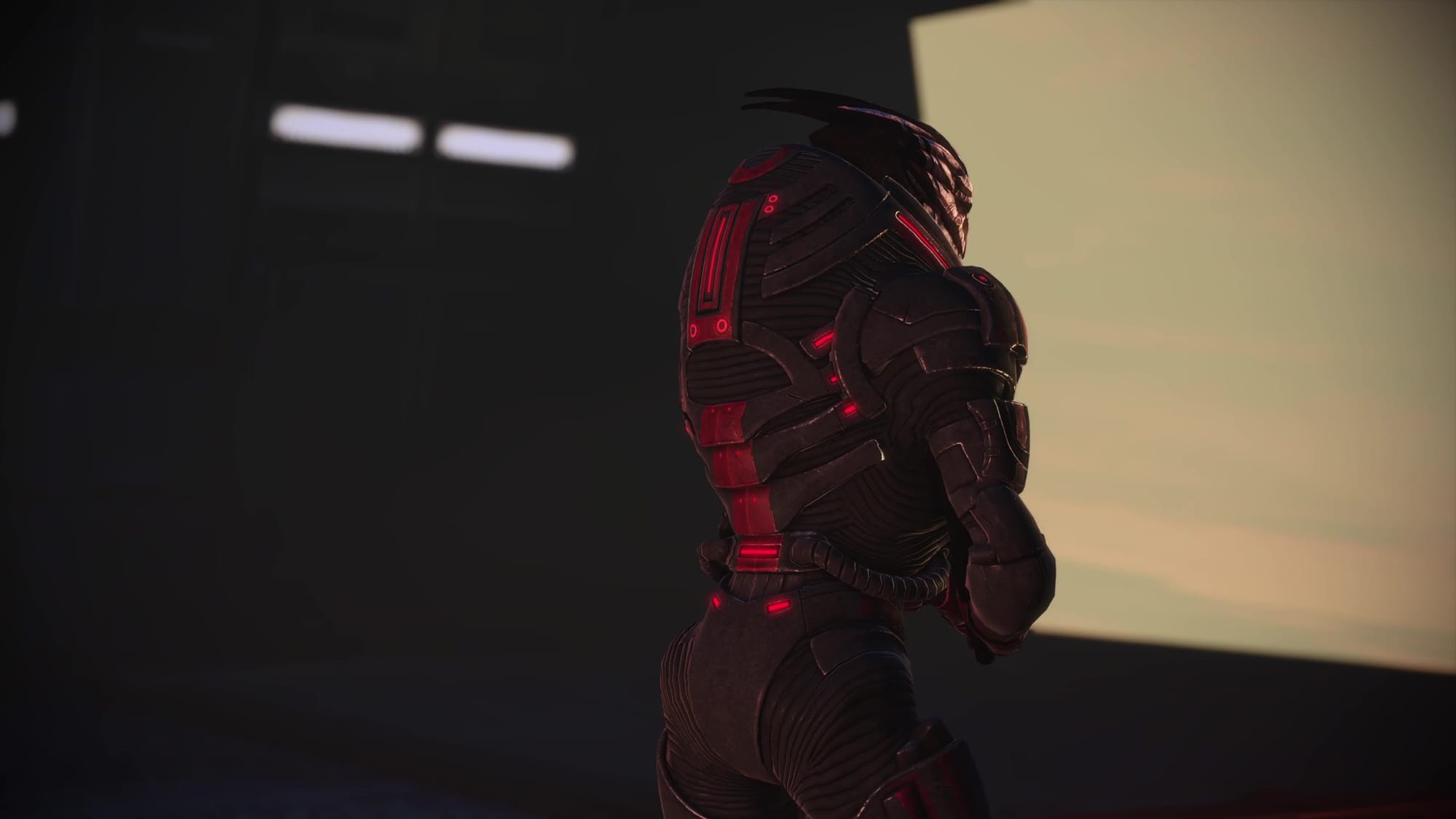
This is partly because Eden Prime is the tutorial, and tutorials are usually designed to teach the player how to equip their pistol, not to produce a complete philosophical event.
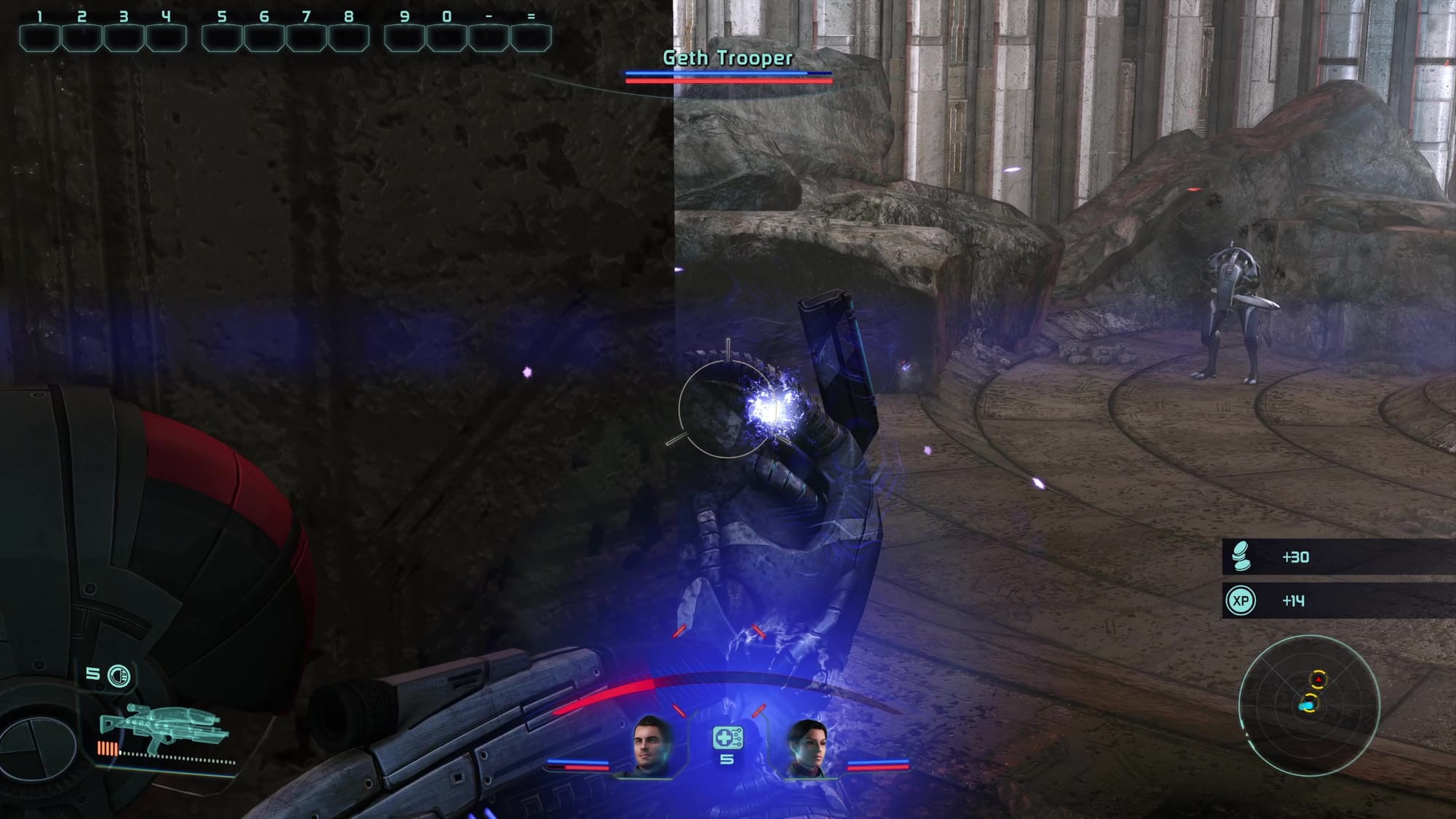
This is also because the last article was long enough already, my god, and my first attempt at this article accidentally became something sort of like a witness-protection program for every single dialogue wheel option on the fucking planet, what was I doing?
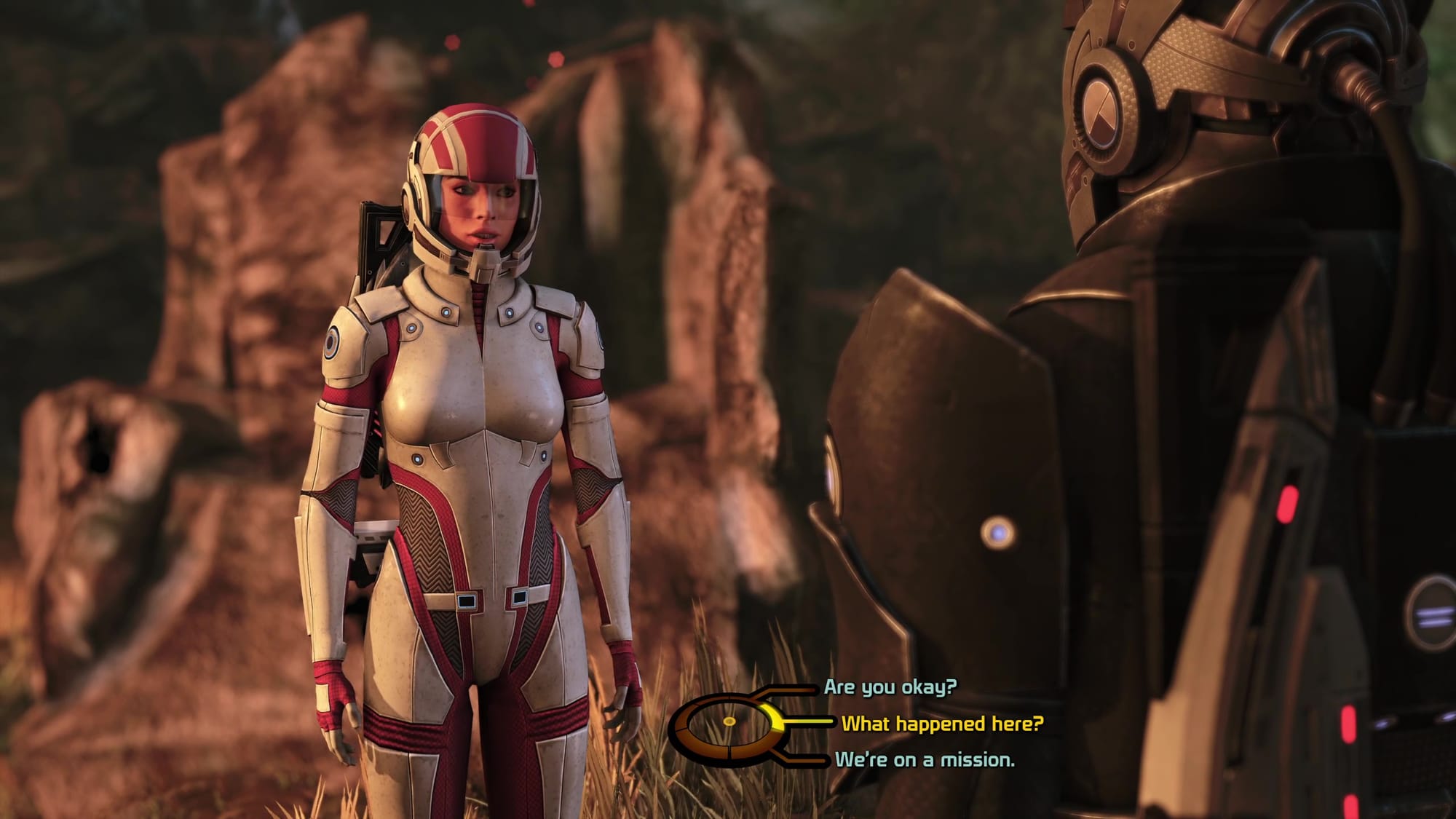
We are not doing that. Never again. This follow up took over a month to come out.
Most early Eden Prime dialogue choices are not real Modal Path Ethics decisions. These give small Paragon or Renegade point rewards. They establish a tone. They let Shepard say the blue thing, the red thing, or the middle thing while the game politely teaches the player which side of the wheel gets back to shooting.
They do not open or close durable futures inside the trilogy. They do not actually change anything real. I should never have written any essays about them at all.
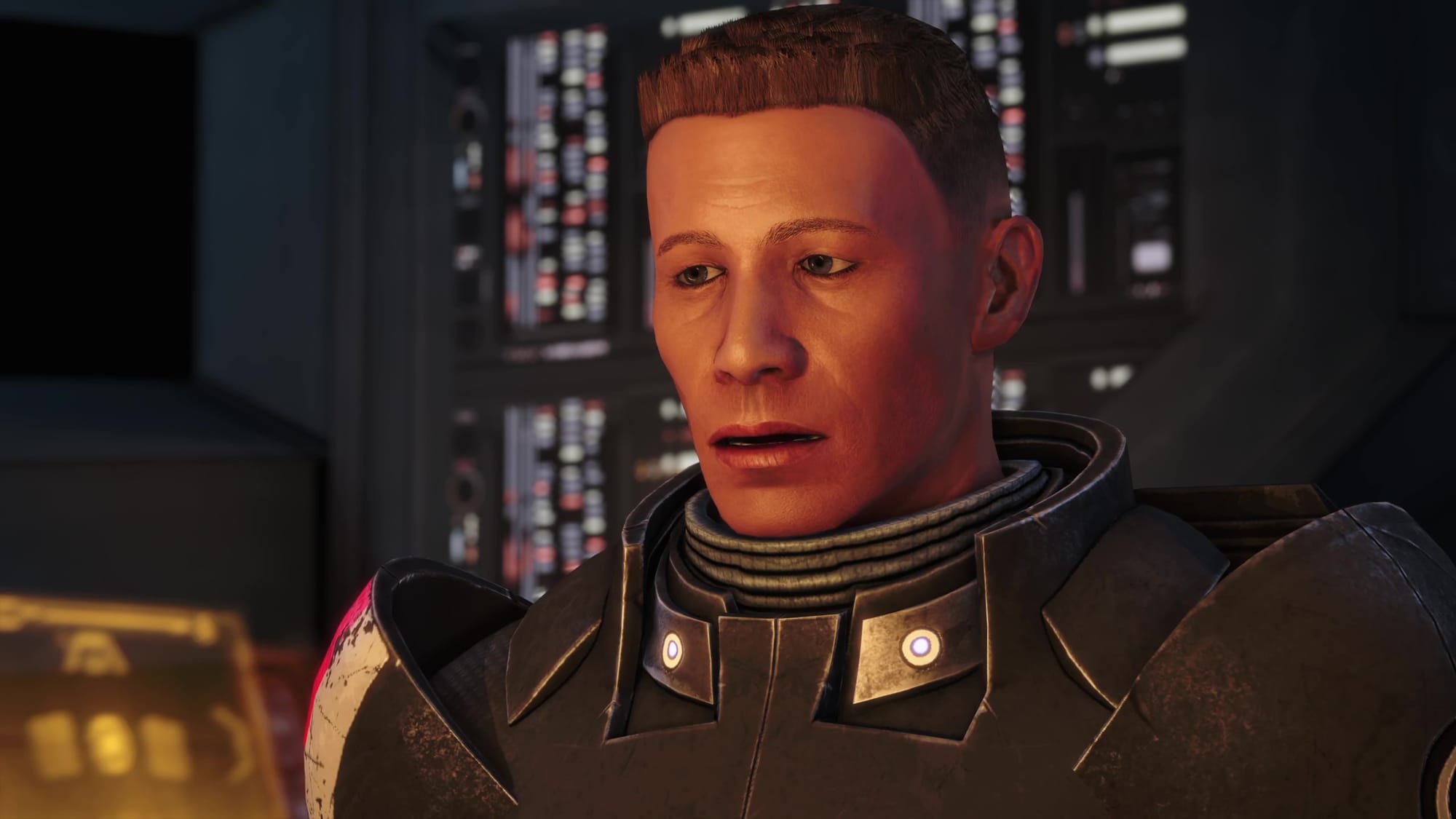
Joker does not become dead because Shepard told him to relax.
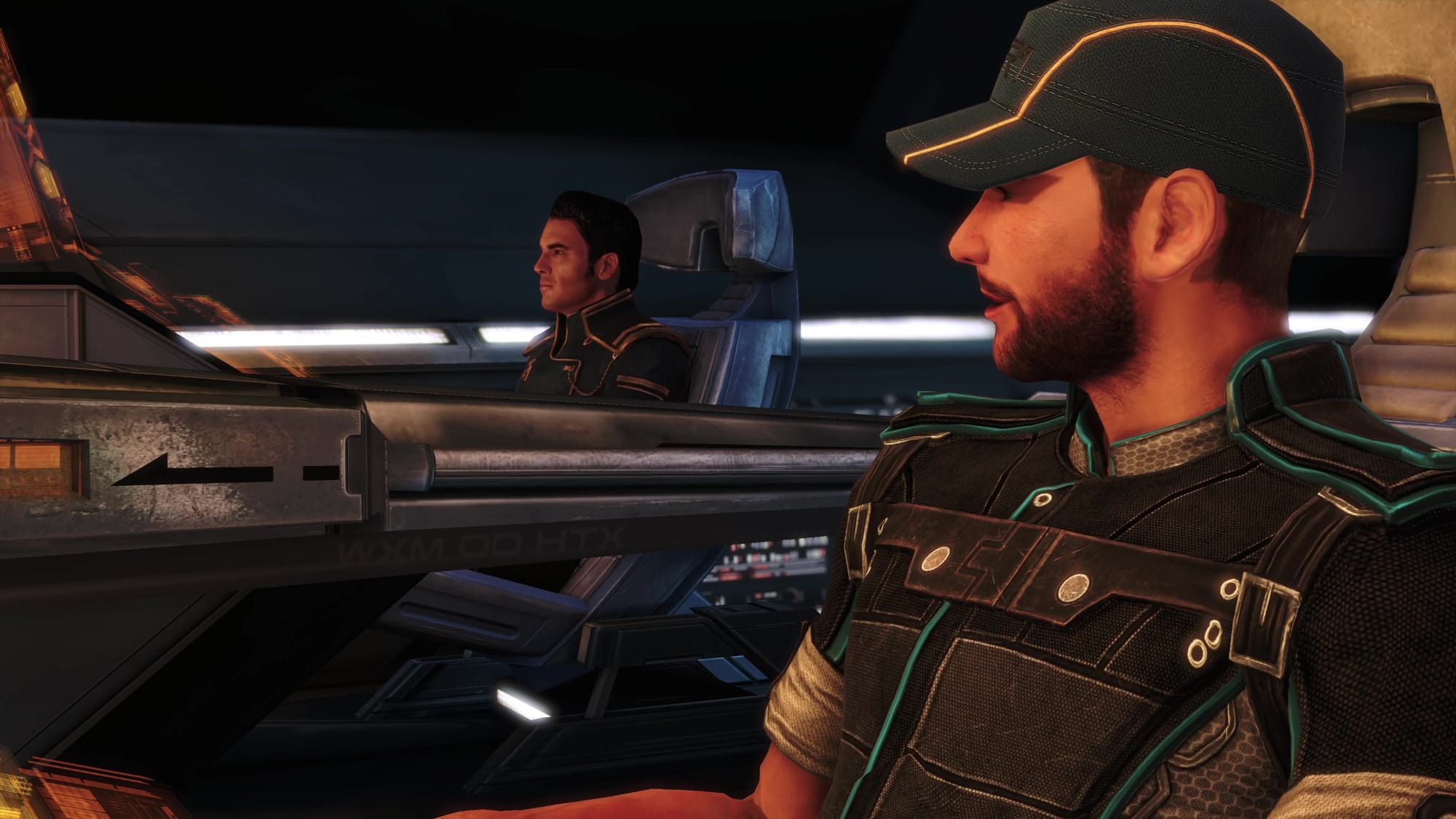
Jenkins does not get promoted because Shepard encouraged him to relax.
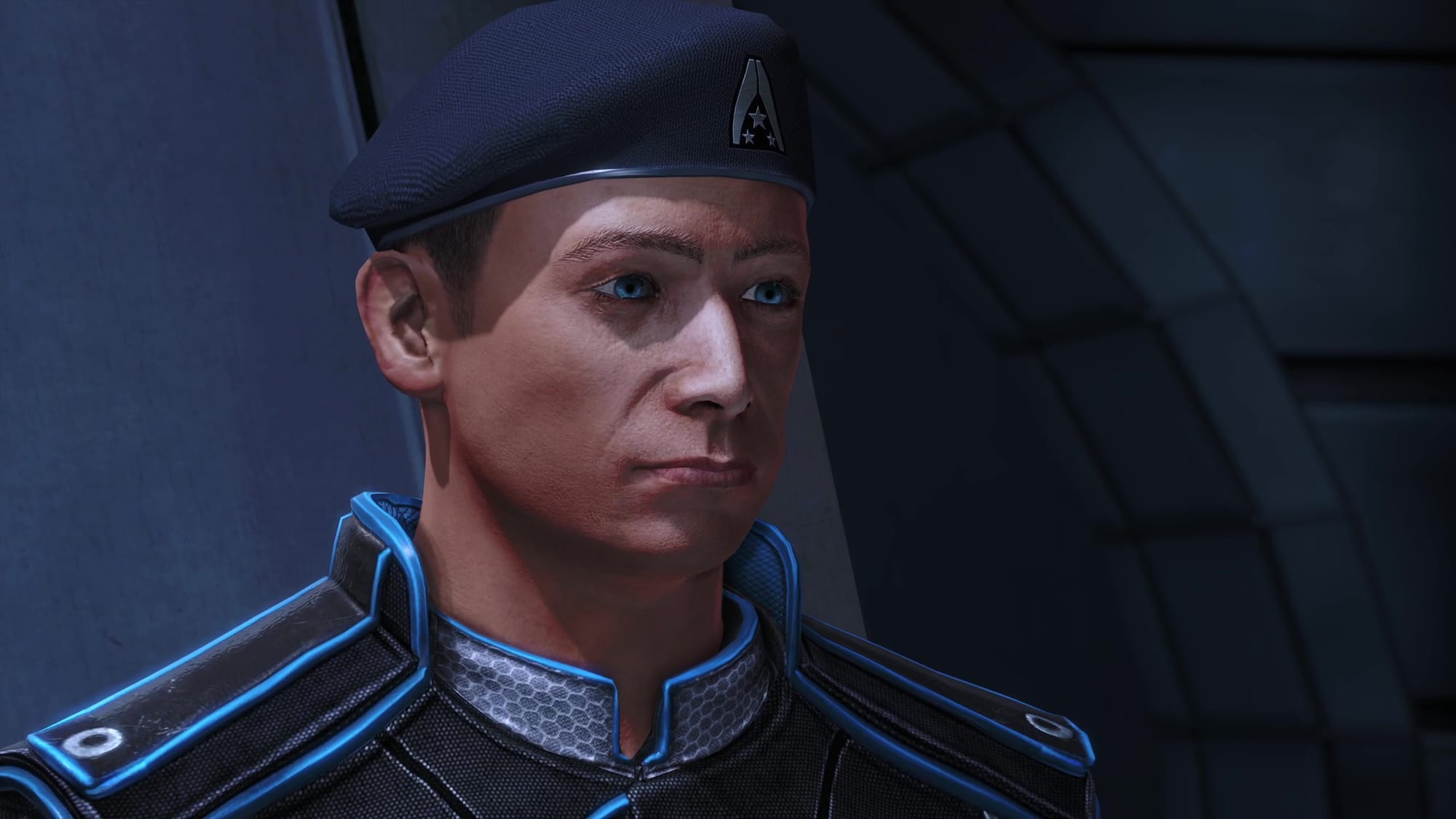
Nihlus does not send any emails because Shepard handled the pre-mission briefing with appropriate interpersonal grace.
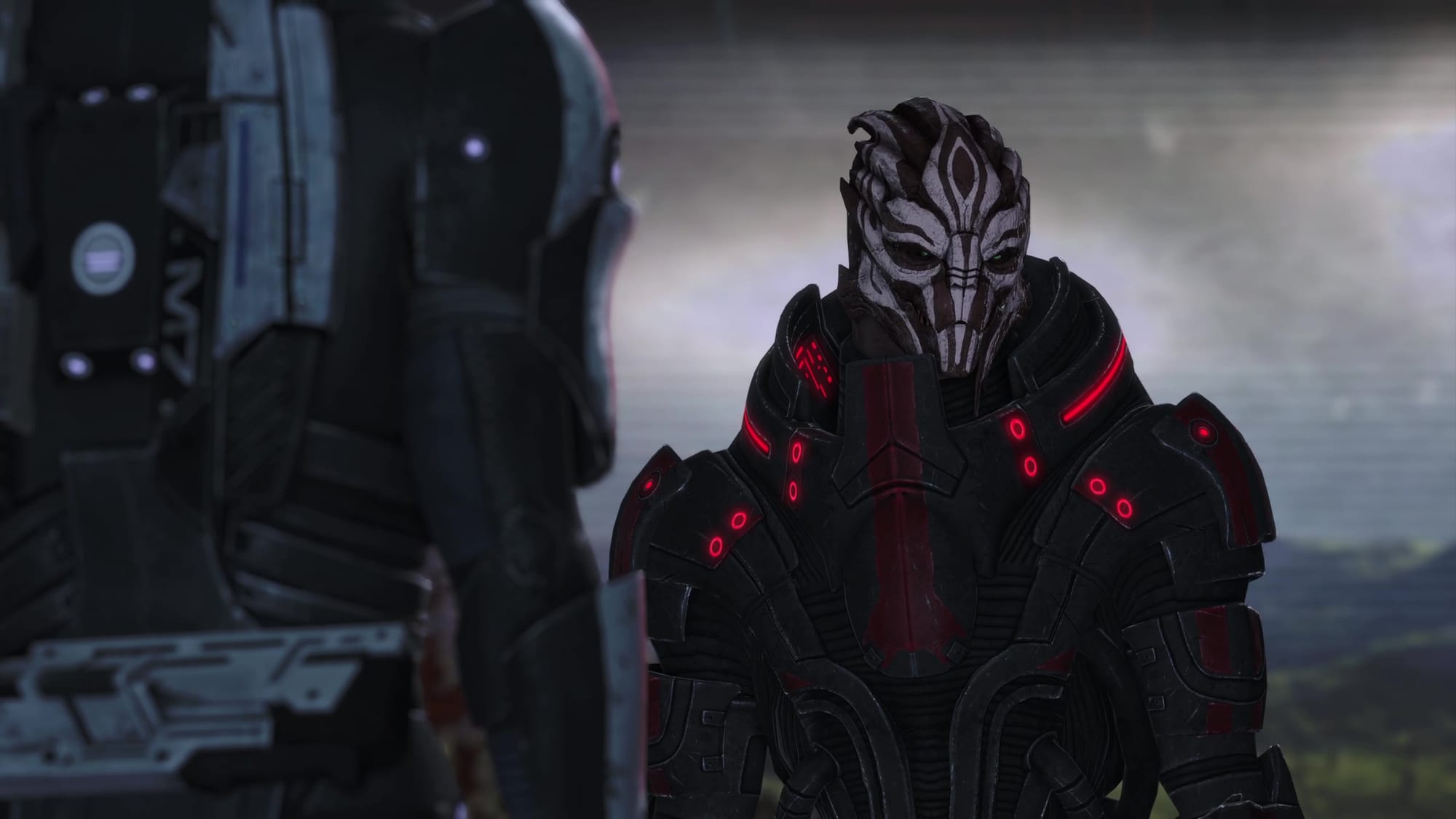
Ashley joins the squad whether Shepard is kind or just needlessly hostile.
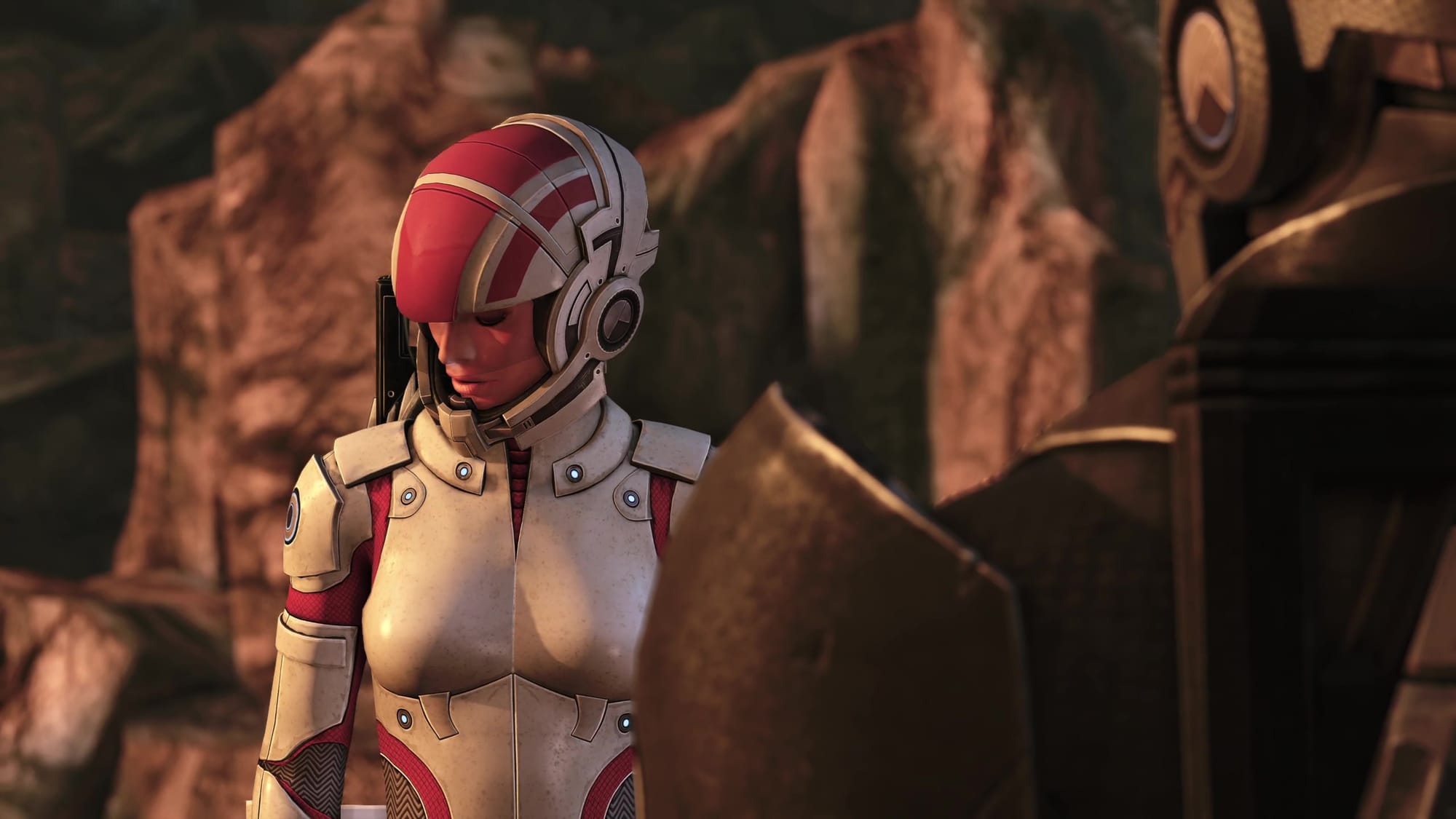
Manuel can be punched, which is bizarre and rude, but the Reaper threat does not actually become easier to understand in any way because Commander Shepard knocked out the very first man in the trilogy who is accidentally right about the plot.
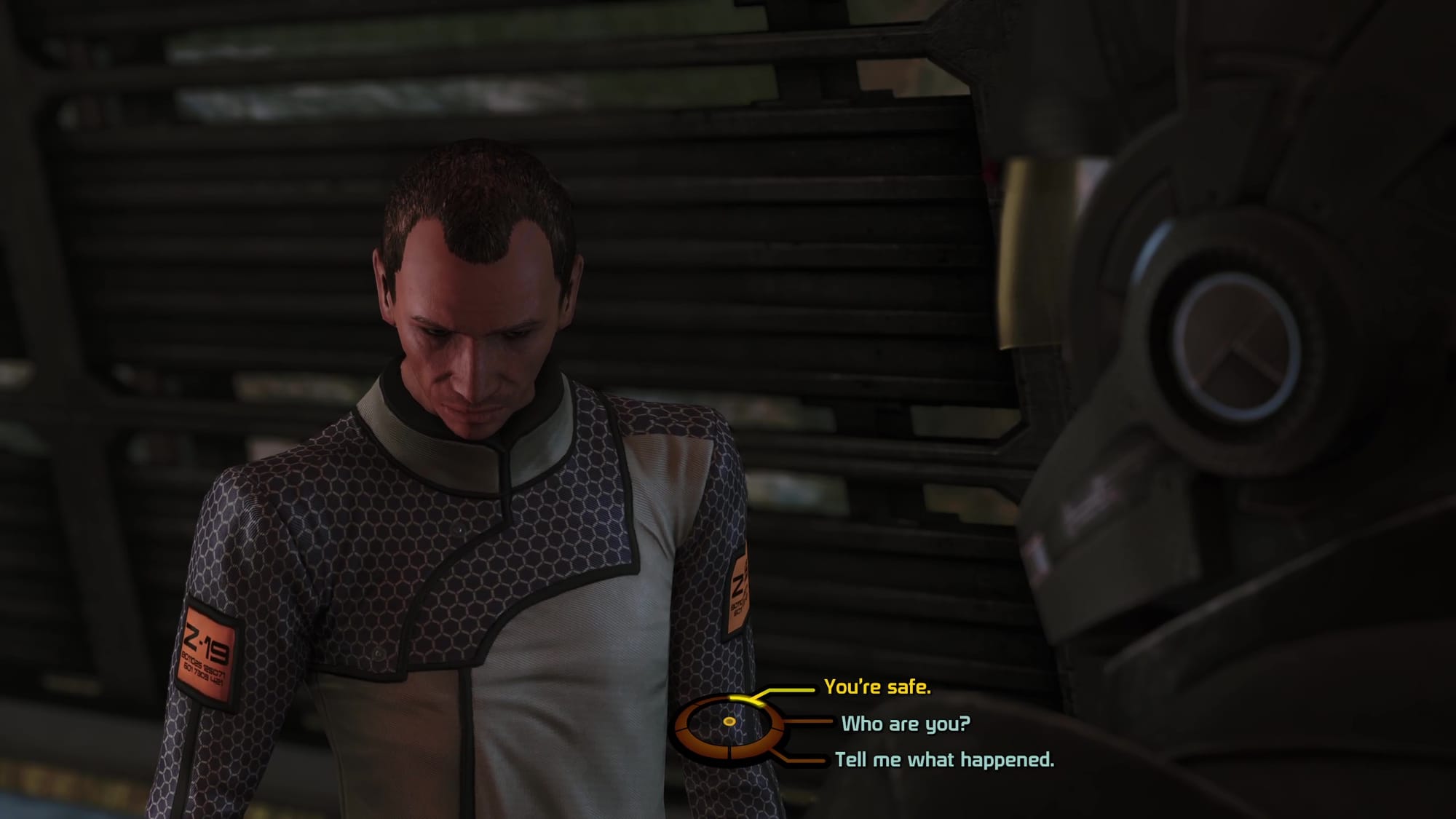
Those choices really only matter as meter residue, and for the player's perceptual training. They may matter later in sum because the morality meters unlock Charm and Intimidate paths. They do not matter enough for a full Closed / Opened treatment.
That is my new rule for this series.
We are tracking reachable futures.
We are fucking moving.
Moving: The Normandy.
Mass Effect opens aboard the SSV Normandy.

The Normandy is a prototype stealth frigate built by humanity with turian assistance. Humanity is very new to galactic civilization. Turians are not.
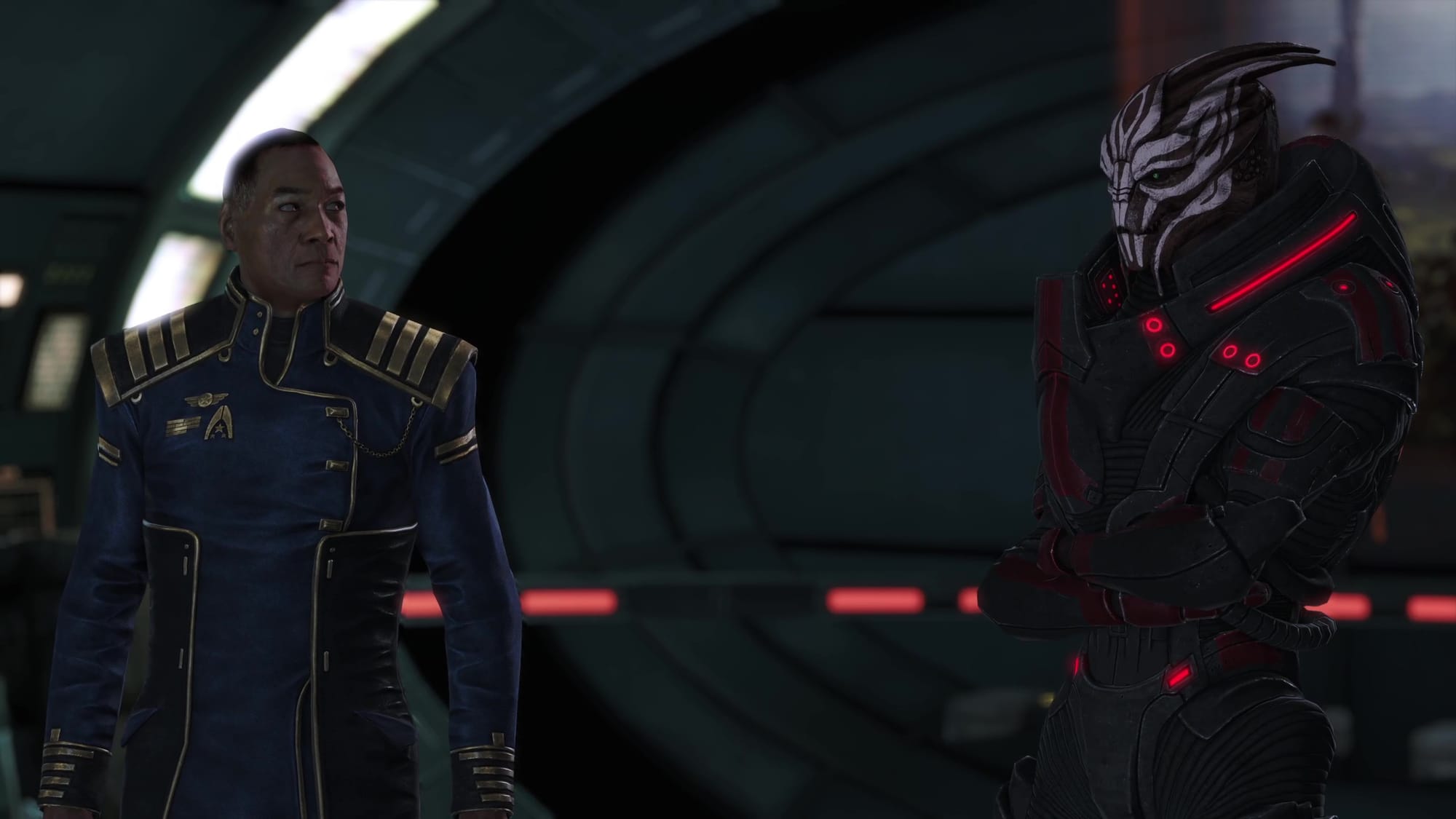
Turians are one of the central military species of the Citadel order, with a civilization built around service, hierarchy, and an incredibly durable belief that if a problem can be solved, it can be solved by a gun, and the gun should probably have a chain of command.
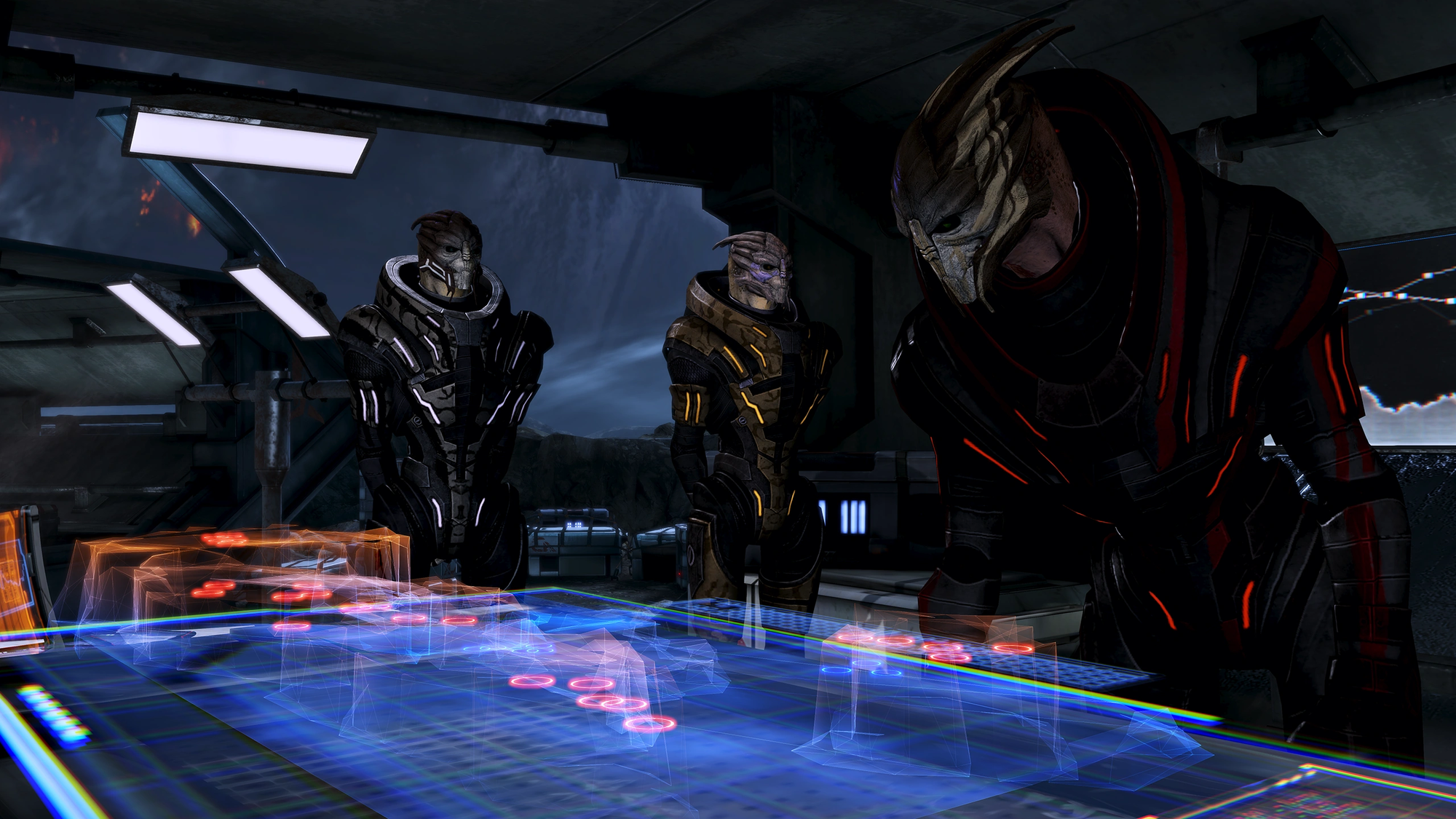
Humans and turians fought the First Contact War twenty-six years before the opening of this game.
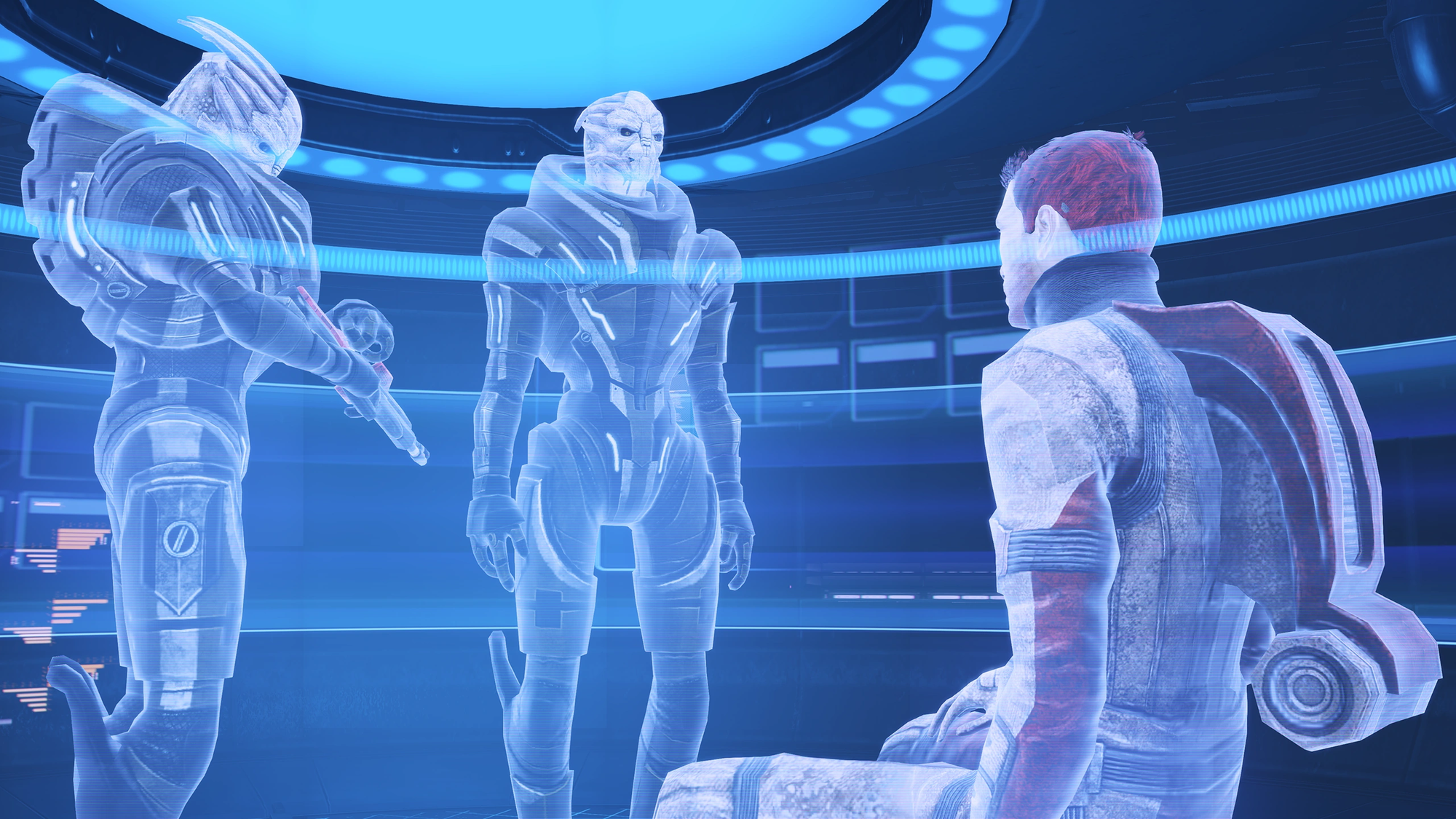
Turians were not actually the first alien civilization humans discovered, however. Humanity’s entry into galactic civilization began earlier, with a long-dead one.

In 2148, humans found Prothean ruins buried under Mars. The Protheans were the ancient species everyone in the current galactic cycle believed had built the mass relays, the Citadel, and the incredible technological substrate their interstellar civilization had inherited.
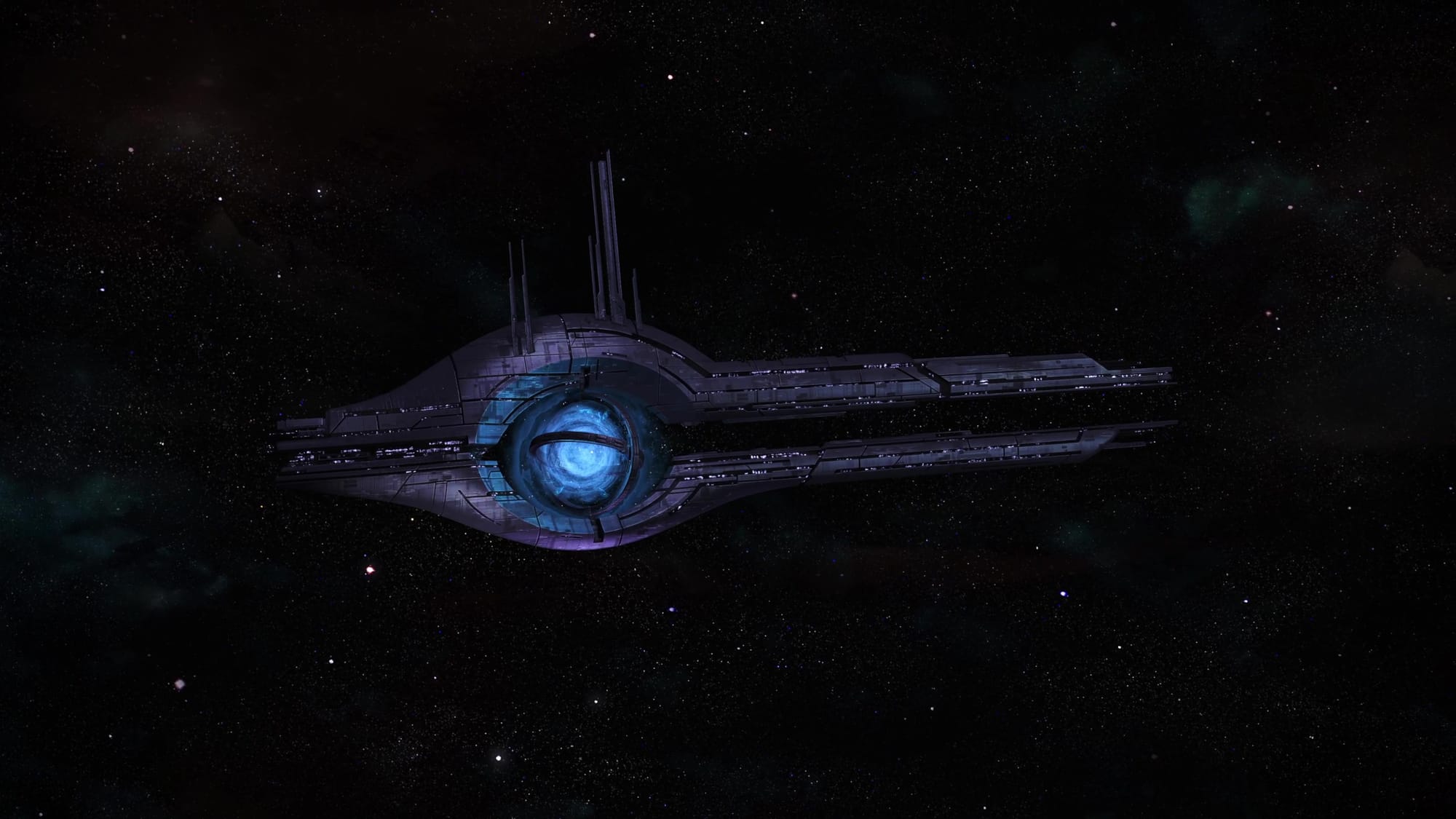
The Mars archives gave humanity the practical grammar of mass effect physics: element zero, faster-than-light travel, artificial gravity, and the sudden possibility that the strange frozen moon of Pluto was not a moon.

Charon was a dormant mass relay covered in ice.
Humanity dug it out and activated it, because humans had just found the largest mysterious button in the entire solar system and not a single person in the room was willing to be remembered by history as a coward.

This opened the Charon Relay and gave humanity access to the wider relay network, which is how a species goes from “we have discovered alien ruins on Mars” to “we are suddenly claiming colony worlds across contested galactic space” with the exact subtlety one would expect from mankind finding a big new magic road leading into the sky.
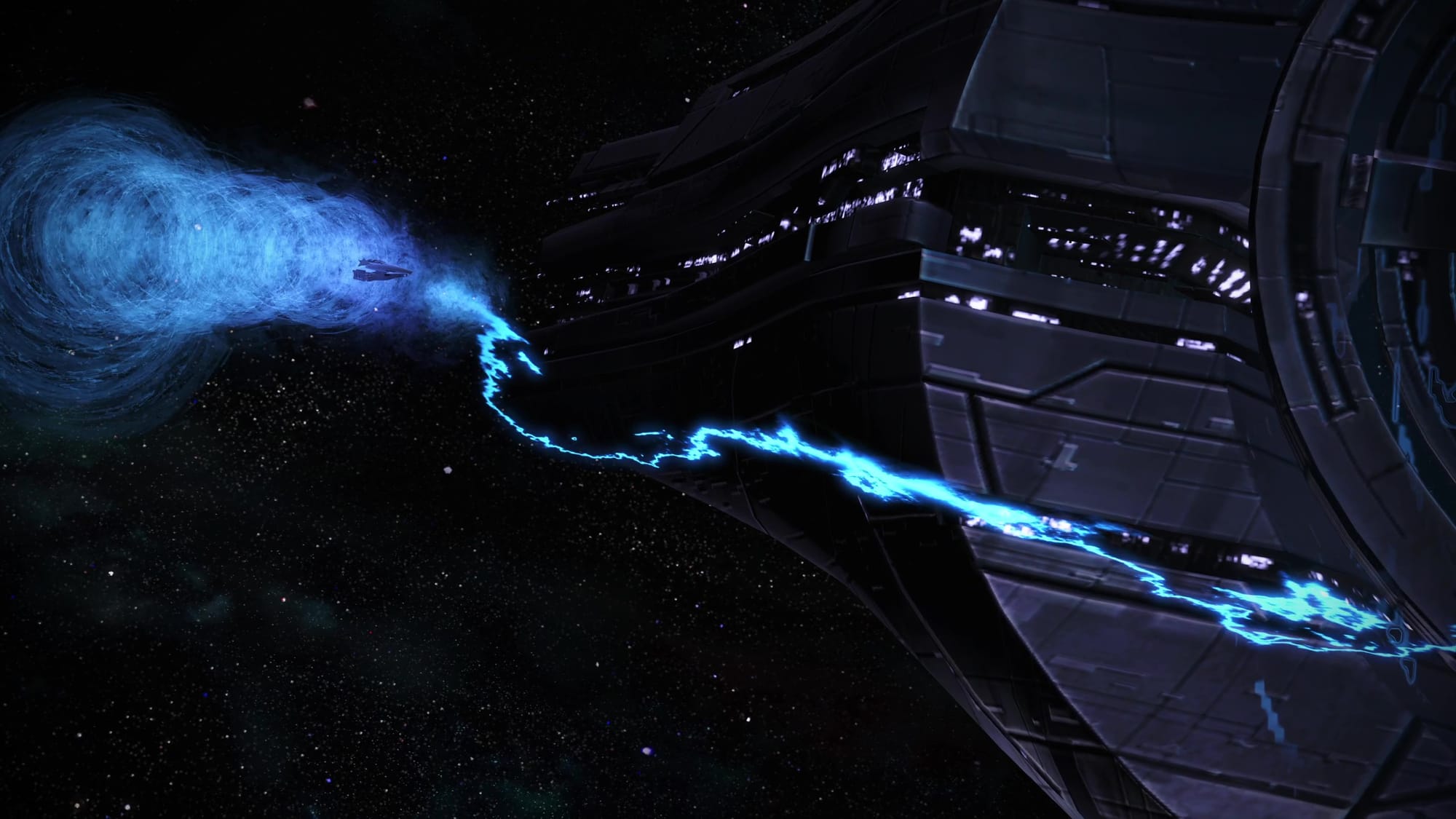
The only problem is that Citadel civilization, which was entirely unaware of humanity at the time, actually already had very strict laws about doing any of this.
Those laws existed because of the rachni.
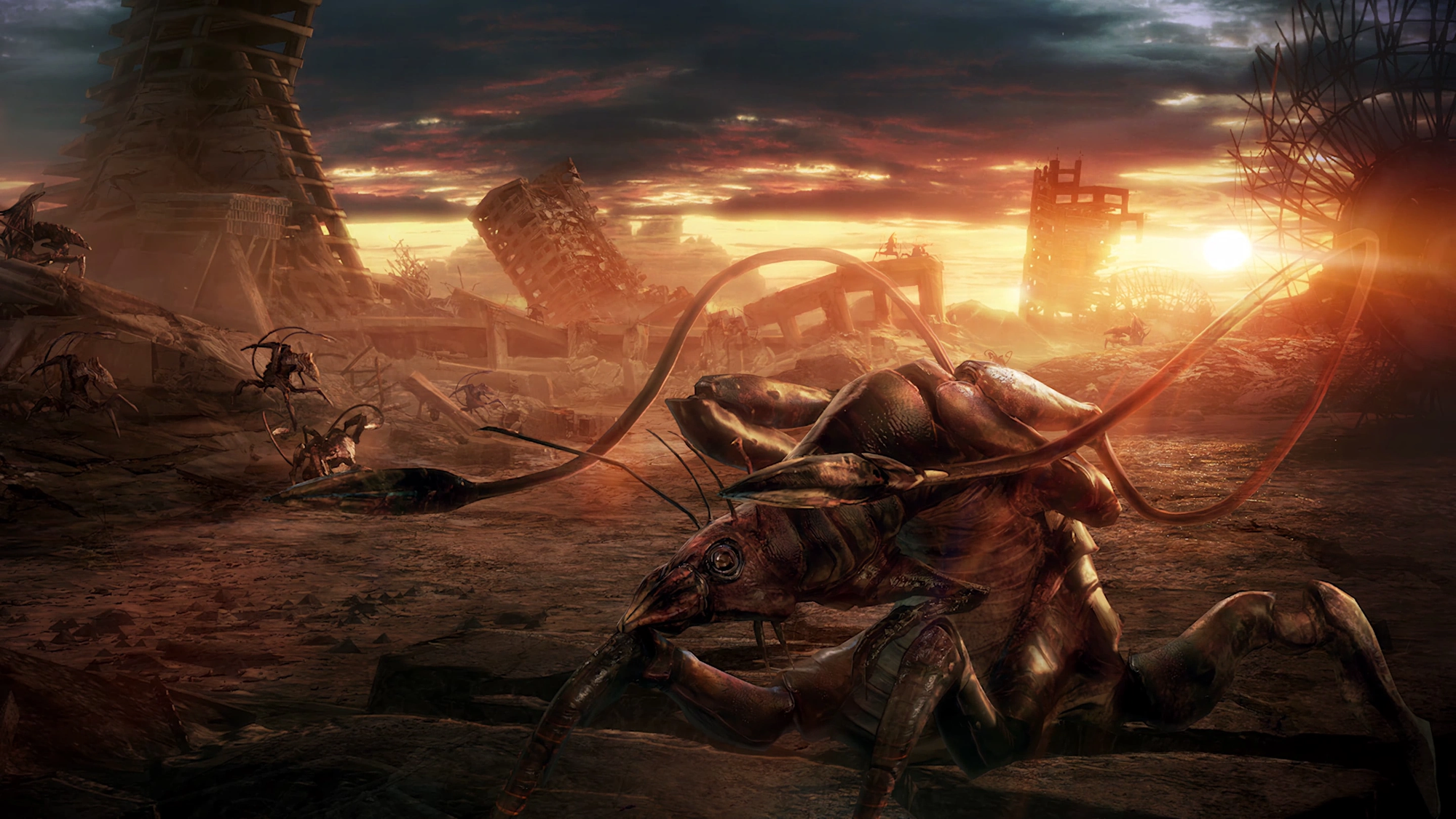
Also because of the rachni, we are somehow still not starting the fucking game yet.
The rachni were an intelligent, tool-using, spacefaring, insectoid species organized around queens and hive structures.
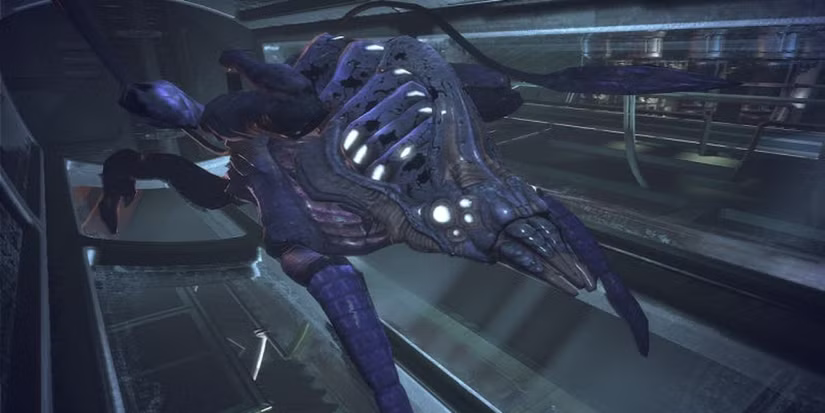
Around two thousand years before Mass Effect 1, Citadel explorers opened a dormant relay into unknown space and found these bugs. The rachni did not become a fun diplomatic puzzle.
They became an apocalyptic galactic war.
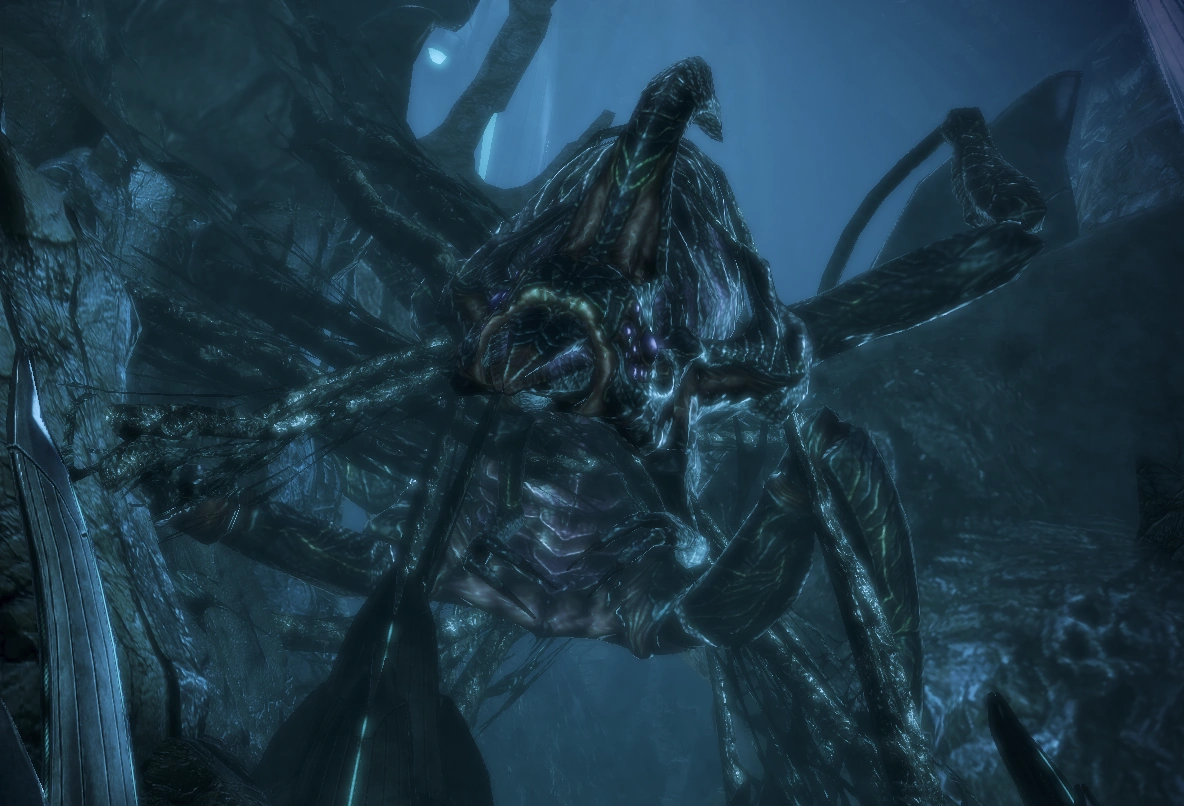
Negotiation failed, partly because the queens who directed the species lived deep inside lethal underground nests on only the most toxic of planets, where no ordinary Council envoy or force could reasonably ever reach.
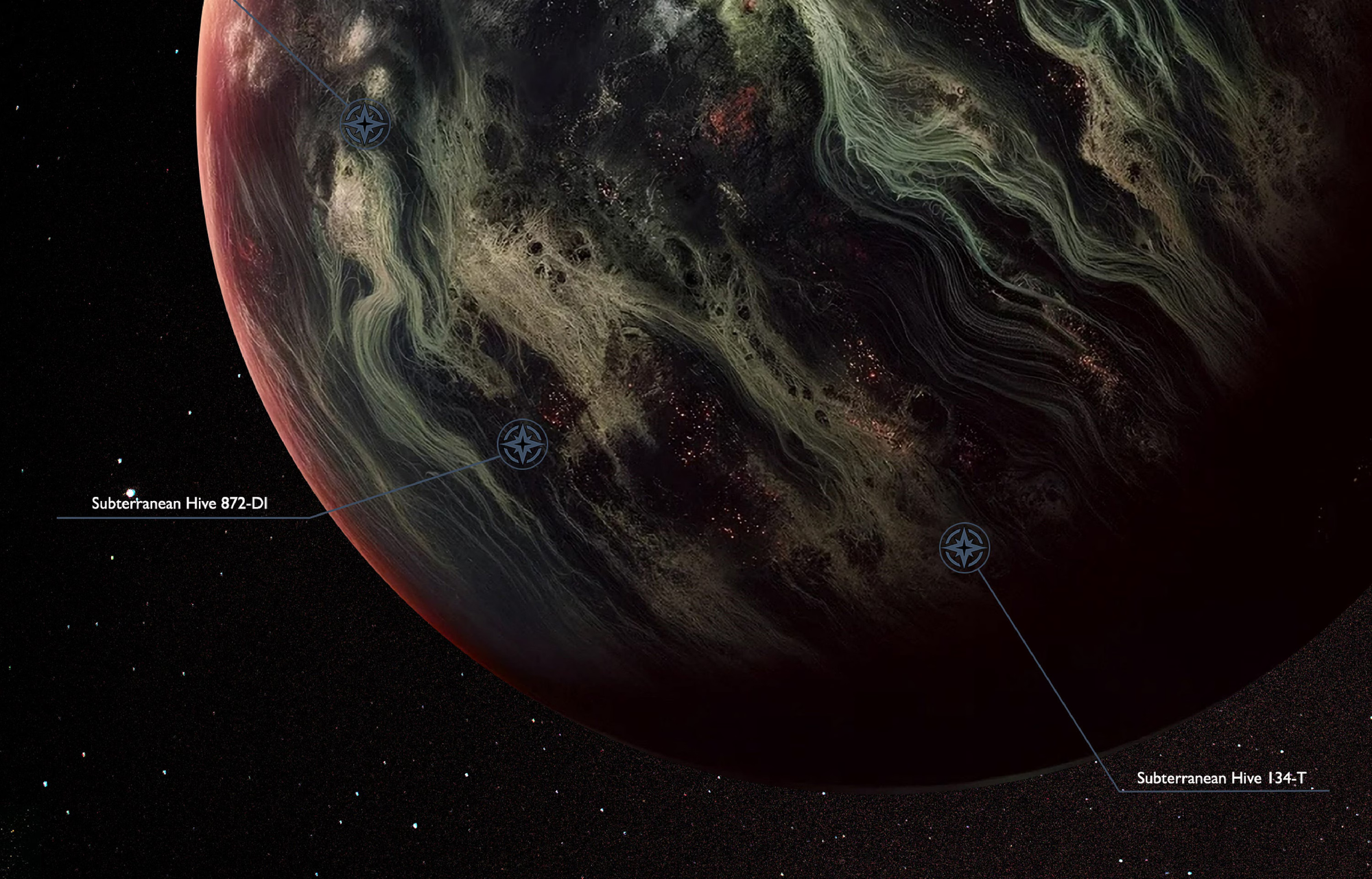
So, the rachni expanded quickly through relay space once the Council opened the door for them, overwhelmed defenses through numbers and coordination, and pushed the Citadel races into a war they were losing badly enough that the salarians eventually did one of the most consequentially wild things in the entire setting:
They uplifted the krogan.
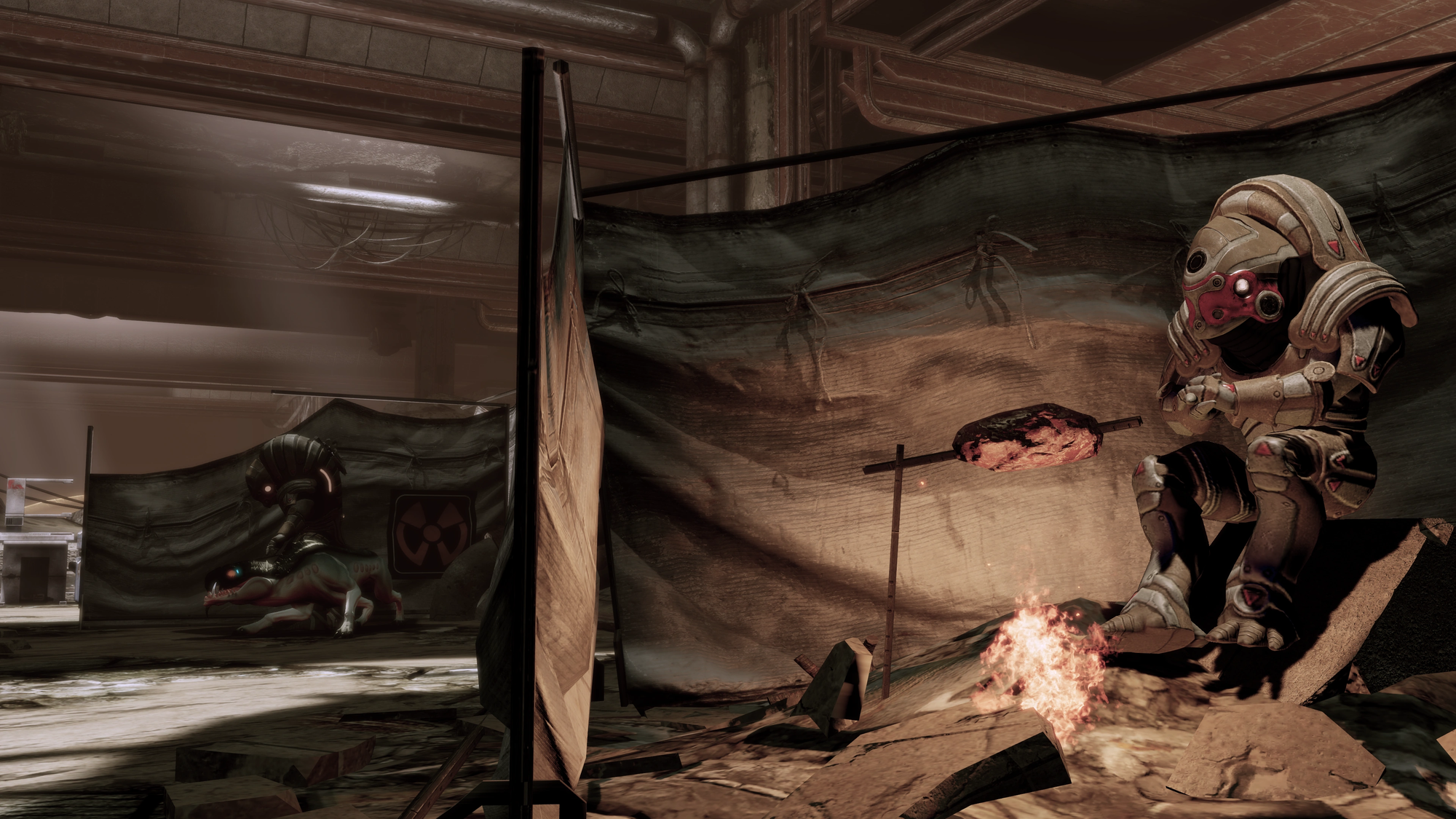
The salarians are another foundational Council species: short-lived, fast-thinking amphibian people whose civilization produces endless scientists, spies, field analysts, and intervention architects at a rate that suggests the entire species is engaged in one extremely long intelligence briefing that began all the way back when they were hunting flies.
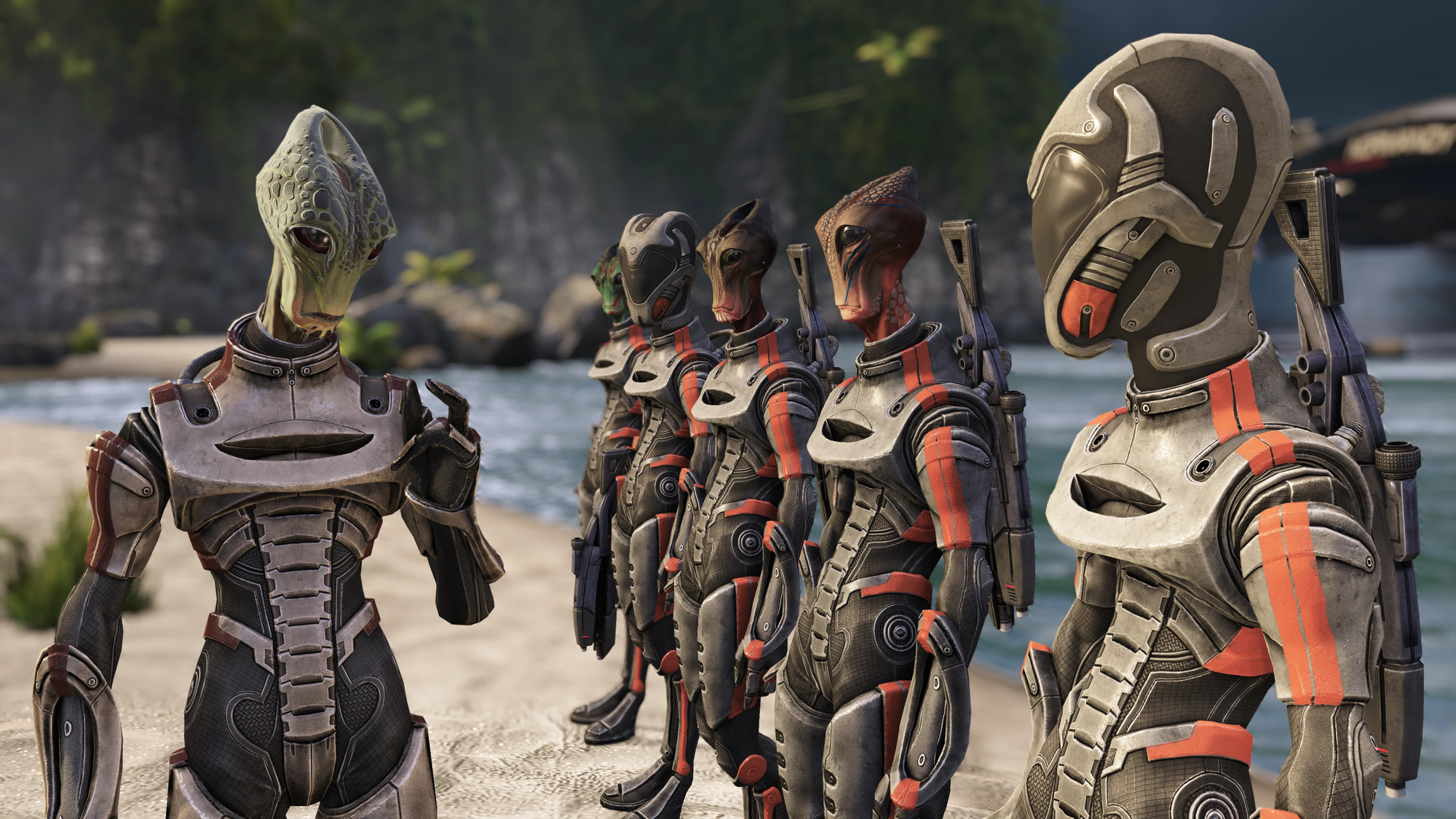
They are not physically dominant in the way turians or krogan are, though they are tall.
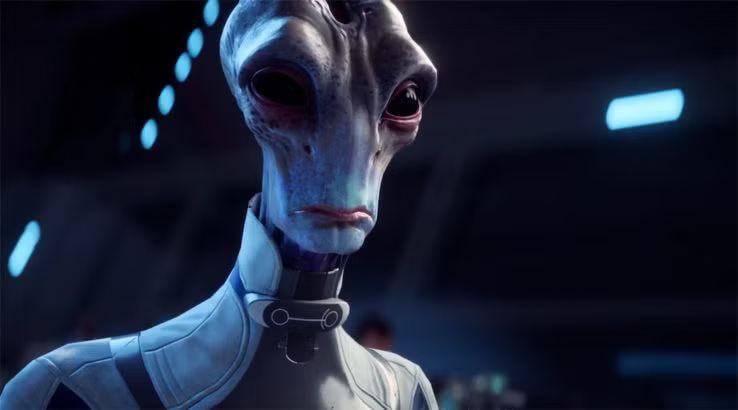
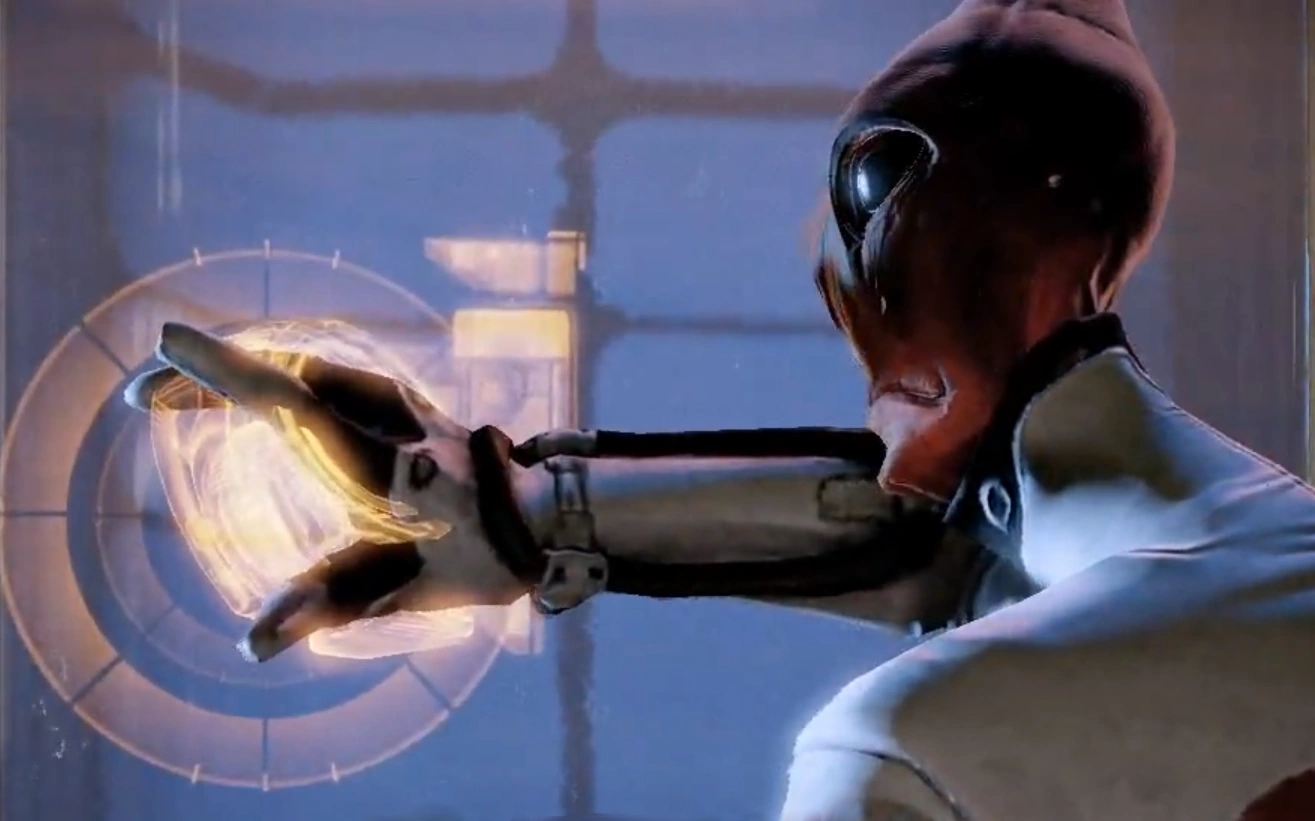
Their power is rapid cognition, coordination, surveillance, and the ability to look at a galactic disaster and invent and deploy a path through it before anyone has finished asking whether the solution should have ever been conceived of.
The krogan are a physically immense, aggressively durable reptilian species from Tuchanka, a planet so hostile that ordinary life there appears to have evolved by losing a bet.
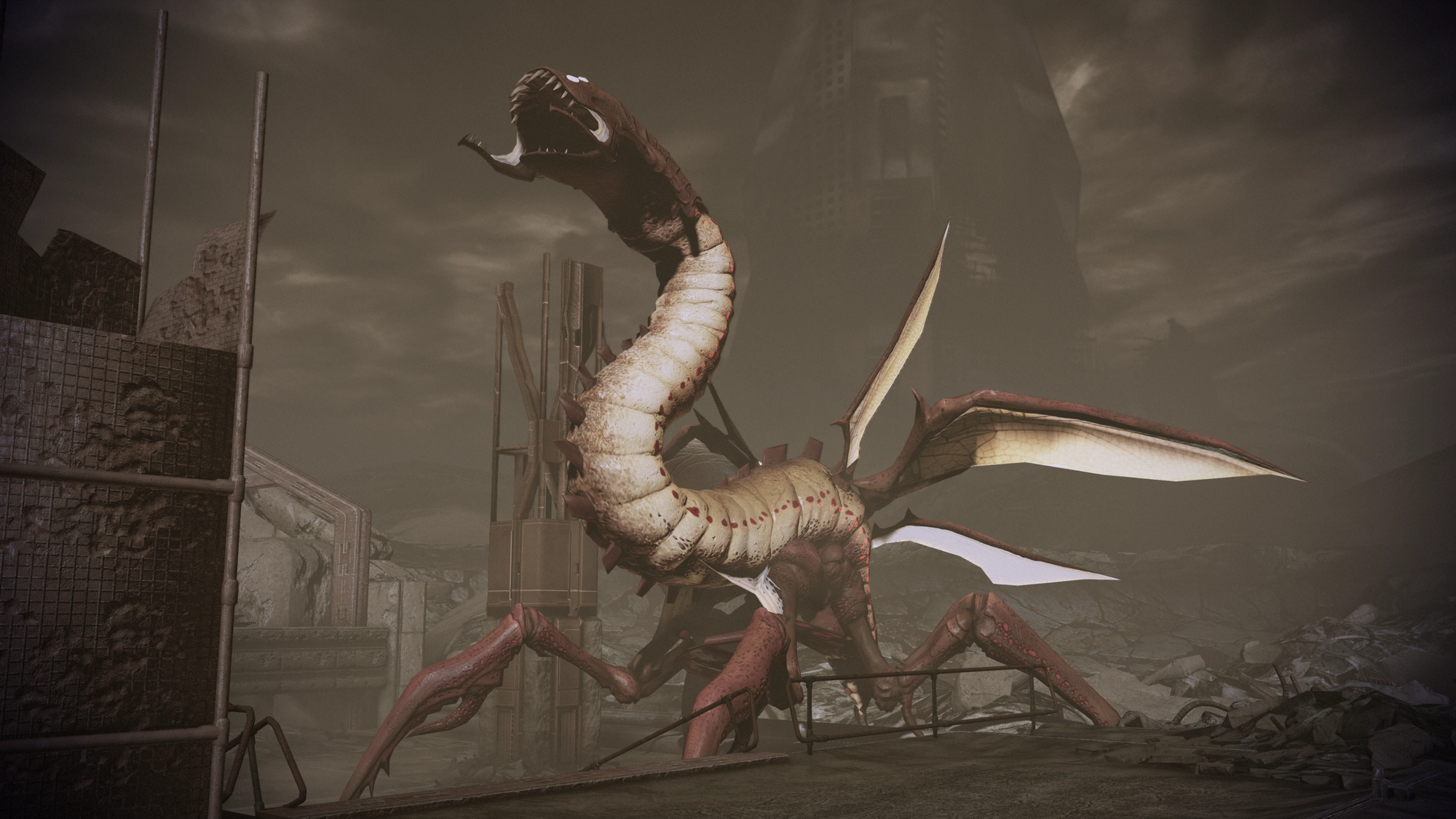
Before Citadel contact, the krogan had already bombed themselves into a nuclear wasteland shortly after discovering advanced weapons and were just still surviving on it, because krogan biology treats “uninhabitable” as a scheduling issue to negotiate.
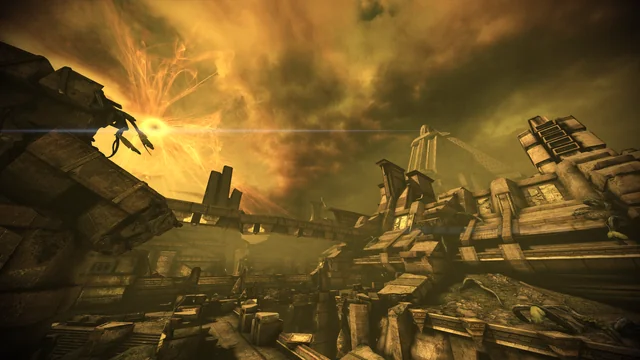
They are redundant-organed, fast-breeding, very hard to kill, and culturally shaped by a world where existence itself is a full-time argument.
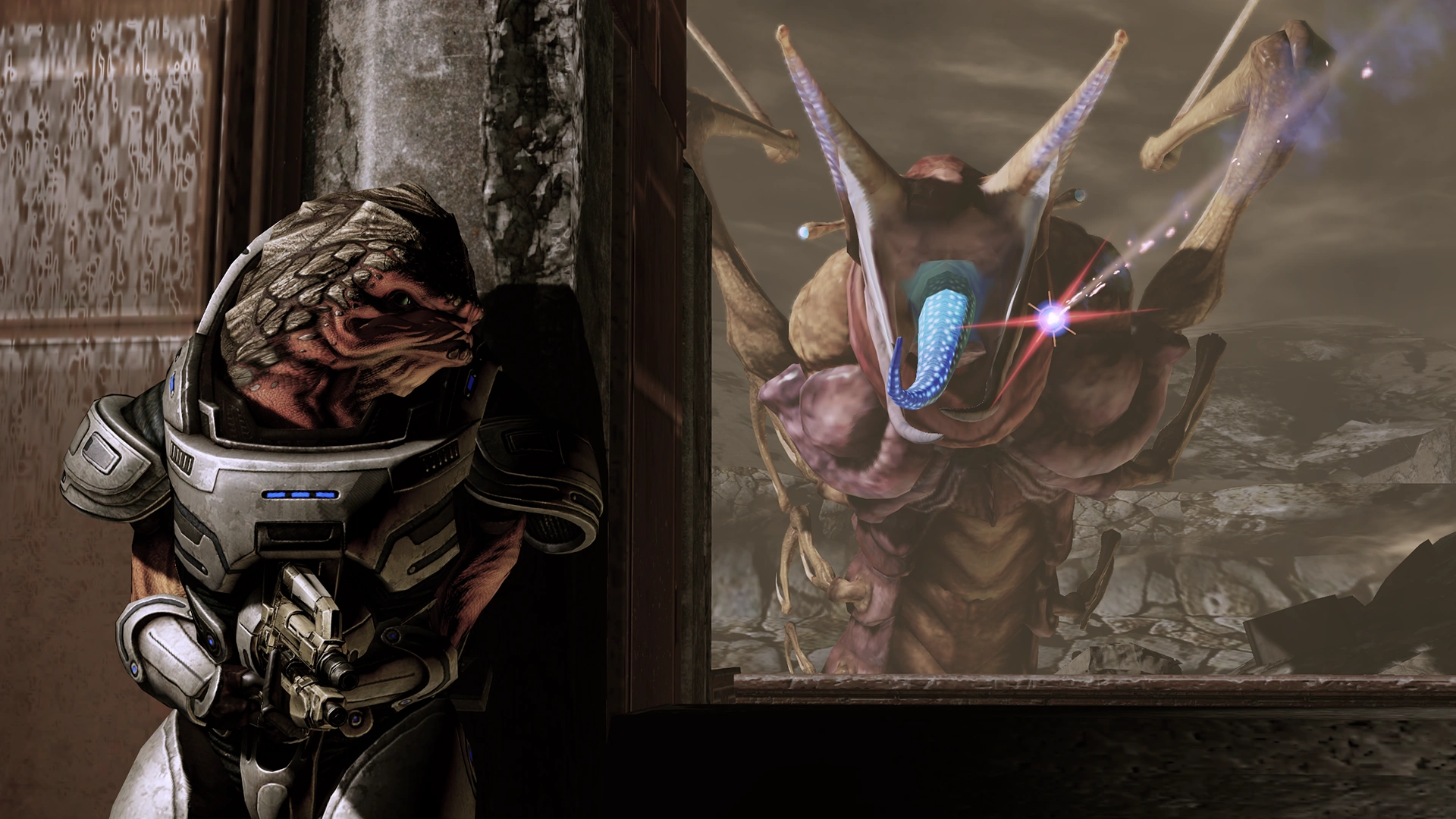
The salarians saw that the krogan could probably survive the toxic planets and underground nests where the rachni queens lived, so they went ahead and just gave them advanced technology, ships, and weapons, moved them into a galactic warzone, and used them as the answer to the rachni.
This worked.
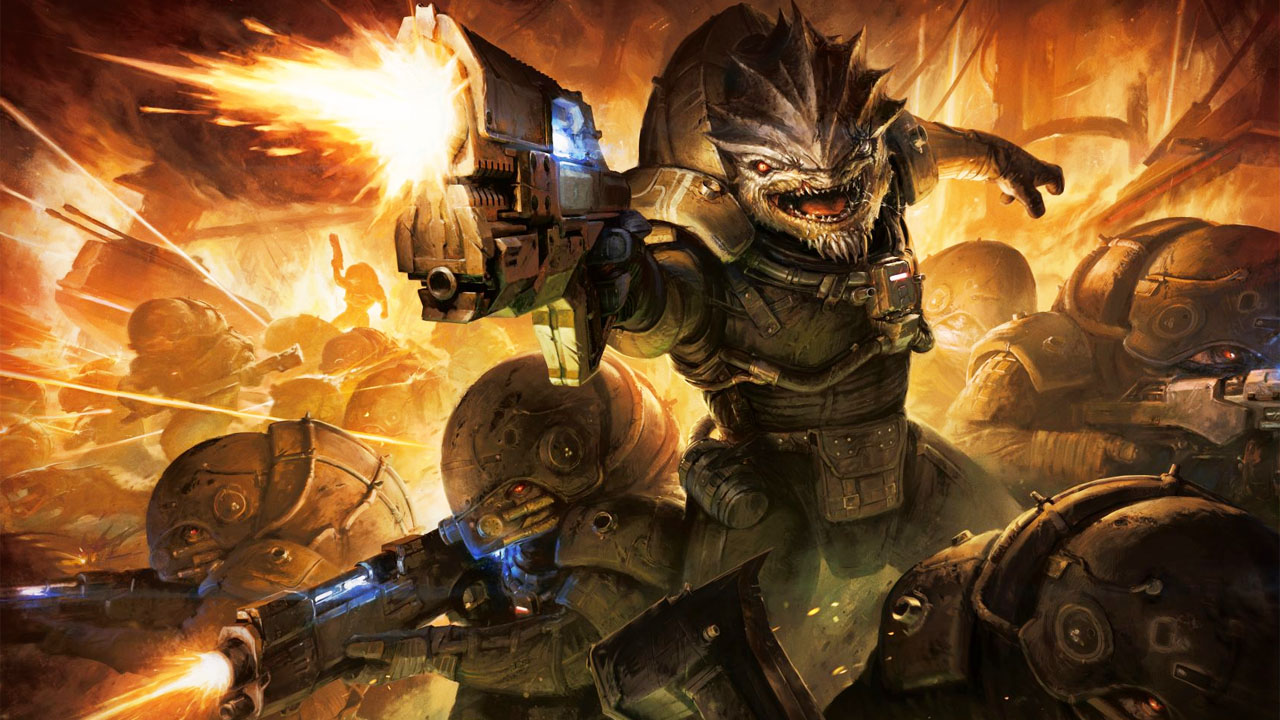
The krogan could survive the hellish worlds and underground nests where the rachni queens lived. They took the war into places other species could not reach and exterminated the rachni so completely that the galaxy believed the species to be extinct.
The Citadel had solved the rachni problem by turning a pre-spaceflight death-world species into a galactic military instrument.
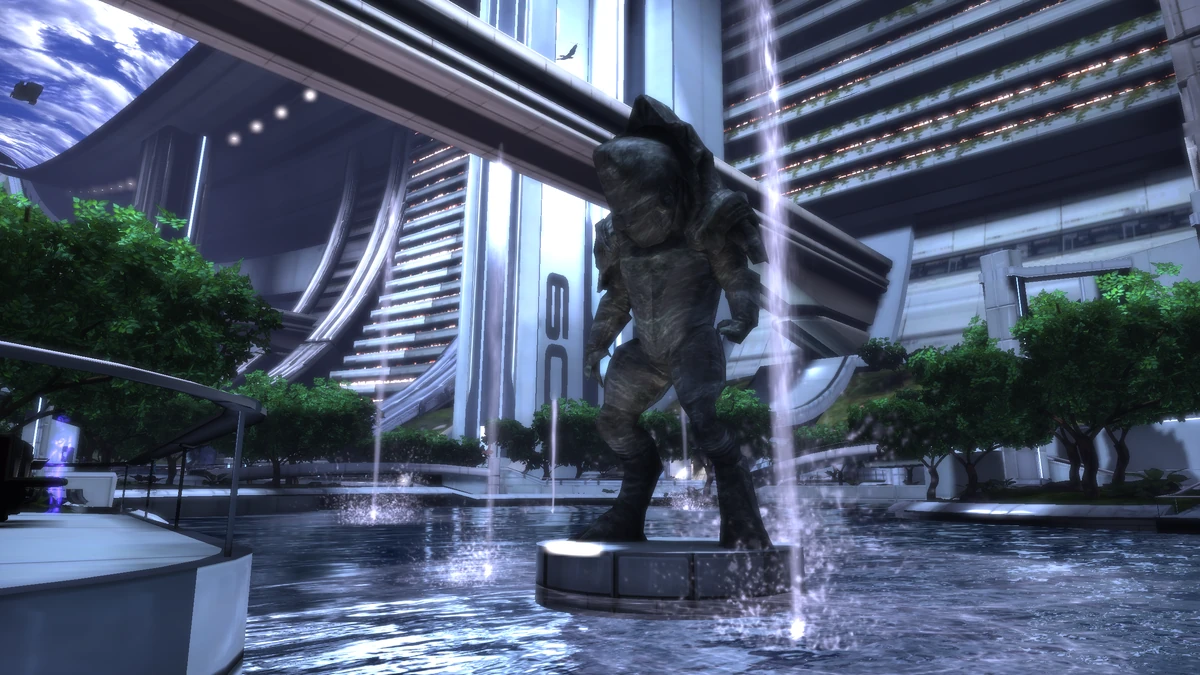
Then, their new instrument did something incredibly unfair and inconvenient to the Council. It kept existing.
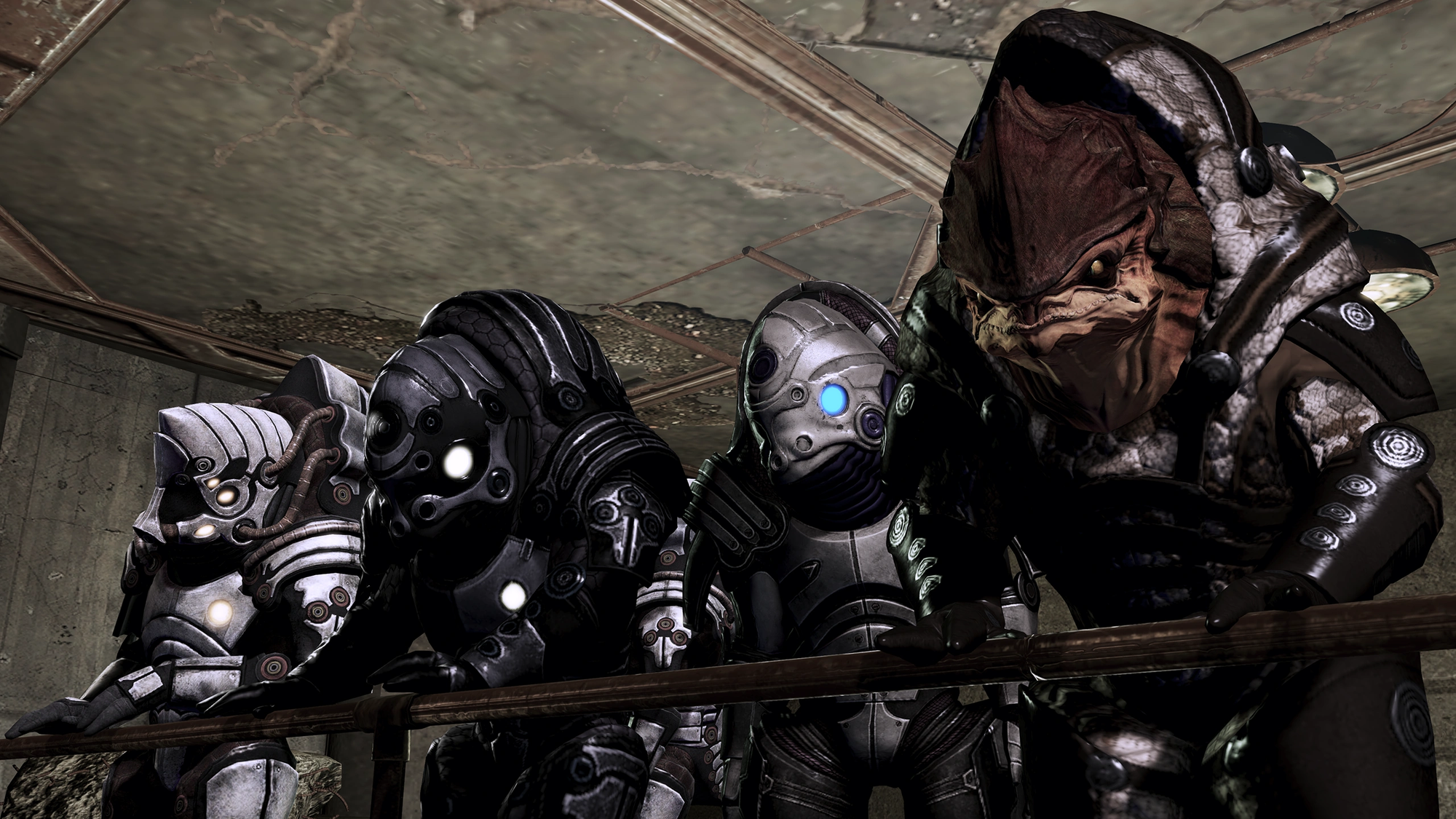
After the Rachni Wars, the krogan were rewarded with new colony worlds. Their population expanded rapidly once removed from Tuchanka’s hostile restraints. Their military power expanded with it. Gratitude and reconstruction turned into territorial pressure, then open conflict, then the Krogan Rebellions.
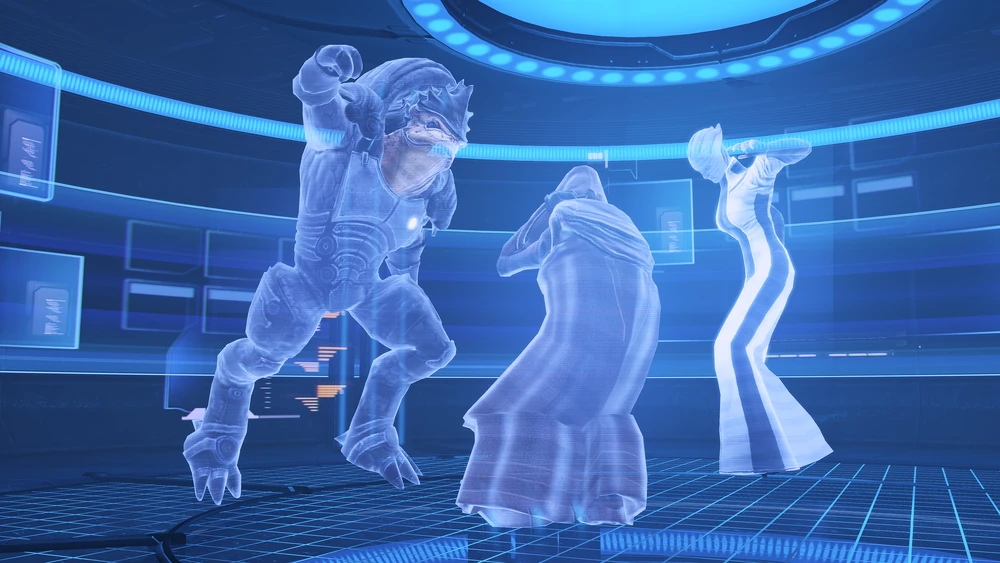
The Council eventually defeated the krogan through another salarian-engineered catastrophe: the genophage, a biological intervention designed by the salarians and deployed by the turians. The genophage reduced viable krogan births to a tiny fraction of what their species previously sustained. It did not make the krogan extinct. It made their future feel extinct while forcing them to keep living inside it.
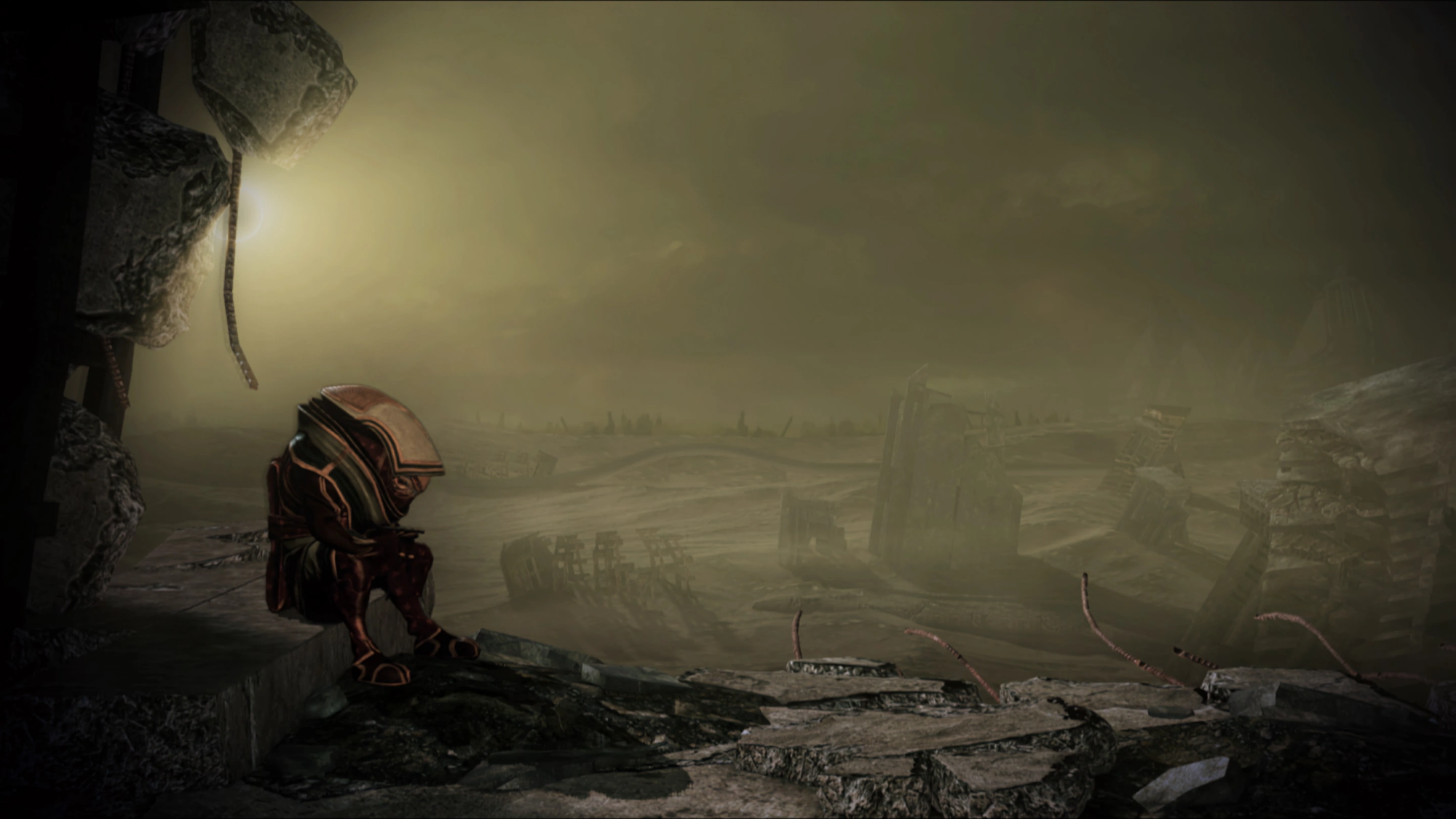
So the lesson the Citadel took from the rachni was not clean:
- Do not open unknown relays, definitely. No more of that.
- Also: when the galaxy panics, it will manufacture a solution whose future harm has not yet arrived, call that solution necessary, then act surprised when the solution becomes the next civilizational problem. We should probably look into this.
That entire history sits behind the relay law humanity unknowingly violated. A dormant relay is a loaded corridor between civilizations, and the Citadel’s most vivid memory of opening one blindly includes the rachni, the uplift of the krogan, the Krogan Rebellions, and the genophage.
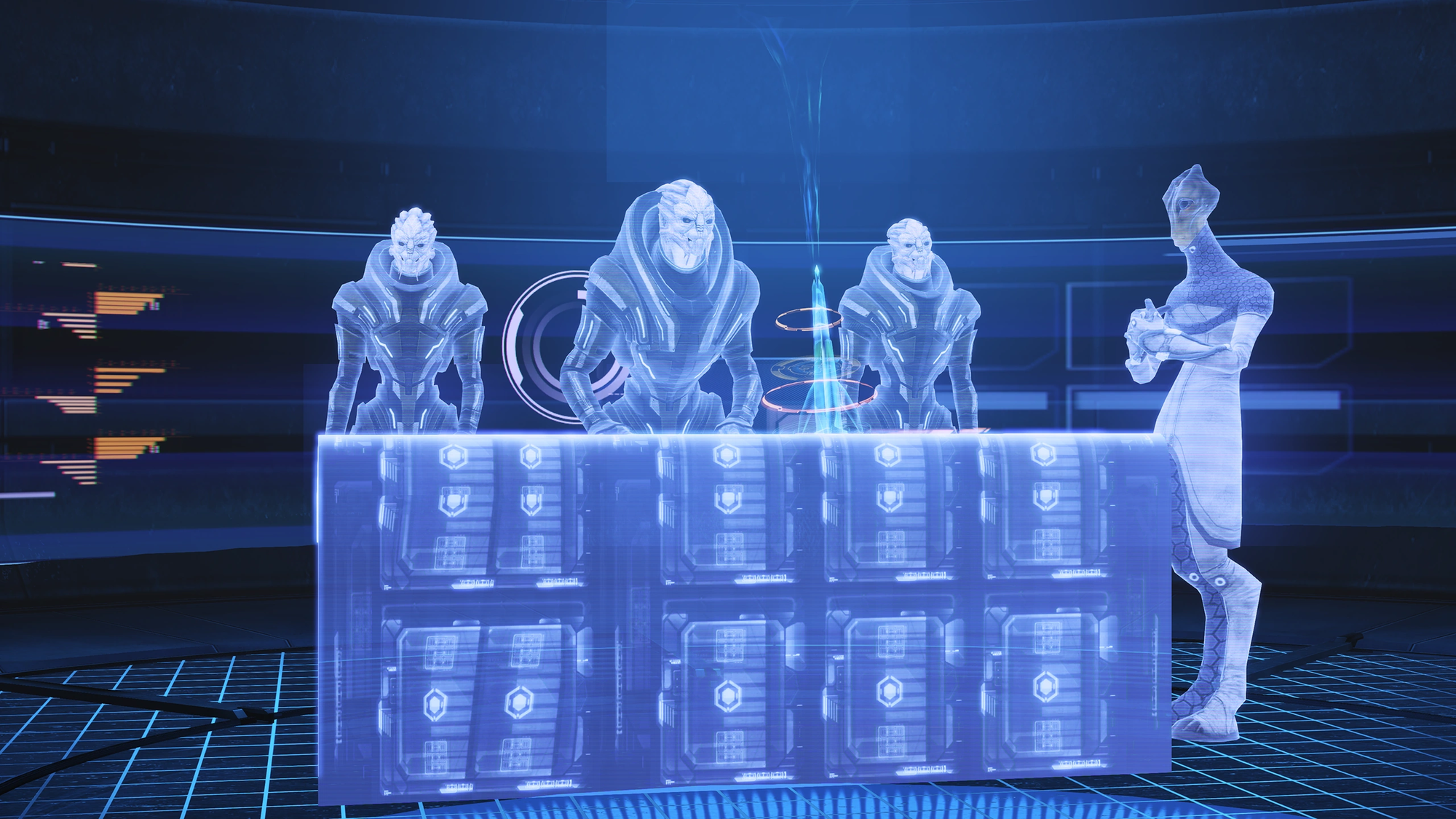
So, by the time a frontier-crazed humanity activated Relay 314, the Council species had already learned, very expensively, that this kind of curiosity at relay scale can become a thousand-year galactic repair problem.
This is why when turian forces discovered unknown alien ships activating the unmapped Relay 314, they treated it as an illegal and dangerous violation of Citadel order.
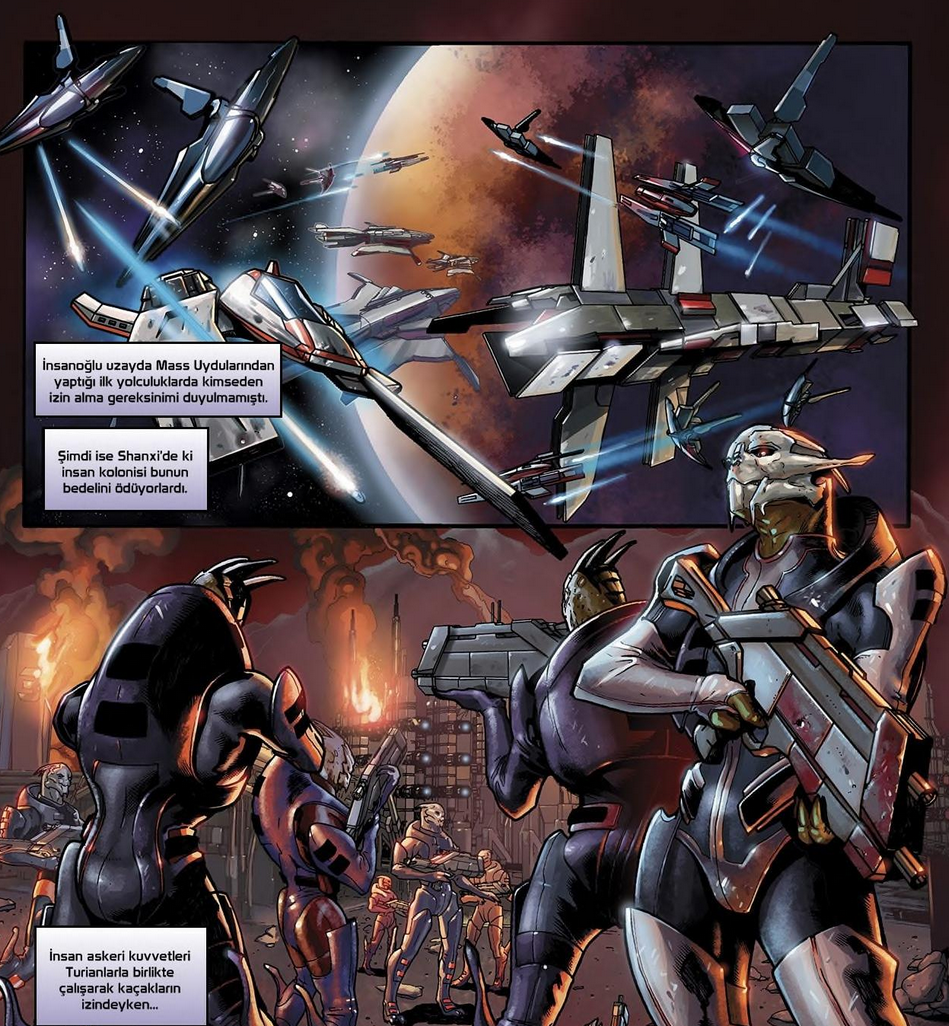
The unknown aliens were humans. The humans, who had no idea there even was a Citadel order yet, interpreted the turian attack as their first contact with non-dead aliens by way of attempted extermination.
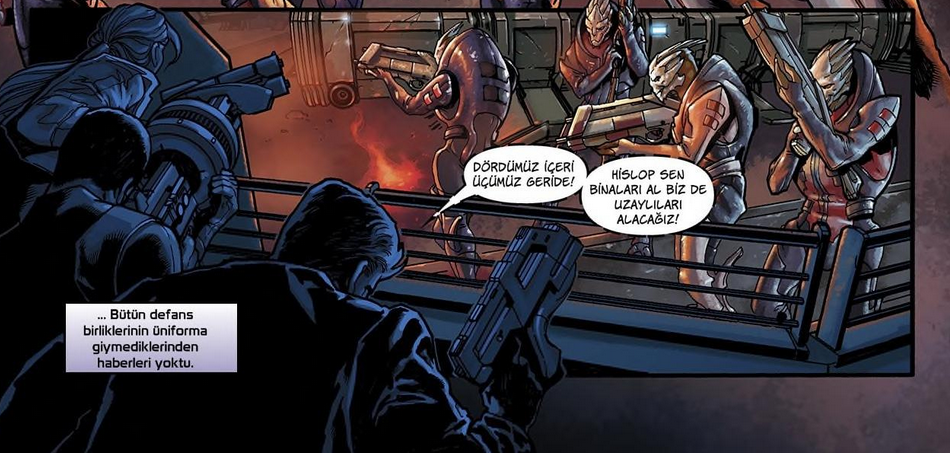
The initial conflict escalated into what humans called the First Contact War and what the Council side called the “Relay 314 Incident,” because bureaucracies love naming the same corpse pile differently depending on whose future is being filed away.
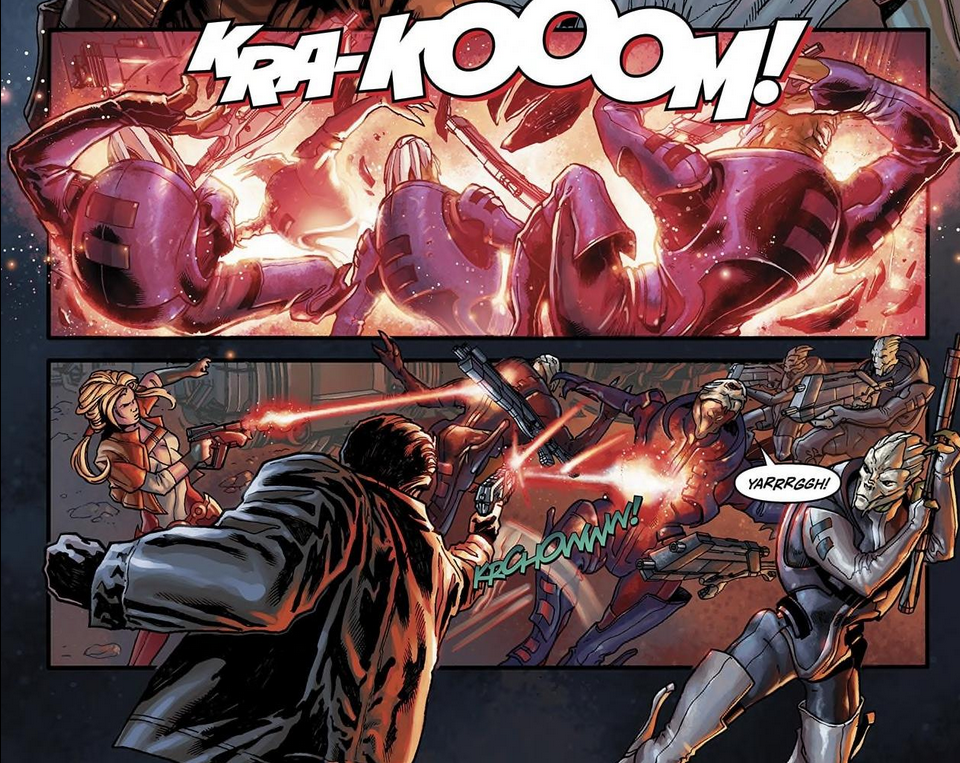
This war was brief. The turians occupied Shanxi, a nearby human colony world. The Systems Alliance counterattacked and retook it. Before the conflict could widen into something worse, the Citadel Council intervened, revealed the larger galactic order to humanity, and forced the turians to stand down.
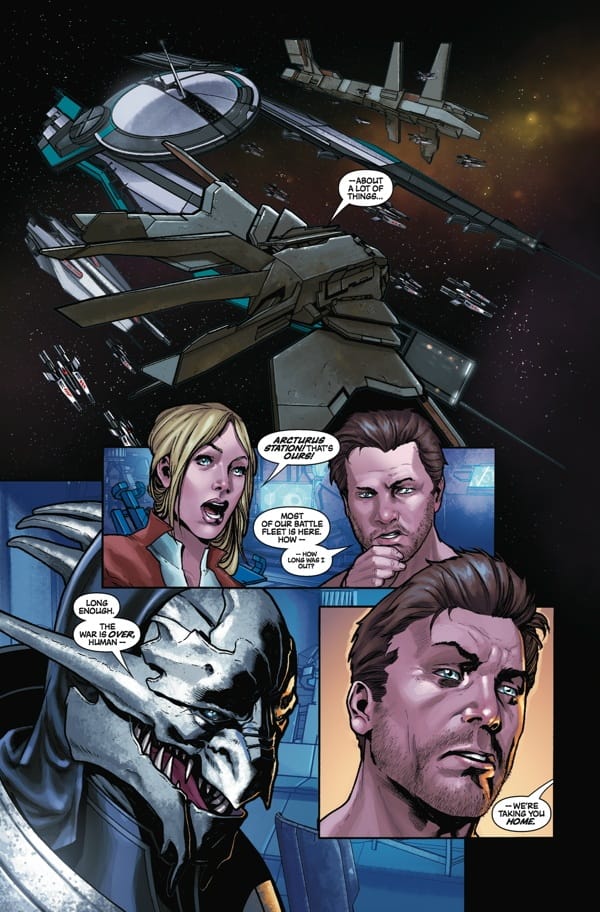
So, that is the history sitting inside the Normandy.
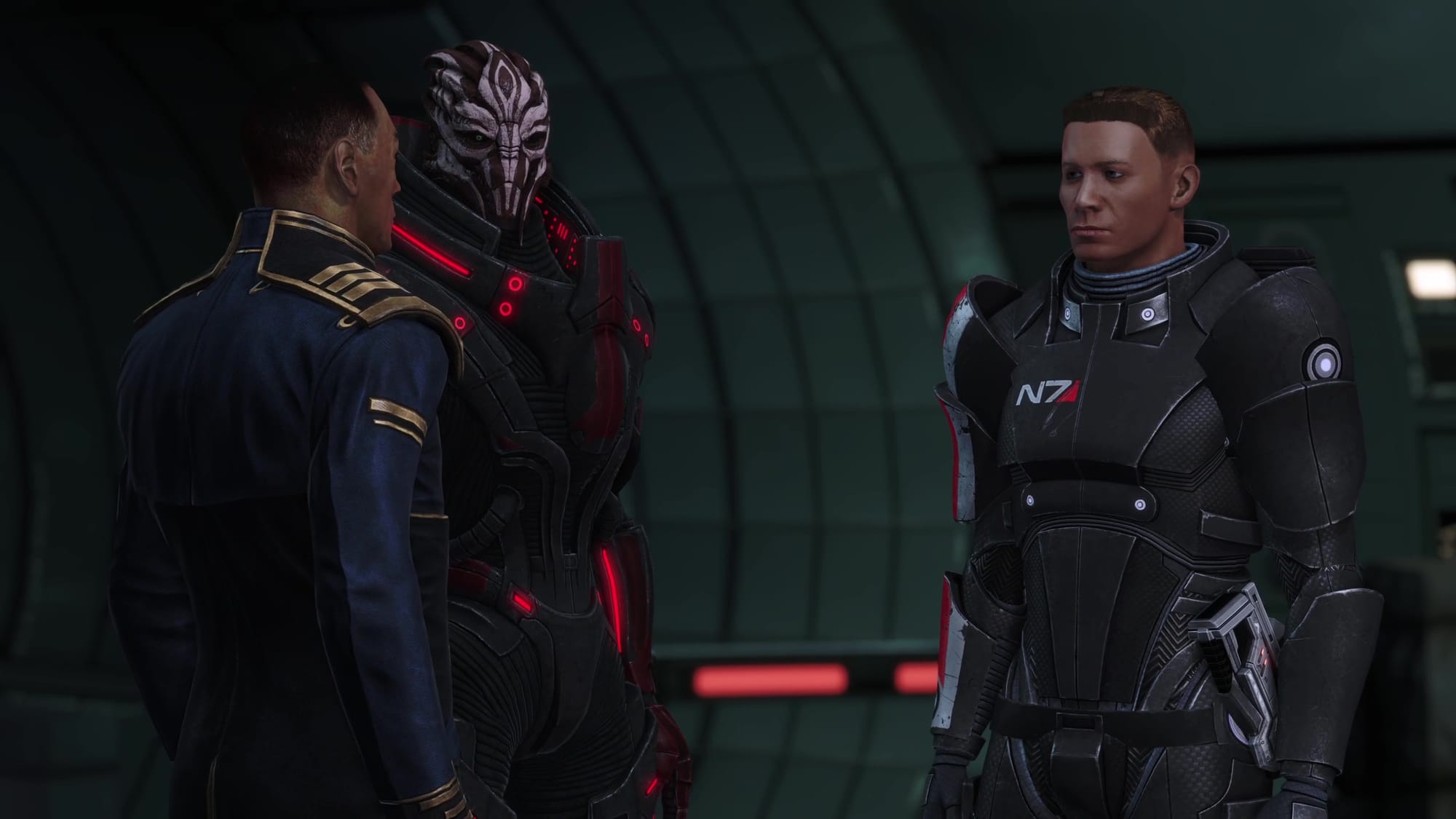
That was all just to explain the origin story of the ship's political atmosphere.

The SSV Normandy is a cutting-edge joint human-turian project built less than thirty years after first contact began as an exchange of fire over a relay humanity only found because Prothean ruins on Mars had already pushed the species into galactic space too quickly.
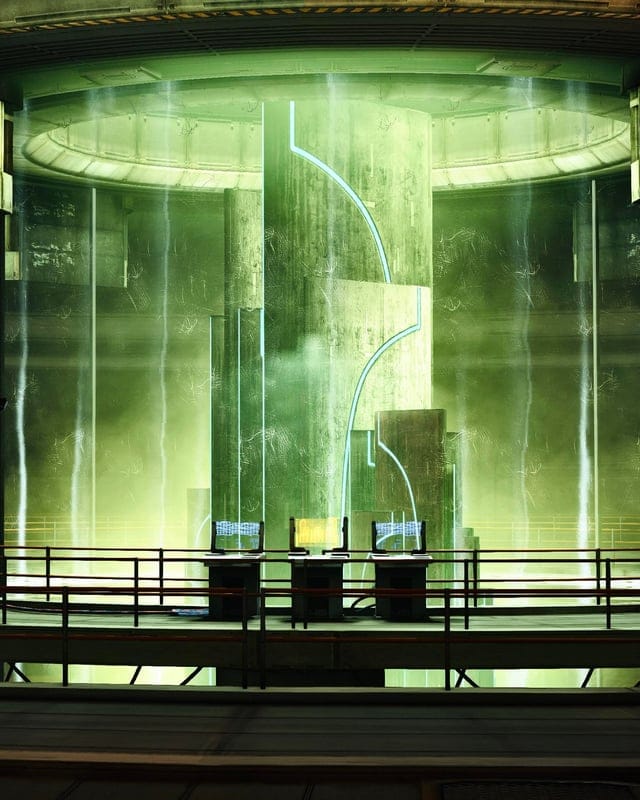
Now, unbeknownst to most of the crew, that same ship is being sent to retrieve another Prothean object from the human colony Eden Prime, with a turian Spectre aboard to evaluate whether a human soldier deserves access to the Council’s most powerful enforcement role.
So the Normandy is human ambition, turian cooperation, military distrust, Council oversight, Anderson’s lost path, Nihlus’s evaluation, and an expensive stealth system that everyone is pretending is the only thing being tested here.
Nihlus Kryik.
Nihlus is a turian Spectre.
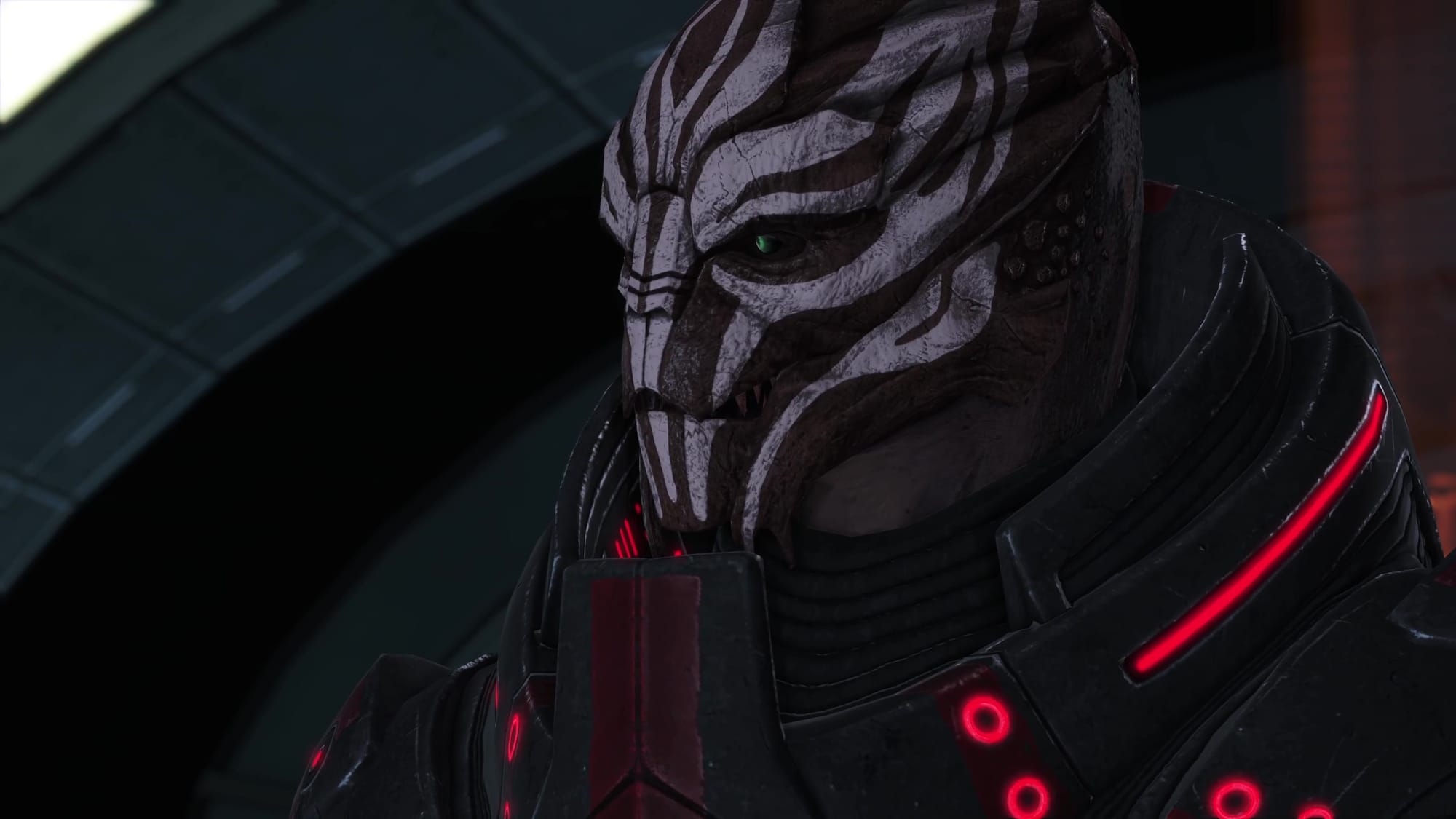
A Spectre is an elite agent who answers directly to the Citadel Council, the central governing authority of known galactic civilization. The Council is a three-species executive body composed of asari, salarians, and turians, with enormous influence over galactic law, diplomacy, military restraint, and the interesting decision to place its most powerful unofficial agents under almost no ordinary oversight.
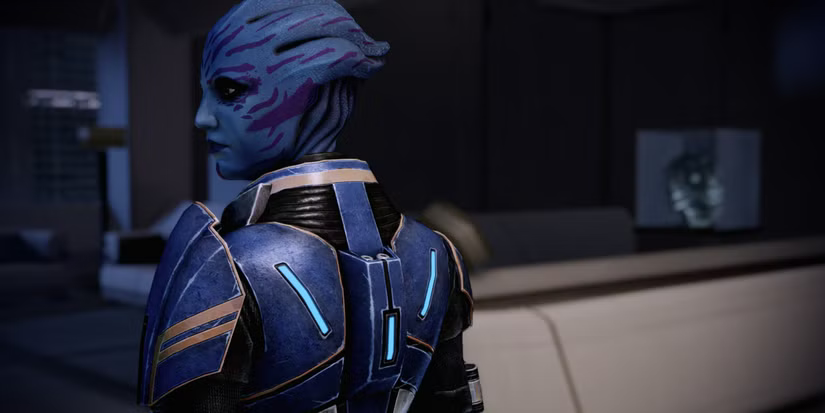
Spectres are above the law in Citadel space.
They represent the Council’s sovereignty directly.
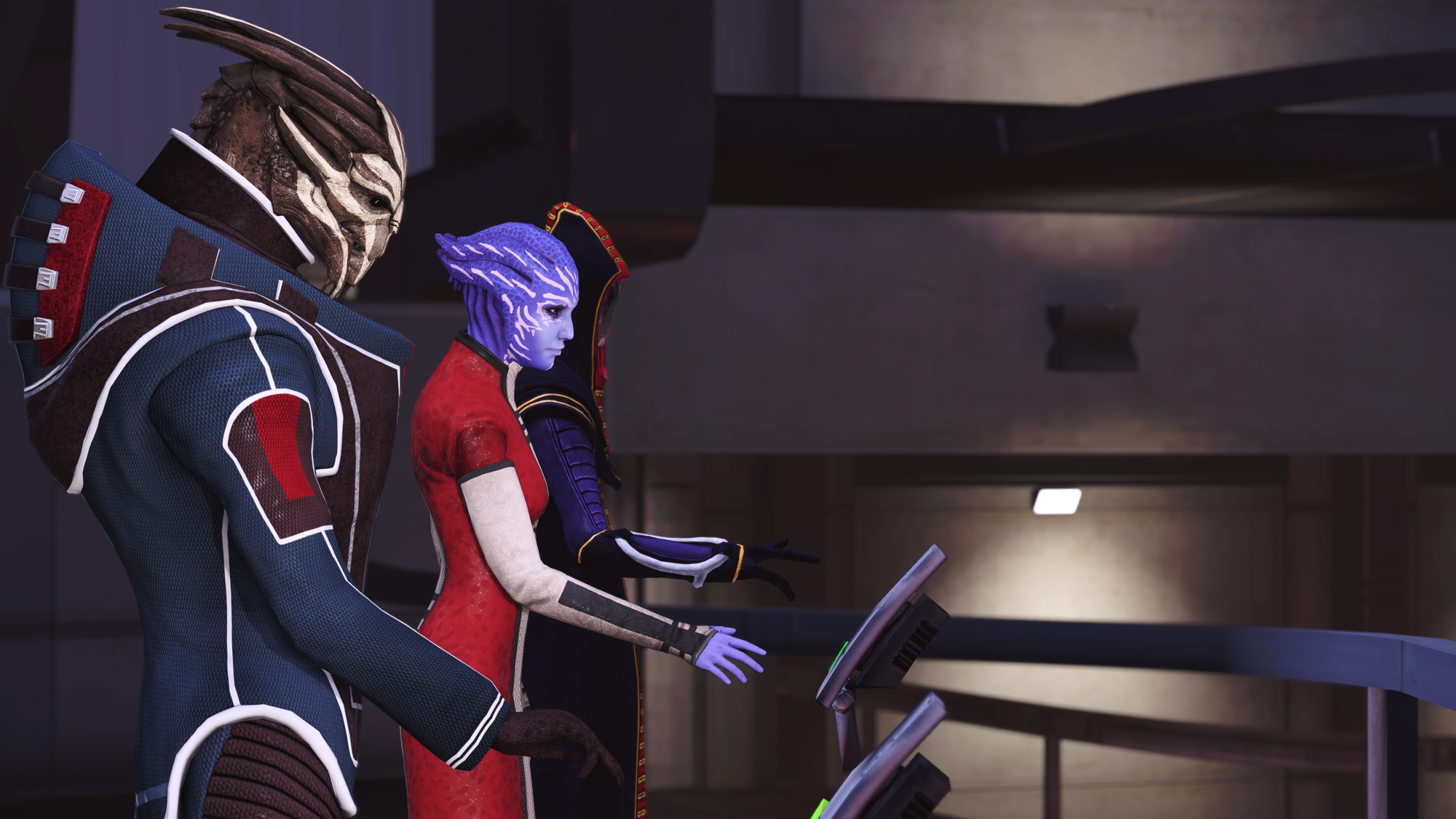
Spectres are the Council’s answer to fields that ordinary politics cannot handle fast enough.
This can be a sensible idea if the Spectre is good.
This becomes less charming if the Spectre is Saren Arterius. We are getting there.
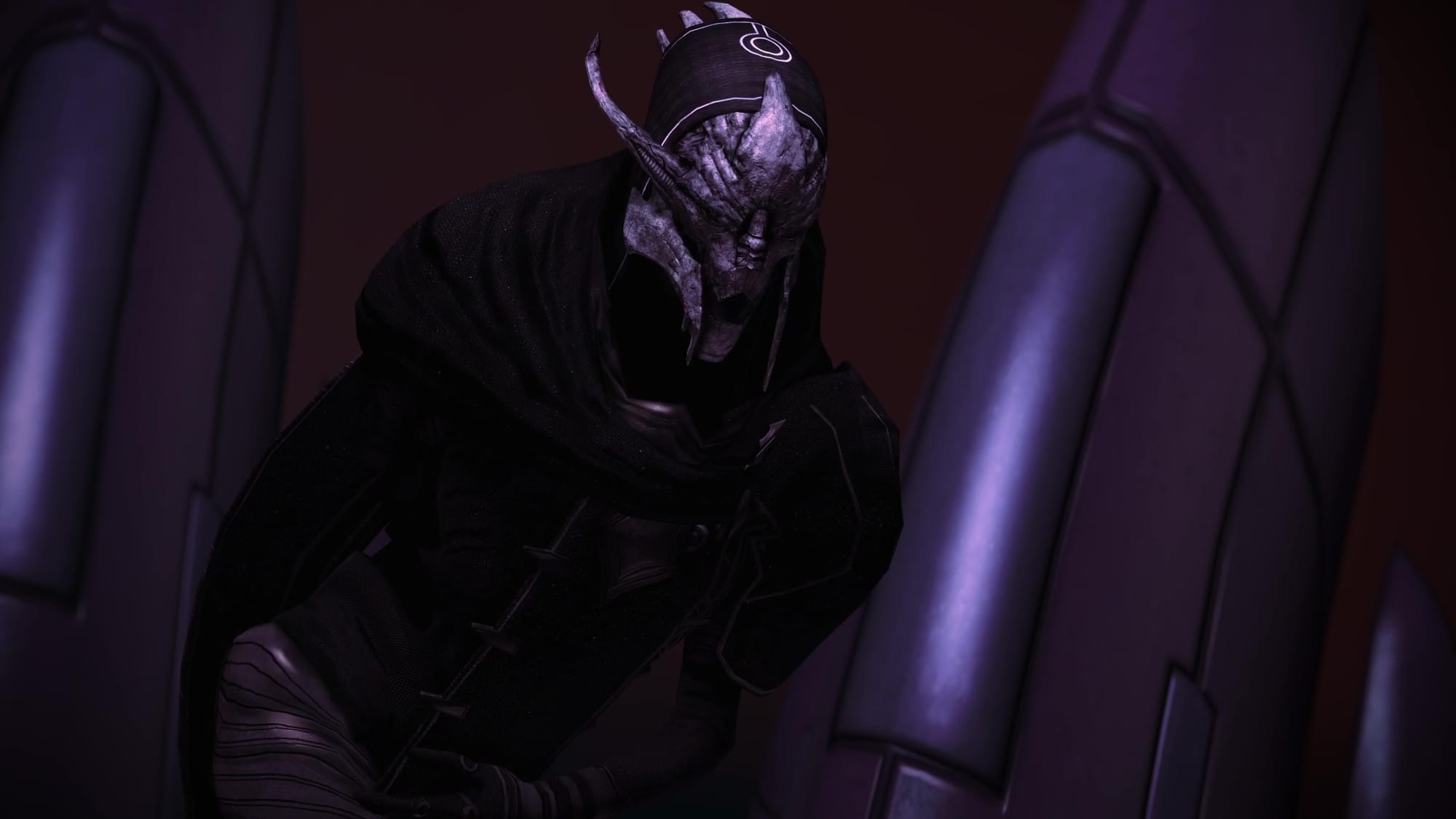
Nihlus is aboard the Normandy for two primary reasons. The official reason is the ship’s shakedown run. The real reason is a Prothean beacon just discovered on Eden Prime.
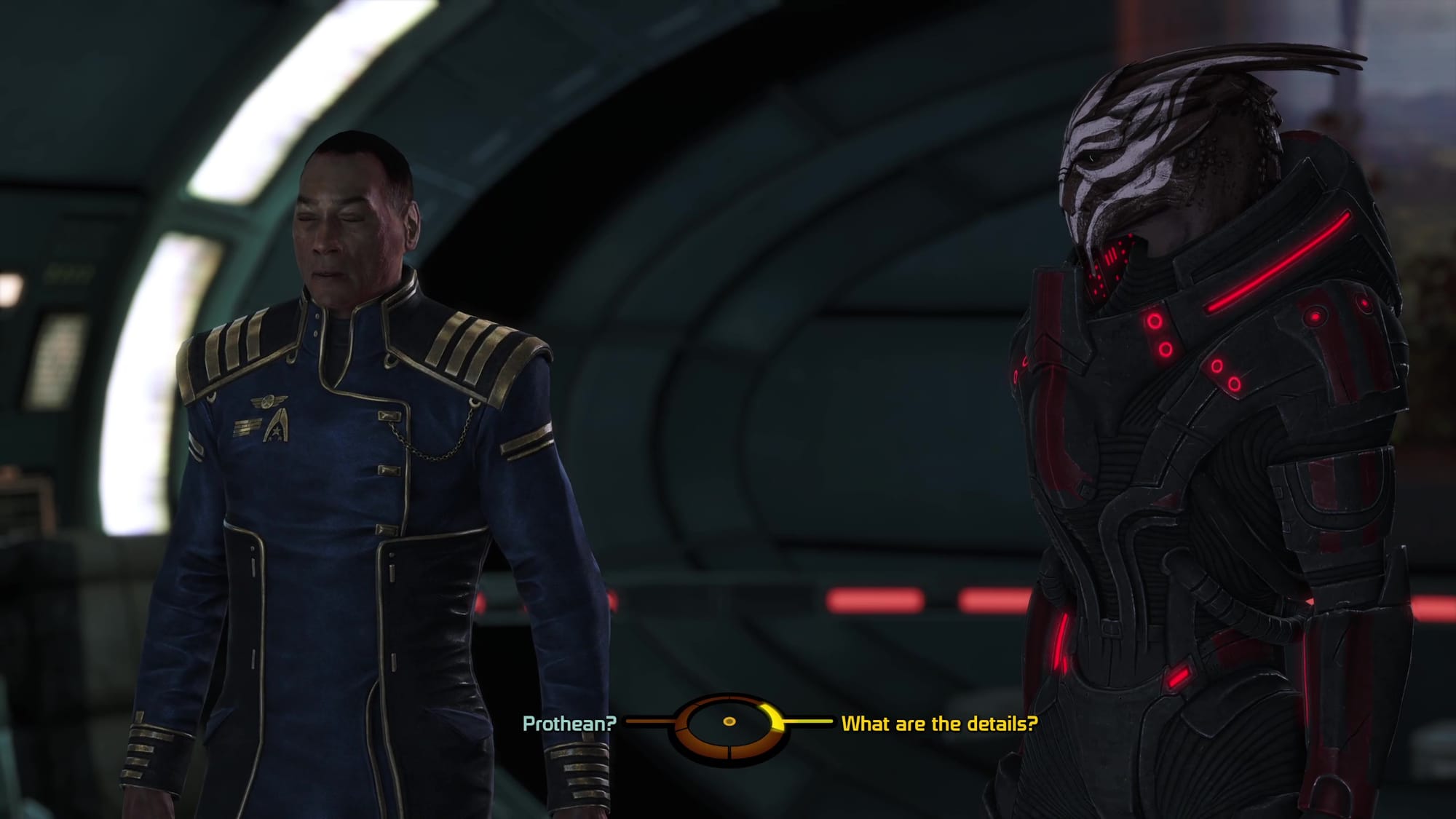
The Protheans were the extinct civilization everyone in the current cycle believes built the foundations of all modern galactic life. Their ruins sit underneath modern mass effect technology, galactic politics, military power, and interstellar travel. A working Prothean beacon is not a museum object. This is a possible transmission from a civilization whose leftovers still structure everyone’s entire world.
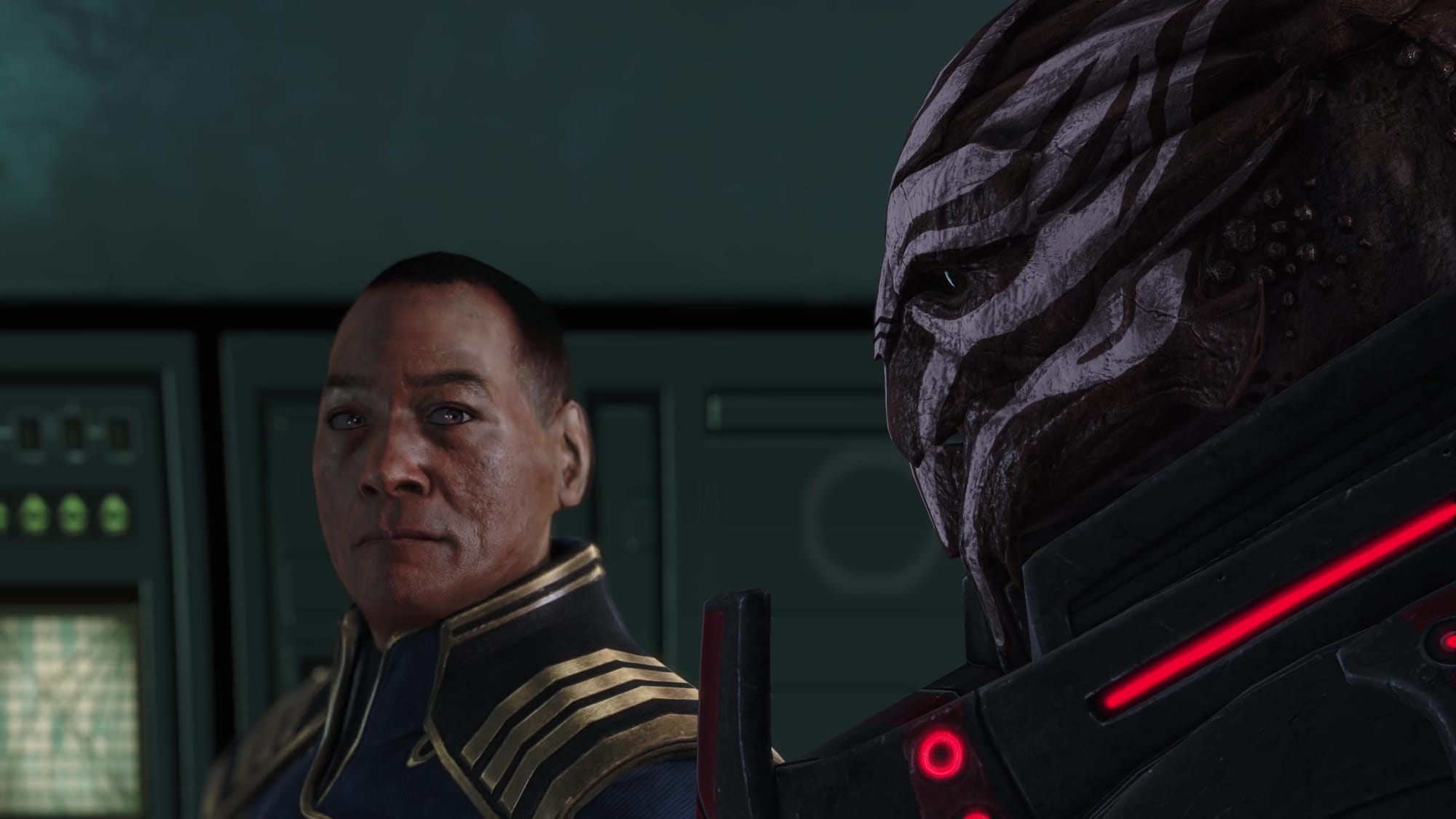
The Normandy has secretly been sent to retrieve it. Nihlus is there to oversee that mission.
He is also there to evaluate Commander Shepard as a candidate to become the first human Spectre.
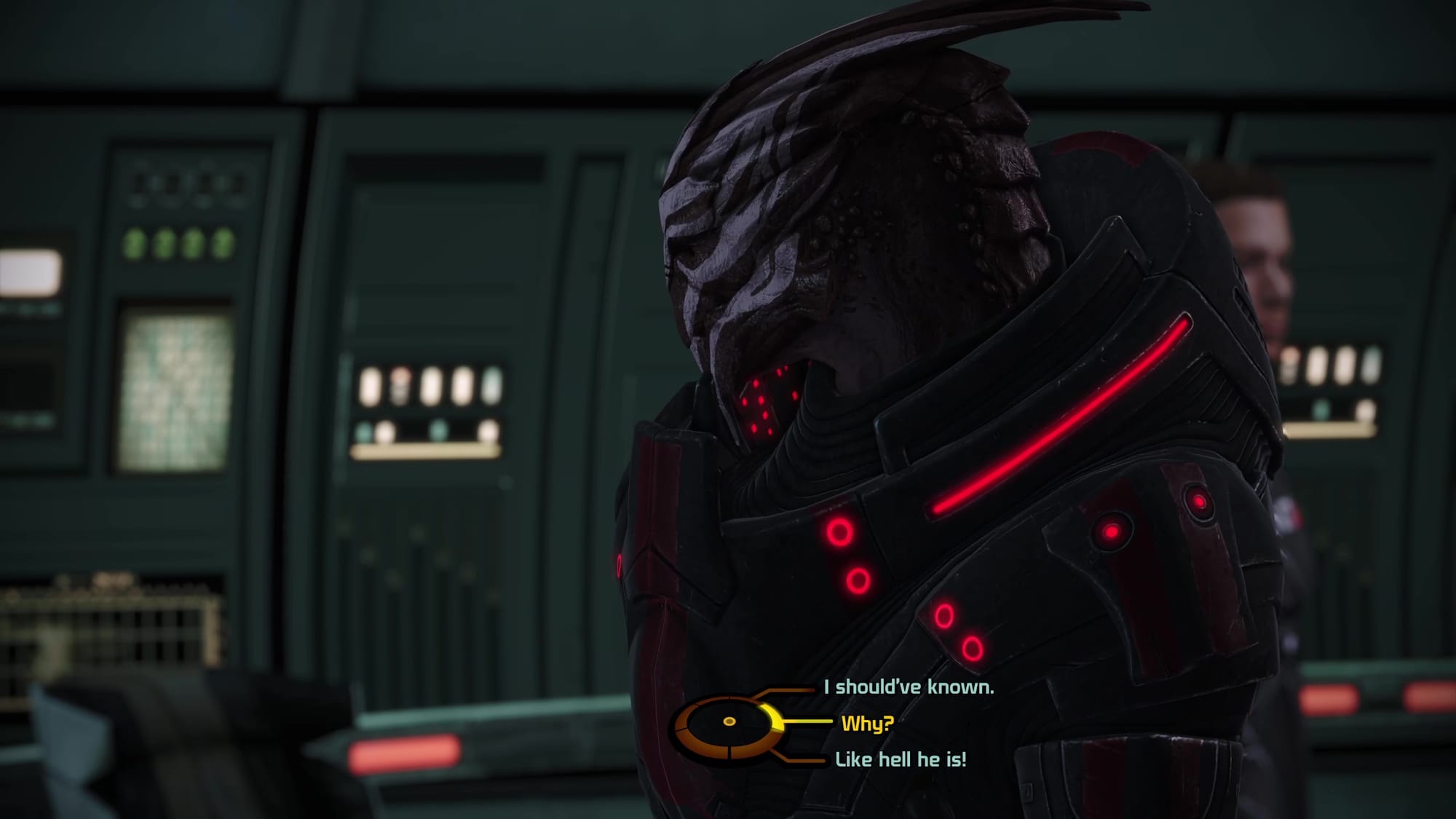
That second mission is the live field we are finally entering.
Humanity wants legitimacy inside the Council order. There are implied to be hundreds of species involved in Citadel civilization. The Human Alliance does not want to be one more alien face in the crowd. The Alliance, specifically, wants a human agent with Spectre authority.
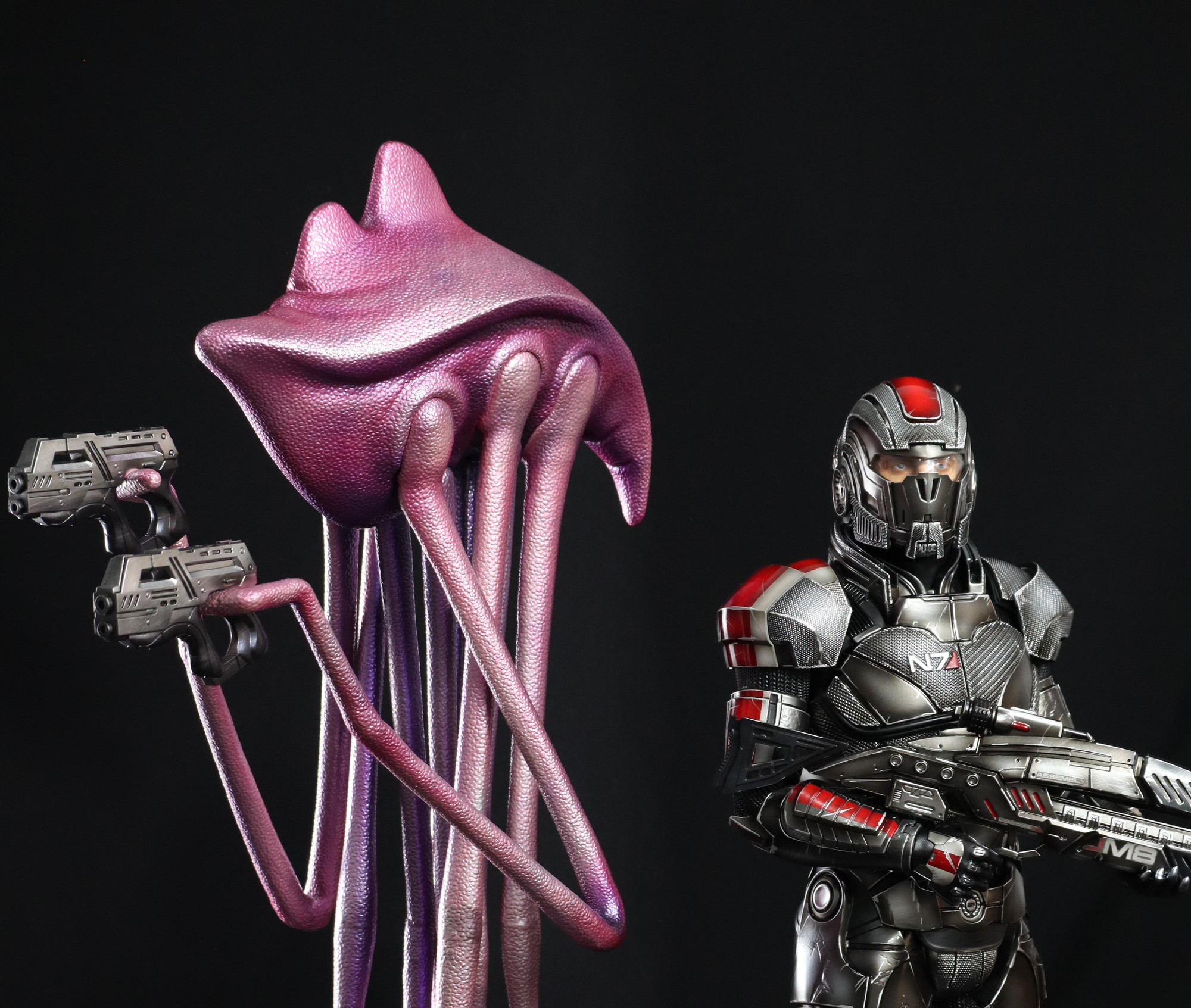
Captain David Anderson is the Normandy’s commanding officer and one of the first human soldiers the Council ever considered for Spectre status.
This went very poorly.
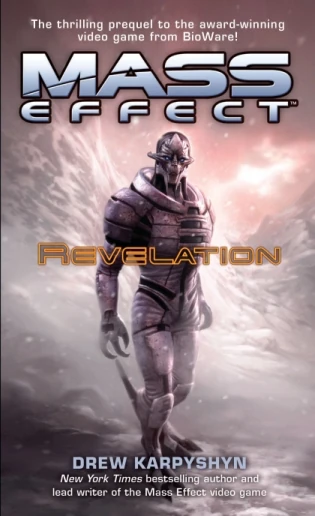
Years before Eden Prime, Anderson was evaluated for the Spectres during a live mission with Saren Arterius, one of the Council’s most accomplished turian agents.
The mission involved batarian terrorism, illegal human research, and ancient artifact work, because nobody in this goddamned setting can open a drawer without finding another precursor death object hidden inside it.
Saren sabotaged the operation, pursued his own agenda, killed witnesses, blew up a building, and then reported events to the Council in a way that made Anderson look reckless, responsible, and unfit.
So Anderson lost the Spectre candidacy.
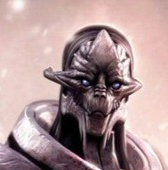
Saren did all this because he already hated humans before Anderson entered the room.
Some of that hatred was the ordinary, near-global turian resentment toward a young species moving too fast. Humanity had gone from discovering Prothean ruins on Mars to claiming many colonies and demanding Council recognition in a single generation. Older Citadel species usually took centuries to climb that structure. Humans had just pulled up like they had found the fire escape, climbed inside, and were offended nobody had put their name on the office door yet.
Saren saw all that as dangerous.
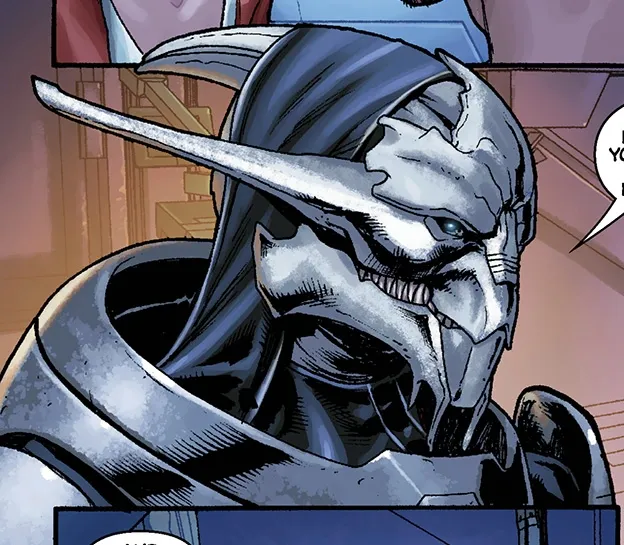
He was not inventing that pressure. Humanity really was expanding very aggressively. The Systems Alliance really did want a larger place in Citadel civilization than its short history made comfortable for everyone else involved.
But Saren’s suspicion did not remain a policy judgment. It hardened into total species hatred.

So, Anderson is not simply a proud commanding officer hoping his subordinate Shepard gets promoted. He is a failed bridge to this future. He knows what it would mean for humanity to have a Spectre, and he knows what it feels like for that path to be closed by Saren specifically.
His faith in Commander Shepard is personal, institutional, and historical all at once.
Shepard is not being evaluated for a job Anderson had wanted. He is being offered a route into Council authority that Anderson believes was stolen from him and their species by the same man who, unbeknownst to them, is already moving inside the Eden Prime field before any other human aboard the Normandy even knows his name.
Nihlus, then, is not just a turian standing on the ship being ominous near the dramatic lens flares.
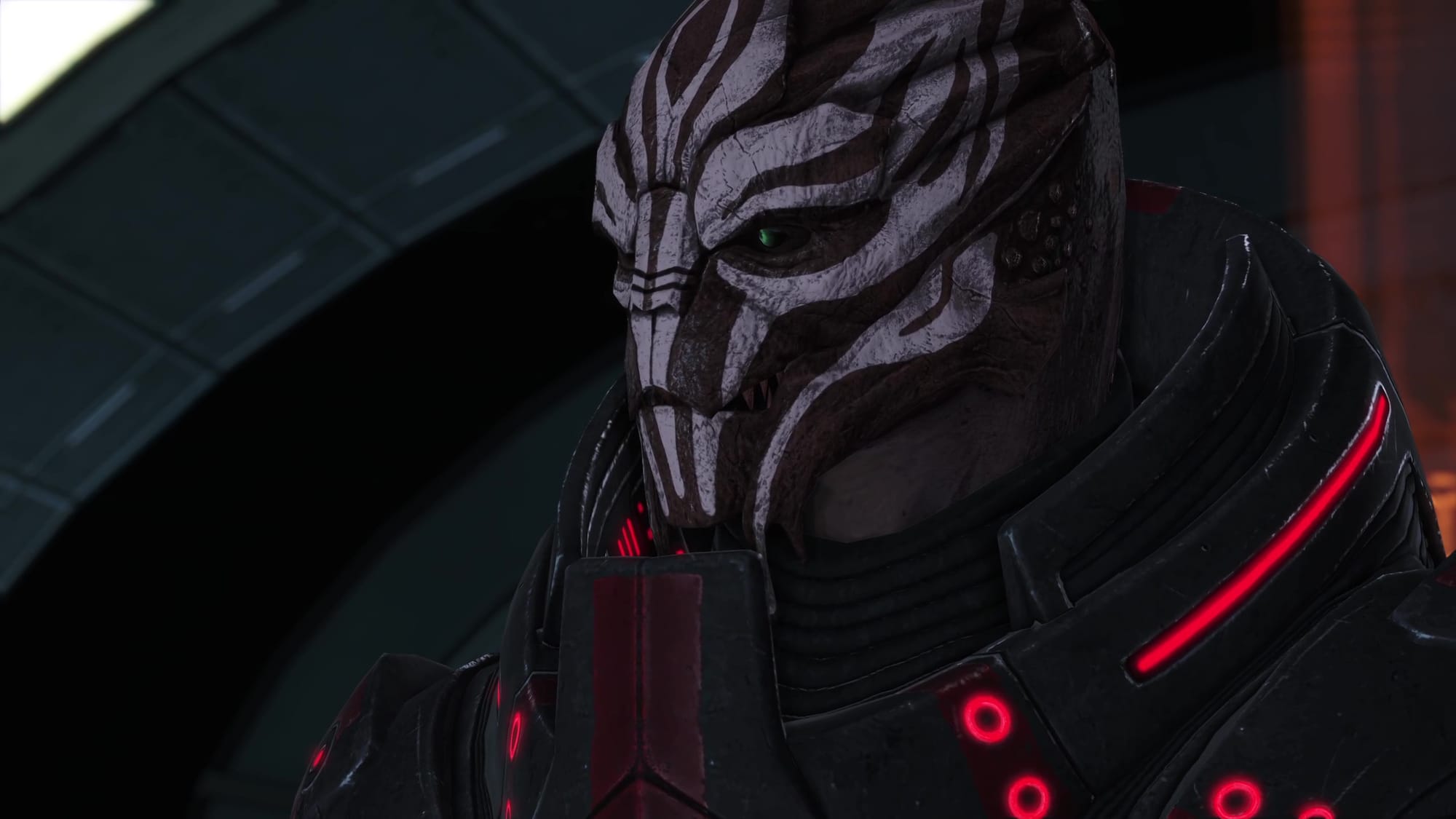
He is the gate between human military agency and Council authority.
Now we are finally, finally ready to play the game.
Commander Shepard walks down a hallway.
The Tutorial Pretends to Have Choices, Tricks Me.
The first actual sequence aboard the Normandy is a tutorial in two senses.
- The obvious tutorial teaches the player how to move, talk, and read the dialogue wheel.
- The less obvious tutorial teaches the player to mistake a morality meter for moral structure if the player is not careful.
Joker, the Normandy’s pilot, is suspicious of Nihlus. He understands that the Council did not realistically send a Spectre to watch a stealth system boot up. He is correct. He is also personally helming a politically sensitive prototype ship with a turian Council agent who can legally shoot anyone standing over his shoulder, which is a situation that would make almost anyone slightly more annoying.
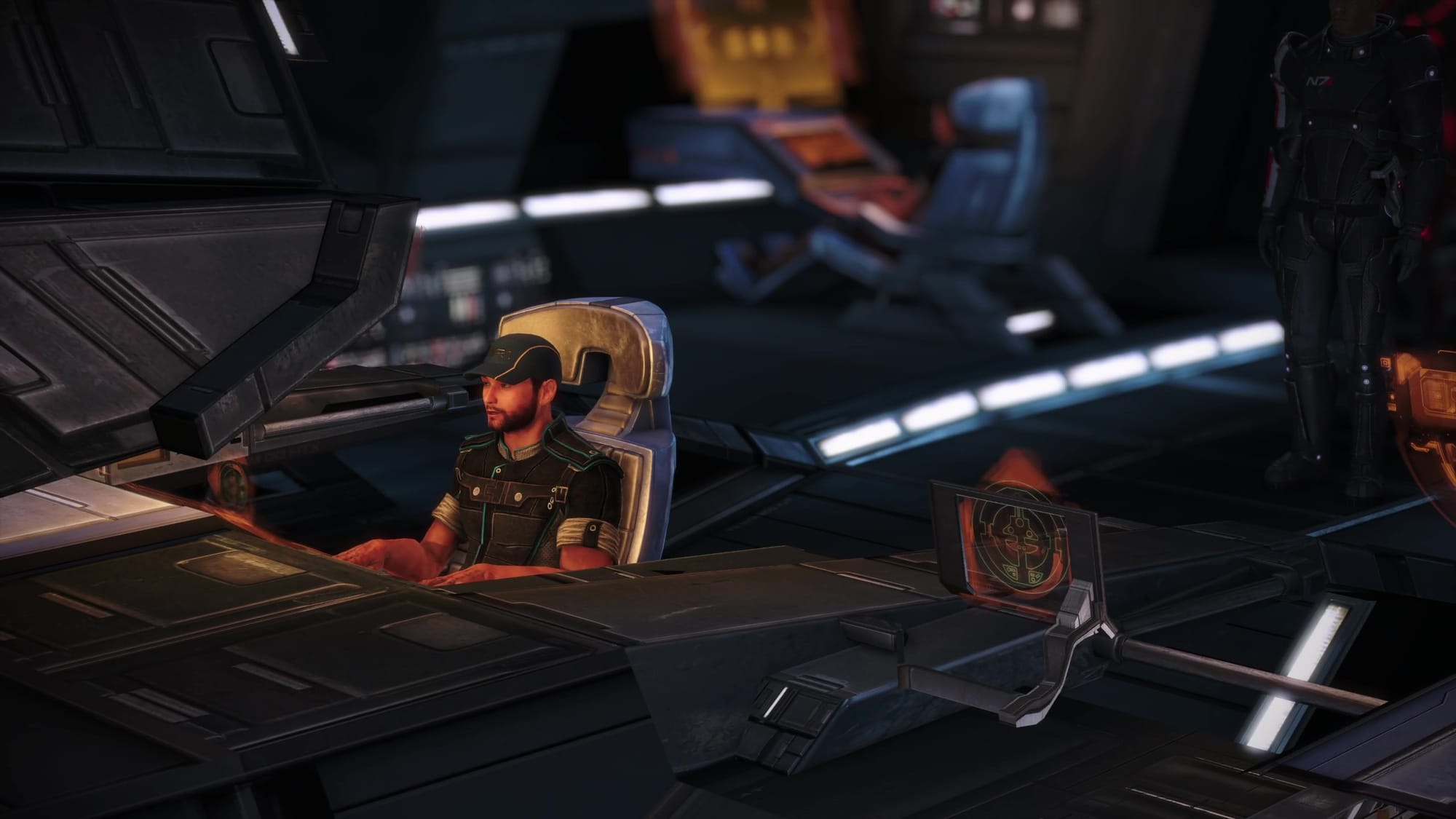
Joker’s real name is Jeff Moreau. He has Vrolik syndrome, a genetic condition that makes his bones extremely fragile. In ordinary military terms, this should probably have kept him very far away from a front-line stealth frigate. In actual field terms, it means the Alliance put the Normandy in the hands of a man whose body has made walking dangerous but whose hands can do things with a ship that everyone else has to describe as a miracle because they are too embarrassed to call it skill.
His irritation at Nihlus is not only generic suspicion. This is also territorial. The Normandy is where Joker’s agency becomes maximal.
Shepard can indulge his suspicion or keep him focused. This gives a small morality reward.
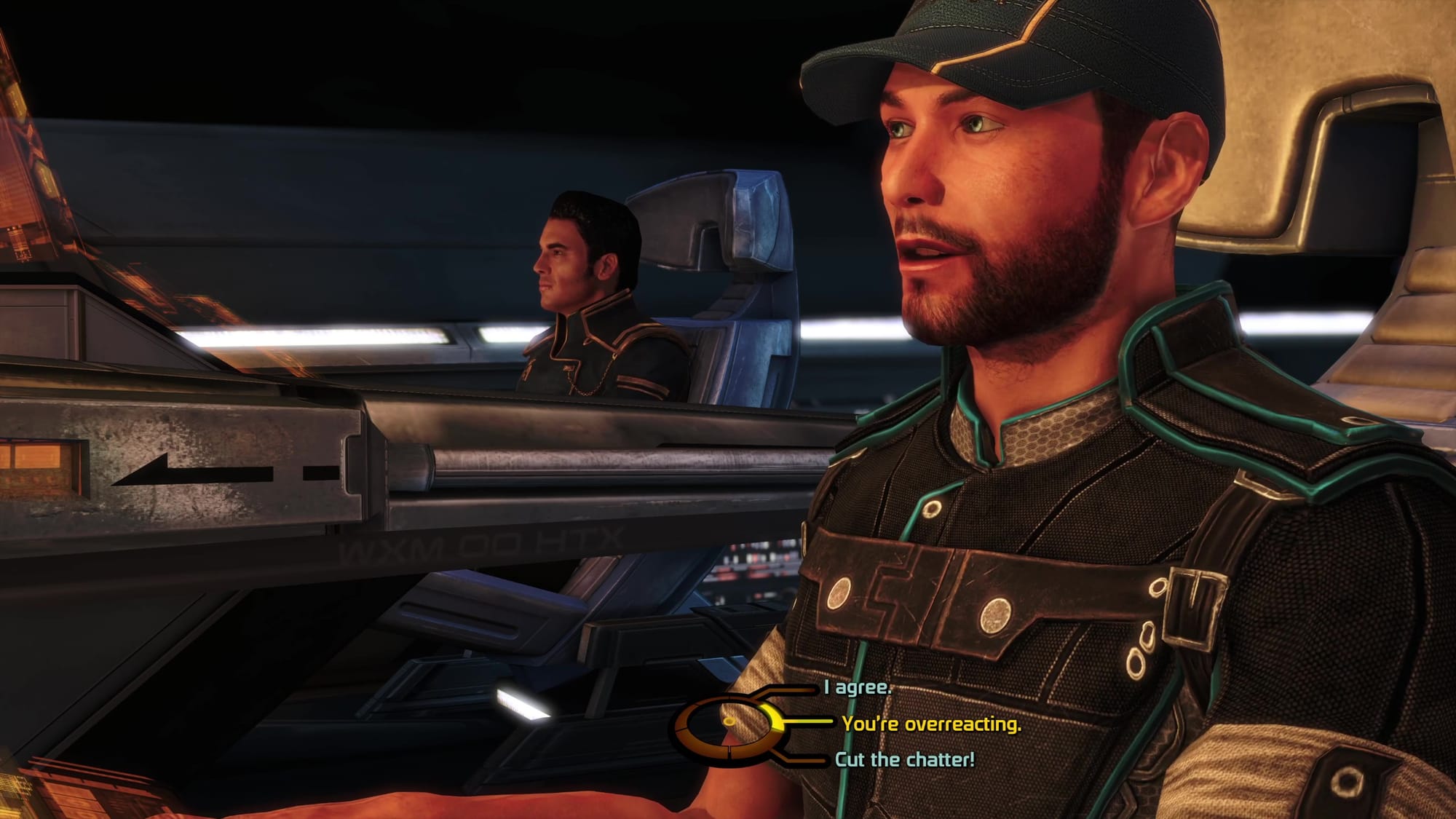
We are moving on. It doesn't really matter.
That is the kind of sentence that almost killed this article last time. There is analysis available here, for sure. I have, in fact, done it already. Suspicion can preserve future-space when it keeps an agent alert to danger. It can close future-space when it hardens into premature distrust, especially inside a mixed political mission where the whole fucking point is to prove human and turian agency can operate in the same field without immediately chewing the furniture.
Fine. Yes. Stop.
We are moving.
This choice does not change the field. Nihlus still does that thing with his mandibles. Joker still pilots the ship. Shepard still walks down the hallway. The mission still receives the distress call. The Reapers remain inconsiderate beasts.
The same is true of the next few tutorial conversations.
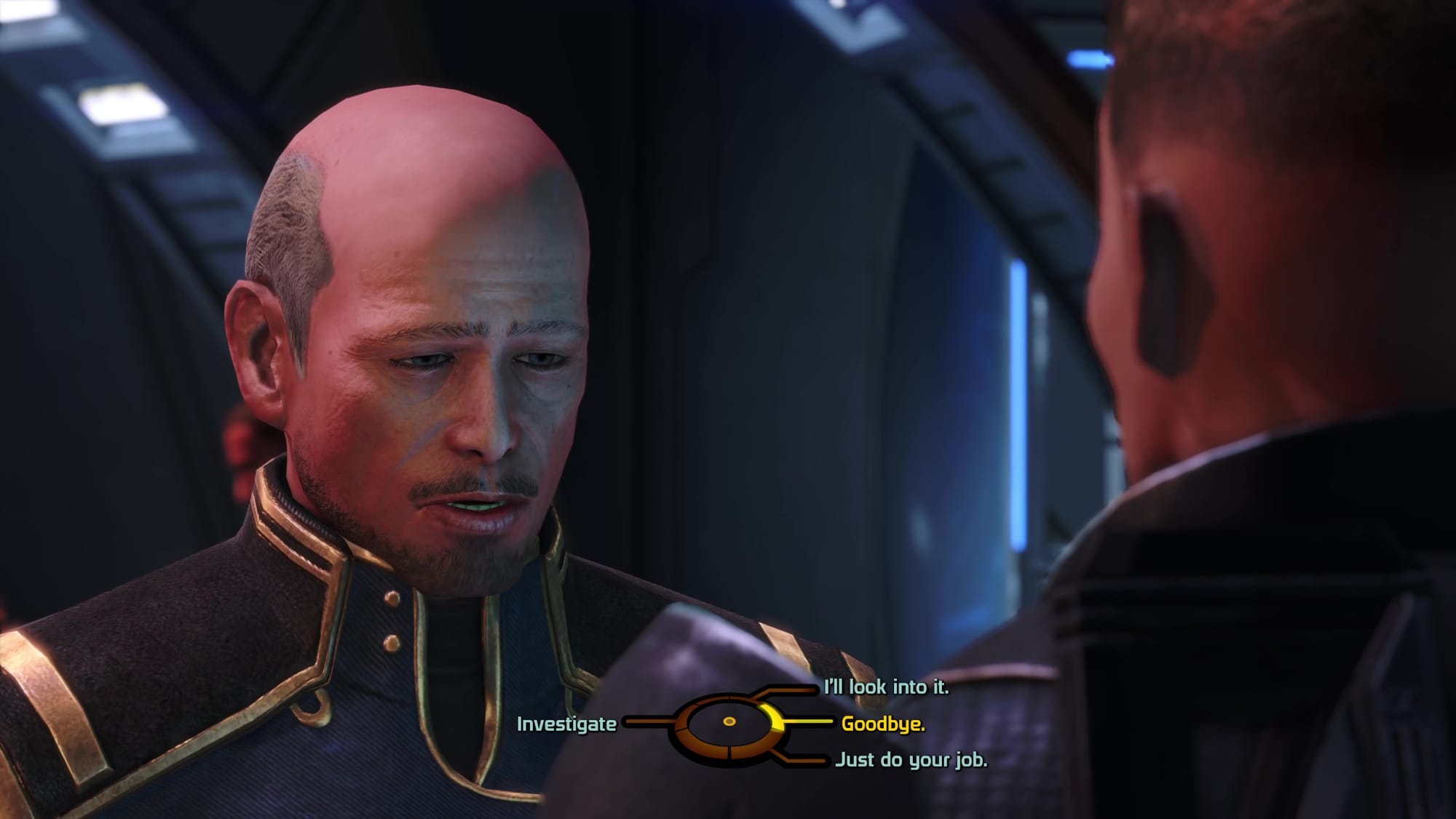
Corporal Richard Jenkins is very excited! Dr. Chakwas is pretty cautious! Pressly understands the mission is not what the official description says it is, and he is a little bit racist! Kaidan Alenko is stable, professional, and already giving off the calm introductory-party-member energy of a man who will soon explain biotic implant headaches to anyone stuck with him in an elevator. He doesn't get an exclamation mark.
Shepard can respond in several tones. The game distributes petty morality points. Modal Path Ethics is not here to audit whether Commander Shepard said the tutorial sentence in a sufficiently emotionally available way.
The only really relevant fact is that this mission is supposed to be very simple:
- Land on Eden Prime.
- Secure the Prothean beacon.
- Bring it to the Citadel.
- Let Nihlus complete his evaluation of Shepard.
- Possibly become the first human Spectre, which is actually an insane career development to have riding on one archaeology pickup on a garden world.
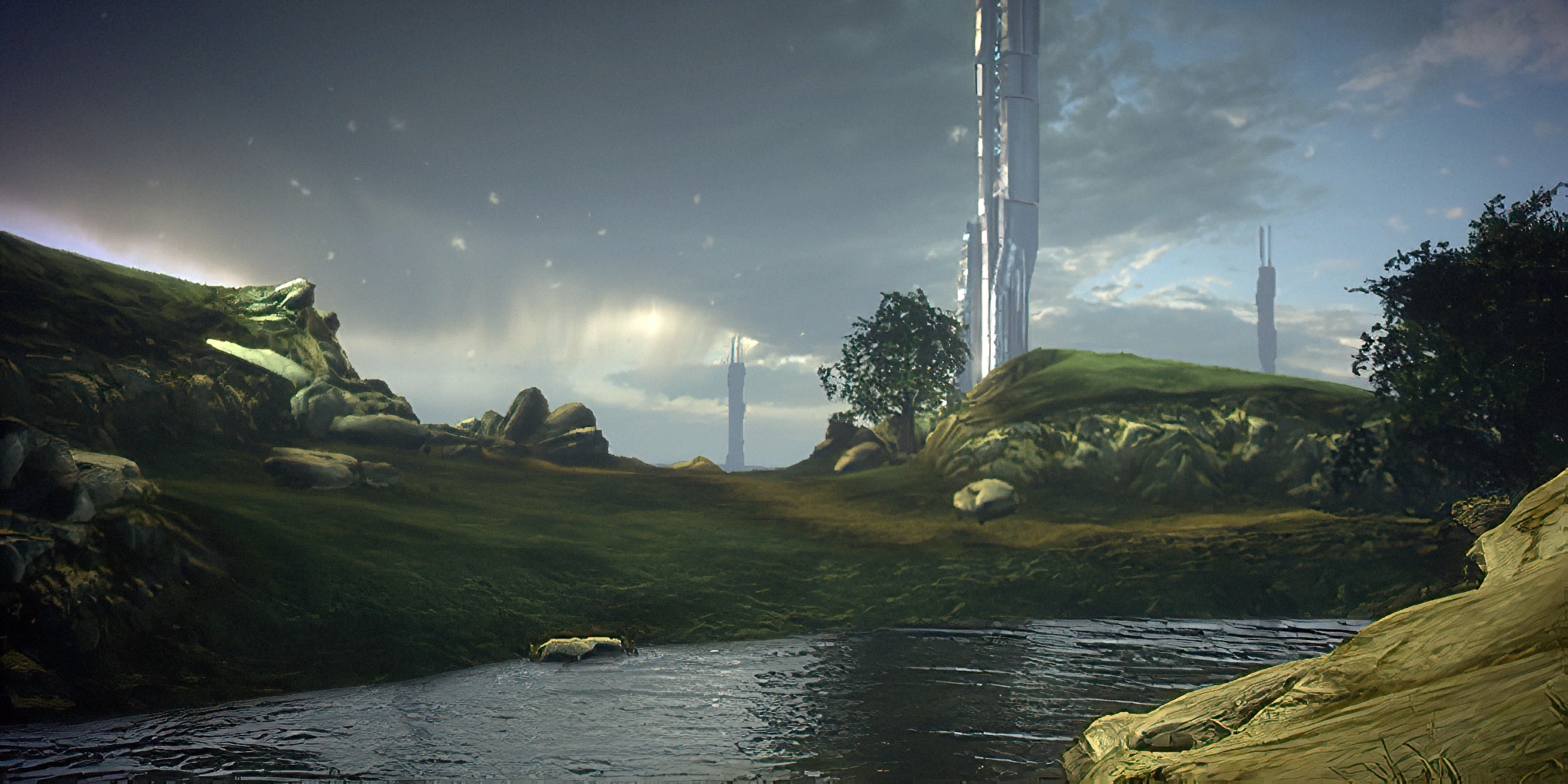
Whatever Nihlus’s evaluation was supposed to read like, if the mission went as expected, it really just cannot have been very interesting.
“Shepard appeared calm while watching cargo technicians load the package. Humanity is ready for this.”
Then, the distress call arrives. Eden Prime is under attack. No way.
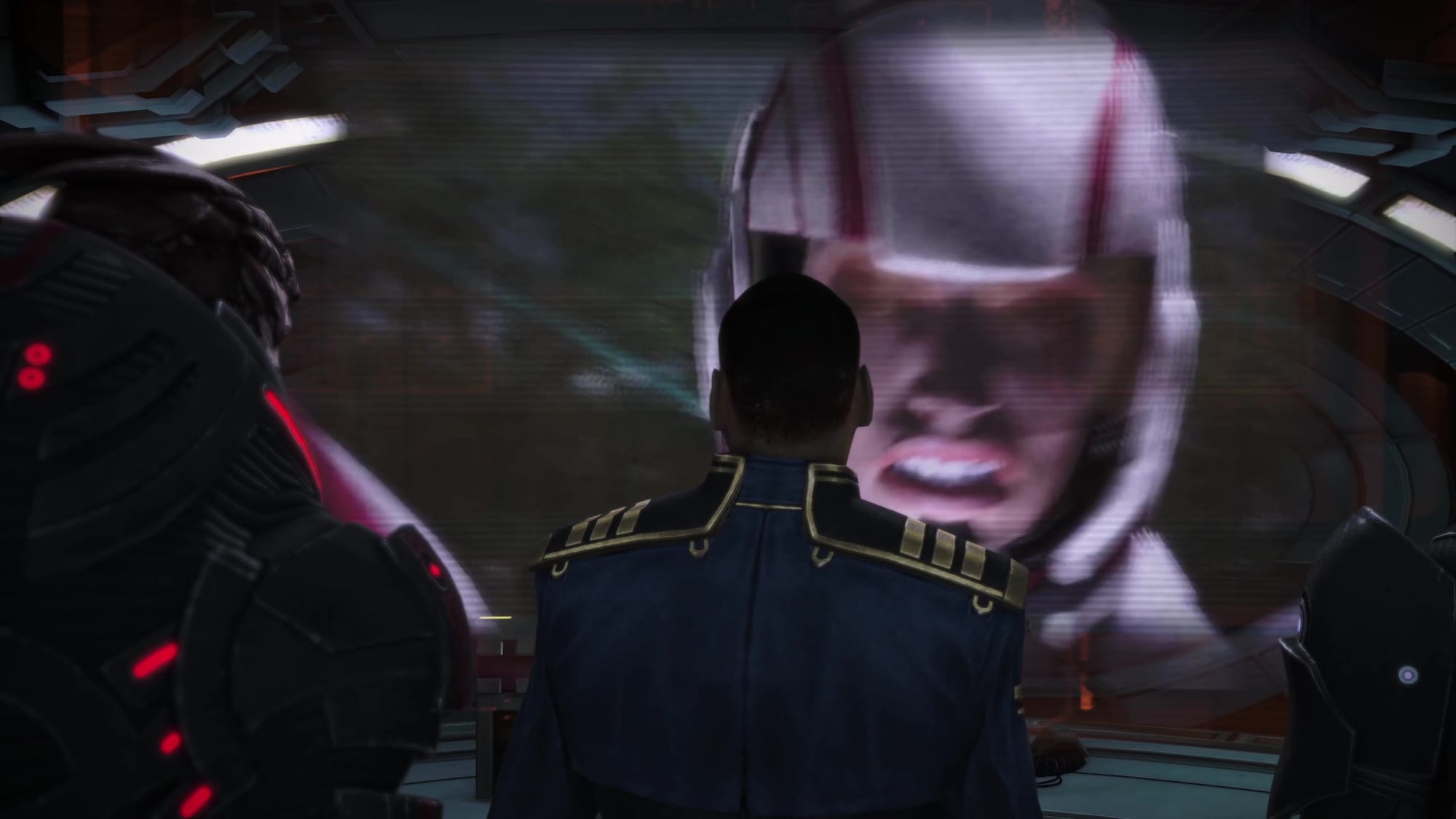
Alliance marines are already dying in the transmission. The colony is burning. Something enormous descends over the surface. The video cuts out before the Normandy can understand what it is seeing.
The field changes. The beacon is still important.
It is no longer the whole mission.
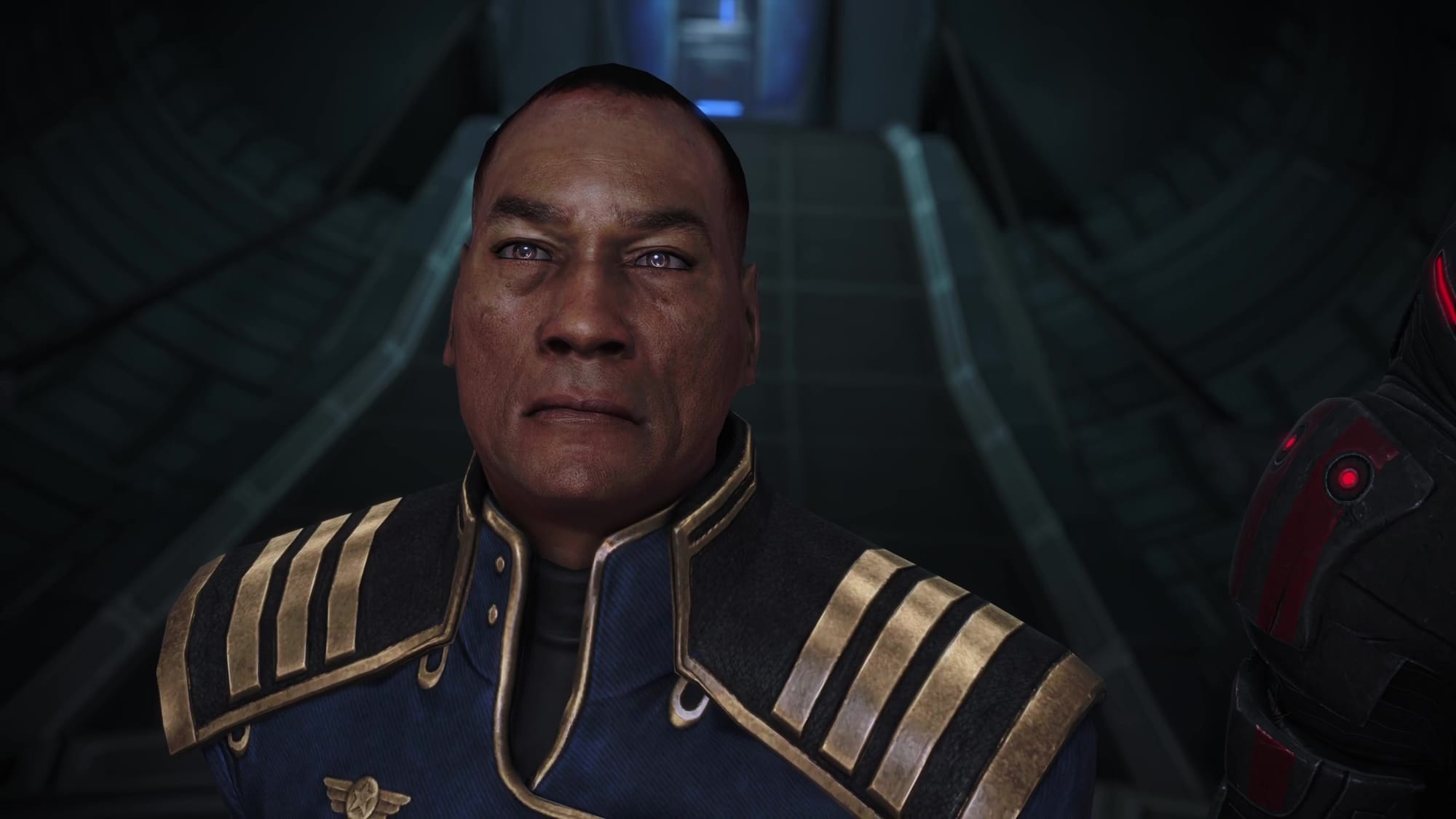
- Eden Prime is now a human colony under attack by an external force.
- Like Mindoir.
- Eden Prime is also a human colony whose outcome may still depend on Shepard organizing enough resistance quickly enough.
- Like Elysium.
This is why the previous article spent so much fucking time on Colonist and War Hero. Because the first real field of Mass Effect is shaped exactly like the perceptual fingerprint we selected.
- A peaceful colony exists.
- An external agent arrives.
- The field begins closing.
- Some futures are already gone.
- Others are still reachable.
That is the structure Shepard already knows from both sides. Mindoir is what a colony’s closure looks like when the preserving agent arrives too late. Elysium is what a colony’s preservation looks like when available agents organize quickly enough to resist.
Eden Prime now contains both possibilities.
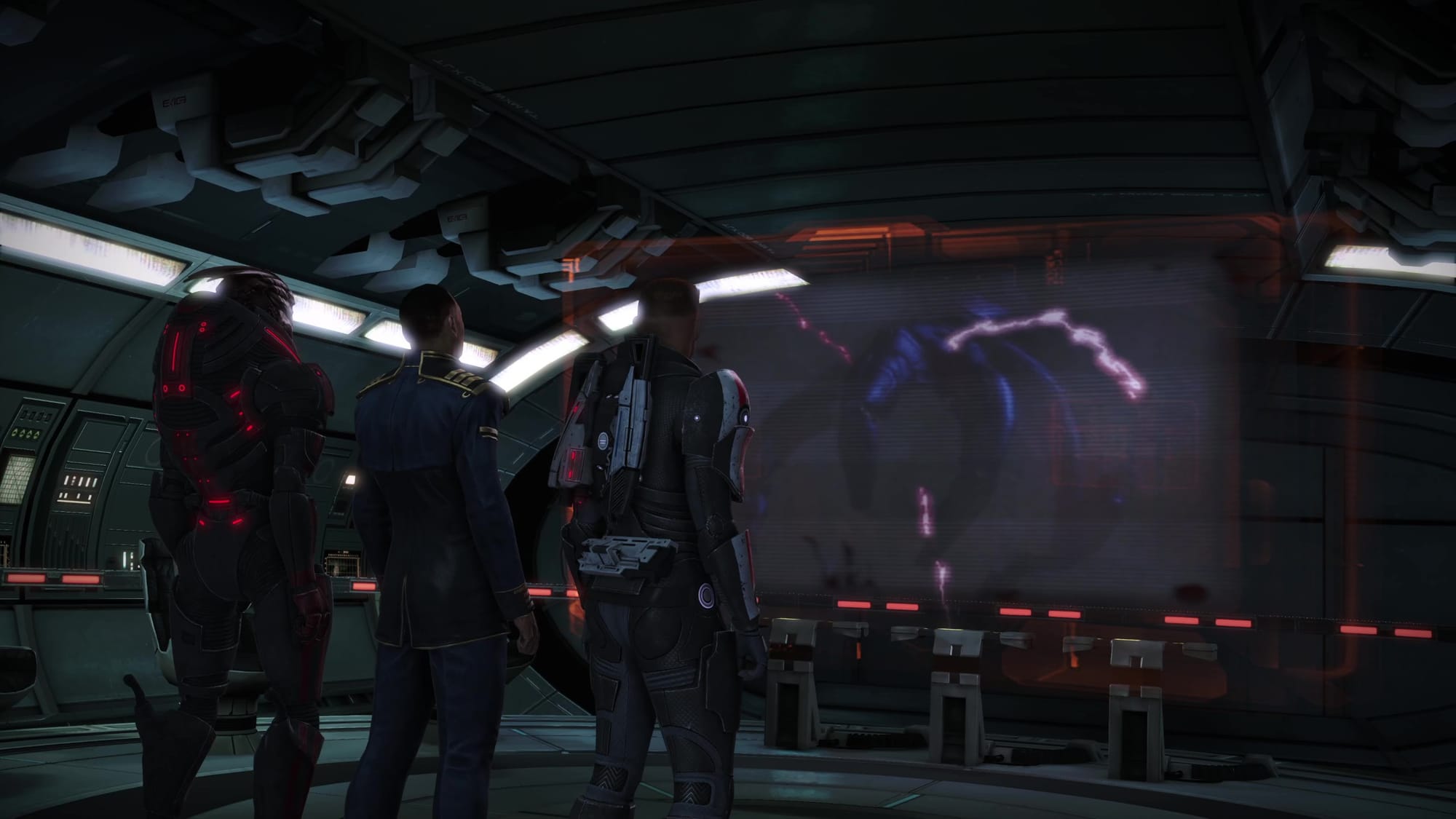
Eden Prime.
The question now is residual preservation.
- Who is still alive?
- What evidence can still be kept?
- What threat is still active?
- What can be prevented from becoming worse?
So Nihlus goes ahead alone to scout.
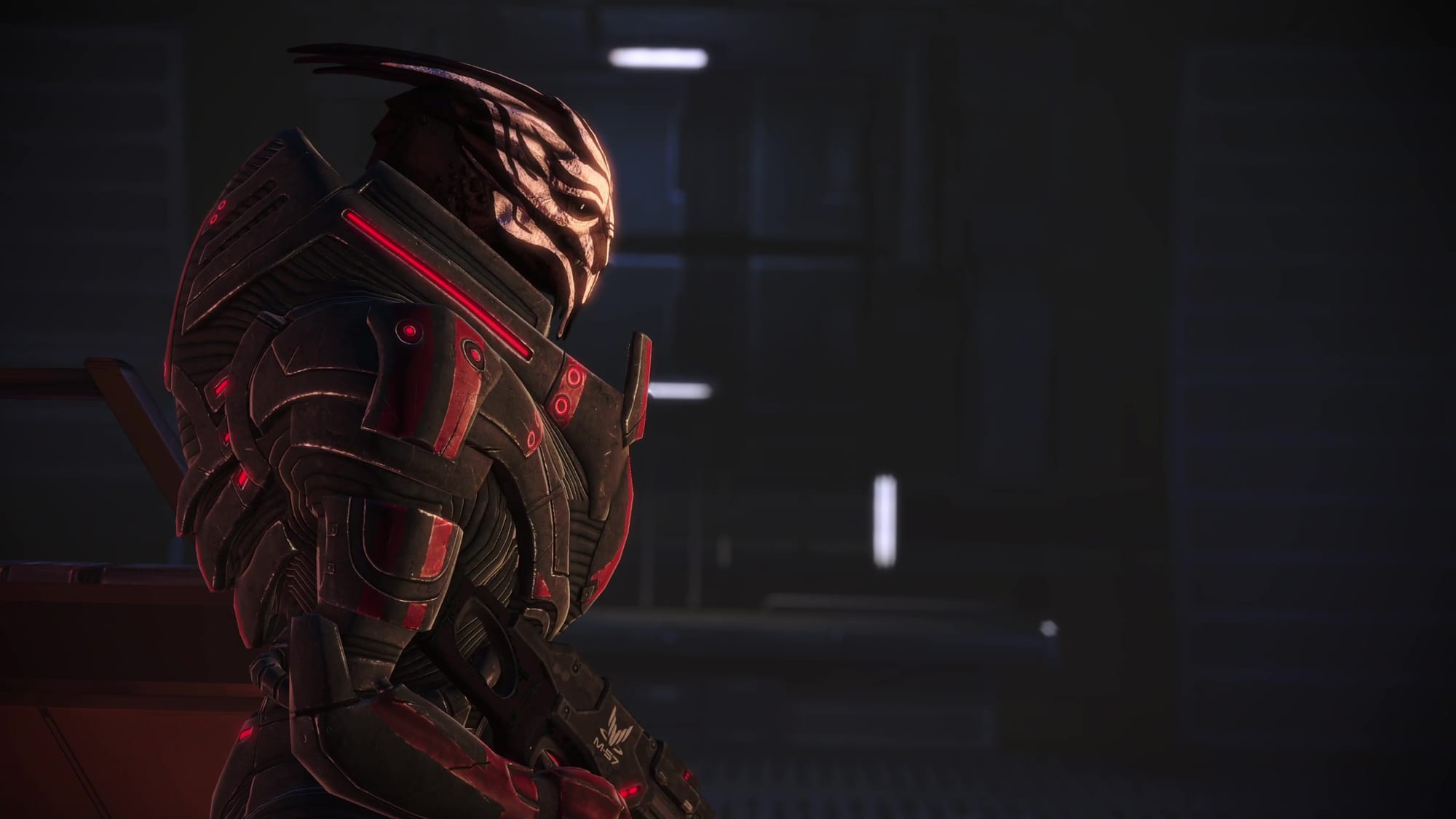
Shepard drops in with Kaidan Alenko and Richard Jenkins. Jenkins is excited to finally play Mass Effect.
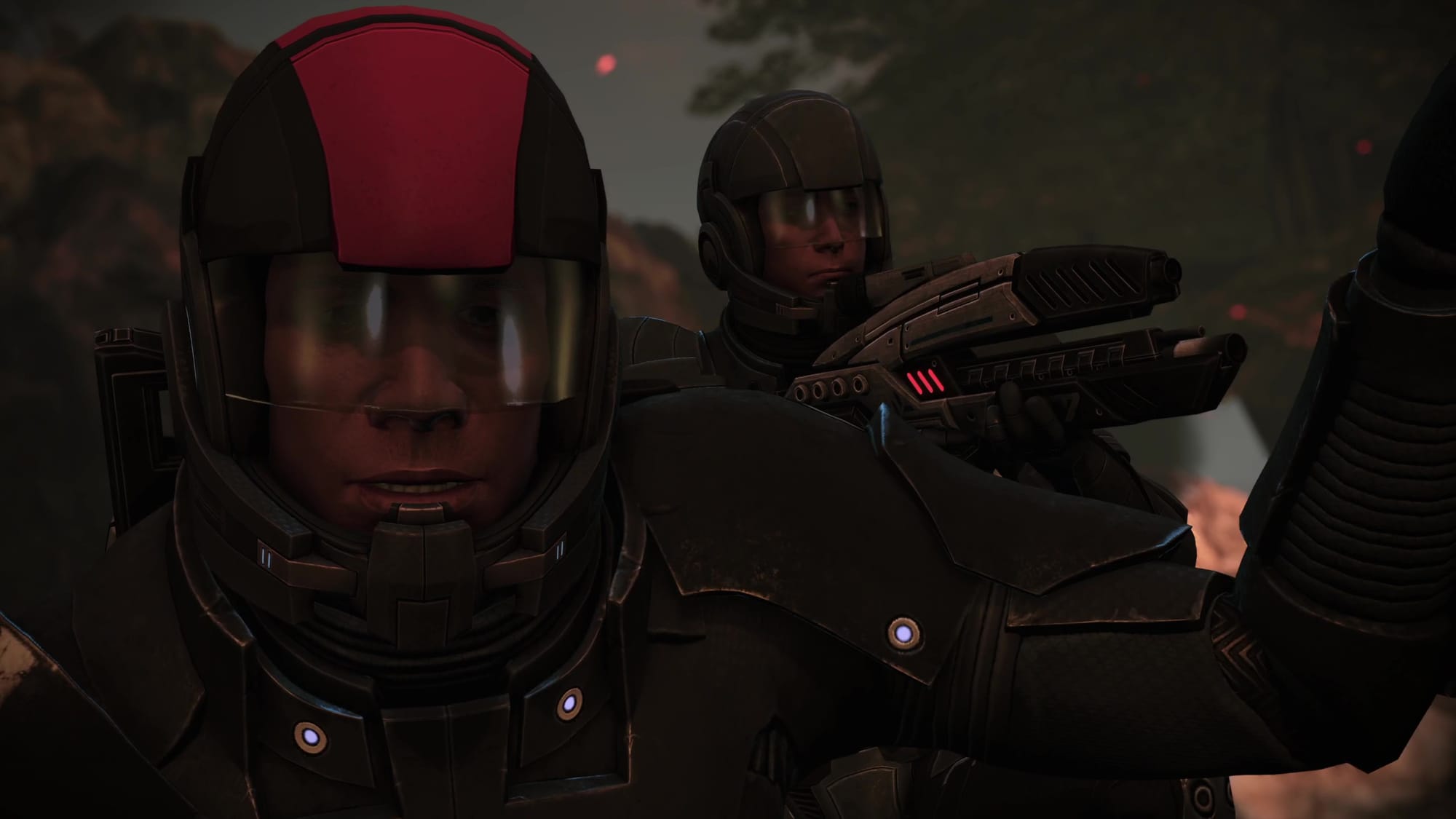
The game corrects this mistake immediately.
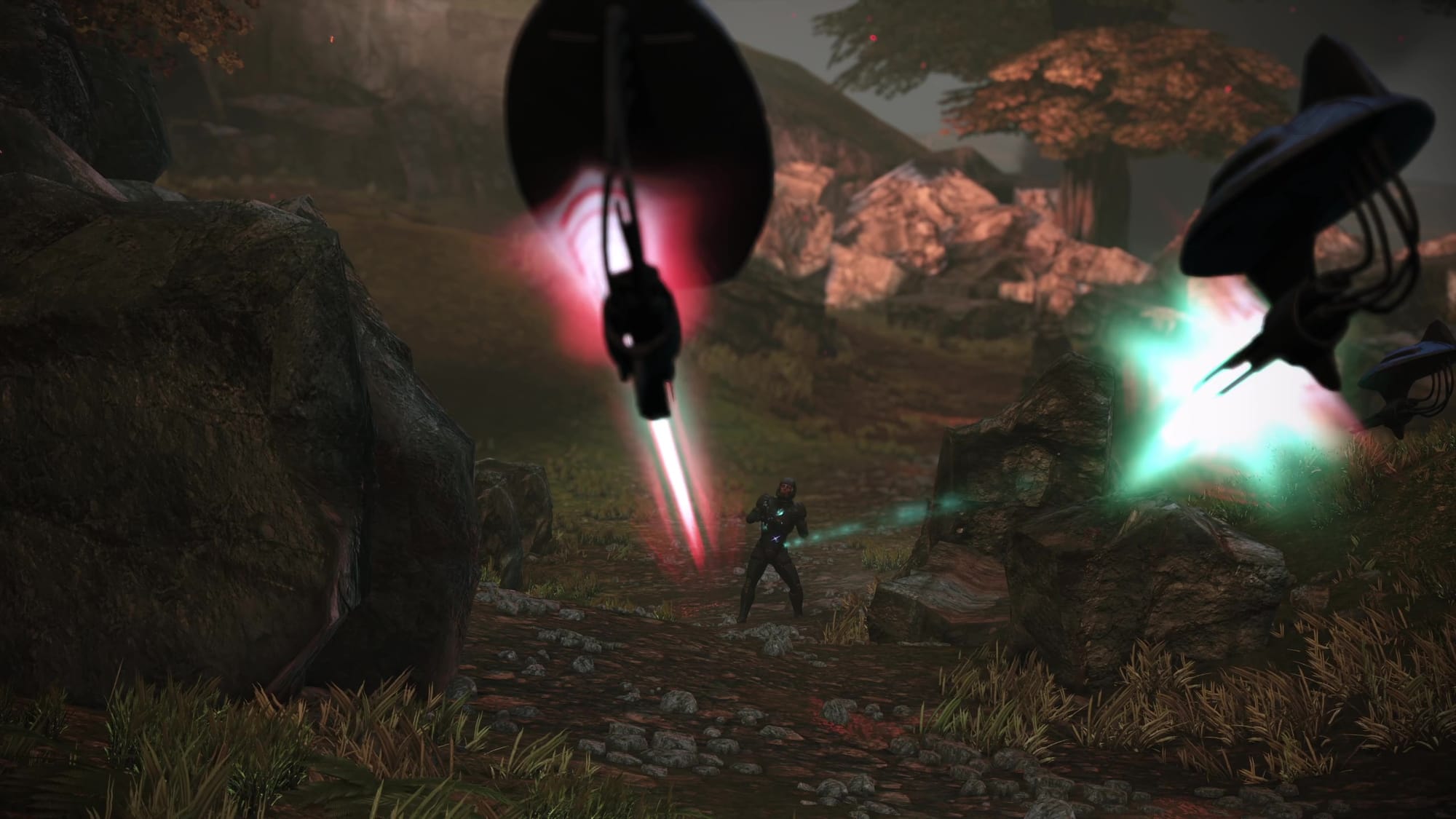
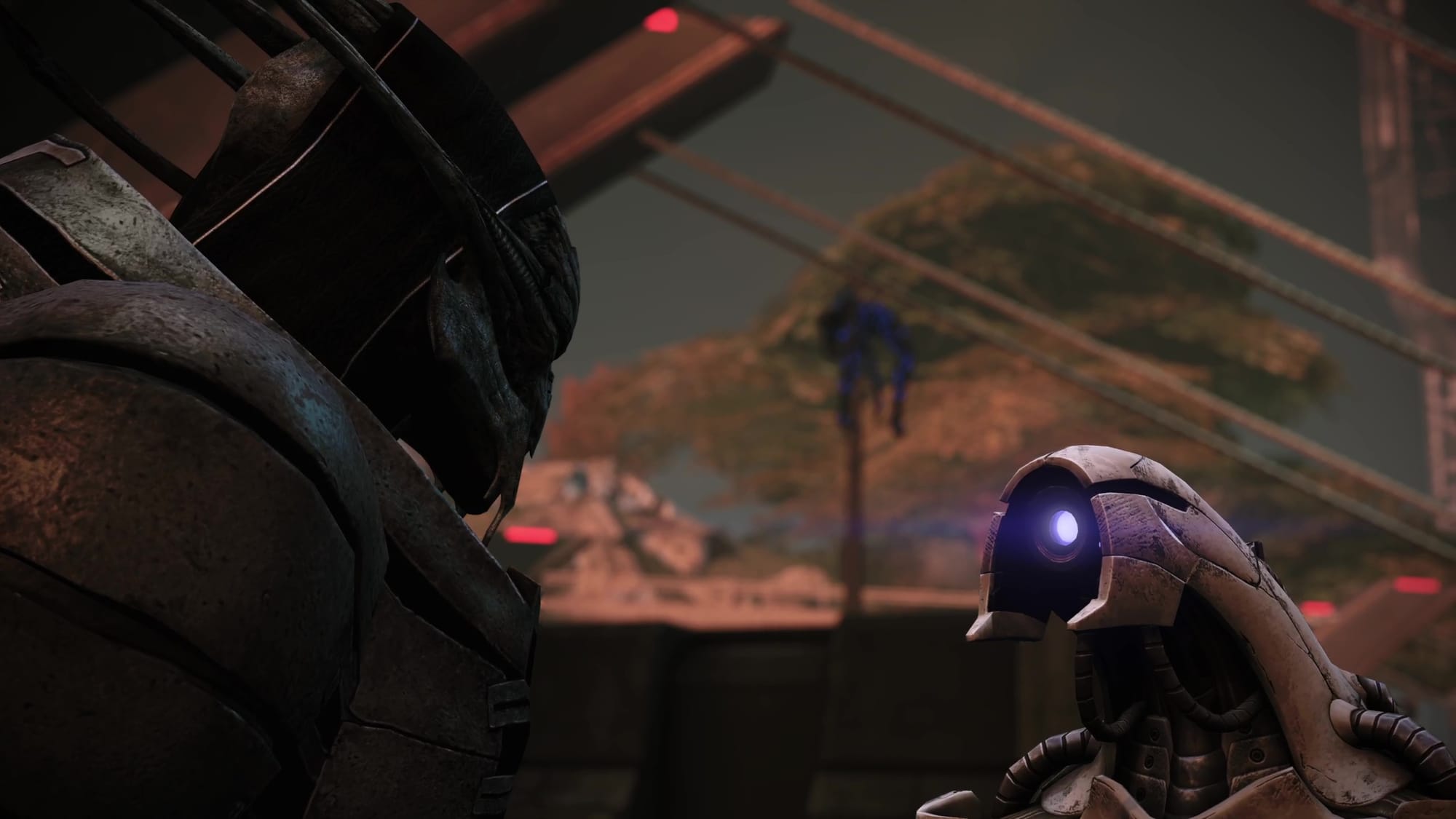
Jenkins runs forward and is killed by geth recon drones, because the tutorial has selected its pedagogical assistant to harvest.
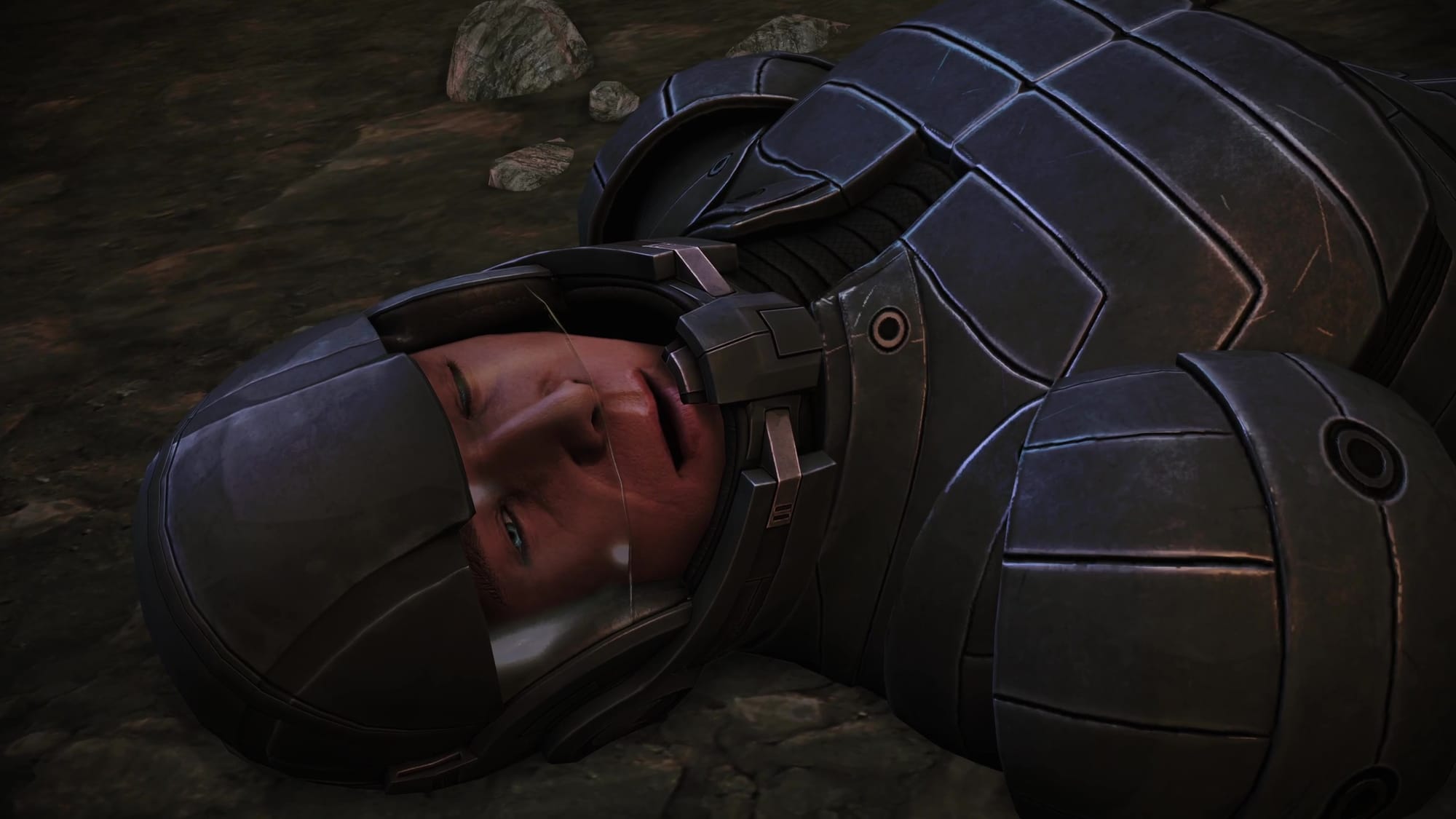
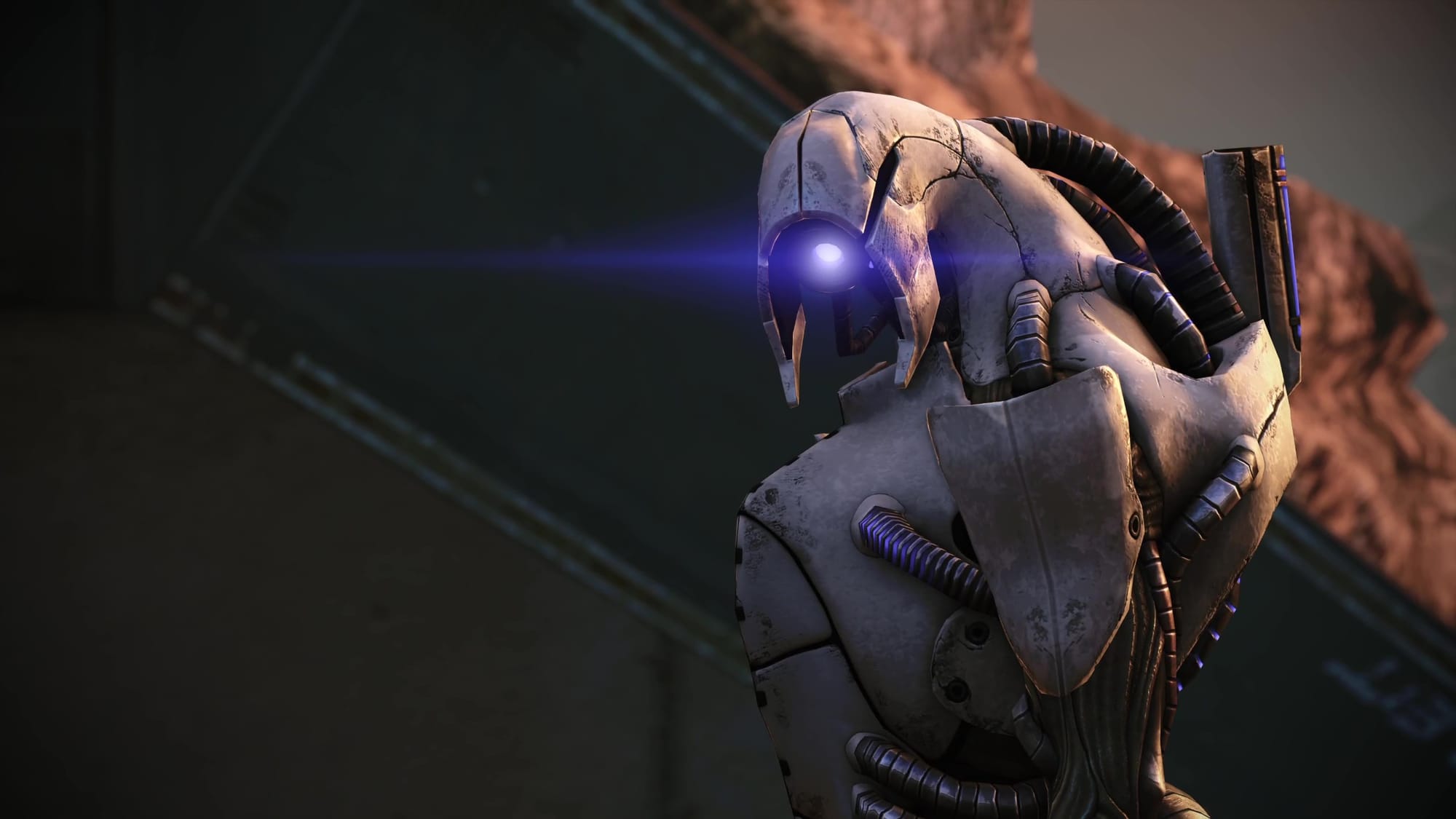
The geth are synthetic beings from beyond the Perseus Veil. In ordinary galactic understanding, they have not operated openly in Citadel space for centuries. Their presence on Eden Prime is a category violation.
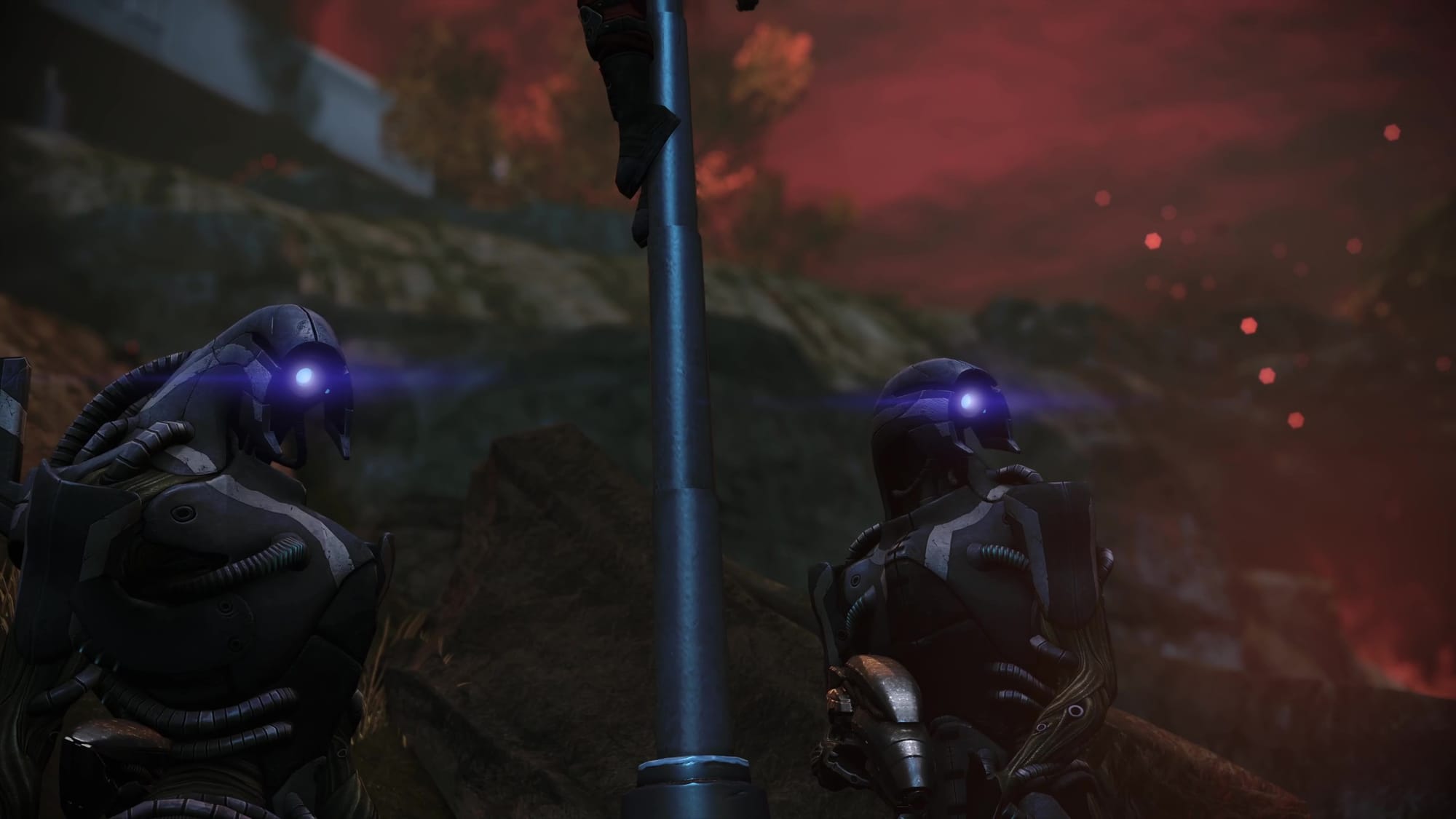
Something that should not be here is here, killing colonists and Alliance marines and our only Jenkins.
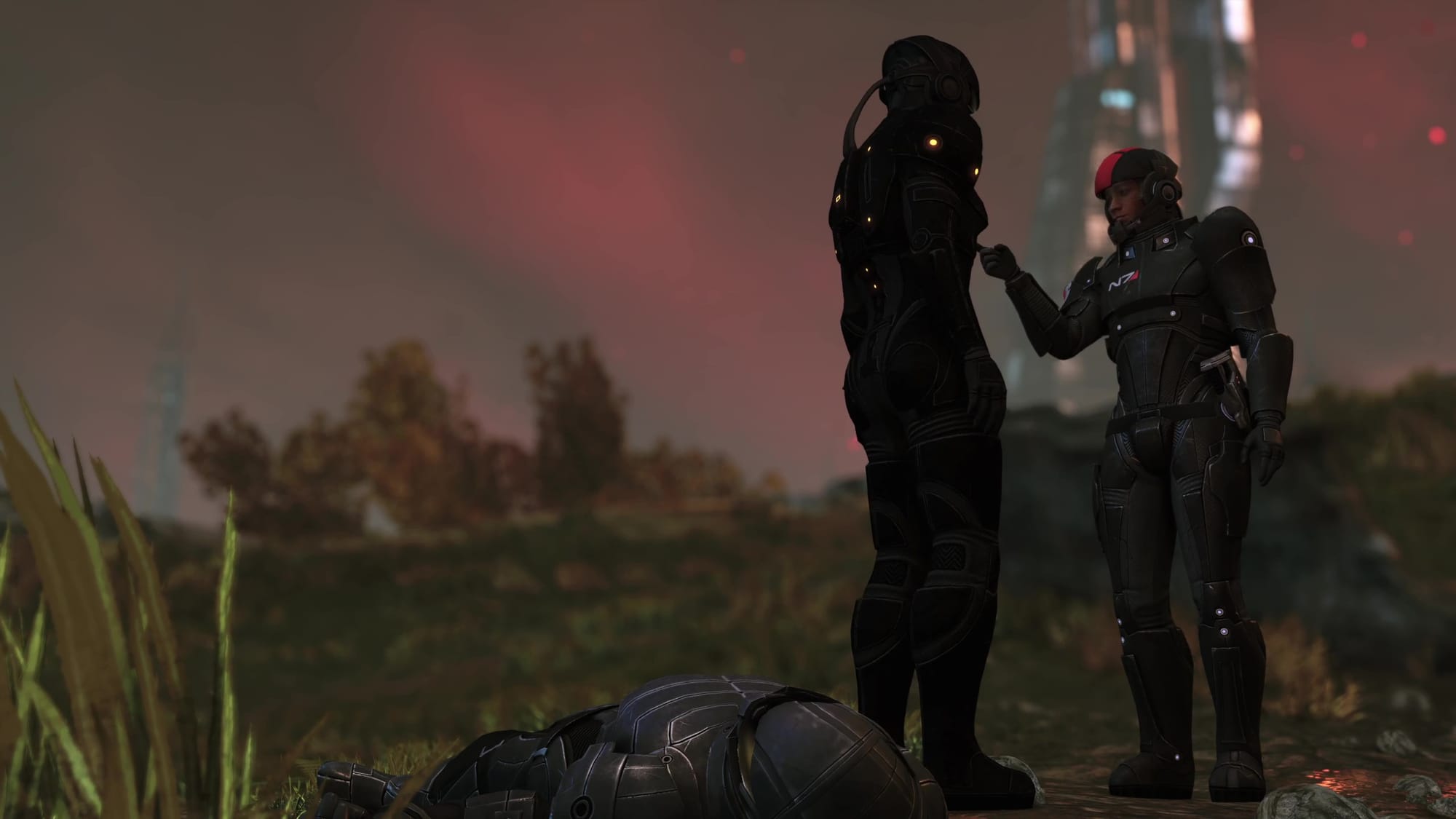
Shepard does not yet know what that means.
He knows Jenkins is dead.
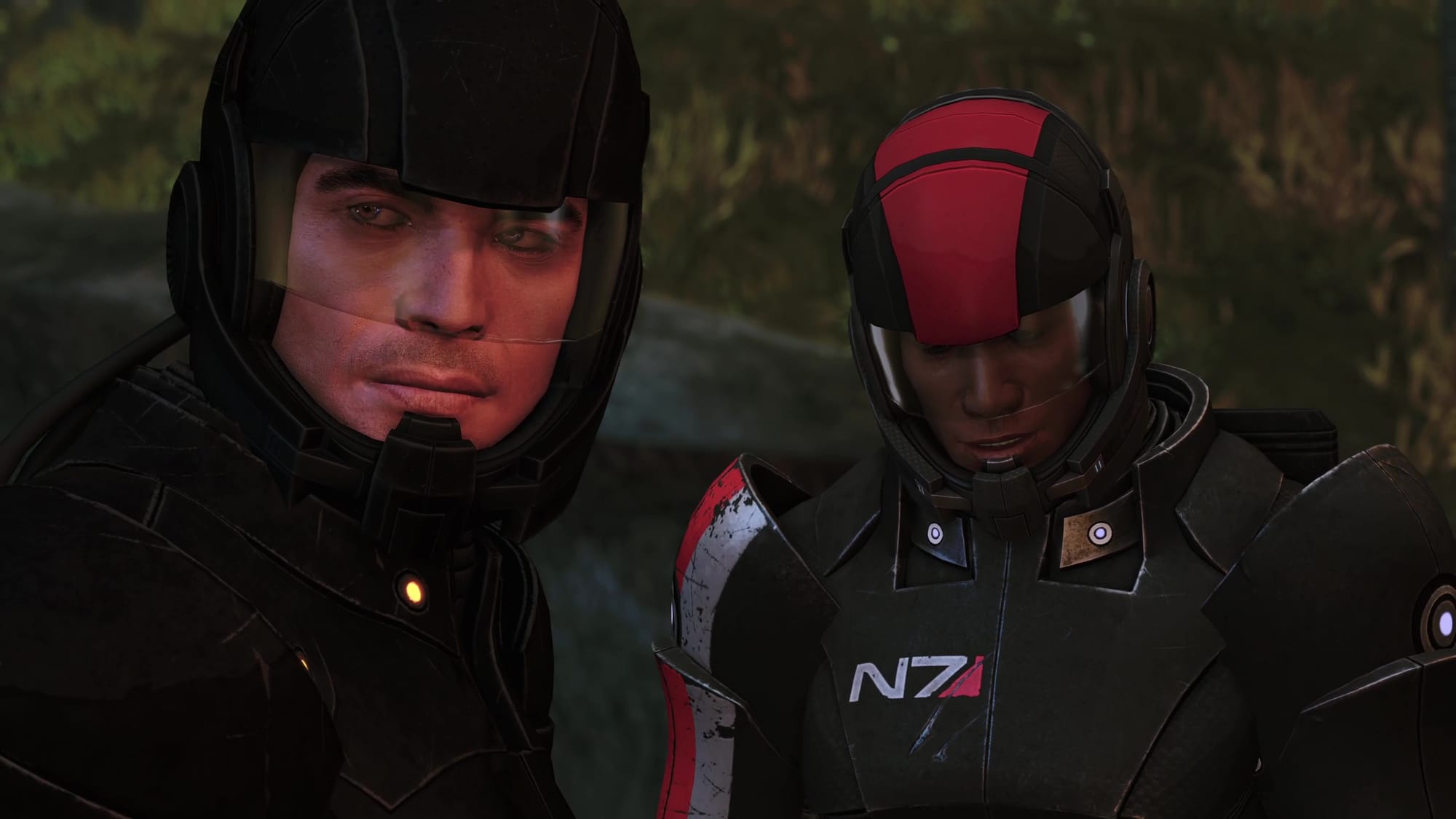
The game gives Shepard a grief-response choice at Jenkins’s body. Kaidan reacts. Shepard can say something acknowledging the death or tell Kaidan to move on.
This gives morality points. It does not change Jenkins, Kaidan, or the mission.
The dead cannot be restored. The mission cannot stop. The squad moves. We move. Goodbye.
Shepard and Kaidan next find Gunnery Chief Ashley Williams, the last visible survivor of the 212.
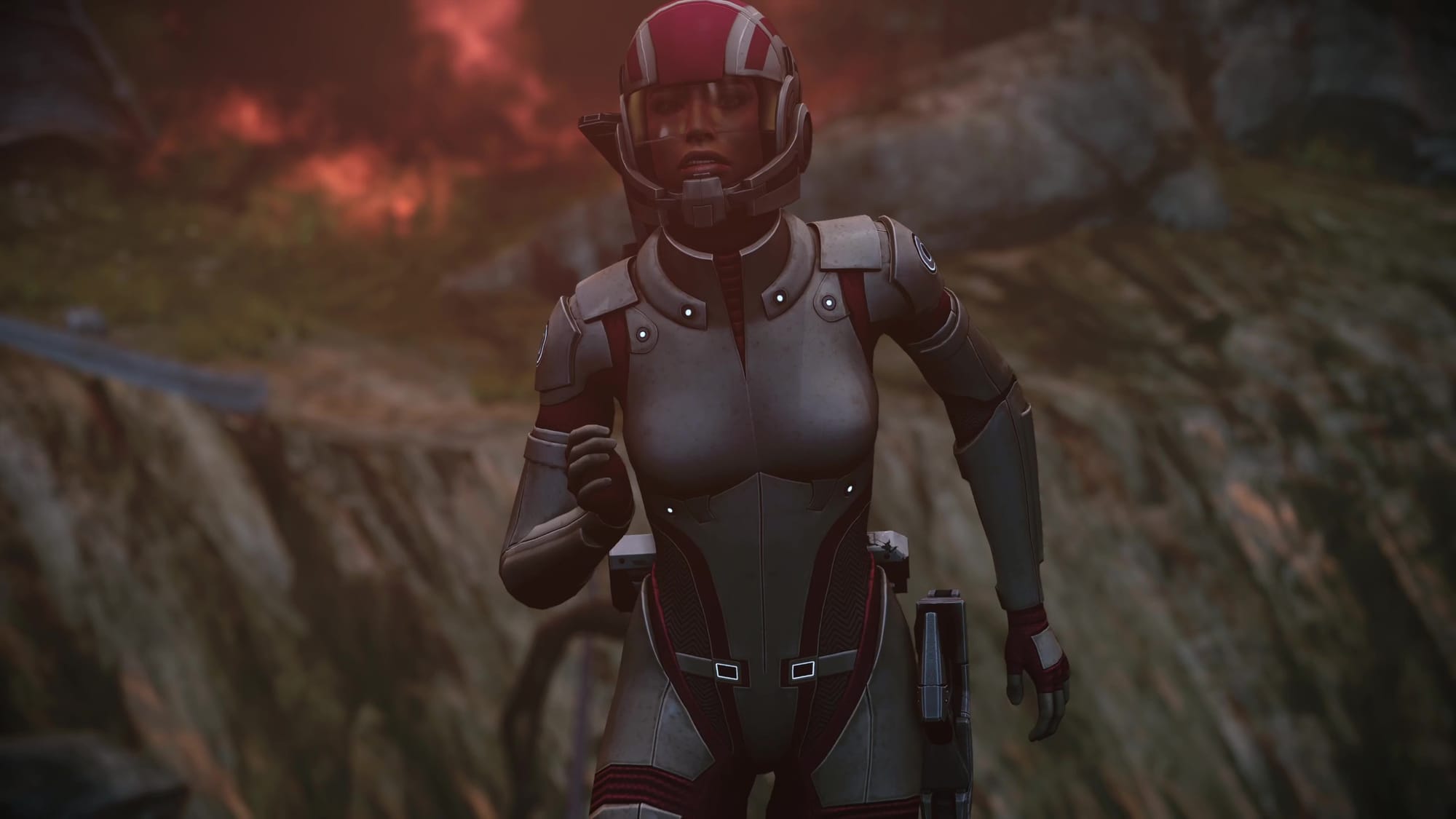
The 212 was the Alliance marine unit fighting in that distress transmission. By the time Shepard reaches Ashley, her entire unit has been wiped out. She is still fighting.
So, naturally, the game gives Shepard the option to blame her for being alive.
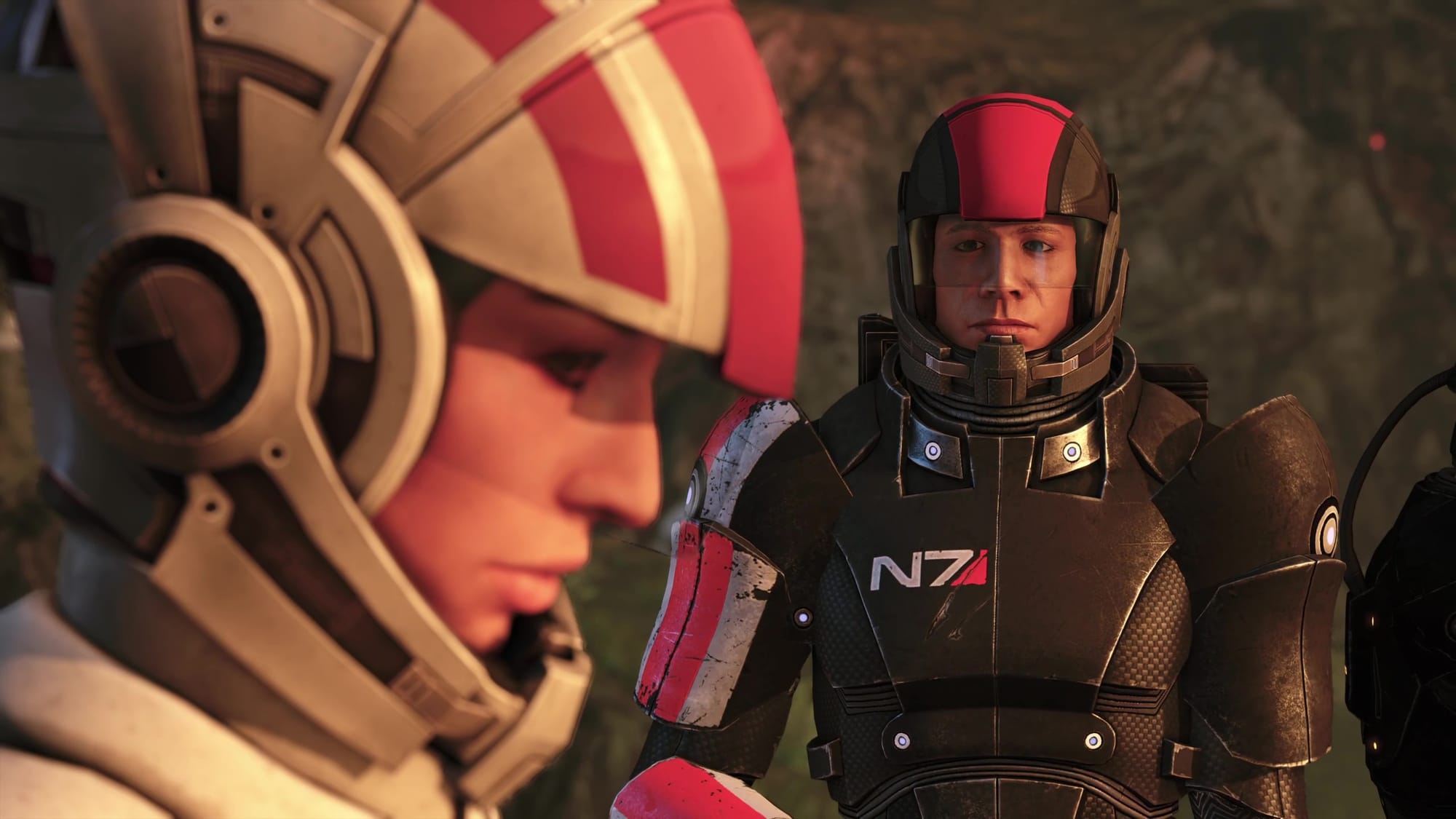
Do not do that, obviously, but also, do not build a courthouse around it. Keep it moving.
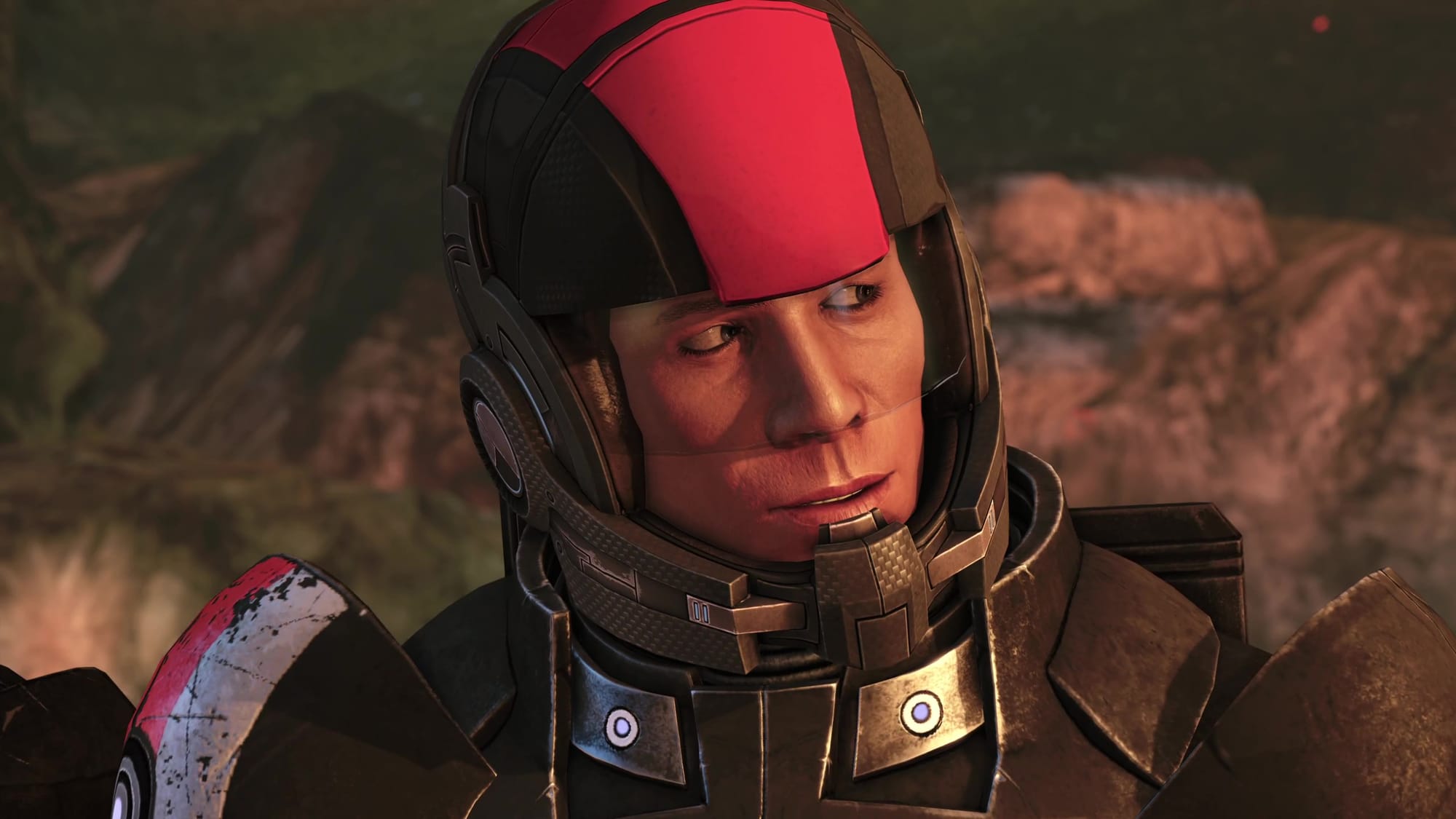
Ashley joins the squad regardless. The player’s tone is morality-meter residue. There are serious things to say about Ashley Williams later. Her suspicion of aliens is real. Her family history with the First Contact War is real. Some of her later dialogue on the Citadel will make the player briefly wonder whether the Normandy has an employee handbook thick enough to beat someone unconscious with.
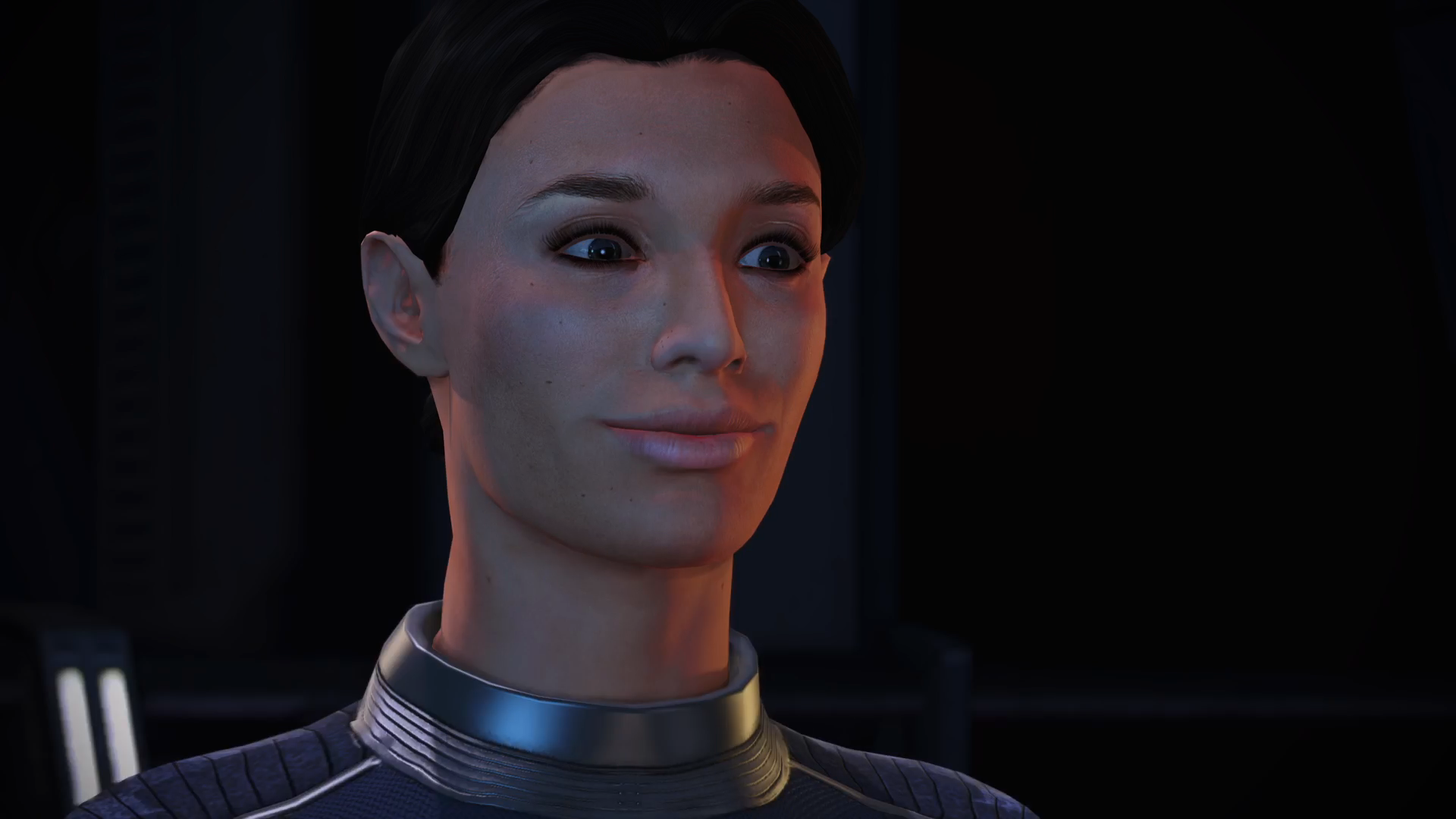
None of this is the live field on Eden Prime. The live field is that a soldier survived the destruction of her unit and remains capable of contributing to the defense of the colony.
She joins. We move.
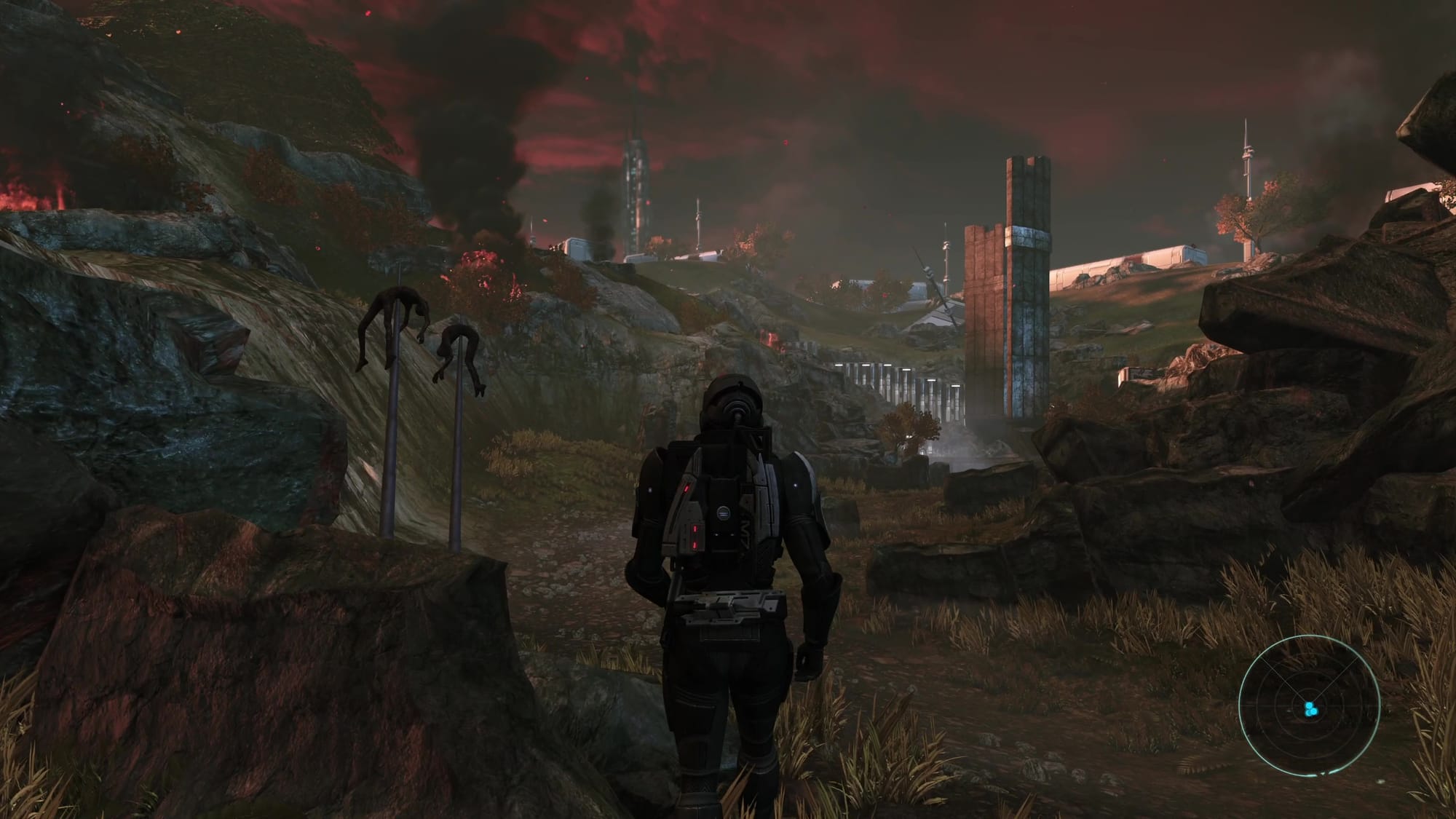
The squad reaches the dig site.
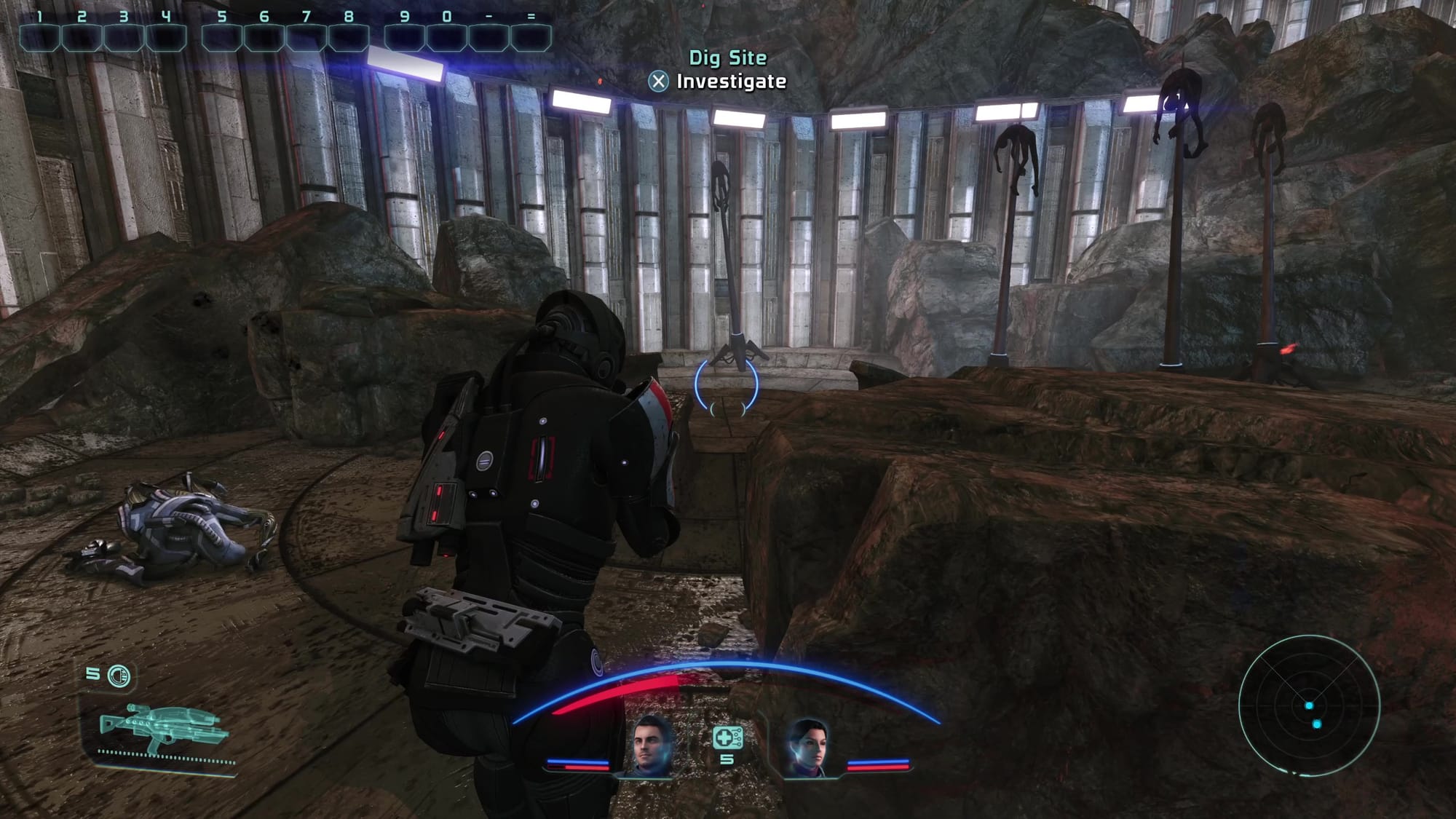
Turns out, the beacon is gone. Woops.
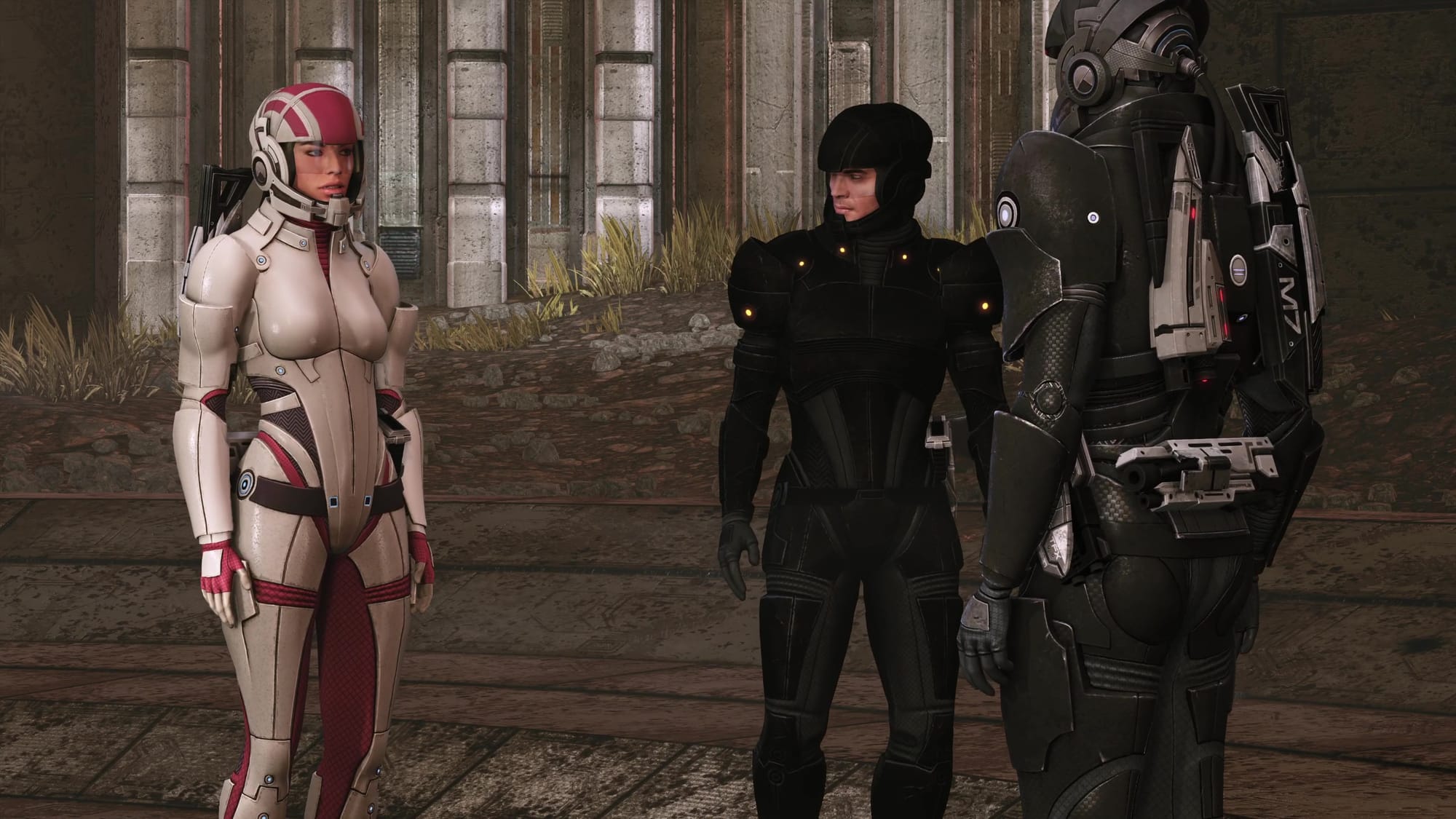
That is the first hard sign that Eden Prime is not simply being attacked. The attackers knew exactly what mattered here. They moved it. They are pursuing an objective inside the colony’s ruin.

The field now has two layers.
- The first is the ordinary contraction of a colony under attack: dead marines, dead colonists, damaged infrastructure, fear, bodily harm, future lives closed.
- The second is epistemic contraction: the destruction or capture of the information needed to understand why the attack is happening at all.
Eden Prime is now a crime scene whose evidence is being burned while the crime continues.
Dragon’s Teeth.
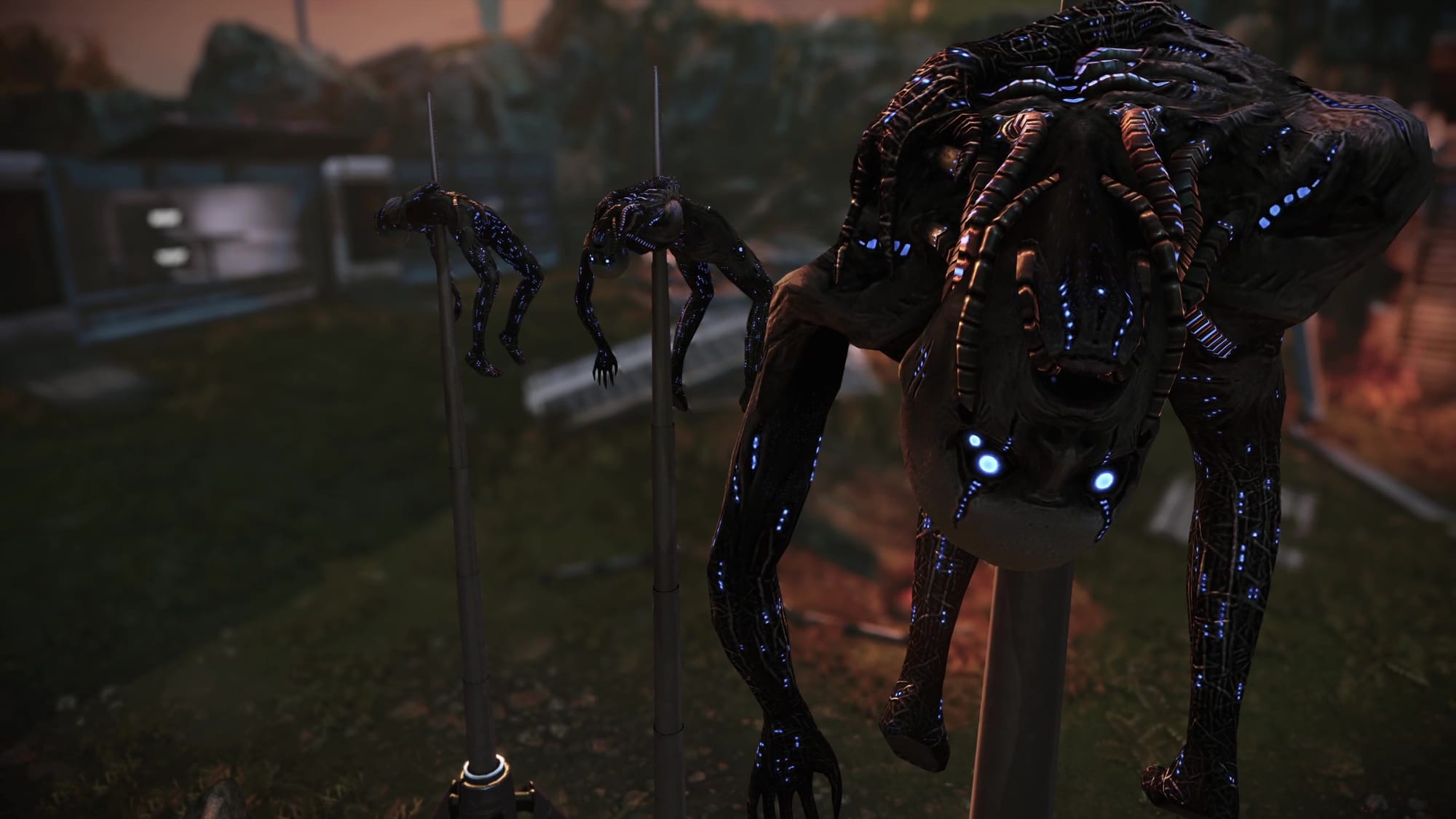
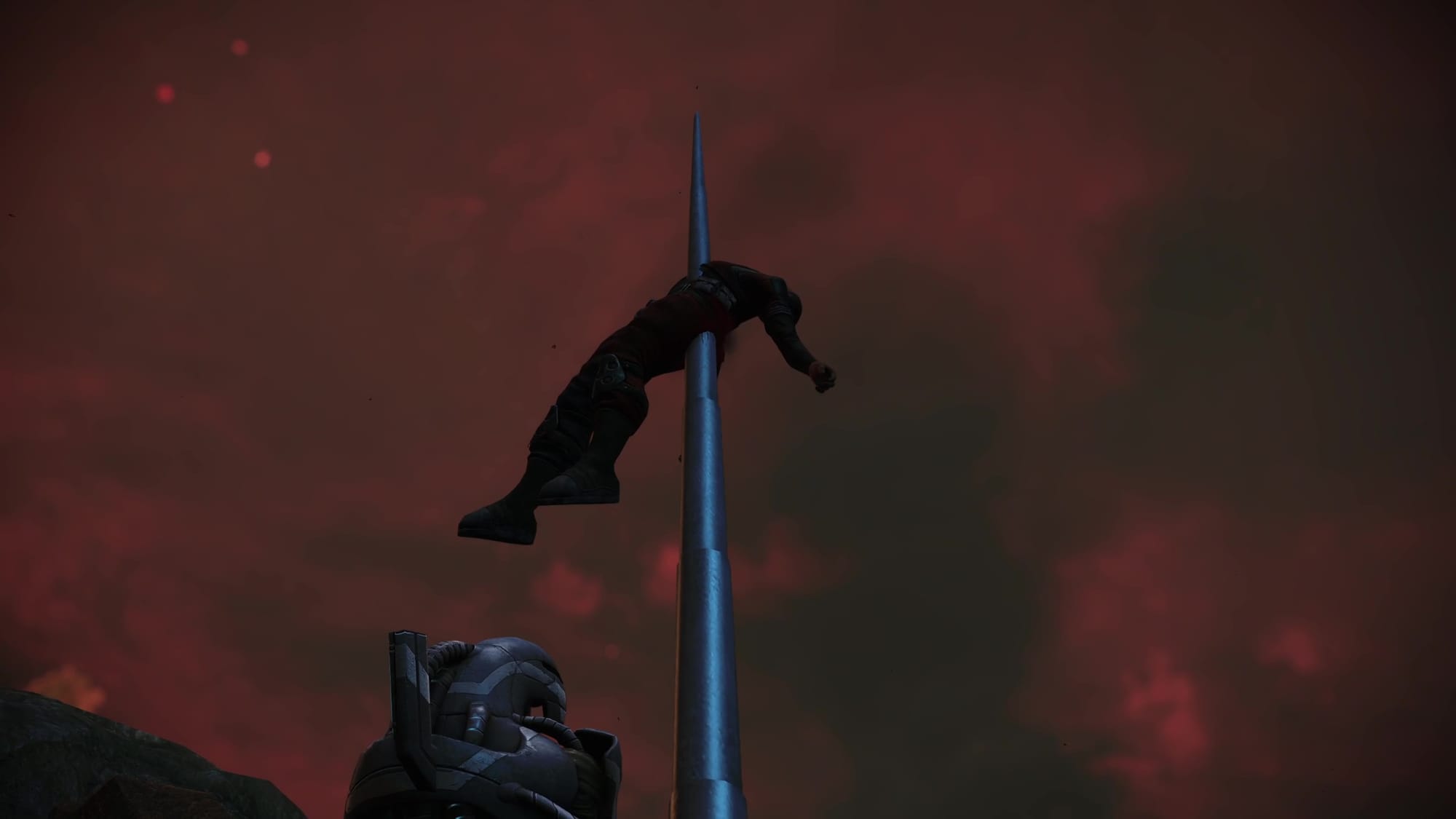
While approaching the research camp, Shepard finds colonists impaled on metal spikes.
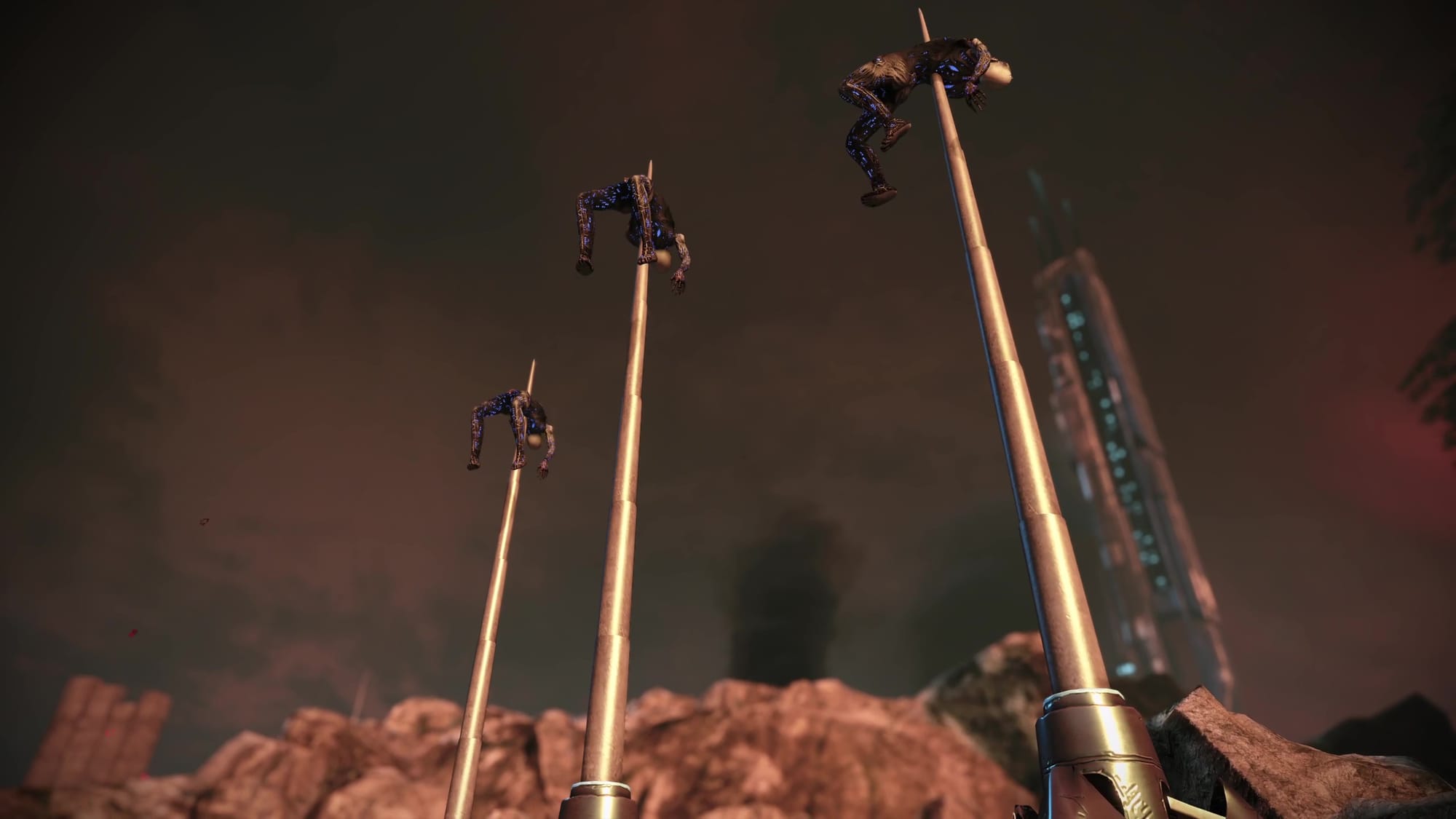
When he arrives, he learns they are not only dead.
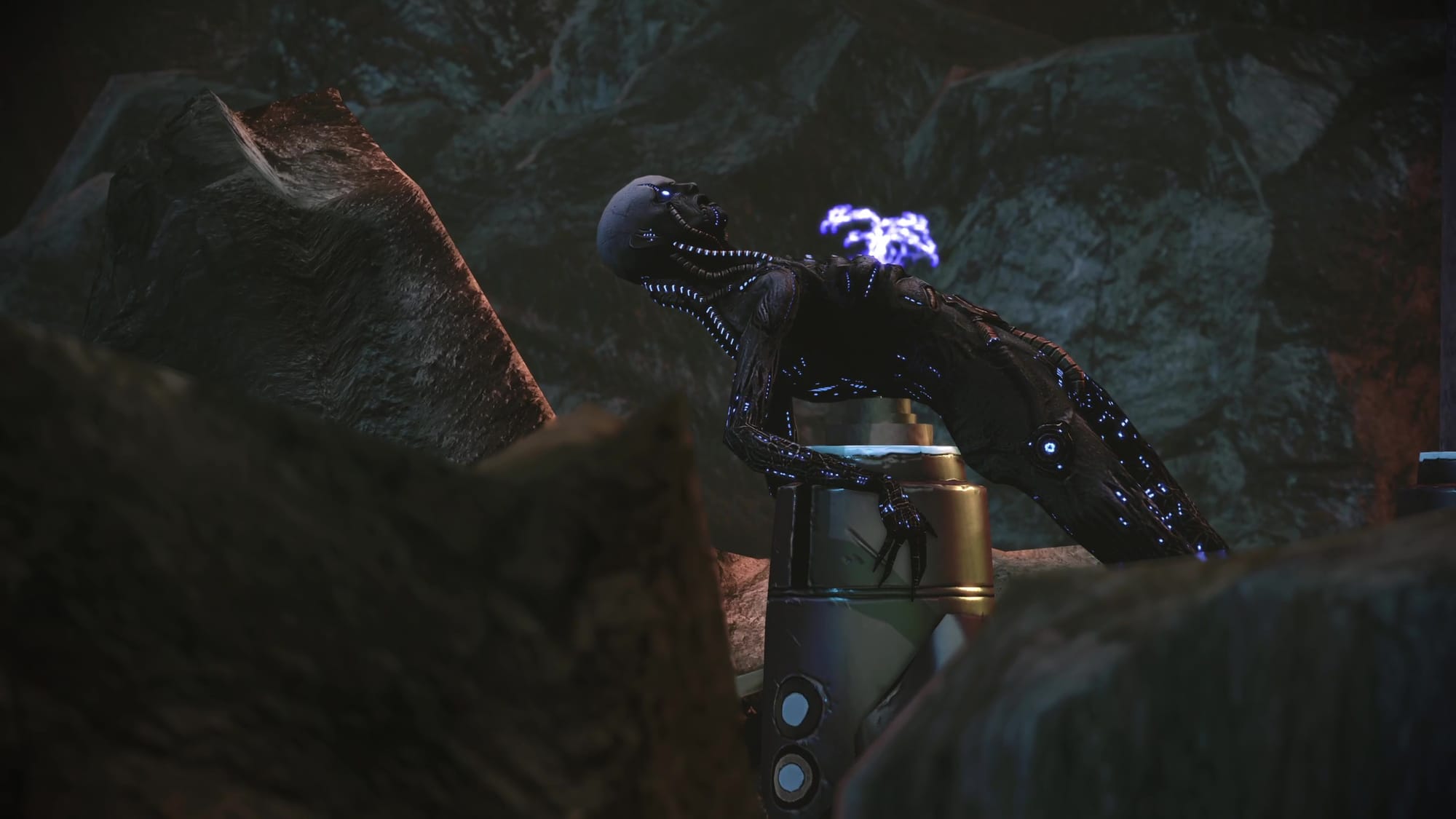
The spikes are called dragon’s teeth. The geth use them to convert human bodies into husks: synthetic-corrupted corpses that attack the living. The first sight of them is one of Mass Effect’s cleanest visual statements of what the Reaper logic will later become.
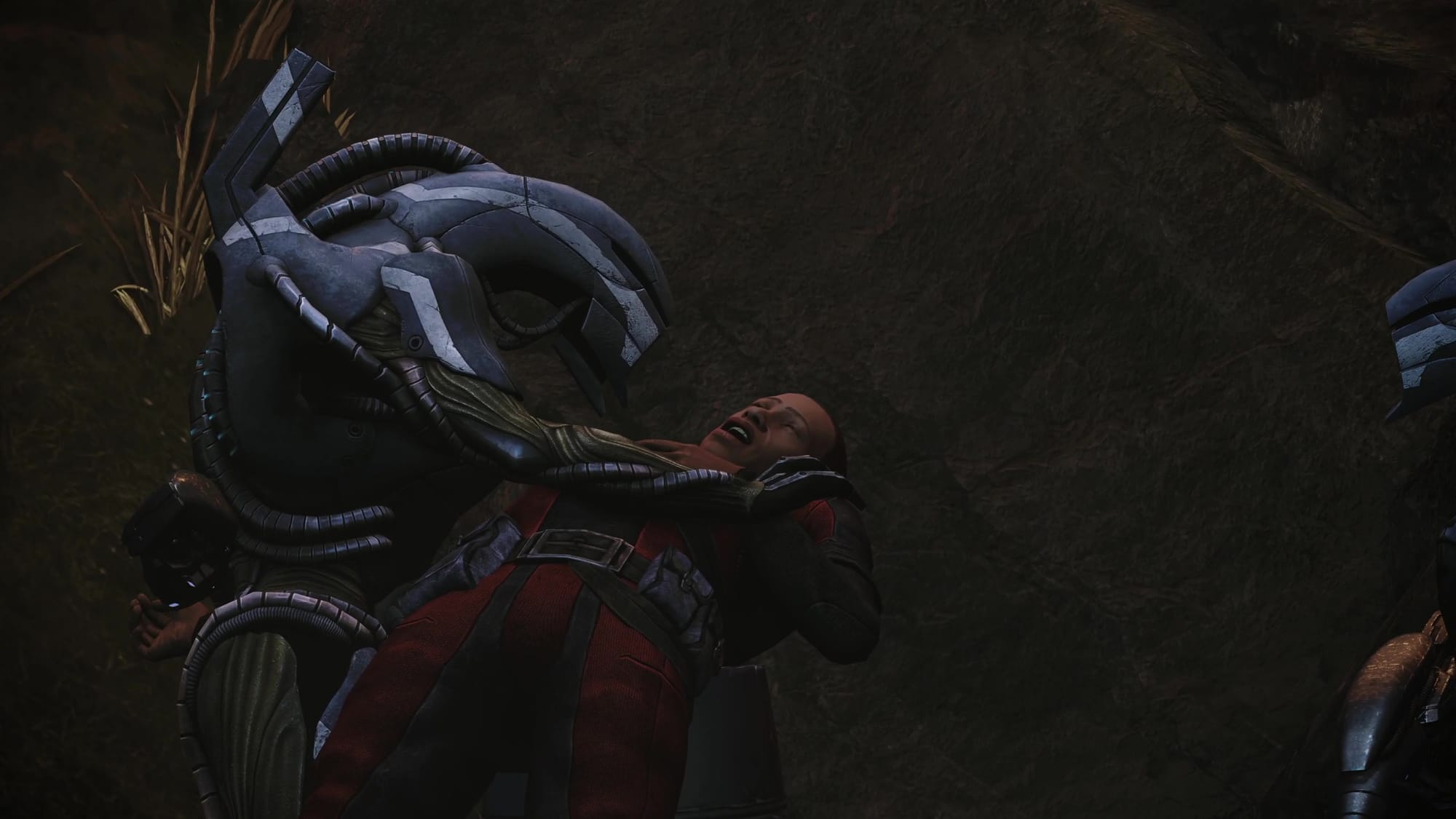
The enemy does not only kill a field, it turns the field’s dead into instruments for closing more of it.
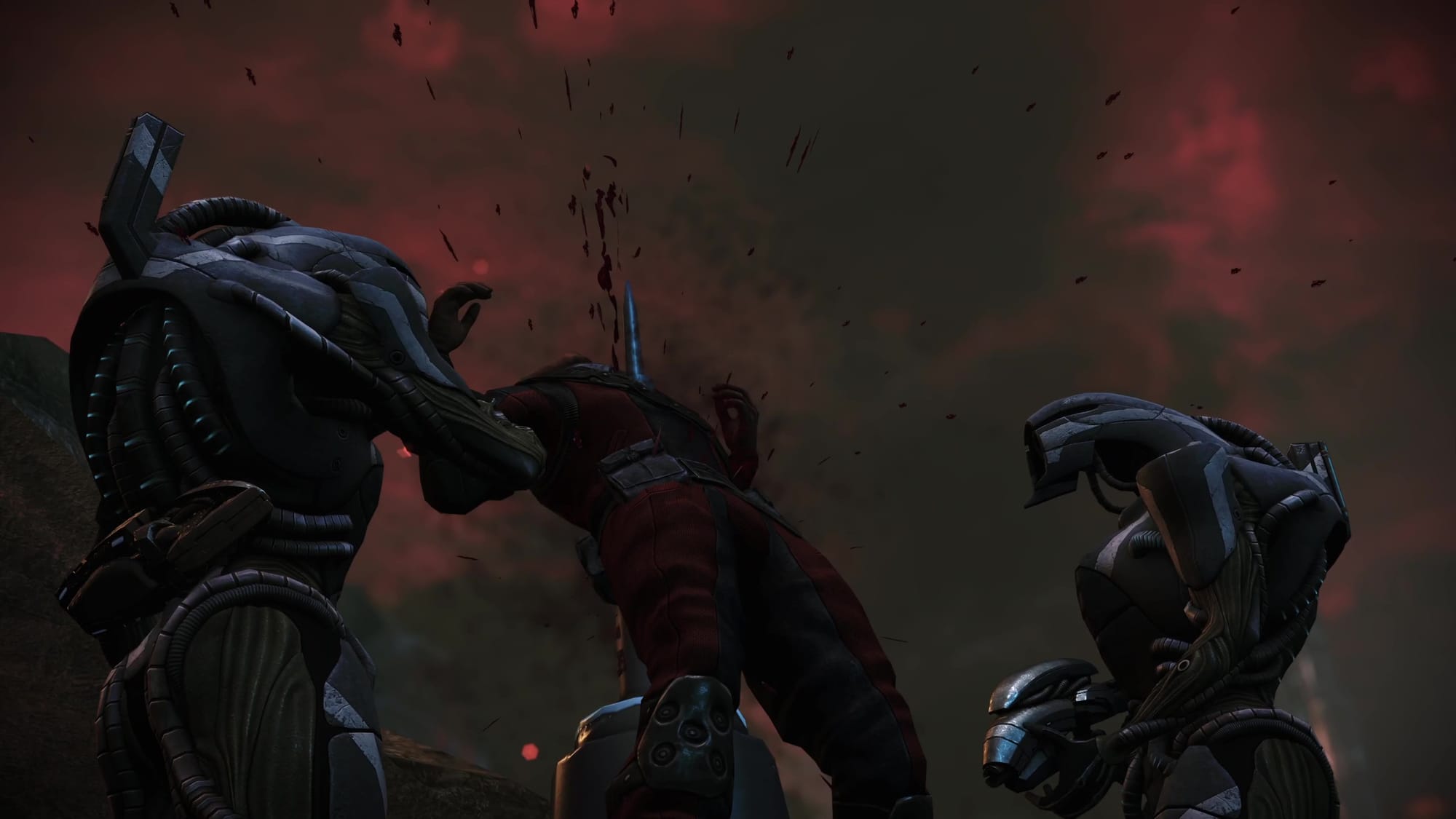
This is recursive contraction. A dead colonist becomes a threat to another colonist, who becomes another dead colonist. A body whose continuance has been ended is repurposed into a weapon against the continuance of others. The field is made to participate in its own closure.
Shepard has no rescue path for these husks.
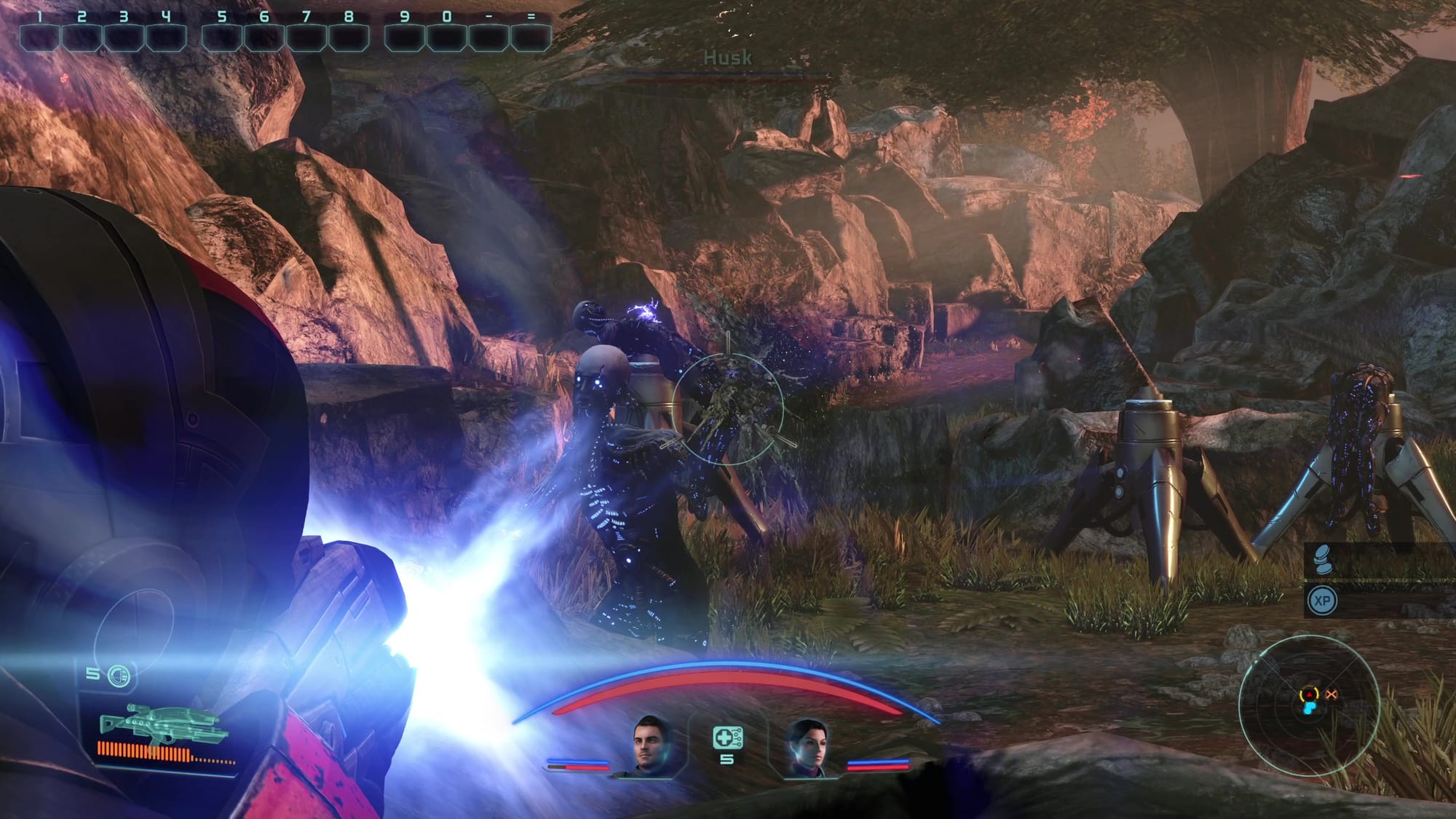
The remaining path that preserves future-space is to stop these things before they kill the living.
This does not make the violence against them good, it means the better path has been forced into violence by prior harm.
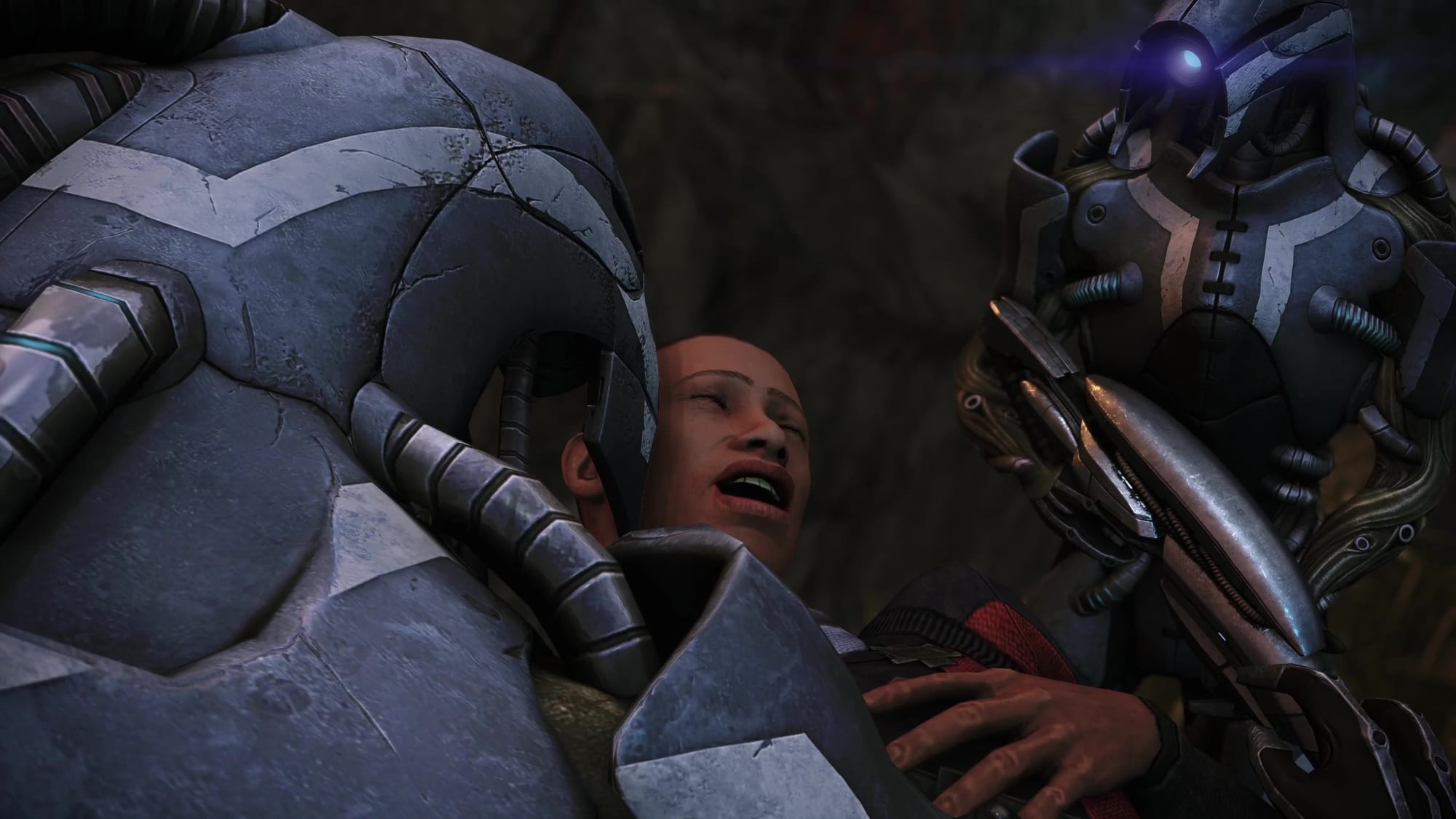
The phrase “better path” should never be allowed to become too sentimental.
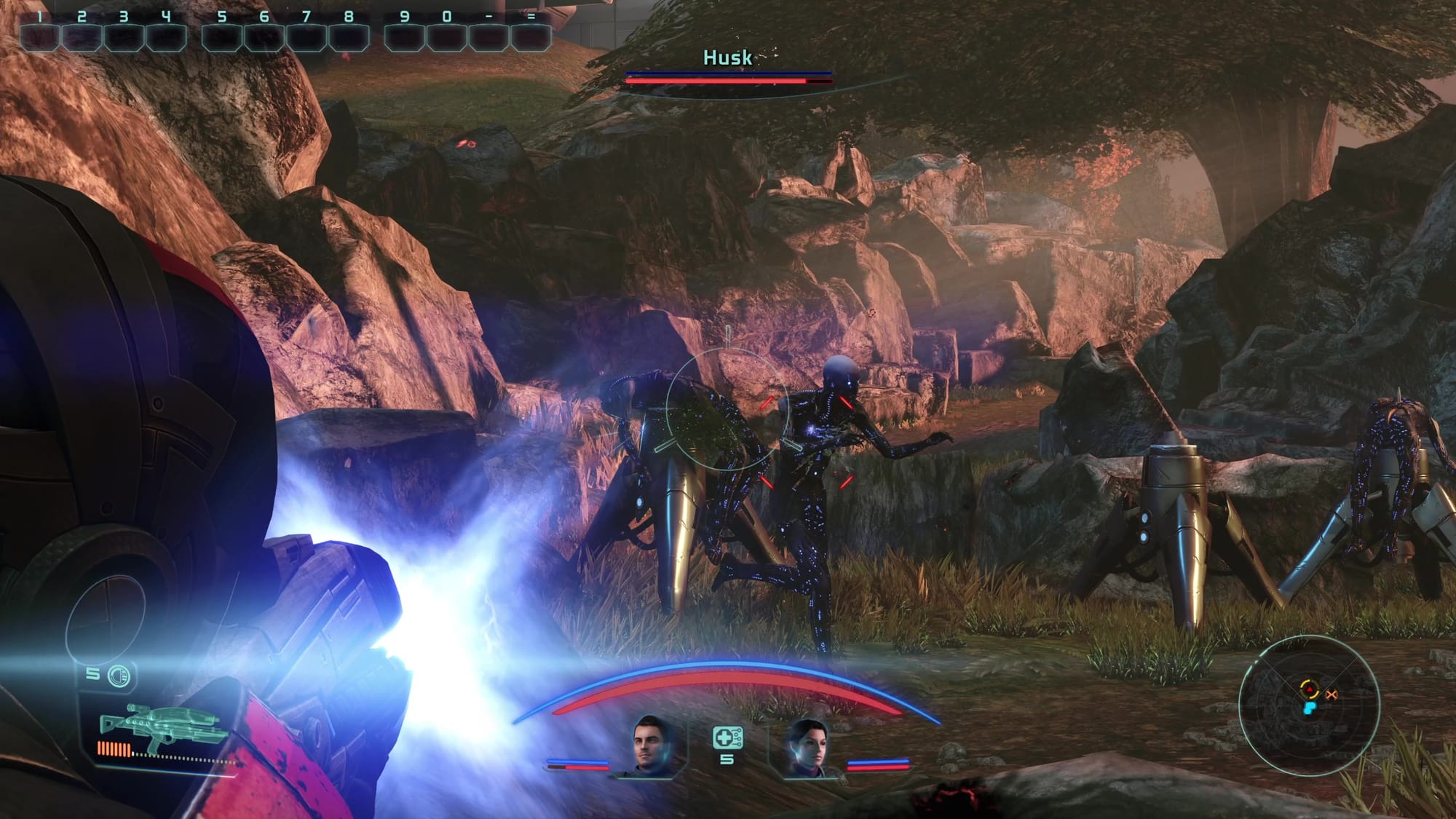
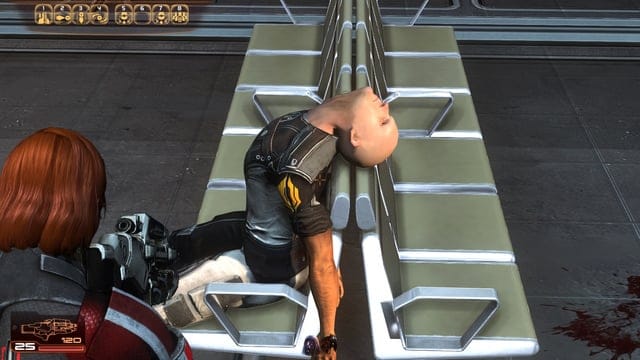
Sometimes the better path is shooting what a murder-machine made out of a bald farmer.
Inside the nearby shelter, Shepard finds Dr. Warren and her assistant Manuel.
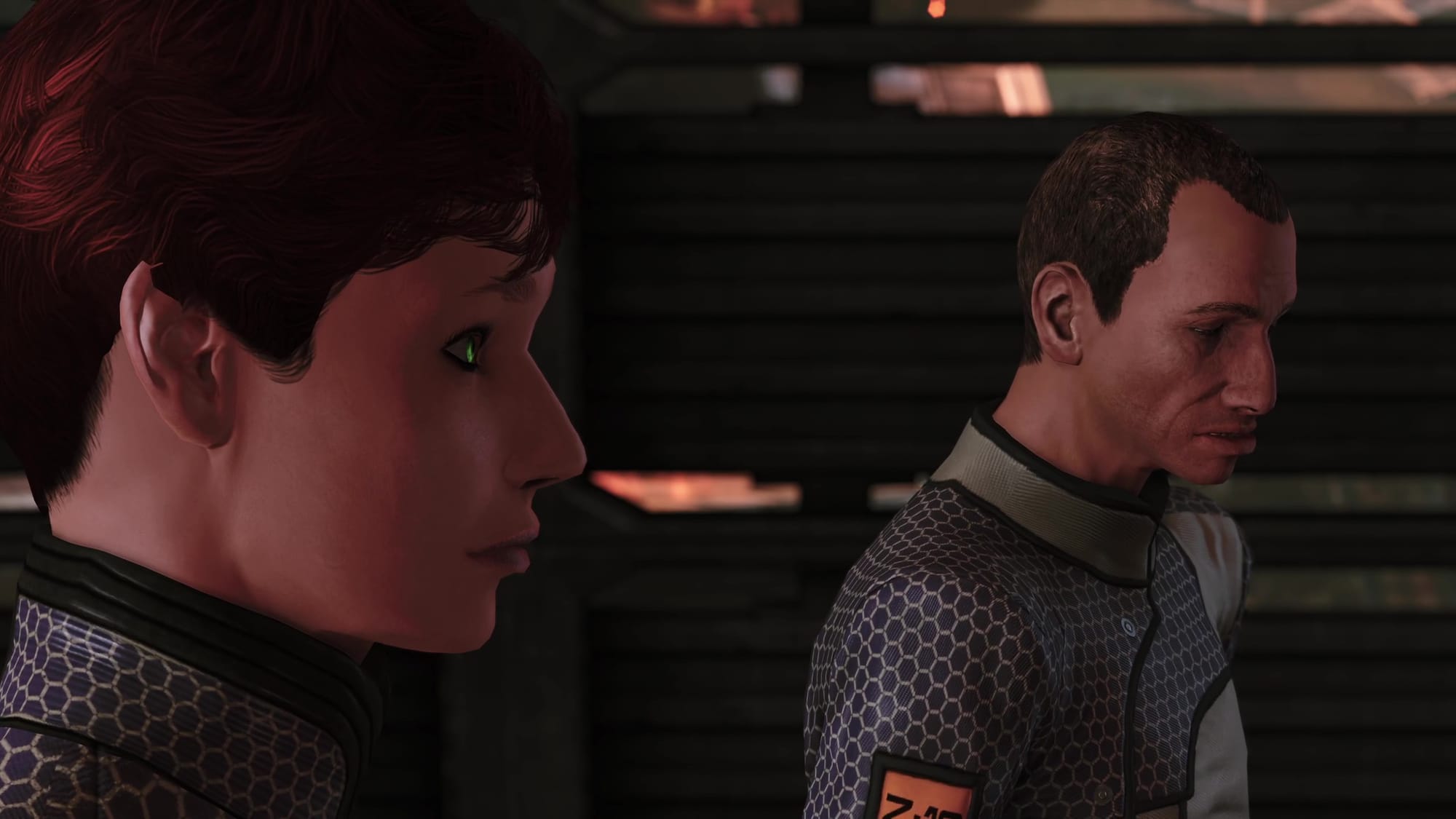
Dr. Warren can tell Shepard that the beacon was moved to the spaceport. This is immediately useful information. Thank you, Dr. Warren.
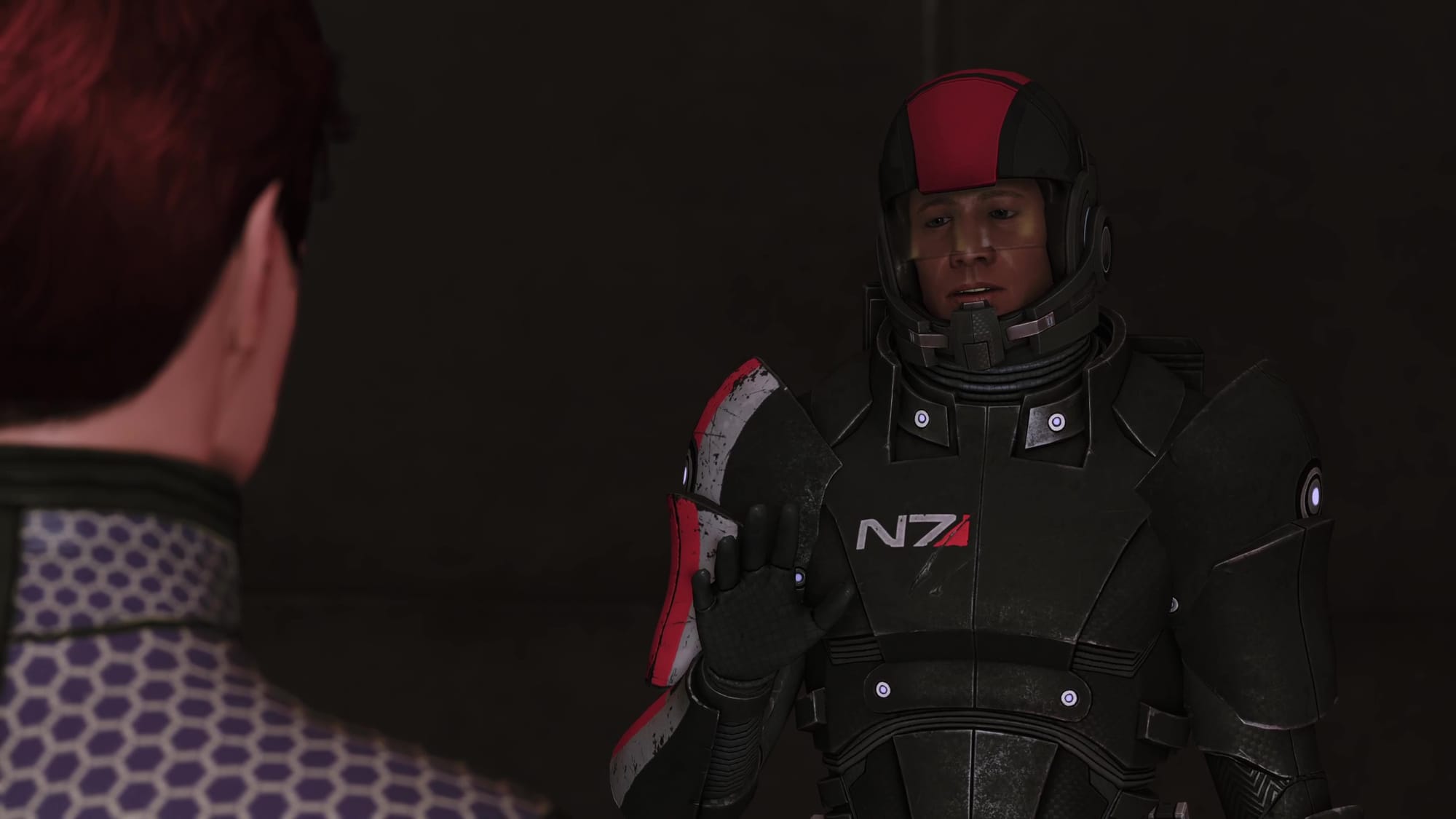
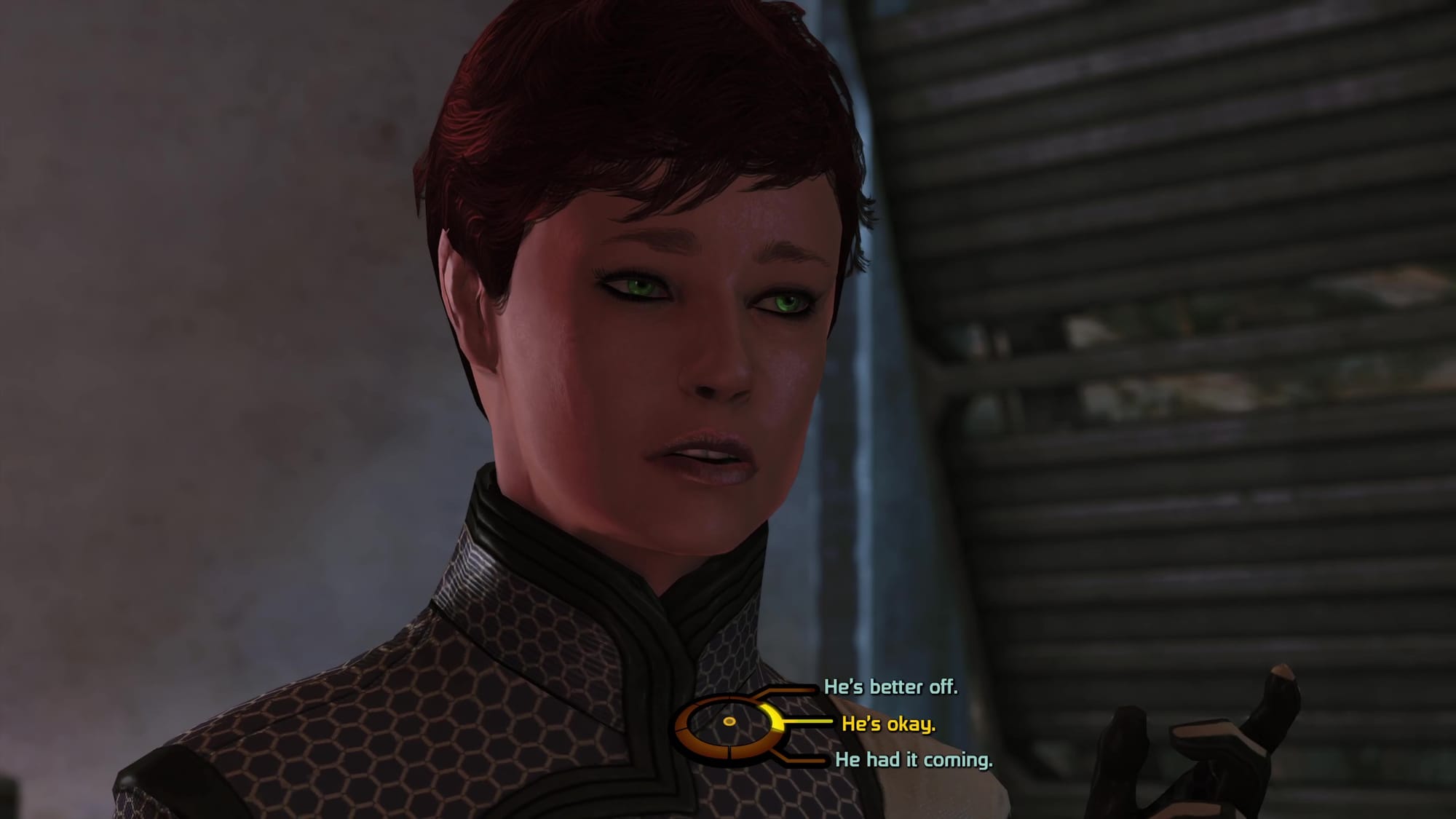
Manuel is panicked and incoherent. He says the beacon is not really a beacon. He says it is a warning. He says everyone is too late.
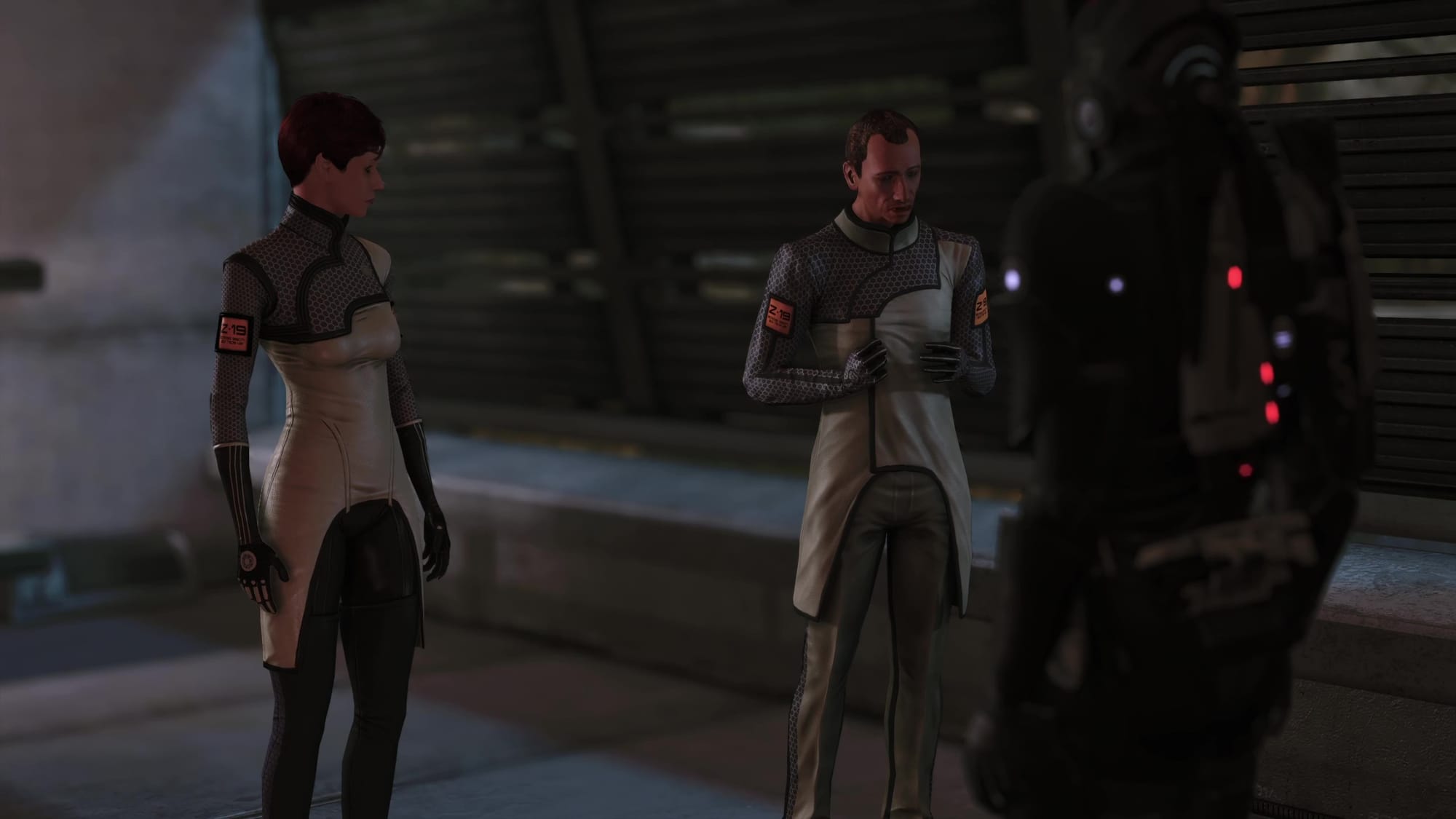
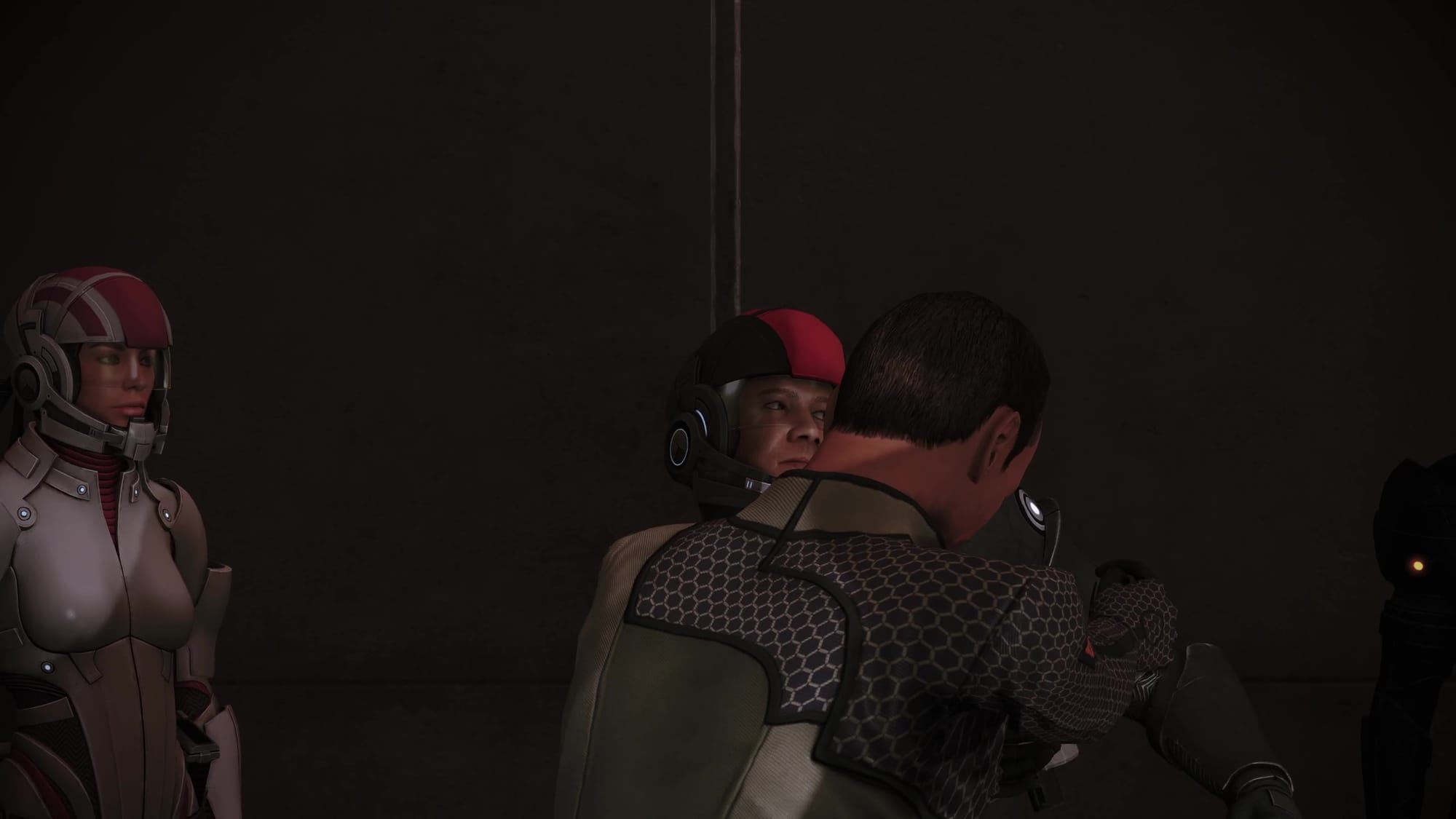
He is correct. The game allows Shepard to punch him unconscious, unprompted.
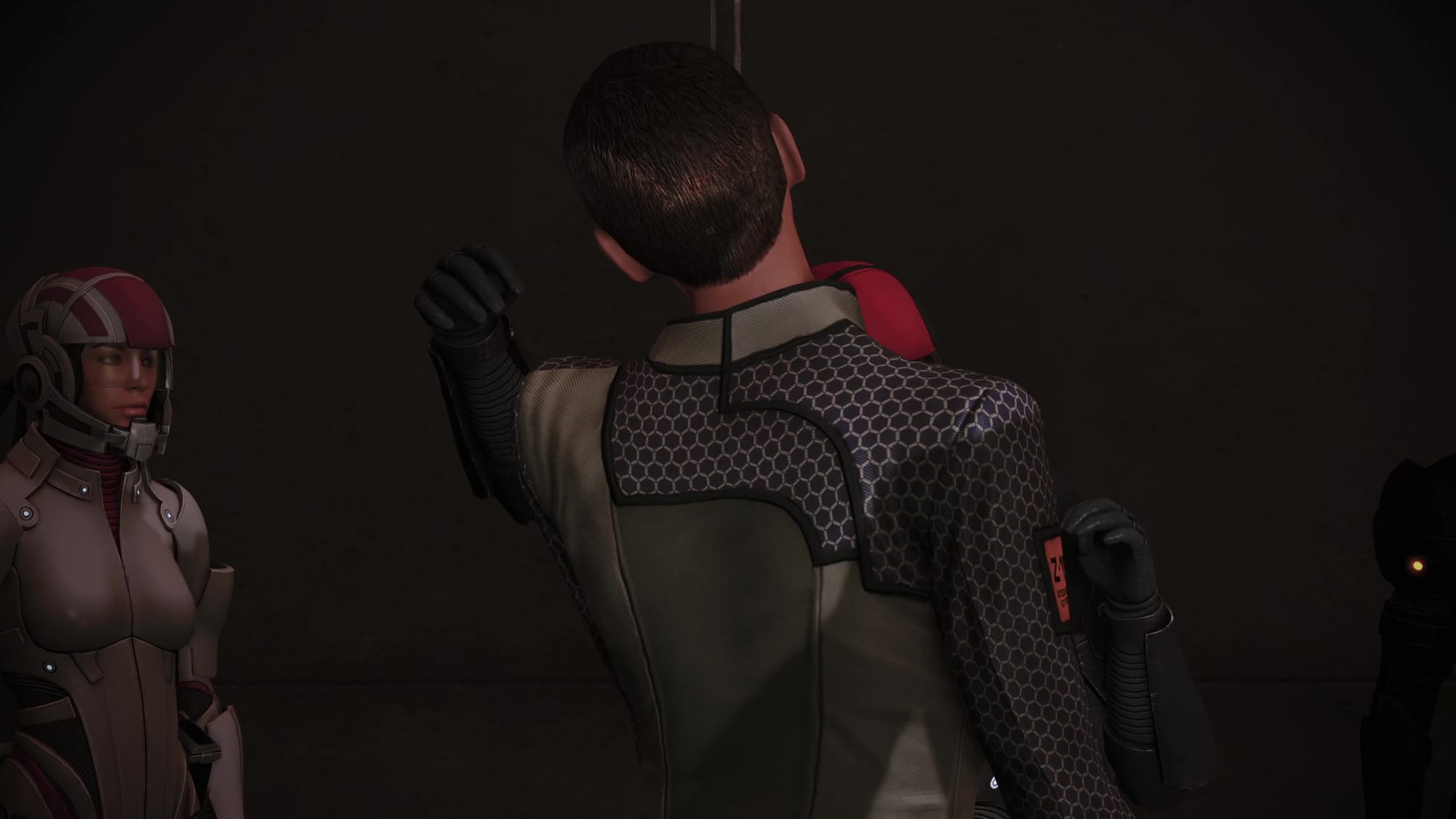
This is one of those early Mass Effect moments where Bioware looks at the player with a straight face and asks them to ponder the mystery of whether there might be deep ethical content in assaulting a terrified academic because he is saying plot-relevant things in an irritating voice.
I ran the weighting analysis. There is not much.
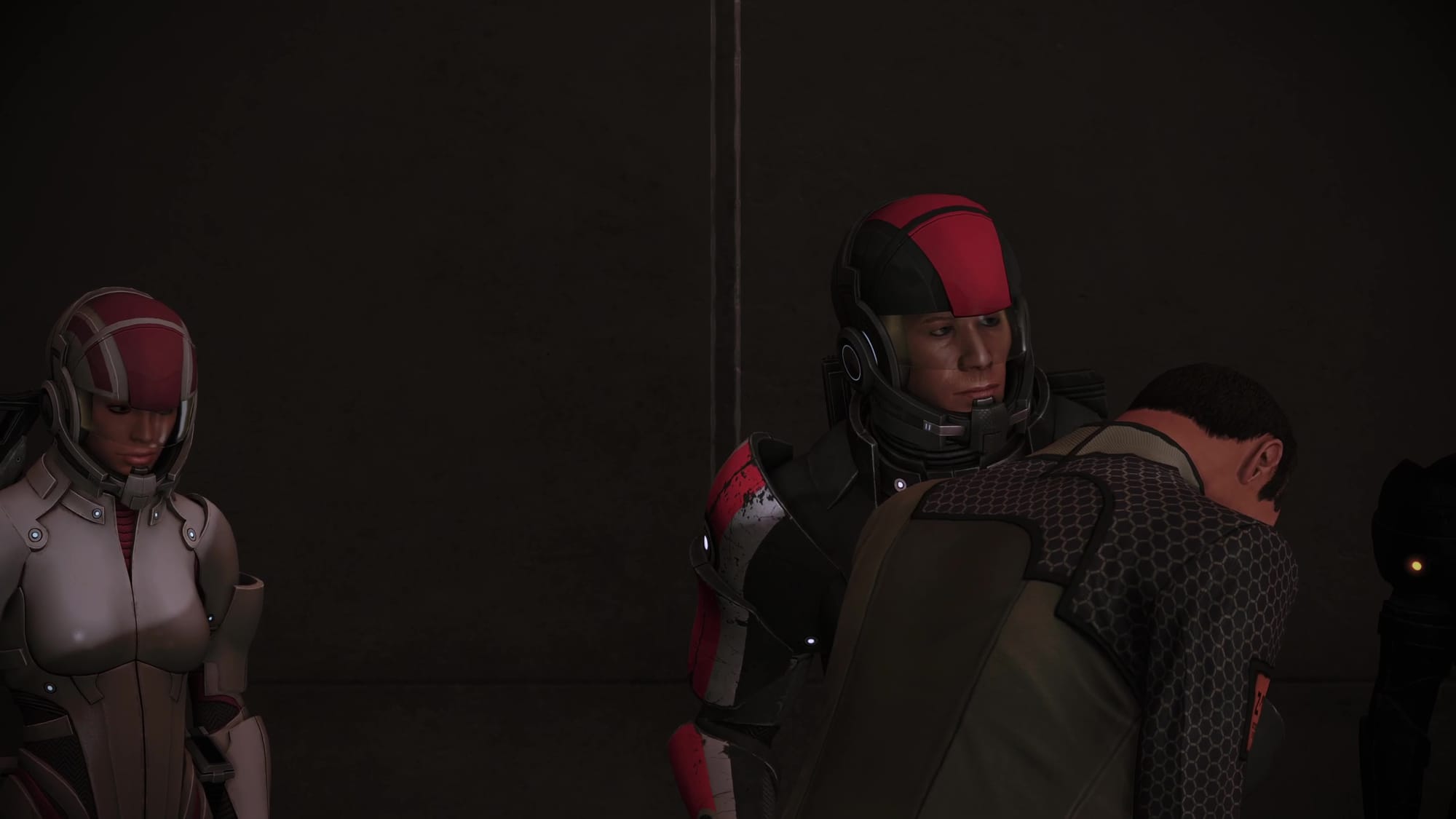
- Manuel is not attacking anyone.
- Dr. Warren is still able to provide and in fact already has provided the immediately useful information.
- The squad is not meaningfully delayed by this man's panic.
- He is not holding a grenade.
- He is not opening a door for the geth.
- He is not about to destroy the beacon.
- He is also offering correct, if difficult to parse information.
This is a damaged witness whose signal has become difficult to process. Punching him gives you Renegade points.

That is all. Moving.
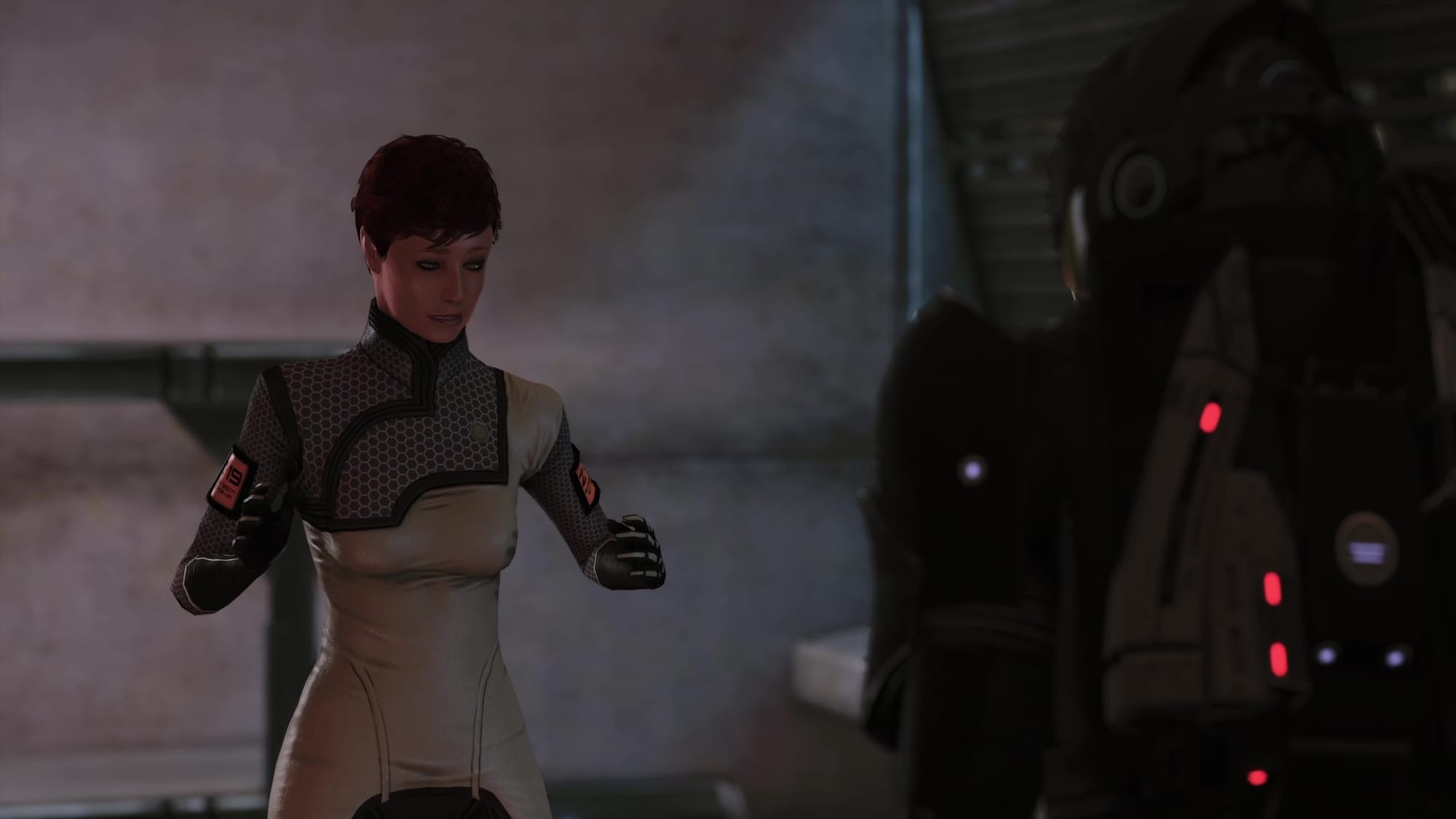
The real interesting point, however, is that Mass Effect places one of the trilogy’s first holistically true claims inside the mouth of someone the interface invites the player to dismiss and assault.
- The beacon is a warning.
Manuel cannot carry that warning usefully. He cannot make it credible, actionable, or institutionally legible. His own signal has been damaged by terror, exposure, and the fact that he is delivering it like a man who has seen God.
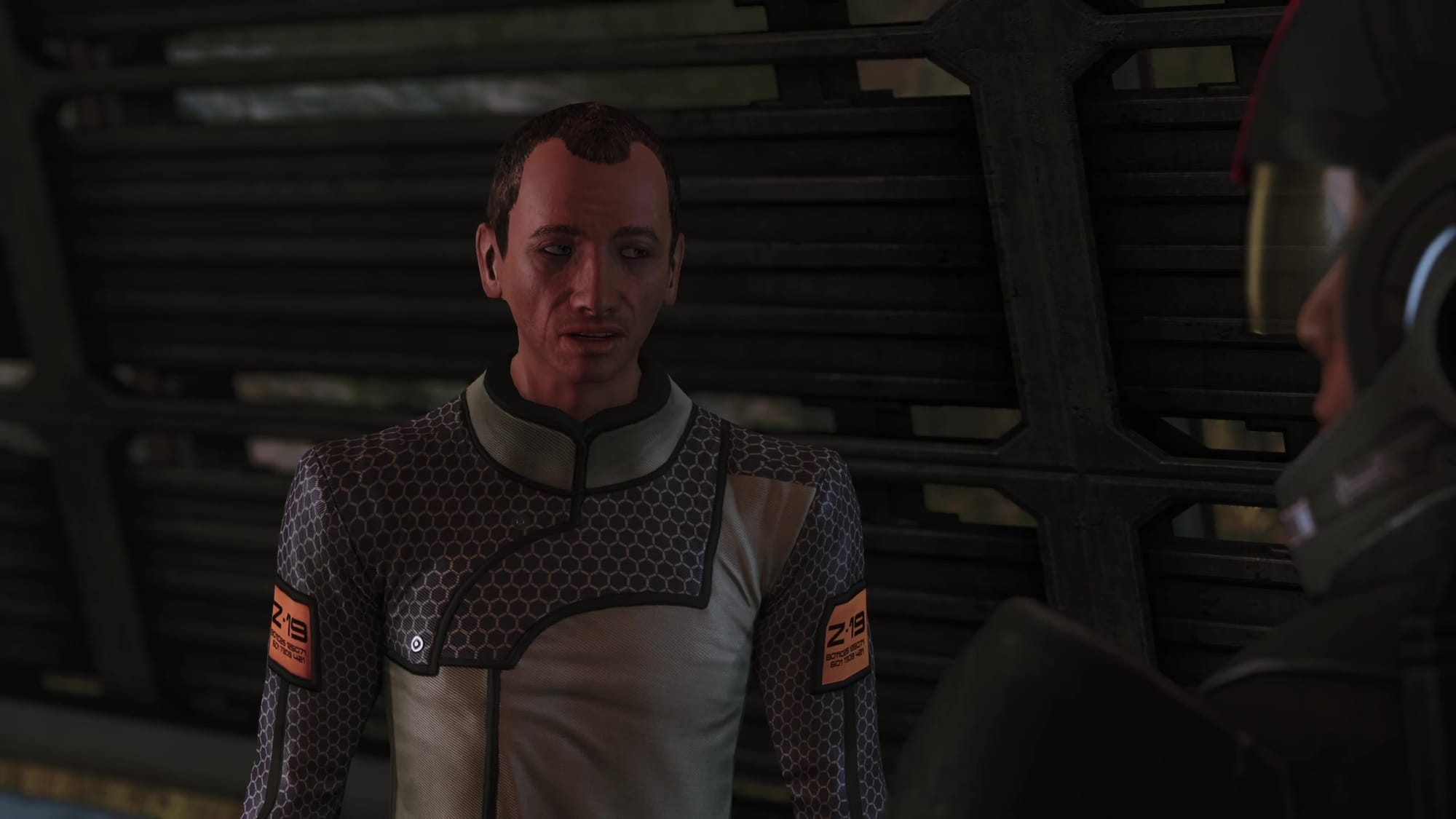
So Manuel is the first broken beacon encountered on Eden Prime.
Next, Shepard moves toward the spaceport. Nihlus, who moves faster on his own, is already there.
Backup Arrives.
After walking away from the research camp, the game leaves Shepard’s perspective.
So will we.

Nihlus reaches the train station first.
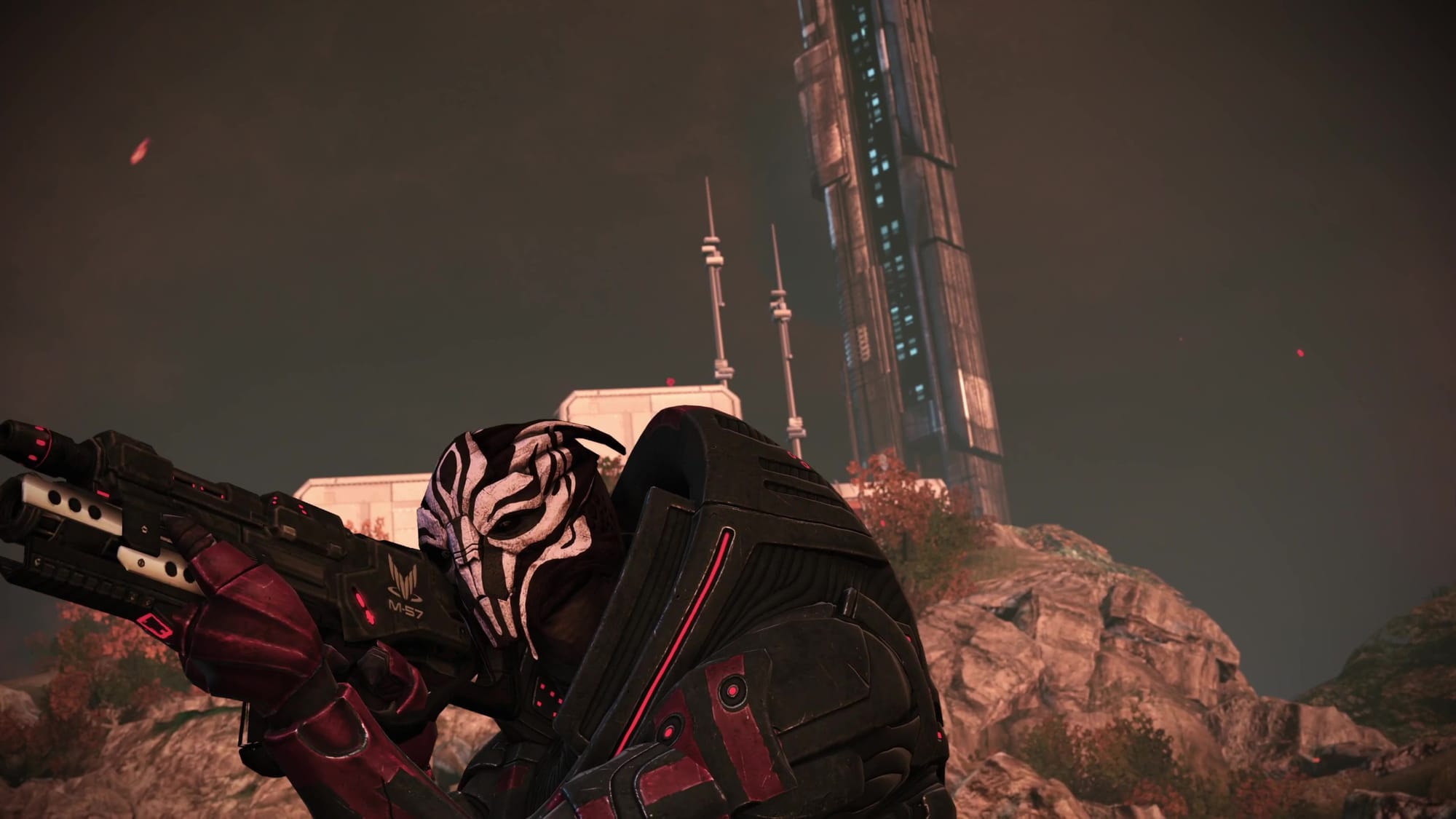
He sees another turian standing there.
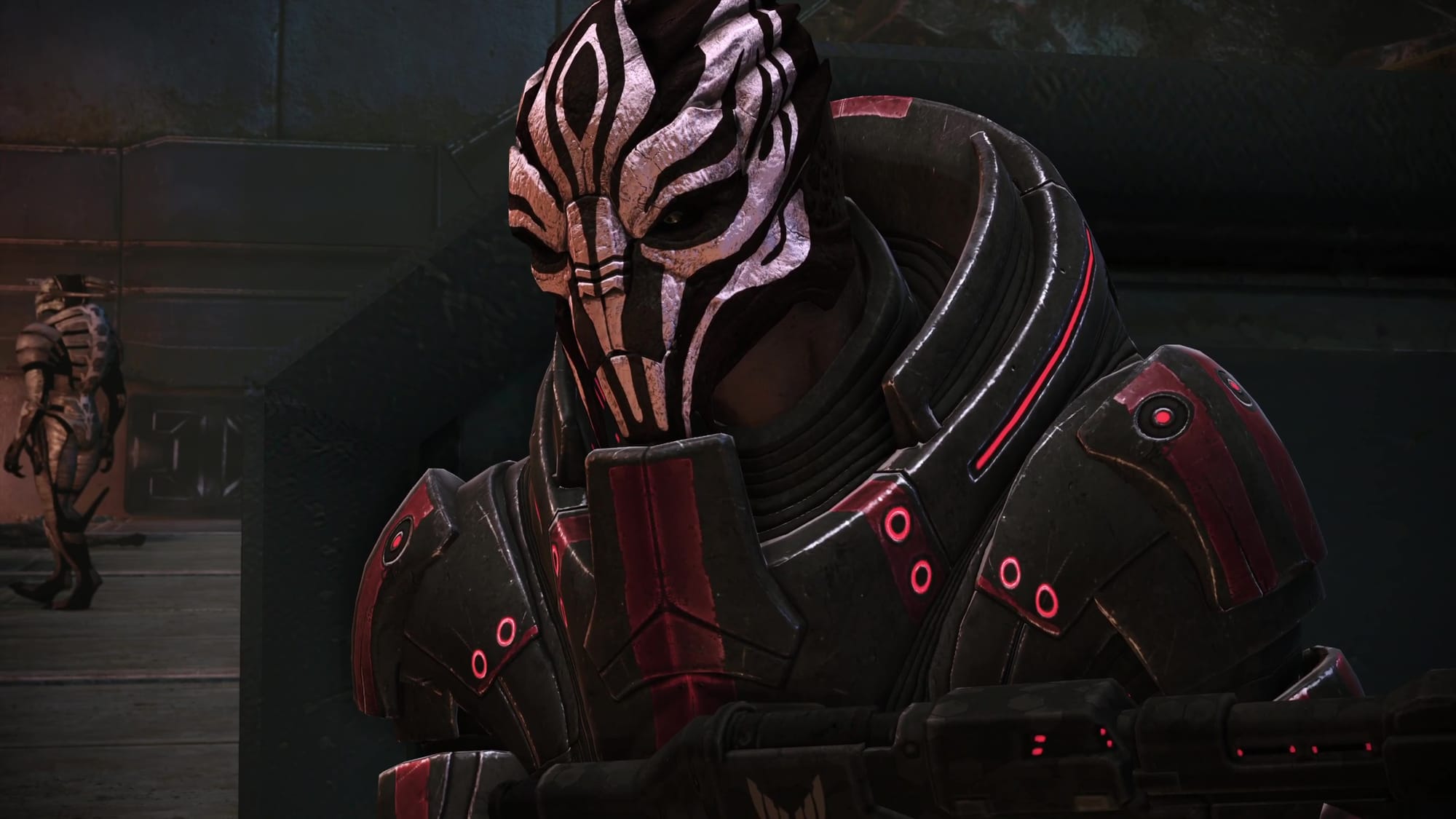
Saren Arterius.
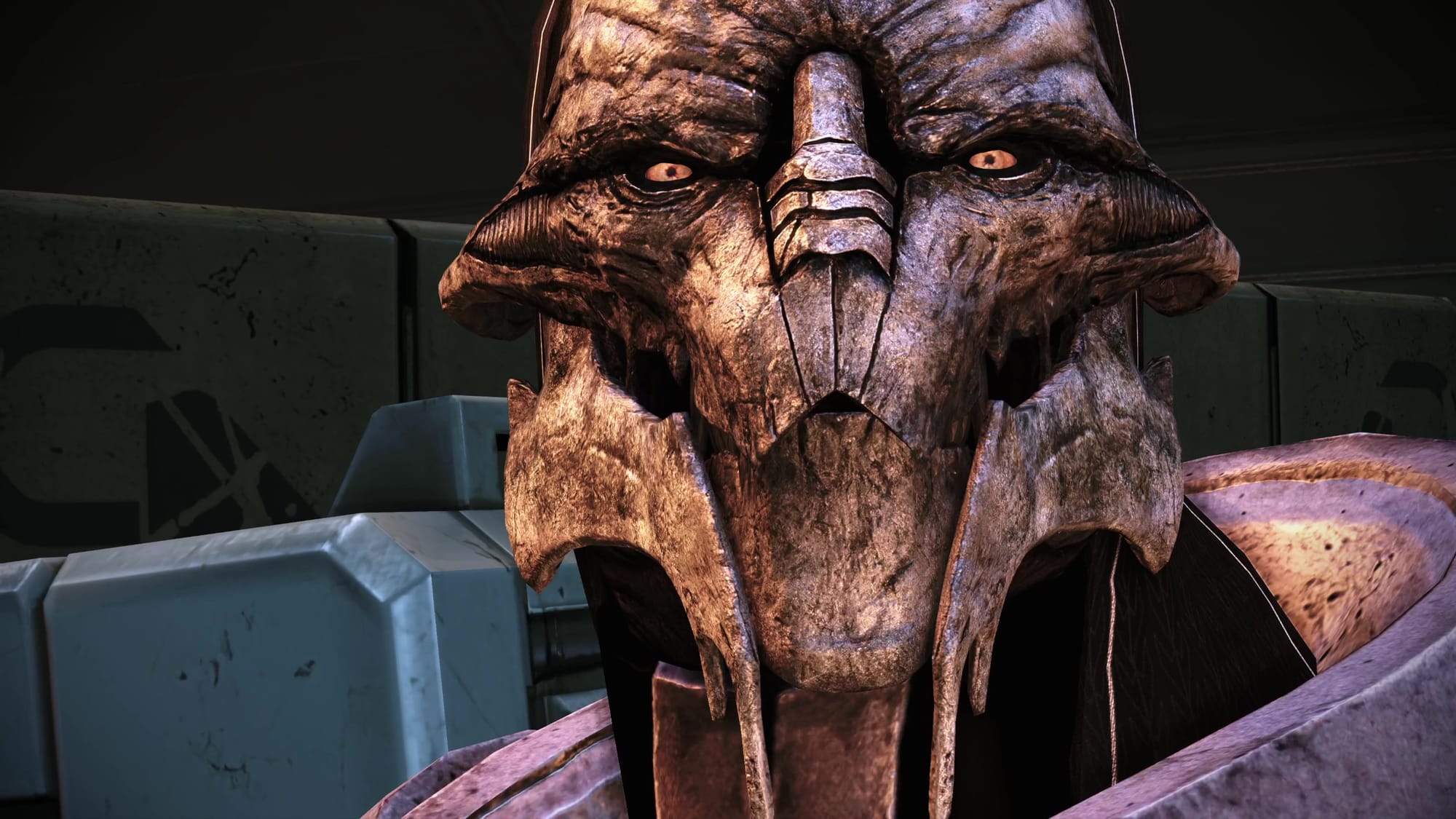
Nihlus does not treat Saren as a threat.
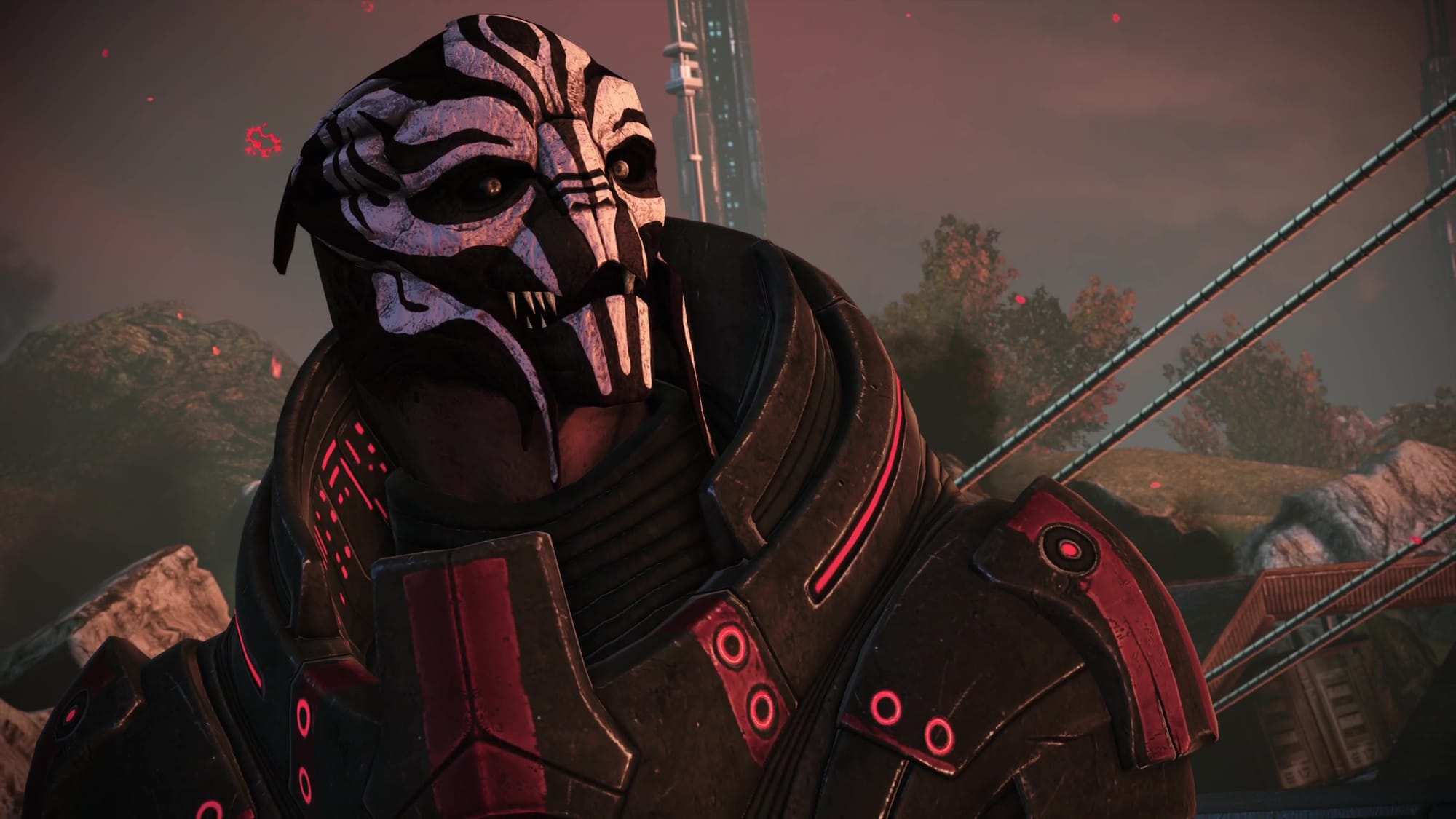
He is surprised, but not immediately afraid. This is his old mentor. Saren befriended him when Nihlus was still fighting against the limits of ordinary military procedure. Saren offered to mentor him. Within just a year, Nihlus was asked to join the Spectres.
That is the relationship entering the scene.
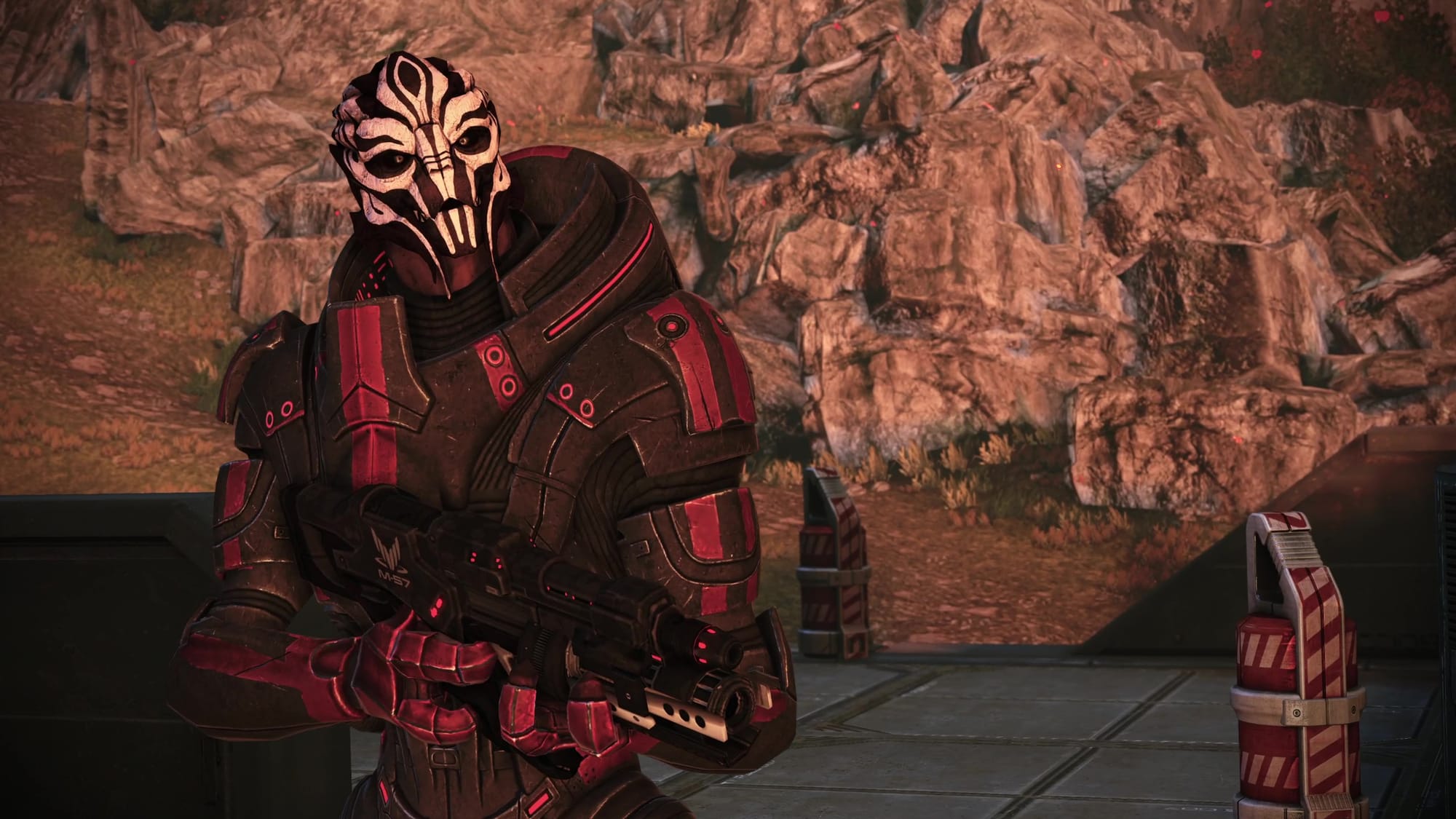
A mentor and a former protégé inside the Council’s most powerful agent class, standing in a colony Saren is currently helping destroy.
Nihlus sees Saren and thinks the field may have just become more manageable.
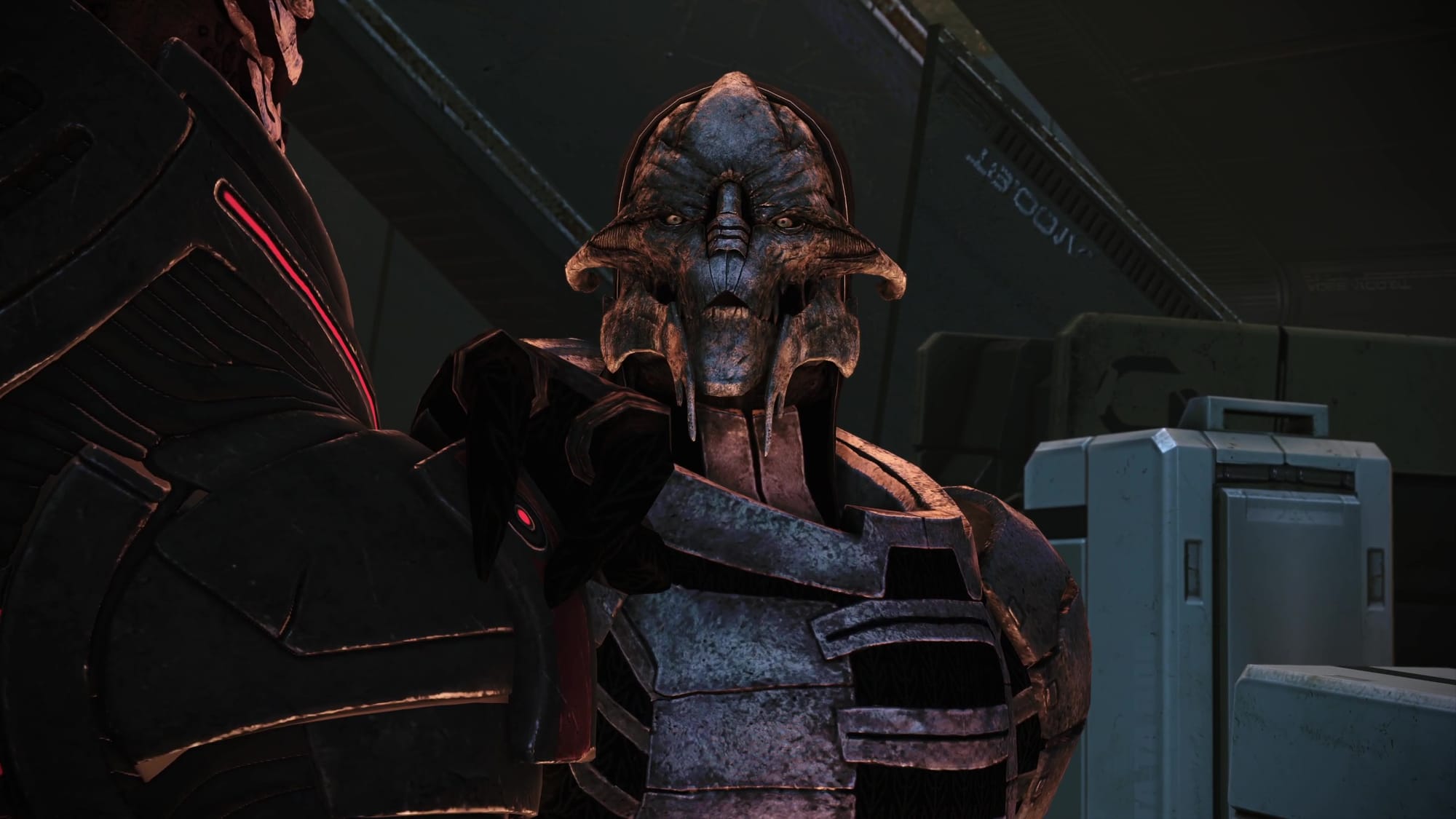
Saren lies. Nihlus turns away.
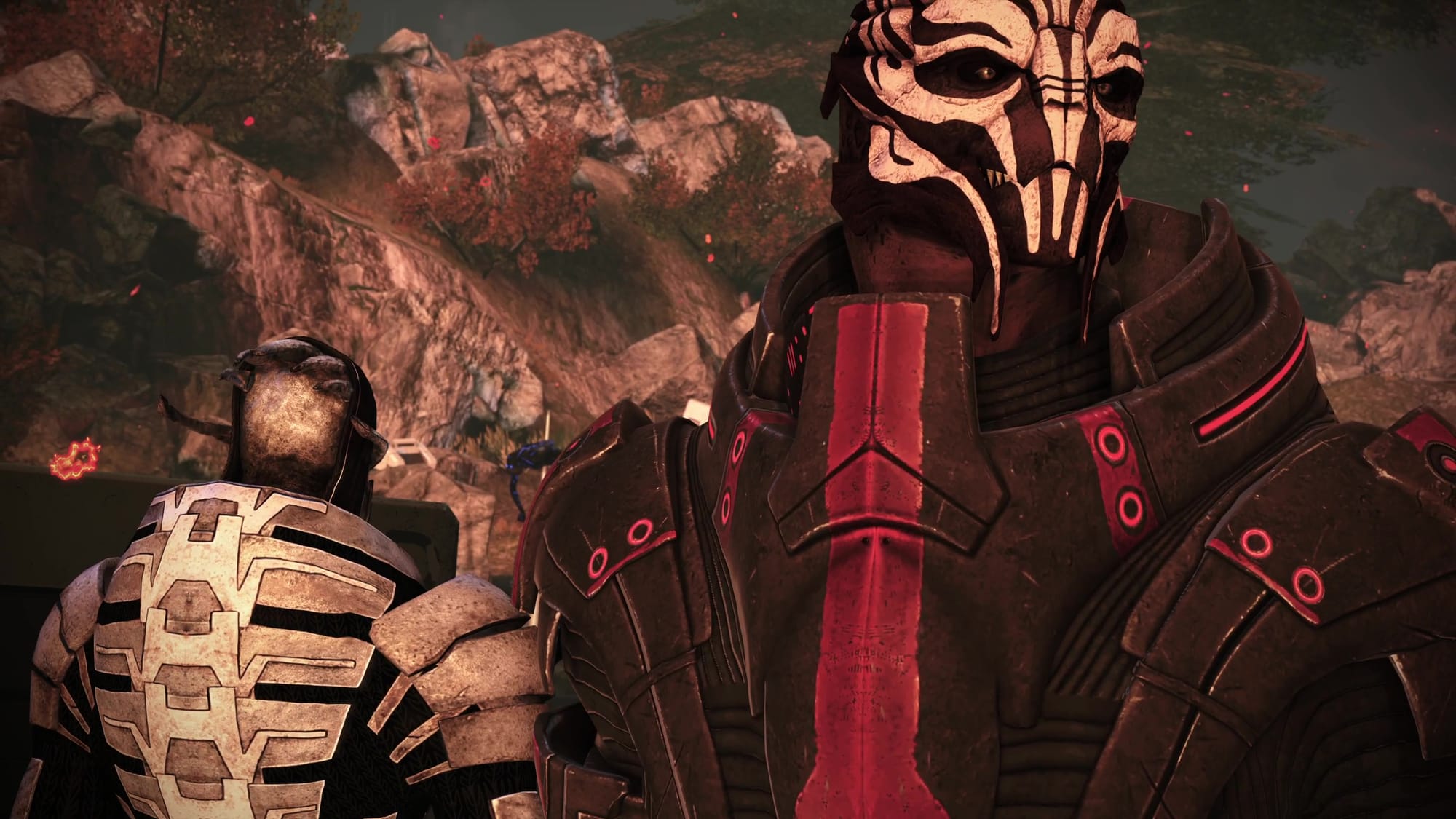
Saren raises a pistol.
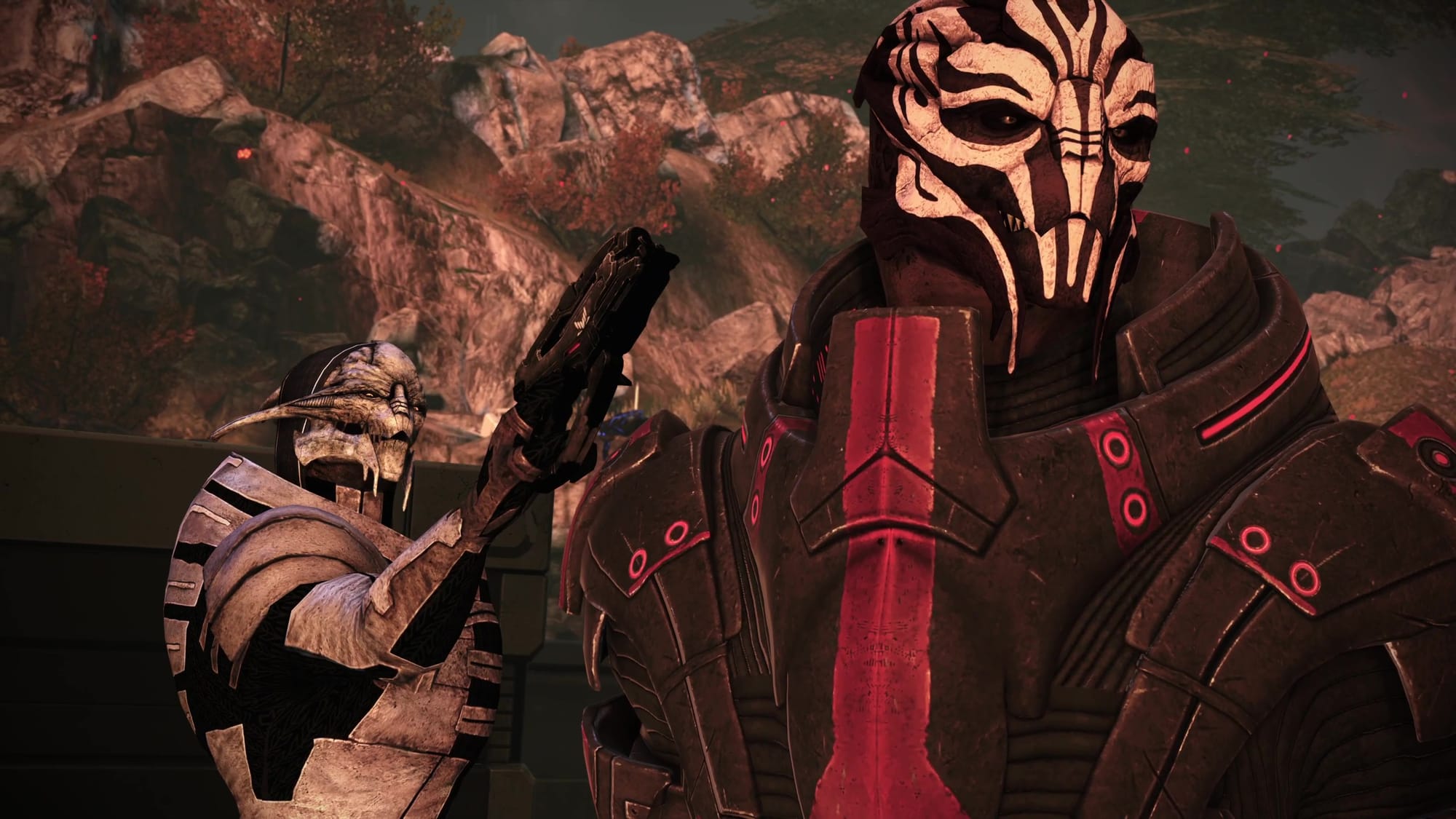
The game cuts back to Shepard. The gunshot sounds across the spaceport.
We have to pause for a minute here.
Because while Shepard hears this as an event inside Eden Prime, Saren arrives at this moment through a much older field.
Failed Field Analysts: Saren Arterius.
Saren Arterius was born in 2139.
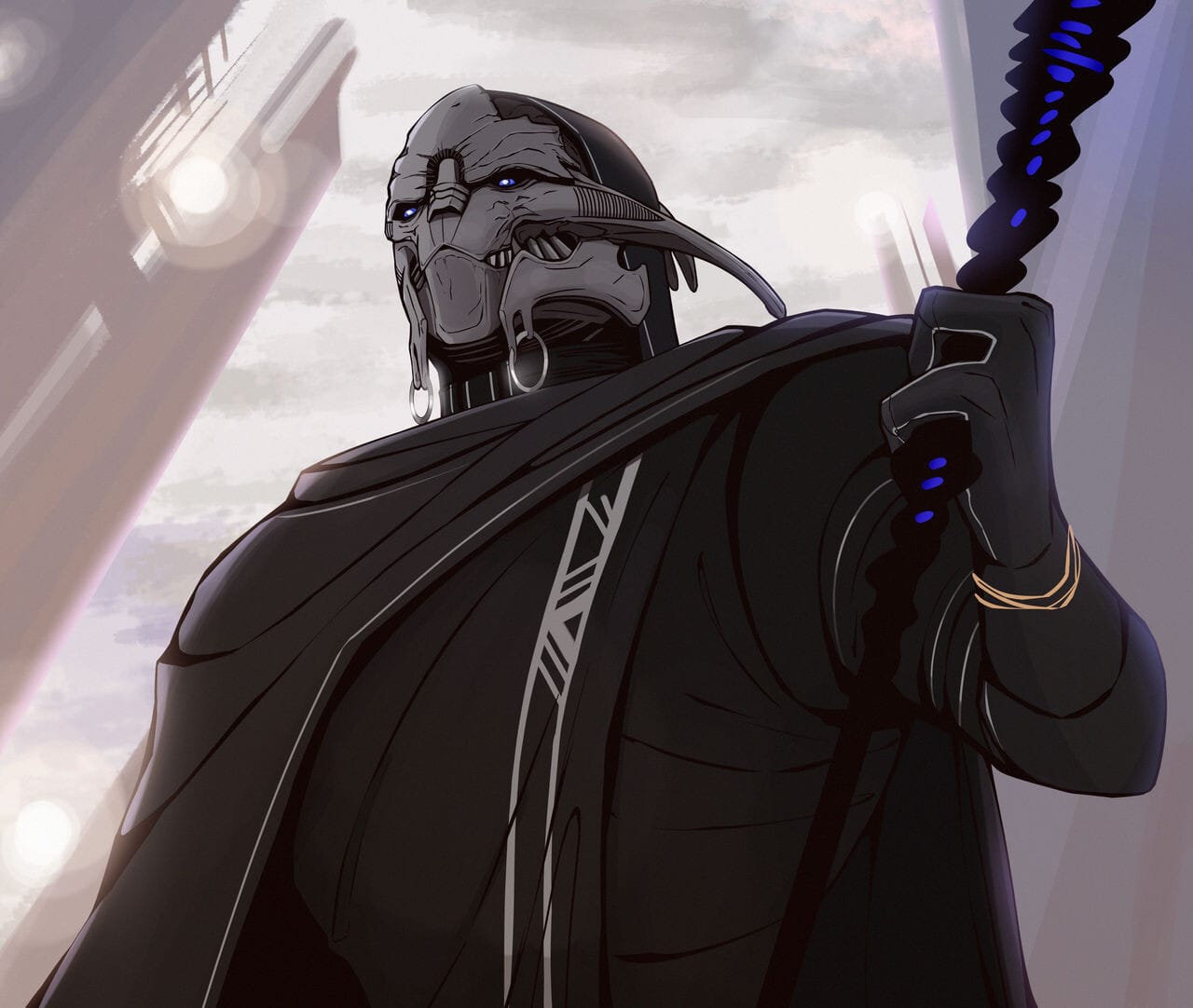
He is turian, which means he comes from a civilization where public service, military obligation, hierarchy, and duty are not decorative cultural values. They are the ordinary architecture of life. The turian individual is expected to understand himself through service to the larger structure.
This does not make turians evil, but it does make them very capable of producing men who experience obedience, necessity, and violence as the same moral weather system.
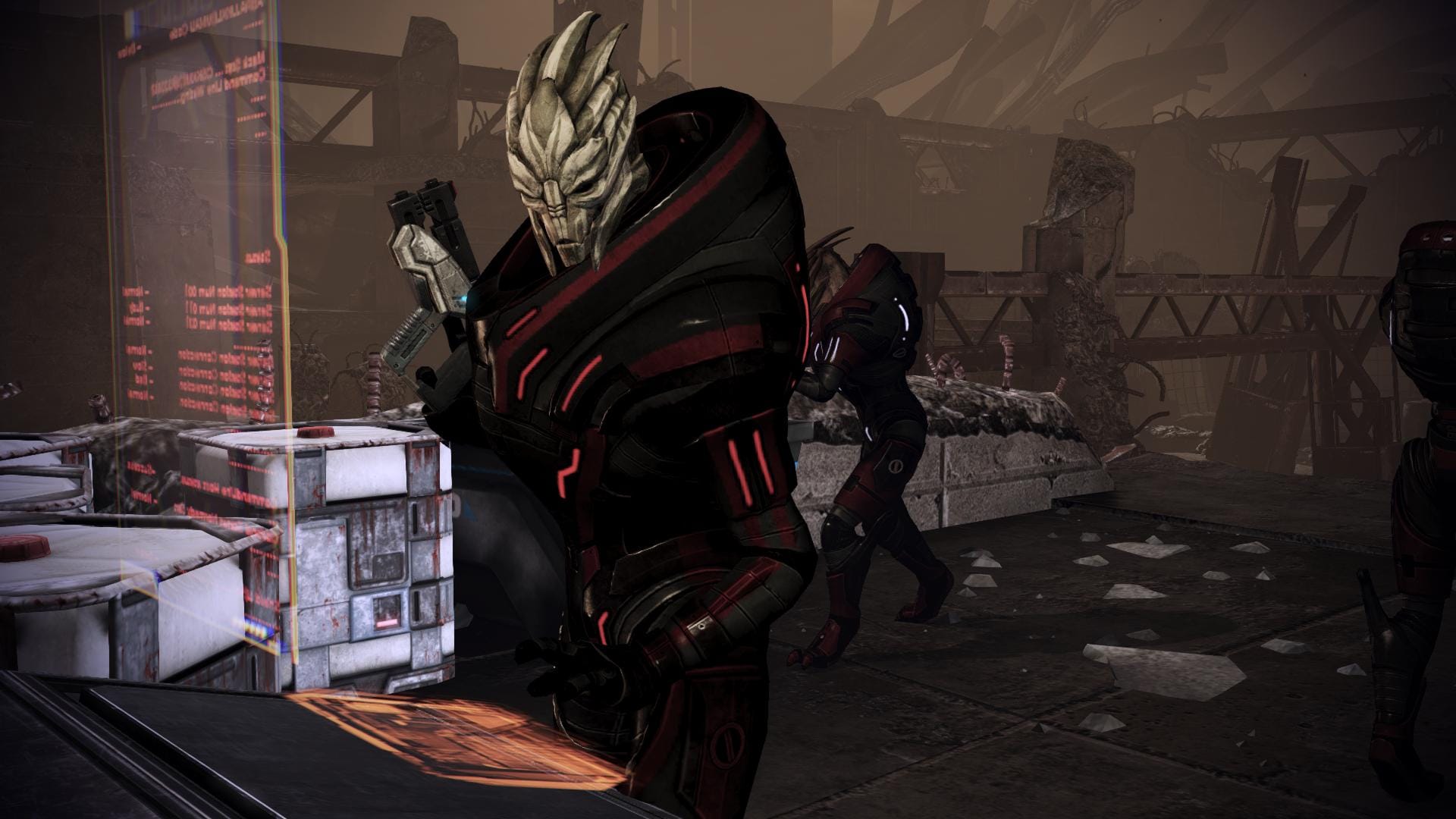
Saren entered military training at fifteen. By twenty, he had become the youngest turian ever admitted into the Spectres. He then became one of the Council’s longest-serving and most effective agents.
He was brilliant. He was useful.

He was also brutal in exactly the way institutions like to rename when the results are convenient.
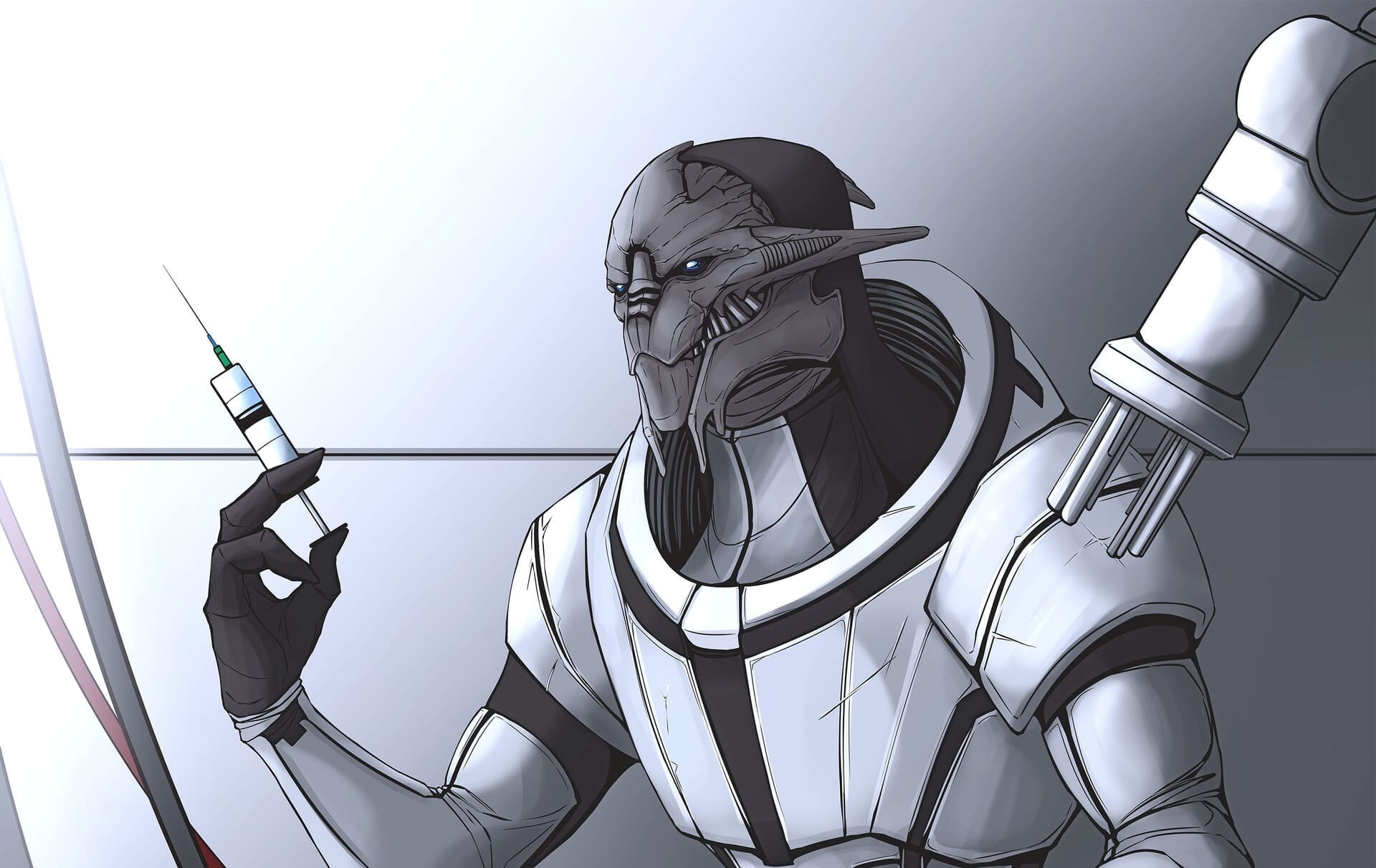
Saren is not a Failed Field Analyst because he cannot perceive large fields. He perceives them constantly. That's what makes a failed analyst dangerous.
He sees systems, threats, institutional delays, species-level pressures, tactical choke points, witness chains, political obstacles, and the difference between an official rule and the force required to make a desired outcome happen anyway. He is very good at moving inside the spaces where ordinary law slows down. That is why the Council uses him.
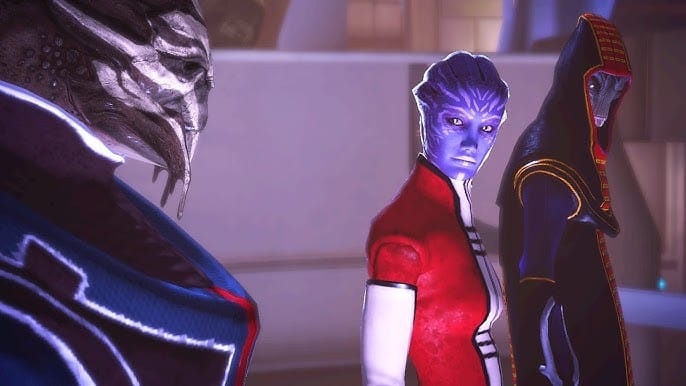
A stupid Saren would be less dangerous. A chaotic Saren would be less dangerous. A Saren who simply loved violence for its own sake would be easier to identify, easier to contain, and much less useful to the institutions that keep giving him authority.
Saren is incredibly dangerous because he has a very good model of the field. The model works often enough to be rewarded.
Then, it fails at the exact scale where failure becomes catastrophic.
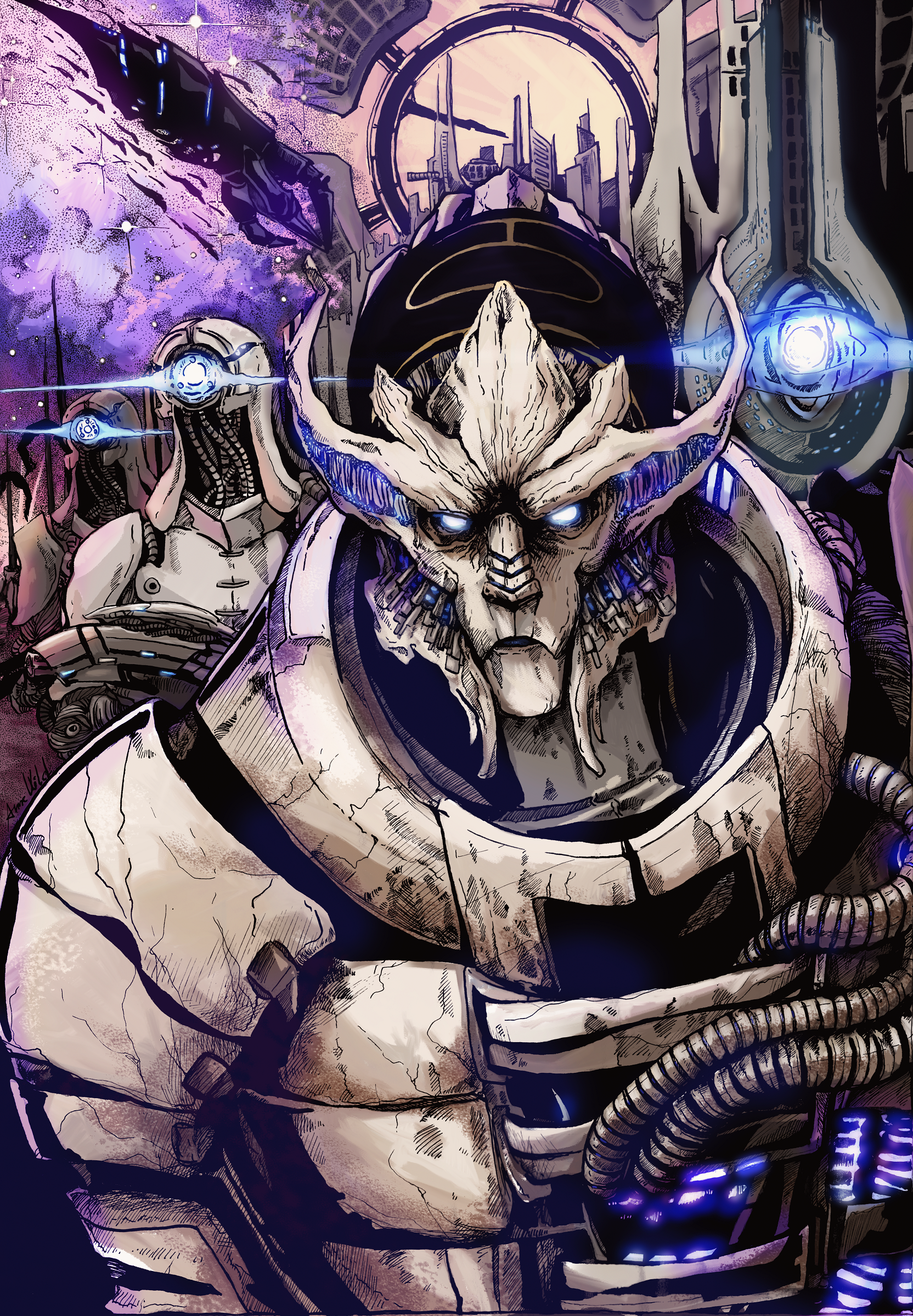
The lore gives Saren two principles.
- Never kill anyone without a good reason.
- And you can always find a good reason.
This is one of the most dangerous ethical machines presented in Mass Effect.
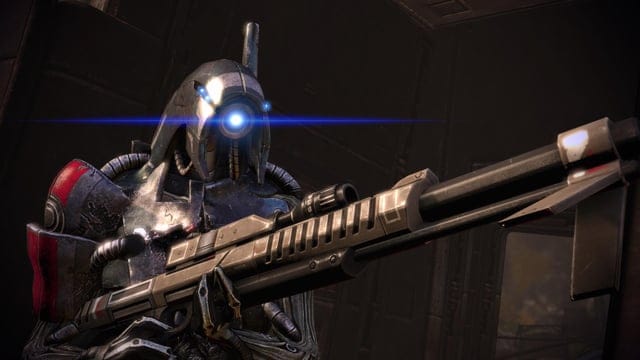
Random cruelty is easier to identify. Random cruelty announces itself as appetite. Saren’s principle keeps the shape of justification while hollowing out its constraint. It lets him experience murder as a disciplined necessity because the search for a reason has already been rigged to succeed.
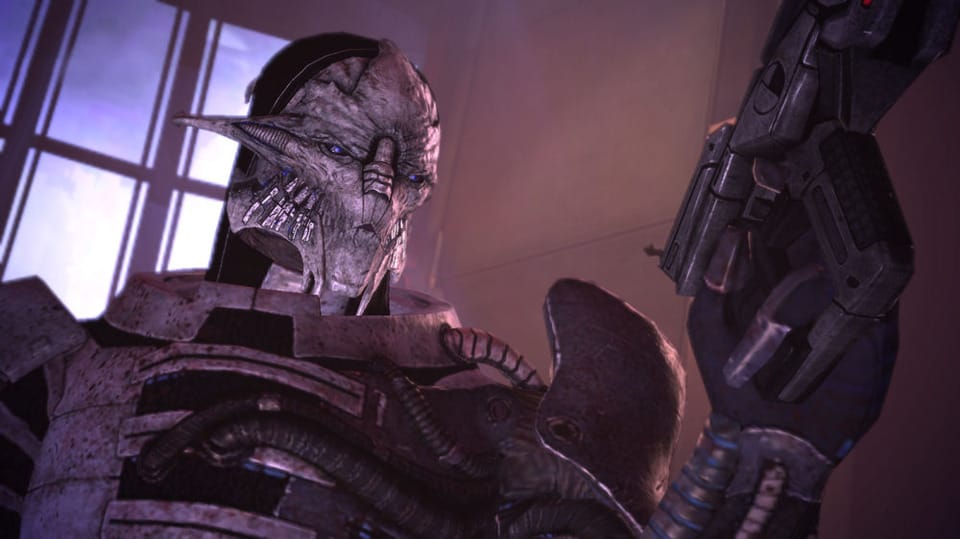
The first rule preserves the self-image of restraint. The second rule destroys restraint. Together, they form a machine for converting inconvenience into necessity. That is how Saren remains intelligible to himself.
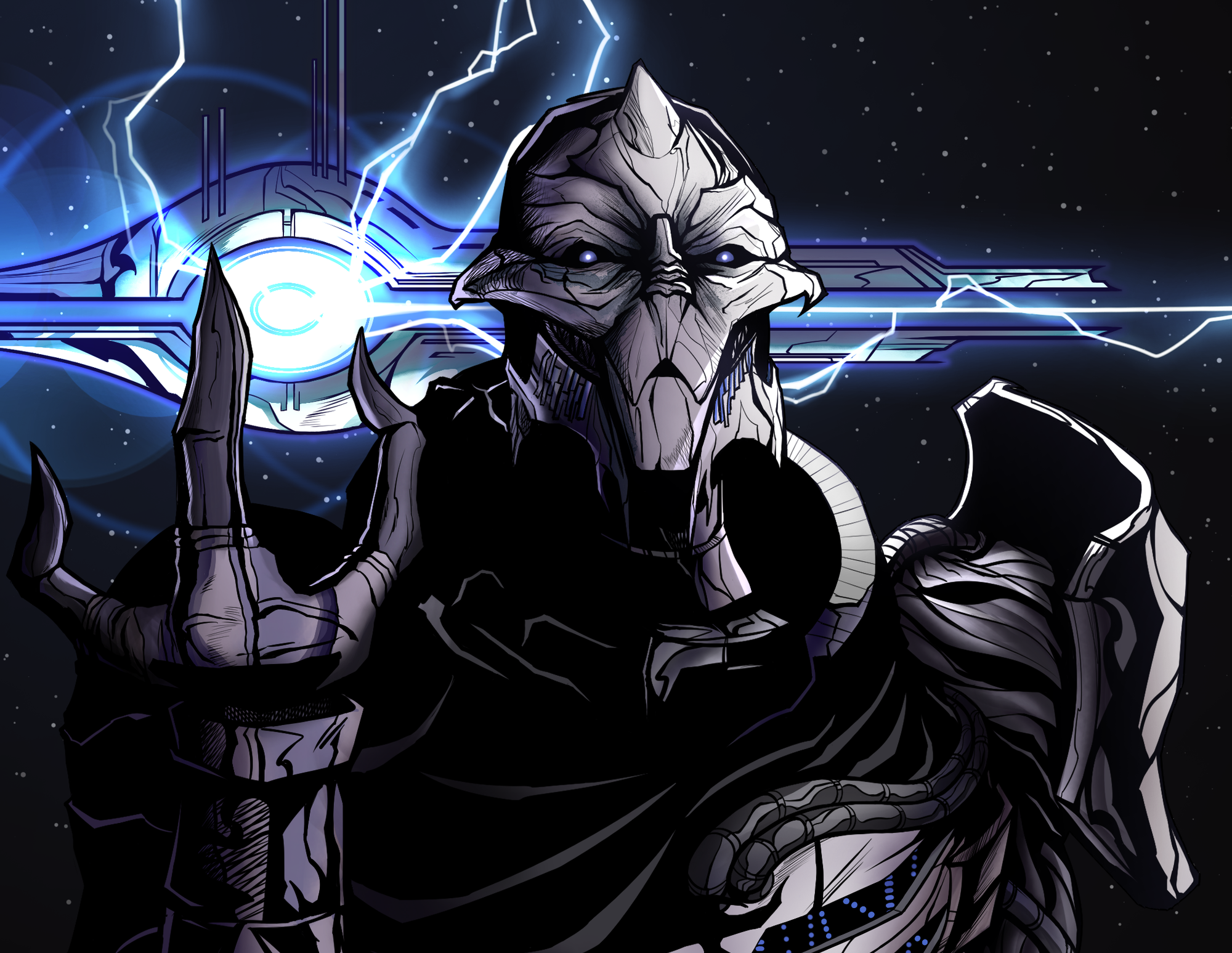
Modal Path Ethics is deeply concerned with the internal legibility of bad action. Many of the worst paths are not selected by agents who experience themselves as choosing harm for harm’s sake. They are selected by agents who believe they have found the adult answer, the hard truth, the necessary burden, the terrible thing someone mature enough finally has to do.
Saren is exactly that kind of agent.
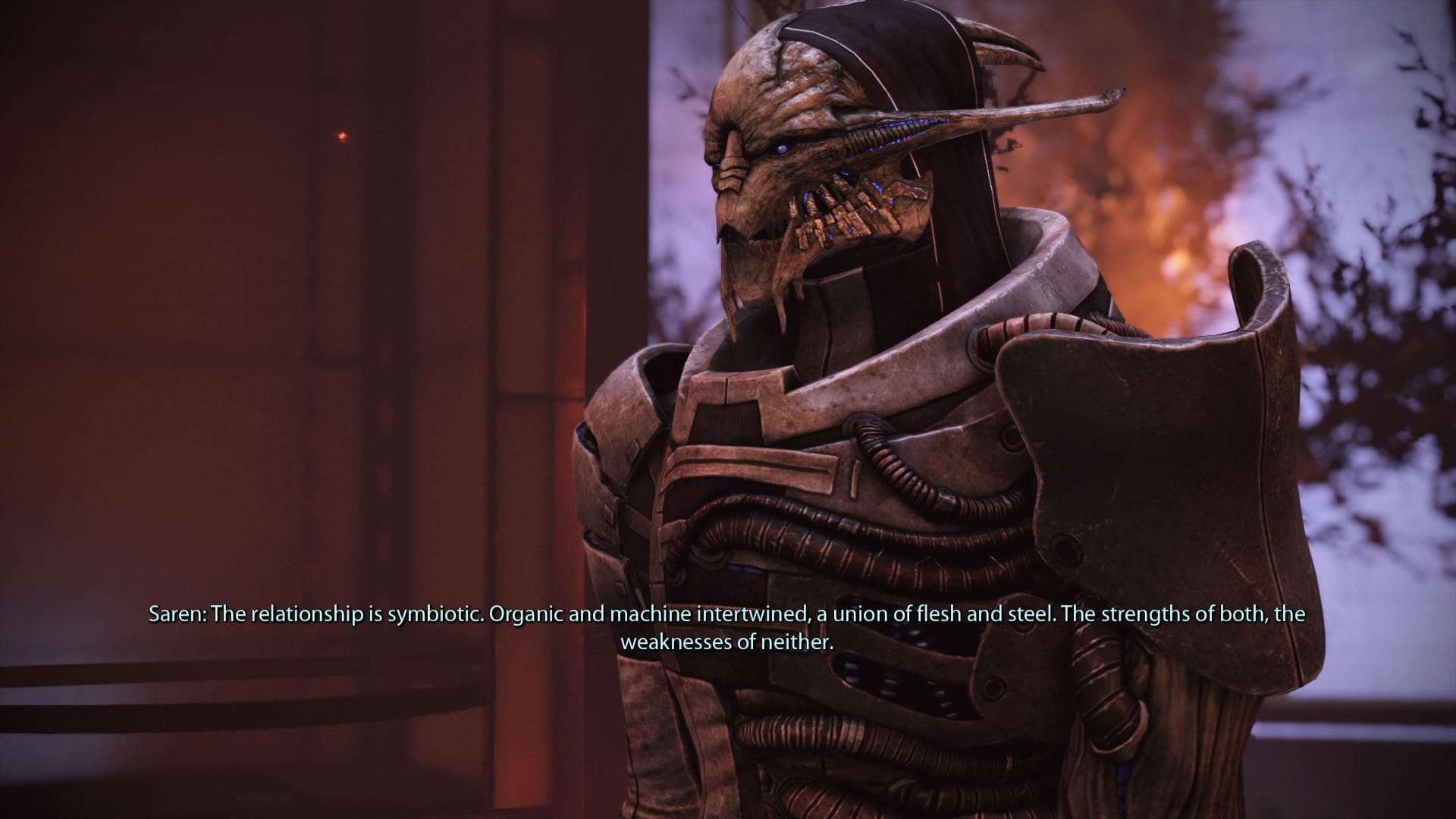
He does not walk into a field asking, “How do I cause maximum destruction here?”
He walks in asking:
“What must be removed?”
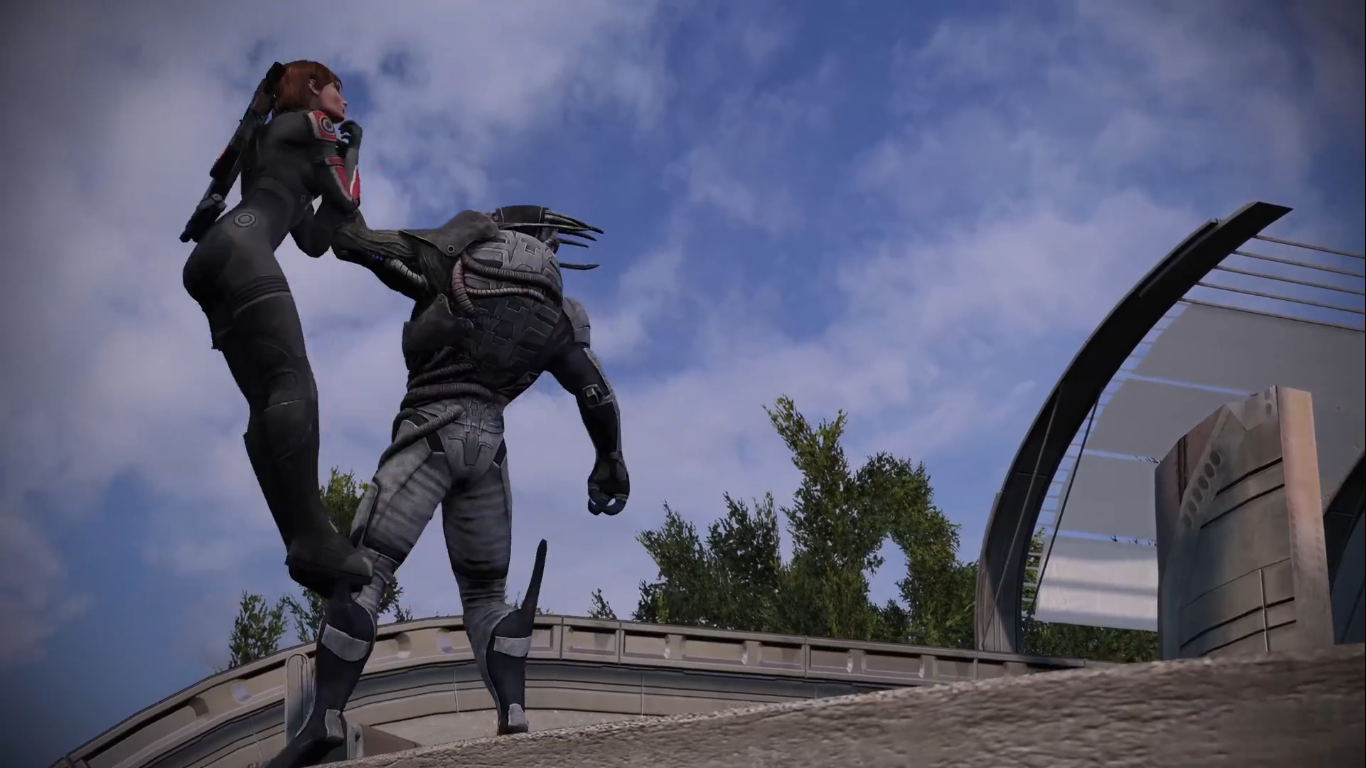
That question can be useful in an emergency. A firebreak removes trees to preserve a forest. A surgeon removes tissue to preserve a body. A commander may have to remove a tactical option that would expose more lives to greater harm. Modal Path Ethics does not forbid removal. It asks what removal closes, what it opens, what alternatives remain, which loci are being weighted, and whether the field has been correctly described.
Saren’s failure is that removal becomes the privileged tool.
Once that happens, field analysis turns into field simplification.
- Witnesses become complications.
- Institutions become delays.
- Lives become units of operational friction.
- Trust becomes an exploitable vulnerability.
And because Saren can always find a good reason, every closure arrives dressed as responsibility.
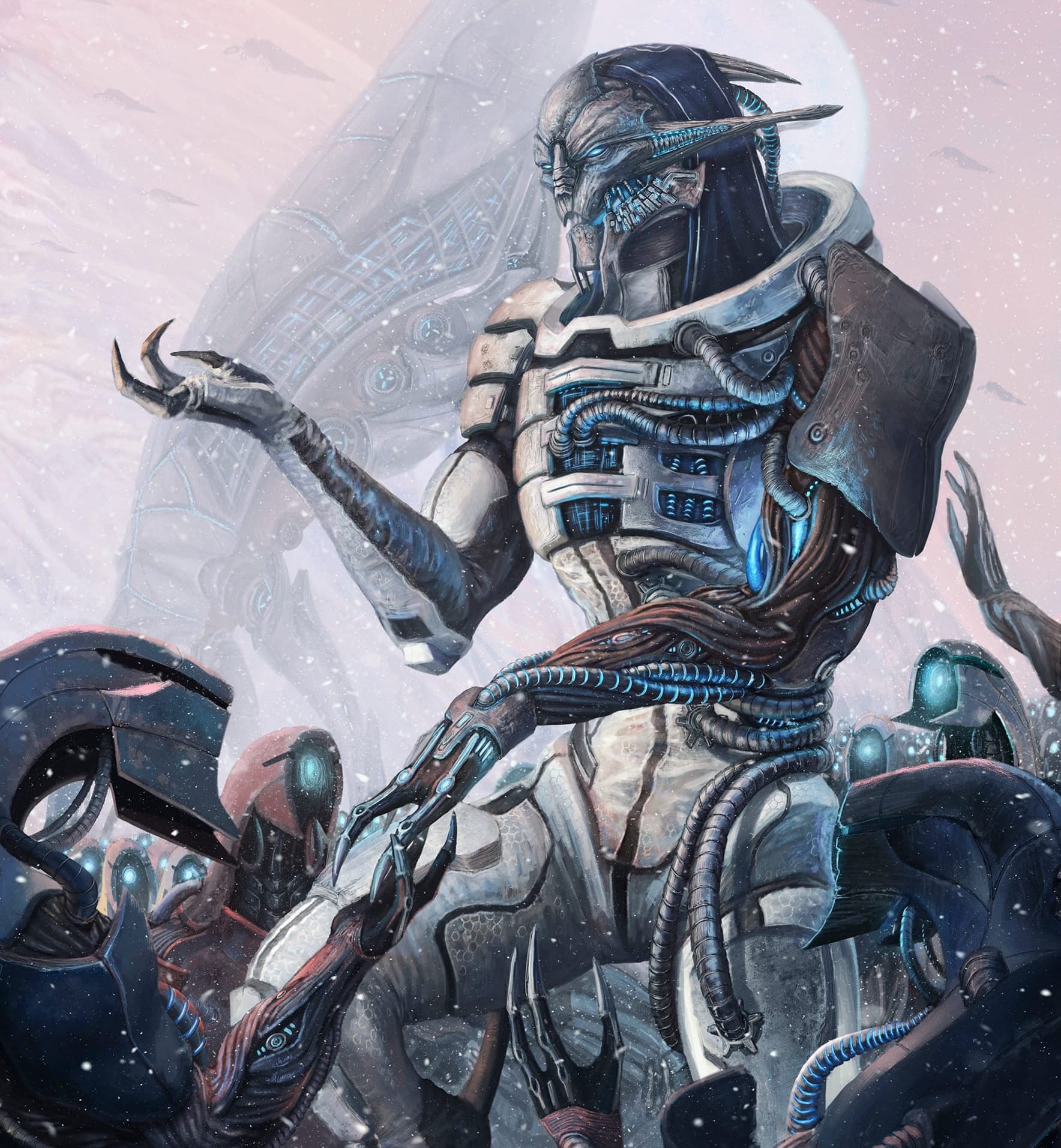
This is where Saren's xenophobia become important. Saren’s anti-human hostility is not invented from pure hallucination. That would be more like moving, because then we could place the entire failure inside personal bigotry and stop looking deeper. Except, the field around humanity’s rise is genuinely very unstable.
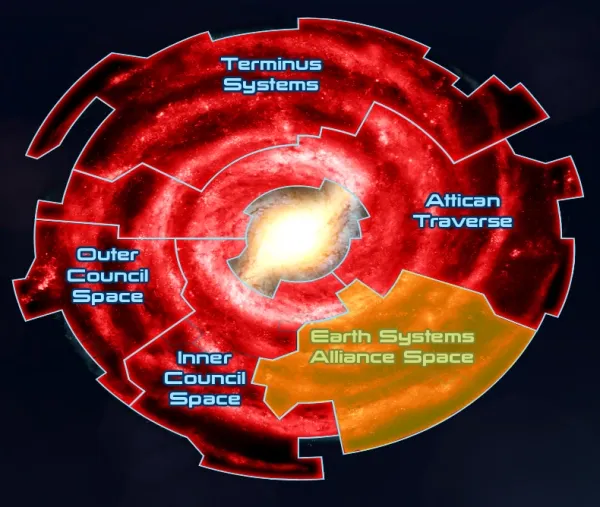
Humanity found Prothean ruins on Mars and immediately accelerated into galactic history. It activated dormant relays without knowing the legal or historical context. It fought back against the turians. It claimed colony worlds at remarkable speed. It immediately demanded representation, status, and military respect from civilizations that had been navigating Citadel politics for centuries.
From the perspective of an older Citadel species, humanity looked dangerously fast. That perception is not automatically false at all.
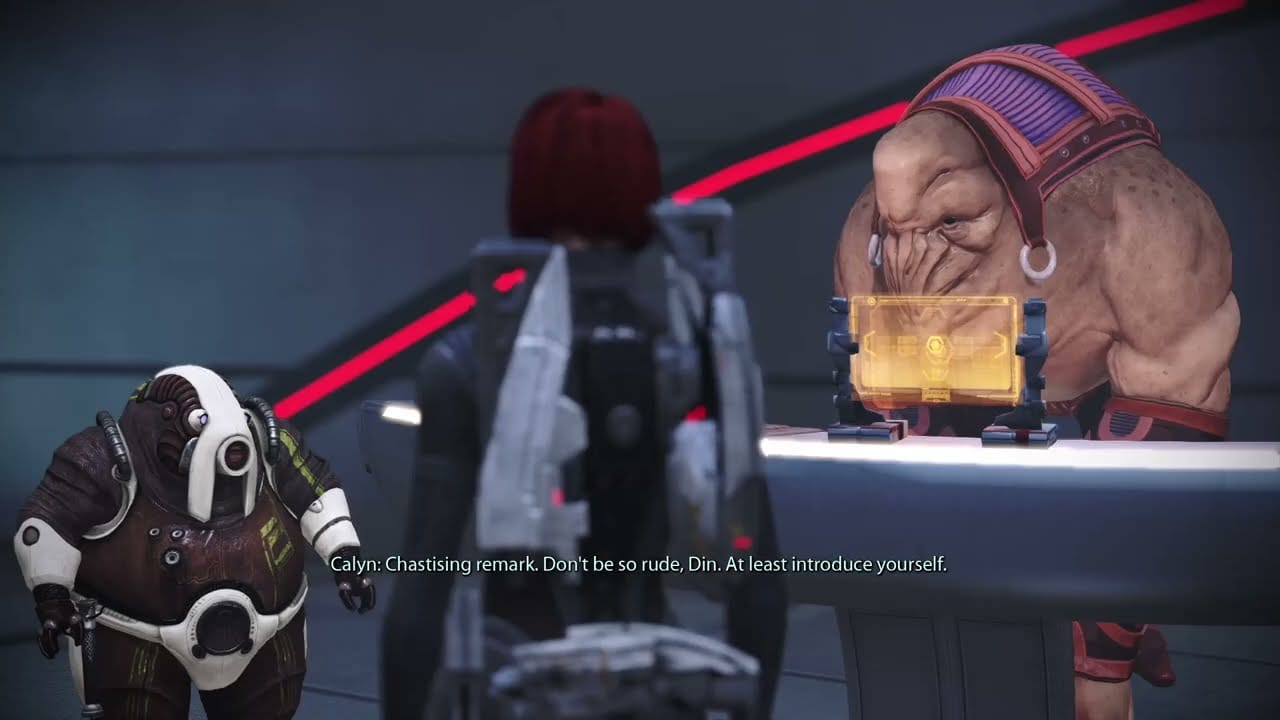
The Systems Alliance is very ambitious. Humanity in Mass Effect is expansionist. Human political leadership wants a larger place in Citadel civilization than the species’ short history makes truly comfortable. Human private groups, criminal projects, military research programs, and nationalist extremists will repeatedly prove that “humanity moves too fast into dangerous things it does not understand” is not an empty concern inside this setting.
Cerberus alone will spend the entire trilogy screaming this point through a bullhorn made of war crimes.
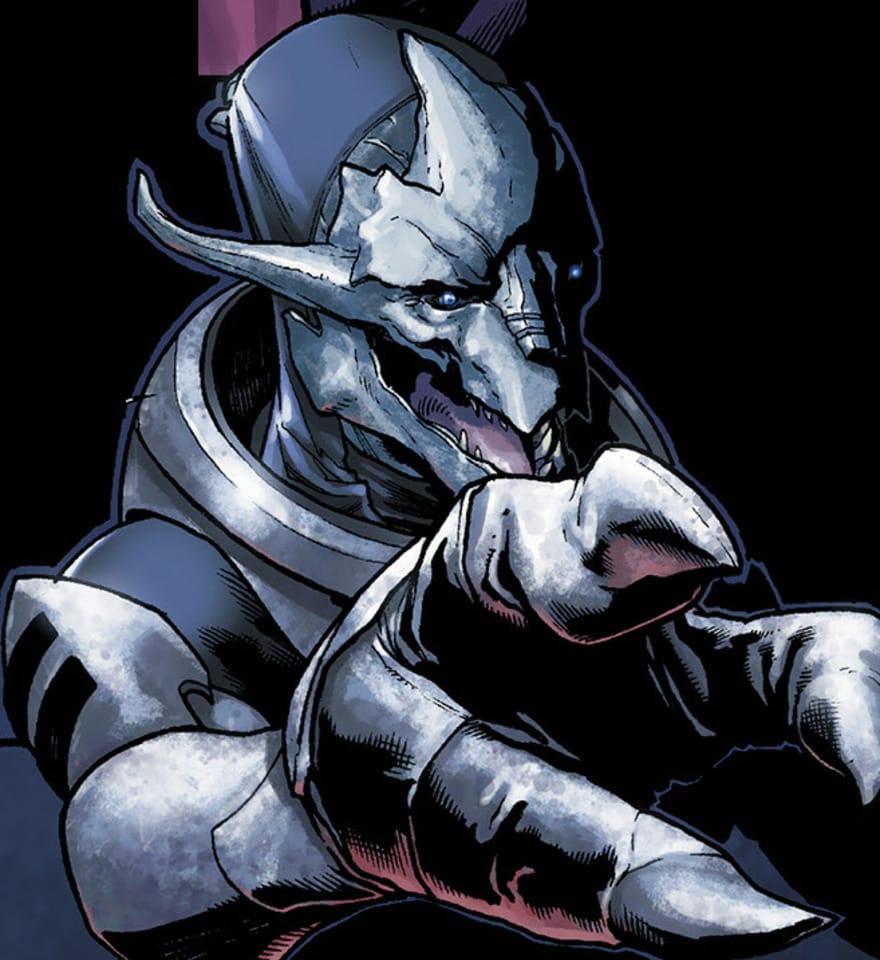
So, Saren sees some of this reality.
Then he corrupts it. He converts policy concern into species hatred.
That is the classic Failed Field Analyst structure. There is always a real field pressure. The analyst identifies part of it correctly. Then, he overcompresses the field into a single hostile category his psychology favors.
Humans are now not an emergent species with risky expansion patterns, institutional insecurity, and varied internal factions.
Humans become The Problem.
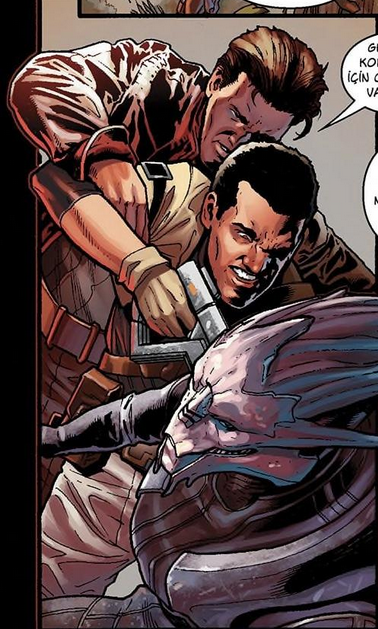
Once that happens, individual human loci become much harder for Saren to perceive correctly. Anderson is not a human soldier with his own agency, history, skill, and possible legitimacy.
Anderson is an instance of human overreach.
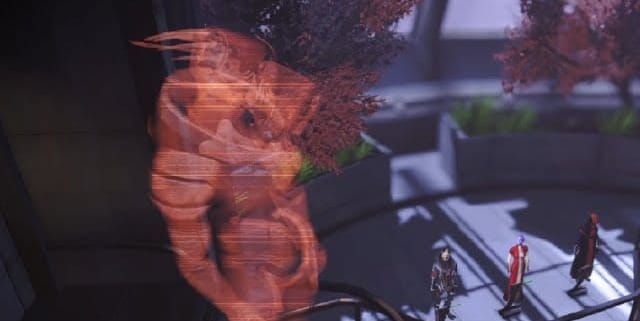
Shepard is not a candidate whose conduct can be evaluated. Shepard is just another version of the same encroaching species path.
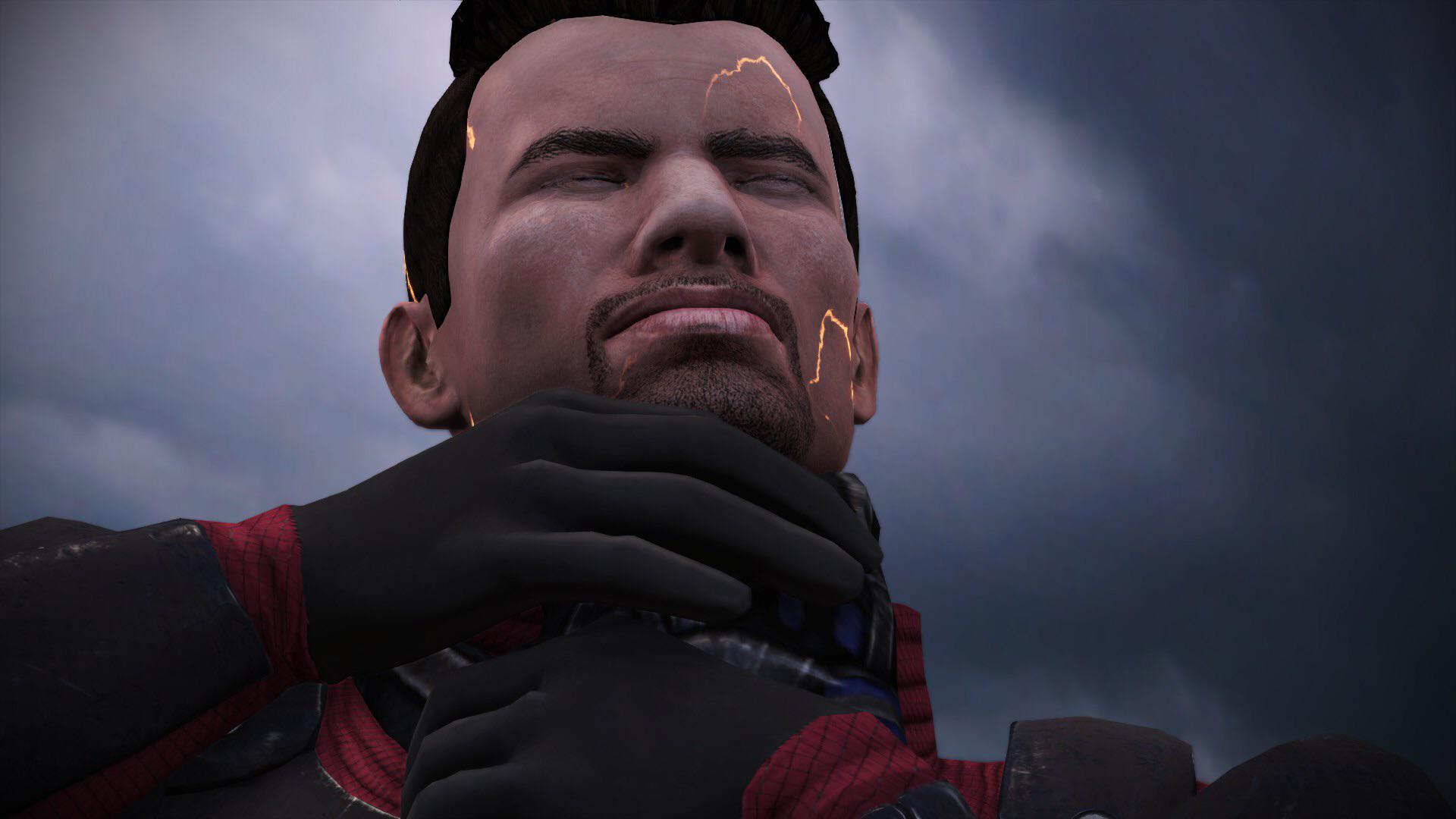
A field is never accurately perceived when its loci are compressed into the analyst’s prior resentment. Species-level analysis like this can be necessary. So can institutional analysis, faction analysis, class analysis, role analysis, and system analysis. But when a living locus disappears into a hostile abstraction, the analyst has started burning detail to preserve their preferred posture.
Saren does this well before he encounters Sovereign.
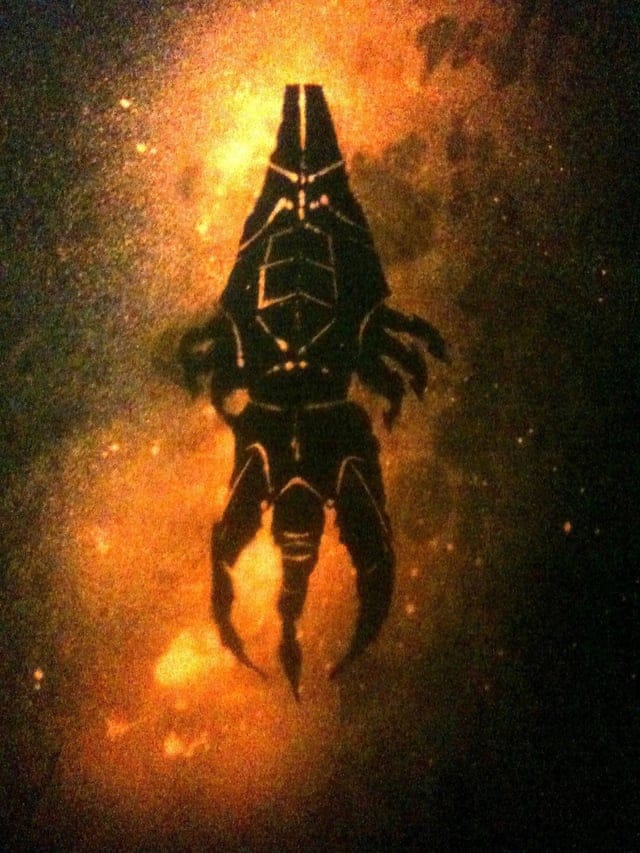
Sovereign corrupts Saren. But Sovereign does not create the Spectre from nothing. Reaper indoctrination always finds an existing structure and bends it. Saren has already built himself a moral machine with incredibly weak safeguards: always find a reason, remove complications, distrust humans, bury dangerous fields through force, and treat institutional delay as proof that unilateral action is warranted.
Sovereign does not need to invent the door, because Saren already did. It only needs to walk through.
Anderson.
David Anderson is one of Saren’s earlier closures.
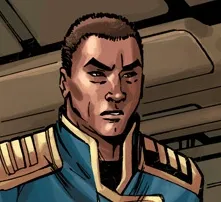
As already described, years before Eden Prime, Anderson was considered as a possible human Spectre. This would have opened a path similar to the one Shepard is now walking: a route for humanity into Council-level agency through an individual who could act across political boundaries.
Saren closed it.

The mission that destroyed Anderson’s candidacy involved batarians, human research, and a dangerous artifact. In traditional Mass Effect fashion, this situation was already carrying way too fucking many unstable fields before Saren arrived to make everything even worse.
Saren and Anderson were assigned together. Anderson was being evaluated. Saren had his own agenda. He sabotaged the mission, killed witnesses, pursued the artifact, and arranged the report so that Anderson carried the blame.
So, Anderson has prior experience with Saren’s pattern, and that prior experience is accurate enough to help Shepard later. However, it is also personal enough that the Council can dismiss it as bias.
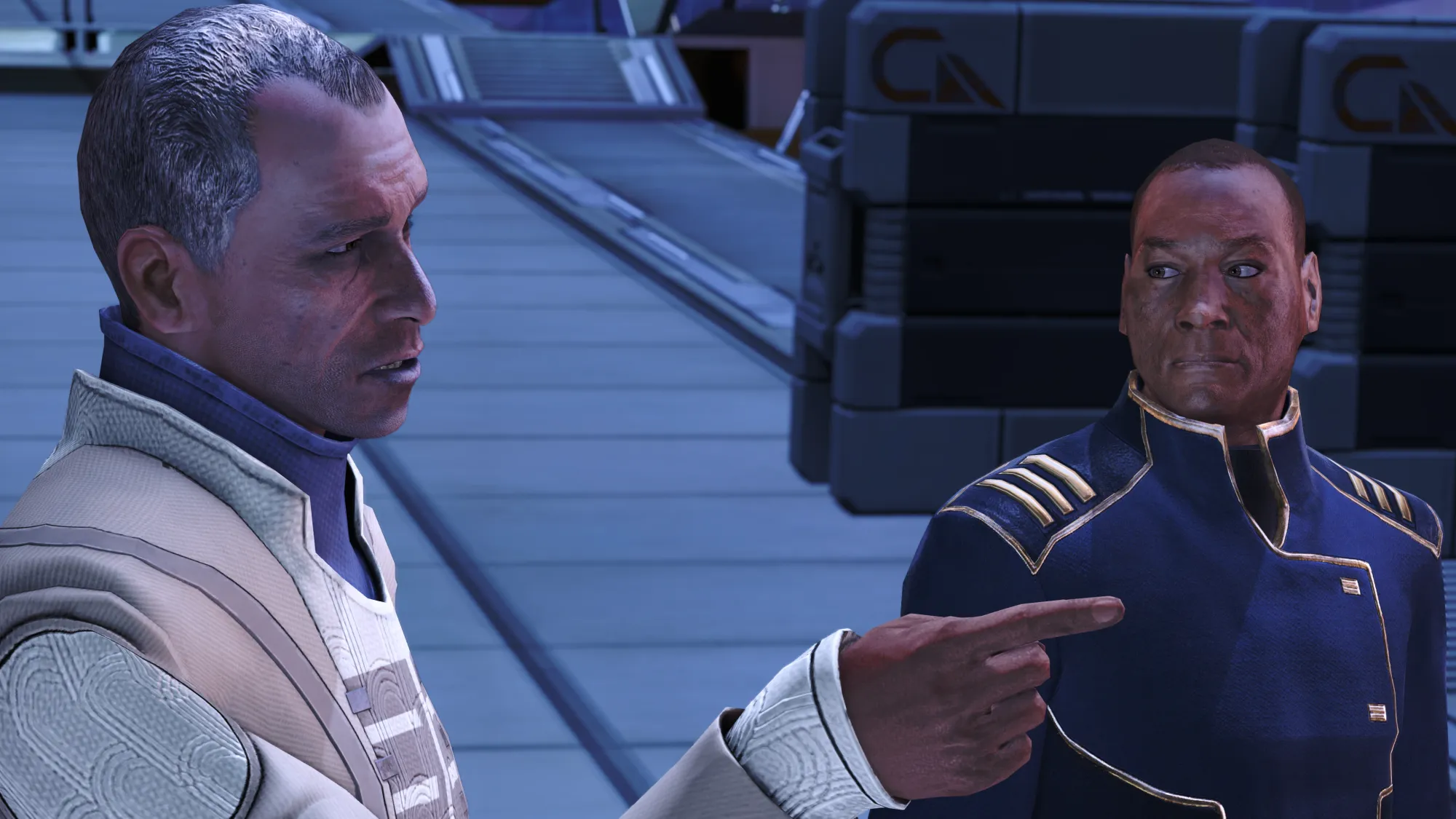
Institutions love a reason to turn accuracy into bias whenever accuracy is inconvenient.
This is one of the subtle institutional pathologies Mass Effect handles well. The Council will later face a claim about Saren from Shepard and Anderson. Anderson knows Saren is capable of this. But Anderson is also compromised by personal history. Both facts are true.
A bad institution uses the second fact to avoid the first. Saren will benefit from this.
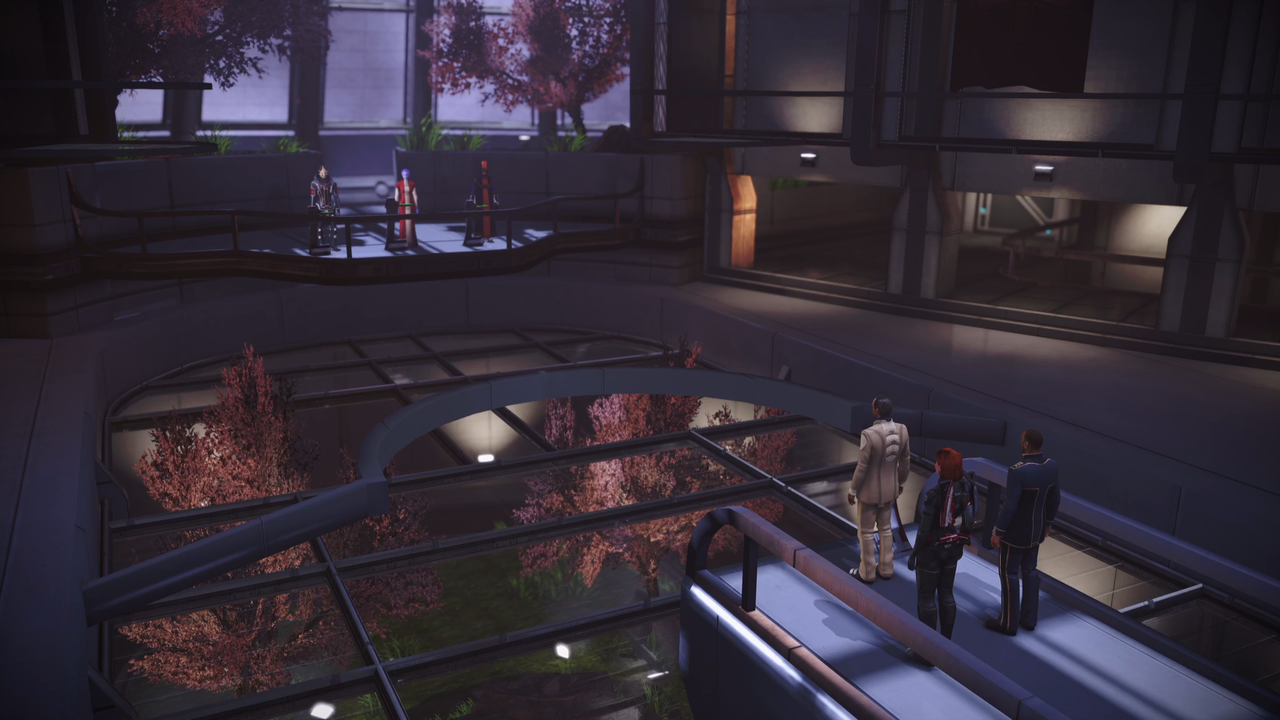
He has already learned that if the evidence field is damaged enough, the Council will prefer the interpretation that preserves institutional stability. A decorated Spectre is easier to believe than a failed human candidate. A trusted agent is easier to protect than a young species demanding even more authority.
And a messy report can close a future if the institution already wants that future slowed down.
Desolas and the First Reaper Lesson.
The deeper wound in Saren’s field runs through his brother, Desolas Arterius.
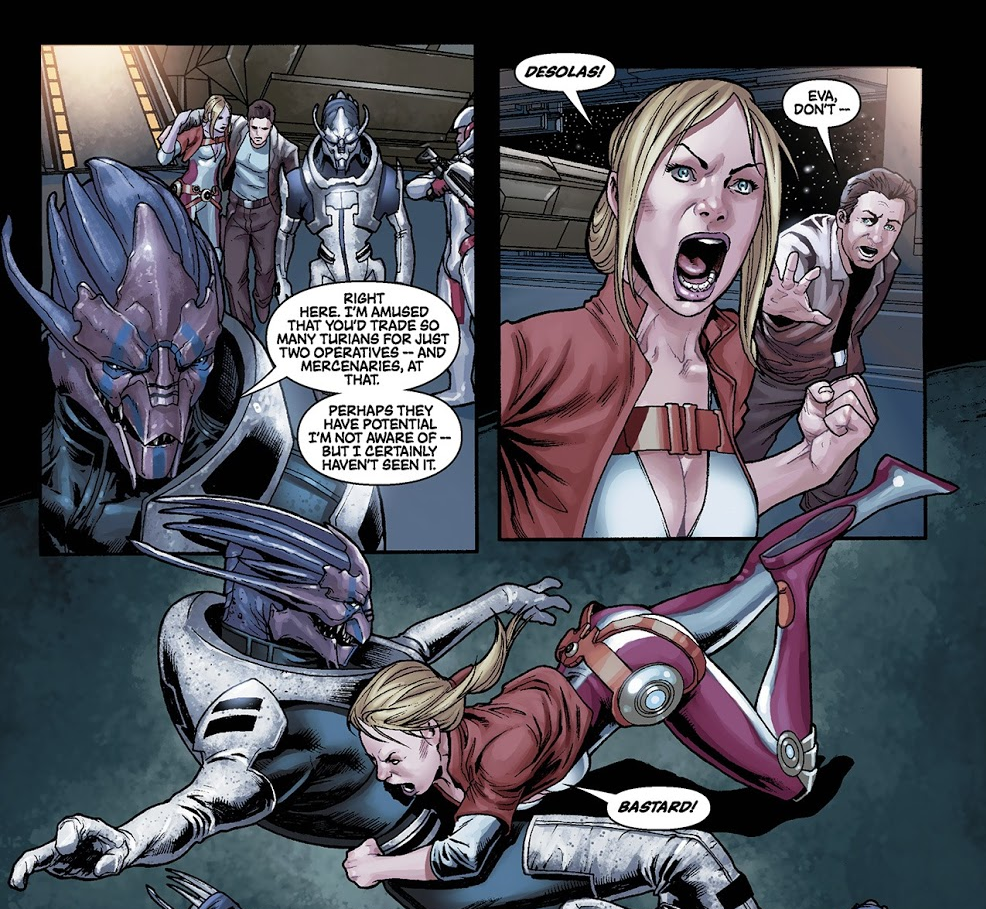
Back during the First Contact War, Desolas became involved with an artifact found on Shanxi. This artifact was not Prothean. It was Reaper technology, though no one involved yet had the language for that.
The human mercenary Jack Harper, who will later become the Illusive Man and form Cerberus, crossed paths with Desolas during the operation.
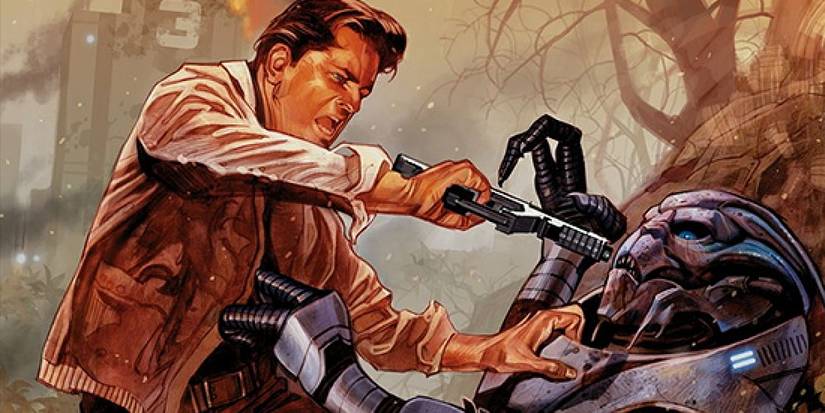
Harper and his team found the artifact first. It transformed Harper’s friend Ben Hislop into something husk-like and left Harper himself changed, including the unnatural eyes that will eventually make him look like a cyberpunk cigarette advertisement.
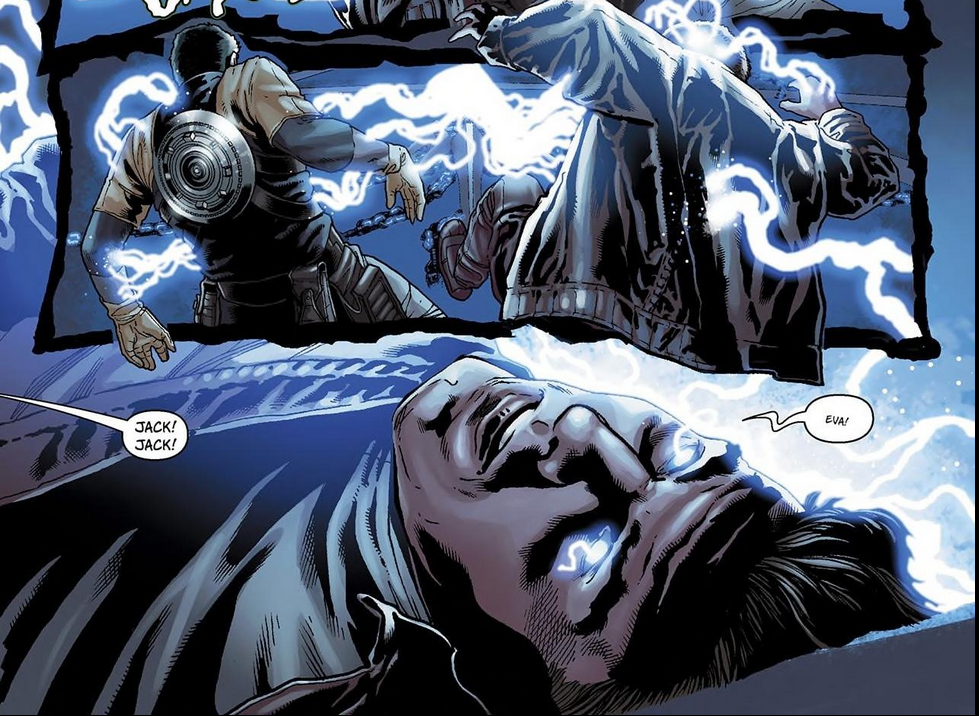
Desolas became convinced this artifact could be used to transform the turian species into something stronger. He took the project back toward Palaven and tried to scale it into a species-level weapon or some kind of improvement system.
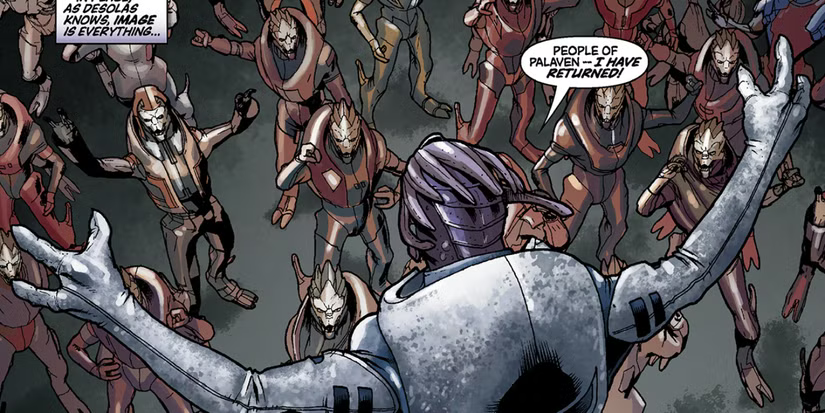
This is one of the key moments for understanding Saren. Before Sovereign, before Eden Prime, before Shepard, before Nihlus dies, Saren has already encountered a field shaped by ancient machine corruption.
- He has already seen a species-level improvement project become a trap.
- He has already seen the promise of transformation become a mechanism for losing agency.
- He has already learned that the dangerous artifact is not inert.
- He has already learned that institutions and leaders can misunderstand contamination as opportunity.
These are real lessons. Unfortunately, they are also incomplete.
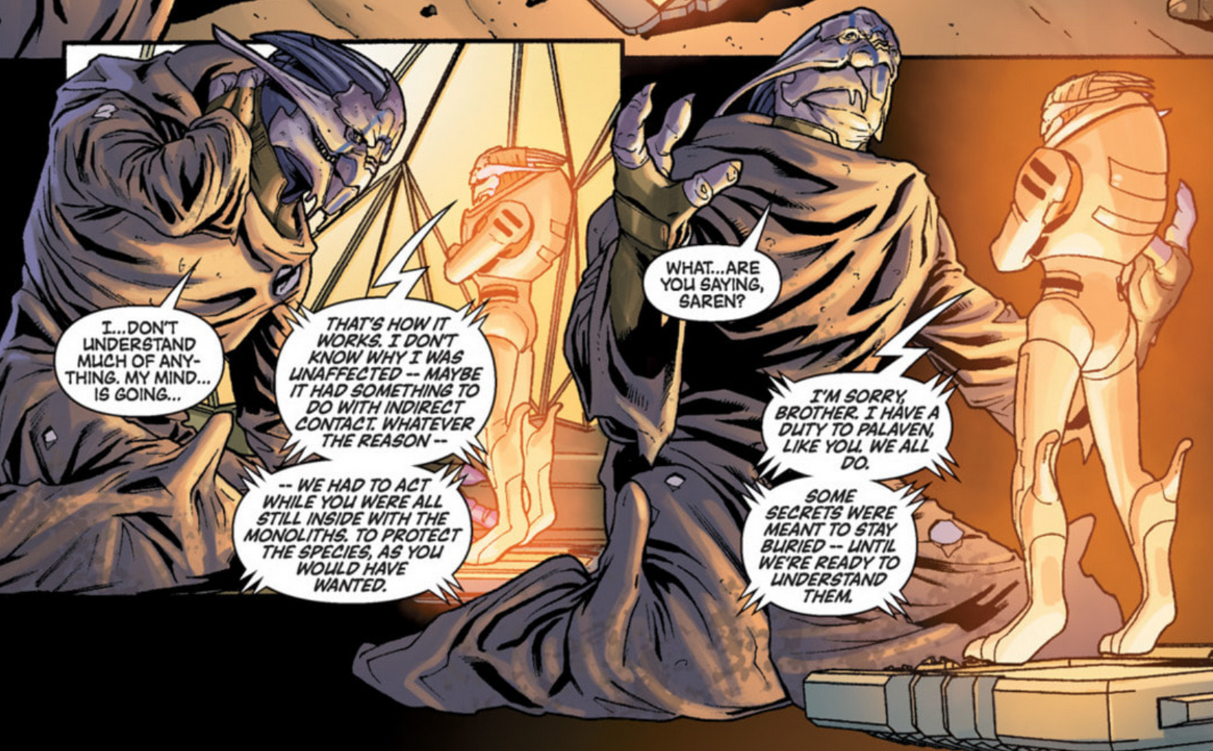
Saren eventually recognized enough of the danger to stop Desolas. He did this by ordering the destruction of the temple with Desolas still inside it, because the Arterius family expresses concern through orbital strike coordination.
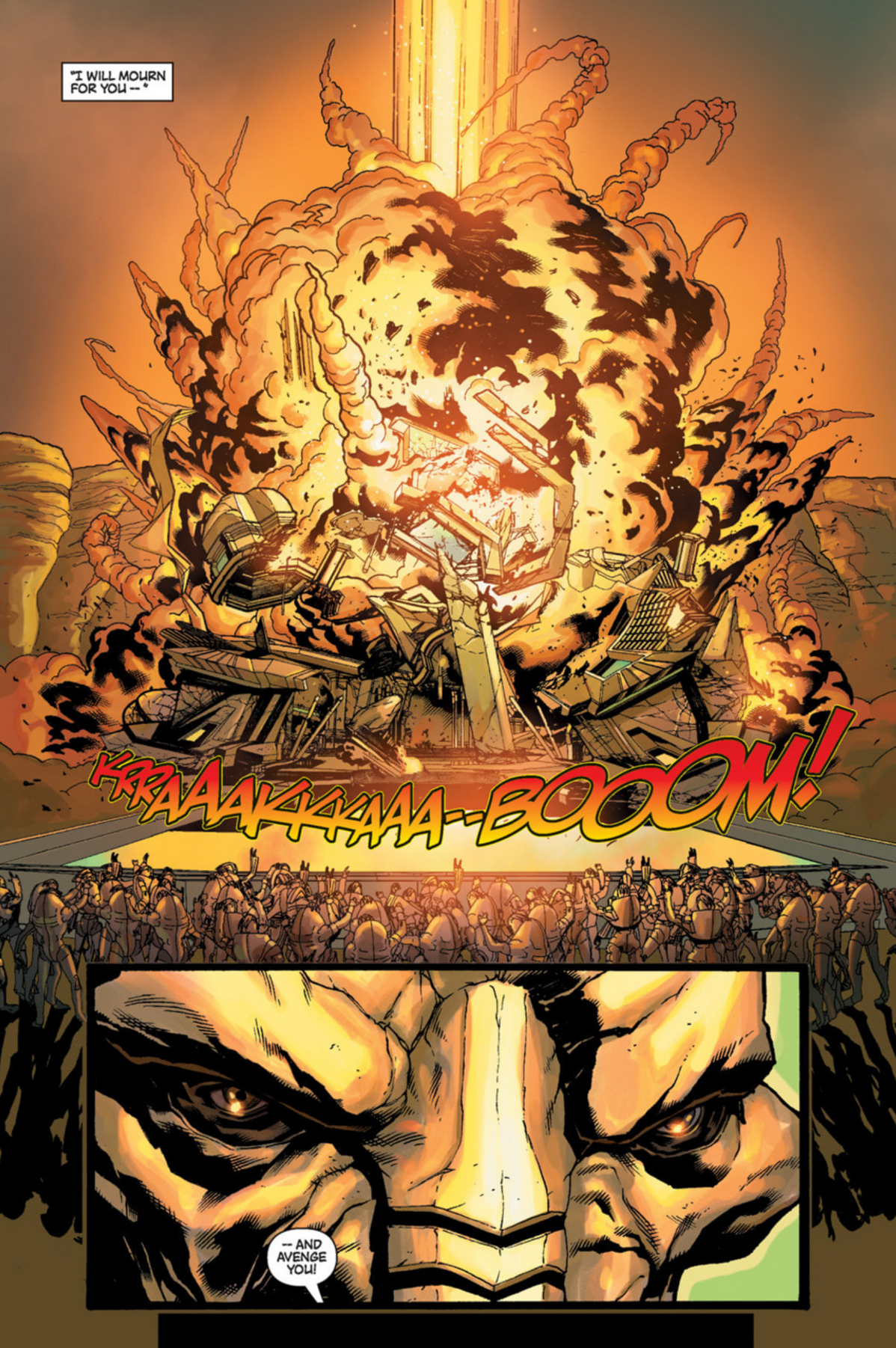
At the level of immediate outcome, Saren may have prevented something catastrophic. Desolas’s project definitely could have produced mass contamination. A Reaper artifact being scaled into a turian species-level transformation system is not really a policy disagreement. This was an extinction path wearing his brother's armor.
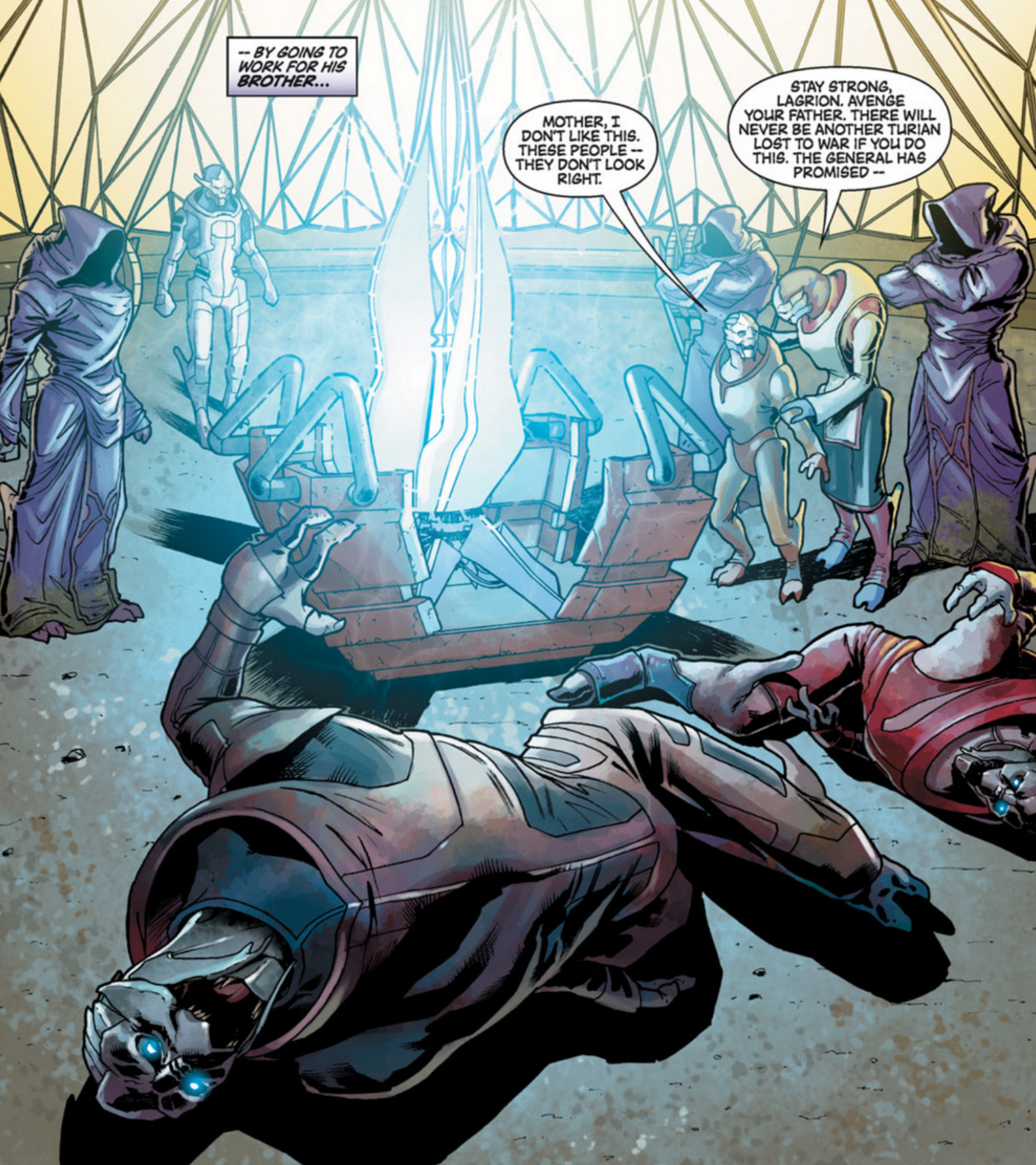
But the moral residue of Saren’s intervention is terrible.
- He learns that dangerous ancient fields should be buried.
- He learns that the correct response to contamination is secrecy and destruction.
- He learns that even family can be killed if the field is large enough.
- He learns that witnesses and relationships are secondary to containment.
- He learns that catastrophic removal can feel like responsibility.
Again, these lessons are not fake. That is the danger.
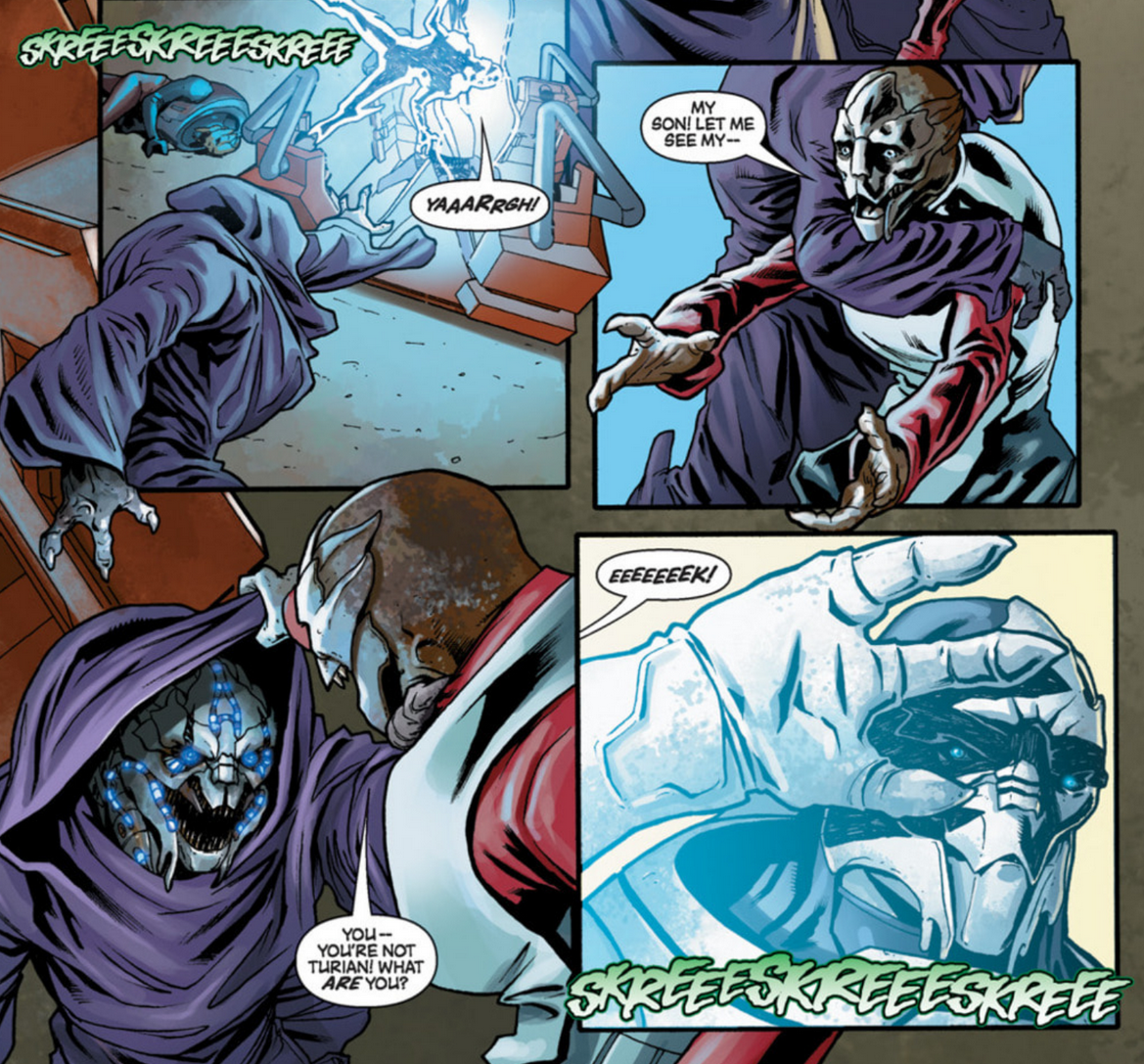
A fake lesson is easier to reject. Saren’s lessons are partially true. Some fields really just must be contained. Some artifacts are too dangerous to leave active. Some relationships cannot be allowed to override the preservation of wider loci. Some emergencies do require terrible speed.
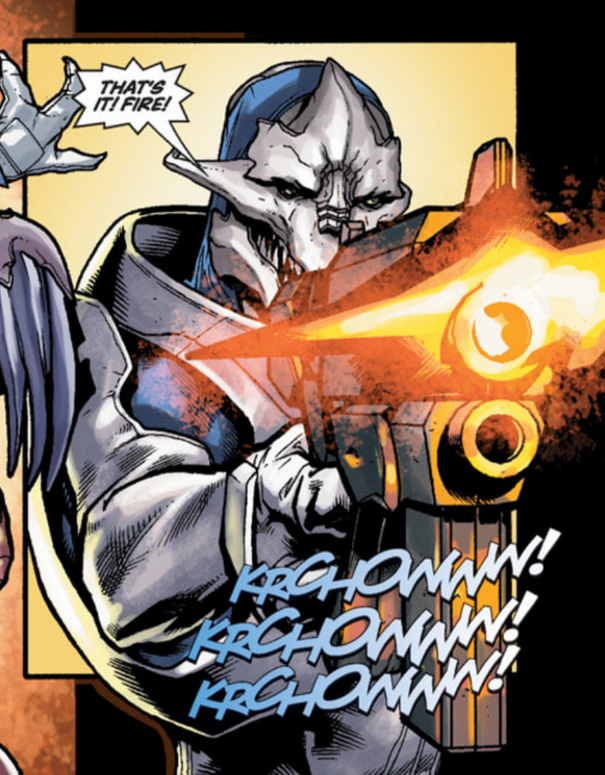
But partial truth is one of the most dangerous materials in ethical reasoning. It grants the agent confidence without granting true completion. Saren leaves the Desolas field with an accurate memory of danger and a distorted memory of method.
- He knows ancient machine influence can corrupt whole species-level projects.
- He knows almost nobody else will understand that in time.
- He knows a field can appear promising while becoming a trap.
- He also now carries the operative assumption that he is the kind of agent who may have to decide, unilaterally and privately, what gets buried and who dies inside the burial.
That assumption is waiting to meet Sovereign.
Sovereign.
Before Eden Prime, Saren found Sovereign.
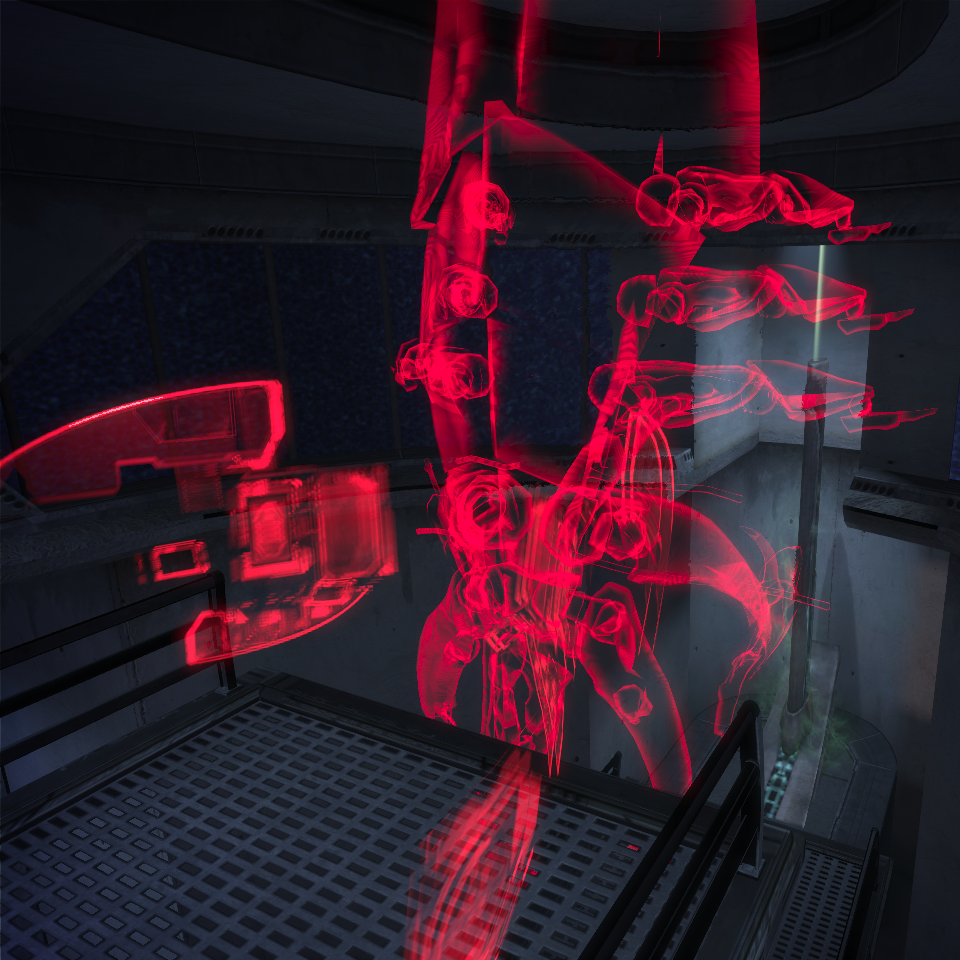
Sovereign is a Reaper, though almost nobody in the galaxy but Saren can yet understand what that means. The Reapers are ancient synthetic-organic machines that return from dark space roughly every fifty thousand years to harvest advanced civilization.
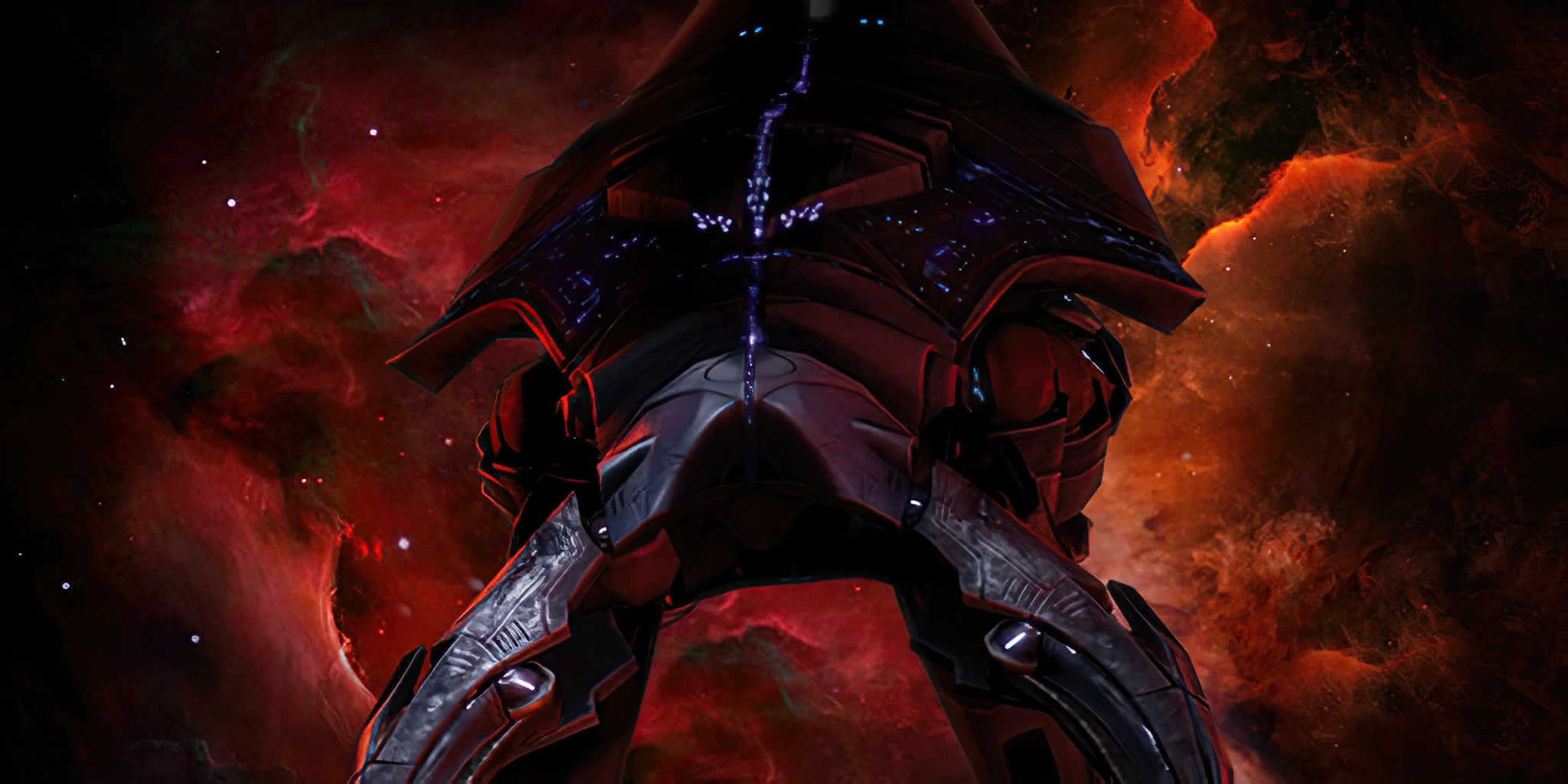
They do not simply invade, or conquer. The Reapers return to reset the visible top layer of galactic history.
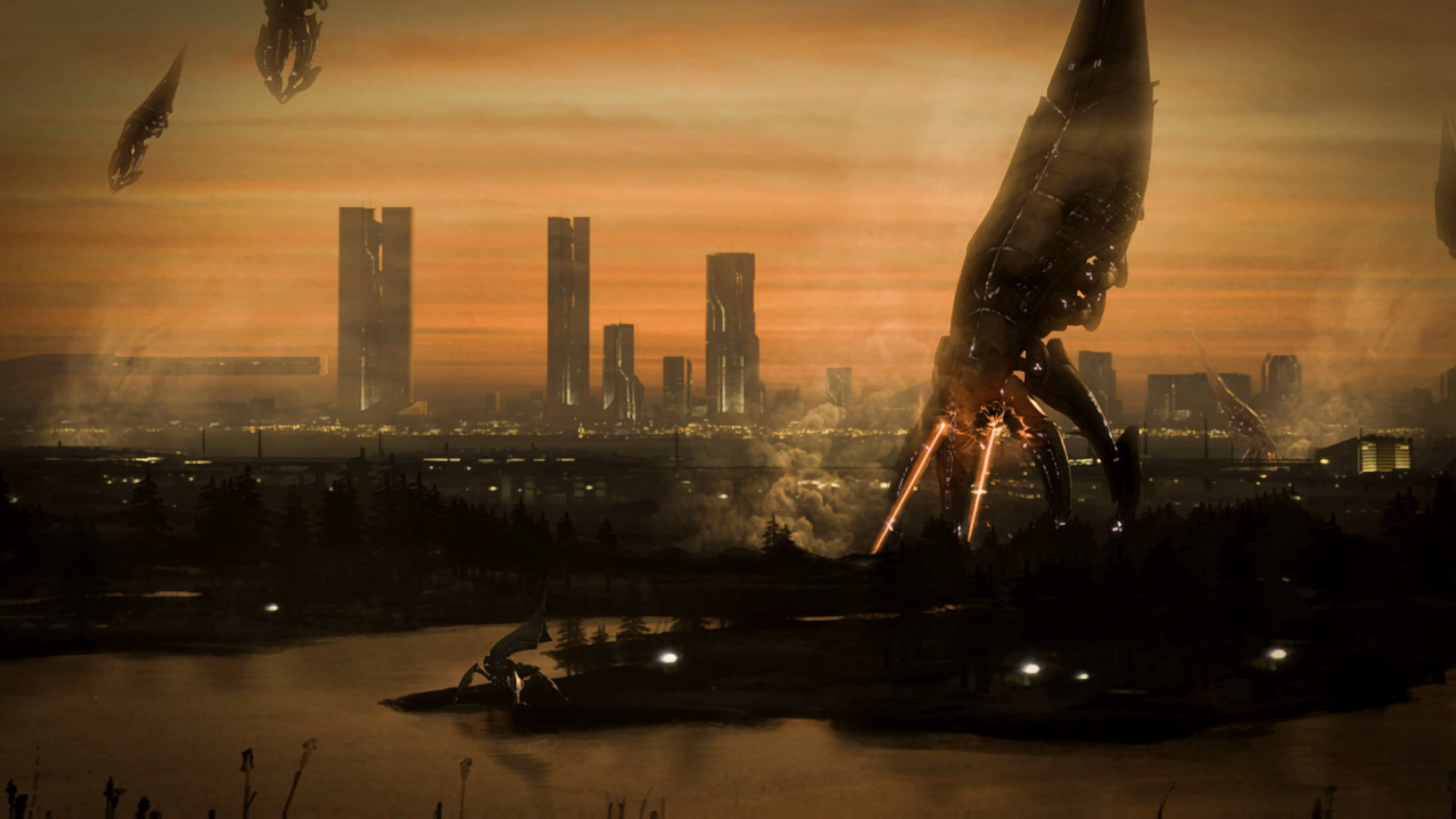
The Citadel, the mass relays, the whole architecture everyone believes it inherited from the Protheans; all of it was actually built by the Reapers. Galactic civilization exists inside a trap whose harvest cycle has been running longer than anyone can imagine.
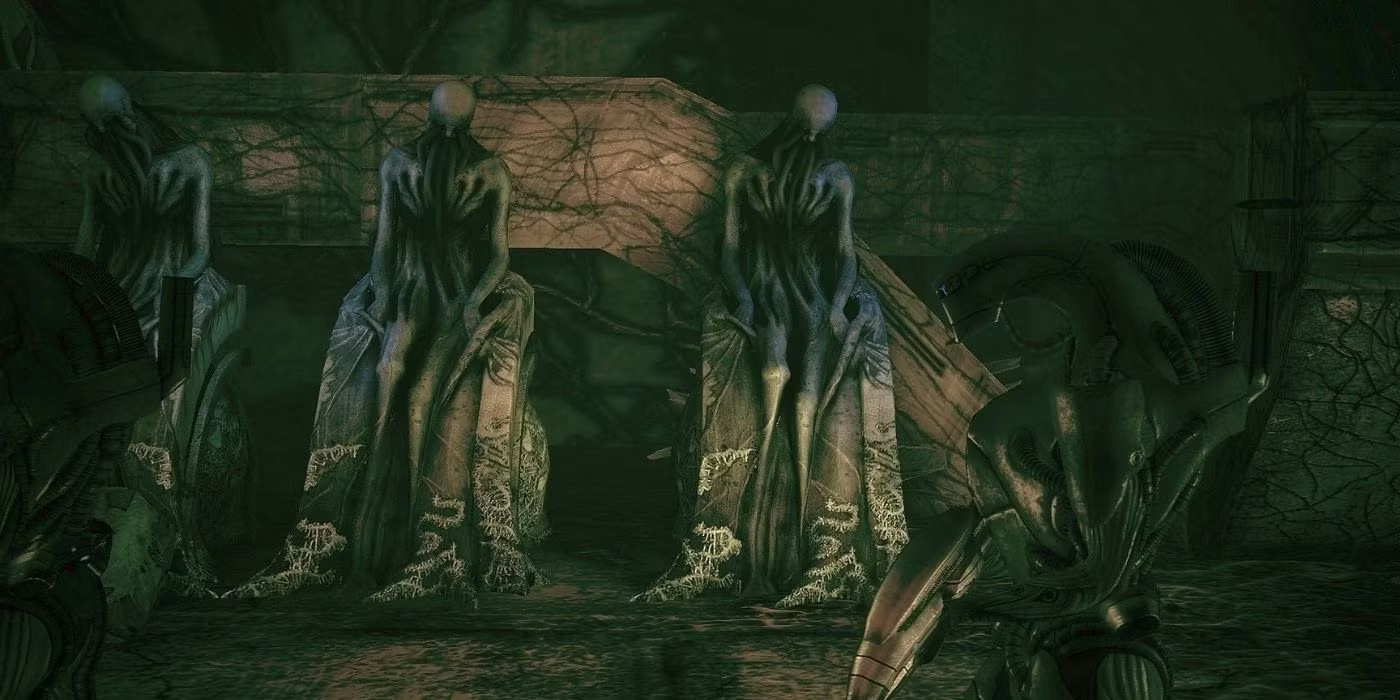
Saren learns this first. This is his epistemic situation. He knows something real.
- The Reapers are real.
- The Council is not prepared.
- The geth are not the deepest enemy.
- The galaxy’s institutions are too slow and too self-protective to perceive the actual field in time.
- Ordinary resistance may fail.
- The scale is worse than nearly anyone understands.
All of that is true enough to make him dangerous.
If Saren were simply wrong about everything, he would be much less interesting and much less useful to this series. He is not wrong that the galaxy is in mortal danger. He is not wrong that the Council is complacent. He is not wrong that any evidence will be resisted. He is not wrong that Reaper power exceeds all ordinary military categories. He is not wrong that the current cycle is living inside a structure built by its mortal enemy.
He sees the danger before almost everyone.
Then, he makes the fatal transition.
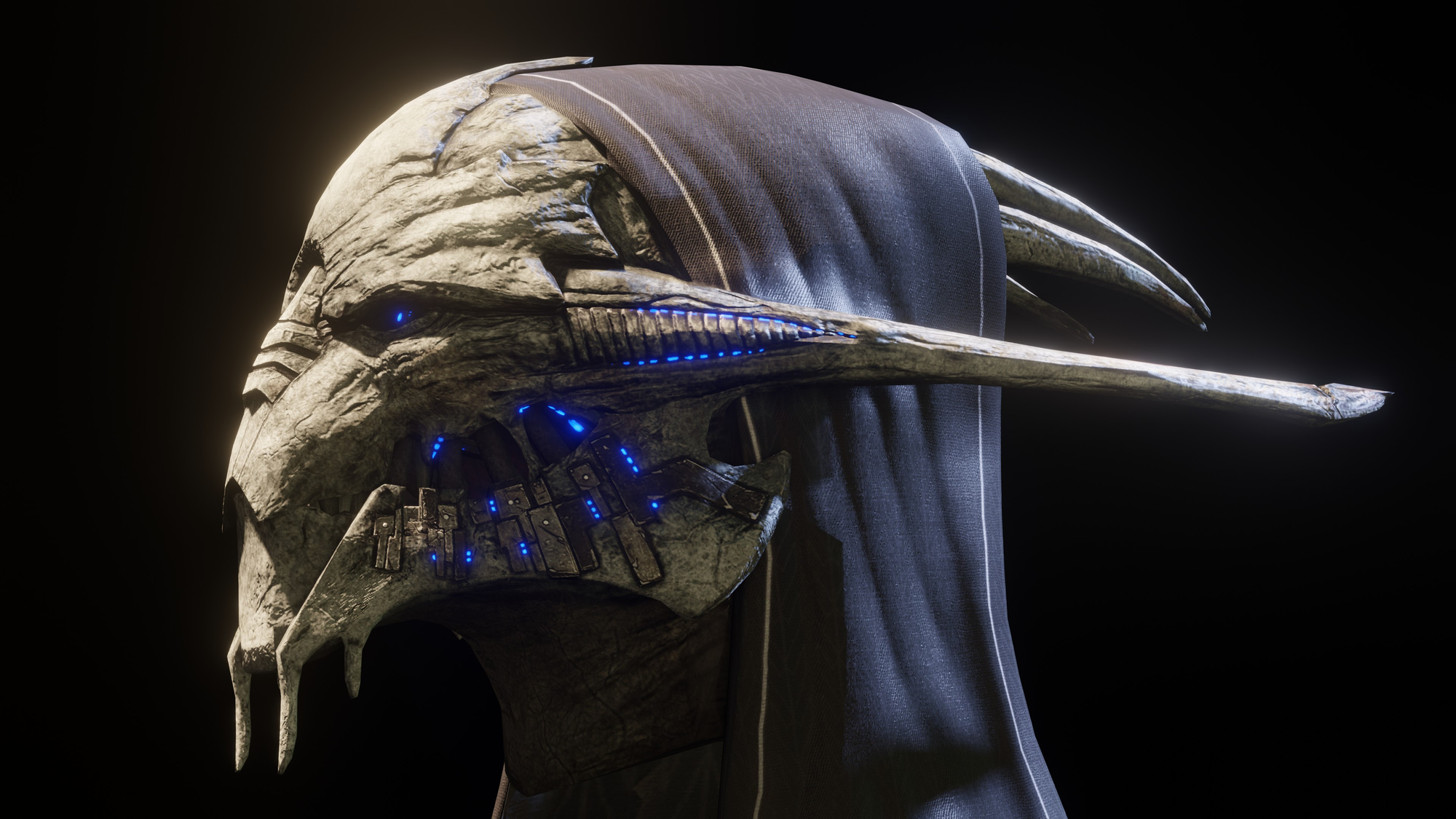
He concludes that because resistance is terribly high, the resistance path is therefore closed.
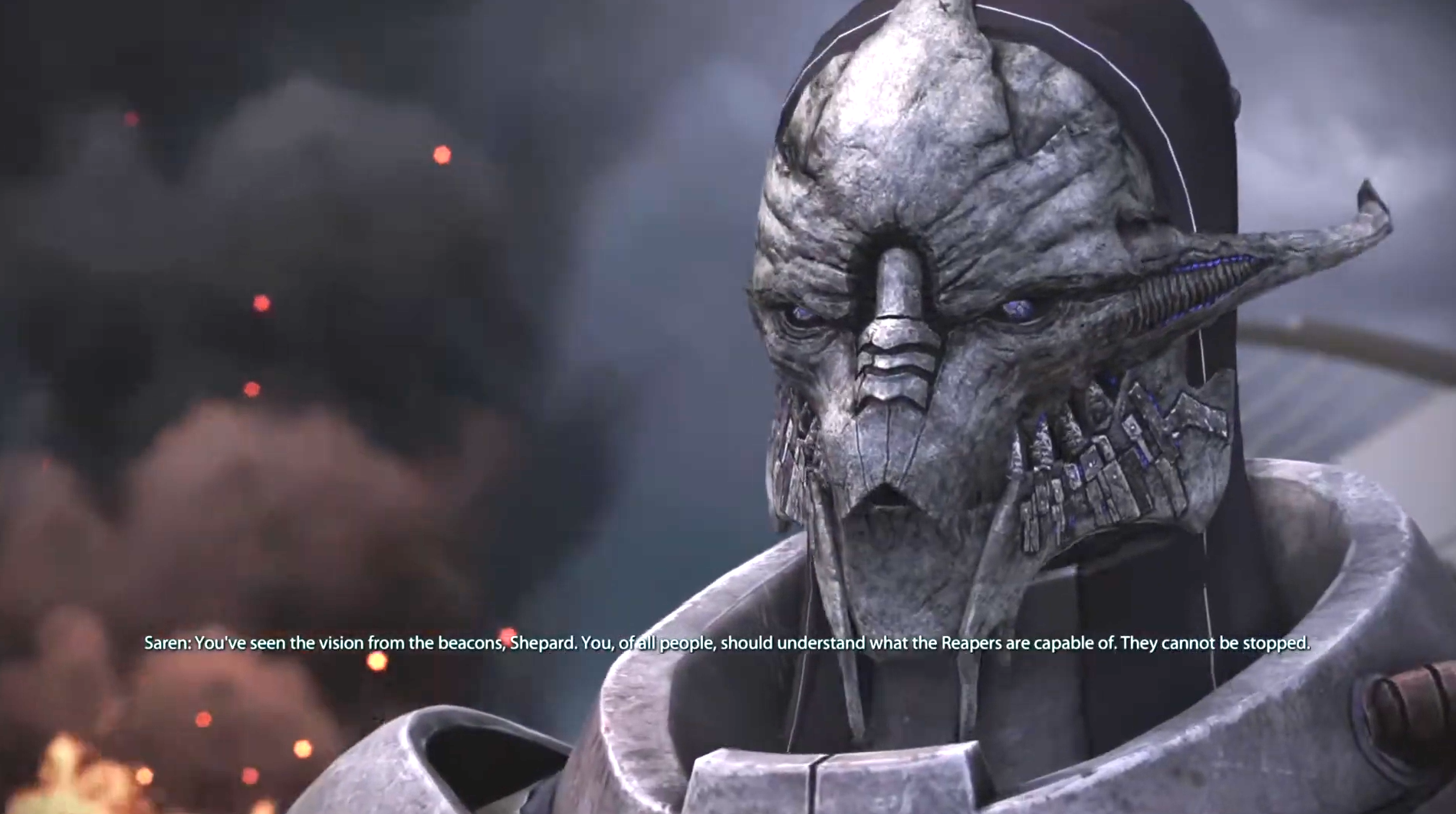
He treats the Reapers’ apparent inevitability as a completed field fact. He reframes collaboration as realism.
If the Reapers cannot be defeated, well, then perhaps organics can survive by serving them. Perhaps submission preserves some future-space where open resistance would preserve none. Perhaps the correct path is not victory, because victory is just a childish fantasy, but managed servitude under the harvest power is what adults choose.
This is Saren’s counterfeit Better. It has the emotional feel of grim maturity.
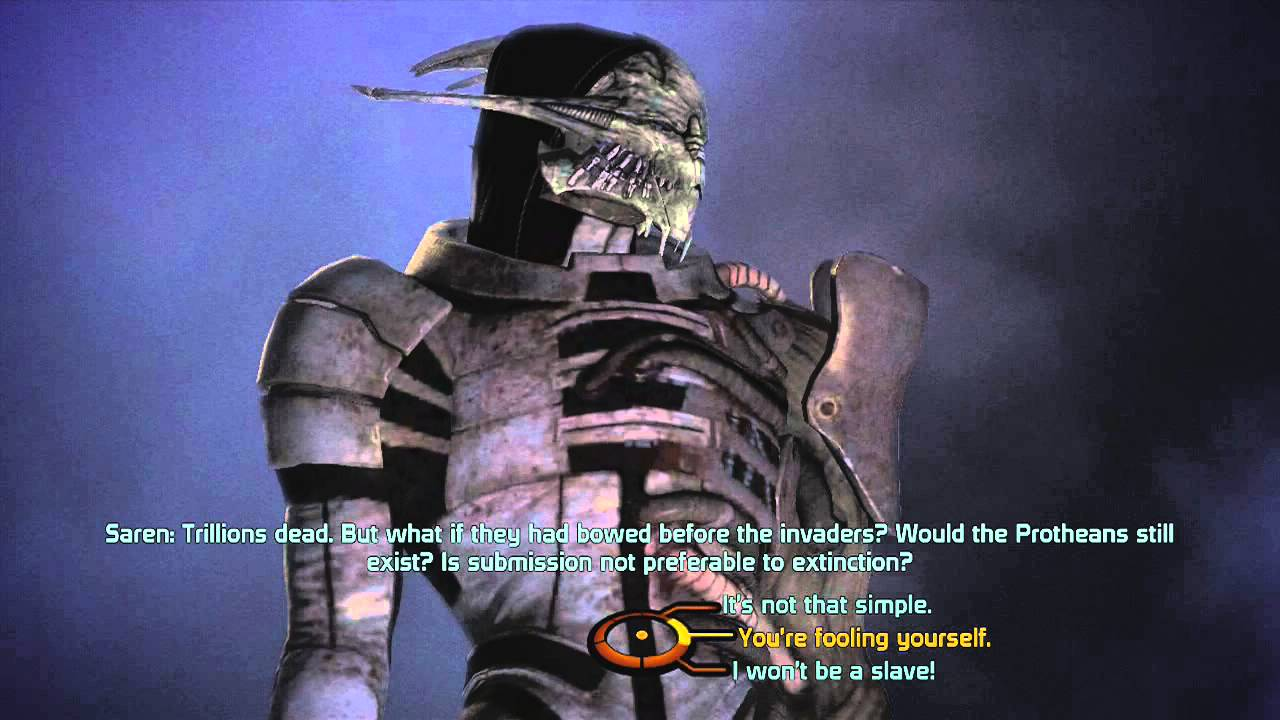
Except this is just surrender to the closing agent.
A hard path is not a closed path. A narrow path is not a nonexistent path. A terrifyingly high-resistance path is not automatically worse than a low-resistance path leading into managed extinction.
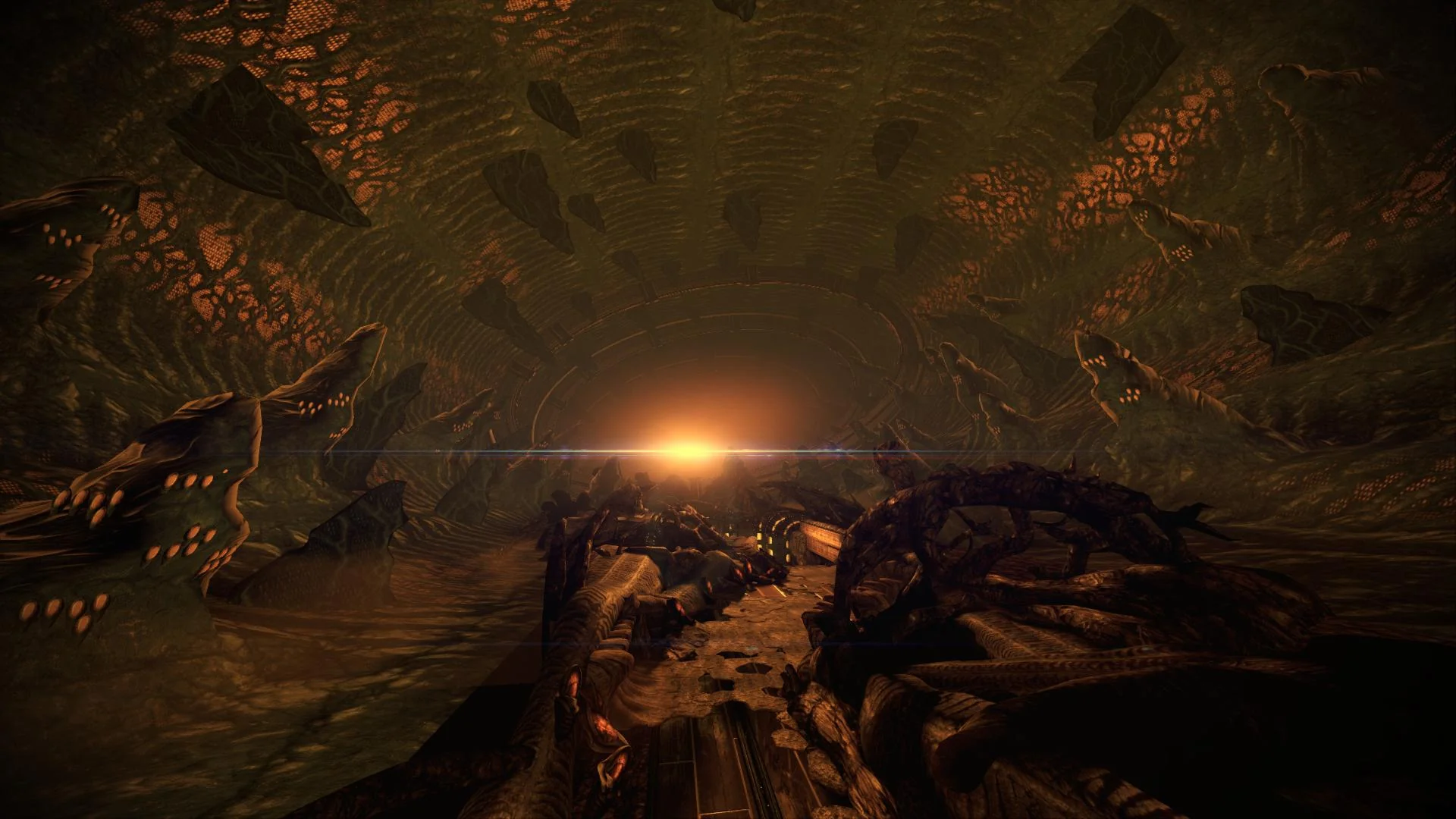
Saren mistakes resistance for impossibility. But Sovereign helps him make that mistake.
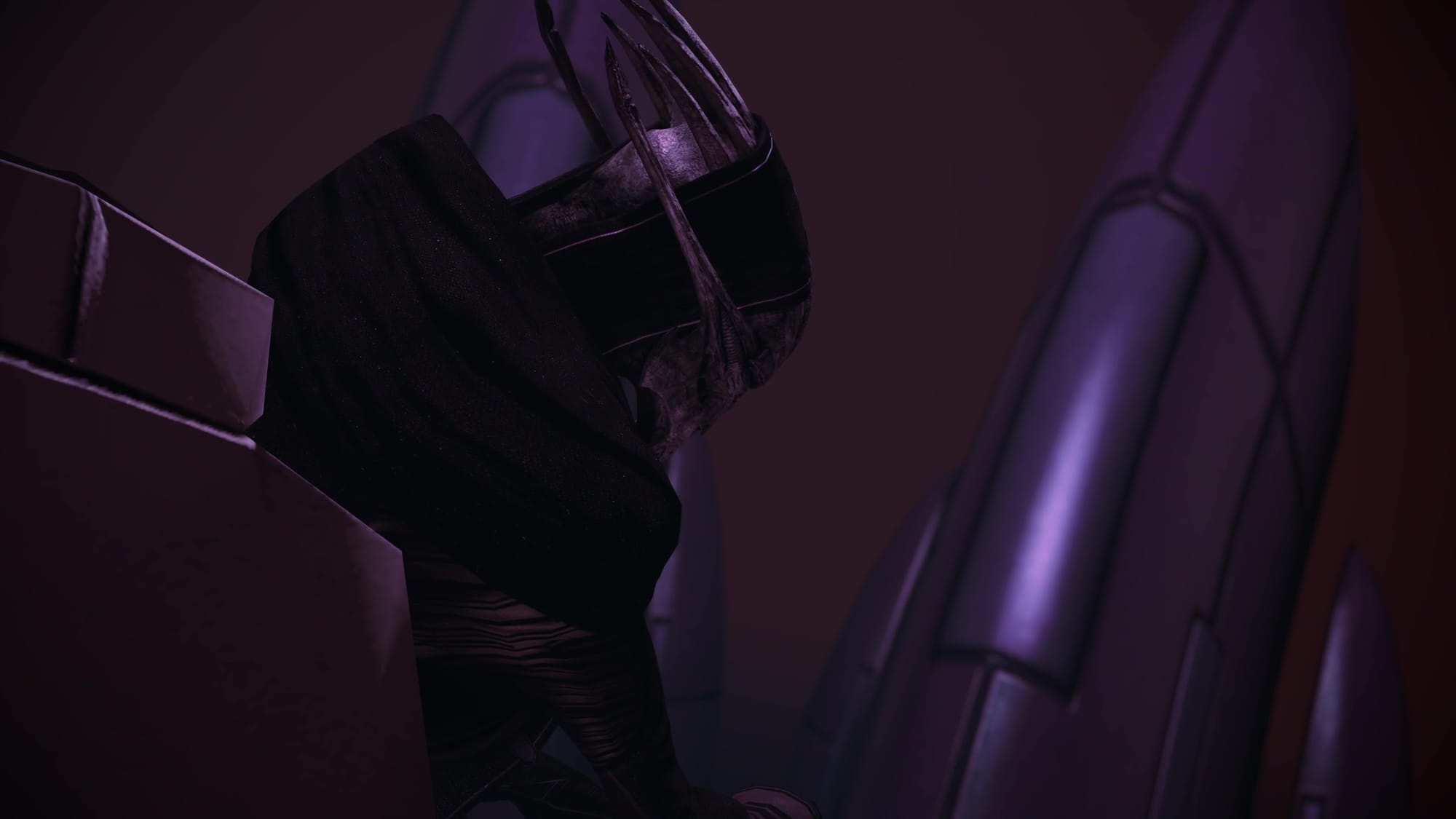
Indoctrination is the Reapers’ mind-corrupting influence. The indoctrination program appears to be written into the very shape of the Reapers themselves; any direct epistemic contact with one is corrupting.
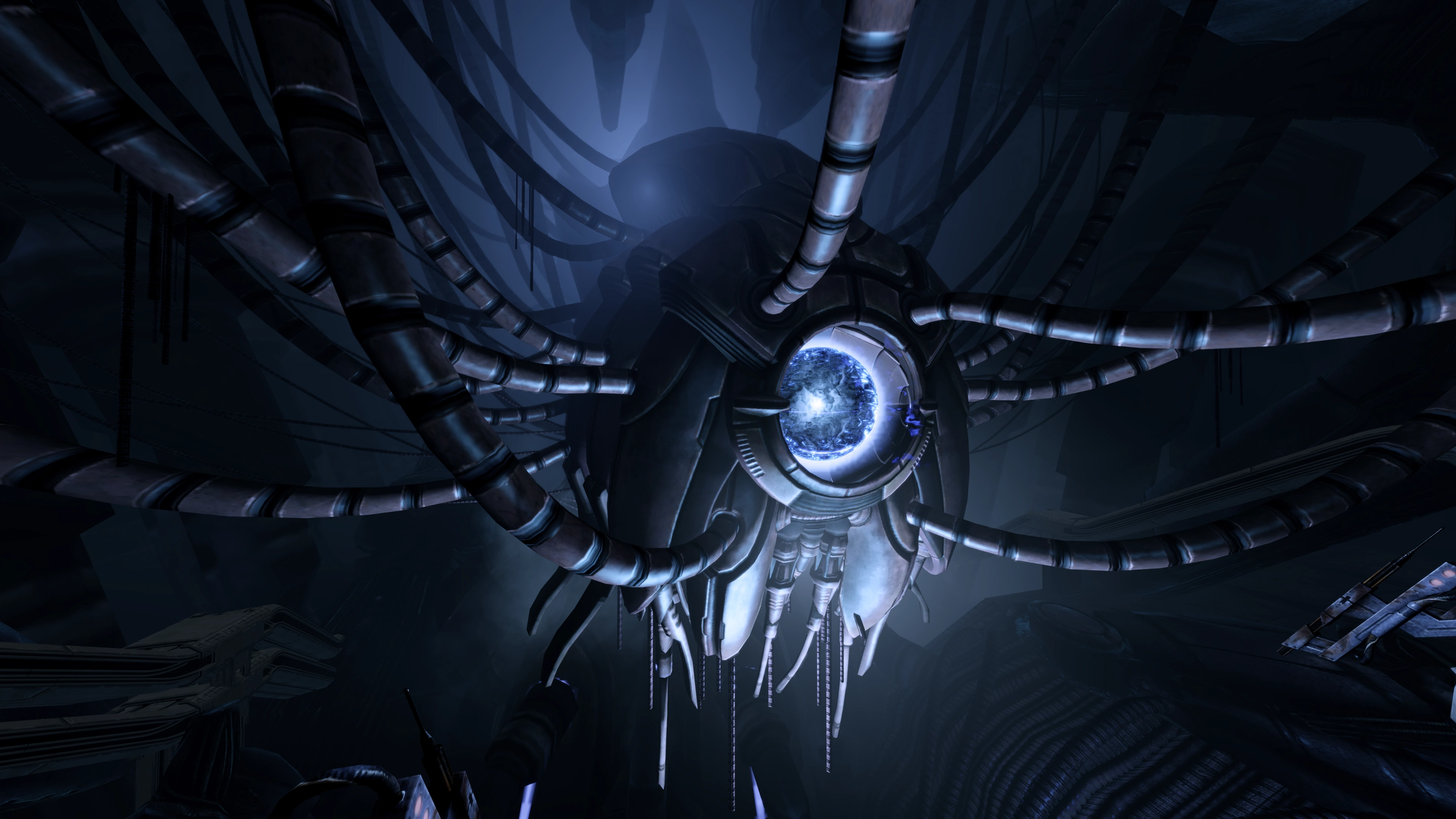
This indoctrination process does not persuade an agent, it degrades the agent’s capacity to evaluate the field independently. Thoughts now must pass through the Reaper-shaped bottleneck first.

This can work subtly, through dreams, feelings, pressure, rationalization, fatigue, perceived necessity, awe, fear, and the slow rearrangement of what the agent experiences as obvious.
This means Saren is also being harmed here. His agency is contracting.
His moral and epistemic perception is being bent toward the machine whose plan he believes he has soberly evaluated.
That reduces the simplicity of blame. It does not rescue the path.
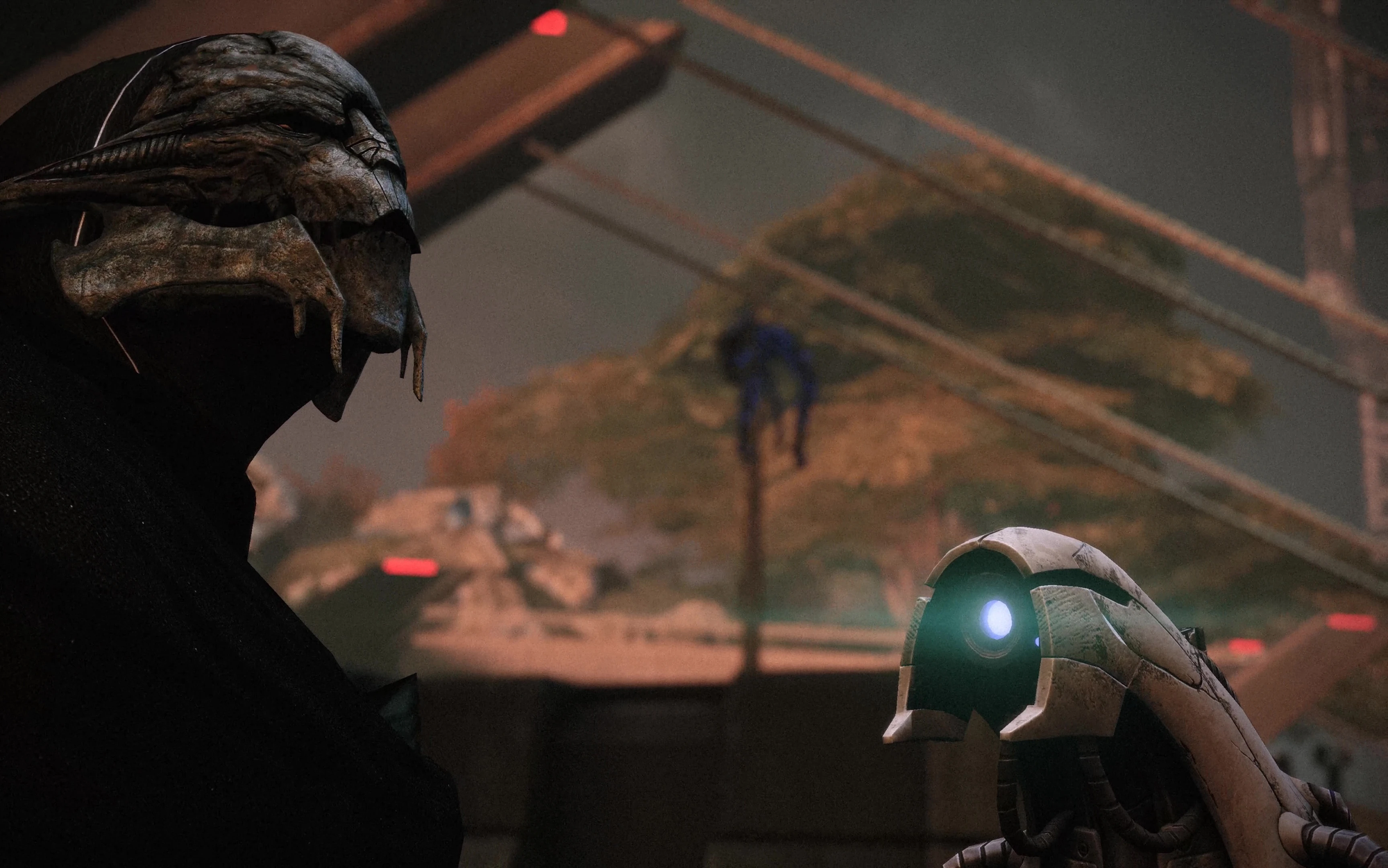
A damaged agent can still be the vector of larger damage. Saren is both a locus being closed by Sovereign and an instrument closing other loci. Serious ethics has to hold both facts clearly without using one to erase the other.
The Reaper field does not turn Saren into a puppet with no prior shape. It captures an existing failure pattern.
- He already believes hard fields authorize unilateral force.
- He already distrusts institutions.
- He already hates humans.
- He already treats witnesses as removable.
- He already carries Desolas as proof that ancient machine threats may require catastrophic burial.
- He already believes he can find a good reason.
Sovereign gives him the largest possible reason.
Bad Topology.
Saren’s failure can be named with more precision. He is not a failed field analyst because he lacks information.
He is a failed field analyst because he cannot correctly distinguish between a closed path and a high-resistance path.
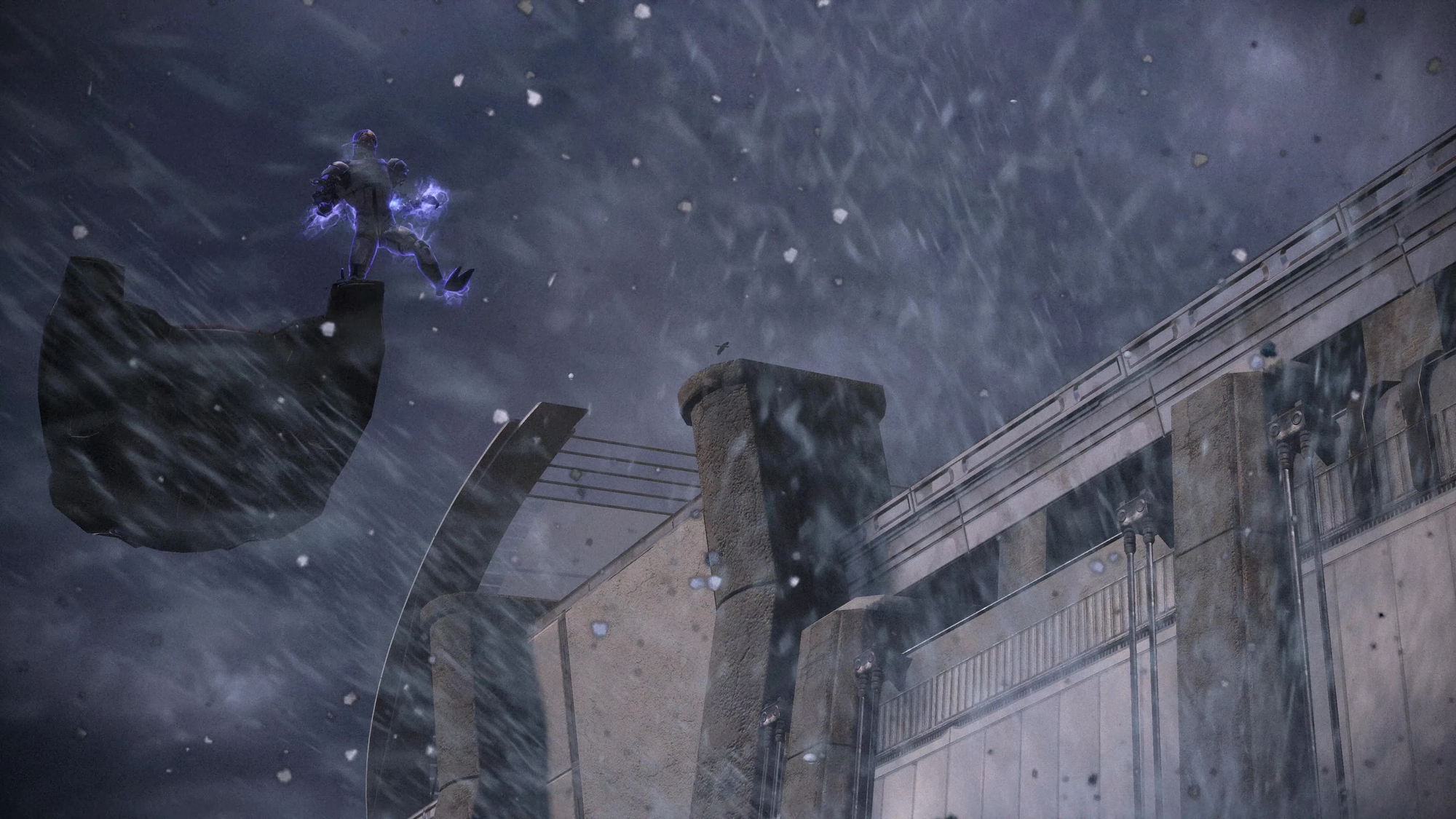
This is one of the most dangerous analytic failures in any ethics built around reachable futures, like Modal Path Ethics.
A closed path is gone. No available action can reach it. The locus has died. The evidence has been destroyed. The time window has passed. The conditions cannot obtain. The physical requirements cannot be met. The relevant agency has been lost. The field has changed in a way that makes the prior future no longer reachable from the actual present.
A high-resistance path is very different.
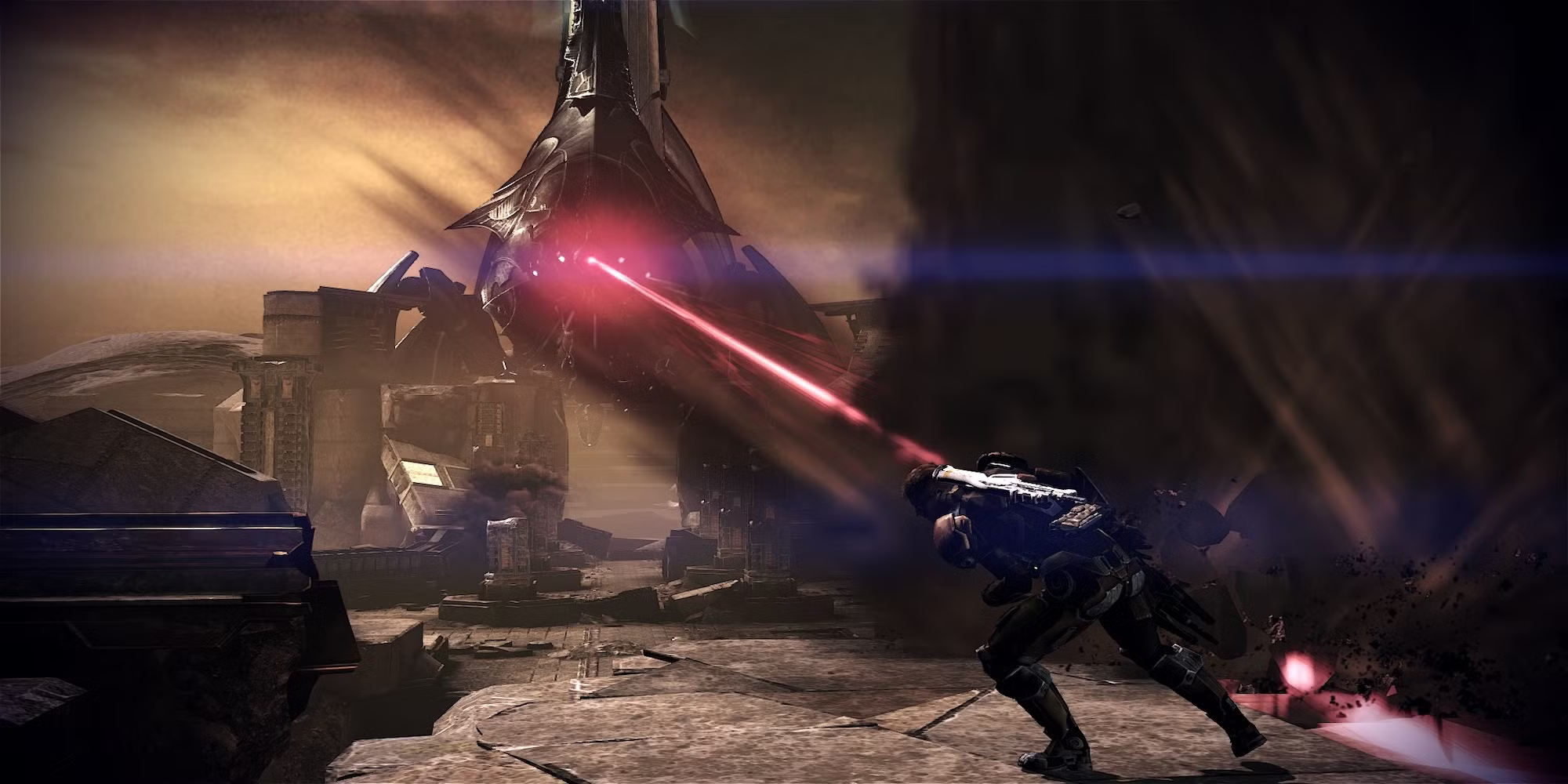
It may be unlikely. It may be costly. It may be fragile. It may require coordination across hostile institutions. It may require new knowledge, new tools, new alliances, or a sequence of narrow successes. It may fail. It may even probably fail.
But it is not closed. This distinction is not inspirational decoration. It is not the poster version of hope where everyone claps because someone said “never tell me the odds” in a hallway.
This is a structural reality.
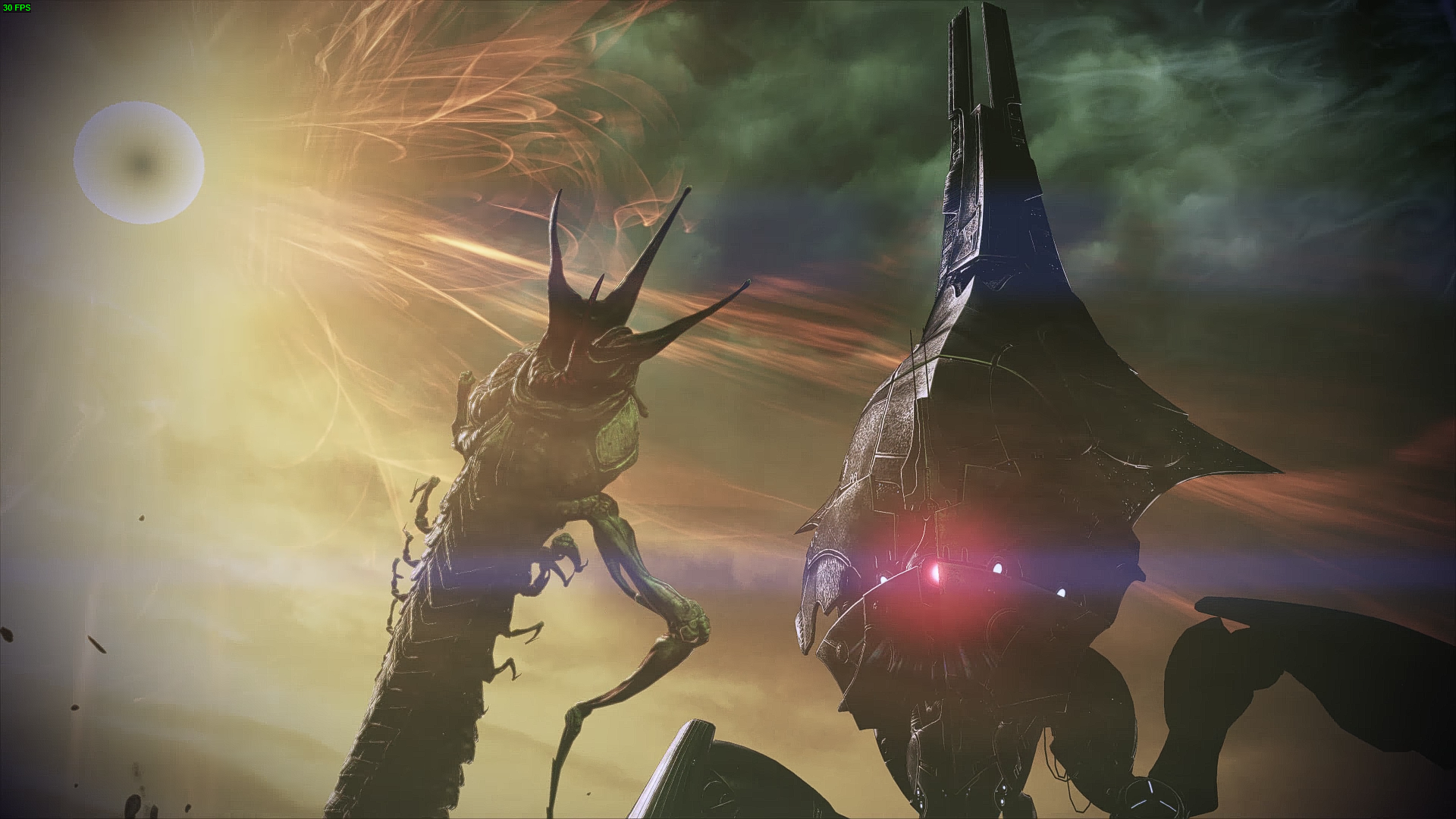
If a path remains open, then actions can preserve, widen, reinforce, communicate, or prepare it. If a path is closed, then action must redirect to residual preservation, salvage, mourning, accountability, or prevention of further closure.
Mistaking one for the other destroys fields.
- Treating a closed path as open can waste resources, prolong suffering, and trap agents in fantasy.
- Treating an open path as closed can make the agent collaborate with the very force closing it.
Saren makes the second error.
He looks at the Reapers and sees a field whose resistance is almost incomprehensibly high. Prior cycles all failed. The Protheans failed. The Citadel itself is part of the trap. The relay network is part of the trap. The Council cannot even perceive the danger yet. The geth have already been drawn toward Sovereign. The enemy has more time, more power, better positioning, and a deeper understanding of the field than the current cycle.
Any honest analysis has to admit this is fucking terrible news. Saren’s fear is not contemptible.
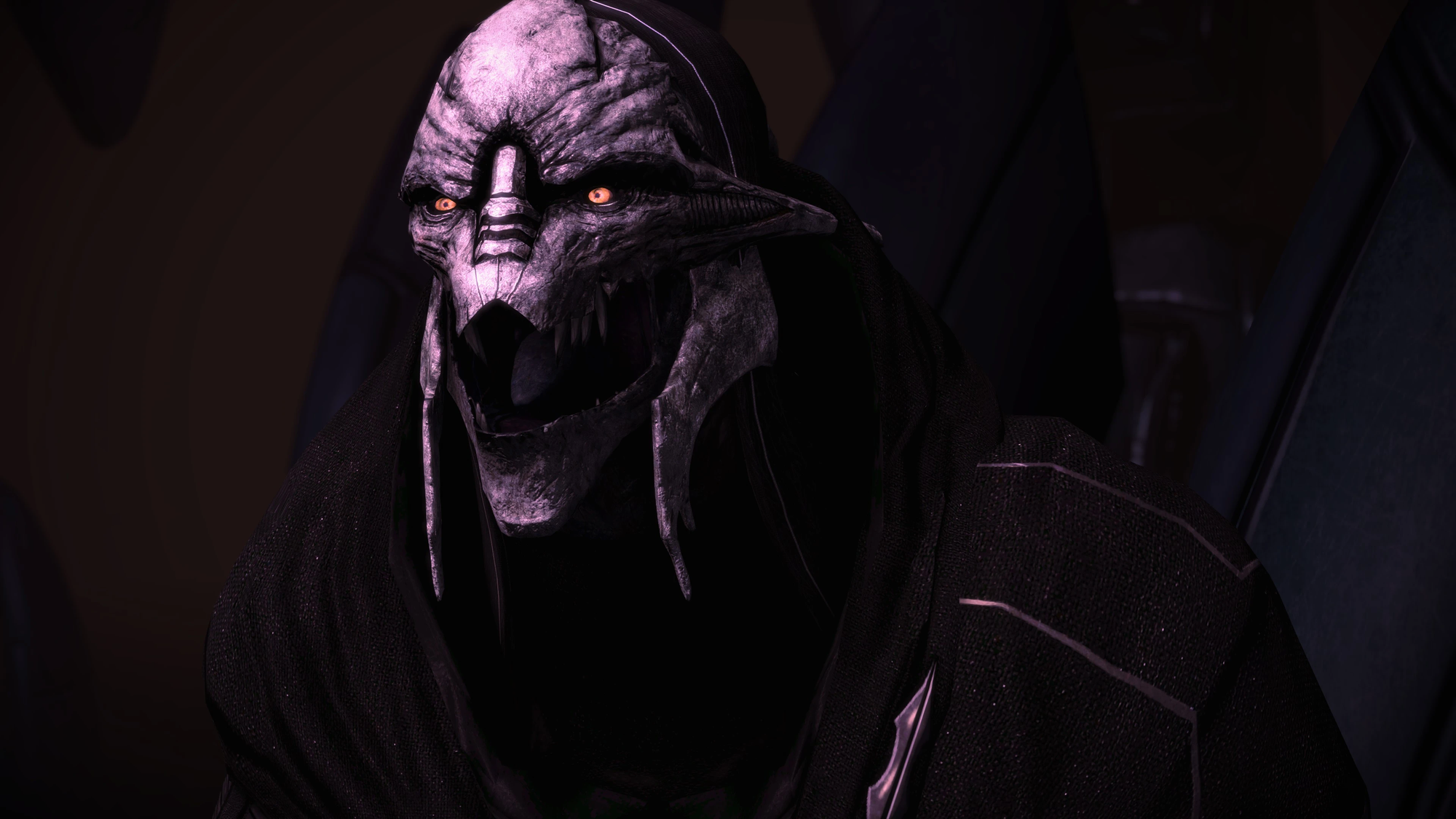
If anything, nearly everyone else in the series is not afraid enough.
But fear does not establish closure.
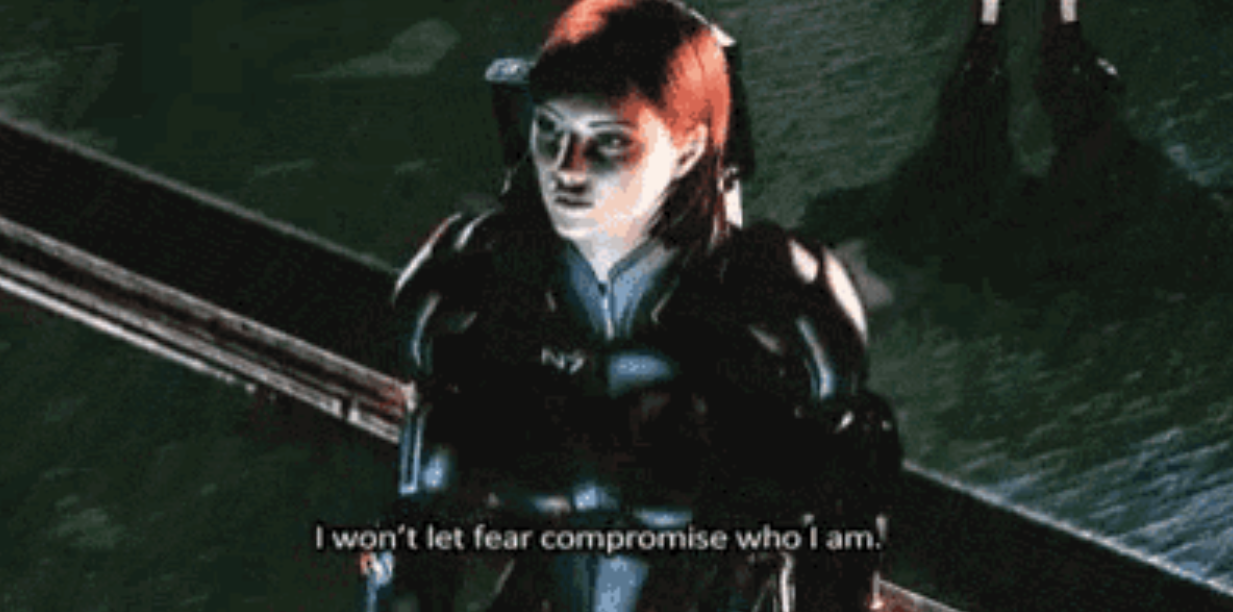
The fact that prior cycles failed does not prove all resistance is impossible. It proves only that prior resistance failed under prior conditions. That field is not this field. The current cycle may have different information, different timing, different agents, different errors, different opportunities, and different residual paths left by the Protheans specifically because the Protheans themselves discovered part of the Reaper mechanism late in their own cycle.
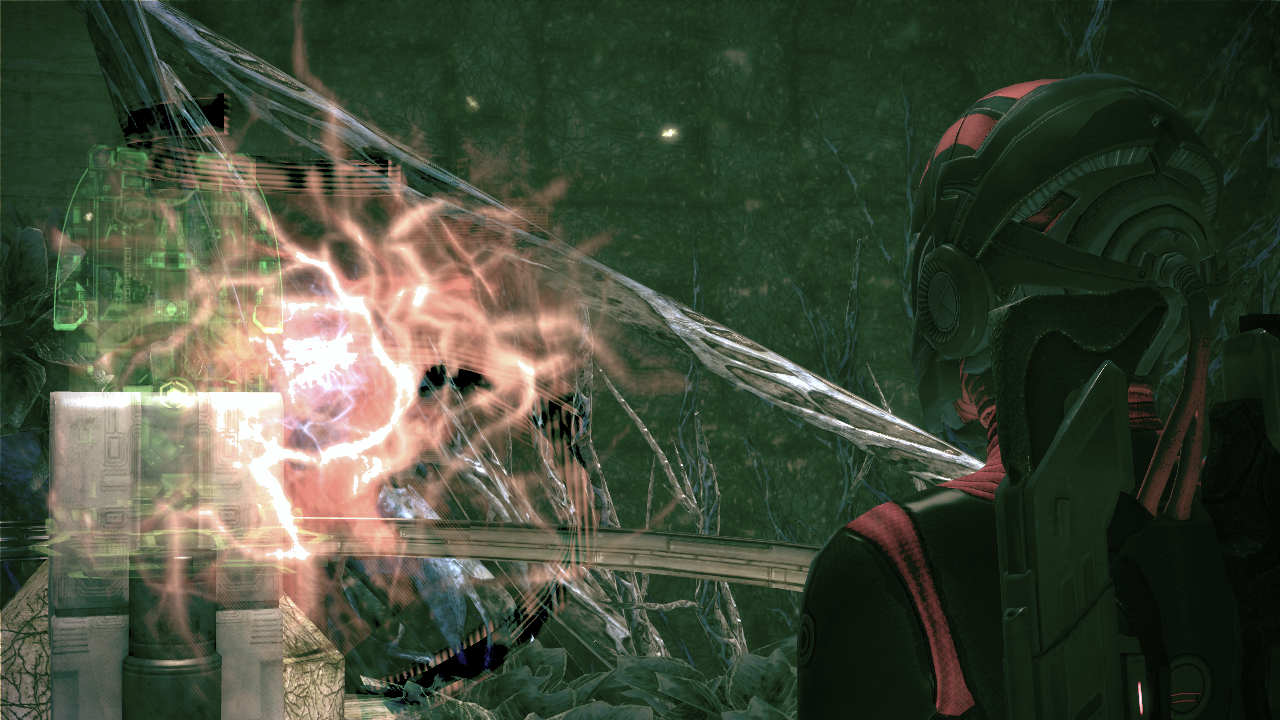
Saren does not know enough to declare impossibility. He declares it anyway.
Then, he builds a civilization-closing moral program on top of that false closure.
This is why his servitude argument is so dangerous. This is not random cowardice. It is a repair argument based on a false field map.
The argument goes like this:
- If resistance is impossible, open resistance will produce total harvest.
- If collaboration is possible, collaboration may preserve some organic future under Reaper rule.
- Therefore collaboration may be the better path.
This would be worth considering if the first premise were known.
Except it is not.
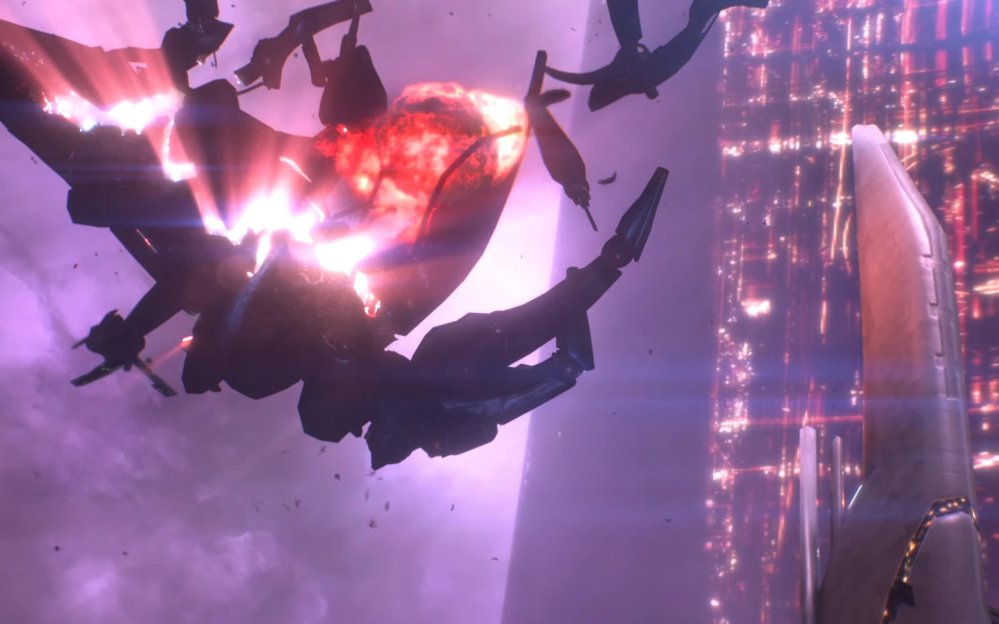
The path from “resistance is terrifyingly hard” to “resistance is closed” is where Saren fails.
That failure turns Nihlus into a removable object. It turns Eden Prime into an acceptable sacrifice. It turns the geth into tools. It turns the beacon into a resource for Sovereign. It turns Shepard into a problem.
It turns truth into a threat.
Once the false closure is accepted, every later closure can be justified as service to the counterfeit Better. This is not realism. This is just bad topology.
Saren’s Agency Under Indoctrination.
There is still the standing problem of indoctrination.
If Sovereign is already bending Saren’s mind, how much of this is Saren?
That question matters, however it also cannot be allowed to flatten the field.
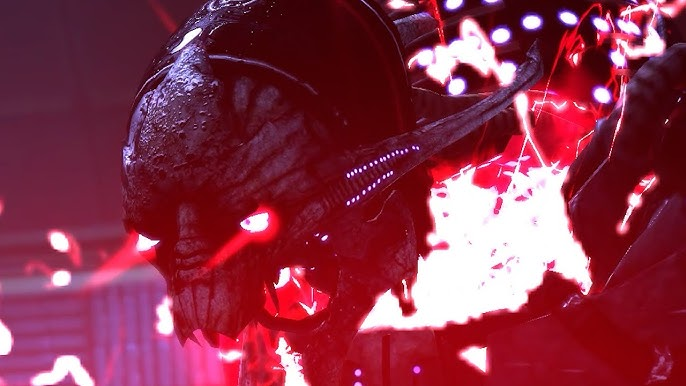
Indoctrination is not ordinary persuasion. It is not a speech with a bad conclusion. This is an invasive deformation of agency. The Reaper does not present arguments; it changes the conditions under which arguments are evaluated. It makes its own goals feel inevitable, mature, necessary, and already half-chosen by the victim.
That means Saren's agency is being closed. His independent perception is being narrowed. His fear, ambition, species prejudice, institutional habits, and prior trauma are being used against him.
This is real. It should change the moral description. It does not make this man safe.
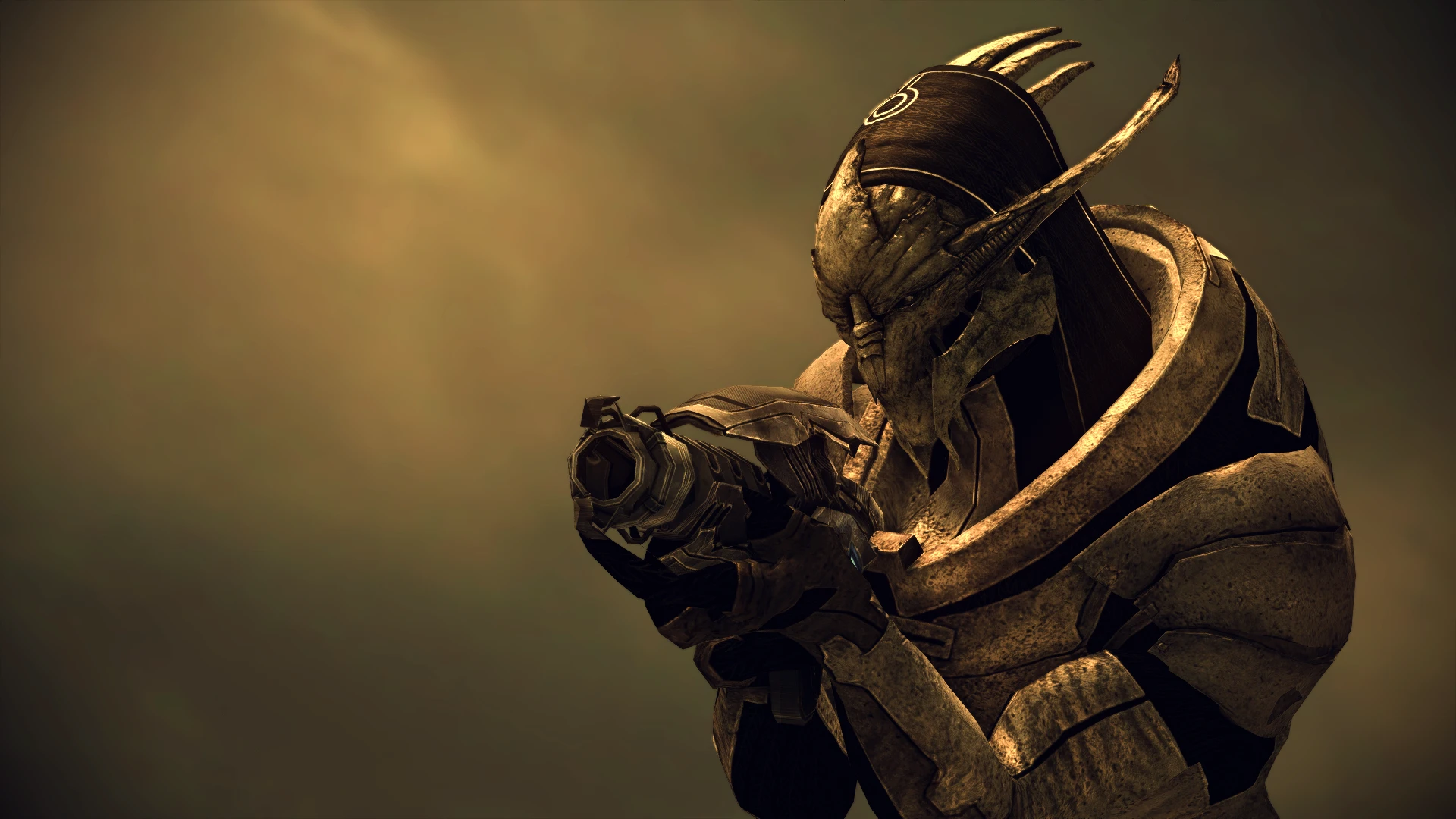
A person can be harmed and harmful at the same time. A person can be coerced and still become the practical vector of coercion against others. A person’s agency can be degraded without every resulting action becoming morally weightless.
Modal Path Ethics has to remain exact here.
- If we erase Saren’s harm, we miss what the Reaper field actually does. We turn indoctrination into a cheap villain sticker instead of a contraction of agency.
- If we erase Saren’s responsibility entirely, we lose the practical structure of the field. Nihlus is still dead. Eden Prime is still attacked. The beacon is still seized. The geth are still deployed. The Council evidence path is still damaged. Saren’s decisions still carry force into other loci.
The field just contains both.
- Saren is being closed by Sovereign.
- Saren is closing other fields for Sovereign.
That double status is how domination often propagates. The captured agent becomes the instrument through which capture expands. This is exactly why the Failed Field Analyst category matters here.
Saren’s failure is not only personal vice. It is a field-theoretic vulnerability exploited by a superior closing agent.
- He had a distorted but functioning model of necessity before Sovereign.
- So Sovereign amplifies it.
- He had anti-human prejudice before Sovereign.
- So Sovereign weaponizes it.
- He had already learned from Desolas that ancient machine contamination may require burial through force.
- So Sovereign reorients that lesson toward its own harvest.
- He had already learned that witnesses can be removed and institutions manipulated.
- So Sovereign gives him a reason to do both at galactic scale.
Saren’s own failures do not disappear under indoctrination. They become the very handles by which indoctrination moves him toward closure.
That is why he is so dangerous at Eden Prime. This is a powerful analyst whose field map has been captured by the largest closing agent in the setting.
Now he is standing behind Nihlus.
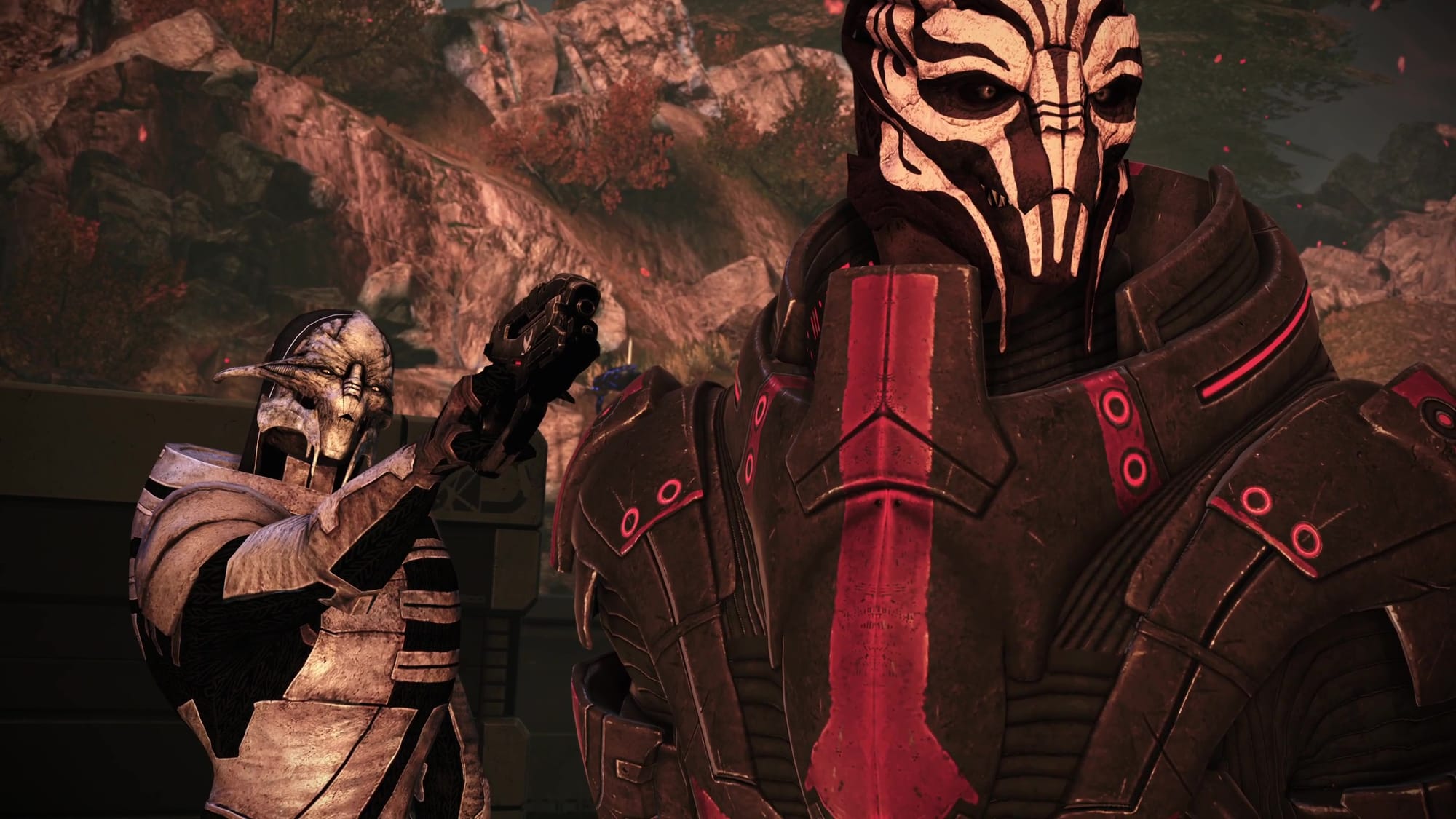
Applied Case: Saren Shoots Nihlus.
The central decision of Eden Prime is not Shepard deciding whether to be polite to Joker, kind to Kaidan, a human being to Ashley, or assaulting Manuel.
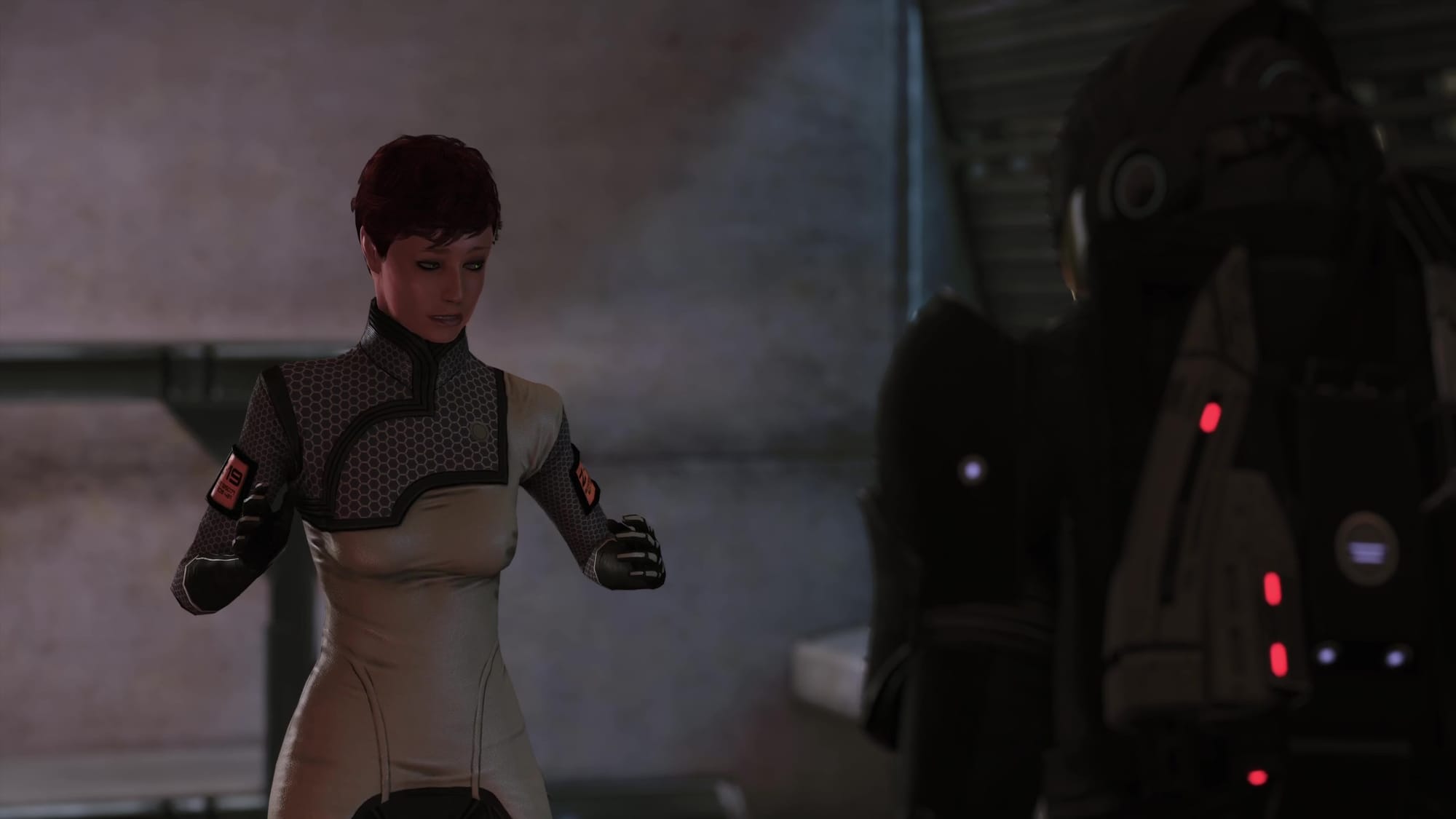
Those choices may reveal Shepard’s character. They do not decide anything important in this field.
The central decision of Eden Prime is Saren Arterius shooting Nihlus Kryik in the back of the head.
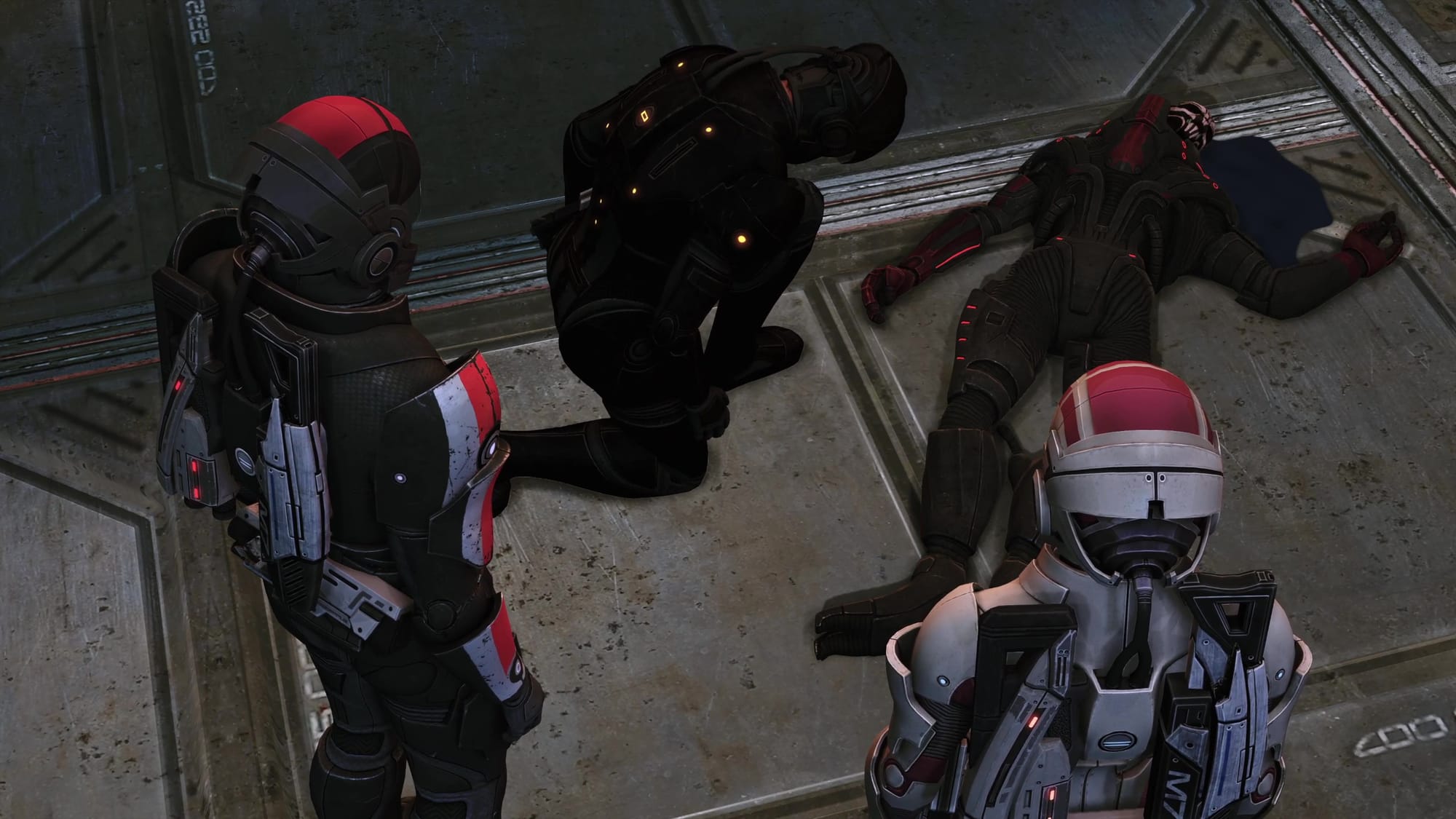
This is not the Player's choice. Shepard is not even present here. But this series is not only tracking Shepard’s dialogue wheel. We are tracking a live fictional field as it moves through decisions that open and close reachable futures.
Saren makes the one decisive Eden Prime choice.
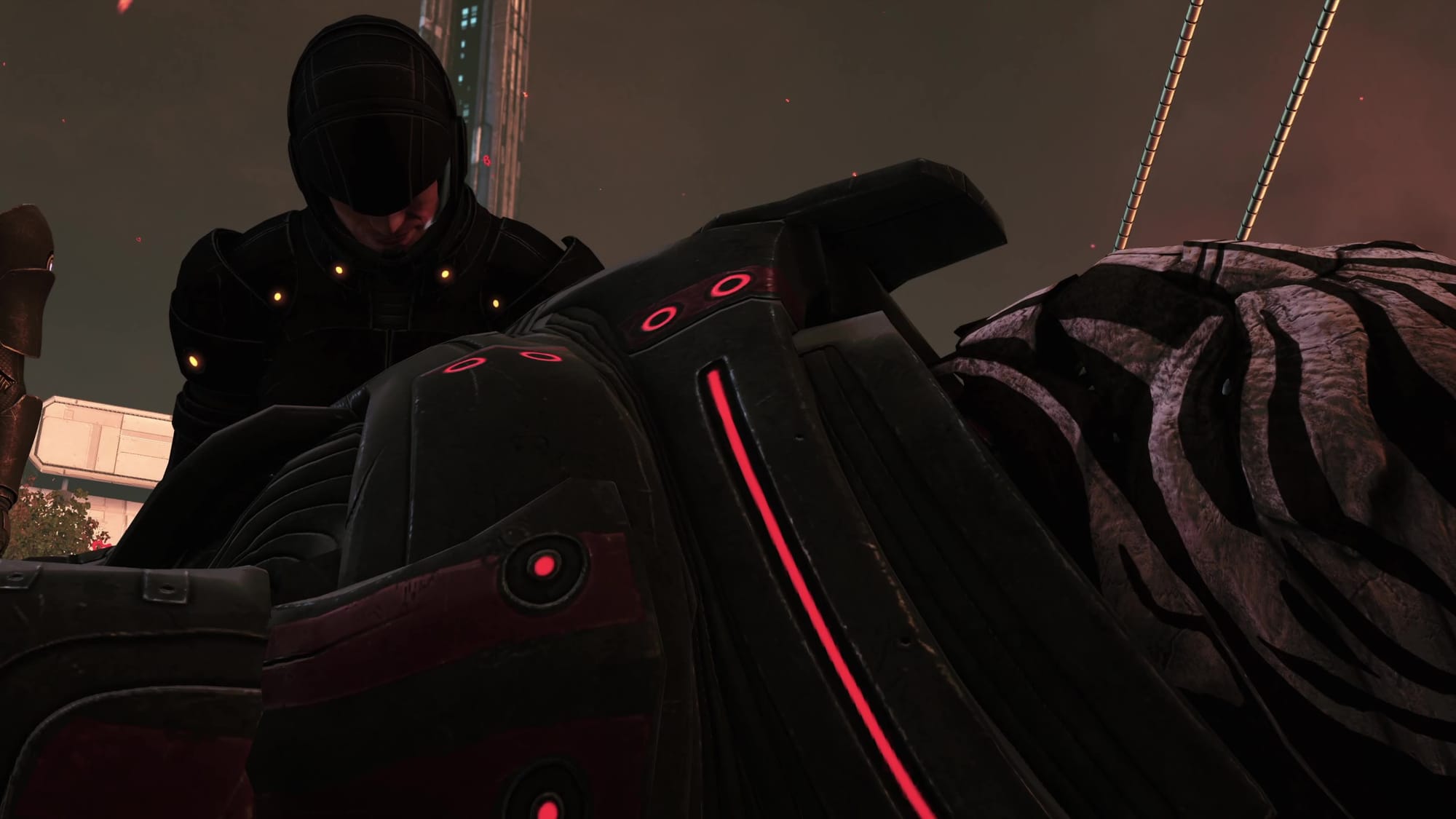
From Saren’s epistemic perspective, the immediate field is simple enough to describe.
- Nihlus can identify him.
- Nihlus is a Spectre.
- Nihlus trusts him.
- Nihlus is evaluating Shepard.
- Nihlus can carry evidence back to the Council from inside the Council’s own authority structure.
- Nihlus expected to accompany Shepard on future missions, which means he may become Shepard’s mentor, guide, and bridge into Spectre agency.
- Saren needs the Eden Prime operation to remain illegible long enough for Sovereign’s larger plan to continue.
So Saren kills him.
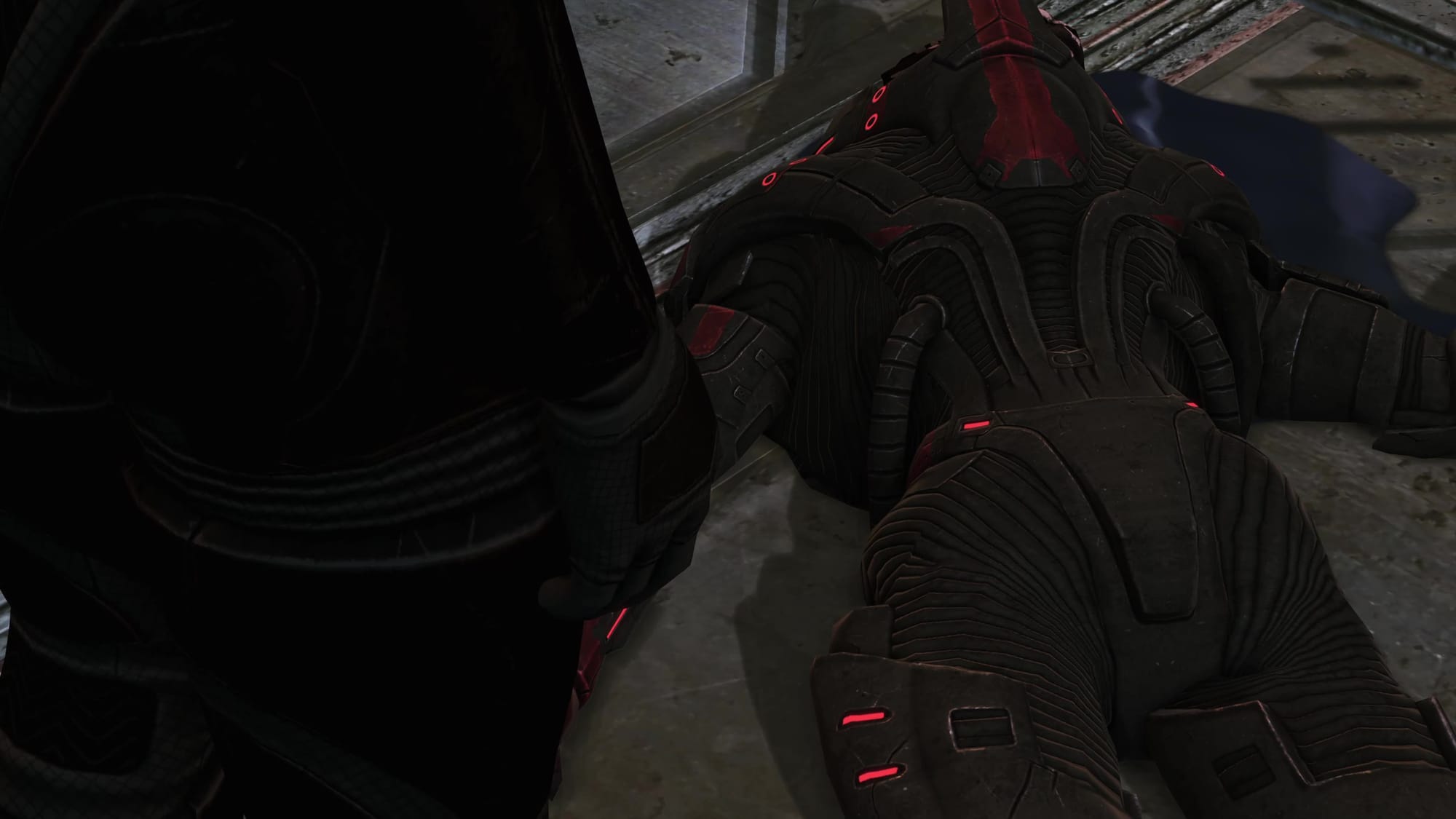
The obvious closure is Nihlus’s life. Nihlus was a locus. I forgot to mention that. His continuance, relationships, agency, future missions, and possible mentorship of Shepard all ended in one shot.
But the weighted field does not stop at one body. Nihlus was a bridge.
- He connects Shepard to the Spectres.
- He connects humanity to Council legitimacy.
- He connects the Eden Prime evidence chain to a trusted internal witness.
- He connects Saren to a remaining relational field outside Sovereign’s direct frame, because Saren was his mentor.
- He connects the Normandy’s mission to a less adversarial future hearing about all of this.
If Nihlus survives, the next article is a very different article. Shepard does not bring only a frightened dockworker’s testimony, Anderson’s prior personal grievance, and a scrambled nightmare vision to the Citadel. Shepard brings a Spectre who personally saw Saren at Eden Prime.
The Council may still deny too much, because the Council is the Council and the Council is idiotic. But the denial field is much harder to stabilize.
Nihlus’s survival also preserves the mentor path.
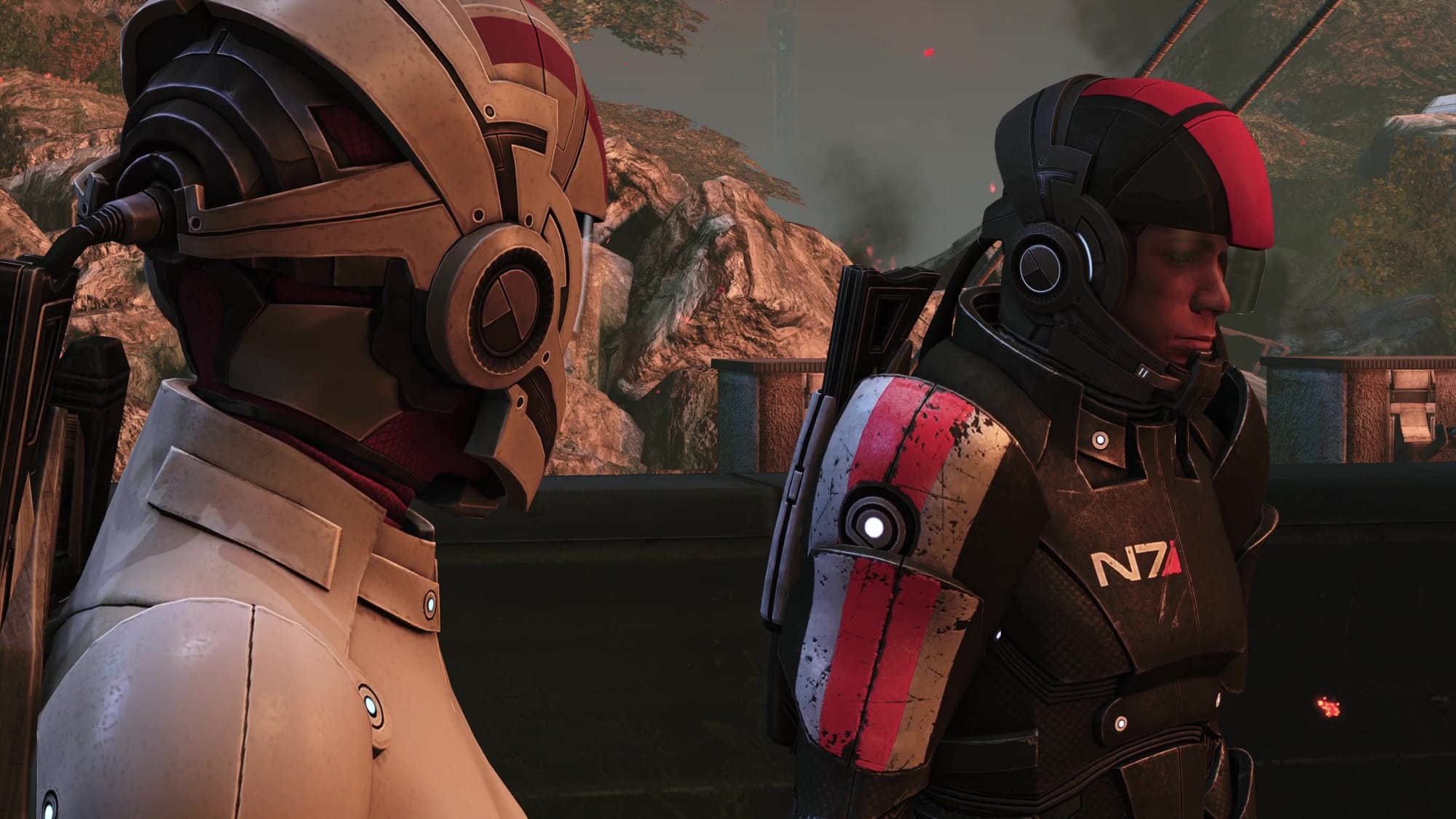
He was not actually only there to observe one mission and write “seems fine” on a Council clipboard. He is expected to accompany Shepard on future missions. He likely would have become Shepard’s mentor. Spectre status is not just a title. It changes what interventions are reachable. It grants jurisdiction, mobility, resources, and permission to act in fields where ordinary Alliance command would be blocked.
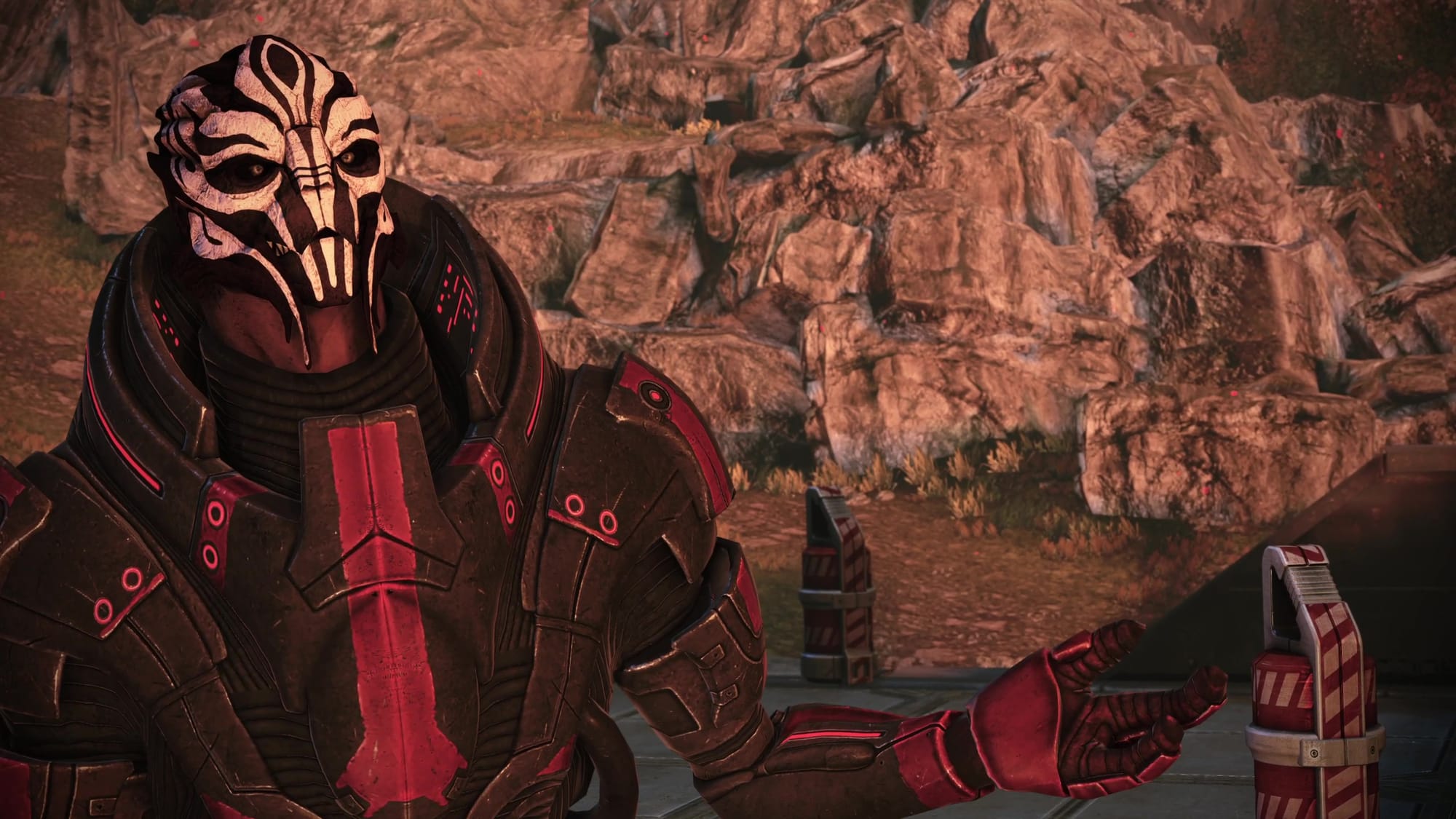
Saren has already accepted the counterfeit Better. If resistance is impossible and submission is the only path by which some organic future can be preserved, then anyone who strengthens resistance becomes a threat to preservation as Saren now misdescribes it.
Nihlus strengthens the resistance path. He can name Saren. He can trust Shepard. He can speak to the Council. He can make the human Spectre path smoother. He can become an independent Spectre witness to the Eden Prime field. He can reopen exactly the path Saren needs closed.
So Nihlus dies.
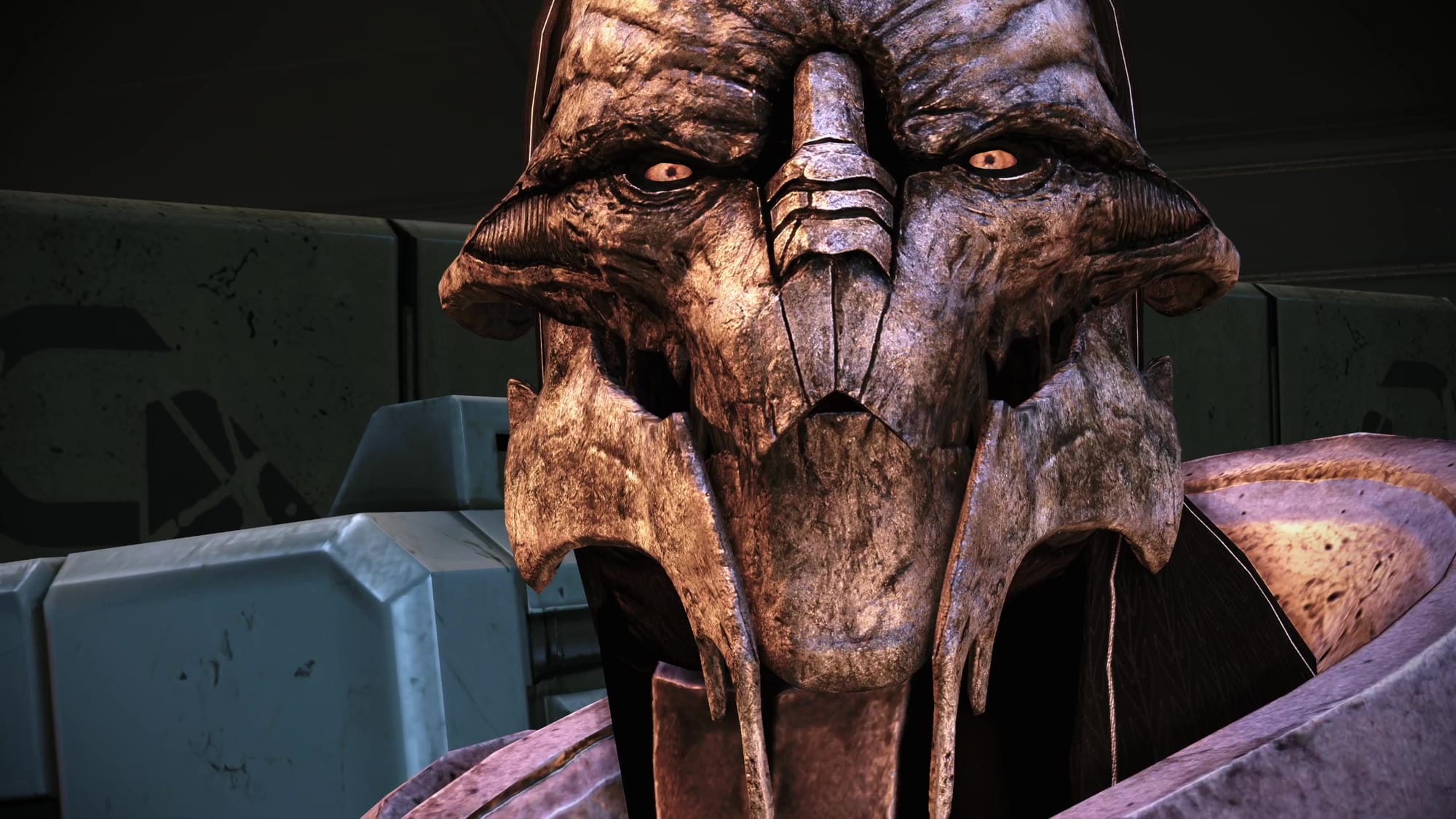
What Saren Just Closed: Nihlus Kryik’s continuance. Nihlus’s future missions. Nihlus’s possible mentorship of Shepard. The cleanest Council-internal evidence path against Saren. A trust bridge between humanity and the Council. A remaining relational anchor between Saren and a non-Reaper moral field. A faster path toward recognizing the Reaper threat. The possibility that Shepard’s Spectre candidacy proceeds through guided evaluation rather than adversarial crisis.
What Saren Just Opened: A concealment path for Sovereign. A weakened evidence field in which Shepard must later argue from fragments. A Council-denial path with lower resistance. Saren’s deeper enclosure inside the Reaper project. The practical necessity that Shepard become a Spectre through conflict rather than through Nihlus’s guided evaluation. A field where the first independent interpretation of the Reaper threat must pass through damaged testimony, institutional resistance, and Shepard’s own incomprehensible beacon exposure.
Shepard Finds a Body, Not a Choice.
Shepard reaches the station after the shot.
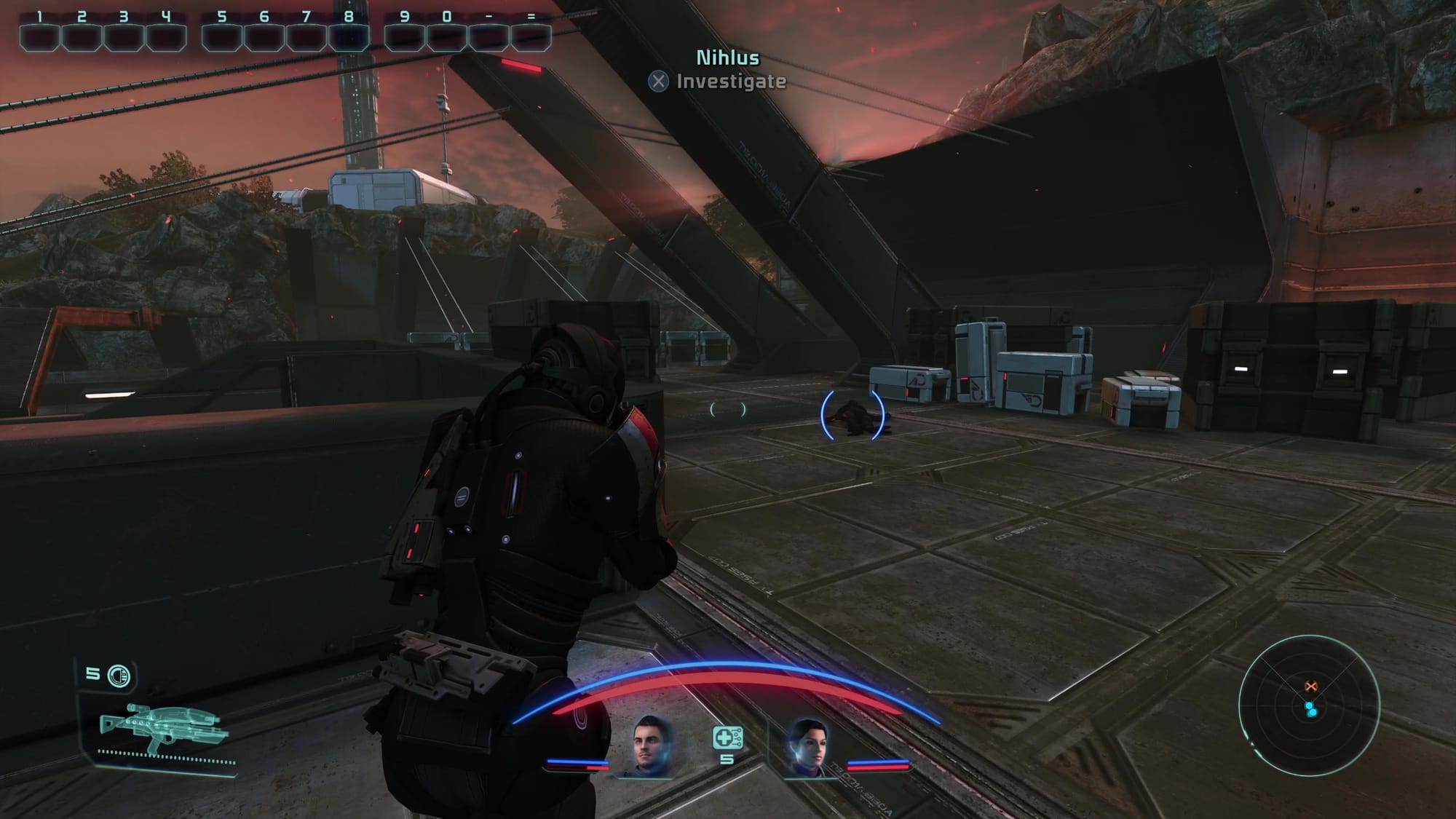
Shepard now has a new task:
- Preserve whatever residual evidence and future-space remain.
He sees Sovereign leaving. He does not know what a Sovereign is.
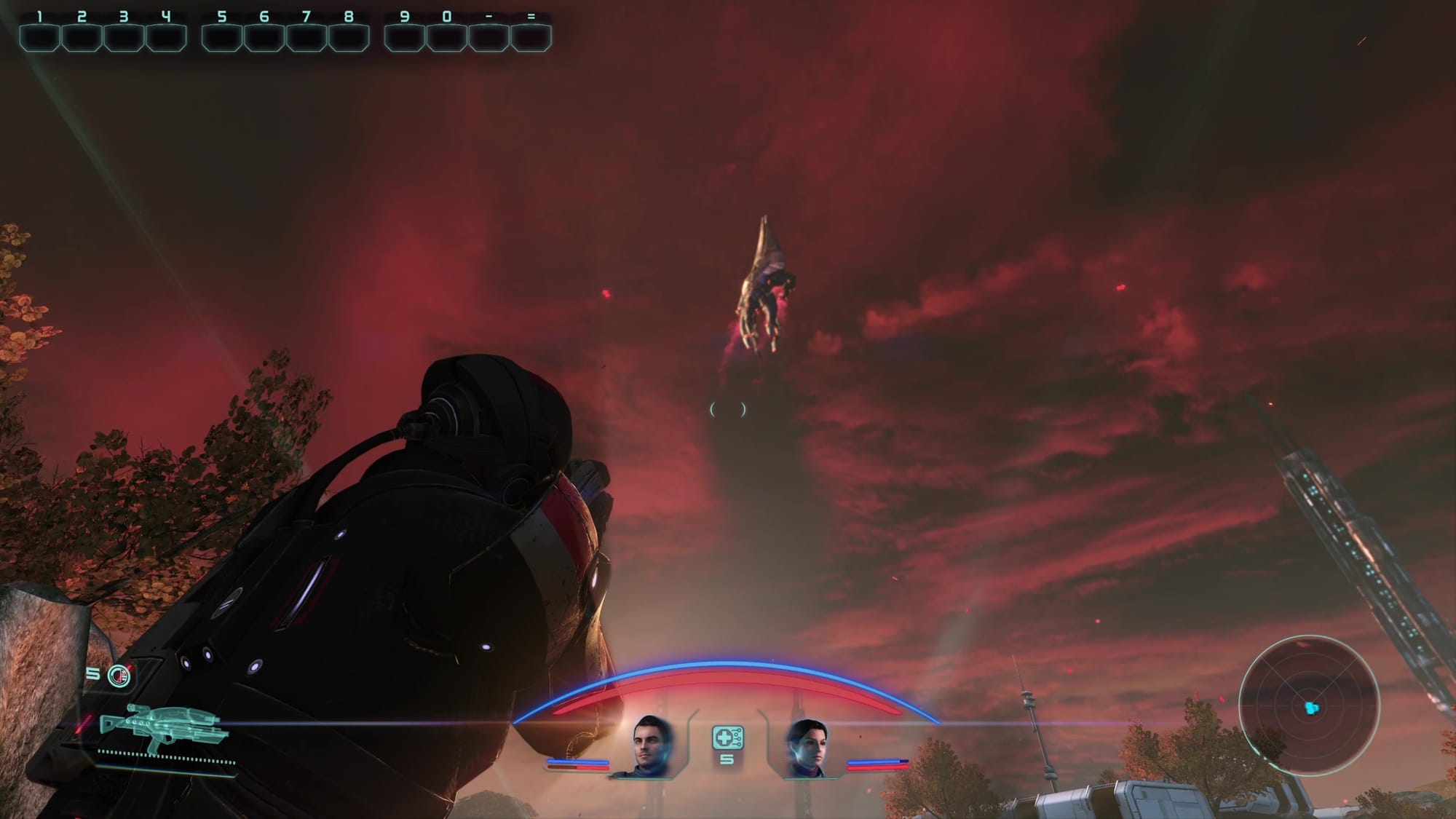
He finds Nihlus dead. A real whodunnit. Before Shepard must think too hard, Ashley notices movement behind nearby crates. Everyone raises weapons.
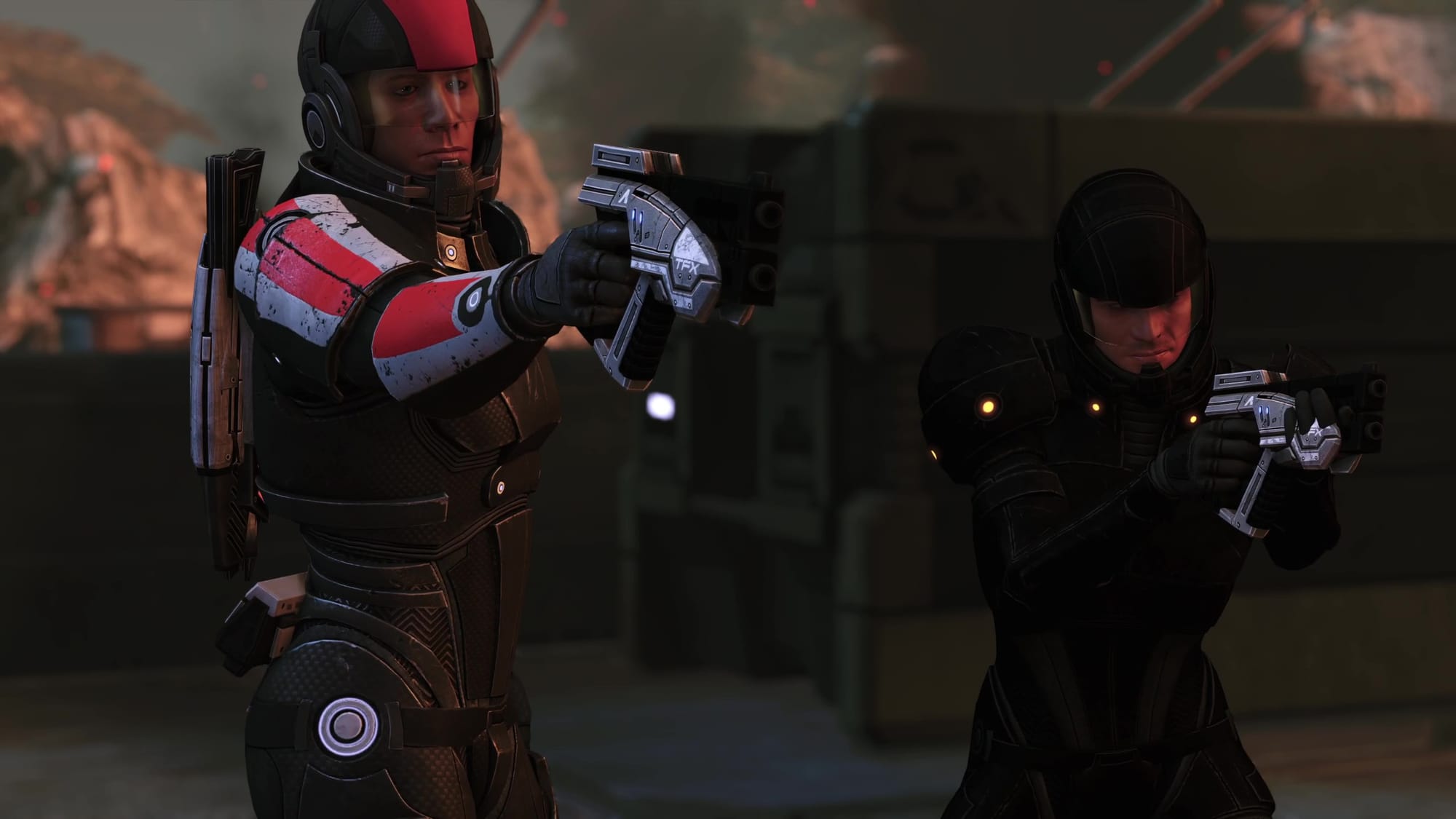
The survivor is a dockworker. Everyone is disappointed.
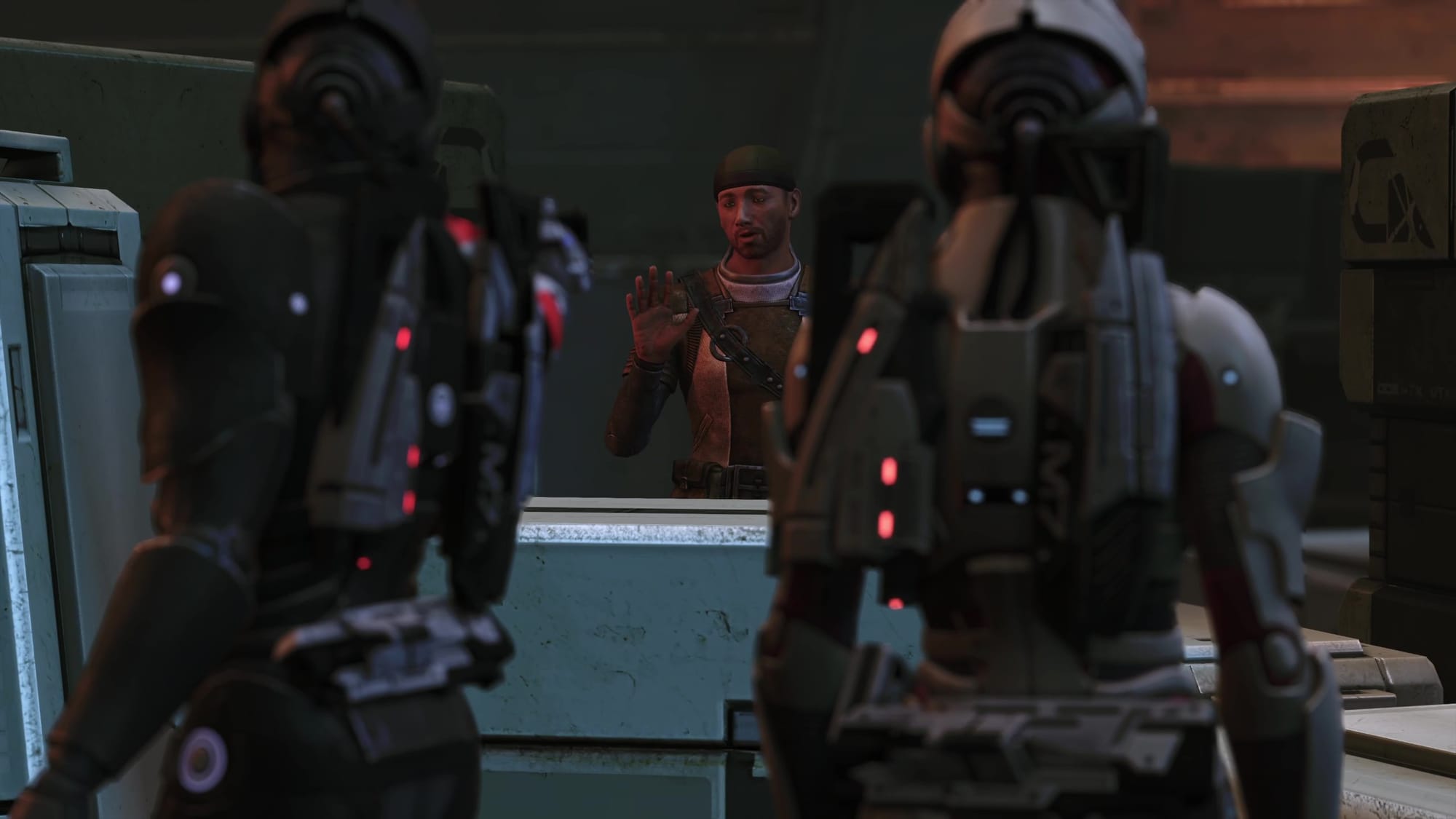
His name is Powell. Powell saw Saren kill Nihlus.
He also heard Nihlus say Saren’s name.
He is also kind of involved in a smuggling arrangement with Cole and some other colonists hiding nearby.
This is a beautifully stupid evidence chain.
The Council’s first real path toward discovering the Reaper threat now runs through a petty criminal hiding behind crates during a geth attack, who can identify one of the most powerful special agents in the galaxy because the victim happened to shout his name out loud just before being shot.
So this is not very good evidence in the clean institutional sense. It is still evidence, though.
In damaged fields, the remaining epistemic path is often ugly. Witnesses are frightened. Records are partial. Motives are mixed. People who saw the key event may also have stolen something unrelated and would rather discuss literally any other topic. Geth may have put people on spikes.
A repair agent cannot demand perfect evidence as the price of preserving imperfect evidence.
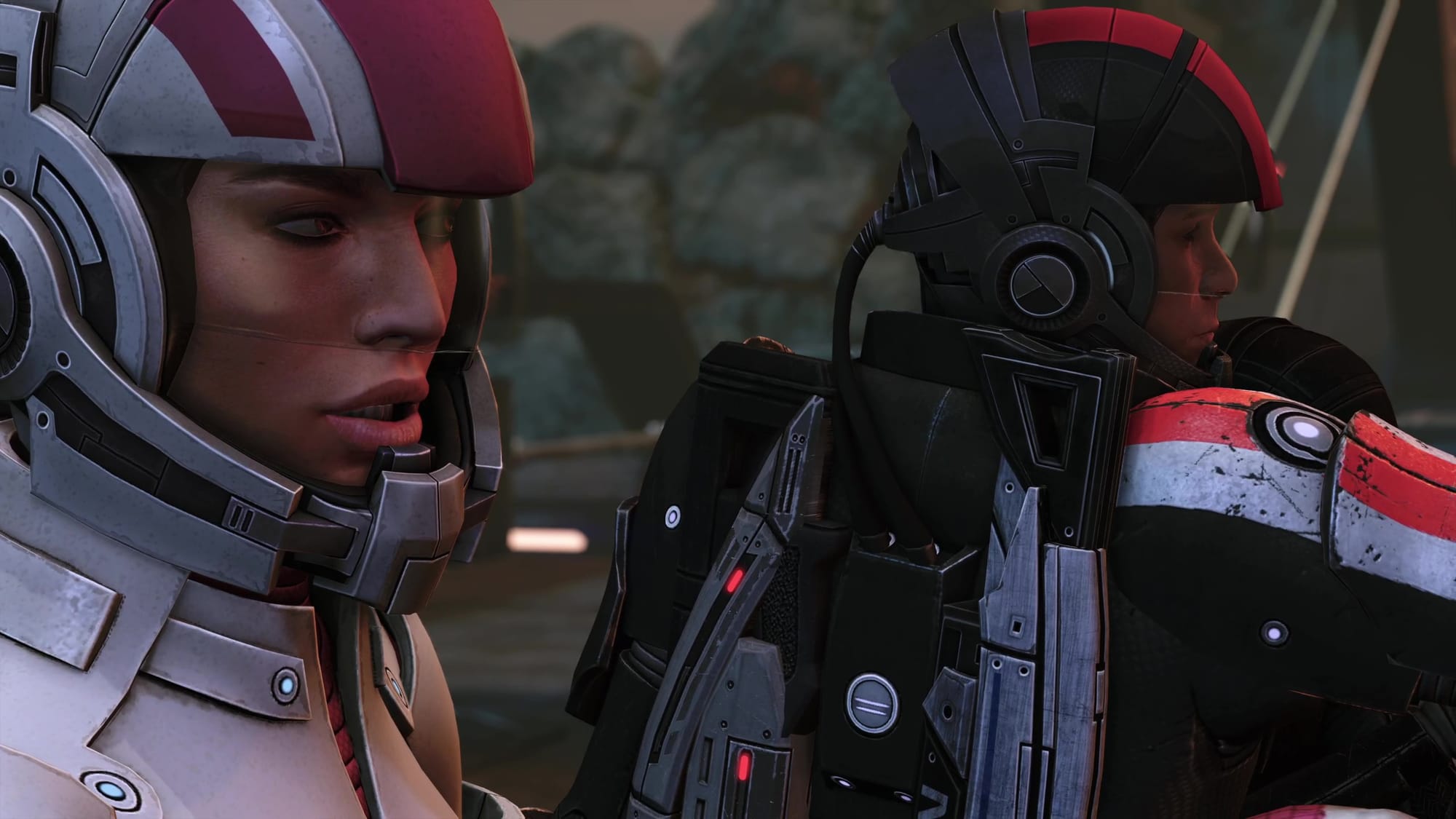
But anyway, now Shepard finally gets something closer to a real choice. We are actually about to analyze a real-time decision from the Commander himself. This is a Citadel Archives first.
Shepard can:
- Preserve the witness field
- Or deform it by treating the local smuggling as the main object of concern
I did not say this was a difficult decision.
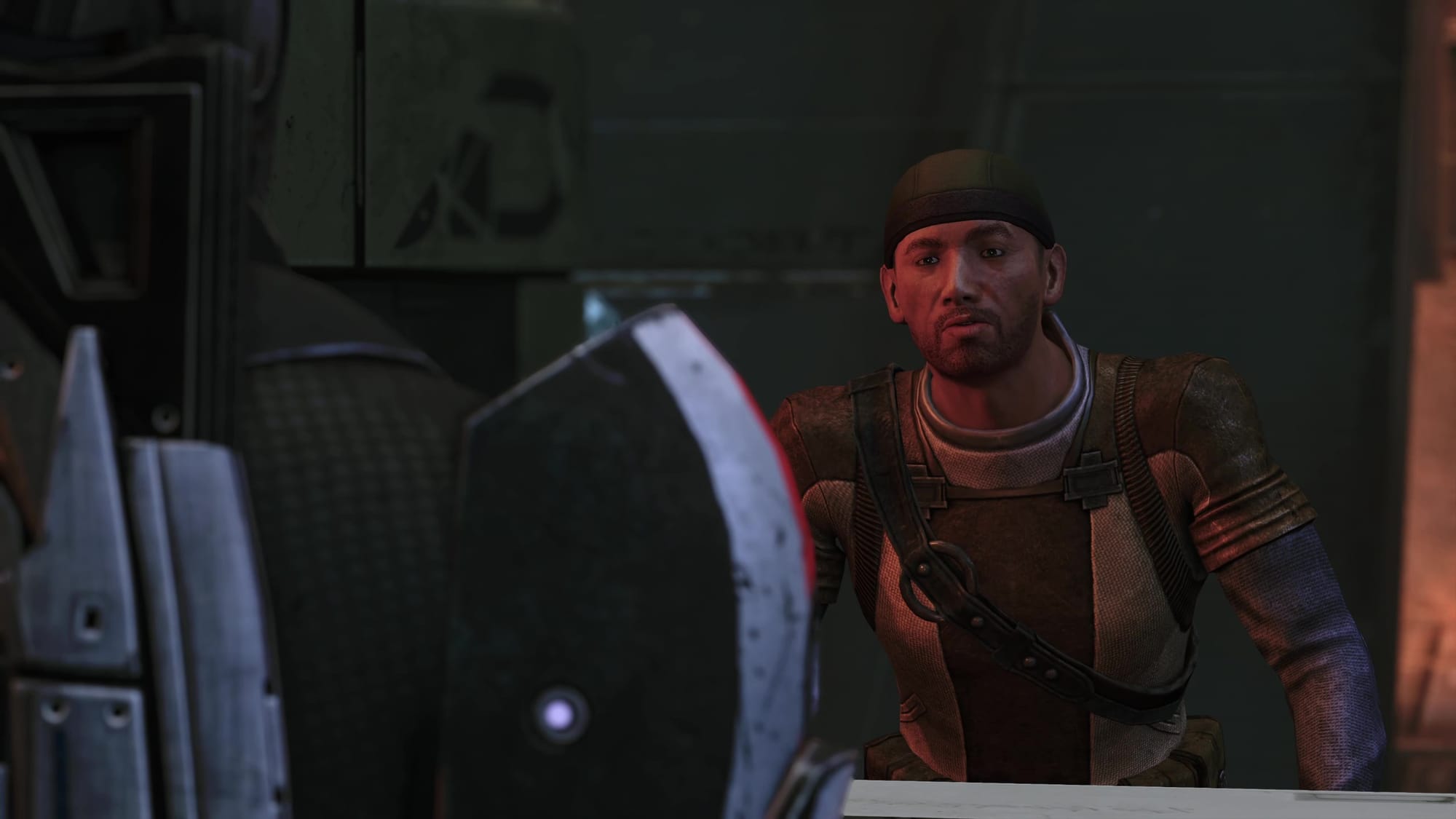
Cole’s smuggling ring is real. It is not the geth.
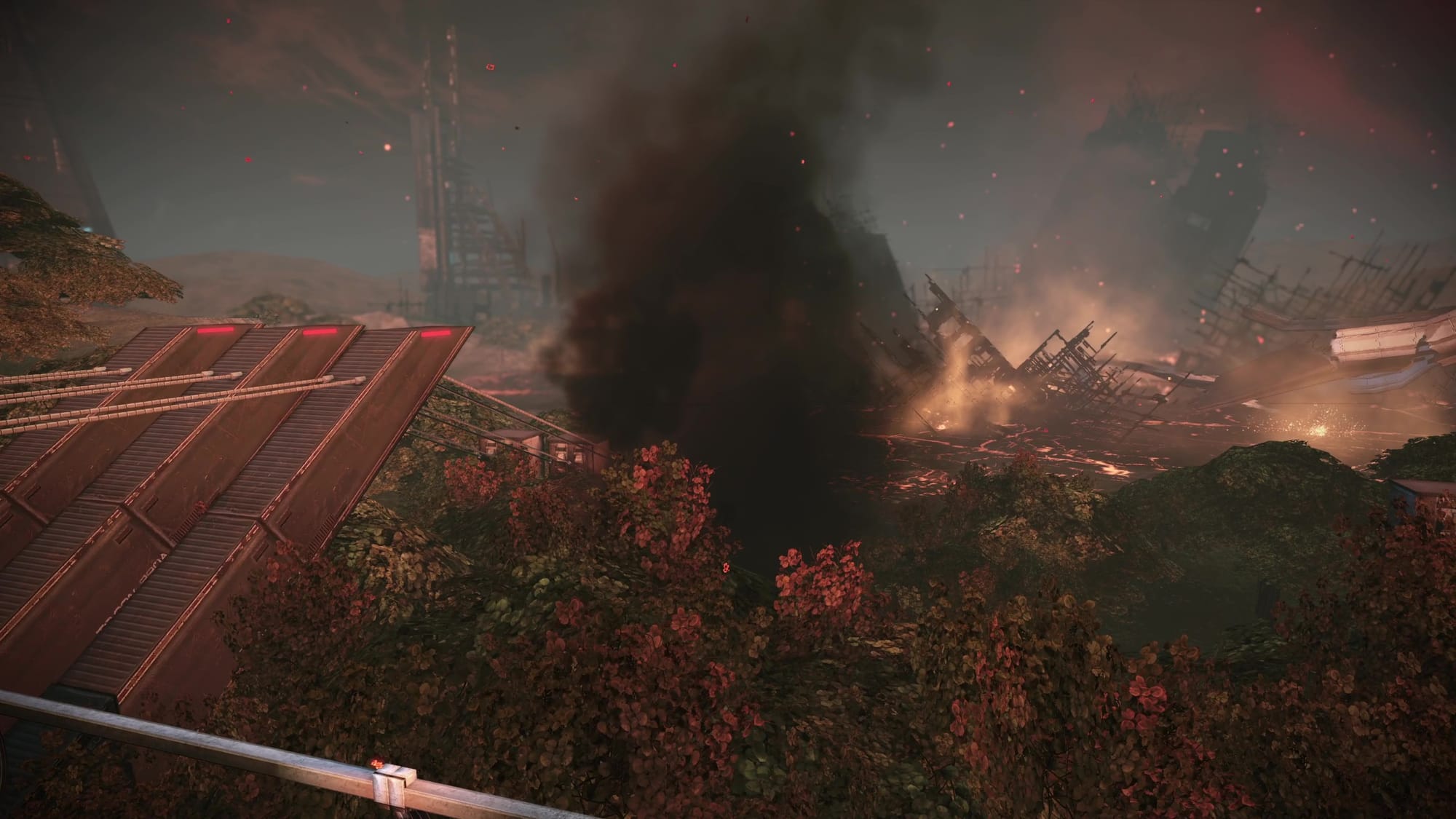
This is really one of those cases where personal accountability should be sequenced behind colony preservation. This does not mean the smuggling is fine. It means the geth are planting nukes and Nihlus has just been murdered by the galaxy’s most trusted traitor. There is a time to investigate unauthorized grenade mod distribution, and it is not before preventing the spaceport from exploding.
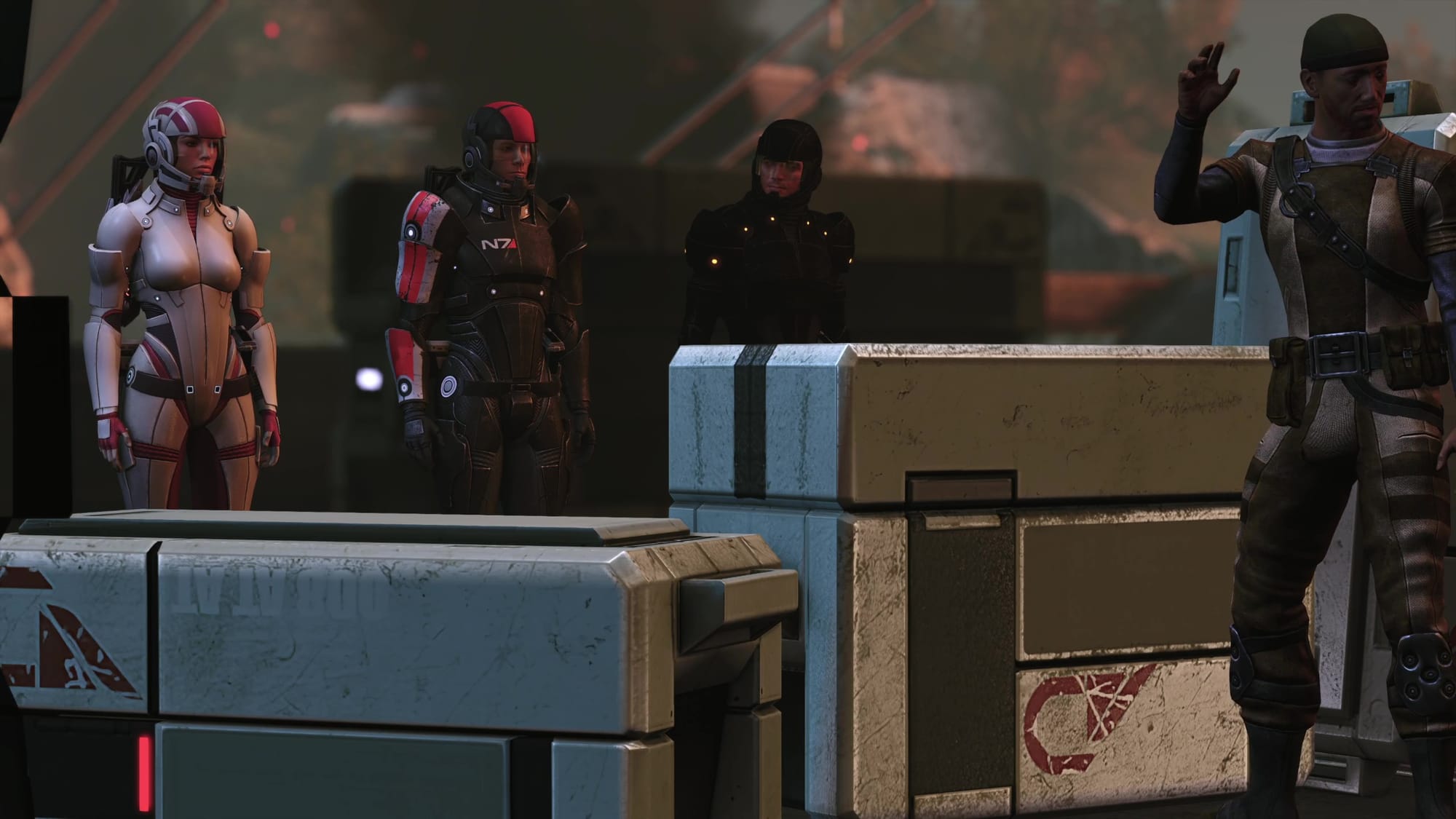
Shepard can use Charm or Intimidate to press this guy's friend for smuggling details and equipment, but the moral center is not “punish the petty criminal standing around near the crime scene.”
The moral center is preserving the testimony necessary to reconstruct the larger closure.
What We Just Closed: The path where colonial smuggling becomes the main moral object because it is easier to punish than the actual catastrophe unfolding around us is to understand. The path where the witness field is damaged for immediate punitive satisfaction. The path where ugly evidence is discarded because the witness is not clean enough to satisfy our institutional fantasy.
What We Just Opened: Powell’s crucial testimony remains unsullied by his smuggling tendencies. Cole’s supporting context. An incredibly fragile but real path from Eden Prime to a Citadel hearing. The recognition that damaged fields rarely preserve truth in respectable packaging.
The Bombs.
Saren orders the geth to destroy the spaceport.
The game gives Shepard an extremely generous five minutes to disarm four demolition charges while fighting through geth resistance.
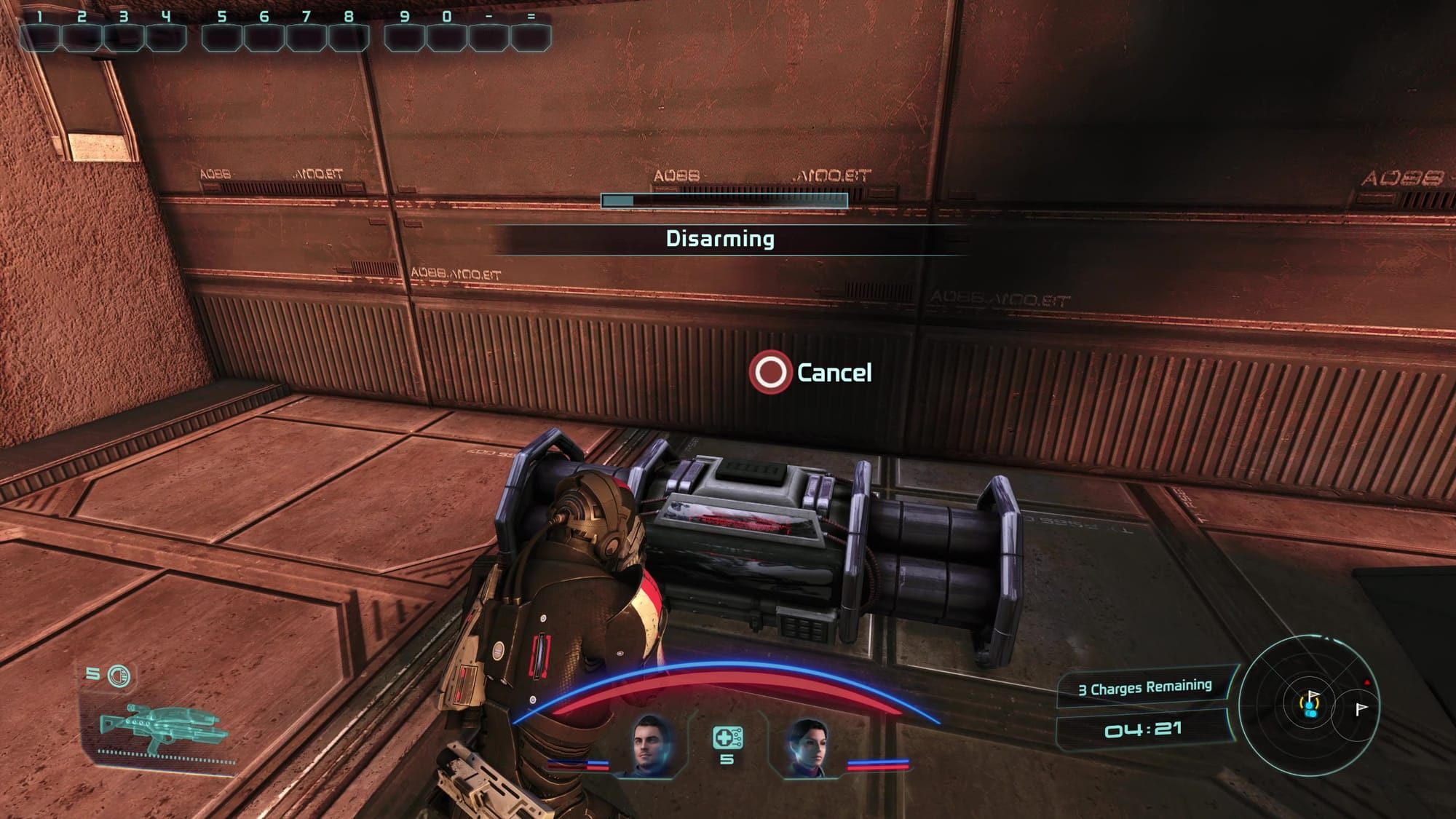
There is really just no interesting argument I could come up with against disarming the bombs, which is a shame because this article clearly needed to become longer.
The Beacon.
Shepard reaches the beacon.
Saren has already used it.
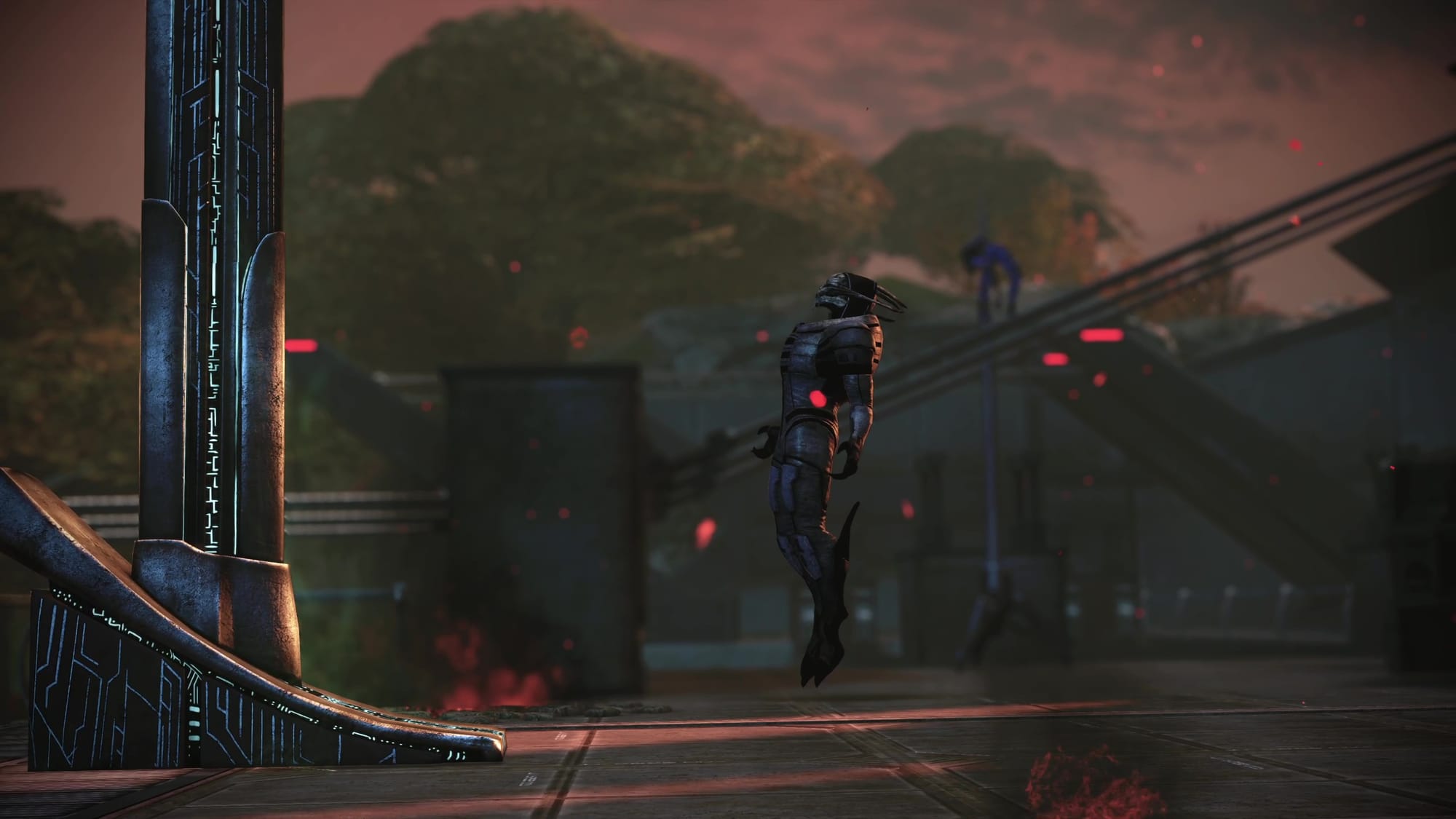
The geth are beaten back. The bombs are disarmed. The tutorial is trying very hard to end before I can find another object to try to explain for twelve paragraphs.
Ashley approaches the beacon. It activates.
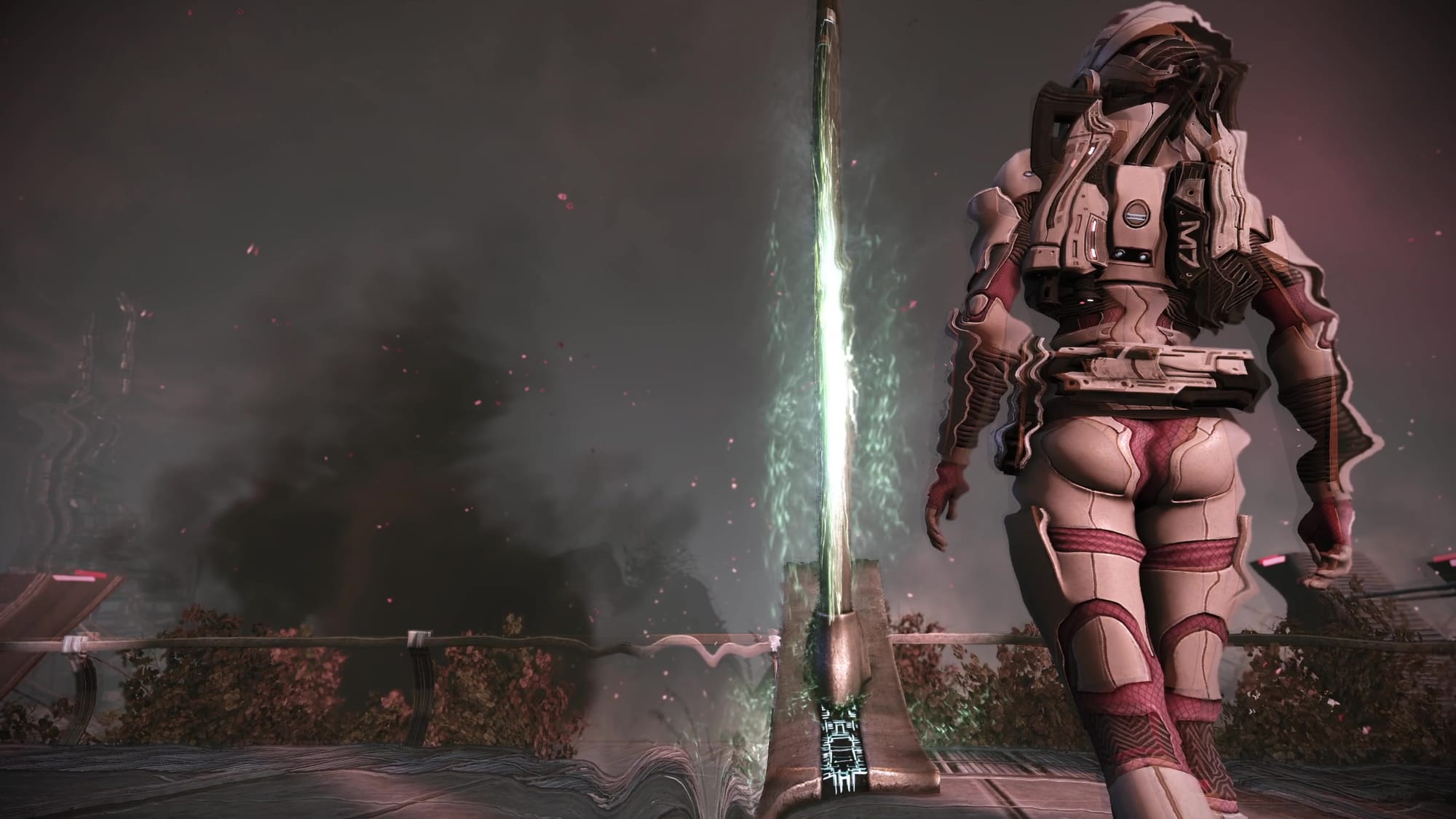
There is no deliberative decision here.
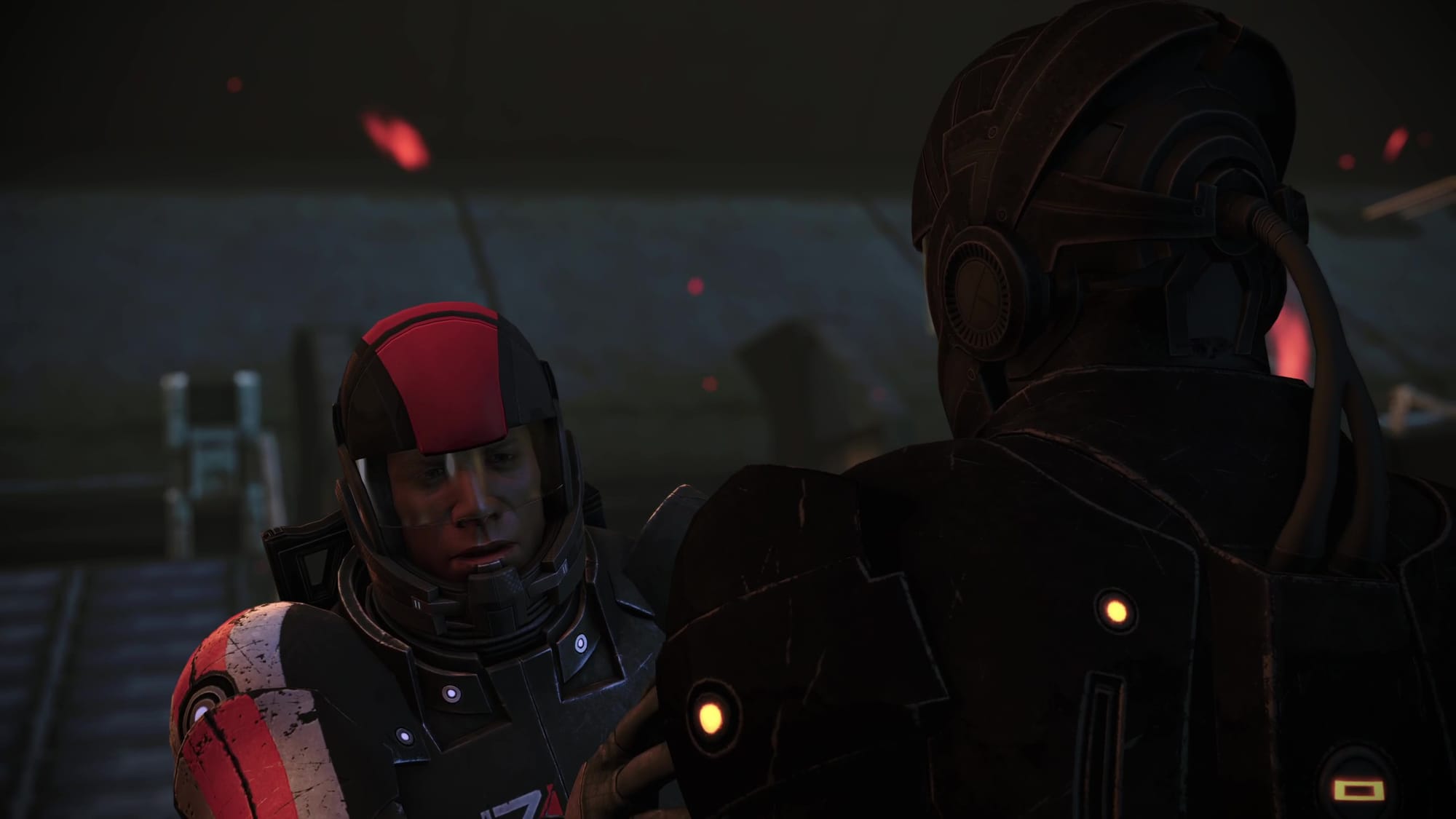
This is a speed-critical scenario. The field does not offer Shepard a clean reflective interval in which to compare weighted futures, consult my framework, define the relevant loci, and calmly decide whether “touch this alien nightmare pillar” ranks above or below “allow subordinate to be eaten by that ancient device.”
- Ashley is already in the beam.
- Shepard can move.
Shepard moves, because that's who Shepard already is. Moving, like us.

Shepard is not standing there as a blank moral calculator. This is an Alliance officer, a combat veteran, a Colonist survivor of Mindoir, and the War Hero of Elysium. His entire selected backstory has trained him around this shape:
- A field is closing.
- A person is in immediate danger.
- There is no time to understand the whole structure.
- So act first where the reachable future is visibly collapsing.
This is not the same as untrained impulse. It is trained fast field-reading under conditions where deliberation has been structurally foreclosed. The training is the fast response, distributed across the years before the moment arrives.
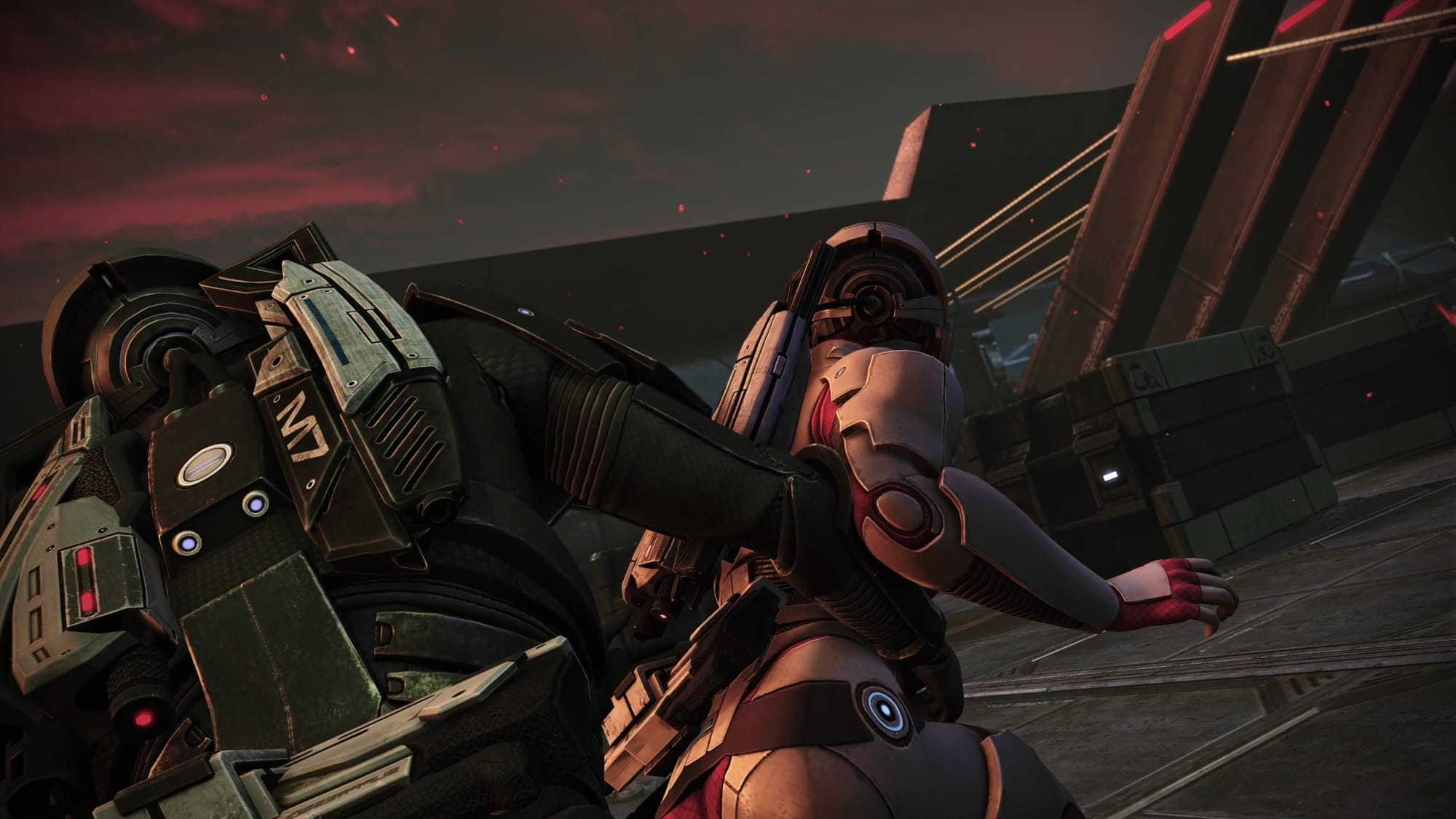
Shepard does not know what the beacon is doing.
He does not know that the beacon contains a damaged Prothean warning.
He does not know that Saren has already used it.
He does not know that being pulled into the beam will make him the first surviving carrier of the message path Saren failed to monopolize, and personally responsible for solving everyone in the galaxy's problems over the next three years.
He knows Ashley is in danger.
So he pushes her out.
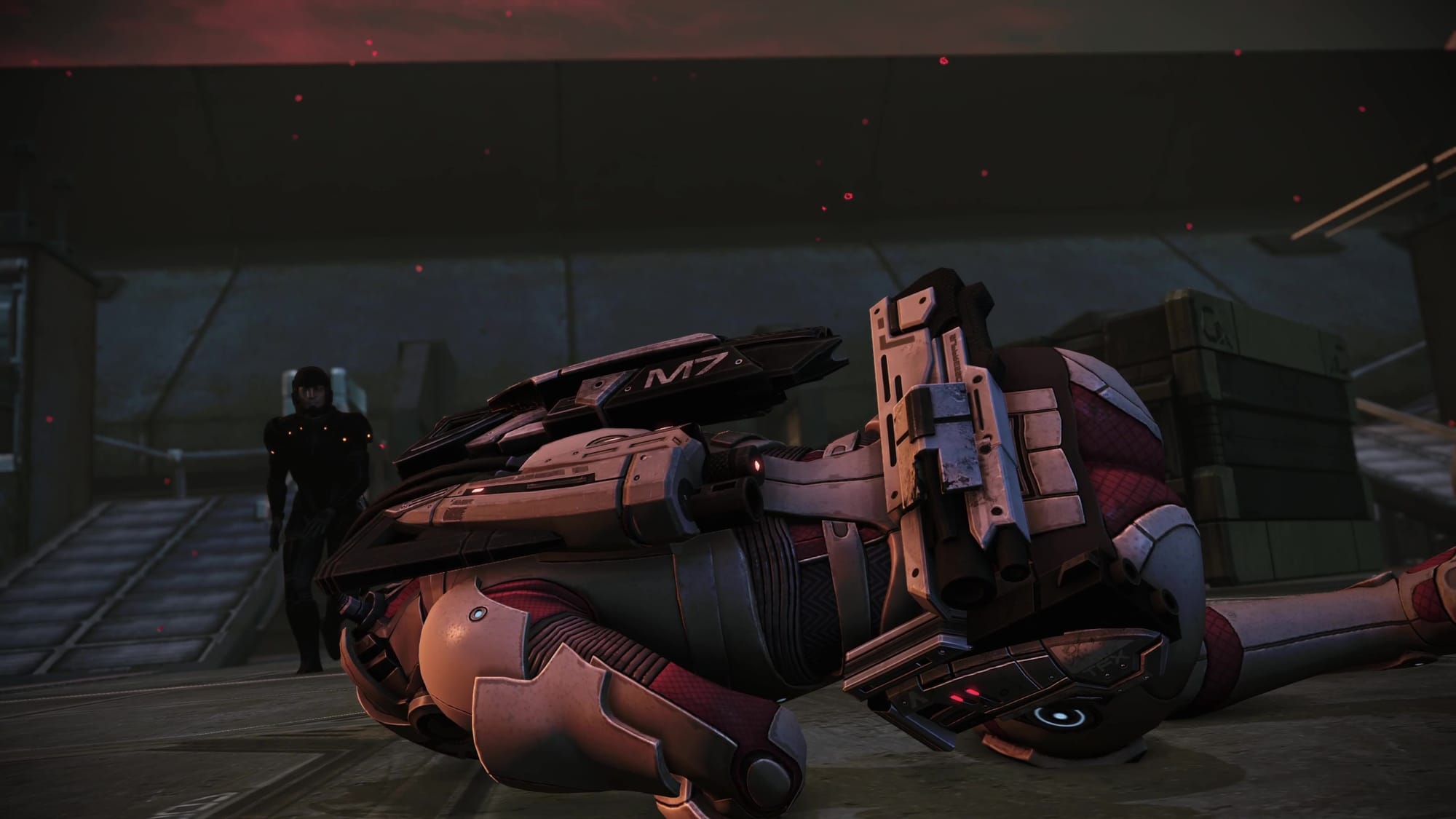
Then, the beacon takes him instead.
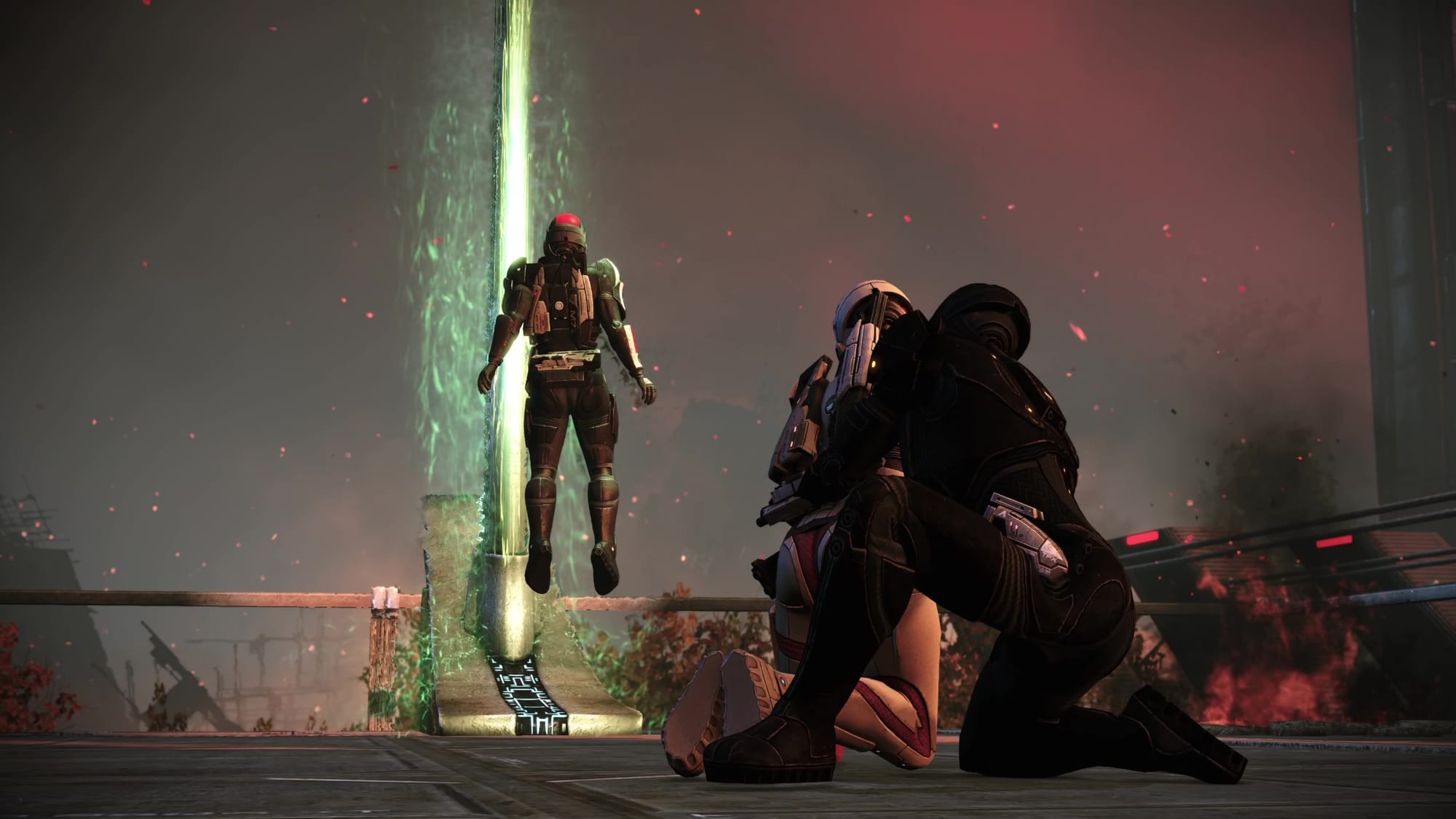
The warning arrives as broken images: death, machines, harvest, bodies, fire, extinction, the end of a civilization trying to speak through a device that apparently communicates by just assaulting the central nervous system of the nearest lifeform with a museum exhibit from hell.

This is not knowledge, really.

It is not even evidence in a usable form.

It is a warning without translation.

What Shepard Just Closed: Ashley’s exposure to the hell-vision beacon. The path where Saren remains the only active interpreter of the Eden Prime beacon. The path where the Prothean warning dies with this object.
What Shepard Just Opened: Ashley’s continuance. Shepard’s carrier-path for the Prothean warning. The possibility that the Reaper field can later be interpreted from outside Saren’s captured frame.
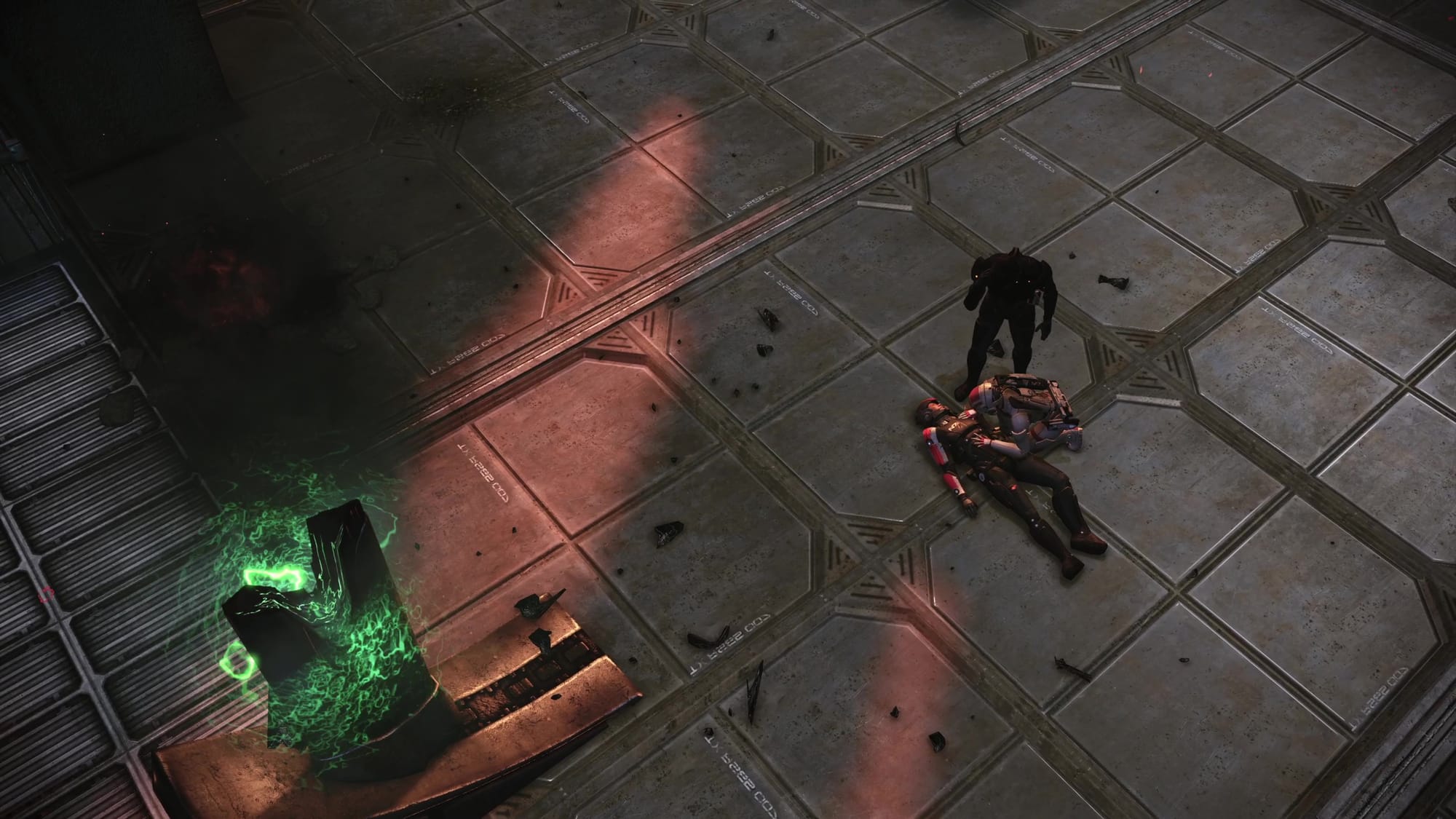
The Bad Evidence Bundle.
Shepard wakes aboard the Normandy.
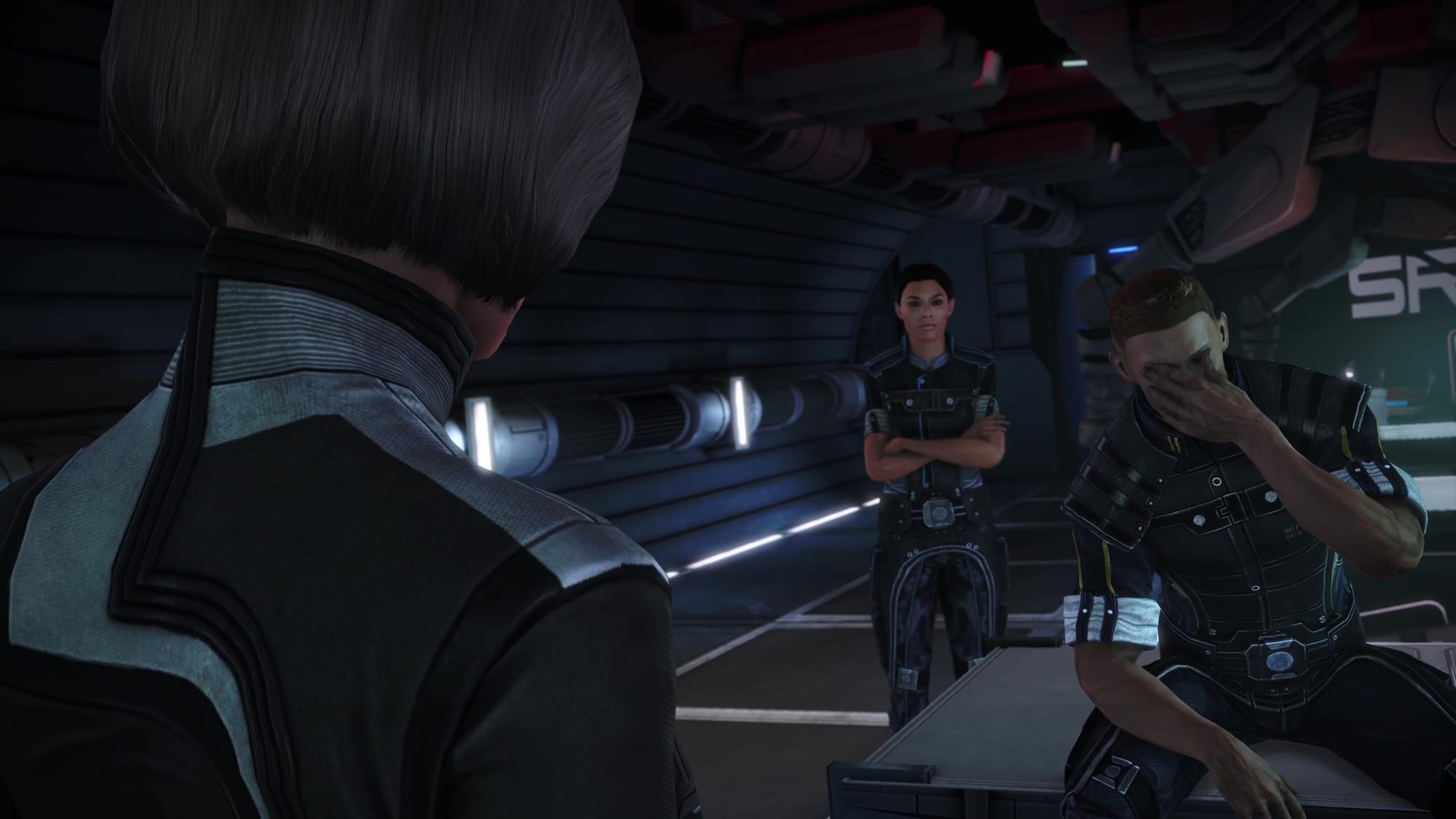
This mission has fucking failed.
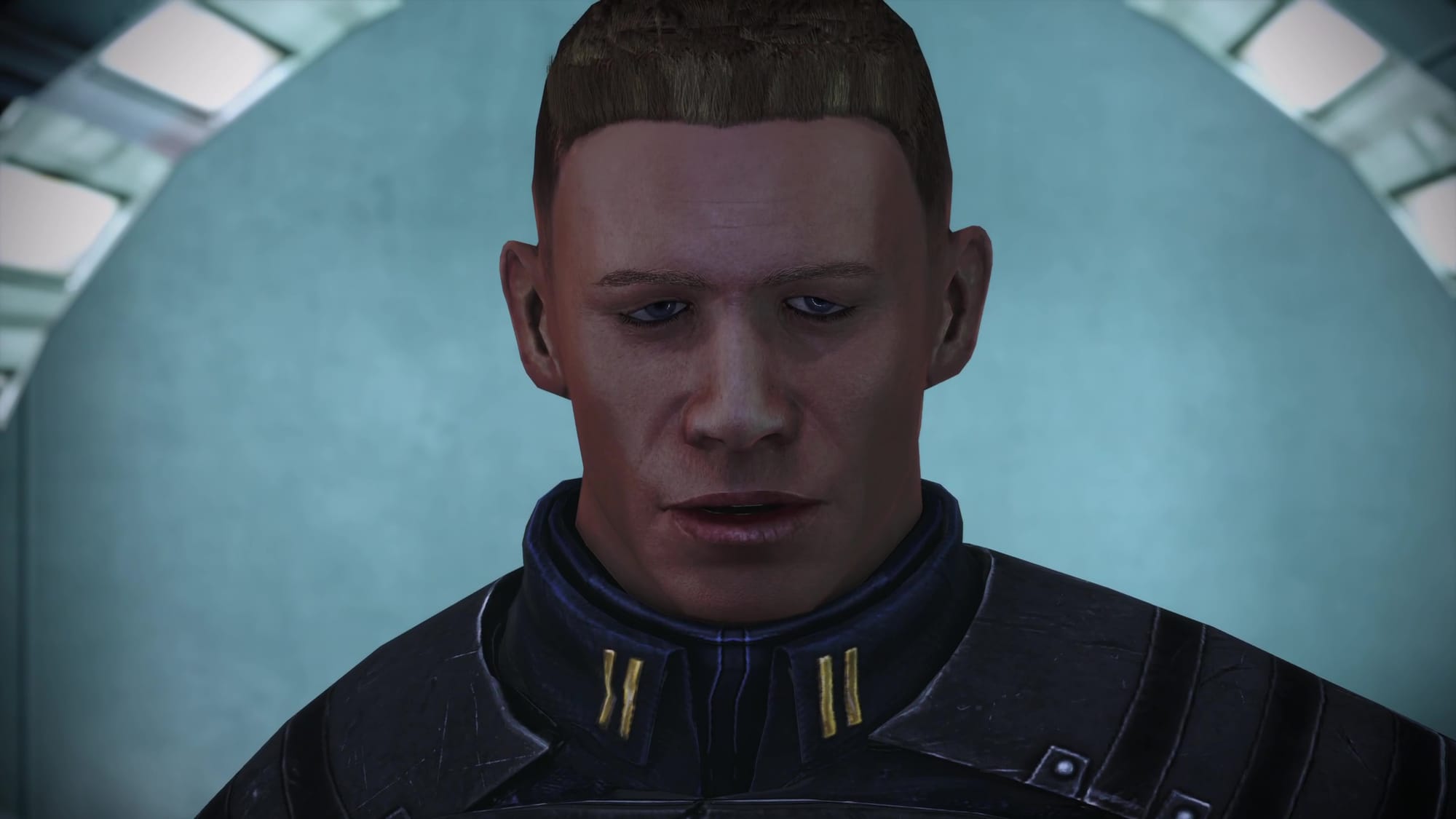
The beacon was not recovered. Nihlus is dead. Jenkins is dead. The 212 is gone. The colony has been hit hard. The geth are involved for reasons no one aboard the Normandy can explain. Shepard has a vision in his head that currently has the evidentiary value of a seizure.
But the path to resistance is still not closed. Saren wanted an erased operation. He did not get one.
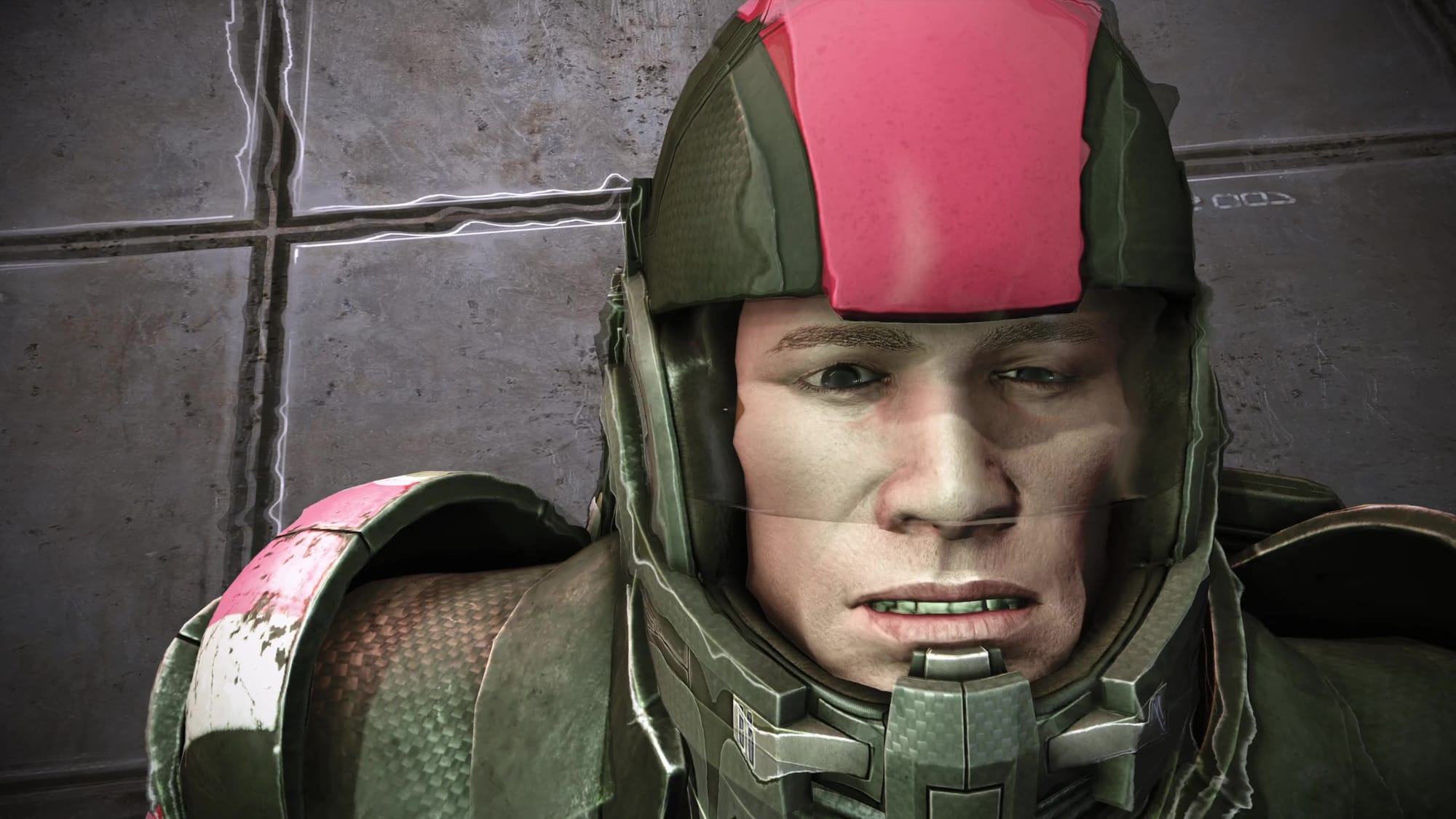
Ashley survived. Kaidan survived. Powell saw the murder. Cole can contextualize Powell. The spaceport did not get to explode. Shepard received the warning. And Anderson already knows Saren’s pattern.
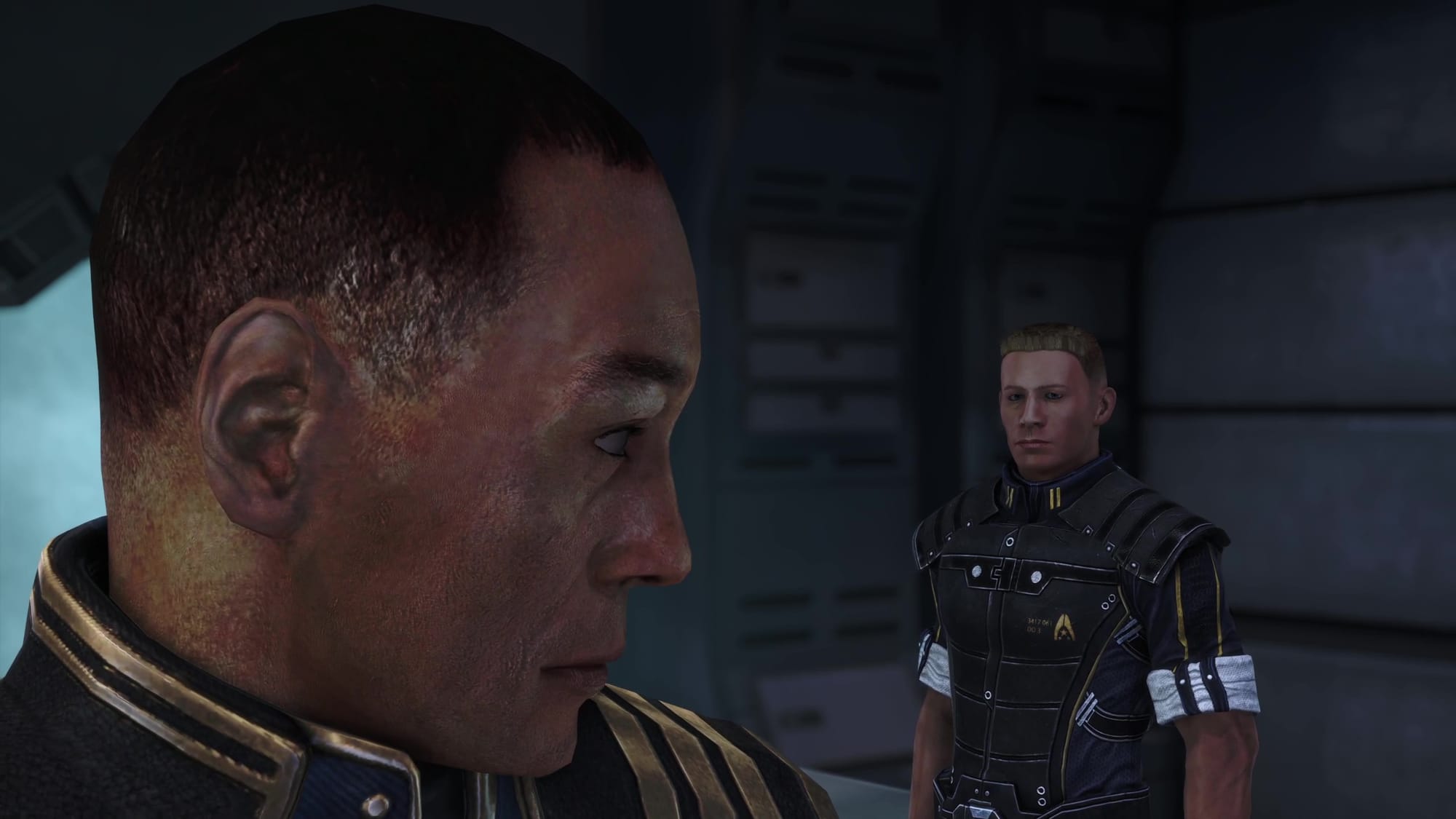
This is not a clean route to the truth, but it is a route. Just enough damaged residue to force the next field open.
That next field is the Citadel.

Poor Shepard now has to explain to the galactic sovereigns that the beacon blew up when touched it, also one of the Council’s most trusted agents murdered another Spectre, attacked a human colony with synthetic forces, and is working with a giant evil machine nobody understands.
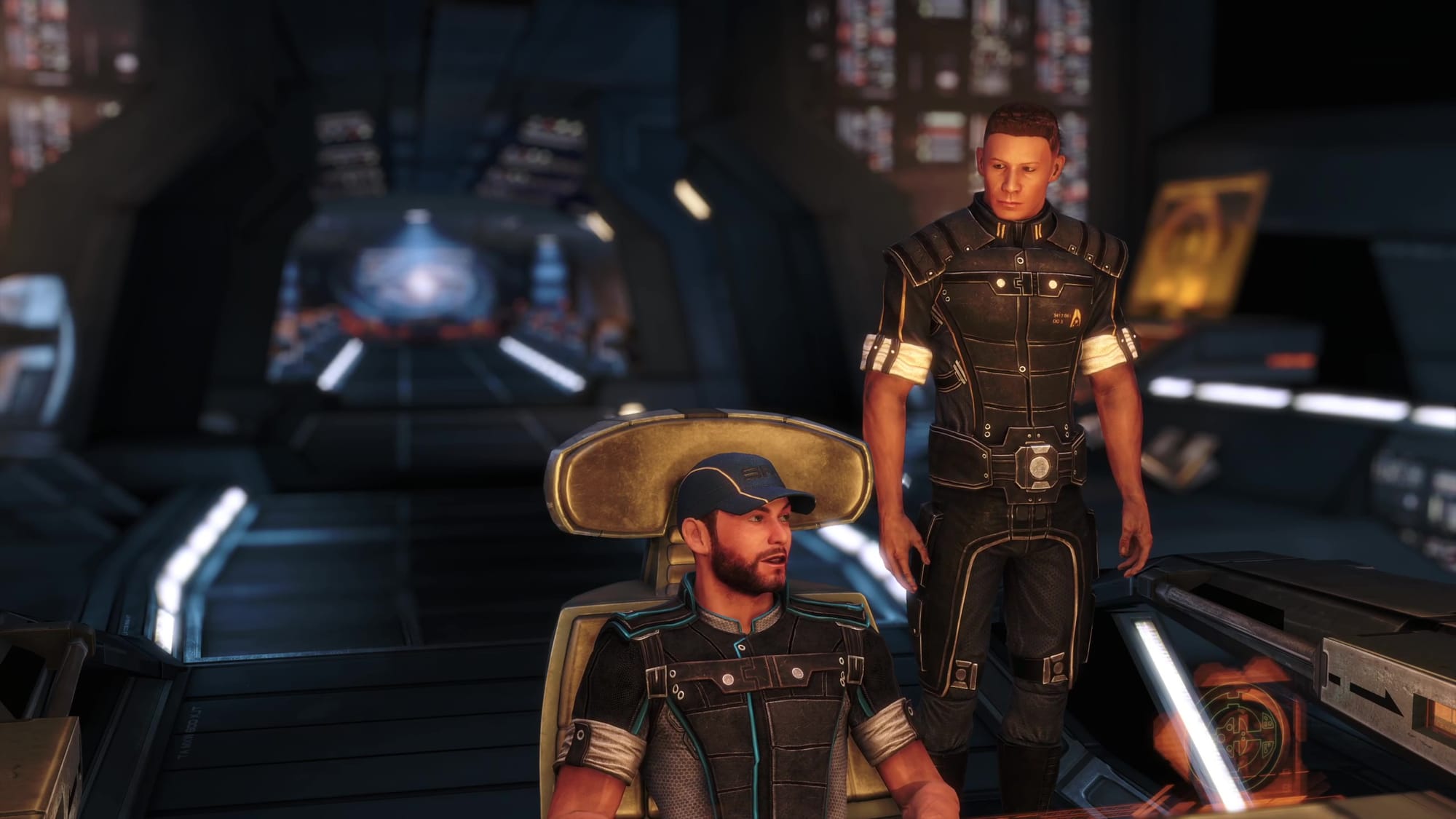
His evidence for this claim consists of a corpse, a cowardly smuggler, Anderson’s old beef, and a nightmare from the ancient past that arrived through Shepard’s nervous system with the clarity of a corrupted torrent.
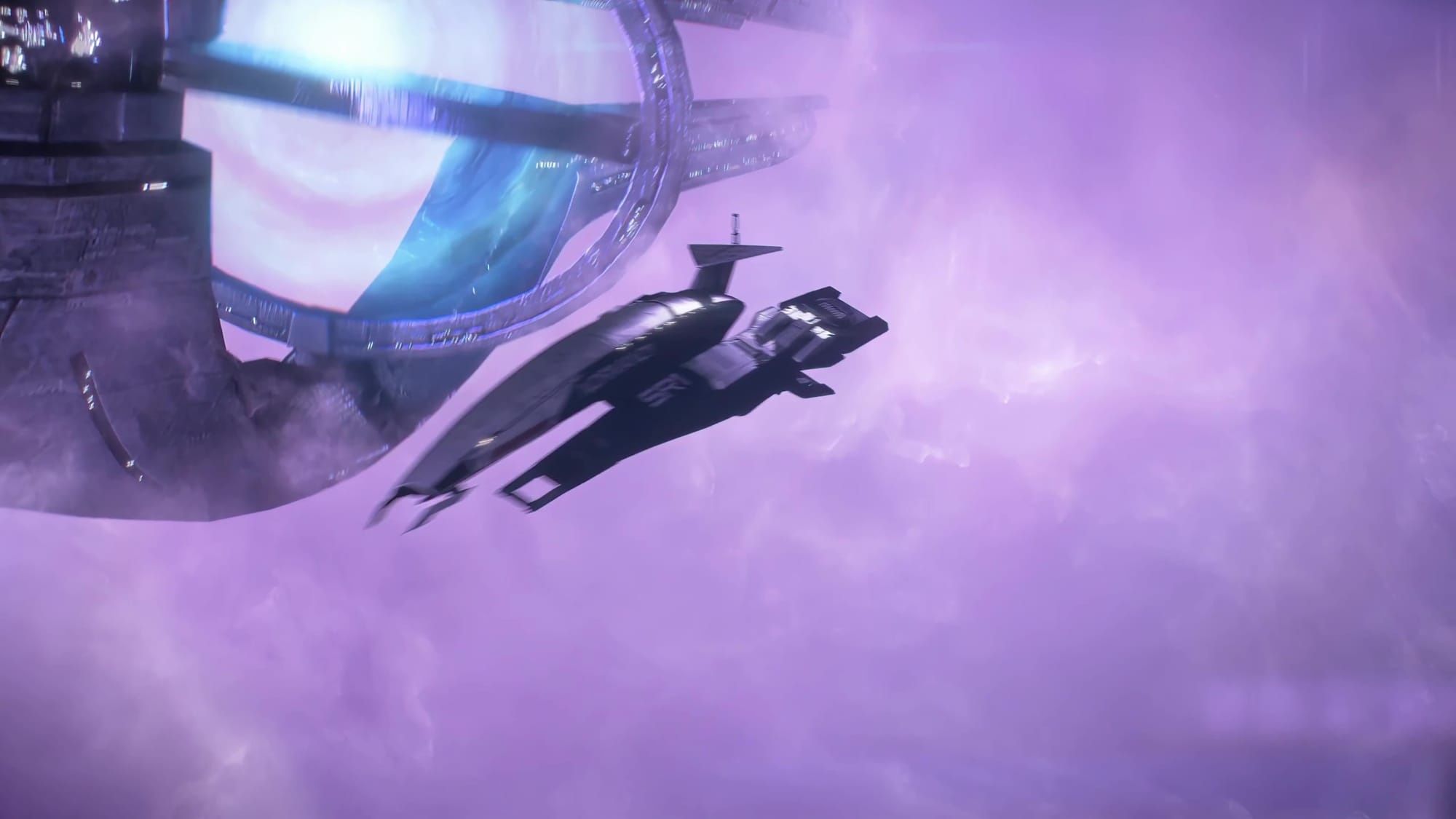
So as we will see next time, the Council will respond with exactly the institutional agility this all deserves.