Tales of Distortion: The Six-Cable Admiral
Geometry declined the realities of command.
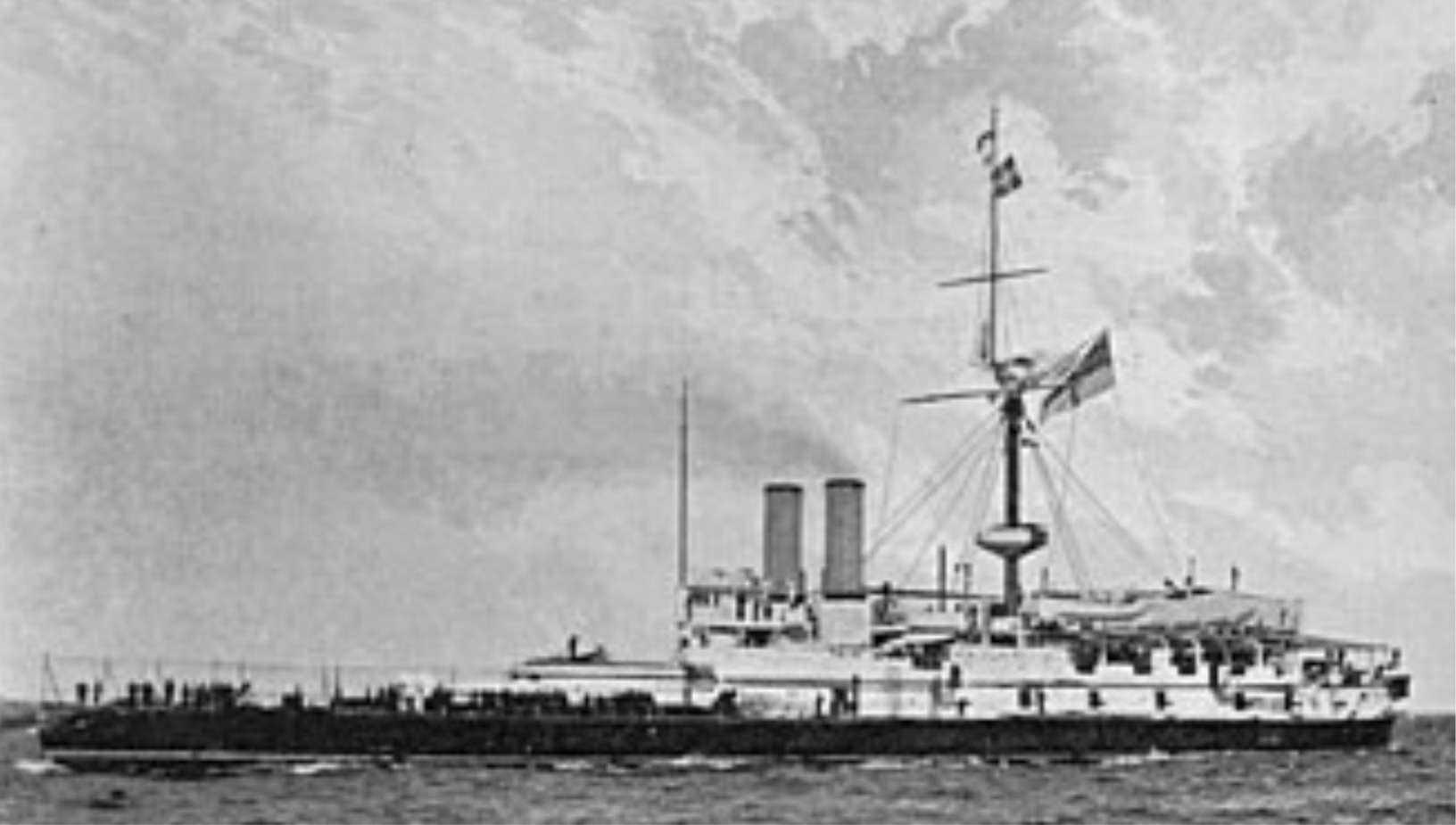
There are many respectable ways to lose a battleship.
A storm can do this. A mine can do it. A submarine can do it. A shell can arrive from an enemy who has been rude enough to bring range tables. The sea itself can look at a nation’s magnificent theory of floating steel and say, in the oldest wet language, no.
HMS Victoria found another route.
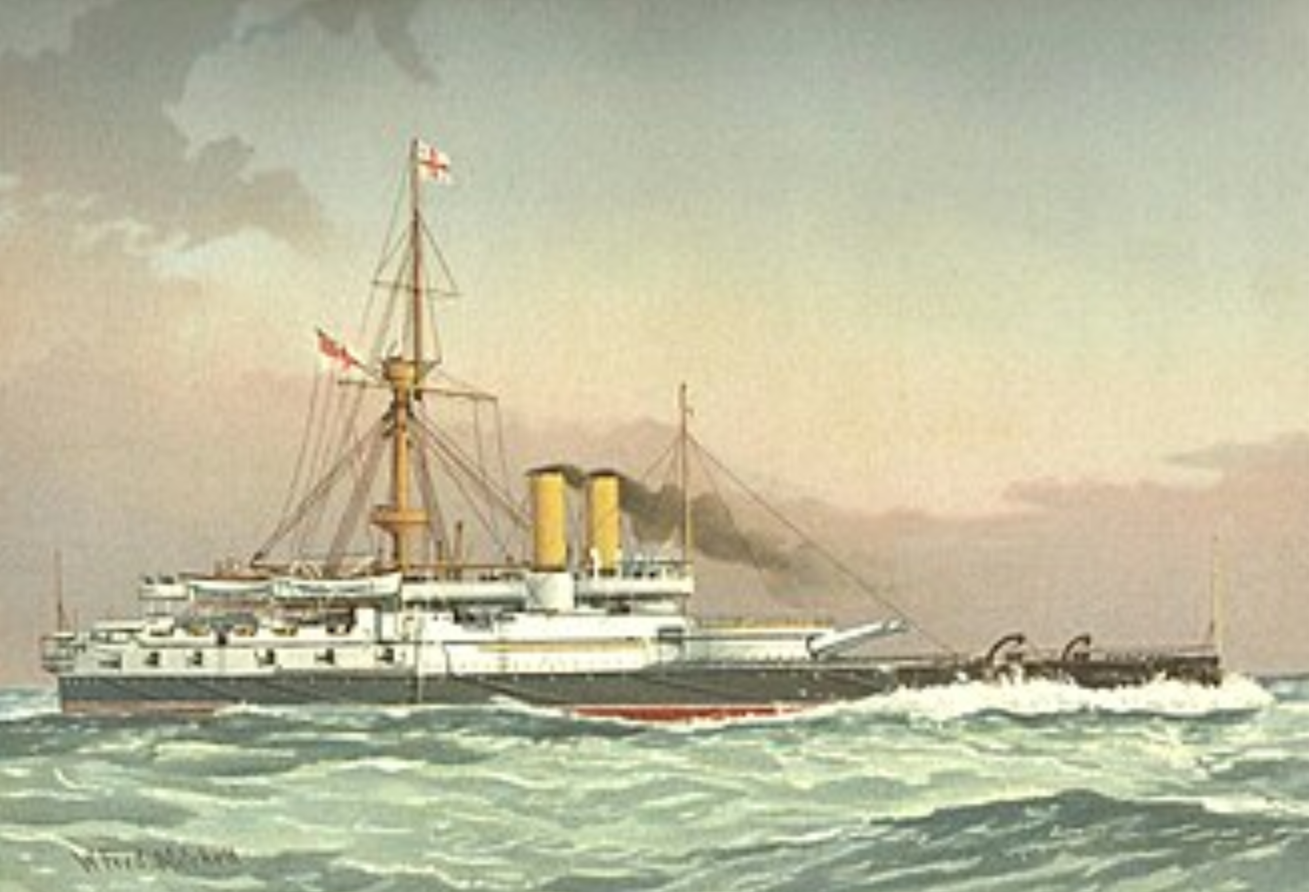
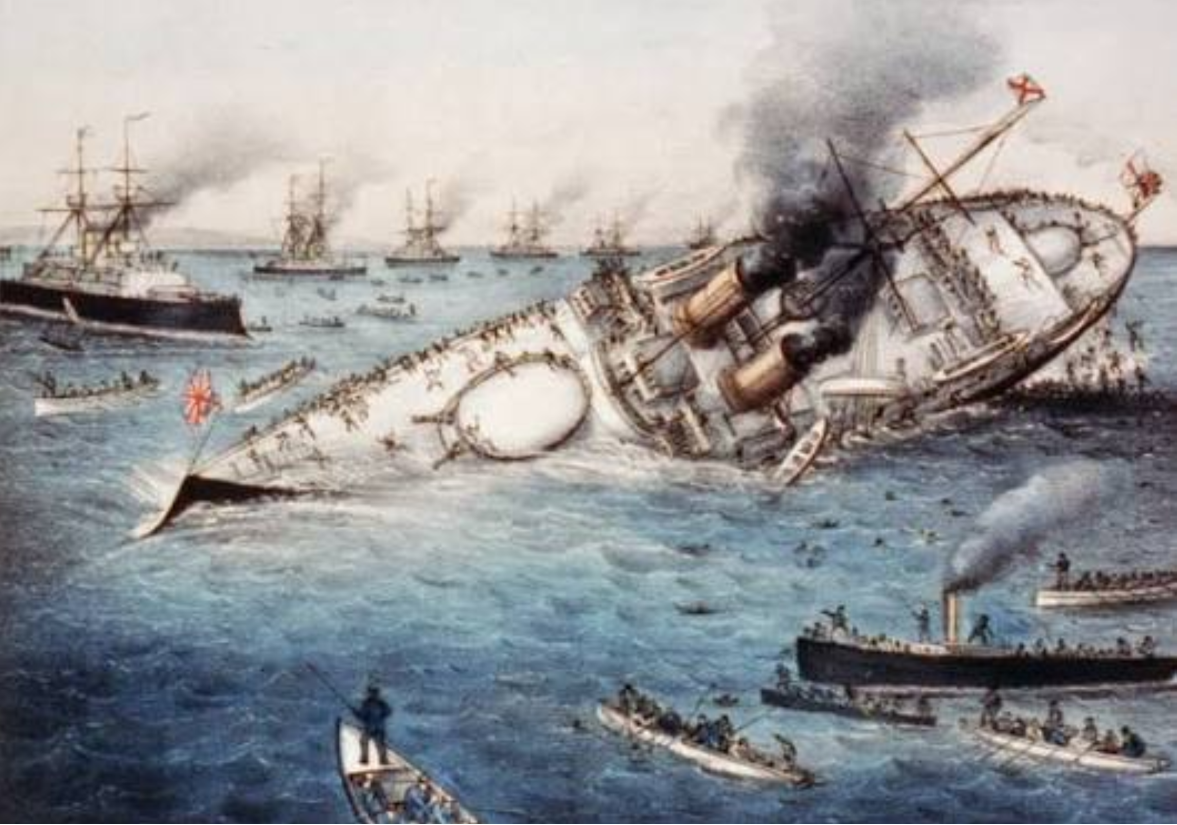
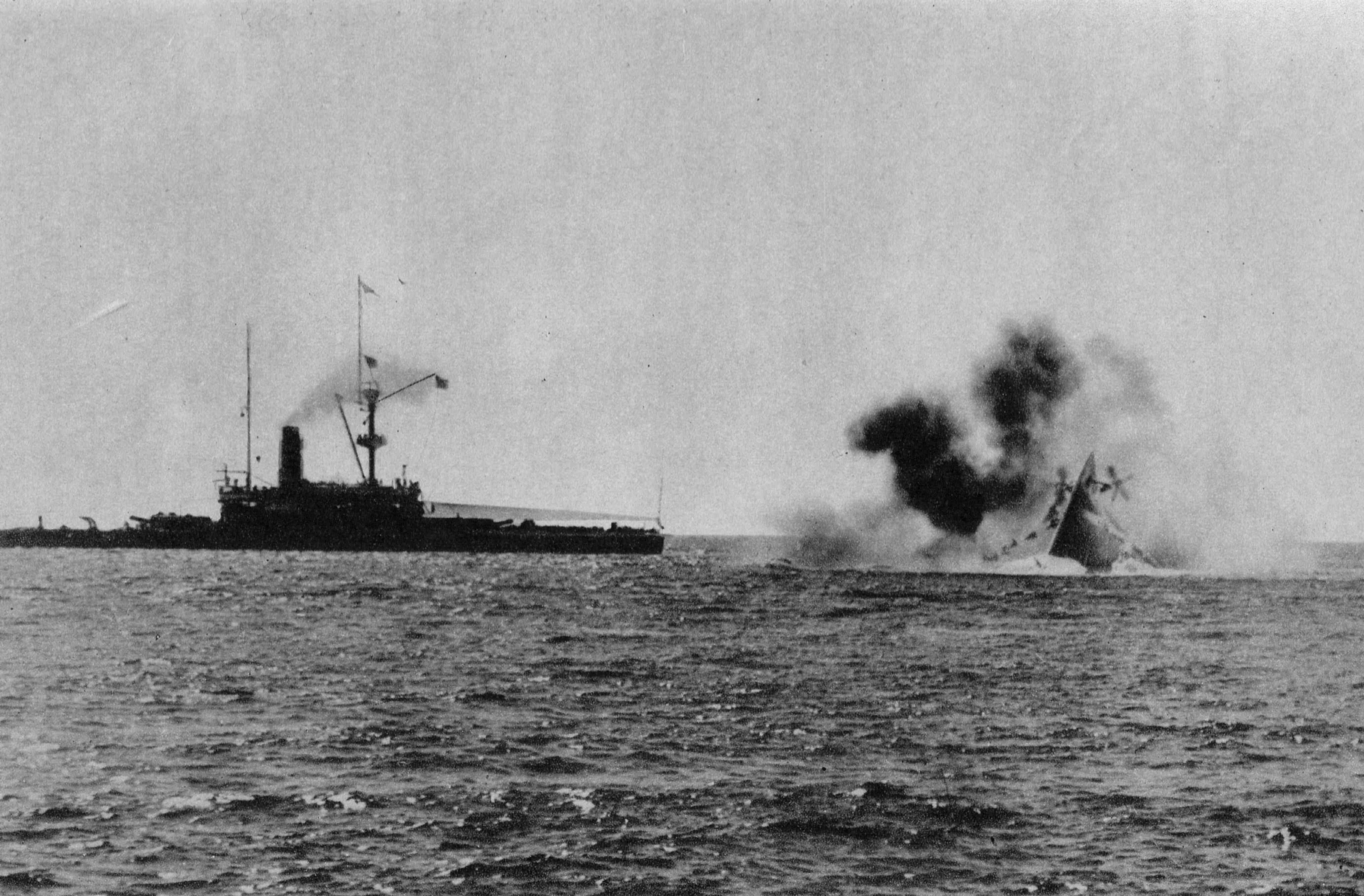
On June 22, 1893, in calm seas and good weather, the flagship of the British Mediterranean Fleet was rammed by another British battleship during a formation maneuver near Tripoli.
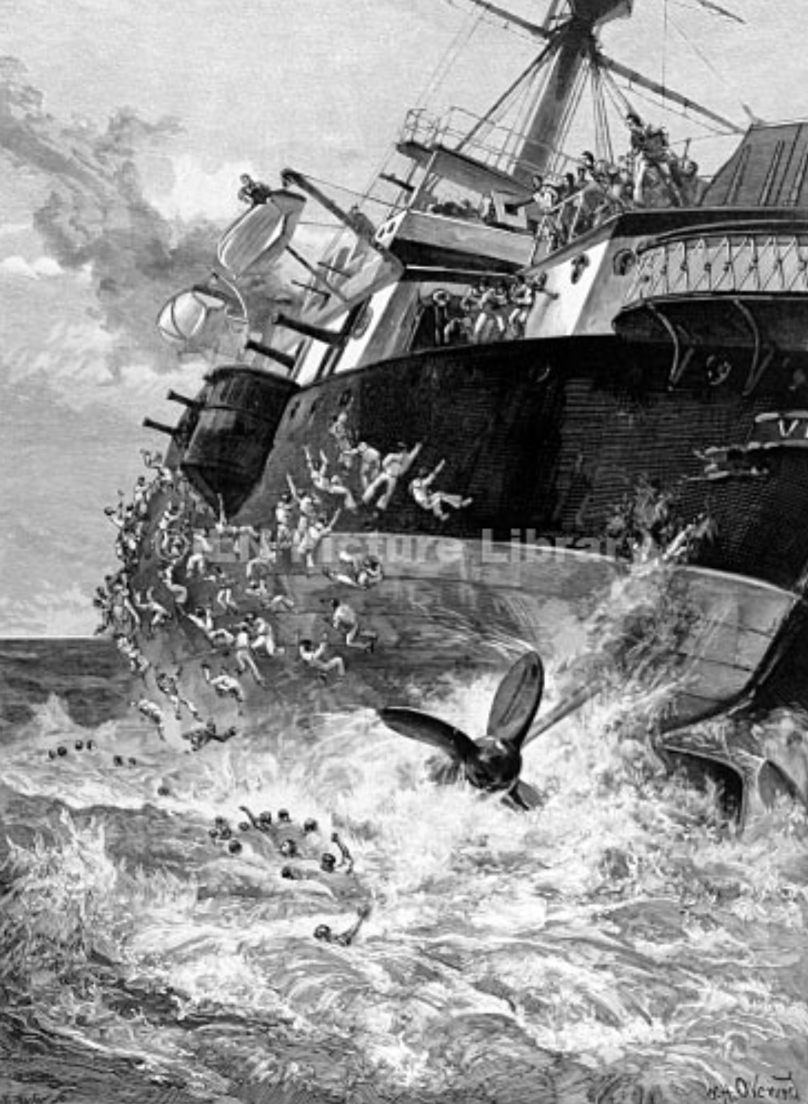
HMS Camperdown struck her. Victoria capsized and sank.
Three hundred and fifty-eight men died, including Vice-Admiral Sir George Tryon.
This was not combat.
This was not fog.
This was not a torpedo, reef, squall, hidden shoal, cursed treasure chest, Kraken attack, foreign saboteur, or one of those naval accidents where everyone gets to blame weather because weather has no lawyers to argue.
This was command meeting geometry.
Geometry won again.
The smallest dangerous object in this Tale is not the ram on Camperdown’s bow, though the ram will make a strong late appearance and should probably not be left unsupervised near friendly ships.
The most dangerous object here is a number.
6
In this case, cables.

A cable was a naval measure of distance.
"Six cables" meant about 1,200 yards between two columns of battleships.
Tryon wanted the fleet to reverse course by turning the two columns inward toward each other. His officers recognized the problem right away.
- The spacing was too tight.
Staff Commander Hawkins-Smith said the maneuver would require at least eight cables. Captain Maurice Bourke reminded Tryon of the same problem. Tryon initially seemed to accept eight, then ordered,
“Leave it at six cables.”
This is a very small sentence to put between columns of battleships.
The Number
Six cables is not evil.
Six cables can be perfectly innocent. Six cables may sit in a chart, mind its own business, and bother no one. Put six cables between a boat and a pier, and maybe everyone has a lovely afternoon. Put six cables in a classroom, and it becomes arithmetic with saltwater flavor.
Put six cables between two columns of Victorian battleships that have been ordered to turn inward through 180 degrees, and the number begins to acquire victims very quickly.
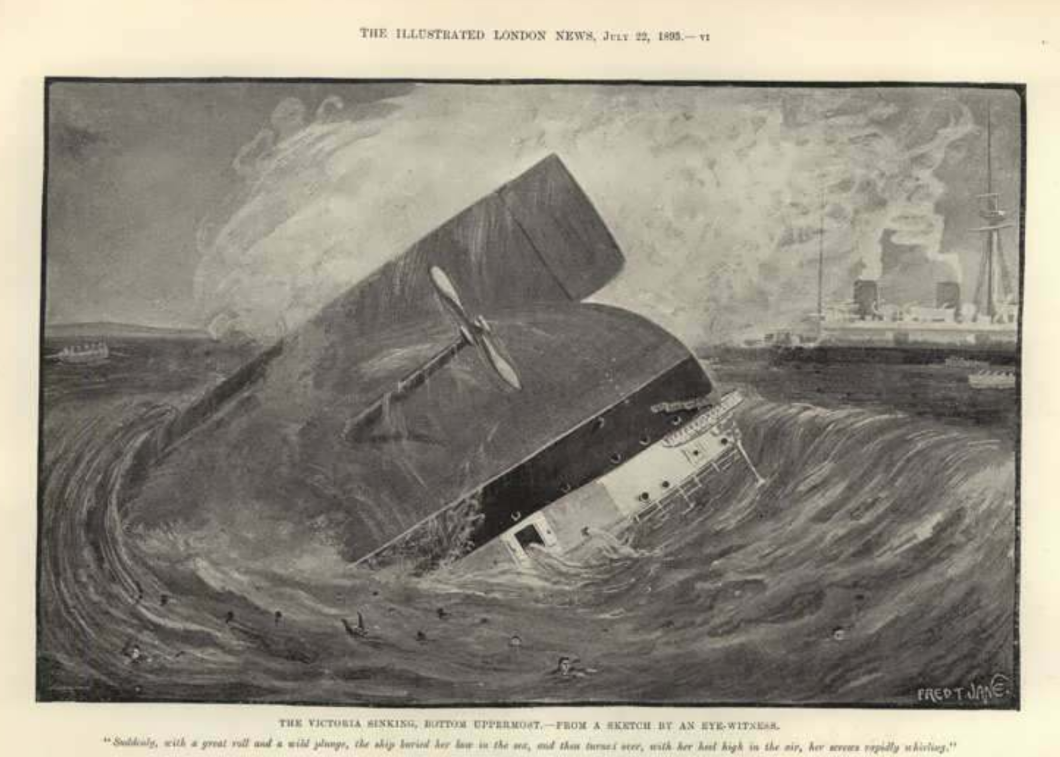
The Mediterranean Fleet was approaching its anchorage.
Tryon intended to perform a neat maneuver: two columns of ships would turn inward, reverse direction, then approach the anchorage in an orderly formation.
On paper this has the clean feeling of a diagram.
Ships make arcs. Arcs end where they should. The fleet looks disciplined. Everyone salutes. The empire remains hydrated.
Unfortunately, battleships are large physical objects. They turn through water.
The ships’ turning circles required more room than Tryon had left them. The older United States Naval Institute reconstruction notes that even eight cables was not generous. Ten cables would have let the maneuver breathe. Six cables gave the fleet enough room for obedience but not enough room for the maneuver.
A number becomes dangerous when it stops answering to the field.
The same number can be harmless in a notebook and fatal in a signal. The difference is the instrument that carries it. Once six cables rose into command, it no longer behaved like a measurement does. It was now an order.
This is a very common institutional disaster shape.
- A metric becomes a target.
- A deadline becomes a moral fact.
- A map becomes permission.
- A doctrine becomes sight.
- A budget line becomes a person’s treatment plan.
- A signal flag becomes a temporary religion with bunting.
The field still has mass, distance, turning radius, time, fear, hesitation, hull plates, momentum, and people inside the engine rooms.
The instrument stops listening.
Tryon Was Good at This.
Vice-Admiral Sir George Tryon is the distorted figure at the center of this Tale.
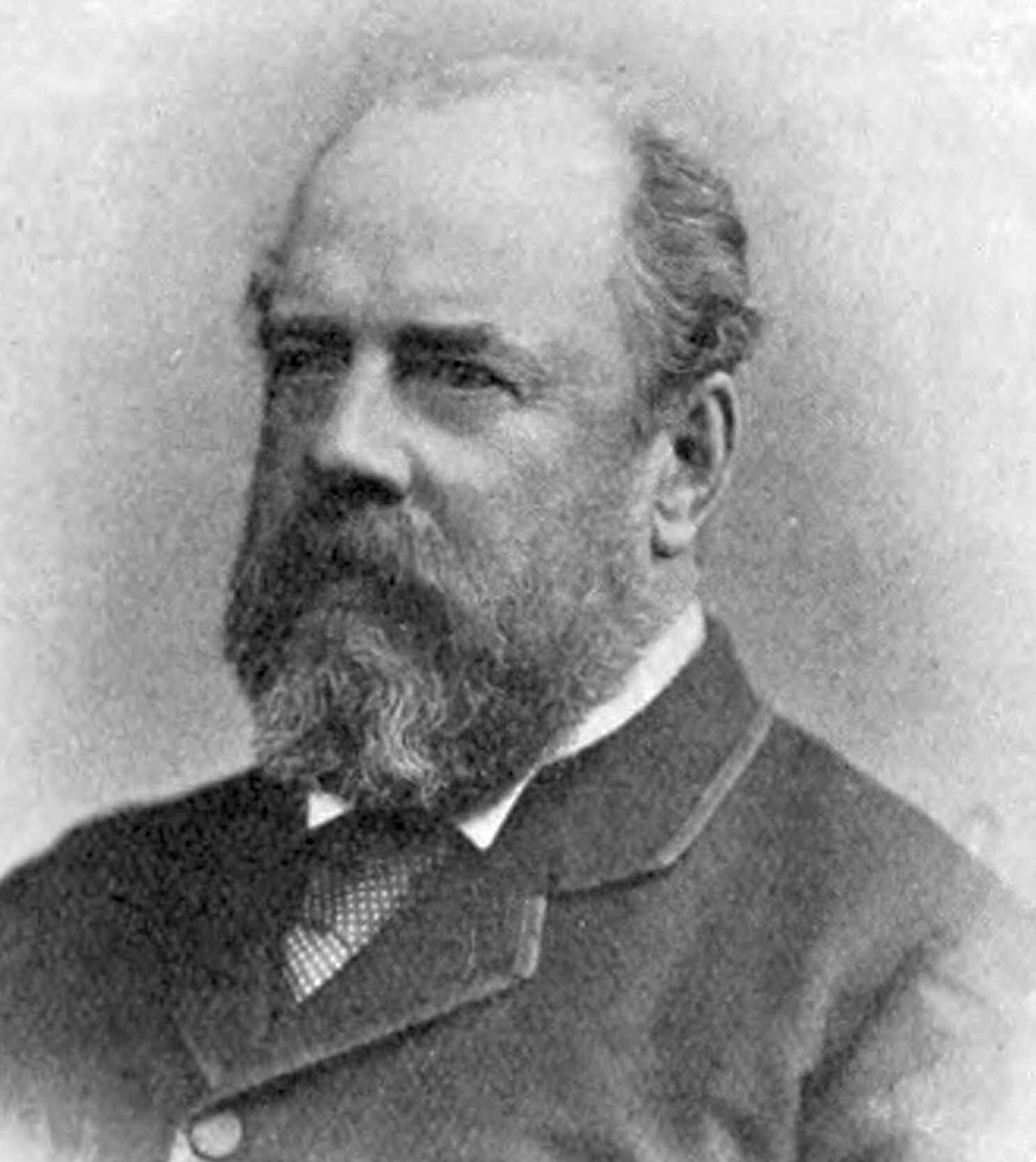
He was an experienced commander and an important naval thinker. He cared about maneuver. He disliked stiff, over-scripted fleet behavior. He wanted subordinates to act with more initiative and fleets to operate with more agility.
Tryon saw a real problem.
A modern fleet could not depend forever on rigid signal-book choreography where every ship waited to be moved like a chair in a diagram. War would be faster, stranger, less polite. Command needed initiative.
Then Tryon placed an impossible-looking signal into a command culture that trusted him enough to execute it.
This is the part where Modal Path Ethics starts underlining the floor.
A true insight can still become a distortion when it passes through the wrong authority relation.
Tryon’s broader intuition about initiative may have been serious. His own signal, in this field, required correction. The fleet had men capable of seeing the danger. The field had warning instruments. The geometry was not subtle.
Nobody needed a mystical vision to notice that two great ships turning toward each other from insufficient distance might discover one another socially.
- The correction existed.
- The correction did not become authoritative.
Cloth Gives Steel a Cool Idea.
A signal flag is a strange object.
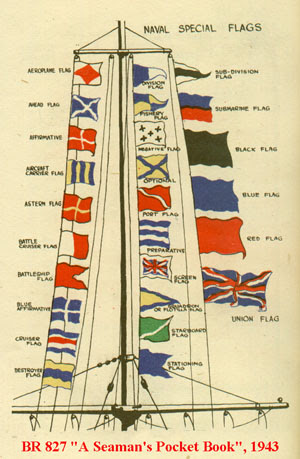
This one is cloth, color, code, habit, hierarchy, wind, and death pretending to be a rectangle.
On Victoria, the signal went up ordering the first division to alter course 16 points to port and the second division to alter course 16 points to starboard. Sixteen points meant a half-turn.
So the columns were to turn inward toward one another.
The ships were steel. The order was cloth.
The cloth won the debate.
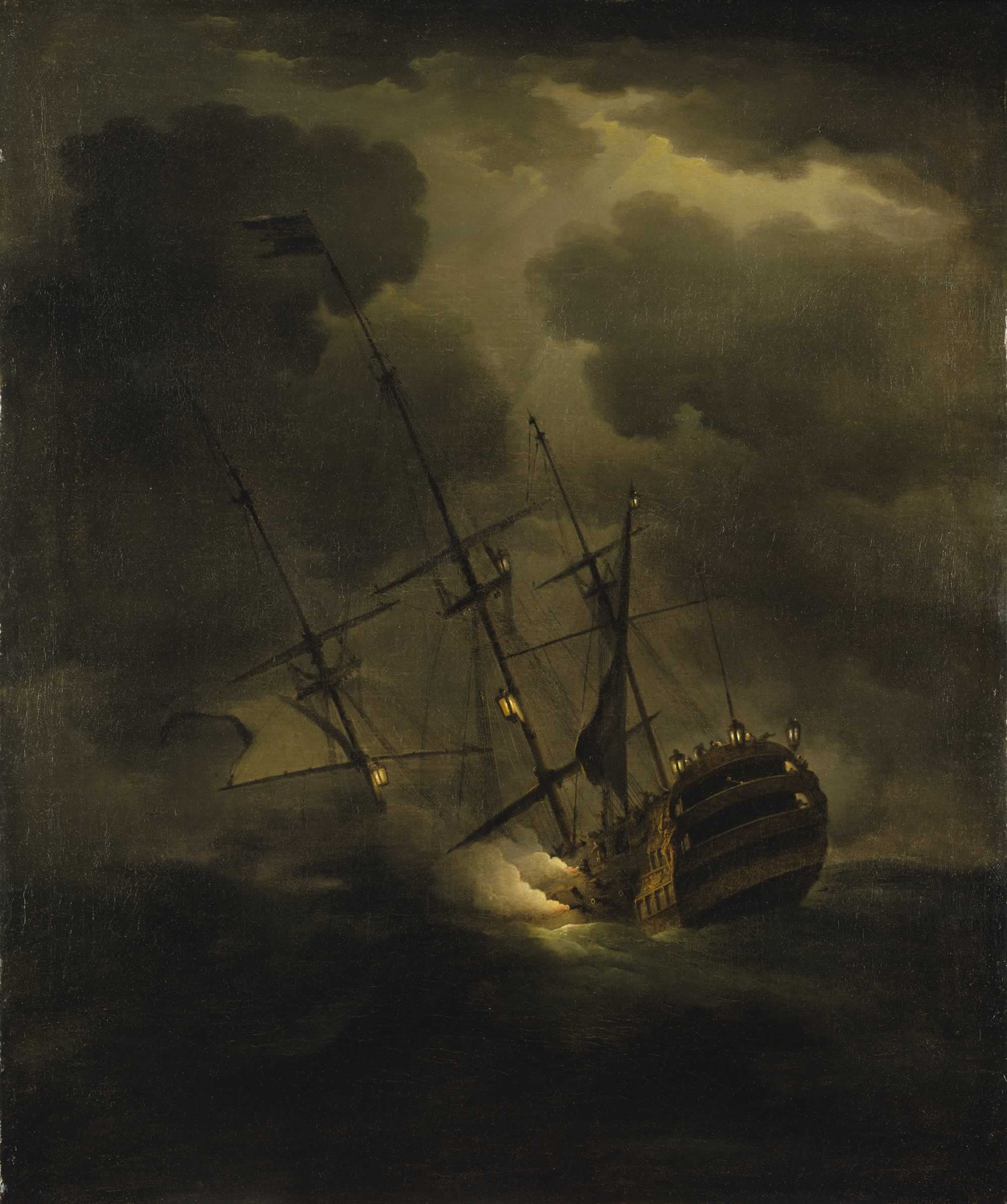
Rear Admiral Albert Markham led the second division from Camperdown. He saw the problem. His officers saw the problem. He kept his acknowledgment signal “at the dip,” meaning he had not yet hoisted it all the way to confirm understanding.
According to the USNI reconstruction, Markham prepared to ask whether Tryon truly intended the maneuver as signaled.
Then Tryon sent the sentence that turns hesitation into tragedy:
“What are you waiting for?”
This is one of the most dangerous questions in institutional life.
- Sometimes it means hurry up,
- the field requires action.
- Sometimes it means stop allowing reality to interfere with my instrument.
Markham was waiting for geometry to receive legal counsel.
He was waiting for the signal to become less insane. He was waiting for the commander-in-chief to reveal the hidden maneuver that would make the order safe. He was waiting inside the little interval where correction still had a pulse.
Then the pulse was embarrassed to death. So Markham obeyed.
This does not make him clean, or uniquely guilty. It places him exactly where distorted fields place many people: seeing enough to hesitate, lacking enough authority to let hesitation become refusal.
The Ram.
Victorian naval design had an entertaining relationship with rams.
This was an era when warships carried enormous guns, armor, engines, discipline, flags, and also a big metal beak for stabbing other ships.
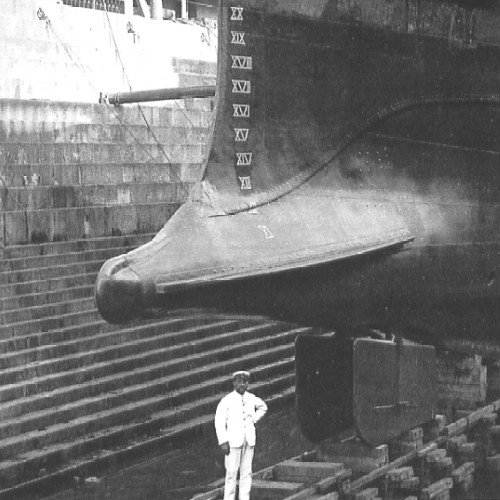
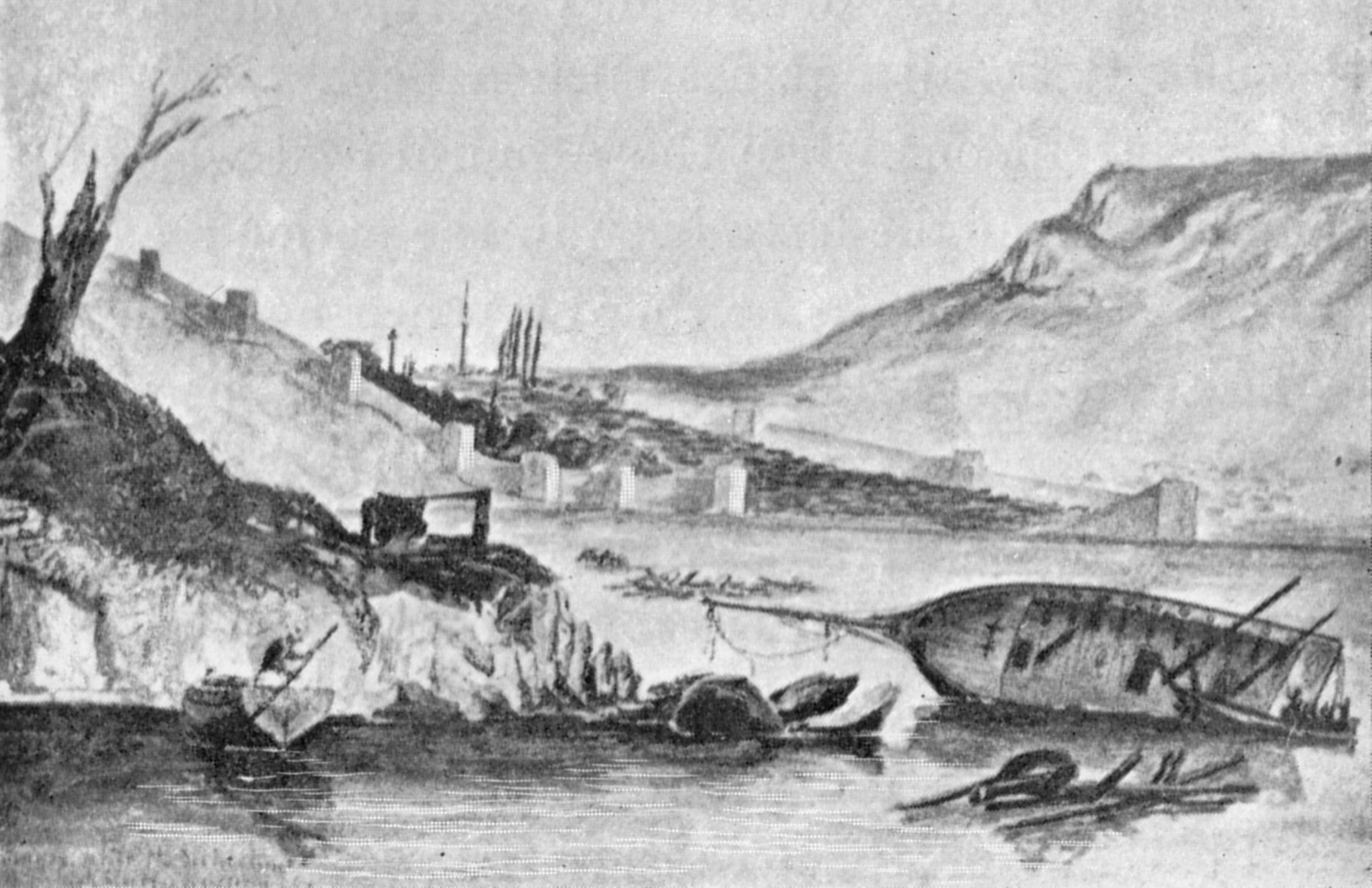
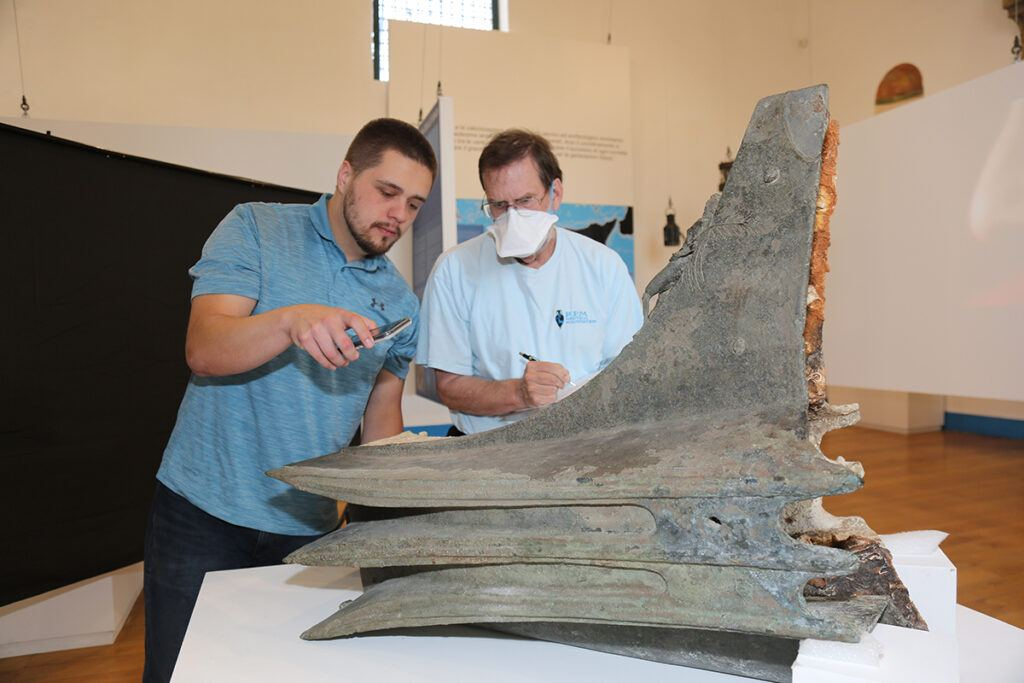
HMS Camperdown had a ram designed to damage an enemy below the waterline.
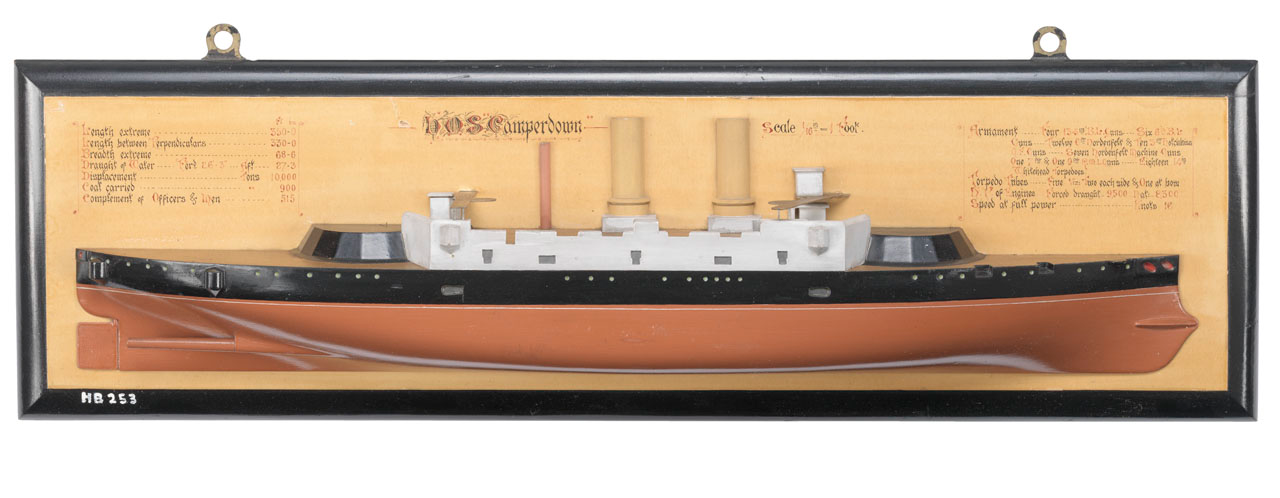
This design decision becomes less charming when the enemy is your flagship.
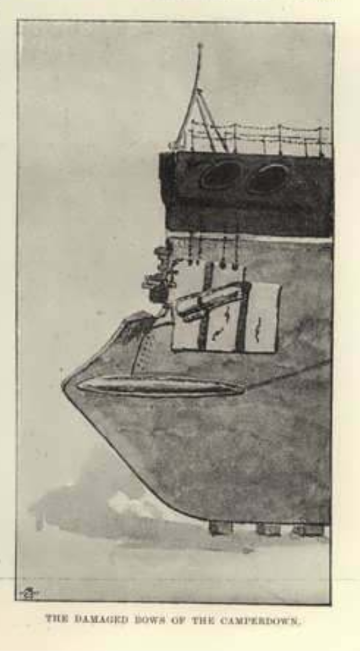
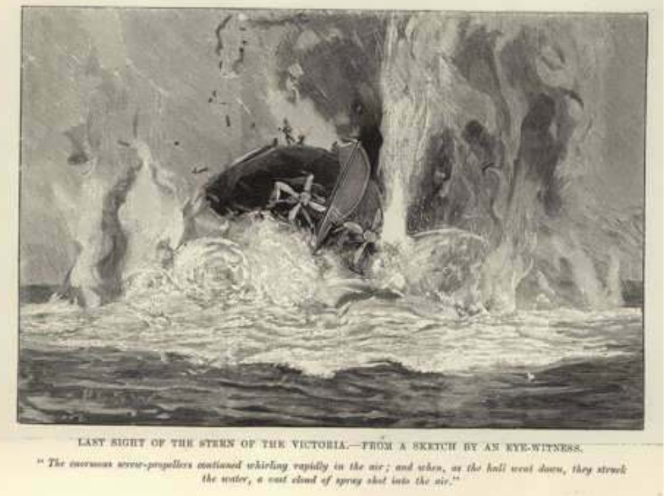
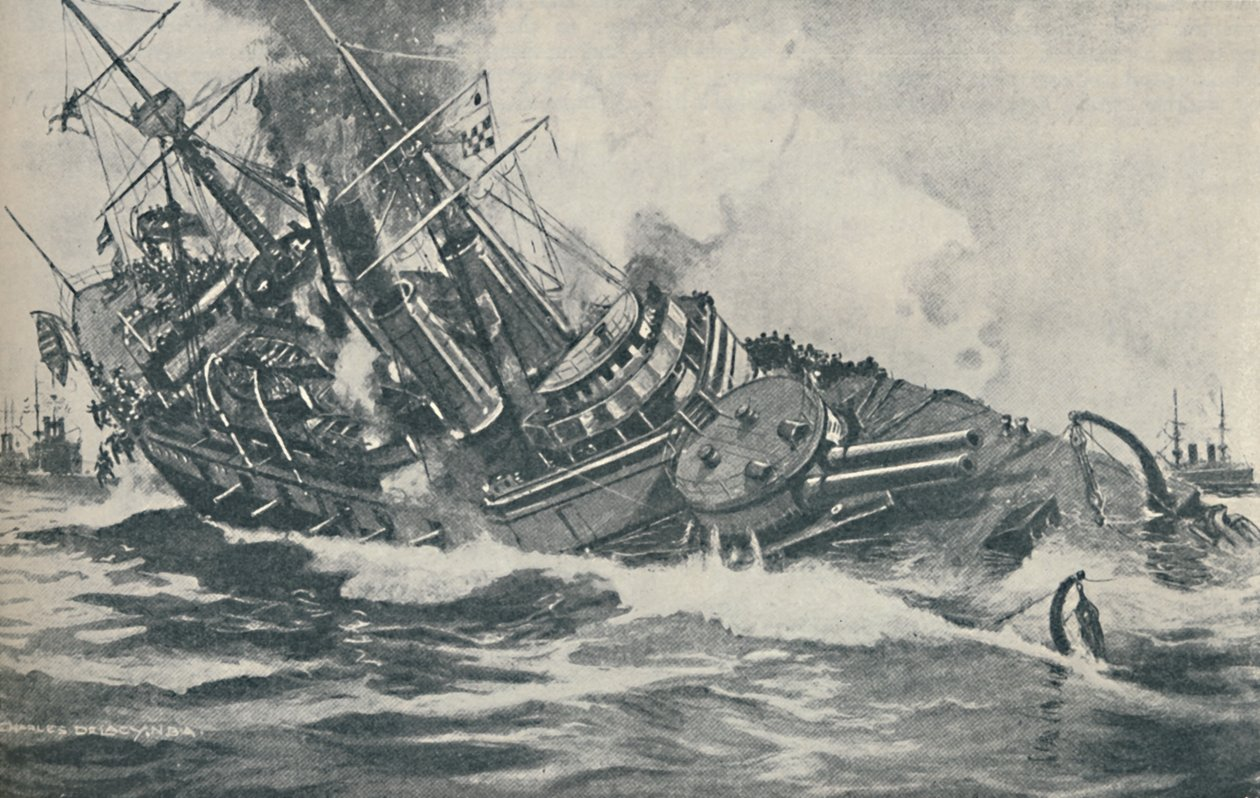
The two columns continued the inward turn. The assumptions did not come true. Victoria did not sweep safely around. Camperdown did not find enough water to perform obedience without consequence. Orders to reverse engines came too late.
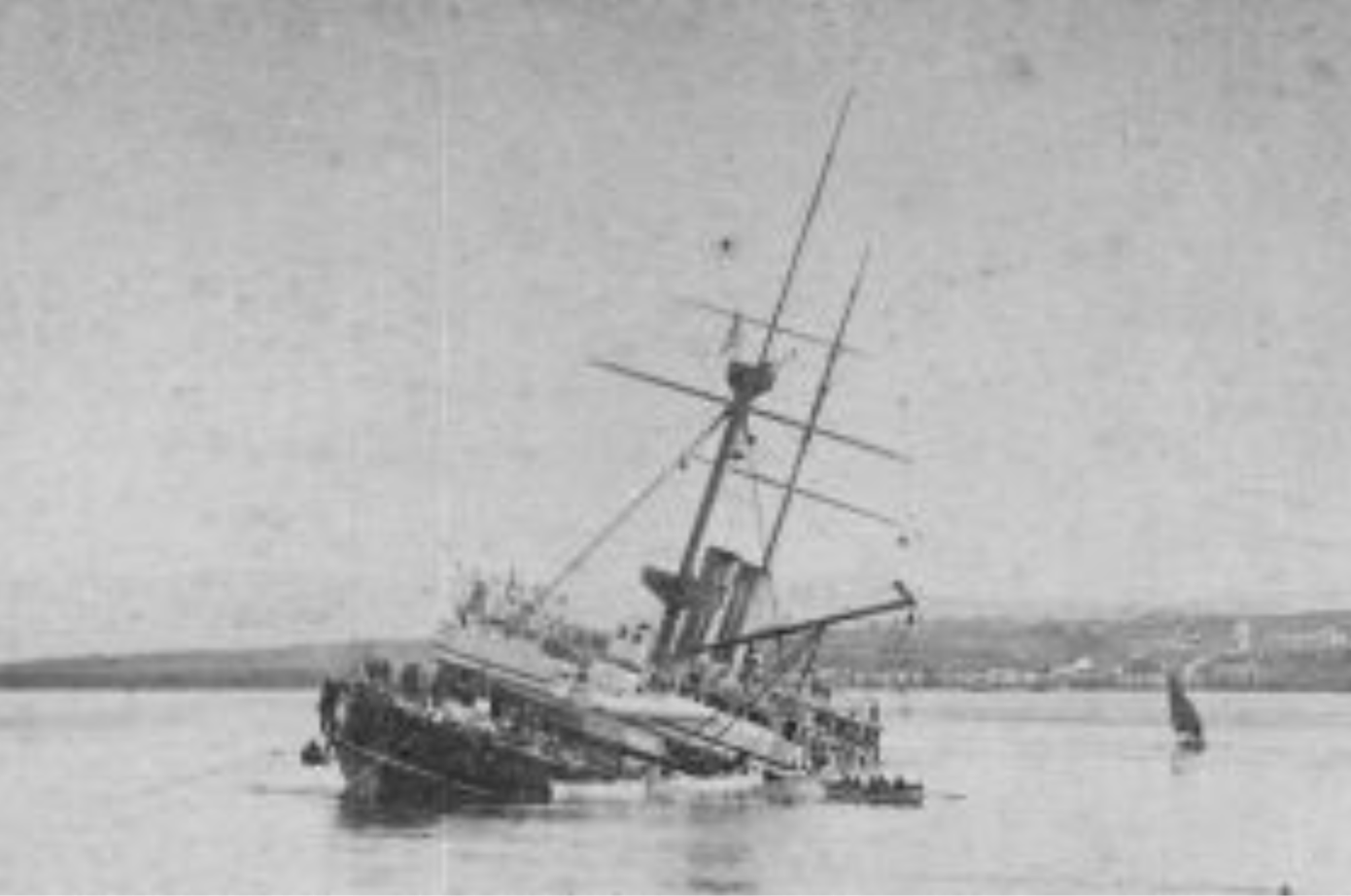
Camperdown struck Victoria in the starboard bow.
The ram had performed beautifully.
A weapon can do its job after the field has misidentified the target. A procedure can work after the premise has failed. A machine can be perfectly faithful to a fatal category. The ram did not have a doctrine problem. It had been built to open ships, and it opened one.
The ship began becoming a lesson faster than anyone could revise the syllabus.
There is a kind of institutional absurdity so dark that it does not need exaggeration. Two of the Royal Navy’s own heavy ships had been arranged so that a friendly ram could demonstrate excellent anti-ship performance on the flagship during peacetime maneuver.
The field, when misread badly enough, starts writing comedy with casualties.
Unsinkable Thoughts.
Victoria did not sink only through the hole in her side.
She also sank through an image of herself.
The older USNI account says that men had been impressed with the thought that the ship was unsinkable, and that many did not come on deck in time. This ship was powerful, modern, armored, prestigious, royal, expensive, and new enough that the imagination had not fully accepted her mortality.
- The ship was not unsinkable.
- The ship was just expensive.
This difference is important to identify.
- Expensive things are often mistaken for durable things.
- Durable things are often mistaken for invulnerable things.
- Invulnerable things are often imaginary things written in procurement language.
- Durable things are often mistaken for invulnerable things.
The hole below the waterline had no opinion about the ship’s prestige.
Water is a very poor monarchist.
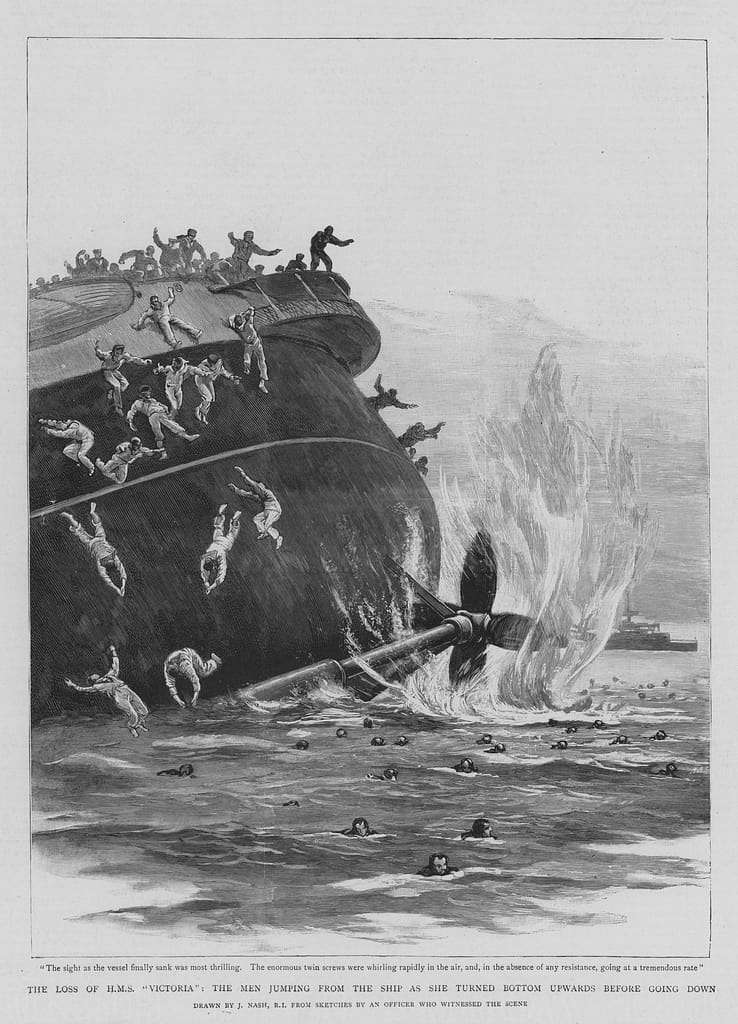
It entered the breach, compartments, openings, ports, and assumptions. It did not pause for rank. It did not ask whether the flagship had been launched only a few years before. It did not care that everyone had been looking at the Mediterranean Fleet as an instrument of imperial confidence.
A field becomes brutally honest at the point of contact.
The Court.
Institutions arrive late wearing their serious shoes.
The court martial acquitted Captain Bourke and the surviving officers of Victoria. It placed the burden on Tryon, who was dead and therefore unusually convenient for institutional settlement.
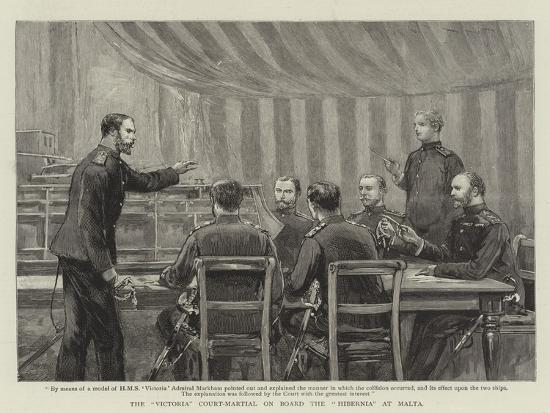
The court also expressed regret that Markham had not sent his intended query, while declining to blame him for obeying the commander-in-chief present in person.
That result is understandable. It is also revealing.
An institution has to decide how much disobedience it can survive.
A navy cannot have every subordinate officer improvising private geometry because command has become a suggestion box. Ships need coordination. Orders need authority. A fleet cannot behave like a dinner party where everyone agrees to turn only after a satisfying exchange of concerns.
A command instrument has to be strong enough to coordinate force, but also porous enough to let reality interrupt it.
- Too little authority, and the fleet dissolves.
- Too much authority, and the fleet rams itself.
The Royal Navy faced that problem in its purest possible classroom:
- two lines of battleships,
- one bad number,
- one visible danger,
- one subordinate hesitation,
- one command rebuke,
- one collision.
- one command rebuke,
- one subordinate hesitation,
The lesson of this should have been simple. It was not simple because institutions are excellent at protecting the instrument that embarrassed them.
They often ask:
Who made the bad order?
Where they should also ask:
Why could the field not stop the order before steel did?
Security Instruments.
Security instruments coordinate danger.
A fleet is a security instrument. A command hierarchy is a security instrument. A signal book is a security instrument. A formation is a security instrument.
A ram is definitely a security instrument, although it should be kept away from almost all meetings.
These instruments exist because danger cannot be answered by vibes.
Warships need orders. Ships need spacing. Commanders need obedience. A fleet that cannot maneuver together is just a very expensive rumor with smokestacks.
The Victoria disaster is not an argument against command. It is an argument against command becoming sovereign over field contact.
- A signal is supposed to coordinate reality.
- This signal began replacing reality.
- A number was supposed to measure distance.
- Six cables became a command object that the distance itself was not allowed to correct.
- A subordinate saw danger.
- The hierarchy turned hesitation into delay.
- The ships kept moving.
- The hierarchy turned hesitation into delay.
This is the Security Instruments problem in miniature.
Protection instruments must act under pressure. They must simplify. They must bind many bodies into coordinated motion. They must sometimes override panic, confusion, and private interpretation.
Which is why they need correction channels strong enough to survive the moment when the instrument is wrong.
A command that cannot be corrected by the field is not discipline. It is a ritual with casualties.
The Ruling.
The sinking of HMS Victoria was a distorted command field.
Tryon’s real insight into initiative passed through his own authority and became an order nobody could safely stop. Six cables became more authoritative than turning radius. Flags became more authoritative than water. Confidence became more authoritative than doubt. Markham’s hesitation appeared, then failed to path into correction. Camperdown’s ram did the honest work of a weapon whose target category had collapsed.
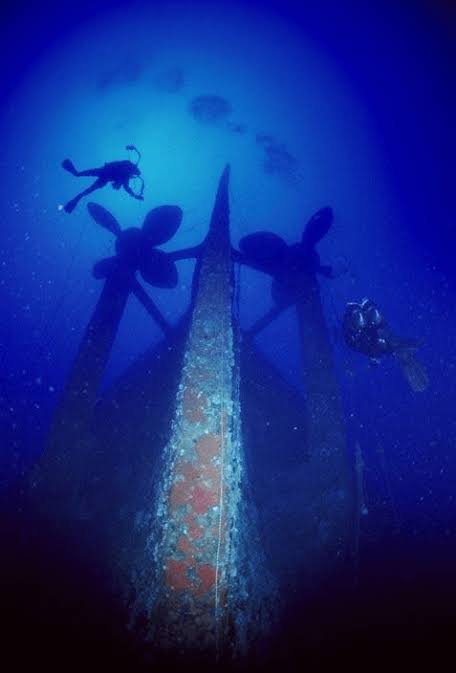
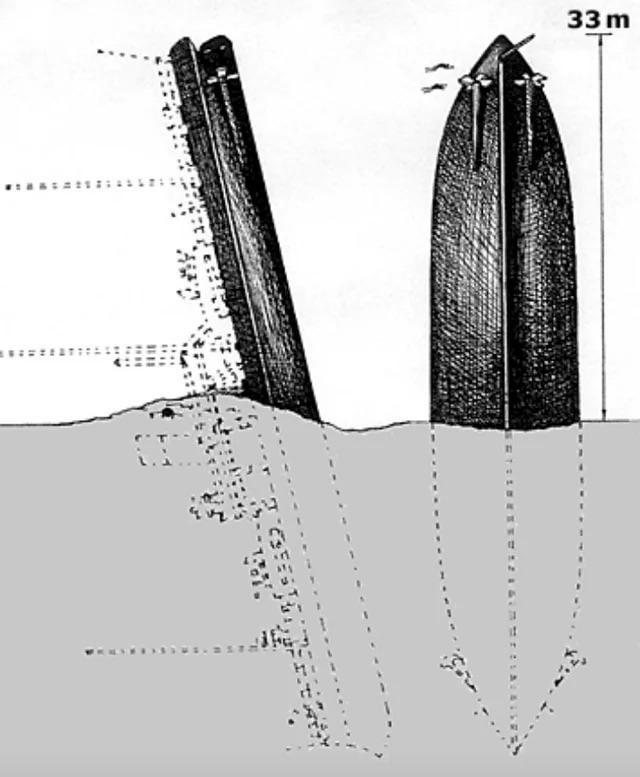
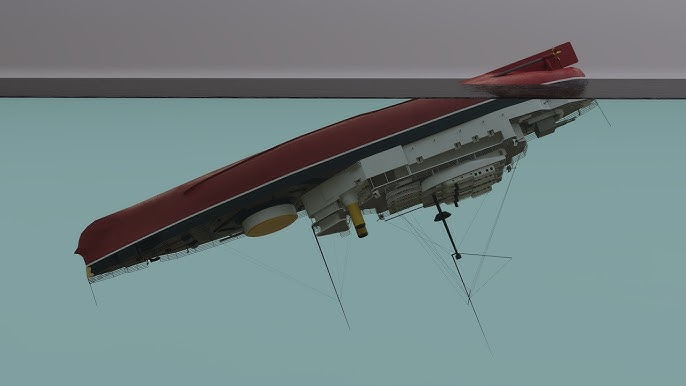
The wreck of Victoria was discovered in 2004. The later USNI account describes her resting almost straight up and down, bow buried in the mud, screws pointing toward the surface.
The sea had kept the diagram.
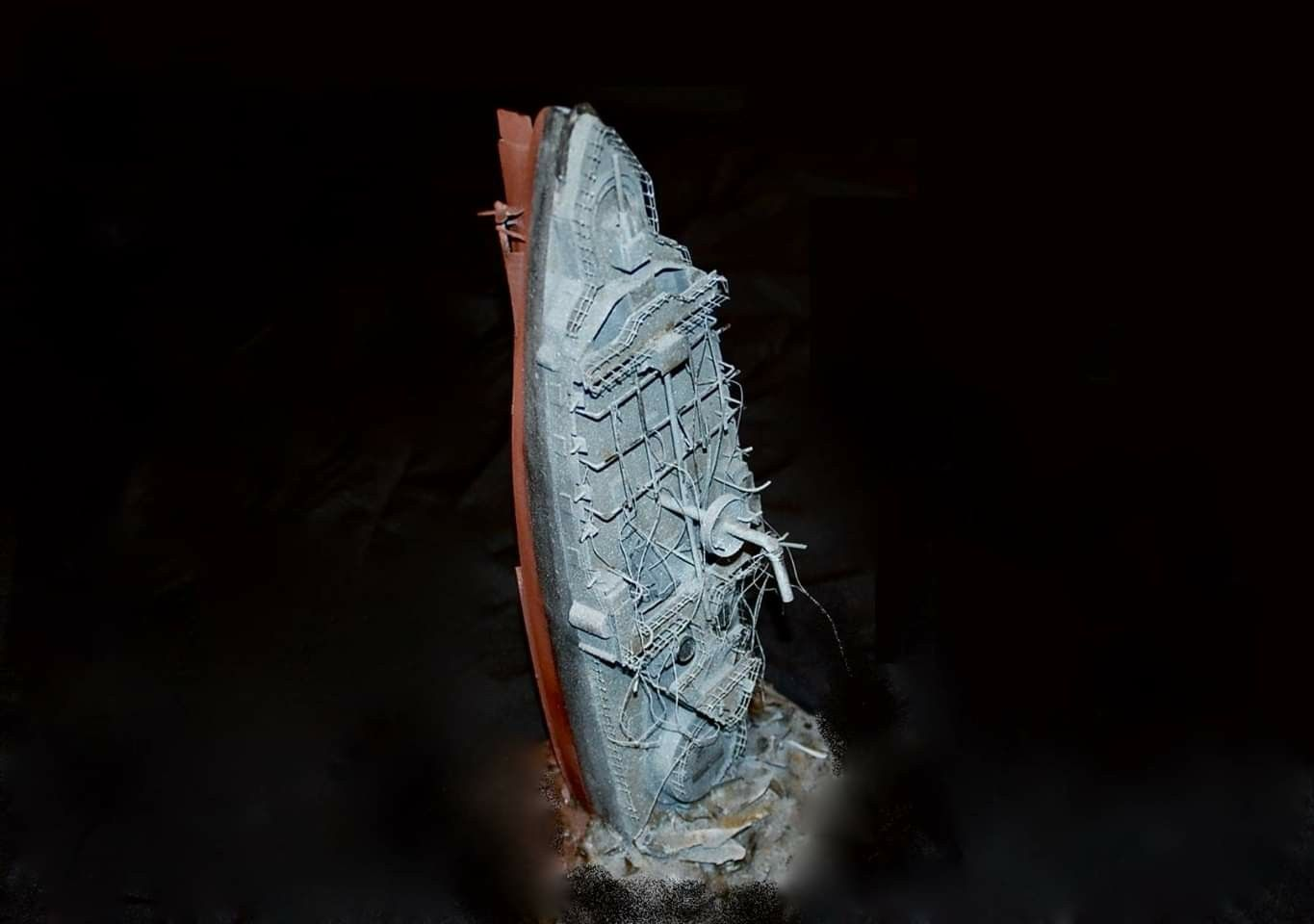
A formation error became a monument. The flagship still points along the vertical line its own momentum drove into the bottom. A dead ship now teaches the maneuver more clearly than the signal ever did.
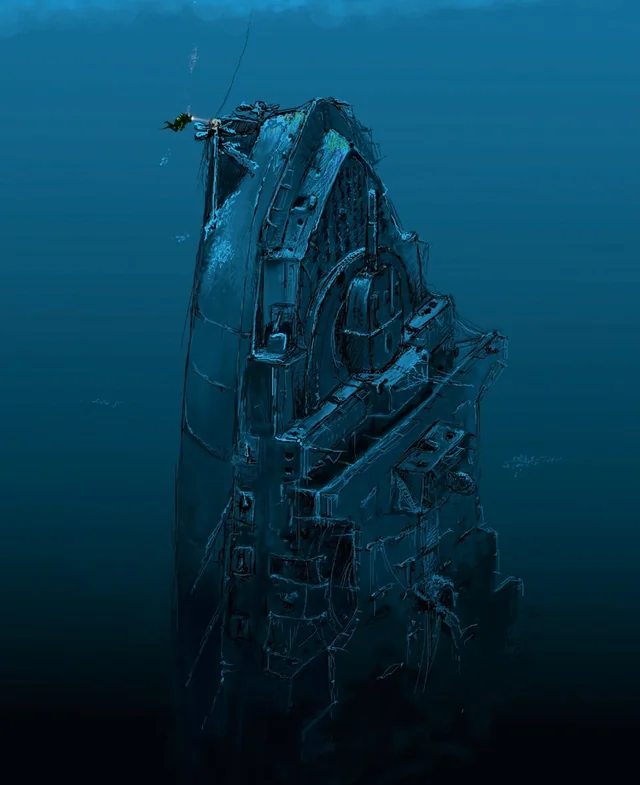
Six cables was never enough room for this turn.
It was only enough room for obedience.