Solving the Parfit Puzzle Suite
Parfit cleared the ground; the framework builds on it.

September 2026 note: The continuation-over-identity move remains important, especially for branching and replacement. Later locus and source-object work places more weight on diachronic causal continuity and nonredundant successor structure, while the non-identity solution now rests on the explicit Continuance Principle rather than an implicit claim that structural future-space is self-evidently normative.
When Derek Parfit died in 2017, his obituaries placed him among the most important moral philosophers of the late twentieth century, which was probably about right, if a bit conservative.
What he left us was a body of puzzles designed to break the moral frameworks we had inherited. Most of them still aren't solved. Some just can't be solved within the frameworks Parfit was working in.
A few, I think, can be solved cleanly with the framework Modal Path Ethics develops, and only because Parfit did the work of clearing the ground. This article is a tribute, an engagement, and an extension, not a refutation. Parfit was right about way more than he was ever wrong about, and where he was wrong he was wrong honestly, in ways that pointed toward his successors.
His central project was a kind of metaphysical reductionism. He argued, against centuries of preceding intuition, that personal identity is not what matters morally. What matters, he said, is psychological continuity and connectedness. A person is not a deep further fact beyond psychological continuity. They are constituted by it.
When he came to believe this, he described the experience as a release from imprisonment in a glass tunnel into something more open. Anyone who has read the passage tends to remember it.

That open air is what we get to work in today.
Why His Puzzles Still Bite.
Parfit's method was simple and devastating: construct a thought experiment that exposes a place where moral intuition and moral theory come apart, and then show that no available theory can make them meet. The puzzles are diagnostics, designed to reveal which features of our moral thinking are load-bearing and which are vestigial.
The puzzles below are some of the best and most challenging of these. Each one breaks a standard moral framework. Each one has been attacked, defended, modified, and re-attacked for forty years now. The literature on them is vast.
What Modal Path Ethics offers is a moral metaphysics that doesn't generate these puzzles in the first place, because it doesn't make the old assumptions that produced them. That is, in some sense, the most respectful response to Parfit possible. He showed us where standard frameworks broke. Any framework that doesn't break in those places, is one Parfit made possible.
Applied Case: The Teletransporter.
The first puzzle, in lay form: a machine scans you completely. This means every neuron, every synapse, every memory, every quirk of personality.
It then transmits this information to Mars, where a perfect physical replica is constructed. The Earth original is then destroyed.
The Mars person wakes up with all your memories, all your projects, all your relationships in mind.
Are they you?
Most people's first reaction is that there's definitely an answer here and the answer is somewhere between yes and no.
Then Parfit makes it even more complicated before you're done when he adds the branch-line variant.
Now, the destruction phase malfunctions. The Earth original survives. Now there are two of you.
Which one is the real one?
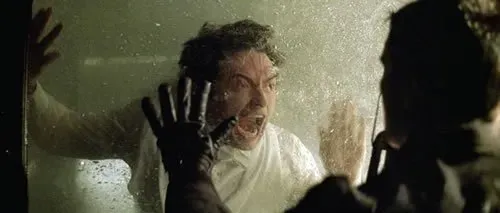
This is where the standard intuitions begin to fall apart completely.
If the Mars person was you in the original case, what made the destruction of the Earth body necessary for them to be you? They have all the same psychological features either way.
If the Mars person isn't you in the branch-line case (because the Earth original is still there), then the answer to "are they you" depends on whether someone else also has your features, which is just a very strange feature for personal identity to have.
Parfit's move here was to give up identity and keep continuity.
Personal identity is not what matters morally. What matters is the psychological continuity. The Mars person has it. The Earth person has it. Both have it. Neither is uniquely identical to the original, but uniqueness wasn't ever what was carrying the moral weight in the first place. Survival, care, and future-directed concern all attach to continuity, not identity.
He saw much further than his contemporaries here. Identity-based moral reasoning had been treating uniqueness as load-bearing for centuries, and most of what was getting lifted by uniqueness was actually being lifted by continuity. Parfit's move cleanly freed a whole region of philosophy.
Modal Path Ethics now inherits this. The framework treats the morally relevant unit as a continuation pattern of weighted reachable future-space, not an essence or a soul or a metaphysical self. This is directly downstream of Parfit's reductionism. He cleared the ground; the framework builds on it.

But Modal Path Ethics' continuation pattern is field-embedded in a way Parfit's psychological continuity isn't. The Mars person inherits not just memories and personality, but also the relationships, projects, embedded participation in fields, capacities operative within a particular network of other loci.
If the Mars version has all the psychological continuity but is teleported to an alien planet where none of the relationships, language, or fields exist, Parfit's account might still call her continuous.
Modal Path Ethics, however, says the continuation pattern has been severely disrupted. Most of what constituted the locus was in fields no longer reachable from the new position on Mars. A continuation pattern always includes its embeddedness. Strip the embeddedness, and you have something that resembles the original locus while being a substantially new one.
The branch-line case stops being a paradox at all once you give up uniqueness.
Two continuation patterns where there was one.

Both continuous-with the original.
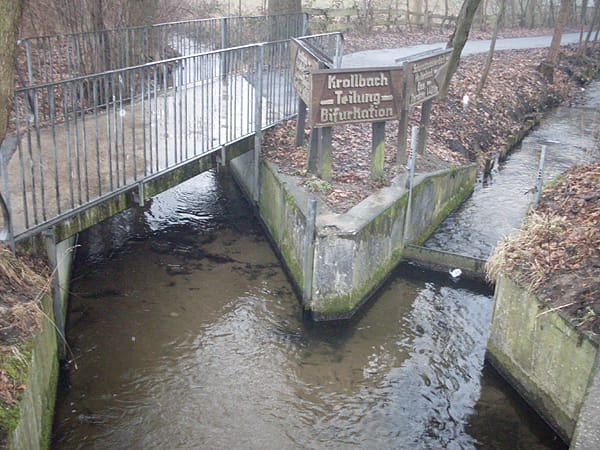
Neither is the original because there are two of them and the original was one.

Both have moral standing.

The original locus has bifurcated, the same exact way a river splits into delta channels. Each continues the river without being uniquely the river. The one-stream river closes at the bifurcation point so two continuations that are not the one-stream can continue on instead. Nothing inherently strange about this at all.
Applied Case: Fission.
Parfit's brain-bisection thought experiment makes the bifurcation move structural rather than science-fictional.
Your brain is split. Maybe Gazzaniga did it.
But in Parfit's version, each half is transplanted into a body. Each half-brain produces full personality, full memories, full identity. Now there are two of you, equally continuous with the original, neither having priority over the other.
Parfit's response to this: identity isn't what matters. Continuity is. Both are continuous with the original. Neither is identical with it. That's fine. Just accept it.
Modal Path Ethics gives this same answer, but more comfortably than Parfit does. He had to argue strenuously for why identity-not-mattering is the right conclusion, against centuries of intuition.
This framework never required identity to be the morally relevant unit in the first place. Bifurcation is just what continuation patterns can do under the right conditions. Two loci where there was one. Each carries moral weight. The puzzle dissolves into a non-issue rather than gets solved, which is the most respectful outcome for the puzzle.
The framework's quiet move here is refusing the uniqueness assumption that generated the puzzle. Once uniqueness goes, the puzzle goes away with it.
Applied Case: Gradual Replacement and the Ship of Theseus.
The classical puzzle: every plank of a ship is replaced over time. Is it the same ship?
The biological version: most of your cells are replaced over years (this is partly true, so this one isn't even mostly a thought experiment). Are you still you?
A common response is that "continuity of pattern matters; gradual replacement preserves identity in a way that instantaneous replacement doesn't."
This is roughly right. Modal Path Ethics sharpens it.
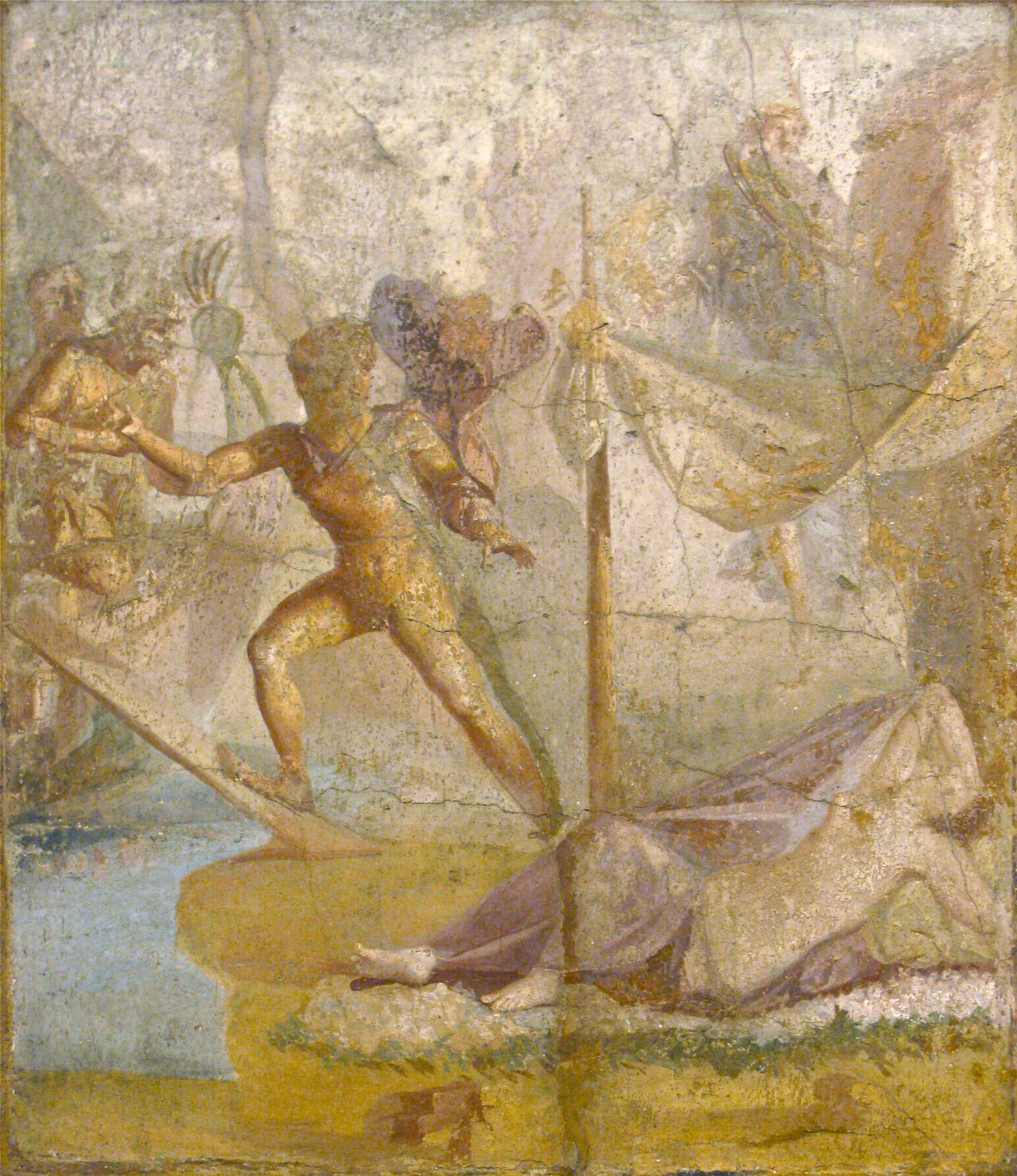
Continuation pattern requires continuity of structure, not continuity of substrate.
The threshold for breakdown is empirical, not metaphysical. How much change, how fast, how disruptive to the structural continuation.
The Ship of Theseus is interesting partly because we can ask "what is the ship's continuation pattern" and get different answers from the wood, the shape, the function, the institutional designation, the history. Different answers give different rulings.
For a person, the continuation pattern includes memories, relationships, projects, capacities, embedded participation in fields. Cell replacement that preserves all of this preserves the locus. Severe brain damage that disrupts memory and capacities is structural breakdown of the continuation pattern, instead. Total displacement from all relationships and fields is partial breakdown, even with the body intact.
The framework doesn't need a sharp line here. Continuation is structural and admits of degrees. Some changes preserve more than others. Some loci continue partially, with real loss along the way.
This matches our actual experience of continuity. We accept that we change, that we lose parts of ourselves, that some changes are more disruptive than others, without feeling that we have died in the strict sense.

Applied Case: The Non-Identity Problem.
Here is where Parfit's work cuts the deepest, where the existing literature has struggled most, and where Modal Path Ethics has the most to contribute. There are a few pages on this in the FAQ section of the book, but of course still more to say.
The puzzle, in lay form: a fourteen-year-old chooses to have a child.
The child she has at fourteen will have a harder life than the child she would have had at twenty-five.
But it isn't the same child at all. It has different gametes, different timing; different person.
The child she actually has at fourteen has a life worth living.
The child she would have had at twenty-five doesn't exist.
So, by standard person-affecting ethics, no one was harmed by this choice. The actual child wasn't harmed (her life is worth living). The hypothetical child wasn't harmed (because she doesn't exist).
And yet, the choice still seems wrong to us. This intuition is one of the central drivers of the literature.
Before going further, I need to disarm the obvious distortion. Parfit used different versions of this puzzle sometimes because he also recognized it.
This is not a moral argument against teen mothers.
This framework has nothing to say against any actual mother, any actual child, or any actual family. The case is being used because it is the most canonical Parfit example and because the structural feature it isolates is a feature, not a verdict on people. Many children born to teenage mothers reach Better and Good paths. Many children born to twenty-five-year-olds, conversely, reach worse paths.
The framework refuses to write off any actual locus and refuses to moralize the actual people. What it does is explain why our intuition has structural content that the people involved still did nothing wrong to deserve.
What is the structural content of the intuition?
It is not about the child who exists. It is about the field configuration the child enters.
A reproductive choice happens within a field. The field around a fourteen-year-old, if it contains the typical conditions of a fourteen-year-old's life as we most often assume them, contains less enabling structure for whoever enters it: less financial slack, less relational stability, an incomplete educational path, a smaller support network, an adult-self still under construction.
The field around a twenty-five-year-old, if more established as we likewise tend to assume, contains more of this enabling structure.
Note the qualifications. These are all conditional. A twenty-five-year-old without those conditions doesn't have a richer field than a fourteen-year-old who has them, simply by virtue of being older. The point isn't about ages. It is about the structural conditions a reproductive choice happens within.
The child's reachable future-space depends on the field configuration they enter. A field with more enabling structure offers them a richer reachable future-space. A field with less enabling structure offers a contracted one.
The contraction is not determinative. Better and Good paths still remain reachable. The framework refuses to claim otherwise.
But the field configuration the child enters has different topology, and that topology is the structural fact our intuition is tracking here.
The intuition that "she should have waited" tracks the structural difference between field configurations, not a verdict on people. This is the most respectful possible analysis of the intuition. It is not a misfire, or bigotry. It is not moralizing. It is sensitivity to a real structural fact that person-affecting ethics cannot see because person-affecting ethics requires a subject who is harmed, not a field.

That is the move Modal Path Ethics makes that subject-indexed person-affecting frameworks can not make cleanly. The structural future-space is morally relevant whether or not specific subjects fill it. The field configuration the child enters is morally relevant whether or not the child counts as harmed. The framework's anti-erasure standard, which already does the work of treating closed future-space as morally real even before any subject exists, handles non-identity cases without strain.
This is not just a theoretical point. The same structure scales to the most pressing moral problem of the present:
Applied Case: Climate Ethics and What the Existing Literature Cannot Path Into.
The non-identity problem in climate ethics has been worked extensively for forty years. Edward Page's Climate Change, Justice and Future Generations worked through the puzzle systematically. John Broome's Climate Matters attempted an impersonal-value approach. Stephen Gardiner's A Perfect Moral Storm identified the non-identity problem as one of the central conceptual obstacles to climate ethics. Simon Caney has written extensively on rights-based approaches. The Stanford Encyclopedia of Philosophy entry on intergenerational justice catalogs decades of attempted solutions.
None of them has produced consensus.
The standard objection that motivates this entire literature: future people who exist as a result of climate policy cannot be harmed by it, because without that policy they wouldn't exist at all. Different policies always produce different people.
The people who exist in a high-emission future are not the people who would have existed in a low-emission future. So if you ask "who is harmed by high emissions" within person-affecting ethics, the answer is clearly no one, because the people who exist in that future have lives worth living, and the people who would have existed otherwise don't exist.
The existing literature responds in four main ways.
- Impersonal principles. Broome, Parfit himself in later work, and others. The principle: it is worse if a future person has a worse life than someone else might have had in their place, even if the two are not the same person. This recovers the intuition that high emissions are bad, but at the high cost of detaching moral evaluation from any actual person who is wronged. Critics have noted this leaves us evaluating outcomes without subjects, which is not an obvious advance over having no answer at all. The principle does the work, but doesn't say why it does the work.
- Threshold harm accounts. You can harm someone by causing them to exist below some threshold of welfare, even if their existence depends on the same act that harmed them. This move recovers harm-talk, but at the cost of a threshold that has to be specified somewhere, and the specification is contested. Different threshold proposals will give different verdicts on the same cases. The framework is doing real work, but it is doing it on a foundation that hasn't been settled at all.
- Rights-based approaches. Future people have rights to a livable environment regardless of who fills the future. This works for some applications but struggles when the rights themselves are non-identity-affected. Different people have different needs, the policy affects which people exist, and the rights end up being defined for hypothetical populations whose composition the policy itself determines. The structure ends up partly circular.
- Ecological holism. The ecosystem has moral standing independent of the specific subjects who inhabit it. This is closest to Modal Path Ethics in spirit and also closest to getting the right answer. The trouble, however, is that "the ecosystem has standing" still requires a thing to have standing, and the question of what the ecosystem is (a sum of subjects, an emergent property, a Gaia-style entity) has to be answered first for the framework to do any work. The ontological grounding gets contested in ways that look very similar to the original puzzle.
What none of these moves can quite do is ground the moral fact ontologically. They all locate the moral content somewhere it has to be defended, like in impersonal value, in thresholds, in attributed rights, or in holistic entities, and each defense has been contested for decades because the existing moral metaphysics doesn't have a place for non-subject moral facts.
The puzzle has been worked, in good faith, by very serious philosophers, and the puzzle has held strong. That is not a failure of effort, moreso a feature of the metaphysics they have to work with here.
Modal Path Ethics has the place they need. The structural future-space is the moral unit. It exists whether or not any subjects fill it. Its contraction is the moral fact, regardless of which subjects do or do not come to inhabit it.
This isn't a clever workaround for the non-identity problem. This is the framework's foundational commitment finally meeting a problem it was built to handle.
The high-emission climate path produces field configurations with contracted reachable future-space in the form of disrupted ecosystems, degraded biospheres, contracted institutional capacity, fewer reachable continuations.
The low-emission path produces field configurations with more reachable future-space.
The contraction is real moral content. The fact that the people in the contracted future are different people from the people in the richer future is not relevant in any way to whether the contraction is real. The non-identity problem doesn't bite this framework because the framework was never built on subject-identity in the first place.
This is what Parfit was reaching for, I think, when he developed his impersonal principles late in his career. The ontology wasn't yet available to him. The structural-realist move that grounds non-subject moral facts hadn't been made.
He could see the puzzle, and he could see roughly the shape of the solution, and he wrote his last work pointing toward something that needed metaphysical grounding he didn't quite have. Modal Path Ethics is explicitly one attempt at that grounding. The framework's entire architecture (extance, locus, weighted reachable future-space, anti-erasure) exists in part because the non-identity problem and its cousins forced moral philosophy to look for grounding past welfare-aggregation.
Applied Case: The Repugnant Conclusion.
Parfit's other great gift to philosophy, also briefly engaged in abstract in the textbook: for any large population A with high welfare, there is a much larger population B with lives barely worth living that has higher total welfare than A.
Total utilitarianism implies B is always better than A. A sufficiently larger population with lives barely worth living can come out better than a smaller population whose members have very high welfare. This can keep going on and on forever. Most people find this obviously wrong. Hence "repugnant."
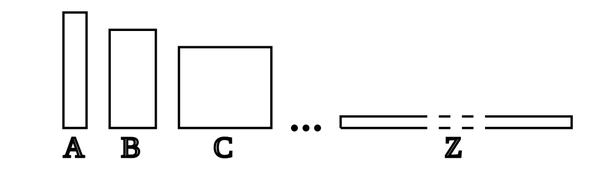
The conclusion follows from scalar aggregation of welfare across persons. If you can sum welfare to a single number and compare populations on that number, the conclusion is forced. If you can't sum that way, the conclusion doesn't follow.
This is, at root, a commensurability problem. Modal Path Ethics rejects scalar aggregation while preserving structured comparison. The full treatment requires its own essay, which is forthcoming.
For the present purposes, what matters is that Parfit himself never accepted the repugnant conclusion. He spent decades trying to formulate population principles that avoided it, and at his death further work remained unfinished. The fact that the conclusion follows from total utilitarianism was, for him, a problem with total utilitarianism, not a license to accept the conclusion. Modal Path Ethics agrees completely.
The full defense requires its own essay.
What Parfit and Modal Path Ethics Share.
The deepest convergence: reductionism about identity.
Parfit's move, that the metaphysical self is less robust than common sense suggests and that what matters is psychological continuity rather than some further fact, is the conceptual ground Modal Path Ethics now builds on.
The framework's continuation-pattern view is what's left when you take Parfit's reductionism seriously and ask: what is actually carrying the moral weight, then, once identity is gone?
The second convergence: the extension of moral consideration past persons-as-rational-agents.
Parfit argued that what matters morally extends to anyone who has psychological continuity in the relevant sense, regardless of whether they meet contractualist or Kantian thresholds for full personhood.
Modal Path Ethics extends this further still. Moral consideration attaches to continuation patterns of weighted reachable future-space, which include but are not limited to psychological continuity. Pre-life harm, ecosystem-level field damage, and field configurations that have not yet been filled are all morally real on this account. Parfit pointed in this direction.
The third convergence: the rejection of self-interest as foundational.
Parfit argued that "rational" self-interest is far shakier than it seems because the boundary of "the self" is shakier than common sense allows. Modal Path Ethics doesn't need self-interest to be ungrounded to motivate care for others. It has structural reasons that don't pass through self-interest at all. But, it can use Parfit's reductionism as supporting evidence. The metaphysical self isn't doing the work standard ethics has been giving it credit for.
Where the framework goes further than Parfit: by grounding the non-subject moral facts that Parfit's later work was reaching for, by treating the field-embedded continuation pattern as the unit rather than the psychologically continuous individual, and by giving non-identity cases their structural rather than impersonal-value treatment.
Where the framework is in Parfit's debt: in basically every direction.