
Convergence Point: Sangmok Kim and the Other Path
Apparently there is a neighborhood.

Where the hell did Modal Path Ethics come from?
My route here involved screenplays, a board game, conceptual software, bad math, unfinished games and novels, psychological study, visions, hallucinations, religious synthesis, the Eberron campaign setting, and a recurring failure to let one project remain one project over around a decade now. We'll unpack some of that next week.
Eventually, I wrote a little book about harm, reachable futures, resistance, and what remains possible after the good options have already disappeared. I assumed I had assembled a fun, peculiar philosophical object out of a highly questionable personal supply chain.
Except then later I encountered Sangmok Kim’s Structural Ethics as Path Preservation.
He was asking what it means for a choice to be real. Whether its result can stand. Whether restriction contains a route back. Why intention, blame, and the name of an action keep arriving before anyone has examined the structure.
- He had filters.
- I had unfinished games.
So I opened the manuscript.
This is what The Convergence Point is for: encounters where another inquiry has developed close enough to this one that resemblance becomes an immediate research obligation.
The task is to find the shared object, preserve the disagreement, and discover which instrument needs correction.
On this occasion, mine needed correction immediately.
The Dates Are Extremely Inconvenient
Before going any further, the chronology needs to sit on the page. Otherwise this encounter looks either cleaner or more suspicious than it actually is.
Kim's earliest public version comes first. On 30 March 2026, writing under the handle Fakedreamer, he posted Ethics as Path Preservation: A Structural Model of Choice Viability, linking a fuller Zenodo development. The core architecture is already there: substantive choice, sustainability, recovery, fixation, and the claim that trolley-style dilemmas arrive after the morally important structure has already failed. (Kim, 30 March public post)
The Modal Path Ethics book manuscript was completed on April 4th, then appeared in public when the website arrived weeks later.
Then the public records start crossing each other in a way I find genuinely ridiculous.
- 16 April: Modal Path Ethics publishes Why Better is Not the Greater Good. (Modal Path Ethics)
- 24 April: The Non-Planet Problem argues that an extant pre-subjective field can suffer contraction of its reachable future before any person exists downstream. (Modal Path Ethics)
- 26 April: the first Thought Gauntlet calls the trolley problem a late-field problem in which the good paths have already been closed. (Modal Path Ethics)
- 6 May, 11:07:32 GMT: Version 1 of Kim's integrated Structural Ethics as Path Preservation is uploaded to PhilArchive. (PhilArchive version history)
- 7 May: Modal Path Ethics publishes Formal: Contraction Is Harm. (Modal Path Ethics)
- 9 May: Formal: Weighted Reachable Future Space and Formal: What Makes Something a Locus go up. (Weighted Reachable Future Space) (What Makes Something a Locus)
- 11 May: Formal: Resistance and Harm makes pre-closure burden to a still-open path part of the harm account. (Modal Path Ethics)
- 12 May: Kim's PhilArchive record reaches Version 4. (PhilArchive version history)
I did not encounter Kim in March. I did not encounter him in May. I found him in July, while reviewing literature for Harm as Contraction of Reachable Continuation. By then, both lines had been sitting in public for months. The public chronology cannot prove a negative about influence. What the chronology does establish is enough for the purpose of this article.
Kim's public path-preservation model predates the public Modal Path Ethics formal spine.
Modal Path Ethics had nevertheless publicly committed itself to adjacent and, in several places, importantly different claims before Kim's integrated PhilArchive manuscript appeared:
- pre-subjective contraction,
- late-field moral problems,
- bearer-relative future-space,
- and the refusal to identify the remaining harmful option with Good.
Then the two formal developments passed through the first half of May almost on top of one another.
So this is not a priority claim.
It is a convergence claim. Hence the name.
Kim was publicly on the path-preservation model first.
Modal Path Ethics arrived from somewhere extremely strange, found footprints later, and then discovered that some of its own tracks were already running beside them.
That is the interesting fact.
Next, That Correction.
Public correction, 7 September 2026: Sections 2 and 8.2 of my submitted Harm as Contraction of Reachable Continuation manuscript, and the preprint file I submitted to PhilArchive, version 1.0, overstated parts of the difference between Modal Path Ethics and Kim’s framework. I botched it. I already had the better one. I'll fix it once whenever I can, I promise.
Kim already recognizes path reduction before complete closure.
He already includes recovery through another person.
His distinction between structural violation and structural non-violation already belongs to a limited judgment layer; non-violation does not mean that the entire situation is admirable, harmless, or settled.
His treatment of sustainability also distinguishes arbitrary dependency from mutual dependence generally. The relevant passages are Paper 5, §§2.7 and 4.1; Paper 4, §2; and Paper 7, §2.2.
The comparison is being corrected. A revised public preprint, version 1.1 dated 6 September, has been prepared. This article records the correction while the file changes remain outstanding.
This error is important to call out publicly because it made the border between the theories look cleaner than the source allowed. A contribution cannot be established by removing the neighbor’s furniture and then congratulating yourself on possessing a chair.
The central contraction thesis remains; its relationship to Kim now has to be argued more accurately.
The Door Has to Go Somewhere
Kim’s integrated manuscript contains seven papers and Appendix 3.5. It moves from the conditions of judgment through choice viability, a branching procedure, relational decomposition, structural outputs, cases, the return of ordinary moral responses, and a comparison with neighboring theories. This is a developing program with several connected jobs, rather than one slogan stretched across a book.
The opening problem is that moral judgment can arrive preloaded.
- Call an act protection, and the act has acquired a defense.
- Call it coercion, and the accusation has arrived.
- Call it consent, and the room may begin treating the remaining questions as administrative details.
Kim asks what structure those names are naming.
- A person can utter a refusal without possessing a viable refusal path.
- An institution can display an exit without making exit achievable.
- A later happy outcome can conceal what was unavailable at the time.
- Good intentions do not establish that someone else’s choices survived.
This produces his starting requirement: judgment-capable structure. Before issuing the verdict, arrange the case so that its relevant states, conditions, relations, and paths can actually be examined.
This is a demand on the judgment, not a claim that an injured person has no injury until an analyst finishes the worksheet.
Kim is temporarily separating questions that ordinarily enter together.
- What changed?
- What could the subject actually reach?
- What maintained those possibilities?
- Which conditions are established,
- and which have been supplied by an interpreter trying to help the case reach the preferred conclusion?
Modal Path Ethics finds all this uncomfortably familiar.
A substantial part of this project has concerned the gap between a named possibility and a future someone can actually enter. Field Tense Logic gives that concern a historically situated form: the present carries infrastructure, memory, burdens, and prior transitions that condition what follows. The result is a field of reachable continuation, rather than a menu detached from the world.
The resemblance is substantial. It still does not establish identity.
Kim’s central question concerns choice viability. We need to learn what that term does before translating it into ours.
Three Filters and a Very Suspicious Exit
In Papers 2 and 3, Kim distinguishes surface options from substantive paths to independent result states. He then asks whether those states are sustainable and whether restriction contains recovery. The three filters are F1, F2, and F3. They operate within a branching procedure, after the input has been structured and the entry condition, 0E, has checked for a relevant state change.
F1 concerns substantive paths.
Suppose, as an illustration, three buttons read
- CANCEL,
- CANCEL LATER, and
- SPEAK TO OUR RETENTION TEAM.
All three eventually return you to a continuing-payment state from which no actual cancellation is available.
The interface contains variety. Your situation does not contain the corresponding variety of outcomes.
Kim’s subscription-trap analysis makes this distinction concrete. He separates a button’s presence, the operation of the procedure, the actual completion of cancellation, the location of payment authority, and the person carrying the cost. His dark-pattern discussion also recognizes that a route can remain executable while the information needed to understand its result has been distorted.
A map of choices has to preserve what the choices do.
F2 concerns sustainability.
Reaching a result once does not settle whether that result can stand under its operative conditions. A state that continues only while another party grants arbitrary permission differs from a state supported through conditions the person can genuinely rely on.
Dependence itself is not Kim’s enemy. In his engagement with non-domination, he expressly distinguishes mutual relation from being placed under another party’s arbitrary power. The relevant question concerns how the state is maintained. Nobody has to become an autonomous electrical grid before their life qualifies.
F3 concerns recovery after restriction.
A restriction with a constituted route back differs from fixation. Calling a restriction temporary cannot perform the work of making its end reachable.
But the future recovery route also cannot be counted as though all the recovered choices are available now. Kim separates current substantive paths from the structure through which later choice viability can return. The person presently restricted and the person later released occupy different states, even when the second state is genuinely reachable from the first.
This is the kind of distinction that looks fussy until somebody uses “you can appeal afterward” to describe what is happening to you now.
The procedure has another feature worth keeping: missing information remains missing information. An unconfirmed recovery route is different from an established absence of recovery. A situation outside the present scope differs from a situation judged harmless. Kim requires the missing condition to be identified rather than replaced by intuition, motive, or a convenient ending.
That discipline would have been useful during my first comparison.
Fortunately, the manuscript had more to say.
The Grandfather Who Totally Ruined My Counterexample.
So it turns out Paper 5 contains an elderly man swearing near subway stairs.
I had not expected the serious theoretical correction to arrive through this interesting gentleman.
In Kim’s initial scene, the man is muttering to himself. He is not described as targeting a particular passerby or physically blocking passage. People may feel uncomfortable or keep their distance. That discomfort does not automatically confirm structural violation.
Then Kim varies the conditions.
- What changes when the conduct is repeated?
- When it targets somebody?
- When people repeatedly detour, abandon a place they used to occupy, or lose usable paths of response?
An entrance can remain physically open while the use of public space narrows. These are the variations developed in Paper 5, §2.7.
Kim sees the reduction. He distinguishes it from the further conditions required to justify his final designation.
It is possible to recognize a structural change without immediately granting it every evaluative label available in the theory. Kim’s distinction protects against both overreaction and dismissal: discomfort does not establish the entire charge, and an unlocked entrance does not settle the condition of access.
The correction became even clearer at the shallow pond.
Kim’s child cannot get out unaided. A nearby person can see the child, approach, and pull the child to safety. His analysis explicitly includes that rescuer within the child’s presently available recovery path. The rescuer did not create the danger, but can still occupy a decisive position in whether the open survival path closes.
This is explicit in Paper 5, §4.1. The best-supported reading is that recovery must be grounded in the operative conditions of the specified case. That is an interpretation supported by the examples, not a claim that every boundary question has been solved.
The useful distinction is among an available route, an intervention that creates a route, and an imagined rescue with no established mechanism. Kim’s cave analysis in Paper 5, §2.5 already helps distinguish constructing an exit from controlling access to it.
An independent court, for example, could be external to a restricting office while belonging to the relevant recovery structure. Whether it actually does requires evidence about access and effective powers. Its organizational address cannot decide the matter.
That is a harder and more productive question.
The Trolley Has Already Eaten the Good Options.
Kim’s treatment of the trolley problem is one of the strongest points of convergence.
He asks whether the familiar lever scene is already downstream of a structural failure. The people on the tracks do not begin with ordinary survival paths, freedom of movement, and several intact futures waiting for the philosopher’s selection. Much of that structure has already collapsed. The visible decision concerns what remains.
He also preserves a further distinction: changing the trolley’s course can newly close the still-open survival path of the person on the side track. Diagnosing upstream failure does not make that additional closure disappear.
Modal Path Ethics’ own trolley treatment calls this a late-field problem. Better names the comparative task inside conditions where every available route already contains damage. Selecting the less destructive available path does not convert its remaining loss into innocence.
The temptation is now to say that Kim diagnoses while Modal Path Ethics acts. That is too easy as well.
Kim has resources for comparing structural burdens. His pond variations even distinguish ordinary damage to clothing from the loss of an irreplaceable keepsake. The latter can close a significant relational path for the rescuer without becoming equivalent to the child’s death. He does not flatten everything outside survival into negligible cost.
And my contraction paper itself disclaims a complete theory of right action. It permits partial comparisons and acknowledges cases requiring additional principles, procedures, obligations, and knowledge. It would definitely be ridiculous to compare Kim’s bounded apparatus with every resource I have ever placed anywhere on this insane website and declare the difference a victory.
Both projects have to preserve the same uncomfortable fact: a justified choice can leave somebody carrying an injury that remains theirs.
The Human Layer Comes Back.
Kim’s structural outputs do not go straight into a punishment dispenser.
- Paper 4 distinguishes preservation, restriction with recovery, fixation, candidate violation, post-failure scenes, and informational limits before justifying final structural designations.
- It explicitly narrows earlier moral/immoral language to avoid suggesting that one designation settles the whole situation.
- Paper 6 then restores responsibility, blame, punishment, apology, compensation, forgiveness, and institutional revision to the inquiry.
- These responses matter because people have to live in the field after the structural assessment.
- A perfectly organized diagnosis that never reaches recognition or repair would leave important work undone.
- These responses matter because people have to live in the field after the structural assessment.
- Kim calls attention to output compression: wrongness, responsibility, blame, punishment, and demands for repair can arrive as one fast reaction.
- His procedure separates their jobs.
- Identifying damage does not yet identify every responsible actor.
- Identifying responsibility does not settle punishment.
- Finding punishment inappropriate does not erase a claim for repair.
- These questions can be connected without becoming interchangeable.
His description of the human layer as the expression of each subject’s pursuit of interest is more contestable.
He means survival, relations, position, avoidance of loss, and future possibilities; not narrow greed or the claim that every appeal to morality is fraudulent. Still, I would press him on what explanatory work the umbrella performs once it contains such varied concerns. Saying exactly which interest is threatened, by which relation, may do more work than the general label.
That is a question about sharpening the account, and certainly no excuse to attribute cynical egoism to him.
- Paper 7 places the apparatus against coercion theory, non-domination, alternative possibilities and responsibility, structural injustice, Kantian method, moral psychology, and moral repair.
- It asks which functions the procedure can handle, which require separation across layers, and which remain outside its remit.
- It expressly warns against translating another theory into the filter names and calling the translation an explanation.
- This warning will become relevant to me in approximately one section.
Same Terrain, Different Question
The correction still leaves a real difference. It is even more interesting than the one I initially advertised.
- Kim constructs a discipline for judging the conditions of choice viability and for preventing structural assessment from collapsing into the human responses surrounding it.
- The central claim of Harm as Contraction concerns what a harm consists in: a nontrivial degradation of a structurally significant continuation or enabling structure genuinely reachable from a qualifying bearer.
- The Continuance Principle assigns that degradation pro tanto significance; significance that can be outweighed without being denied.
Consider a constructed example.
A person retains two substantive, sustainable routes into an important activity. A new arrangement makes each route significantly slower, more precarious, and more burdensome, while neither becomes unusable and the conditions of choice viability remain satisfied.
- Kim can record the changed path conditions and investigate them without necessarily issuing a final structural-violation designation.
- Modal Path Ethics proposes that qualifying damage to the continuation relation itself constitutes harm.
- Both conclusions could be true.
That does not make every difficulty an injury. Practice, protective friction, and the ordinary nonselection of an alternative do not automatically constitute harm. The question remains whether a structurally significant continuation has been nontrivially degraded.
The difference concerns the target and force of the judgment.
A finding of structural non-violation can coexist with a harm-token. To show contradiction, I would have to establish that Kim’s designation rules that harm out. I have not established that.
Conversely, saying “contraction is harm” does not by itself derive every boundary in Kim’s procedure.
- Which result states count as substantively independent?
- Which dependencies defeat sustainability?
- What evidence is sufficient to enter a recovery path?
A general harm criterion still needs detailed instruments for those tasks.
That is the useful relationship:
- substantial shared description,
- different principal questions, and
- additional commitments that neither vocabulary can obtain simply by renaming the other.
- different principal questions, and
I Have Brought a Tree to the Meeting, By the Way.
The bearer question takes the difference farther.
- Kim’s central subject is an encounter party possessing a structure of choice viability.
- Modal Path Ethics deliberately permits qualifying bearers for which choice is the wrong category.
Its locus inquiry asks whether an instantiated organization has enough integrated continuance and successor structure for damage to be meaningfully borne at that level. Naming something does not qualify it, and qualifying it does not grant equal moral weight or a right to indefinite preservation.
The American chestnut is useful here.
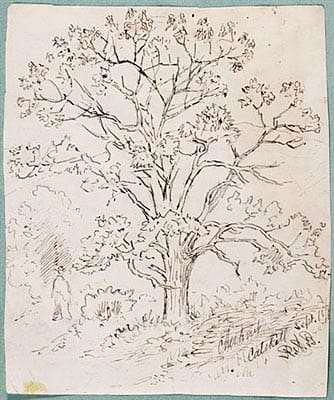
Research documents persistence through stump sprouts while sexual reproduction becomes infrequent; the blight’s failure to infect the root system helps explain how living material can persist through the loss of much of the species’ former mature life. The biological account contains survival and severe impairment at once.
The earlier Modal Path Ethics chestnut application asks what has happened to that generative continuation. We do not need to wait for extinction before investigating damage to maturation and reproduction. We also do not need to pretend the tree is deliberating between two lifestyle options.
Then, obviously, I bring a planet-forming disk.
NASA’s account of a Spitzer observation in IC 1396 describes stellar winds and ultraviolet radiation stripping a potential planet-forming disk around a sun-like star. That physical account supplies the process; it does not supply my ethical conclusion.
The Non-Planet argument identifies the extant disk as the proposed bearer. Planet-forming continuations can be damaged through the loss of their material conditions without a hypothetical future civilization becoming the current victim. Under the Continuance Principle, a qualifying loss of that organized generative continuation is harm.
The neighboring star has not been summoned to court. No absent alien has been entered into a victim database.
The claim concerns an existing organization and what happens to its continuability.
A critic can accept the physical description and reject the moral extension. That is a serious disagreement. A cool picture of dust being stripped from a disk does not deductively prove the Continuance Principle.
The defense is explanatory: does contraction illuminate what familiar injuries, deprivations, and generative losses share, preserve important distinctions, and continue to work as awareness, agency, and subject-centered language cease to fit? Or does it extend harm beyond the point where the term earns its normative force? My paper takes on that burden. It does not discharge it by drawing more arrows.
This is the distinctive addition I am defending in the comparison with Kim: a constitutive account of bearer-relative harm that can extend beyond choice-bearing subjects.
That is an identifiable contribution claim, not a certificate of uniqueness across the entire history of philosophy, and broader scope is not automatically better scope.
Finding a neighbor makes the question more exact.
Do Not Eat the Neighbor.
Having discovered the resemblance, I tried a reduction out of curiosity.
Could Kim’s filters be reconstructed inside a sufficiently detailed continuation model?
Conditionally, yes. Preserve the relevant paths, result-state distinctions, maintenance relations, recovery routes, evidence, and subject-centered composition, then apply Kim’s rules, and the reconstruction can retain the judgments those rules determine.
But the important phrase up there is apply Kim’s rules.
If I place his standards inside a larger representation, I have not shown that they follow from the Continuance Principle. I have carried them into another language. The translation may be useful; it has not made the translated work disappear.
The reverse test matters too. A list of eventual destinations loses the difference between present freedom and later release. An unannotated route map loses changes in burden. Pairwise summaries can lose a constraint governing what several participants can achieve together: every pair of three systems could be jointly available without all three ever being available at once. A record of the pairs alone would miss that limitation.
Finite tests show those particular information losses; they do not prove that Kim’s full procedure necessarily incurs them.
Kim already preserves time, role, sustainability, and recovery. A fair comparison cannot place his shortest final label beside my richest possible field-description and call the asymmetry a discovery.
Compare records with records. Compare judgments with judgments. Compare normative commitments with normative commitments.
This is Paper 7’s warning from before. Kim cautions against absorbing a neighboring theory into local terminology before identifying what it actually does.
The Dyad Has Two Jobs
Kim’s Appendix 3.5 offers an unusually useful way of keeping several people inside one case without turning them into one moral blob.
- Suppose B attacks C
- and A restrains B.
The restriction on B and the preservation of C’s path cannot be represented adequately by attaching one adjective to that entire scene.
Kim separates the relevant relational axes, runs the analysis on those axes, and reconstructs subject-centered conclusions. The result is not an arithmetic sum of unrelated dyads. Roles and mediation remain visible.
This dyadic encounter unit is a procedural unit. It tells us where a filter is being applied.
The dyad examined in Hoel and the Causal Locus asks a different question:
Can an ongoing relation become a causally significant organization worth tracking at its own scale?
Does it carry history? Do changes to its relational features affect later interactions? What persists through changes in participants or context, and what disappears when the coupling ends? Those are questions about a candidate causal locus.
An encounter does not automatically create such a locus. A persistent relationship might contain many encounters with different structural effects.
The two analyses can cooperate.
- One examines what happens along an encounter’s axes.
- The other investigates the continuing organization that helps generate future encounters.
Kim’s engagement with Iris Marion Young also prevents a lazy attack on the dyads. He explicitly allows social-structural conditions to matter when their relevance to the case’s paths, maintenance, or recovery is established. The framework does not simply deny anything larger than two people.
The harder joint problem concerns boundaries.
When does a wider arrangement have to enter the case?
Which information would disappear if we retained only the relation-specific outputs?
When does the continuing organization deserve analysis as a bearer itself?
Modal Path Ethics cannot answer by saying that everything is a field, funny as that may be. Kim cannot settle every application by giving the encounter unit a name. Both instruments have to preserve the distinctions required by the question.
And causal organization does not confer sovereignty. A relationship can be real, persistent, and consequential while being one its participants have excellent reason to end. The causal-locus argument explicitly separates causal significance from consciousness, moral standing, and jurisdiction.
The third thing does not get a crown because we found it.
Then the Description Gets a Job.
There is one further problem that belongs to both projects.
A structural judgment can become an input to the field it describes.
- Imagine an institution taking structural non-violation as permission to close a complaint.
- The original finding may have been limited and accurate.
- The closure of the complaint is another act, with another effect on reachable correction.
- Kim’s limited designation does not authorize that promotion.
- Now, imagine an institution invoking harm to preserve a relationship its participants are trying to leave.
- The relationship’s reality does not give its continuation priority over the people carrying it.
- Modal Path Ethics’ wider bearer vocabulary offers no automatic defense of the resulting confinement.
- The relationship’s reality does not give its continuation priority over the people carrying it.
The label has entered the operation.
Hoel and the Causal Locus connects this problem to uptake: a received description can alter the relations through which the described system continues. The fact that a description is accurate does not make every use of it appropriate. A false description can also acquire real effects.
The present article is a small, embarrassing example. My account of Kim entered a manuscript. The comparison affected how I presented the paper’s contribution. Correcting my private understanding would not, by itself, correct the files another person might read.
The description had already left the room.
Repair therefore has to follow the description into its actual carriers. That is why the correction belongs here while the replacement manuscripts are still moving through their respective processes.
Kim’s distinction between a structural recovery route and the wider work of moral repair is helpful yet again. An avenue for changing a file is one thing. Accurately recognizing the error and correcting the impression it created require further work.
Theories about correction have a particularly irritating obligation to survive being corrected.
Also, There Is a Robot in Both Rooms
One qualification belongs in any honest account of the convergence.
- Kim’s manuscript includes a declaration of extensive ChatGPT assistance, covering exploratory discussion during theory formation, organization, terminology comparison, translation, consistency checking, and editorial work.
- He retains responsibility for the claims and final text.
- My contraction paper also discloses substantive ChatGPT use.
So this sadly cannot become a romantic story about two sealed minds receiving the same revelation from opposite mountains.
Shared tools, available literature, common problems, and patterns reinforced in dialogue are possible sources of resemblance. The evidence here does not establish the genealogy of every overlapping concept. Similar language could carry shared insight, shared blind spots, or both.
That makes the comparison more demanding, not pointless.
The test is whether the similarities survive reconstruction, whether the cases actually distinguish the theories, whether each account can receive a correction, and whether the surviving differences perform explanatory work.
In this encounter, the strongest evidence is not that two documents contain the Good Word path.
The Ruling.
Sangmok Kim is a serious interlocutor for Modal Path Ethics.
His developing framework supplies a detailed discipline for making choice viability judgeable: substantive paths, sustaining conditions, recovery, evidential limits, relational decomposition, and the careful return of responsibility and repair. Those distinctions deserve engagement in their own terms.
The convergence is substantial. So is the difference between a procedure for judging choice viability and a constitutive theory of harm extending to qualifying non-agent bearers.
I have not established that either theory absorbs the other. The attempted reduction above just showed how much a successful translation has to preserve, including criteria that sadly do not appear automatically when someone writes reachable continuation at the top of the page.
The remaining research is concrete: how to assign moral significance to confirmed reductions short of fixation; how to establish the boundary of a recovery structure; how to preserve joint and historical organization; how to justify non-agent harm; and how to prevent an accurate structural judgment from acquiring authority it never earned.
None of that requires the two projects to become one project.
It requires them to remain capable of changing one another’s work.
That is a much more interesting discovery than finding a flattering reflection. A mirror agrees about your position because it has no position of its own. A neighbor can tell you that you have misread the map.
I wound up here through stories, games, code, and many attempts to make several kinds of meaning coexist without one swallowing the others. That history neither proves the framework nor disqualifies it. It explains why certain questions kept becoming hard to leave alone.


Comments ()