MODAL KOMBAT: Catherine Malabou and the Transition Problem
"I am no longer Bi-Han. I am Sub-Zero."
Catherine Malabou has a wicked move.
A person suffers catastrophic brain injury. Or Alzheimer’s disease. Or another trauma severe enough that the familiar organization of a life collapses.
Memory changes. Affect changes. Desire changes.
Projects disappear.
Relationships become unrecognizable.
The person who survives may no longer identify with the one who entered the event. Family members may describe someone they love as having become someone else. Rehabilitation may restore capacities without restoring the former way those capacities belonged together.
Malabou thinks ordinary philosophical language is badly prepared for this.
Plasticity usually sounds constructive. A brain changes. A subject adapts. A wound heals. A person incorporates what happened into a developing identity.
Malabou wants another possibility on the board:
- destructive plasticity.
An accident can produce a form that cannot simply be returned to its previous organization. In The New Wounded, brain lesions and degenerative disease become central cases because they can produce transformations of subjectivity so severe that the person appears to have “become someone else.” The Ontology of the Accident pushes harder: the subject’s history can split; an unprecedented persona appears; its present seems to come from “no past”; a “new being” enters the world through the accident.
That is an excellent problem.
Modal Path Ethics has recently become extremely inconvenient for it.
ROUND ONE
Malabou Lunges In.
First, give her the hit.
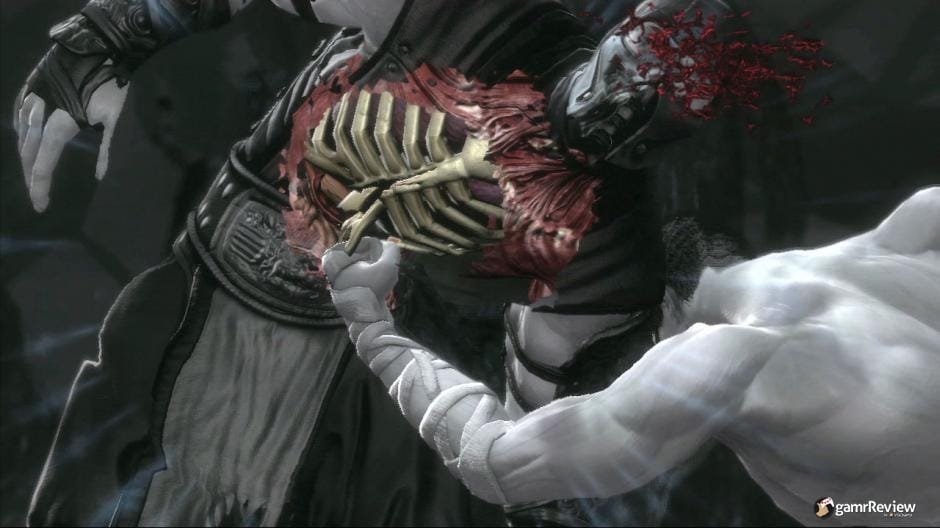
A lot of moral and therapeutic language secretly assumes that survival means restoration.
- The patient will return.
- The self will integrate.
- The trauma will be incorporated.
- The old life
- will eventually become intelligible as part of
- the new life.
- will eventually become intelligible as part of
- The wound will acquire meaning.
The person will recover enough of the old organization that continuity becomes narratively satisfying again.
Malabou refuses that consolation.
Good. Sometimes the old form is gone.
A person can survive while losing an enormous amount of what previously organized the world around them.
The old profession may never return. The old relationship may become impossible. The old emotional response to a spouse may disappear.
The former personality may no longer organize behavior.
The person may not miss what observers keep calling the “real” version of them.
The demand to recover can itself become violent if it treats the present person as a failed copy of somebody who no longer exists in that form.
Malabou deserves the point.
There are transitions after which return is the wrong repair model.
Modal Path Ethics already agrees.
Eduardo Blasco’s persistent-agent work reached the same problem experimentally from a completely different direction. His later recovery experiments did not produce one privileged trajectory back to an original configuration. Multiple viable organizations could appear after reopening, and persistence became compatible with successor structures that had never been specified as copies of the former state.
So:
Recovery does not mean going back.
Score one for Malabou.
ROUND TWO
Wait.
Who died?
This is where the problem starts slipping.
Malabou has shown something devastating:
- Life A can become inaccessible.
That does not yet establish:
- the locus that lived Life A ceased to exist.
Those are different claims.
Take the strongest case.
There is a person living Life A.
Then:
SEVERE EVENT.
A massive amount of the organization supporting Life A is destroyed.
Memory, competence, affect, habit, self-understanding, practical access, relational structure. Whatever actually goes in the case.
That is already enough for catastrophic harm.
The current Modal Path Ethics harm thesis was built precisely for damage like this:
An actual transition harms an extant locus insofar as it nontrivially degrades a structurally significant continuation or enabling structure genuinely reachable from that locus.
- Life A had enabling structures.
- The event destroys many of them.
- The locus loses access to continuations that previously belonged to its field.
- The event destroys many of them.
That is severe contraction.
Nothing else is required.
Then the person remains alive.
And here Malabou introduces a strange escalation.
The transformed person can become so unrecognizable that the language of alteration seems insufficient. The publisher’s summary of The Ontology of the Accident gives the strongest version very cleanly: the new persona’s present “comes from no past,” and a new being appears through the biographical rupture.
But if the present really comes from no past, what exactly did the accident happen to?
That question is going to become very annoying.
ROUND THREE
The Transition Is Evidence.
Start with the simple fact.
Life B came after Life A through Event E.
If Life B is genuinely the result of Event E happening to the bearer living Life A, then Life B has a past.
A very specific one.
It has:
- this nervous system;
- this injury;
- these residual capacities;
- these damaged capacities;
- this body;
- these habits;
- these surviving relations;
- these lost relations;
- this treatment;
- this family;
- this environment;
- this recovery history;
- this exact path through the event.
Change the past and Life B changes.
That is provenance.
Malabou can absolutely say that the present self may no longer experience that past as its own organizing narrative. That is powerful.
She can say the old personality has stopped functioning as the grammar of the present. Also powerful.
She can say there is no psychological synthesis capable of turning the rupture into a happy developmental chapter. All good.
What she cannot obtain from those facts for free is:
therefore the current locus has no diachronic continuity with the earlier one.
Because the accident itself is the connection.
If A and B were genuinely unrelated, we would have lost the phenomenon Malabou wanted to describe.
There would be no destructive transformation of A.
A would simply end.
B would separately appear.
The philosophical force of destructive plasticity depends upon something more disturbing:
A bearer remains through a transition that destroys enormous amounts of how that bearer had previously been able to exist.
That is already worse. No new ontology required.
ROUND FOUR
Simondon Tags In.
The problem becomes much clearer once we stop looking for the person entirely inside the skull.
Gilbert Simondon already forced Modal Path Ethics through this correction.
An individual does not form first and then get dropped into an environment.
Individuation also differentiates an associated milieu.
Individual and milieu become distinct through a process that leaves them coupled. The relation is constitutive; the environment is inside the explanation of how the individual continues.
This does not abolish the person.
Modal Path Ethics explicitly resisted that move too.
Relations constituting a locus can cross the boundary through which the locus remains distinguishable. Boundary never meant independence. The local field did not begin sealed. Its distinguishability was produced.
Now, return to Malabou’s injured person.
Life A was never just a personality profile.
Life A existed through an organization involving:
- body;
- memory;
- skills;
- language;
- rooms;
- tools;
- family;
- work;
- habits;
- institutions;
- routes through the world;
- expectations;
- recognition;
- social roles;
- physical access;
- and whatever relations actually sustained that person’s ordinary continuation.
Then the accident happens.
Some internal structures are destroyed.
And the associated milieu breaks too.
- The old house may no longer be navigable.
- The old job may no longer be possible.
- A spouse now encounters radically different affect.
- Friends no longer receive familiar responses.
- Speech may require assistive technology.
- Daily schedules change.
- Care relations appear.
- Medical institutions enter.
- Former independence becomes dependence in some respects.
- Old dependence may disappear in others.
- Legal status can change.
- Social recognition changes.
The world that supported Life A no longer fits.
That is not evidence that the locus vanished. It is evidence that the transition altered the coupled organization through which the locus had been continuing.
And then the next process begins.
- The person acts.
- The environment responds.
- The person learns under the changed conditions.
- The environment changes again.
New routines emerge.
New relations become possible.
New competencies may appear.
Different supports become enabling.
New continuations become reachable from the damaged remainder.
Simondon already gave Modal Path Ethics the basic architecture:
- milieu enables object
- → object acts
- → action alters milieu
- → altered milieu helps enable continued object.
- → action alters milieu
- → object acts
There is no need for Life B to arrive new from another universe.
The locus is undergoing further individuation under altered conditions.
Malabou has mistaken how violently the mode of continuation changed for evidence that continuation itself disappeared.
ROUND FIVE
Blasco Deletes the Ariadne Thread.
Eduardo Blasco makes this worse for Malabou.
Inside his OMEGA persistence experiments, Blasco had a structure called the Ariadne Thread.
It looked like the obvious carrier of continuity.
- Under compression, the Thread weakened.
- During reopening, it recovered.
This was an attractive story.
So then he disabled it.
The system kept recovering.
So he destroyed it more completely.
Still, with deeper adaptive plasticity preserved, the regime began rebuilding coherent organization while the Thread remained absent.
Later, a functionally equivalent Thread emerged again.
The apparent carrier of continuity turned out to be generated by deeper organizational persistence.
Blasco’s own conclusion was that the Ariadne Thread did not generate organizational order; organizational order could generate the Thread.
This is a simulator. It does not prove human personal identity.
It gives us a spectacular warning.
Do not identify the thing that looked like continuity with the organization carrying continuity.
- Personality can change.
- Memory can change.
- Affective structure can change.
- Narrative self-understanding can change.
- A former project can disappear.
None of these, individually, automatically establishes locus death.
The same problem appears whenever philosophy selects one recognizable feature of identity and promotes it into the metaphysical carrier of the person.
Malabou is far too sophisticated to locate identity in one well-named memory file. But the rhetoric of an unprecedented new being risks doing something structurally similar at a larger scale.
- The old recognizable organization disappears.
- Therefore the bearer has somehow become ontologically new.
Blasco says:
Slow down.
Ask what remained capable of continuing.
ROUND SIX
Life A Is Gone.
The Locus Is Not.
We can now make the transition explicit.
- Life A
↓
- Severe Event
↓
- Destruction of Life-A-enabling structure
- Severe contraction
↓
- Continuing locus in altered associated milieu
↓
- Further individuation
↓
- New enabling structures
- New reachable continuations
↓
- Life B
There.
That is the whole fight.
Life A can genuinely be gone.
No sentimental rescue.
No hidden claim that the former personality remains intact somewhere deep down.
No promise that enough therapy restores the correct person.
No claim that a new life compensates for the old one.
The old continuations can be dead.
The damage can be irreversible.
Then, something else becomes reachable.
That later opening does not falsify the earlier contraction.
The current Modal Path Ethics account already separates a harm-token from the overall later transition profile. A real contraction can coexist with later openings, repairs, burden changes, or newly reachable continuations. The later field does not get to retroactively declare the earlier harm imaginary because something good eventually became possible.
That is exactly what destructive plasticity needed.
Malabou wanted a theory capable of saying:
The person survived and something irretrievable was still destroyed.
Yes. Absolutely.
Modal Path Ethics already says that.
The mistake is adding:
therefore the person who survived is ontologically another being.
Why?
ROUND SEVEN
“Present Comes From No Past.”
Now we can hit the strongest language directly.
Taken phenomenologically, this is excellent.
A person can inhabit a present that no longer feels generated by the life preceding it. Old memories may not organize present desire. Old projects may no longer exert authority. The former narrative may be unavailable.
The person may experience the past almost as the biography of somebody else.
Fine. Taken ontologically, “comes from no past” falls apart.
The present is just saturated with past.
The lesion is past.
The damaged neural architecture is past.
The body carrying the event is past.
The residual competencies are past.
The missing competencies are past.
The changed marriage is downstream of past.
The new care structure is downstream of past.
The assistive device is present because of past.
The altered room is present because of past.
The family’s grief is structured by comparison to past.
The clinician’s diagnosis is based on transition from past.
The new life is forming under material conditions produced by past.
The person may have lost access to the past as self-understanding.
That does not make the past causally absent. It never is.
This gives us the clean distinction:
The past may cease to be available as identity without ceasing to remain active as provenance.
That is enough.
ROUND EIGHT
No Hegel Cheese.
There is one obvious escape Malabou should refuse.
Fine, says the Hegelian.
- Life B came from Life A.
- Therefore Life A has been preserved in Life B at some richer level.
No.
Historical continuity does not mean preservation of what was lost.
Causal succession does not reincorporate losses into a higher unity and announce victory.
Life B does not redeem Life A.
The later field remains the field after contraction.
That is all.
Modal Path Ethics has already spent enough time separating retention from local continuation to recognize the error.
Continuity means:
- the loss happened to a bearer that continued.
It does not mean:
- what was lost continues inside the bearer.
That difference carries almost the entire article.
Continuity does not mean the lost survived. It means the loss happened to someone who did.
Malabou wanted destruction without biological death.
There it is.
OFFENSIVE PHASE
Destructive Plasticity Has a Transition Problem.
We have defended enough.
If the earlier subject has literally been destroyed, tell Modal Path Ethics when.
Which transition terminated the locus?
- Loss of autobiographical memory?
- People survive that.
- Loss of personality continuity?
- People change profoundly.
- Loss of former projects?
- People abandon projects.
- Trust me.
- People abandon projects.
- Loss of affect?
- Severe affective change does not obviously produce Mickey-17-style numerical replacement.
- Loss of self-recognition?
- Recognition fluctuates and can fail.
- Loss of narrative integration?
- Some people cannot produce coherent autobiographical narratives while remaining plainly continuous bearers of their histories.
- Failure of recognition by family?
- That would let observers determine whether a person still exists.
- Continued embodiment?
- Malabou does not think body alone settles subjectivity, correctly.
So what does?
Where is the criterion that converts:
- catastrophic alteration
into
- ontological replacement?
The dramatic description cannot do the work.
“Unrecognizable” is relational.
“Unprecedented” is historical.
“Someone else” can describe qualitative transformation.
None automatically establishes numerical discontinuity.
And there is a deeper problem.
If B truly bears no constitutive relation to A, then why is B an effect of A’s accident?
The instant Malabou answers:
Because the accident transformed A into B,
the relation returns.
There is the path.
There is the transition.
Welcome to the transition problem.
MATCH POINT
The Transition Problem.
Modal Path Ethics does not need to deny a single serious phenomenon Malabou identified.
The old mode of life can be annihilated.
A personality can become unrecognizable.
The person may never want the former life back.
The former self can lose all practical authority over the new one.
Recovery can fail completely if recovery means return.
Therapeutic insistence on restoring the original person can become another violence.
A later flourishing can coexist with permanent loss.
Those are all useful.
Then stop.
The stronger ontological move adds confusion.
The simpler account already has everything:
A locus lives one organization.
A severe transition destroys much of the structure supporting that organization.
The locus suffers catastrophic contraction.
The locus remains active inside a radically altered field. Its associated milieu changes.
Further individuation occurs.
New continuation-generating structures emerge. New continuations become reachable.
The old ones remain lost.
One gives way to the next because one became the next.
There is no paradox.
Just a transition.
BATTLE PASS.
Malabou absolutely brought useful tech to steal.
- Keep destructive plasticity as an attack on every cheap account of resilience.
- Keep the refusal to equate plasticity with happy adaptation.
- Keep the insistence that some transformations destroy enough of a life that restoration becomes a false ethical goal.
- Keep her attention to people whose post-traumatic organization no longer presents itself as the injured original waiting to be repaired.
- Keep the warning against forcing the new life to perform nostalgia for observers.
All fantastic stuff. Then remove the ontological drama we do not need.
A person can become unrecognizable without becoming unrelated.
A life can end while the locus lives.
A future can be destroyed while another opens later.
That is severe enough.
RESULTS SCREEN.
Catherine Malabou wanted philosophy to recognize a kind of destruction more radical than ordinary change and less final than death.
She found it.
The mistake was thinking she needed another being to explain it.
She did not.
The catastrophic case is easier to understand once the entire transition comes back into view.
- Life A existed.
- A severe event occurred.
- The structures enabling Life A were devastated.
- The locus continued in the damaged field.
- Its milieu changed around it.
- The locus changed with the milieu.
- New structures became available.
- New continuations opened.
- Life B became possible.
None of this restores Life A. None of it makes the contraction fake. None of it converts the wound into necessary growth.
And none of it requires the mysterious appearance of a mysterious person whose present has no past.
The past is just everywhere. Always.
It just no longer has to look like the present.
Malabou discovered that a life can become unrecognizable without ending.
Modal Path Ethics already has a name for what happens when one organized mode of continuation gives way, through an actual event, to another.
A transition.
GG, WP.