Simondon and the Locus in Formation
This guy keeps trying to take my locus.
Modal Path Ethics has created a problem for itself.
Again.
This keeps happening.
The Relational Descent was supposed to make things clearer.
Intelligence looked suspiciously object-shaped, so we followed it downward. The intelligence inside the box dissolved into a relation among distinctions, receivers, histories, tools, environments, correction, and whatever became reachable after uptake. That created a problem.
If intelligence could dissolve like that, what else had we been treating as a thing because the noun was convenient?
The self started moving.
The institution started moving.
The controller had already fled the premises.
Pretty soon Modal Path Ethics was standing over a field full of relations wondering whether it had accidentally eliminated every locus its own ethics required. Oops.
Erik Hoel helped me out.
 Aidan Lawson
Causal emergence gave us a way to say that a higher-order pattern can be completely constituted by lower-order relations and still retain causally significant organization at its own scale. The person did not have to become a fundamental substance to remain a person. The institution could decompose without becoming imaginary. The object could come back properly chastened.
Excellent.
Problem solved.
For approximately five minutes.
Because causal emergence begins with something we have quietly granted in advance.
A candidate macrostate.
Some collection of lower-level activity has already been grouped together and presented as one higher-order thing. We can then ask whether that scale captures causal organization better than another scale.
Hoel can help us test the grouping.
He does not yet tell us why these relations form this grouping in the first place.
- Why is this person one locus?
- Why does this organism remain one locus while its material constituents change?
- Why does an institution persist after the people inside it leave?
- Why might a relationship possess a future that belongs to the relationship
- rather than functioning only as shorthand for two separate people?
- Why is a city an intelligible candidate locus while a collection consisting of Baltimore, seven houseplants, the third floor of a bank in Osaka, and every left shoe currently in Nebraska is not?
Modal Path Ethics already knows how serious this problem is. Harm is supposed to be borne somewhere. Its existing locus diagnostic therefore asks whether a proposed bearer is instantiated, bounded, continuous, integrated, vulnerable to contraction, capable of degradation or repair, and analytically non-redundant. It explicitly refuses both person-only ethics and that opposite disaster in which anything that can be named receives locus status.
Good. Great. Very cool.
Where did those properties come from?
We have almost lost the locus again.
Gilbert Simondon would like to now inspect my paperwork.
We Keep Starting Too Late.
Simondon's major work on individuation begins from a complaint about the way philosophy poses the problem of the individual.
We look around.
- There is the object.
- There is the person.
- There is the organism.
- There is the crystal.
- There is the machine.
Now explain what makes each one an individual.
Simondon thinks the question has already smuggled in the answer.
The individual has been placed at the beginning of the investigation even though its genesis is exactly what needs explaining.
His proposed reversal is severe:
Do not begin from the constituted individual and search backward for a principle of individuation. Begin from individuation and understand the individual as something produced through it.
The English translation of Individuation in Light of Notions of Form and Information only became available in full in 2020. Its scope is enormous: physical individuation, living beings, perception, psychic and collective individuation, information, technology, thermodynamics, cybernetics, crystals. The common project is genetic.
What operation produces the apparently finished thing from which ordinary ontology begins?
This is immediately dangerous for Modal Path Ethics.
We just fought our way back to the object.
Simondon would like to know whether we recovered it too early.
The Brick Has Been Concealing an Operation.
His attack begins somewhere extremely helpful.
A brick.
The traditional hylomorphic picture describes an individual through matter receiving form.
- Clay.
- Brick-shape.
- Apply one to the other.
- Brick.
- Apply one to the other.
Whatever one thinks about how completely that simplified picture captures Aristotle or the later hylomorphic tradition, Simondon's target is clear:
Matter and form can become retrospective abstractions from an operation that was much richer than either term.
- The clay used to make the brick is not generic passive Matter.
- It has been extracted, selected, dried, broken down, moistened, kneaded, and otherwise prepared until it possesses the particular material dispositions required by the operation.
- The mold is not immaterial Form descending upon it.
- The mold is itself a manufactured material structure.
- Its rigidity, geometry, surface, preparation, and capacity to resist deformation all matter.
- The mold is itself a manufactured material structure.
Then there is the part the static matter-form picture suppresses almost completely:
- Energy.
- Pressure.
- Moisture.
- Contact.
- Time.
- The worker.
- The prepared clay pushing against the material walls while those walls constrain the clay.
The actual brick arises through an operation in which these conditions become mutually effective. Simondon's own analysis insists that abstract clay plus abstract parallelepiped cannot explain the concrete brick drying in front of us.
The thing philosophers call the individual is what became easy to point at after the operation stabilized.
That gives Relational Descent a devastating new rule:
The individual is often where the explanation stops because it is where the process became easy to name.
Simondon wants back into the workshop.
The Principle Is an Operation.
This gets us much closer to the locus problem.
Suppose we ask what makes this brick this brick.
The clay alone cannot answer. The same prepared clay could participate in another brick.
The mold alone cannot answer. The same mold can produce many bricks.
The abstract form cannot answer. The chemical description alone cannot answer.
The relevant individuality appeared through the concrete operation by which prepared matter, material constraint, energy, timing, and local conditions entered a specific history together.
Simondon therefore relocates the principle of individuation from some hidden ingredient inside the final individual to the operation through which the individual came into formation. His brick analysis describes individuation through the energy exchange and internal resonance established during the actual taking-on of form.
So that is a major correction for my own locus language.
Modal Path Ethics has been asking whether something currently displays enough integration, continuity, boundary, vulnerability, trace, and future-structure to qualify as a locus.
Simondon asks us to add another question:
What history generated the integration we are currently measuring?
Because arbitrary aggregates can be given boundaries.
- I can draw a circle around your left shoe and three clouds.
- What I cannot automatically supply is an individuating history through which that grouping acquired its own organized continuation.
The boundary alone is weak evidence.
The process that keeps generating the boundary is much stronger.
Start Before the Thing.
Simondon calls the field prior to completed individuation preindividual.
This word is extremely easy to ruin.
It does not mean a mystical primordial sludge from which Reality manifests Individuals because French philosophy has become restless again.
The useful idea is much more concrete.
A preindividual field contains unresolved differences, tensions, potentials, incompatibilities, available energies, and possible transformations that have not yet been resolved into the later individual–milieu organization.
Simondon repeatedly uses metastability to think about such a condition.
A metastable system is neither inert equilibrium nor undifferentiated chaos. It contains stored potential. Something can happen there.
His canonical example is crystallization.
A supersaturated solution can remain apparently stable while carrying conditions under which a local perturbation initiates a phase transformation. Once crystallization begins, existing crystal structure conditions the formation of adjacent crystal structure. The organization propagates.
The crystal does not appear because a completed crystal-form was waiting outside the solution for permission to enter.
A structured transformation runs through the field.
Simondon calls this kind of operation transduction.
And now Modal Path Ethics has another problem.
The Boundary Is an Event Before It Is a Line.
Transduction is one of Simondon's most important concepts and one of the easiest to overinflate.
At minimum, it describes a process in which a structuring activity propagates through a domain, each already structured region supplying conditions under which the next region can become structured.
The crystal is the clean image.
- A local organization appears.
- That organization changes the conditions immediately around it.
- Those altered conditions support further organization.
- That organization changes the conditions immediately around it.
The structure advances.
The individual emerges through the propagation rather than arriving complete at the beginning.
For Modal Path Ethics, this suggests something stronger than the statement that a locus has a boundary.
The boundary may itself be an achievement of the locus's history.
An inside and an outside become distinguishable because transitions begin occurring differently through the emerging organization.
Some relations start constraining others.
Some states begin preserving a history.
Some perturbations propagate internally in characteristic ways.
Some outside changes get absorbed. Others destroy the organization.
The locus becomes legible because individuation has produced an asymmetry in the field.
That is much better than putting a circle around something and hoping ontology will respect the penmanship.
It also helps explain why locushood can be graded.
- A newly forming institution may have weak continuity and unstable boundaries.
- A mature organism has enormously developed internal coordination and highly consequential boundary relations.
- A language can persist through changing speakers because its transmission structure reproduces distinctions across generations.
- A transient crowd may display coordination for ten minutes and then dissolve without preserving enough of its own organization to deserve much independent locus status afterward.
The question becomes genetic and dynamical:
What process keeps making this grouping one thing?
Unfortunately, the Environment Is Inside the Explanation.
Then Simondon starts taking my locus away again.
Individuation does not simply produce an individual.
It also produces or differentiates an associated milieu.
The individual cannot be fully understood first and then placed into an environment as an independent second step.
Individual and milieu emerge through the same individuation.
They become distinct through a relation that also leaves them coupled.
This is one of the recurring findings in scholarship on Simondon: the individual is relative to the milieu associated with its existence, and the relation is constitutive rather than an optional bridge added between otherwise completed substances.
Fantastic.
We have almost lost the locus again.
Because if part of what makes the individual what it is belongs to its ongoing relation with a milieu, where exactly do we put the boundary?
Modal Path Ethics cannot answer:
Everywhere.
Harm as contraction requires discrimination.
Whose future contracted?
What died?
What was repaired?
Which history ceased continuing?
Which dependency belonged to the locus and which belonged to another locus supporting it?
When two loci depend on one another, have we discovered one locus or two?
When a person requires social relation to develop agency, this does not make society and the person morally interchangeable.
When a coral reef depends upon water chemistry, the ocean does not become one coral.
When a user-model dyad develops a rich history, that does not automatically turn every server, electricity market, training datum, user, engineer, and cultural reference involved in that interaction into one mega-locus.
Relational constitution cannot become boundary abolition.
That would destroy the very thing Relational Descent is trying to understand.
So Simondon gives us a stronger problem:
The relations constituting a locus may cross the boundary by which the locus remains distinguishable.
That sounds contradictory only if a boundary must mean independence.
Modal Path Ethics already knows otherwise. Its own possibility-space account treats loci as nested within larger fields while carrying local fields of continuation of their own. Reachability is explicitly relative to locus and scale. A future may be reachable for an institution while unavailable to the person who must enact it, or available locally while destructive at a larger scale.
Simondon now gives that nested picture a genetic dimension.
The local field did not begin sealed. Its distinguishability was produced.
Life Does Not Finish the Job.
Physical individuation makes this easier to see.
A crystal forms.
The relevant transformation propagates.
Under some conditions the process approaches a stable result.
Living beings make everything worse.
Simondon's treatment of life emphasizes continued individuation. The living being does not simply undergo one genesis and then spend the rest of its existence carrying around the finished result.
It preserves internal tensions and potentials.
It regulates, exchanges, repairs, develops, responds.
It continues resolving problems while generating new ones.
Contemporary scholarship on Simondon therefore describes the living being as continuing through individuation rather than existing as a finished individual to which later change simply happens. The physical/living distinction should not be exaggerated into an absolute binary, but ongoing metastability is central to the living case.
This may be one of the deepest contacts with Modal Path Ethics.
The framework has always treated extance dynamically. An extant locus is a region of realized causal structure capable of further lawful transition, carrying a local future-structure to which opening, closure, resistance, degradation, and repair can apply.
Simondon suggests that, for some loci, the capacity for further transition is not something we append after identifying the object.
It is part of what the object is.
A living individual can be understood partly through its organized capacity to remain available for further individuation.
That gives us an astonishingly close bridge to reachability.
A finished inventory asks:
What does this thing contain?
A path-structural account asks:
What continuations can this organization still sustain?
The second question may tell us more about the living individual than the first.
Simondon Has Also Found Active Information.
This is becoming irritating.
Modal Path Ethics has spent a lot of time developing an account of active information.
Information does not become morally or causally interesting because symbols exist somewhere.
It becomes active when uptake changes what happens next.
The same sentence received by different systems can do radically different things because the receiver's history, structure, capacities, expectations, and present state determine what transitions the distinction can trigger.
But it turns out Simondon has been waiting to jump me here too.
His account of information refuses a picture in which information is simply a detachable content travelling intact from sender to receiver.
Information becomes significant through the state of the receiving system and the transformation reception can initiate there.
A signal entering a metastable field may trigger individuation precisely because the receiver carries unresolved potential. Recent work reconstructing Simondon's information theory emphasizes this event-like character: information belongs to the operation by which a disparity becomes capable of producing transformation.
Alright.
Point to Simondon.
That overlap matters.
It also clarifies what Modal Path Ethics can still add.
Simondon asks how information can participate in individuation.
Modal Path Ethics asks what that uptake does to reachable continuation.
- What became easier afterward?
- What became resistant?
- What distinction can now be made that could not be made before?
- What path closed?
- What history was carried into the receiver's next state?
- Did repeated uptake stabilize an emerging locus?
- Did it destabilize one?
- Did the representation become one of the conditions through which the represented thing now continues?
This is the bridge we recently reached through Hacking.
Simondon has driven underneath it from another direction.
He Put a Turbine in the Ontology.
Then Simondon gives us a machine.
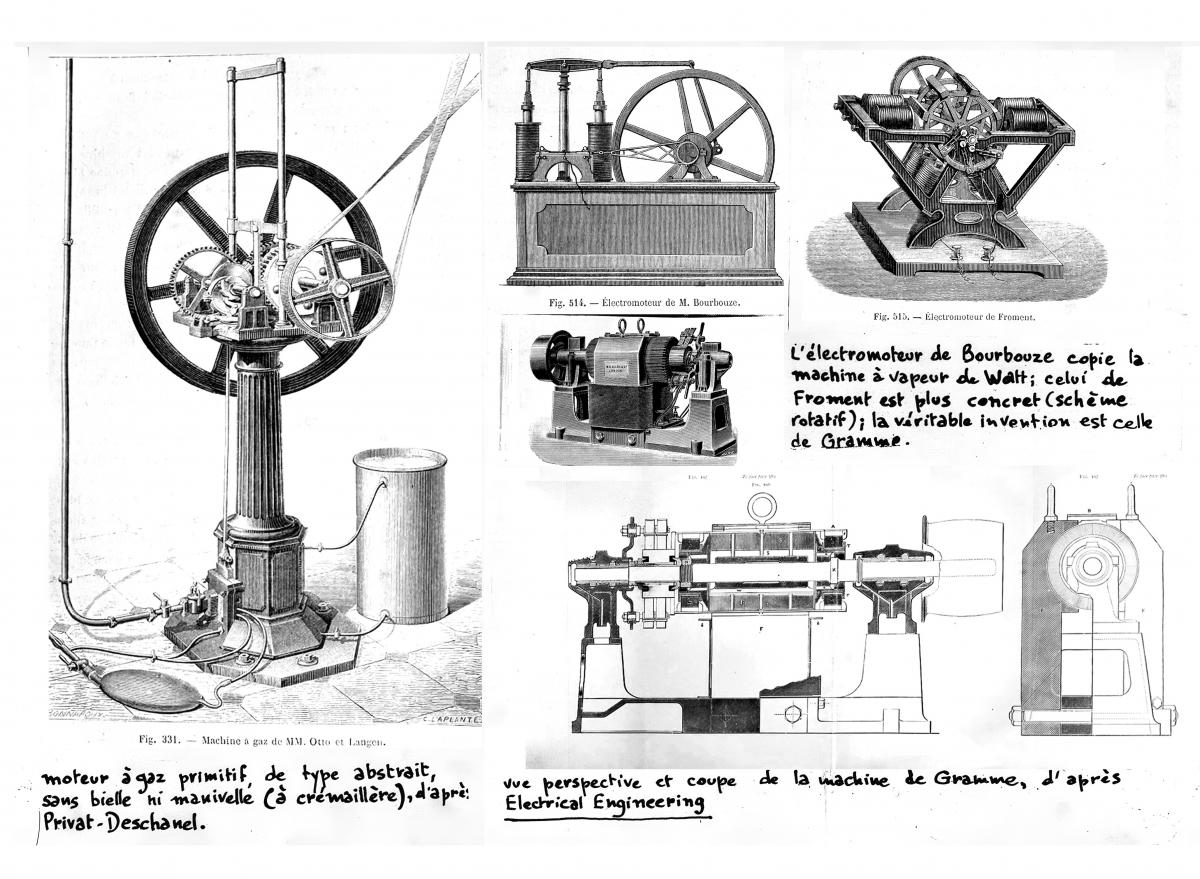
This is useful because crystals and living things make it too easy for people to assume we are smuggling in some special organic essence.
Consider the Guimbal turbine-generator.
Simondon uses it to analyze a technical object whose operation depends upon an associated milieu that the object's own functioning helps create.
- Oil surrounds the rotor.
- Water surrounds the housing.
- The generator produces heat.
As the system operates more intensely, turbulence in the oil and surrounding water increases, improving the heat exchange that the system requires in order to continue operating.
The turbine therefore does not simply sit inside a fixed environment and consume externally supplied conditions.
Its functioning participates in producing the particular thermal regime through which its functioning remains viable.
Simondon describes this as a recurrent causality between technical object and associated milieu. The milieu conditions the object; operation of the object helps constitute the milieu.
This is enormous for Relational Descent. Because now the continuation architecture looks like:
milieu enables object → object acts → action alters milieu → altered milieu helps enable continued object
That is not yet Hacking's reflexive uptake.
Nothing here has to understand a description of itself.
No classification is looping through self-conception.
The relation is more basic.
A thing can participate causally in producing the conditions of its own continued operation.
That matters for organisms.
It matters for technologies.
It matters enormously for institutions.
A hospital becomes useful because a population needs coordinated care. Its usefulness reorganizes training, infrastructure, referral pathways, records, budgets, legal expectations, and public dependence.
Those changes alter the field in which the hospital later operates.
A platform becomes useful because people gather there. Their gathering makes integration with the platform more valuable.
More institutions build around the platform. Exit becomes increasingly expensive.
The changed milieu now helps explain why the platform persists.
The same structure appears across The Inner Apocalypse: a function can be carried successfully enough that the surrounding field reorganizes around its carrier, after which the carrier points toward the reorganized dependency as evidence that it cannot safely be replaced.
Simondon does not give us the political conclusion.
He gives us machinery underneath it.
A locus may participate in producing its own conditions of continuation.
This is a much stronger account of persistence than “the thing stays there.”
This Is Also How the Locus Becomes Dangerous.
Now the Relational Descent thread starts reconnecting with the sovereignty work.
An object does not have to be fundamental in order to become powerful.
It does not even have to begin with a strong boundary.
Individuation can progressively stabilize one. The resulting locus can alter its milieu. The altered milieu can increasingly favor the locus's continuation.
Representations of the locus can then be taken up by participants in the field.
Those representations can further alter behavior. The altered behavior can strengthen the organization.
At some point, the thing we originally described becomes part of the machinery producing the reality described.
This can be harmless. It can be beautiful.
Languages survive because speakers reproduce them.
Relationships deepen because participants remember what the relationship has become.
Institutions preserve promises across personnel turnover.
Organisms maintain the conditions of life.
A technical system creates the operating regime in which its own components function well.
The same recursion can harden.
The organization changes the milieu until alternatives become difficult.
The description becomes a norm. The norm becomes infrastructure.
Infrastructure changes reachability.
The resulting field increasingly produces conduct that confirms the original description.
Now we are back in Hacking territory.
Then Goodhart.
Then markets.
Then diagnoses.
Then The System.
Then They.
The dangerous object was not fake. That would be easier.
The dangerous object can be a real causal achievement whose successful continuation expands its own jurisdiction.
This is why Relational Descent cannot end in debunking.
Sometimes we descend beneath the object and discover that the object earned its existence.
The remaining question is what authority that existence should carry.
We Need to Chasten Simondon, Too.
Simondon is extremely attractive to a framework currently surrounded by relations.
That makes him so dangerous.
Crystallization is not automatically a theory of personhood.
A turbine is just not a society.
Psychic individuation is not obviously the same operation as physical phase transition.
Collective individuation is not established by noting that groups contain tensions.
A model-user relationship does not become an independent locus because we learned several magnificent French words.
Simondon deliberately moves across physical, biological, psychic, collective, and technical domains. That gives his work extraordinary generative power. It also gives us reason to ask, every time, which features survive the move and which arrived through analogy. Contemporary scholarship itself emphasizes multiple intertwined modes of individuation rather than collapsing every domain into one identical process.
Modal Path Ethics therefore cannot replace its current locus diagnostic with:
Has individuation occurred?
The answer would depend entirely on how generously we defined individuation.
We need harder contact.
- Does the proposed locus display a generated rather than arbitrary boundary?
- Does a characteristic organization persist through some constituent turnover?
- Does its past remain causally active in its present?
- Do perturbations propagate through it in ways that justify treating the organization as a scale of intervention?
- Can its future be meaningfully narrowed or reopened at that level?
- Does the higher-level account reveal structure that disappears when we decompose it into constituents?
- What relations with the surrounding milieu are constitutive,
- and which belong to independently continuing loci?
- Can the alleged locus disappear while most of its constituents remain?
- Can its constituents disappear while the higher-order organization persists through replacement?
Those questions join Simondon to Hoel.
- Individuation explains genesis.
- Causal emergence tests scale.
- Reachability gives the result a future.
And Modal Path Ethics still needs all three.
A Better Locus.
We should not rewrite the formal definition after one encounter.
We should, however, admit that the old one is already under pressure.
The current framework treats an extant locus as a bounded region of extance capable of carrying local future-structure. The later formal locus work adds instantiation, boundary, continuity, integration, vulnerability, repairability, trace, relationality, and analytical non-redundancy.
Simondon suggests the next version will have to become explicitly genetic.
Something like:
An extant locus is an organized, historically continuous individuation whose characteristic transition structure remains distinguishable across change through an ongoing relation with the field that sustains it.
I do not trust that definition yet.
It immediately creates questions.
- How much organization?
- How much continuity?
- What counts as the same individuation after radical transformation?
- How large can the sustaining field become before the locus boundary loses meaning?
- Can a temporary event qualify?
- Can a relationship be stronger as a locus than an institution?
- When does a distributed locus become a convenient macro-description rather than a true bearer of contraction?
- What distinguishes an associated milieu from an arbitrary causal background?
The Relational Descent has found another floor underneath the floor.
We will have to go down there too.
The Transindividual Is Waiting.
There is one part of Simondon we should leave partly unopened.
For now.
His psychic and collective work does not treat society as a pile of already completed individuals that subsequently decide to relate because why not.
Psychic and collective individuation are reciprocally implicated, and his category of the transindividual attempts to describe a domain in which individual and collective becoming are connected through unrealized preindividual potentials carried into later relation. Recent scholarship describes these two poles as genetically coeval rather than simply deriving one from the other.
This obviously leads somewhere.
We have recently been asking whether a human–machine Dyad can become a causal locus.
Hoel gave us one question:
Does distinctive causal organization exist at the relational scale?
Simondon now adds another:
Have we made a mistake by beginning with two completed individuals and treating their relation as secondary?
Then uptake adds the third:
What happens once participants receive a description of the relation and begin changing through it?
We are not settling all that here. We have enough problems.
But the direction is now difficult to ignore.
The third thing may require individuation.
The Ruling.
Modal Path Ethics keeps almost losing its locus.
At first this looked like a recurring failure of the Relational Descent.
It may be the discipline working correctly.
- We identify a thing.
- We descend beneath it.
- Its apparently primitive unity dissolves into relations.
- Then we owe the thing an explanation.
Why did those relations form this individual?
What maintains the distinction?
What history does it carry?
What scale preserves its causal structure?
What relation to its milieu makes its continued existence possible?
What can happen to it next?
Every successful relational descent creates an obligation to explain why the thing we descended from was ever a thing.
Hoel gave us part of the answer.
- A higher-order pattern can survive decomposition because causal organization can remain significant at its own scale.
Simondon takes us one step earlier.
- The pattern had to become an individual before we could coarse-grain it as one.
- Its unity was an achievement.
- Its boundary was generated.
- Its environment participated.
- Its history remains inside the explanation.
- And for living, social, and perhaps other dynamically sustained loci, individuation may continue for as long as the locus does.
A locus is not what remains after the relations are removed.
The relations are part of how the locus becomes capable of remaining at all.
That does not dissolve the person into the field. It gives us a harder job.
I now have to explain how the person keeps becoming distinguishable inside it.
The Relational Descent has found another floor right away.
Of course it has.
The object came back.
Now we have to find out how the hell it was born.

Comments ()