Influencutors: MoistCr1TiKaL and the Ordinary Field
Reality has failed to organize itself into two teams.
Influencutors is a Modal Path Ethics engagement series for influential public figures whose repeated judgments reveal a stable model of society worth taking seriously on its own terms.
This incredible word now exists thanks to me, and because the internet has produced a large class of people who perform social philosophy continuously, in public, before audiences larger than most philosophy departments will encounter in several geological periods. Some of them did not ask for this distinction. Modal Path Ethics never asked for this either.
Qualification is intentionally narrow:
- The pattern must recur across substantially different cases.
- One interesting opinion does not count.
- The recurring model must explain something real.
- Being wrong loudly is already covered elsewhere on the internet.
- The model must have identifiable limits:
- conditions under which the instrument loses contact, compresses the field, or exceeds its jurisdiction.
- The audit concerns the person's recurring ontology, social model, or reasoning instrument.
- It is not a review of their content format, audience, politics, personality, or entire moral character.
- The strongest cases
- and the failure cases
- both stay in the room.
- and the failure cases
Influencutors asks what model of society keeps producing all these goddamn takes.
MoistCr1TiKaL has a recurring problem.
He will spend twenty minutes explaining that somebody behaved horribly, made an indefensible decision, lied, escalated a conflict, treated another person badly, or otherwise managed to turn a straightforward human interaction into the ruins of Carthage.
Then he will say:
- This other part, though?
- They are right about that.
People fucking hate this.
In June 2026, when Charlie White covered the defamation fight between Ethan Klein and iDubbbz, a Reddit thread accused him of performing an advanced form of fence-sitting. The complaint was basically that he had managed to call iDubbbz nasty, criticize his conduct, take Klein's grievance seriously, and still conclude that iDubbbz had the better position on the use of the lawsuit. Charlie then made another video because apparently the first half hour had failed to exhaust everyone's available opinions.
This accusation follows him around everywhere.
Too safe.
Too obvious.
Too middle-of-the-road.
This guy waits until there is a consensus.
He says the thing ninety percent of normal people already think.
He refuses to commit.
There is something real inside that criticism.
There is also a philosophical mistake.
A middle position only exists when the field has already been compressed into one line.
- Ethan on this side.
- Ian on that side.
- Pick your location.
Charlie keeps refusing this line.
He treats the controversy as several things.
- There is a person.
- There is what the person did.
- There is what they said.
- There is what the person did.
- There is the thing someone else did in response.
- There is the history between them.
- There is the audience.
- There is the instrument being used.
- There are the consequences.
Those objects can all have different moral statuses at the same time.
This should not be revolutionary.
On the internet, it qualifies.
The Middle of What?
Modal Path Ethics already has a reason to be interested in this chicanery.
Its original account of the Human Confusion argues that human moral cognition compresses a much larger field into socially useful categories: intention, blame, loyalty, victim, offender, responsibility, protagonist, antagonist. Those compressions help people coordinate. They also become dangerous when the category begins impersonating everything that actually happened.
The internet is exceptionally good at this operation.
- A person becomes a side.
- Then the side inherits the person.
Once that happens, propositions begin traveling in cool bundles.
- If somebody is judged bad,
- their correct observations become suspicious.
- If somebody is judged good,
- their mistakes acquire protective context.
- If somebody has been harmed,
- every instrument they use in response starts borrowing legitimacy from the original harm.
- If somebody has caused harm,
- every later harm against them starts looking a little less urgent.
The whole person becomes this one giant moral object for categorical convenience.
Charlie has a persistent resistance to this.
This does not make him neutral.
He is very often spectacularly unneutral.
- A scammer may receive ten uninterrupted minutes of being called a fucking idiot.
- A dangerous product can receive a clear ruling.
- A company can be described as predatory without first convening a symposium on the competing schools of corporate ethics.
The important distinction is elsewhere:
Charlie is frequently in the middle of the field without producing a middle ruling.
He keeps several things visible long enough to rule on them separately.
 Aidan Lawson
That is the philosophical move.
"Unfortunately, This Guy Is Right."
The 2026 Klein–iDubbbz fight gives us a clean example because everyone involved had helpfully made the field disgusting before Charlie arrived.
This dispute centered on a serious allegation concerning Klein and his children that originated elsewhere and was later displayed and discussed on an iDubbbz stream. Klein pursued a defamation action in Canada. Charlie covered the dispute in H3 vs iDubbbz Lawsuit, then returned to it in Useless.
Charlie's position did not resolve into one moral color.
- He could regard Ian's underlying conduct as reckless.
- He could regard the allegation as vile.
- He could regard Ethan's anger as understandable.
- He could also regard the lawsuit as a bad response.
This annoyed people because moral discourse likes transitively clean equations.
Bad conduct + bad person = bad position.
Good grievance + harmed party = good response.
Except the real world has never agreed to operate this way.
- A person can behave badly and be correct about the instrument being used against them.
- A person can have a legitimate grievance and still select an excessive response.
- A victim does not receive jurisdiction over every possible repair mechanism.
- An asshole can be right about paragraph six.
There is just no cosmic appeals court available to fix this little inconvenience.
Modal Path Ethics handles the same problem formally by separating the status of a transition from later questions about blame, trust, culpability, sanction, and response. An actor may deserve criticism while a particular intervention against them still creates further contraction. Responsibility itself has several components that should not be forced into alignment just because alignment would make the story easier to tell.
Charlie does this with fewer diagrams.
- He looks at the person.
- Then he looks at the move.
- Then, to the distress of everyone who had already selected uniforms, he keeps both results.
- Then he looks at the move.
This is not centrism.
Nothing has been averaged.
The Enemy Becomes Some Guy Again.
The Sneako conflict is even better.
In early 2023, Charlie and Sneako had built one of those online relationships where two people gradually become simplified into everything the other person dislikes.
They argued publicly.
They insulted each other.
Sneako displayed firearms during the escalation.
Charlie responded.
The conflict became large enough that each man increasingly encountered the other's category before encountering the other man.
Then Charlie called him.
His April 2023 video I Talked to Sneako is striking because the conversation did not produce conversion. Charlie did not discover that all previous disagreements were a misunderstanding and ride into the sunset on a horse labeled CIVILITY.
- He still thought Sneako was badly wrong about important things.
- He remained sharply opposed to his defense of Cuties.
- He remained critical of the social and economic ideas surrounding the red-pill influencer world.
- They also found points of agreement,
- acknowledged places where each had mischaracterized the other,
- and substantially cooled a conflict that had been operating through increasingly stupid public categories.
- Charlie described entering the conversation expecting greater distance than he eventually found.
This is a small event and also an excellent piece of social ontology.
The category enemy had been carrying too much.
Under direct contact, the object decomposed.
Sneako became:
- a person Charlie still disliked in important respects;
- a person with some positions Charlie considered harmful;
- a person capable of making individual points Charlie accepted;
- a person whose account of himself contained information that Charlie's prior model had lost;
- a person Charlie could speak with without somehow ratifying the entire worldview attached to him.
Nothing supernatural happened here.
The propositions remained propositions.
The disagreement remained disagreement.
The person became larger than the category again.
Online politics and commentary often treat this as dangerous softness.
- If the other side becomes intelligible,
- perhaps vigilance has failed.
- If someone you oppose says something true,
- perhaps you have given them credibility.
- If you publicly acknowledge error about an opponent,
- perhaps your audience will interpret correction as surrender.
Charlie appears unusually willing to absorb that cost. This is one of the most important habits.
- A person is not one proposition.
- A conversation is not an alliance.
- Agreement is not contamination.
- Understanding someone does not transfer ownership of your judgment to them.
These sentences should be very fucking boring.
We have built an internet on which they need endless defending.
The Audience Changes the Thing.
Then comes gambling.
- In 2021, major Twitch streamers were broadcasting online gambling to enormous audiences.
- Charlie criticized the practice, with particular attention to the younger viewers watching highly visible streamers hit large wins and sustain large losses.
- xQc pushed back in part by comparing gambling streams to Charlie opening expensive Pokémon card products on stream.
- Charlie thought this comparison was ridiculous.
- The interesting part is why.
Charlie did not need to conclude that gambling itself is categorically evil.
That would have been much easier for everyone.
Instead, the relation mattered.
- An adult gambling privately is one event.
- An adult gambling with promotional incentives is another.
- An adult gambling before a vast audience is another.
- A celebrity gambling before an audience containing large numbers of teenagers is another still.
- The visible physical behavior may be similar.
- The social object has changed.
- A celebrity gambling before an audience containing large numbers of teenagers is another still.
- An adult gambling before a vast audience is another.
- An adult gambling with promotional incentives is another.
This gets us closer to actual philosophy.
 Aidan Lawson
The action cannot be fully located inside the actor. Its identity partly depends on the relation.
- Who is watching?
- What capacities do they have?
- What status does the actor hold?
- What behaviors are being normalized?
- What incentives organize the performance?
- What becomes more reachable after uptake?
Modal Path Ethics later formalized this problem through active information: information becomes active when a receiving field takes it up and redirects capacities around it. The message does not provide all the force. The field receiving the message supplies much of what happens next.
Charlie had arrived at the social version already.
- The gambling stream does not end at the gambler.
- The audience is part of the act.
This is important because it also gives us the case where Charlie's own ordinary judgment later needed exactly the same correction.
The iDubbbz Apology.
In May 2023, iDubbbz released I miss the old idubbbz.
He apologized for earlier material, including his use of slurs, his harassment of Tana Mongeau, and the culture he believed some of his older work had helped cultivate. He unlisted his Content Cop videos while leaving routes for researchers and video essayists to access them.
Charlie disagreed with a substantial part of the self-indictment.
His response in iDubbbz Situation emphasized that Ian had existed inside a much broader mid-2010s internet culture where edgy humor, offensive language, and deliberate transgression were widespread. Charlie resisted the idea that Ian should retrospectively treat himself as a uniquely powerful author of that culture.
There is something worth preserving in Charlie's instinct.
Do not turn one actor into the entire causal field.
Ian did not invent 2016.
A person can participate in a culture without possessing sovereign authorship over it. The visible individual often becomes a convenient sink for a much wider history.
Good insight.
Then, Charlie under-read the other half.
Critics, including people who had belonged to Ian's audience at the time, argued that the content did more than reflect the surrounding culture. It helped reproduce one. Some described being teenagers who took permission from the rhetoric, normalized slurs within their own friend groups, or watched genuinely bigoted parts of the audience use the ironic frame as cover.
This is very important.
A person can be produced by a field and still become one of the instruments producing the next version of the field.
Both directions operate.
- The weather made the man.
- The man acquired a weather machine.
Charlie's mistake here was not excessive centrism.
His ontology stayed too local.
He saw:
- Ian.
- Ian's intention.
- Ian's jokes.
- Ian's intention.
- The surrounding internet culture.
He gave less weight to:
- audience uptake.
- status.
- repetition.
- imitation.
- the creator-audience relation.
- the way a sufficiently large speaker changes the environment that originally formed them.
This is precisely where Modal Path Ethics should disagree with an influencutor rather than convert him into a mascot.
- Charlie was right to resist actor fusion.
- Ian was not the whole field.
- Ian's own retrospective account was still allowed to identify a downstream causal role that Charlie could not see from his position in the audience.
That distinction is critical.
If somebody says, "I built something worse than I realized," the fact that other people were also building similar things does not settle the claim.
Commonness distributes context. It does not erase activity.
This Is Why the Fence Is the Wrong Geometry, Australia.
The usual criticism of Charlie imagines a one-dimensional political or cultural line.
- One camp stands over here.
- Another camp stands over there.
- The craven Charlie, frightened of becoming unpopular, walks carefully toward the middle.
There are certainly moments where Charlie is cautious. He has a giant audience, speaks about an absurd range of subjects, and has plenty of incentives to avoid turning every story into ideological warfare.
That does not explain the stronger pattern.
The stronger pattern appears when we stop drawing one line.
 Aidan Lawson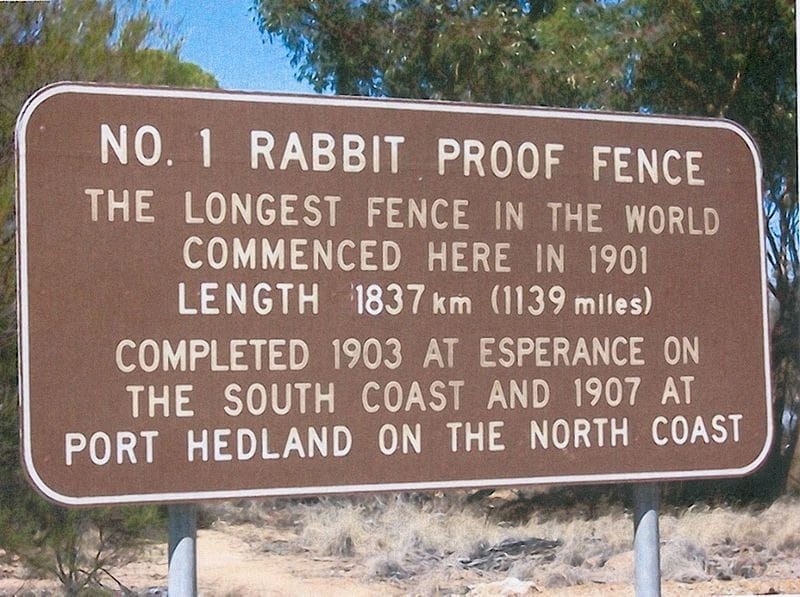
Take the Klein–iDubbbz case.
There is:
- Ian's conduct;
- the underlying allegation;
- Ethan's injury;
- the lawsuit;
- the wider creator feud;
- the audience;
- the law;
- the public response.
Charlie can distribute judgment across these without assigning one final number to the entire person.
Take Sneako.
There is:
- ideology;
- interpersonal hostility;
- a specific disagreement;
- direct contact;
- public performance;
- points of agreement;
- remaining disagreement.
Take gambling.
There is:
- gambling;
- sponsorship;
- adult agency;
- adolescent vulnerability;
- celebrity status;
- platform distribution;
- audience uptake.
These are fields.
A field can contain asymmetric rulings.
- One actor can be more wrong overall while still being right locally.
- Both actors can behave badly while one response remains worse.
- A practice can be acceptable in one relation and dangerous in another.
- A person can deserve criticism without becoming a valid target for every available instrument.
Nothing about this requires finding the midpoint.
The midpoint is gone.
The Obvious Answer Is Allowed.
Cr1TiKaL also offers philosophy something it periodically forgets:
Sometimes the answer is obvious.
This is allowed.
A controversy can involve:
- fourteen people;
- three companies;
- several years of personal history;
- one Discord server;
- leaked messages;
- a lawsuit;
- contradictory screenshots;
- changing platform policies;
- competing financial incentives;
- an audience conducting amateur forensic science at 3:00 in the morning;
- and a person with an anime avatar who somehow knows the most important fact.
After careful inspection, the ruling may still be:
Yeah, that was a shitty thing to do.
Philosophy can become suspicious of this.
- If the conclusion remains available to ordinary moral perception, perhaps the analysis has failed to go deep enough.
- Maybe there is another layer.
- Another historical mechanism.
- Another institutional relation.
- Another hidden burden.
- Maybe there is another layer.
There often is.
The existence of another layer does not automatically reverse the local ruling.
Complexity and ambiguity are different things.
A complex causal field can produce a very clear ruling.
Several causal factors can explain an action without making the action harmless.
Several people can contribute to a disaster without distributing responsibility evenly. An institution can create the conditions for misconduct while the person performing the misconduct remains responsible for performing it.
There is simply no prize for becoming confused after enough context has been added.
Ordinary Moral Realism.
This gives Cr1TiKaL a surprisingly coherent place among Modal Path Ethics' interlocutors.
He operates from something like an ordinary moral realism.
Do not put too much weight on the title. Charlie has not released a 900-page treatise entitled Being and Shit Takes just yet.
The point is simpler.
- He behaves as though the ordinary world remains available for inspection.
- People can lie.
- People can exploit others.
- A company can scam customers.
- A person can mistreat an animal.
- A creator can abuse an audience.
- A lawsuit can be excessive.
- A feud can become stupid.
- A product can be dangerous.
- A public apology can be sincere.
- Someone can be cruel.
- Someone can also just be wrong.
These judgments do not require a total political theory before they become available. And crucially:
The field can be complicated while the ruling remains ordinary.
This is why "middle of the road" misses something important.
Charlie does not appear to believe that moral sophistication requires maximal distance from common judgment.
Sometimes common judgment has correctly identified the object.
There really is a scam.
There really is an injured person.
There really is a reckless act.
There really is an absurd response.
So do the analysis. Then, if the obvious answer survives contact, keep it.
Modal Path Ethics should probably put that one on a sticky note.
Where the Ordinary Field Fails.
Now, the disagreement.
Ordinary moral perception is strongest when the harmful object stays visible.
- Someone steals.
- Someone lies.
- Someone threatens.
- Someone abuses.
- Someone sells fucking garbage.
- Someone treats another person horribly.
- The event fits inside recognizable human scale.
What happens when the harm is produced by everyone behaving normally?
A labor market can distribute desperation without one employer behaving like a movie villain.
An insurance system can make care unreachable through thousands of locally defensible decisions.
A recommendation algorithm can alter a culture without intending anything at all.
A school funding structure can reproduce deprivation while every administrator fills out the correct form.
A housing market can transfer extraordinary burdens through transactions each participant understands as ordinary.
A supply chain can externalize ecological harm across enough institutions that no local actor encounters the whole event.
Now, common sense has a very big problem.
The ordinary field is itself generated.
 Aidan Lawson
The road already has a history.
The middle of the road may feel moderate because the alternatives were removed before anyone currently standing there arrived.
This is where Modal Path Ethics presses much harder than Charlie usually does.
Its foundational claim is that human moral categories often privilege what is narratively legible: identifiable actors, vivid motives, punishable actions, recognizable suffering. Slow contraction, distributed burden transfer, institutional lockout, and future loss can remain morally deeper while attracting much less attention because nobody can point to the obvious asshole.
Sometimes there is no asshole in the room.
There is a workflow.
This is a much harder Cr1TiKaL video.
There is no satisfying thumbnail for that one.
Nobody has said anything unbelievably stupid here.
Nobody has been caught in 4K.
Every person interviewed can fully explain their role.
It is all locally rational.
The harm survives them all anyway.
That is where the ordinary field needs another instrument.
The Road Can Be Part of the Problem.
This is the cleanest disagreement between Cr1TiKaL and Modal Path Ethics.
Charlie's method often begins with an admirable instinct:
- Look at what actually happened before letting ideology decide what must have happened.
Excellent. Then comes the harder question:
- What counts as "what actually happened"?
If the answer includes only the visible persons and visible acts, the field can disappear beneath its participants.
The iDubbbz apology case demonstrates the problem in miniature.
- Charlie saw Ian inside the surrounding culture.
- That corrected one distortion.
- Then he underweighted what happened after Ian's content entered millions of other people.
The relation ran both ways.
This is exactly the kind of thing Active Information was built to catch.
A message does not have to contain all of the causal force that follows from it. It enters receivers, institutions, audiences, histories, fears, incentives, and capacities already prepared to respond. The field supplies much of the force.
So intention cannot settle uptake.
Context cannot settle uptake.
Ordinariness cannot settle uptake.
A creator can sincerely understand a joke as a joke while a receiving subculture uses it as permission.
A company can sincerely understand a policy as neutral while its interaction with an existing unequal field produces asymmetric closure.
A platform can sincerely optimize engagement while engagement optimization changes which social realities become visible.
The road is not neutral because everybody agrees it is a road.
Sometimes we actually need to inspect the pavement.
What Cr1TiKaL Gives Modal Path Ethics.
First:
- Keep the objects separate.
- A person is not their worst act.
- An act is not redeemed by a person's better qualities.
- A legitimate grievance does not justify every response.
- Being correct once does not transfer correctness to the rest of the worldview.
- Being wrong elsewhere does not invalidate a true local claim.
This sounds incredibly basic.
Modal Path Ethics has already watched civilizations fail this test.
Second:
- Direct contact matters.
- The Sneako conversation demonstrates something small and valuable.
- A socially compressed person can regain distinctions when someone actually speaks to them.
- The category does not have to disappear.
- It has to surrender what the person contradicts.
- The Sneako conversation demonstrates something small and valuable.
Third:
- Relations change acts.
- The gambling case makes this especially clear.
- Audience, power, age, sponsorship, status, and distribution are not decorative context around the action.
- They help constitute the social action.
- The gambling case makes this especially clear.
Fourth:
- Complexity does not require mush.
- Modal Path Ethics can inspect ten interacting fields and still eventually say:
- This shit is bad.
- The framework has no obligation to become unclear as proof that it has noticed complexity.
- Modal Path Ethics can inspect ten interacting fields and still eventually say:
Fifth:
- Do not make every event prove your entire worldview.
- This may be Charlie's most important contribution.
- The internet is full of people carrying complete theories that are permanently one viral clip away from total confirmation.
- Charlie often permits an event to remain embarrassingly local.
- Some guy did something dumb.
- This company sucks.
- This response was ridiculous.
- Nobody needs to derive the fall of Western civilization before dinner.
- A framework interested in fields should treasure that restraint.
What Modal Path Ethics Gives Cr1TiKaL.
First:
- The field can generate the person you are judging.
- This does not erase responsibility.
- It changes what repair requires.
Second:
- The person can generate the field in return.
- Large creators, institutions, categories, rankings, and narratives become active after uptake.
- Audience effects belong inside the analysis.
Third:
- Normal can be an output.
- An ordinary practice may feel morally obvious because institutions, infrastructure, incentives, and language have already trained the field to receive it that way.
Fourth:
- Burden can leave the visible scene.
- A decision can look harmless locally
- because somebody elsewhere, later, poorer, weaker, younger, or less visible carries its cost.
Fifth:
- Sometimes the object is distributed.
- There may be no villain.
- There may still be damage.
This is where the Ordinary Field becomes insufficient.
Charlie is very good at recognizing when the people have been flattened into sides.
Modal Path Ethics asks him to perform the same operation one level higher:
- Do not flatten the field into the people.
The Influencutor.
There is a temptation here to make a grand claim about influencers replacing philosophers.
Please do not.
Universities remain operational. Books continue to exist.
Somewhere, a philosopher is reading this sentence and becoming very tired.
MoistCr1TiKaL matters for a narrower reason.
- He has spent an enormous portion of his adult life adjudicating social events in public.
Not abstract trolley problems. Actual messy ones.
People lying.
Companies failing.
Creators fighting.
Audiences reacting.
Platforms amplifying.
Lawsuits escalating.
Apologies landing.
Scams spreading.

Status changing what an action means.
Millions of people then watch that ruling, argue about it, modify their own interpretations, and sometimes become part of the next event.
This is a strange philosophical environment.
- The philosopher is inside the field.
- The audience is inside the field.
- The case can answer back.
- The subject may upload a response before dinner.
- Your mistake receives analytics.
- The subject may upload a response before dinner.
- The case can answer back.
There are worse laboratories.
Cr1TiKaL's philosophy of society is therefore found in the recurring operation more than in any doctrine he has announced:
- Keep enough of the field visible that the person does not become the side.
- Then rule.
- Sometimes the ruling is obvious.
- Then rule.
- Sometimes the ordinary field misses the structure underneath it.
Both facts survive.
The Ruling.
MoistCr1TiKaL is accused of sitting on the fence because the internet wants controversies to become one portable object.
He keeps finding several instead.
Then he does something deeply suspicious.
He judges them separately.
This produces conclusions that look evasive only if moral properties are required to travel in bundles.
- A person can suck
- and be right here.
- A harmed person
- can choose a bad response.
- An enemy can become more intelligible
- without becoming correct.
- A legal adult can gamble
- while the broadcast relation around the gambling remains dangerous.
- A creator can be formed by an ugly culture
- and still help reproduce it.
These are not middle positions.
They are different positions about different things.
Modal Path Ethics agrees with Cr1TiKaL's refusal to let the cast list settle the structure. It also demands him to keep going.
The ordinary field can lie.
Common sense can inherit infrastructure it never examined.
Normal conduct can distribute extraordinary harm.
An audience can turn information into action the speaker did not anticipate.
A system can injure people without producing anyone satisfying enough to yell at for fifteen minutes.
Sometimes the middle of the road is exactly where a clear-eyed person should stand. Sometimes the road is what needs auditing.
Charlie already knows how to keep both sides of a controversy in view.
The next move is harder.
- Keep the people in view.
- Then look under the pavement.