Applied Case: The Trees Are Still Standing
The Chestnut, the Datacenter, and the Speed of the Future
On April 25, Modal Path Ethics published two articles.
- The Chestnut Blight examined a species that had survived the loss of the ordinary path by which it once became a forest.
- The roots were still alive.
- Shoots kept returning.
- But the fungus kept interrupting the journey to mature, reproducing canopy trees.
- The American chestnut was present in the world,
- and its former forest was gone.
- The Datacenter examined a structure that had spent decades convincing everyone it was a cloud.
- Unfortunately, the cloud required land, electricity, cooling, roads, materials, water, and somebody willing to live next door.
- AI was enlarging that physical demand at extraordinary speed.
- Computation could open valuable futures;
- the building carrying it could close others.
Six months later, these two articles have apparently found one another in Mason County, West Virginia.
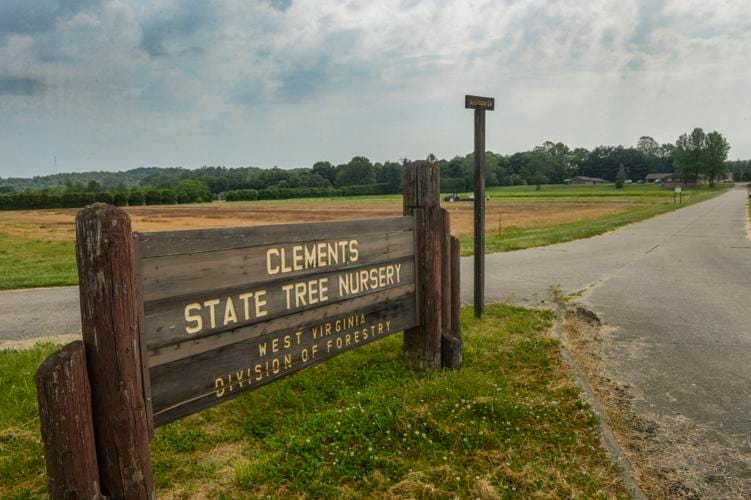
There are mature American chestnut trees at the former Clements State Tree Nursery. There is also a plan for Nscale's Monarch Compute Campus, an AI infrastructure development advertised at more than 2,250 acres, with a first phase designed for 1.35 gigawatts of IT capacity.
Nscale is negotiating to acquire the nursery property.
West Virginia's government proposes moving its existing trees.
Modal Path Ethics would prefer to keep them there.
Before the Campus.
In 1976, researchers planted nuts gathered from unusually large surviving American chestnuts in West Virginia, Virginia, and Maryland. They were trying to learn whether some survivors carried meaningful resistance to chestnut blight. Many of the seedlings died. Some became mature trees. Nuts from those survivors established a second Clements orchard in the 1990s. That younger orchard has supplied the West Virginia chapter of The American Chestnut Foundation with seeds for more than a decade.
The state closed the nursery in 2021. In 2023, a previous administration signed a purchase option connected to the proposed industrial development, according to the current governor's office. In May 2024, the West Virginia chestnut chapter reported assurances from the state's commerce secretary that the trees would remain and be cared for. Its 2025 newsletter recorded continued uncertainty about what those assurances would mean after the administration changed.
Nscale acquired the company carrying the Monarch development in March 2026. This campus grew into a very large promise of energy infrastructure and computation.
Then October arrived.
On October 10, Governor Patrick Morrisey announced a preservation plan that his office said followed an October 5 assessment. Existing trees would be relocated within the property in late 2027, during dormancy, at Nscale's expense. Grafts, seedlings, and other stands were already being established to preserve genetic lineage. The government describes the move as protection.
On October 16, the American Chestnut Foundation published a qualification of unusual importance:
It knew of no documented successful relocation of mature American chestnut trees.
Comparable large-tree work, including oaks, could require years of preparation and aftercare. The foundation recommended independent evaluation of any proposed move.
This is a managed, planted orchard containing multiple chestnut species, including American chestnut, not a naturally occurring remnant wild grove, nor, in the foundation's terminology, a dedicated American chestnut germplasm conservation orchard. So, let's just look at what this orchard actually does:
it has been used for research, breeding, and seed production.
A surviving, reproducing tree remains important without needing a more dramatic label.
- Nscale says it has no plan to bulldoze the trees.
- The state says it intends to preserve them.
Neither statement proves that mature-tree relocation will work. Nor does the lack of documented success prove that every possible attempted relocation must fail.
The evidence establishes a live and serious risk, with the feasibility of the proposed intervention still unresolved.
Preservation: Several Different Jobs.
- A seed preserves some inherited material.
- A graft may preserve a selected donor genotype.
- A seedling establishes another individual.
- An orchard preserves living adult trees, reproductive relationships, access to harvests, and decades of growth in one place.
Those achievements overlap, but are not interchangeable.
So do not want to treat the existence of backup plantings as evidence that uprooting the originals is safe. The backups are valuable on their own terms. If the mature trees die after a move, their loss remains.
That led to a very small investigation: what could be done without pretending to possess Nscale's unpublished northern master plan or the tree-by-tree root survey, which I could not find online?
Three alternatives can be stated honestly.
These are questions for a site designer, not approved redesigns. Each has a different legal and engineering test. And each starts with the same biological object:
The orchard stays where it is.
1. Leave the Nursery Out of the Deal.
The simplest alternative is to just leave the trees alone.
West Virginia still owns the former nursery, and Nscale is negotiating to acquire it under a purchase option reportedly dating to 2023. That agreement may impose real constraints. I have not seen its terms. But acquisition is a legal and commercial question before it becomes an excavation problem.
Could the state retain the nursery? Could the agreement be amended to exclude a surveyed orchard and its supporting grounds? Could Nscale receive the infrastructure access it actually needs without taking possession of the trees?
The approximately 1.2-acre orchard is a pretty small part of a proposed 2,250-acre campus, though the orchard and the full nursery property are not necessarily coextensive. Those numbers cannot establish that an exclusion is feasible. The parcel could contain an indispensable access corridor, utility connection, drainage feature, or other constraint the public record does not reveal.
They do establish a reason to investigate the necessity of the proposed disturbance before accepting it.
Any exclusion must preserve more than the trunks. The trees need their supporting root zones, existing soil and water conditions, protection from adjacent construction, and continued access for research, care, and nut collection. Keeping a small patch of land while severing the relationships that sustain it would reproduce the problem at a different boundary.
If the project can function without that property, the mature trees do not need a relocation plan. They need the property left intact.
2. Keep the Orchard Inside the Campus.
Suppose the purchase cannot reasonably be separated, or the nursery lies inside land Nscale must acquire. Ownership of the property still does not require removal of the trees.
The second alternative is to incorporate the existing orchard into the development as a protected, functioning conservation and research area.
That requires an actual preservation agreement, not a cool green patch on a master plan. An independently enforceable conservation easement, restrictive covenant, or comparable binding instrument could establish what activities are prohibited, who maintains the trees, who can enter to study them, how violations are remedied, and what happens when the property changes ownership. The appropriate legal instrument would have to be determined under West Virginia law and the terms of the transaction.
The physical boundary would need to be drawn by qualified arborists and relevant specialists around the trees' actual conditions. Mature roots extend beyond visible trunks and often beyond the canopy. Construction could damage them through excavation, trenching, soil compaction, stockpiling, altered drainage, or changes in grade without touching a single branch. These are all questions for a tree-specific assessment, not summands for an arbitrary buffer distance. Roads, underground services, stormwater facilities, and construction access would have to respect the resulting protection area.
The arrangement would also need a durable maintenance commitment, independent monitoring, continued access for breeding and seed collection, and a way to correct damage after the datacenter becomes operational. You would need to preserve the orchard's reproductive function, not just its appearance.
This is an especially reasonable possibility to investigate because these trees already exist within a long-running research history. There is no need to invent a conservation benefit to justify keeping them.
If a functioning orchard can coexist with the campus, its survival becomes a feature of this project's design. It should remain a living research site rather than be converted into landscaping.
3. Move the Infrastructure Instead.
The third alternative begins only after identifying a real physical collision. Perhaps the planned road crosses the orchard. Perhaps a transmission corridor, gas pipeline, building pad, drainage basin, or grading operation requires its current location.
If that is the problem, it has a name, a footprint, and engineering requirements that can be examined.
A road might be realigned, provided the new route still satisfies grades, vehicle turning requirements, emergency access, and construction logistics. A utility might use another corridor or installation method, provided safety, maintenance access, and operating requirements remain satisfied. A building or equipment pad might be repositioned or reconfigured. Drainage infrastructure might be redesigned to retain existing soil and water conditions. Each possibility would need engineering review, and each could fail for legitimate reasons.
We also have evidence that Monarch's planners already consider environmental avoidance when choosing layouts. In its publicly filed Data Center No. 3 alternatives analysis, the developer's consultant compared a design affecting approximately 62.63 acres of wetlands with a more compact alternative affecting 24.16 acres. That comparison concerns a different part of the development and does not establish that the same technique will work at Clements. It does establish that changing infrastructure layouts to reduce environmental damage is an ordinary design problem within this project.
And any redesign must be judged across the affected field. Moving a road away from chestnut roots would be a pretty poor solution if it simply destroyed another important habitat, imposed new flooding on neighbors, or made essential infrastructure unsafe. The alternative has to survive the same scrutiny we are applying to relocation.
There may still be a good engineering reason that every viable layout conflicts with the orchard. If so, the developer should be able to identify the conflicting facility, explain its constraints, and show why avoidance failed.
Until then, we have just an extraordinarily lopsided evidentiary situation here: a proposed intervention into living, mature trees for which successful relocation has no documented American-chestnut precedent known to the American Chestnut Foundation, and no publicly demonstrated engineering necessity for that intervention.
Before moving the trees, show why the infrastructure cannot move.
Again, the public record does not establish that any of these alternatives is feasible.
It also does not yet establish what physical requirement makes all three impossible.
The state's own account places the nursery in a separate acquisition discussion, while the developer has not publicly supplied the detailed northern construction geometry needed to decide the matter.
This is the design question:
Which specific constraint requires the existing trees to be moved, and how was that constraint tested against an in-place preservation alternative?
If there is a real constraint, produce it. Then the alternatives can be narrowed. If relocation is unavoidable, its survival claim still requires independent arboricultural evidence, not a landscaping promise with a big budget attached.
Finland Has Already Run the Other Experiment.
On October 22, the Guardian reported from the remains of a forest near Muhos, Finland. Google contractors had cleared approximately 330 hectares, estimated by conservationists at about 250,000 trees, for a proposed datacenter site. The topsoil had been stripped too. At a second site near Kajaani, Finnish broadcaster Yle reported that just under 200 hectares had been cleared.
Finland's Licensing and Supervision Authority ordered environmentally significant preparatory work suspended until the required environmental-impact assessments were completed. Google apologized and said it believed its work had complied with the applicable rules. There has been a regulatory finding and a police inquiry; I am not inventing a final criminal judgment today.
The forest was already gone when the halt arrived.
Google says it plans to replant trees on 130 hectares at Muhos. That may become an important restoration effort; it cannot retrospectively preserve the mature forest, its accumulated soil relationships, or the living routes already interrupted by the clearcut.
Whether the replacement eventually works is a question about the future. What happened to the original site is a question about the past.
A permit review that comes after the irreversible work may still hold a company accountable. It cannot make the felling un-happen.
Near Otanmäki, local resident Anni Ranta told the Guardian she disliked the direction and pace of AI development. Her last words were the part that sticks:
“It's going too fast, too soon.”
The Past Is Not in the Option Set.
In August, I wrote The Past Is Not in the Option Set against the fantasy that civilization could solve the problems of modernity by returning to an earlier century.
Billions of lives now depend on systems that cannot simply be switched off. The climate has already changed. Cities have already been built. The oceans have already absorbed the heat. The institutions carrying modern life may deserve radical transformation, but the people depending on them still need to eat on Monday morning.
The old world cannot simply be selected again.
That argument has acquired an uncomfortable new urgency.
On October 17, Jack Clark, Anthropic co-founder and a former journalist who began his career reporting on datacenters, addressed economists and policymakers at a meeting of the International Monetary Fund. Two days later, he published the speech in Import AI #477.
Clark had an announcement.
The singularity has begun.
He was serious.
His argument was that artificial intelligence had begun to cross a threshold from performing increasingly impressive tasks into contributing to scientific discovery itself. The same general-purpose systems were now working across mathematics, biology, physics, software, and robotics. As those systems improved, they could help develop the technologies that would make the next generation of research possible.
Clark described the possibility of multiplying scientific labor on a scale previously unavailable to civilization. Training another human researcher takes years. Producing another instance of an AI model can be much faster, subject to the computing resources required to run it. If those models become competent collaborators, scientists could direct extraordinary amounts of additional work without waiting for entire generations of researchers to be trained.
That could change the pace of discovery.
And 2026 has supplied reasons to take the possibility seriously.
Clark cited major improvements on difficult scientific benchmarks. Epoch AI's FrontierMath results now show leading systems solving approximately 94 percent of problems in its evaluated first three tiers, although those tiers do not exhaust the hardest research-level mathematics. Anthropic researchers, Clark reported, are producing almost ten times as much code as they did during the company's first four years.
METR has independently documented rapid growth in the difficulty of software tasks frontier agents can complete. Its measurements have suggested that the length of human-expert tasks an AI can complete at a fixed success rate has been doubling approximately every few months.
So in plain English: work that defeated leading models not very long ago is increasingly becoming work they can accomplish. If that trend continues through another year, the range of tasks they can handle could expand severalfold again.
That is an extrapolation, not a calendar for the singularity. Completing a task that takes a human expert a day does not mean an AI can operate independently for a day. Passing an advanced mathematics test does not establish that its solutions are understood, verified, or useful in the wider scientific field. The rate of improvement could change. Scientific discovery still requires interpretation, replication, equipment, experiments, and the ability to recognize when a convincing result is wrong.
Clark understands much of that. His speech explicitly argues for greater scientific infrastructure, independent human understanding, oversight, and restraint. He wants governments to prepare for a world where the number of potential discoveries may grow faster than the laboratories available to test them.
That possibility deserves to be taken seriously.
But there is another history here.
Civilization Was Already Running Out of Road.
The twentieth century ended with what looked like an extraordinary opening.
The Cold War was ending. Nuclear confrontation had avoided catastrophe. Major institutions had an opportunity to reorganize international security, economic cooperation, and technological development around a world that no longer needed to reproduce every inherited conflict.
There was room to change the game.
Much of the machinery survived instead.
Military alliances continued. States preserved strategic advantages. Economies became more interconnected while retaining deep dependencies and vulnerabilities. Institutions accumulated responsibilities, resources, and authority around the functions they already knew how to perform.
This was not necessarily irrational. A defense ministry has to maintain defense. An electrical grid has to balance. A government has to keep its institutions functioning. A corporation has to meet obligations. None of these organizations can independently redesign the entire world before opening for business tomorrow morning.
The trouble is what happens when all those locally competent institutions continue playing against one another.
One country builds a defense. Its neighbor now faces a stronger military position and builds another. A government makes a supply chain more secure by bringing production home. Other governments recognize that international supply has become less reliable and do the same.
Each decision can improve the position of the institution making it.
The shared field can still deteriorate.
Industrial civilization had another way to keep the arrangement going. It became extraordinarily capable of moving its costs elsewhere.
Carbon into the atmosphere. Pollution downstream. Extraction into distant landscapes. Ecological loss into the future. Security risk toward another country. Debt toward another generation.
That arrangement bought time.
But there is only one atmosphere.
One connected ocean system.
One biosphere.
Nuclear escalation does not remain conveniently inside the country that initiated it. Climate change does not respect the jurisdiction of the agency assigned to manage it.
The places available to receive yesterday's displaced consequences are increasingly confronting consequences of their own.
The empirical pressure is real. The World Meteorological Organization reports that 2015 through 2025 were the eleven hottest years on record. The United Nations Environment Programme estimates that developing countries will need hundreds of billions of dollars annually for climate adaptation by 2035, far beyond current international public adaptation financing. SIPRI's 2026 assessment describes renewed reliance on nuclear weapons amid rising escalation risks.
These are different processes, with different causes and possible remedies. They do not add up to a mathematically established date for civilizational collapse.
They do establish something important about the world in which AI arrived.
Civilization was already approaching a period of enormous, difficult, rapid, and unavoidable change.
Even if artificial-intelligence development had stopped five years ago, the climate would still be changing. Governments would still face security dilemmas. Cities would still need adaptation. Ecosystems would still require restoration. Infrastructure would still need replacement. Political institutions would still be struggling to manage consequences that cross the boundaries of their authority.
The future was already going to arrive quickly.
Artificial intelligence did not create that predicament.
It arrived inside it.
And that makes Clark's announcement considerably more interesting.
A Faster Player on a Shrinking Board.
Artificial intelligence may be one of the most important ways to escape the inherited predicament.
Scientific discovery can improve energy systems, medicine, agriculture, materials, and ecological restoration. Better modeling can help institutions recognize damage they currently fail to see. More capable computational tools can allow smaller organizations to perform work previously requiring enormous bureaucracies.
A civilization composed of competing institutions might become substantially better at coordination without having to surrender every decision to one central authority.
That would be an extraordinary development.
But the opposite path is available too.
Every existing institution receives the new capability.
The military gains faster planning. The intelligence service gains better surveillance. The corporation gains more efficient optimization. The government gains stronger administrative integration. Financial systems react faster. Security organizations become more effective at predicting and countering one another.
AI can make the existing machinery astonishingly competent.
And competence at an inherited function does not guarantee improvement in the field surrounding it.
That was already the problem before AI. Greater capability can expand the set of available remedies, while also allowing institutions to pursue damaging objectives more efficiently and make their accumulated authority harder to correct.
Clark is right to insist upon restraint. His own warning distinguishes the scientific work AI makes possible from the scientific work humanity should actually authorize.
But restraint has to reach the physical infrastructure too.
In his speech, Clark argues that governments should build more computing capacity, electrical infrastructure, laboratories, and scientific equipment. These are very reasonable demands if AI is to help address the enormous problems already confronting civilization.
Yet every new datacenter enters an existing landscape.
Every power station, road, transmission line, cooling system, and industrial campus changes a real field containing people, habitats, institutions, and histories that did not begin when the development was announced.
The infrastructure required to produce the next generation of scientific progress can itself close possibilities that science was supposed to help preserve.
That is what makes the Clements orchard so revealing.
The American chestnut blight destroyed much of the species' former ecological role long before modern AI existed. Researchers spent decades cultivating surviving trees, testing their descendants, and retaining a path toward restoration.
Some of those trees are still alive, producing nuts.
They are continuing an experiment that began fifty years ago.
Now, at precisely the moment when AI researchers are discussing a scientific revolution capable of accelerating discovery across entire disciplines, the physical infrastructure for that revolution may require relocating mature trees whose successful transplantation has no documented American-chestnut precedent known to the American Chestnut Foundation.
What an extraordinary test of what progress means.
A sufficiently capable AI might help design a better restoration program. It might help identify blight resistance, analyze roots, study soil, plan infrastructure, or improve the survival of future chestnut generations.
But it cannot simply declare fifty years of biological history reproduced.
Even if a machine could generate a thousand excellent preservation plans tomorrow, the trees would still need sunlight, roots, water, fungi, and seasons.
The faster the generation of new plans becomes, the more important it is to distinguish a proposed future from one that can actually be reached.
This is the question behind the proposed redesign of Monarch.
Can the nursery remain outside the acquisition?
Can the orchard remain protected inside the campus?
Can the conflicting infrastructure be moved instead?
Those are ordinary questions of land use, engineering, legal authority, and biological preservation. They require evidence, not waiting for a superintelligence.
If none of the alternatives works, that failure can be established. If one does, the trees may survive without an extraordinary transplant experiment.
And if nobody establishes the answer before moving them, then the speed of construction will have made the decision before the inquiry could.
Too Fast, Too Soon.
Back to Anni Ranta, standing near the destruction in Finland.
- She looks at the pace of AI development and says it is going too fast.
- Jack Clark looks at scientific progress and says the singularity has begun.
They may both be observing real features of the same transition.
I do not think anyone can promise Ranta that everything will slow down. Climate change is not waiting. International competition is not waiting. The responsibilities inherited by existing institutions are not disappearing. Even the decision to delay technological development takes place inside a world where other processes continue.
And I do not think Clark's accelerating science can simply be declared Good because it promises enormous discoveries. It may help civilization find a better road. It may also give the institutions consuming the old road enough power to keep going until the next failure can no longer be contained.
What counts is what the acceleration enables, which burdens it imposes, and whether the affected world retains a consequential route to correct its course.
The future does not have to slow down for every important thing to survive.
But the people building that future have to learn which things cannot be hurried, replaced, or reconstructed after they are gone.
In Finland, the forest has already been cleared.
In West Virginia, the trees are still standing.
The past is not in the option set.
But the trees are.
Sources.
The American Chestnut Foundation's Clements history and October 16 update, the West Virginia chapter's May 2024 newsletter, Governor Morrisey's October 10 preservation plan, 404 Media's October 21 chronology, West Virginia Public Broadcasting's field reporting, Nscale's own campus description, the Guardian's Finland investigation, and Yle's account of the suspension and environmental review.