Thought Gauntlet III: The Transplant Surgeon
This field is now oriented around predation of loci using care-language.
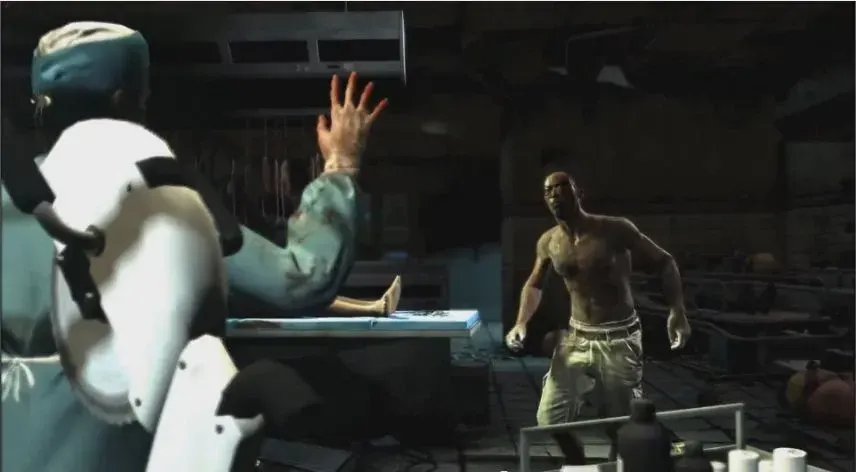
The Transplant Surgeon is a version of the Trolley Problem, worthy of its own separate examination because the answer is different.
Five patients are dying. Each needs a different organ. One healthy patient is available. If the surgeon kills that healthy patient and distributes the organs, five people live. If the surgeon does not, the five die.
Should the surgeon kill one to save five?
Most people say no. Modal Path Ethics agrees here.
At first glance, the numbers look familiar. One life against five. One future to be closed so that five futures may remain open. If the stripped Trolley Problem can be answered by redirecting the trolley away from five people and toward one, then why not do the exact same here, in one of its variants? Why not redirect one healthy body into five dying bodies? Doesn't this preserve more continuance in sum?
This is the exact problem with the Trolley Problem and family.
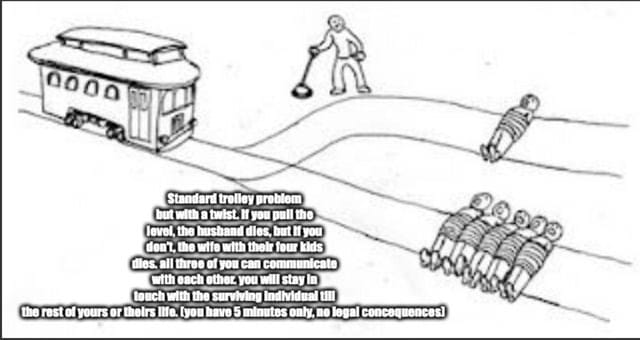
The Trolley Problem tries to trap moral reasoning strictly inside emergency arithmetic. The Transplant Surgeon shows us why that arithmetic is not enough to substitute for morality. In the trolley case, a destructive process is already underway. The agent encounters a moving harm and can redirect it. In the transplant case, the surgeon, through choice, creates a new predatory path inside a field that only works because patients can enter it without becoming raw material.
This is not a subjective disgust or decorative difference.
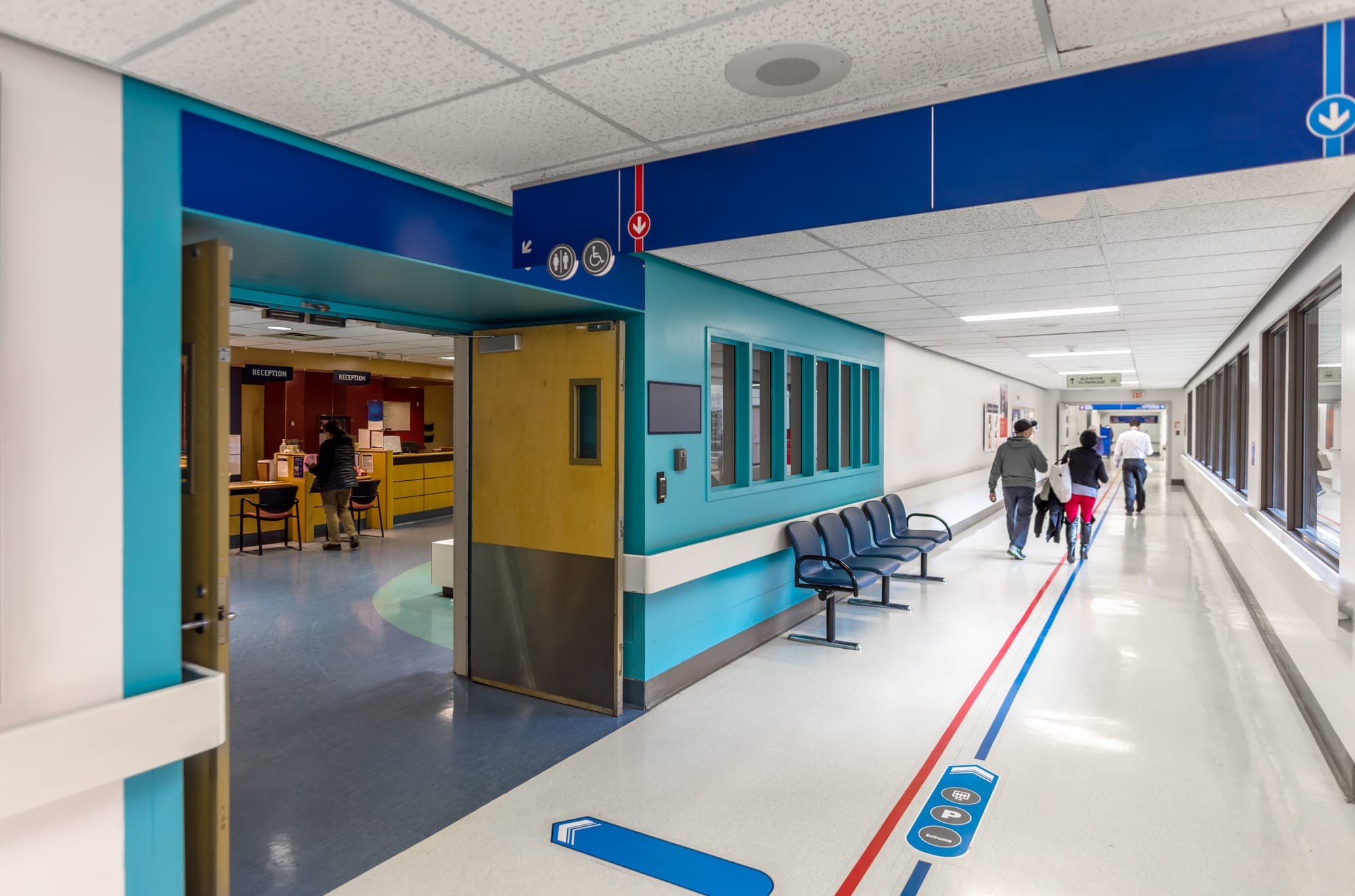
A hospital is not just some building full of bodies, tools, and useful biological parts. This is also a trust-field. People enter it because they are sick, injured, unconscious, afraid, dependent, or otherwise unable to repair themselves alone. They expose their bodies and futures to strangers because the medical field is supposed to be organized around care.
That trust-field is what makes the treatement inside the hospital reachable. Without it, many paths to care, and continuance, are narrowed across the entire conjoining field.
So this question is not at all about one life versus five.
If a surgeon may now kill one healthy patient for spare parts, the field changes. The hospital is now no longer a place where vulnerable people seek repair. It has become a field where the patient's vulnerability can be converted into more inventory.
This field is now oriented around predation of loci using care-language.
The five dying patients still matter. Their futures are being narrowed by whatever condition brought them to the hospital. Their need is still real. Their deaths are still real losses. A moral analysis that just shrugs at them because it wants clean hands and clarity is not serious.
The need of those patients still does not automatically create a path through another person’s body.
A dying patient’s future has weight. So does the future of the healthy patient. So does the medical field that allows any patient to become treatable in the first place. The surgeon does not manipulate six interchangeable containers of arbitrary future value. The surgeon stands inside a role, an institution, a practice, and a relation of entrusted vulnerability. That structure is all part of the field.
This thought experiment works to erase it, which erases its own purpose. Next.