Applied Case: The Aug Incident of 2027
Spoilers for Deus Ex: Human Revolution and The Missing Link.
Modal Path Ethics reaches the end of Human Revolution through a ventilation shaft.
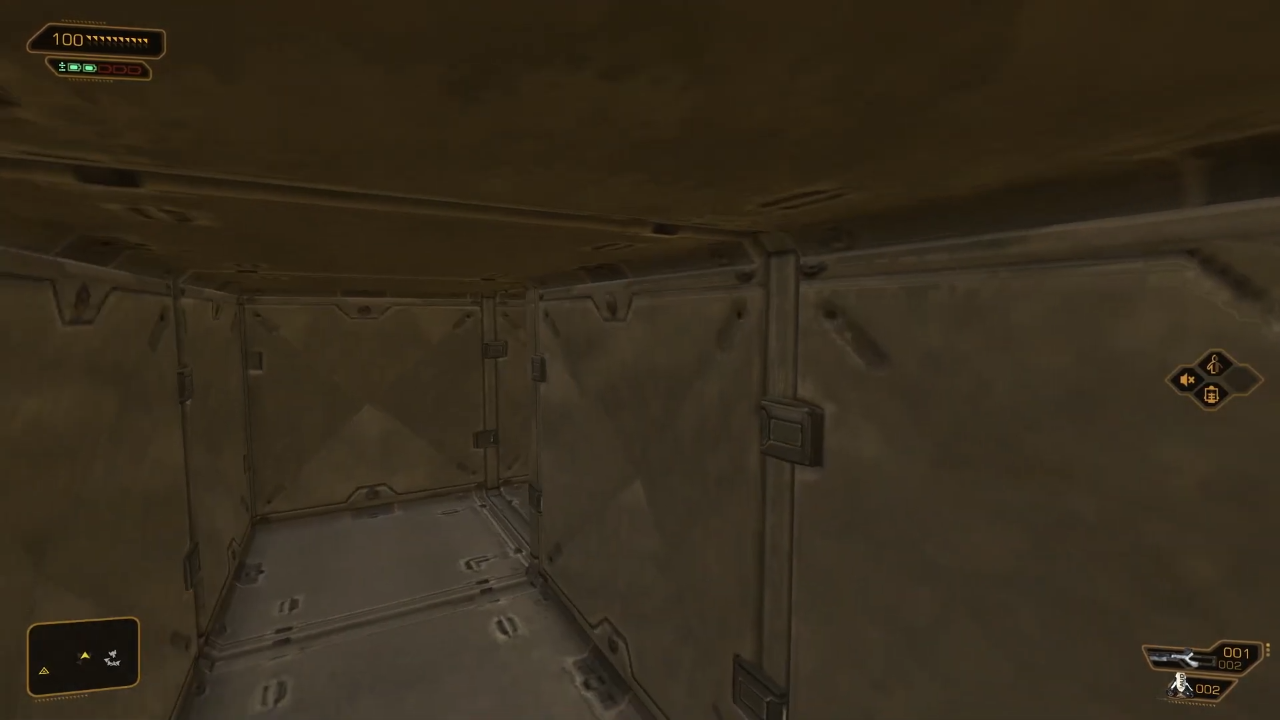
This is appropriate.
Adam Jensen has spent the better part of the game learning that every official doorway in the year 2027 is decorative. The real entrance is usually behind a vending machine, above an exposed pipe, beneath a desk, inside a wall, or through one of the international air-duct systems apparently installed by the United Nations for the convenience of heavily augmented ethicists.
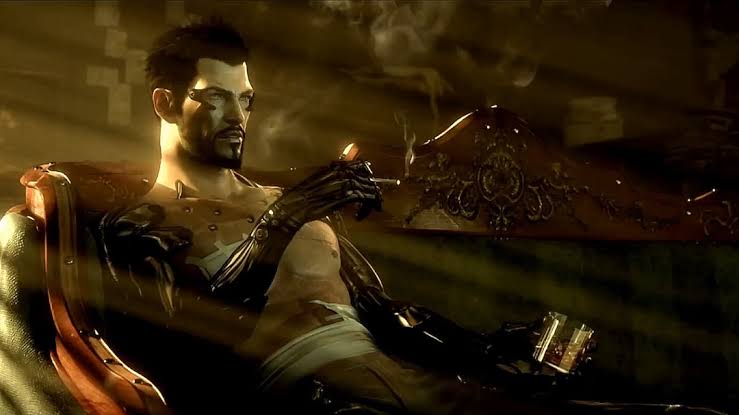
Panchaea is collapsing around him.
The installation groans beneath the Arctic water. Alarm light moves across black metal. The people still alive inside the structure have been driven into murderous frenzy by a signal carried through their own augmentation biochips. Hugh Darrow has turned the global medical interface into a command channel. Zhao Yun Ru has tried to seize the system. The Hyron Project has already placed human bodies inside the machinery as processing infrastructure. Everyone involved has apparently decided the human future needed more wires and fewer witnesses.
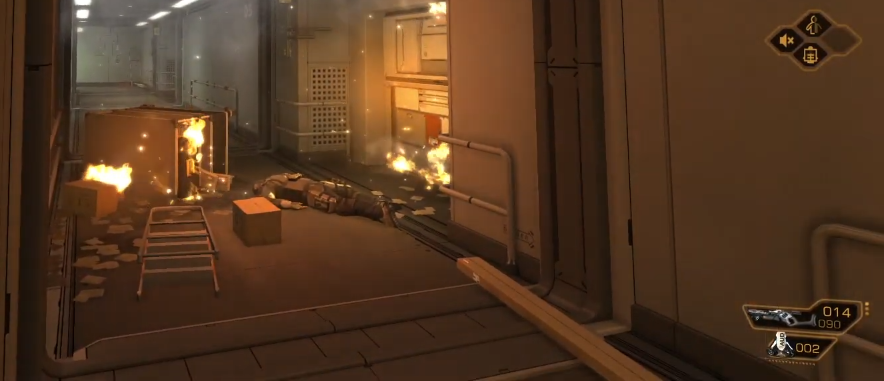
The signal is stopped.
Then, the real emergency begins.
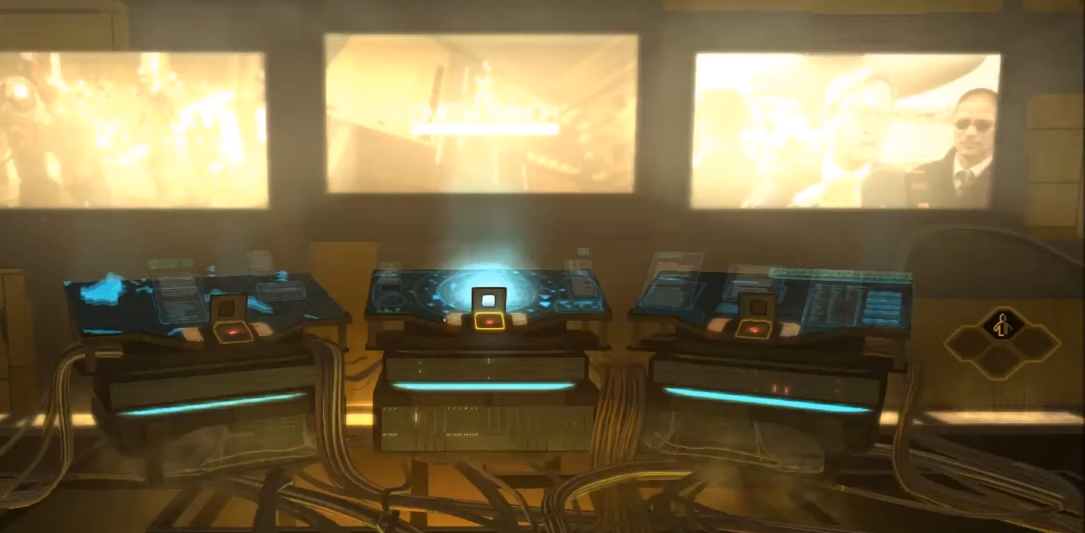
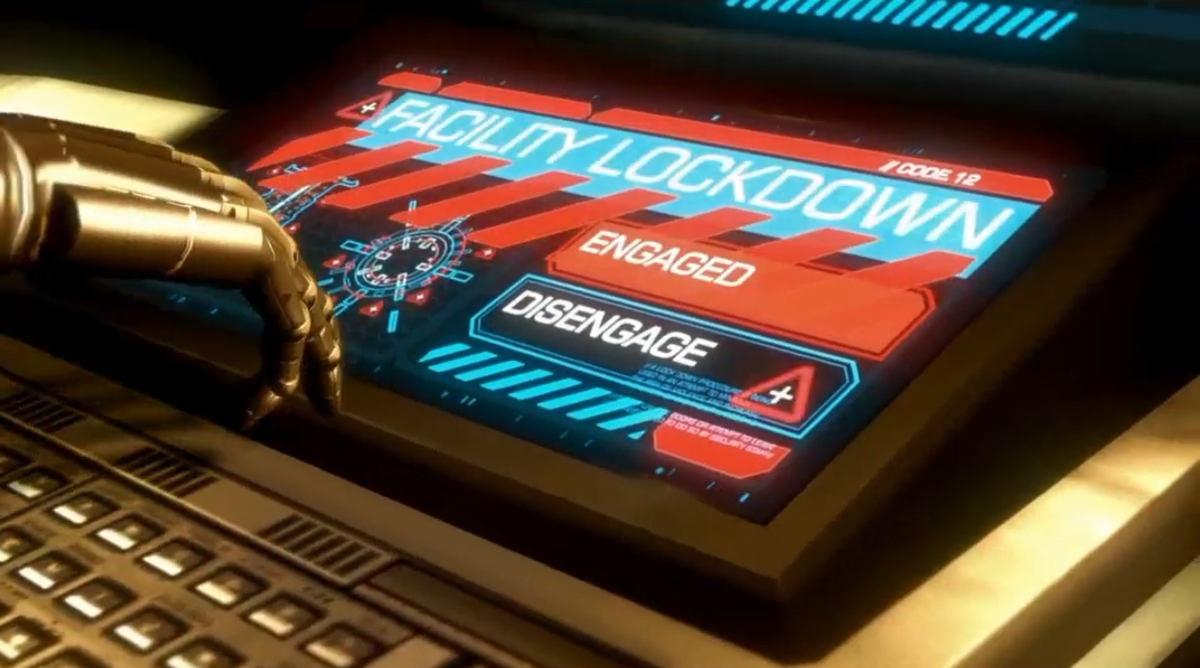
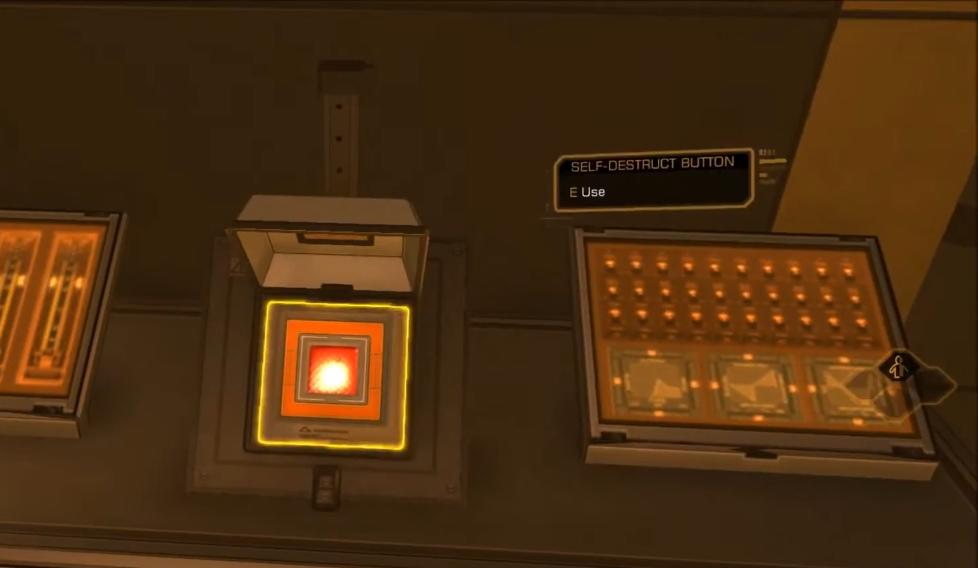
A console opens.
Four answers appear.
Human civilization has become clickable.
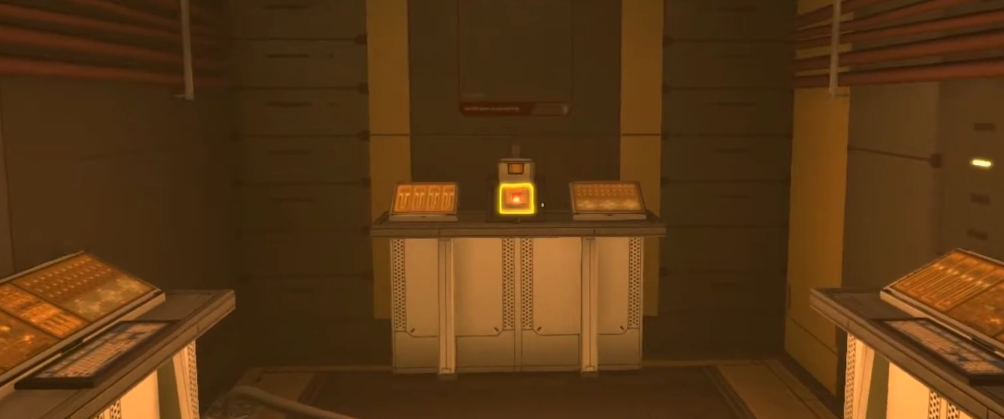
Modal Path Ethics requests an evidentiary appendix.
But the console does not have that button.
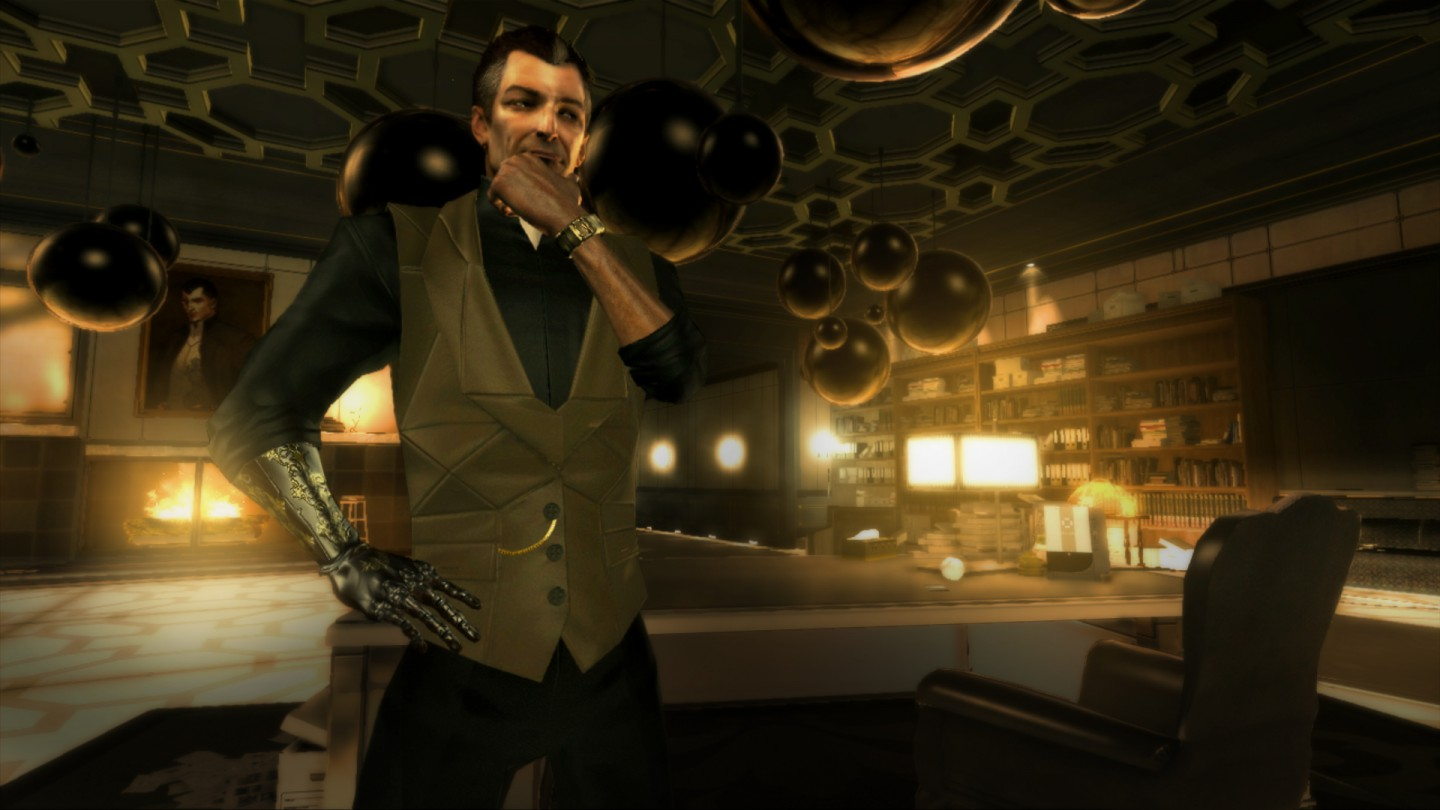
It has David Sarif.
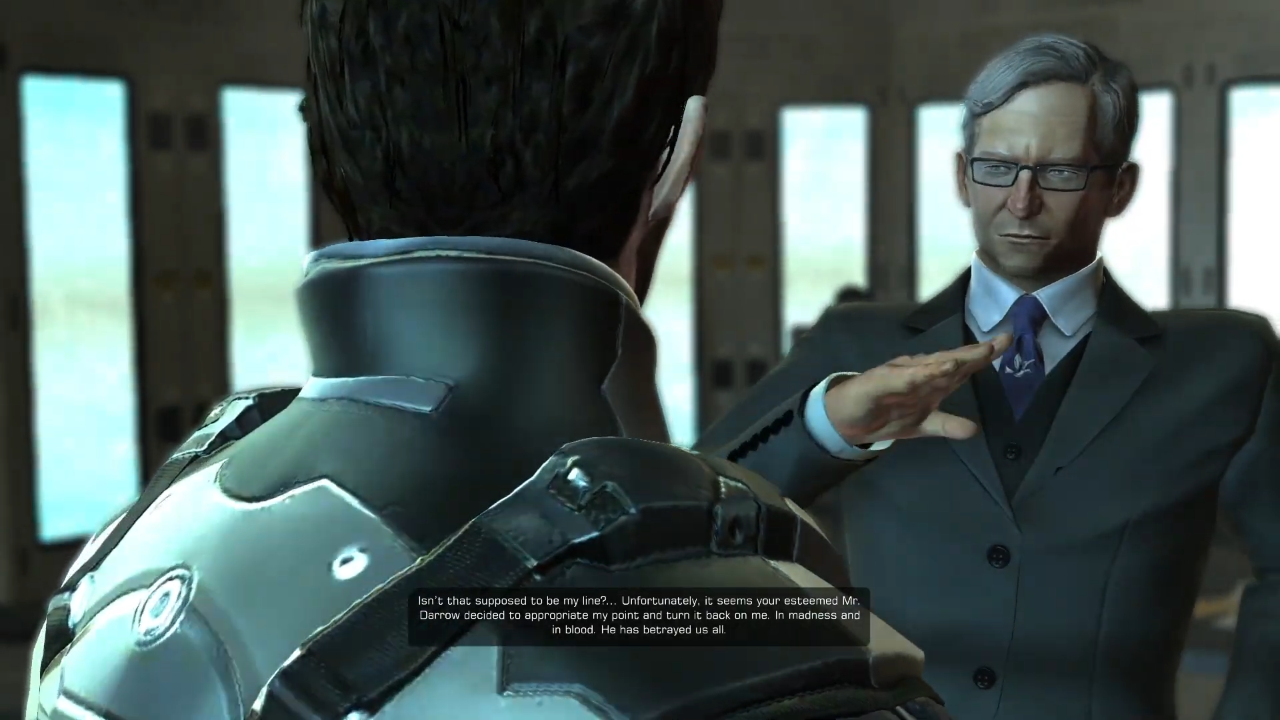
It has William Taggart.
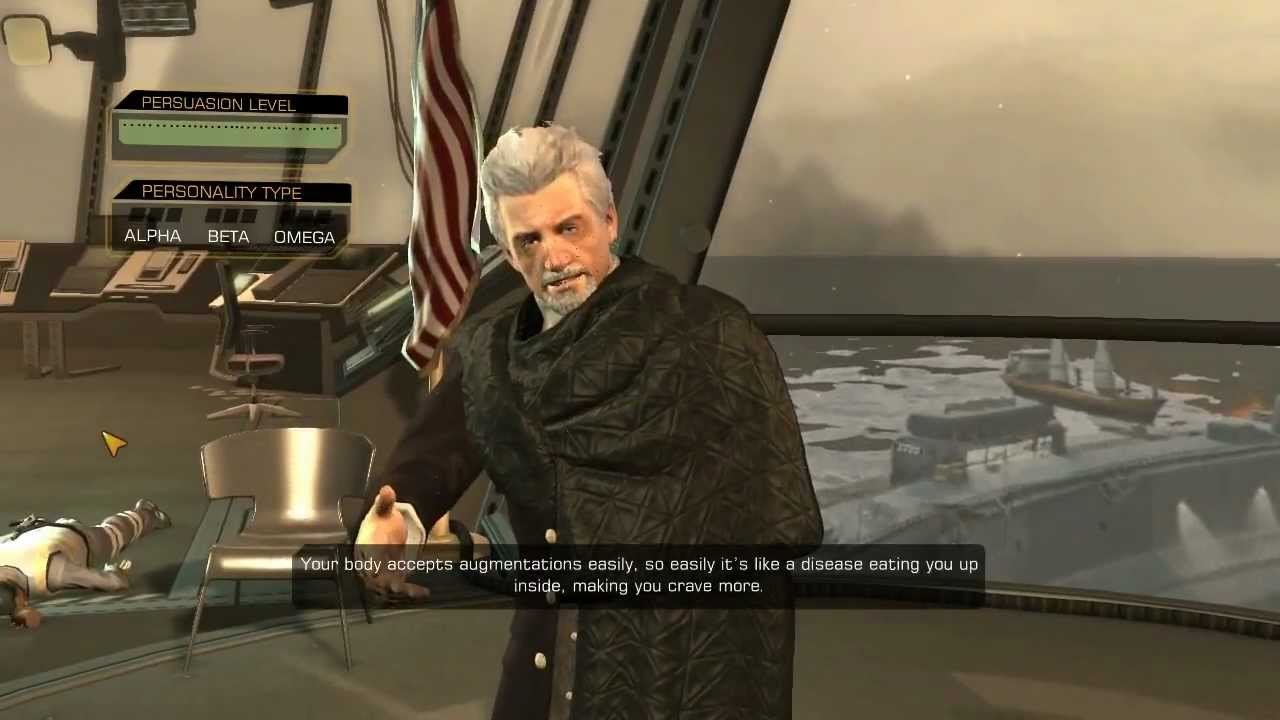
It has Hugh Darrow.
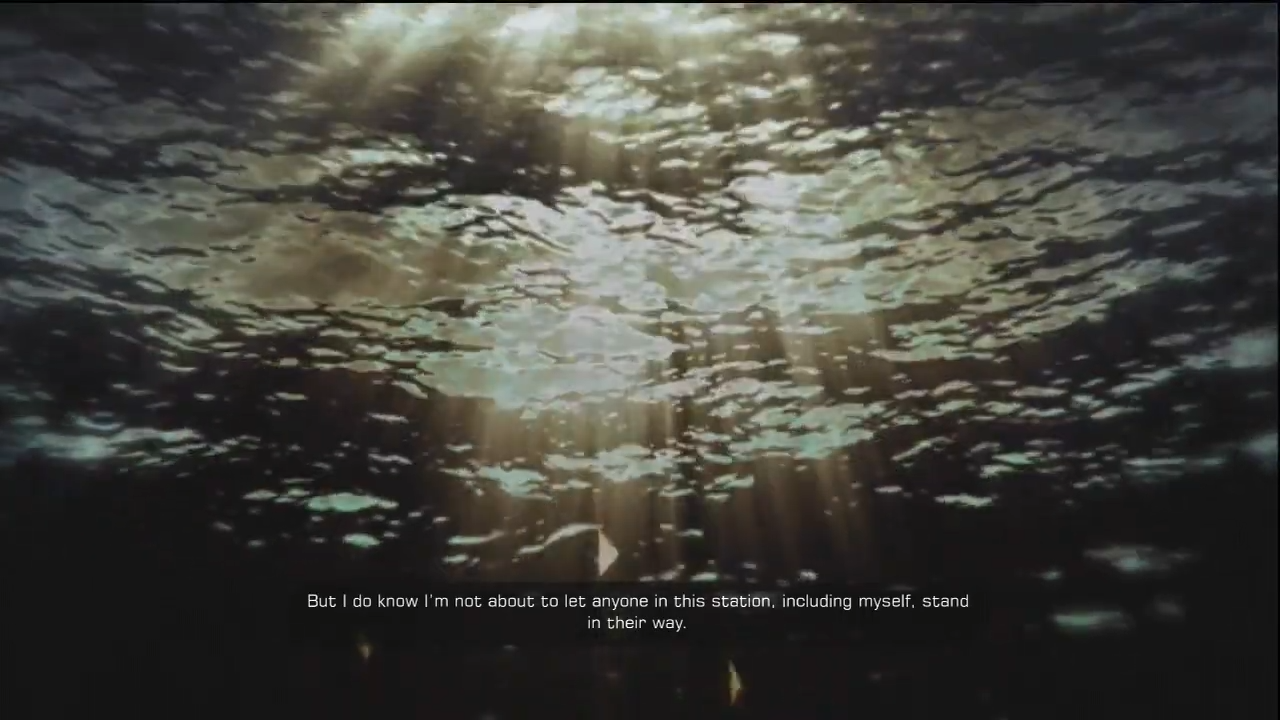
It has a fourth option that destroys Panchaea, kills everyone still inside it, and leaves no surviving person at the center of the event to tell the world what happened.
Four futures. Four stories. Four attempts to decide what billions of people will be permitted to understand about the catastrophe that has just entered their bodies, their families, their hospitals, their cities, and their fear.
The catastrophe has happened twice.
First, augmented people were turned against the world.
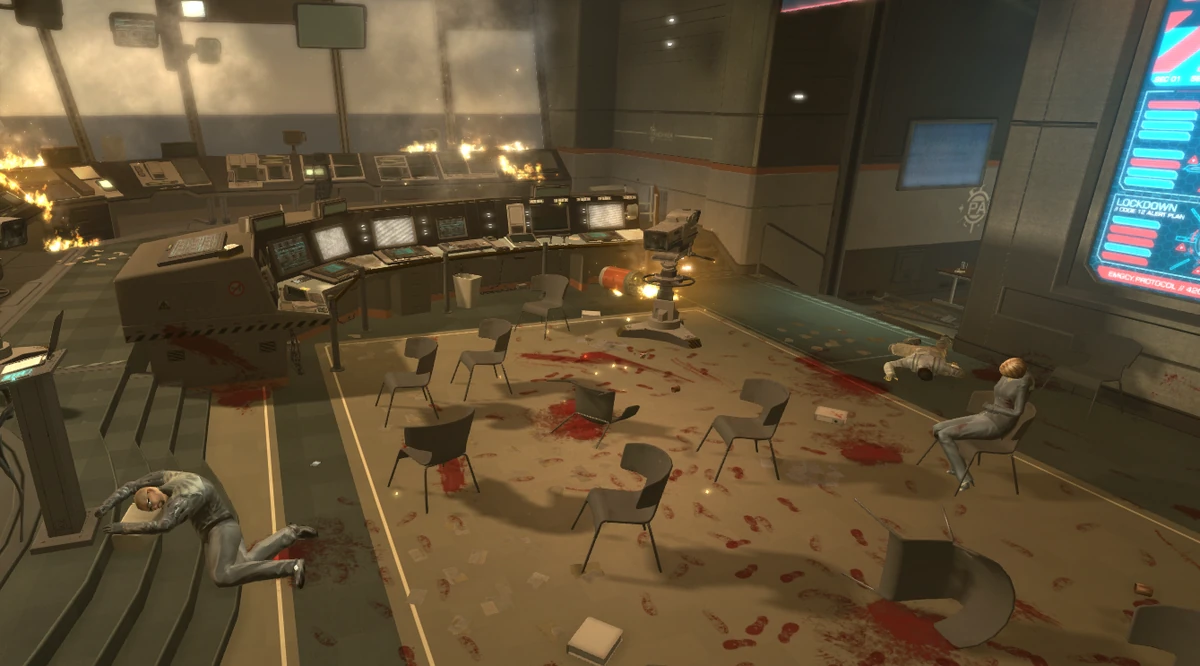
Now the world must be told what the hell that meant.
Modal Path Ethics looks at the buttons.
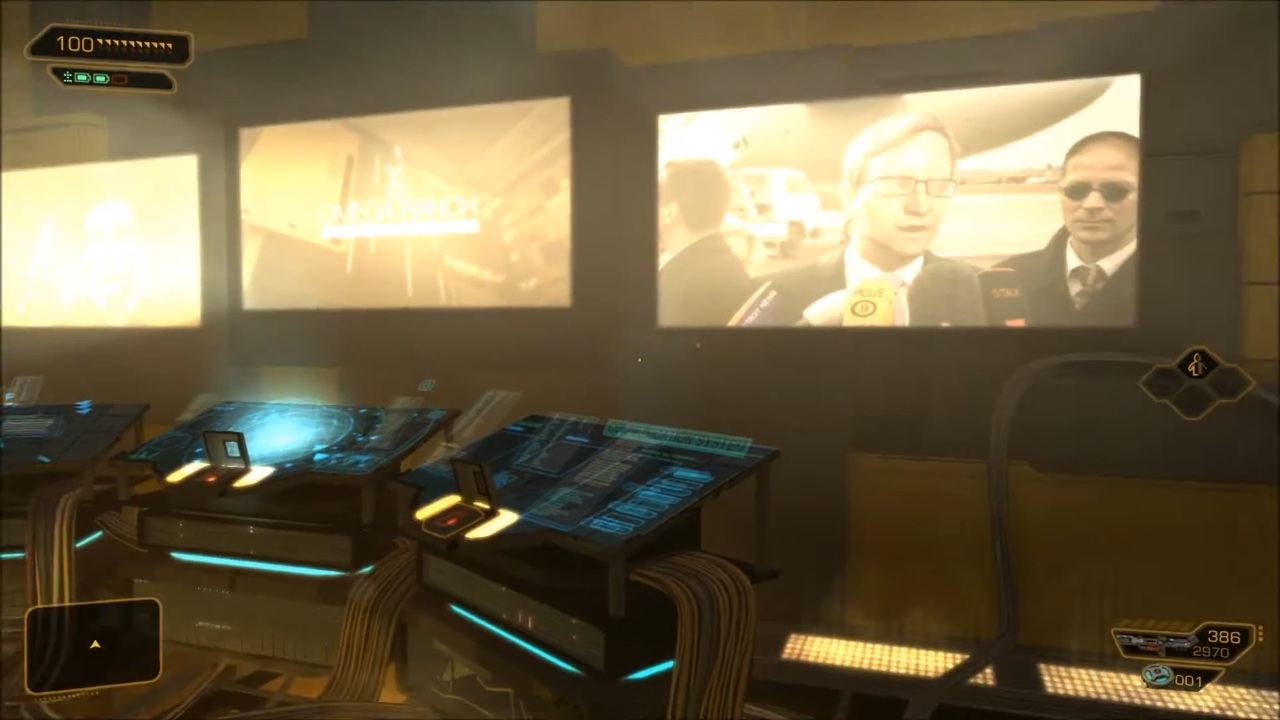
The buttons look expensive.
Somewhere in the installation, a pipe is hissing.
For one hopeful moment, Modal Path Ethics assumes there is another vent.
The Body.
Before Panchaea, before Darrow, before the biochip recall, before the world acquired a single terrible event around which every faction could build its preferred future, there was Adam Jensen’s body.
The body was almost destroyed at Sarif Industries.
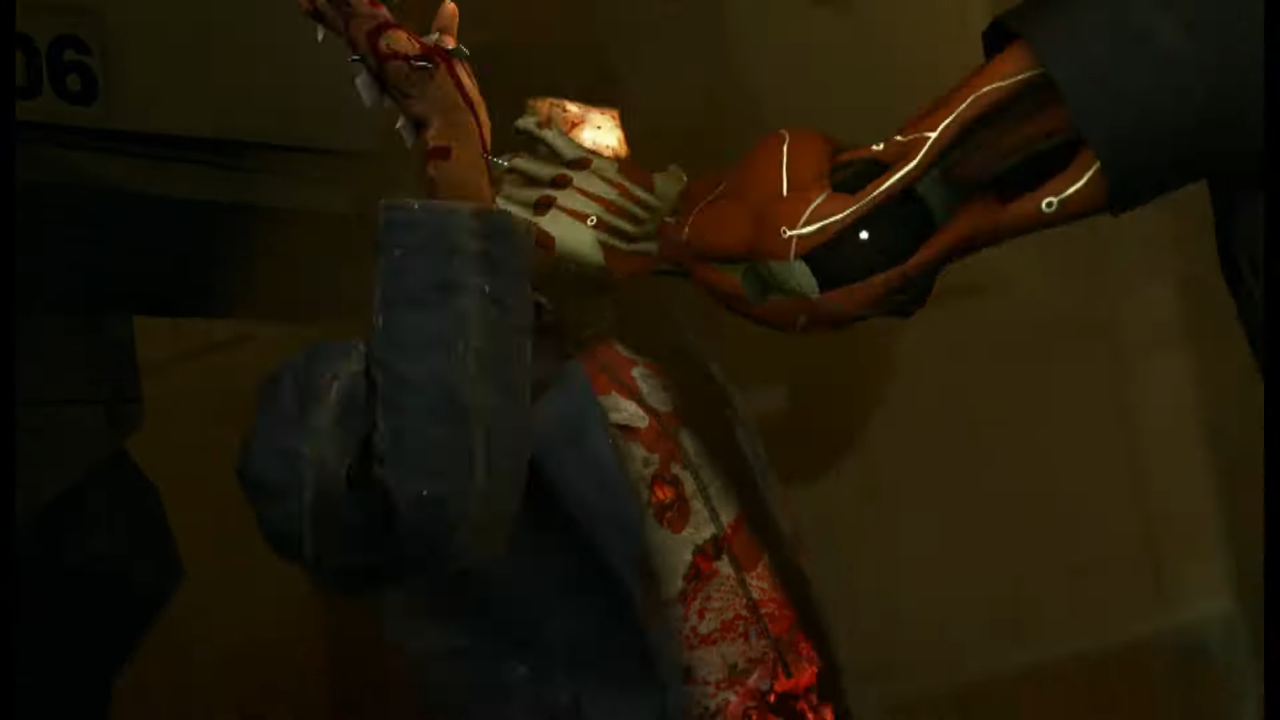
Then David Sarif saved it.
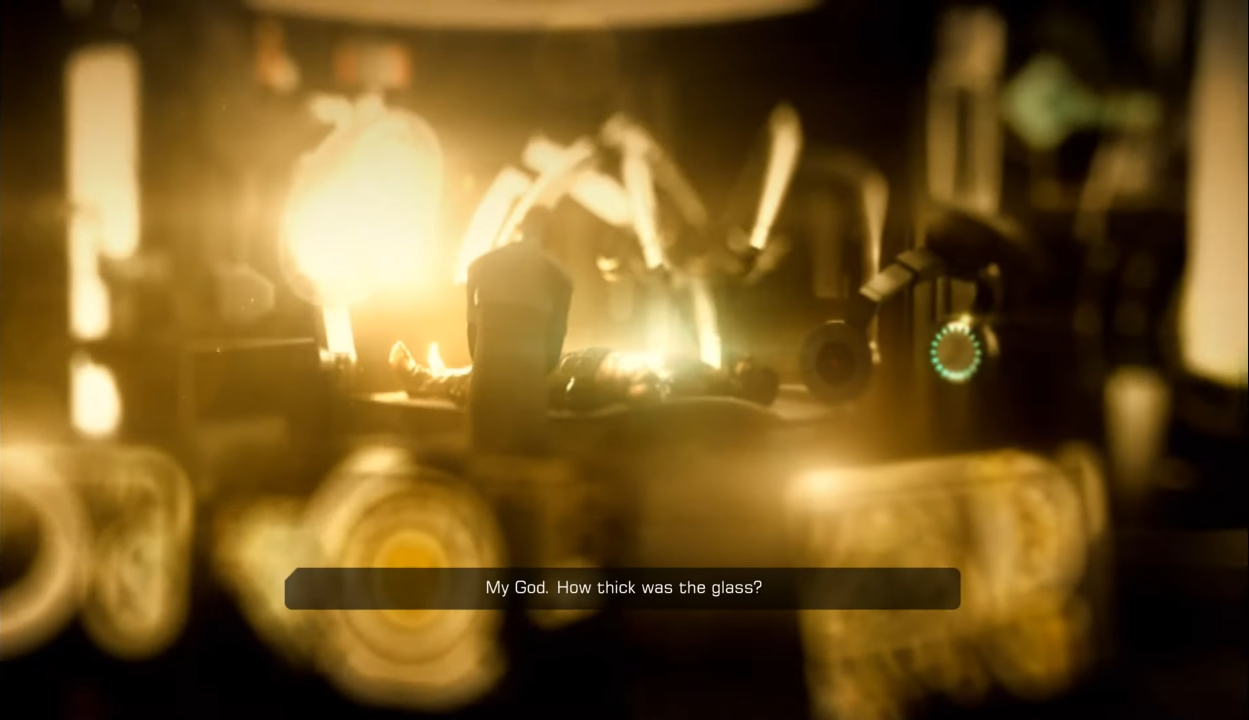
That sentence is true.
It is also not large enough.
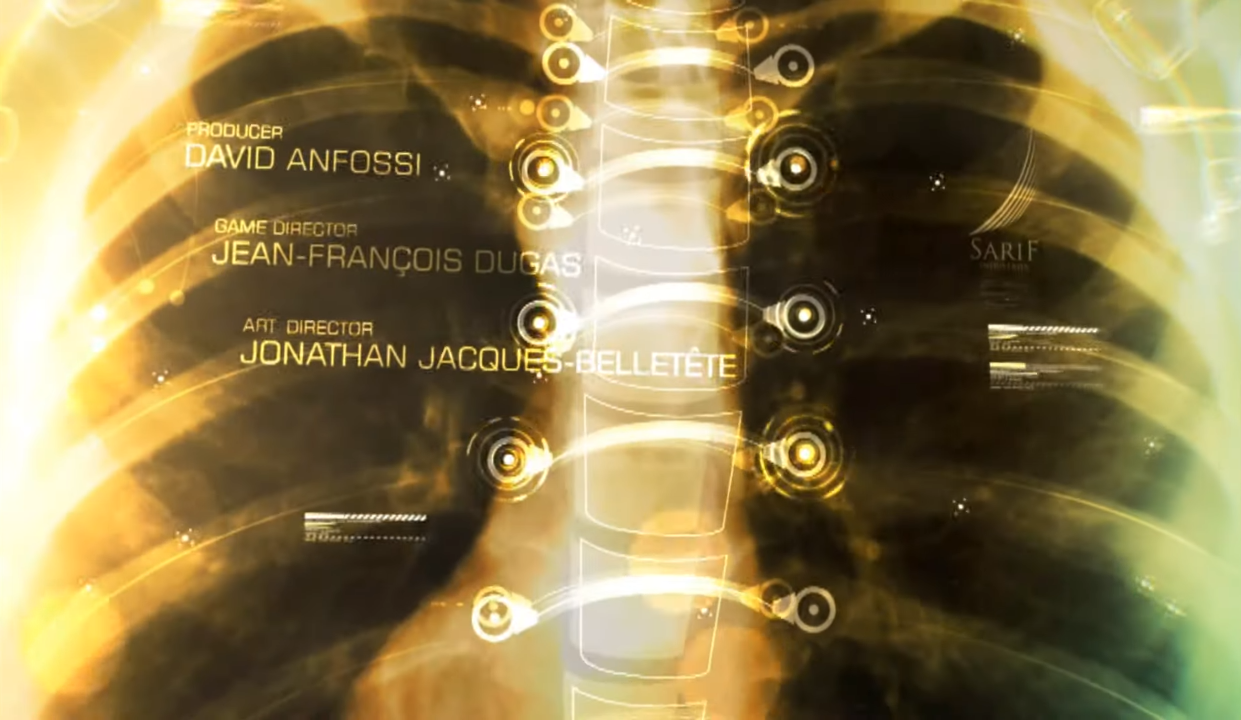
Jensen wakes after six months with arms, legs, lungs, eyes, skin, bones, nervous interfaces, weapons, processors, and a great deal of corporate optimism that were not there before. He had authorized augmentation where medically necessary. Sarif’s interpretation of necessity arrived with blades inside the forearms.
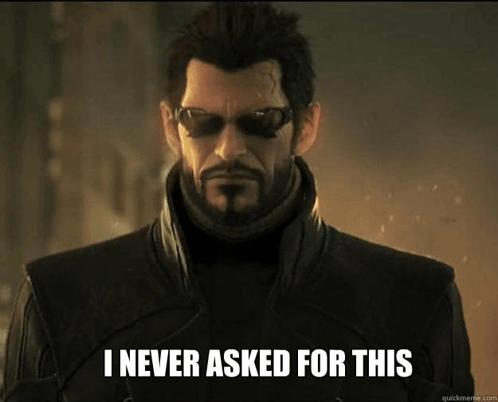
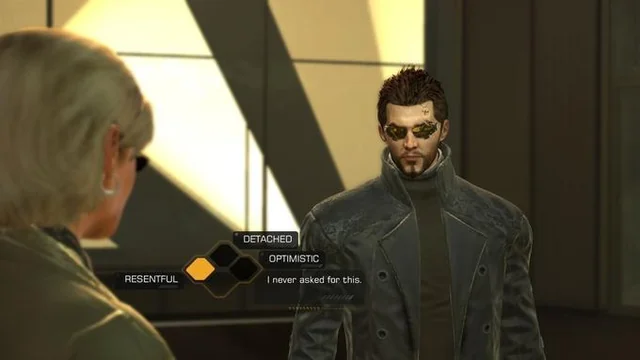
“I never asked for this.”
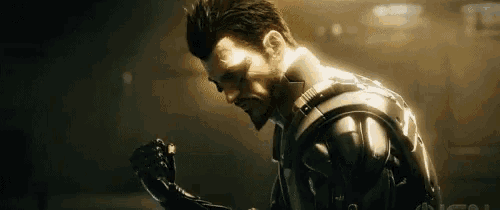
The line became funny because the voice is so severe, the sunglasses are indoors, and the entire game looks as though a cathedral has acquired a venture-capital division.
The line remains serious.
Adam Jensen is the augmentation debate before the debate becomes public policy.
- His original body was closed by violence.
- His life was preserved through extraordinary technical intervention.
- His restored agency came attached to alterations he did not meaningfully select.
- His continued body became Sarif property in every way that ownership can operate without appearing on a title.
- His unusual biology became the hidden ground of Megan Reed’s research into ending rejection and Neuropozyne dependence.
In the game’s world, most augmented people require a scarce, expensive immunosuppressant to prevent rejection. Sarif’s researchers are attacked just before announcing a way around that dependency; Jensen later learns that Megan’s work was based on his unusual DNA.
He is living evidence for the expansion augmentation can make reachable. He is also living evidence for how quickly a life-saving instrument can acquire jurisdiction over the person it saved.
The game’s central dispute therefore cannot be divided cleanly between natural humanity and technological violation.
The unaugmented Adam Jensen is almost dead.
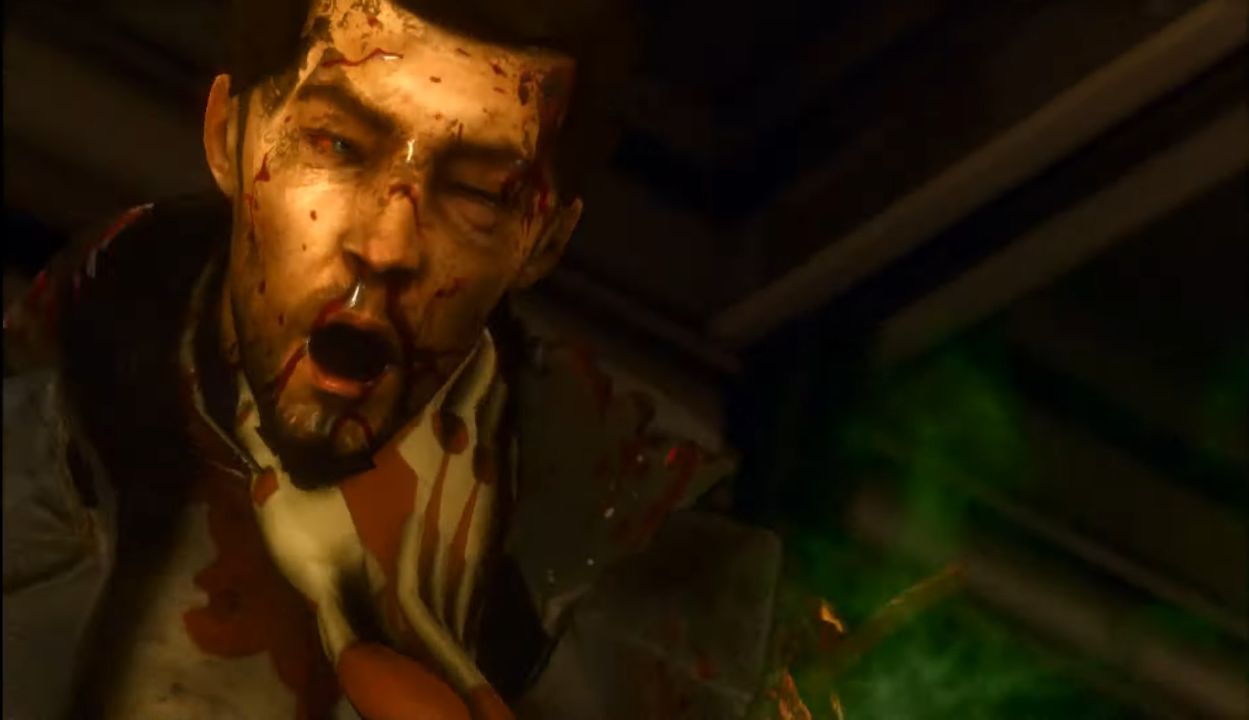
The augmented Adam Jensen is alive, capable, altered, weaponized, employable, medically strange, and carrying a future other people have already begun to design around him.
That is the field.
- David Sarif sees the reopened future.
- Hugh Darrow sees the captured body.
- William Taggart sees the need for control.
Each man sees something real.
Each man is preparing to make their fragment sovereign.
SARIF MANUFACTURING PLANT.
Gold light.
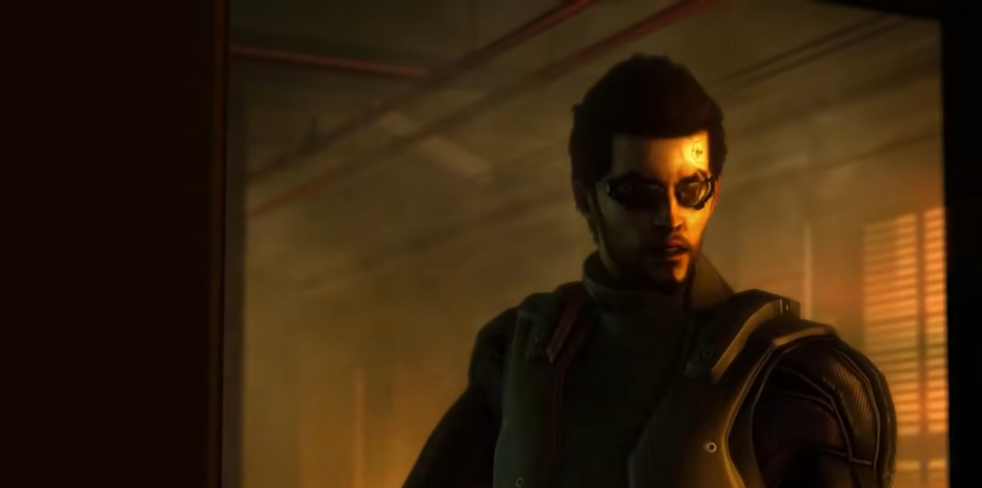
A gun near a hostage’s head.
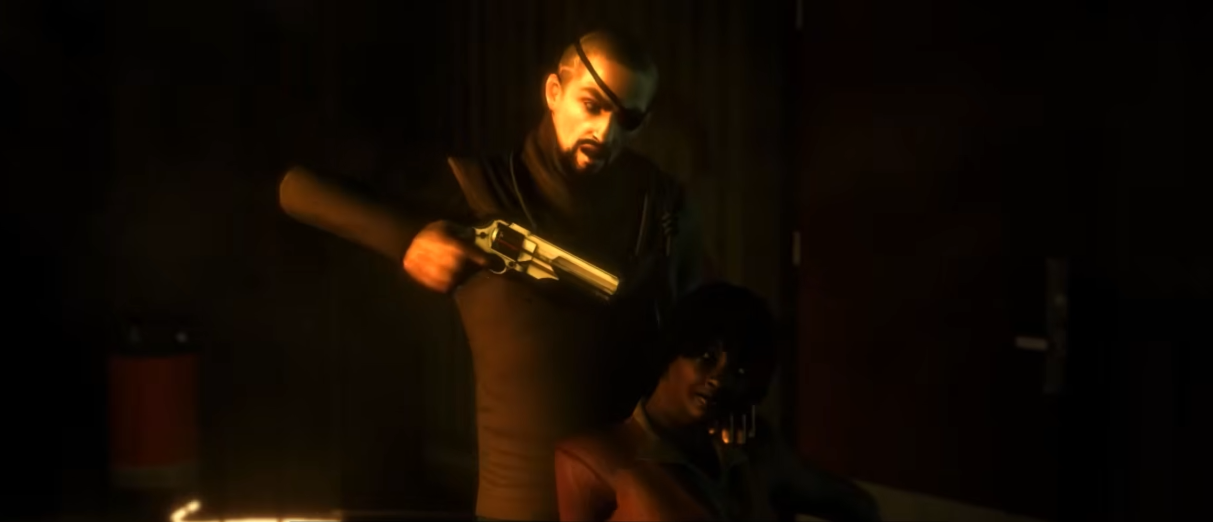
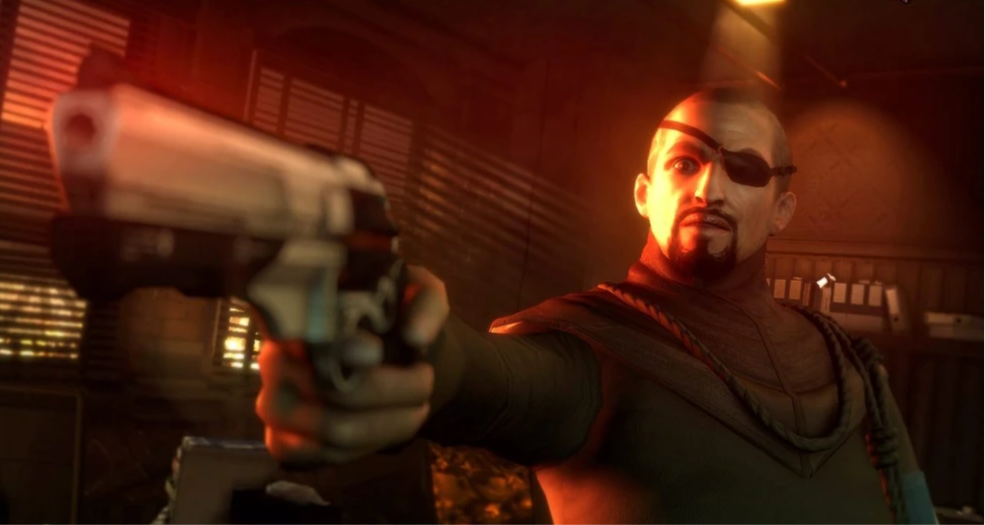
Zeke Sanders has taken Josie Thorpe into a room and turned her body into the final argument of a cause.
Sanders belongs to the anti-augmentation field. He has real reasons to distrust Sarif Industries, corporate power, manufactured dependency, technical inequality, and a future in which the unmodified person is slowly translated into an obsolete labor category.
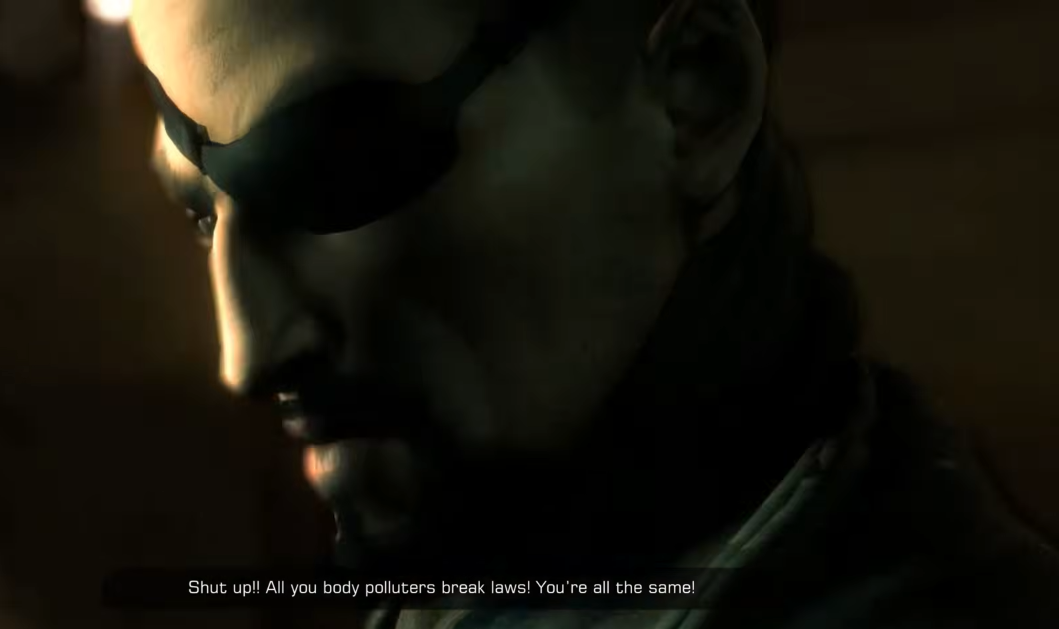
Then he takes a hostage.
Modal Path Ethics has encountered this structure before.
- A wound becomes a claim.
- The claim becomes leverage.
A person becomes the surface through which the claim tries to make itself undeniable.
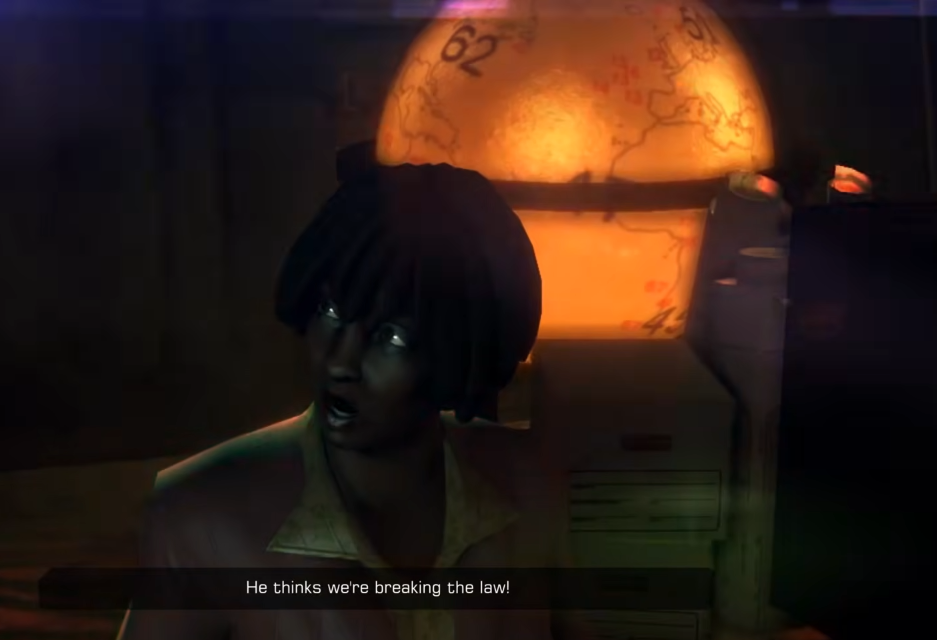
The dialogue interface appears.
This is the first important console in the game.
It looks smaller than Panchaea because only two people are standing beside it.
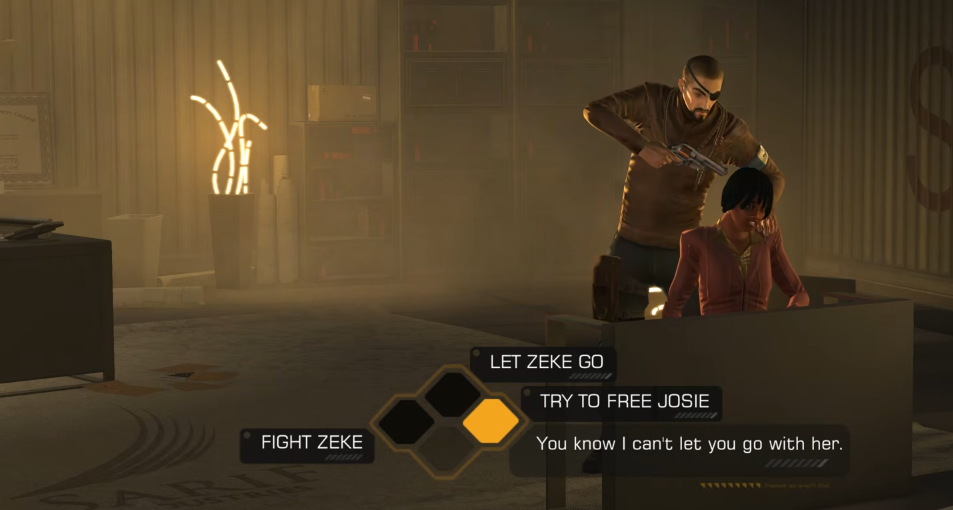
The scale is misleading.
Jensen can treat Sanders as a terrorist-shaped obstacle. He can kill him and save Josie if the shot is clean. He can fail the conversation and watch the hostage die.
He can also listen closely enough to the frightened man behind the role, expose the betrayal surrounding his operation, and make a path reachable in which Josie lives and Sanders leaves alive.
Modal Path Ethics takes the last route.
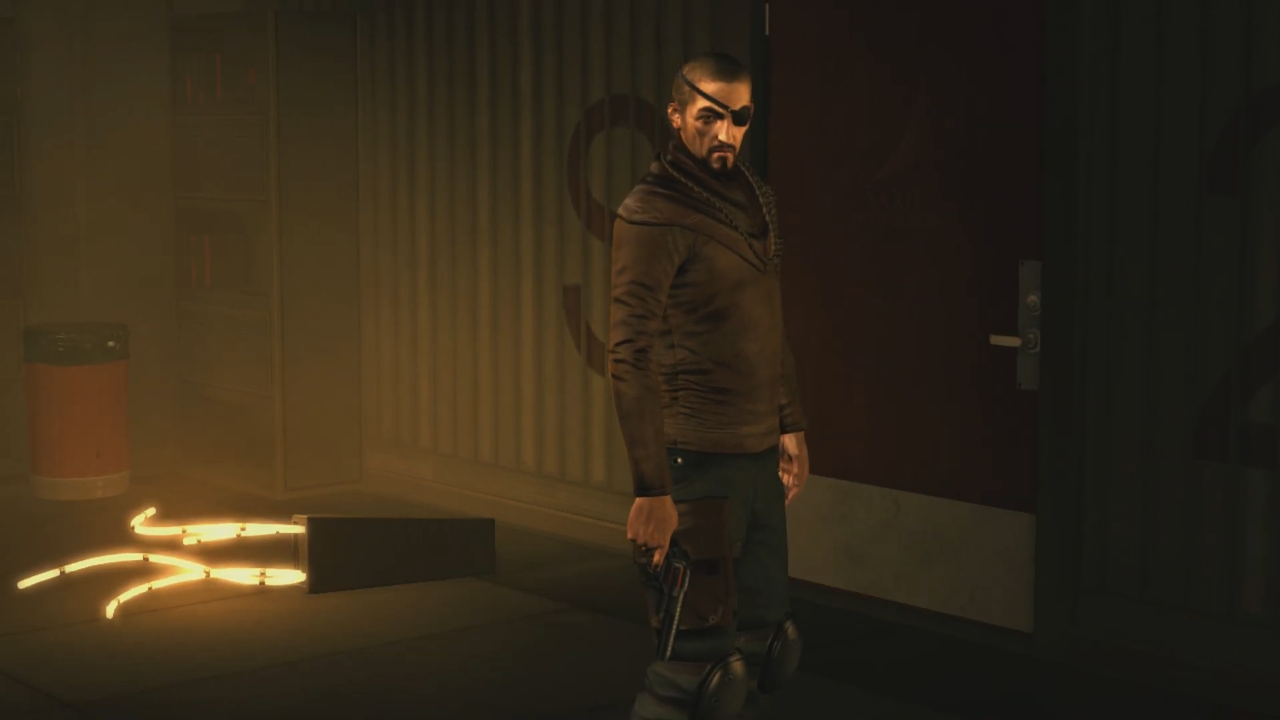
This does not vindicate Purity First.
It does not vindicate Sarif Industries.
It preserves the hostage, refuses the convenient killing, and keeps the wounded antagonist from becoming a corpse that every side can use more easily than the living man.
The first lesson of Human Revolution enters quietly:
A faction can be wrong about the person in front of it while remaining right about part of the field behind her.
That lesson is going to survive all the way to Panchaea.
The Cost.
Hengsha has two cities.
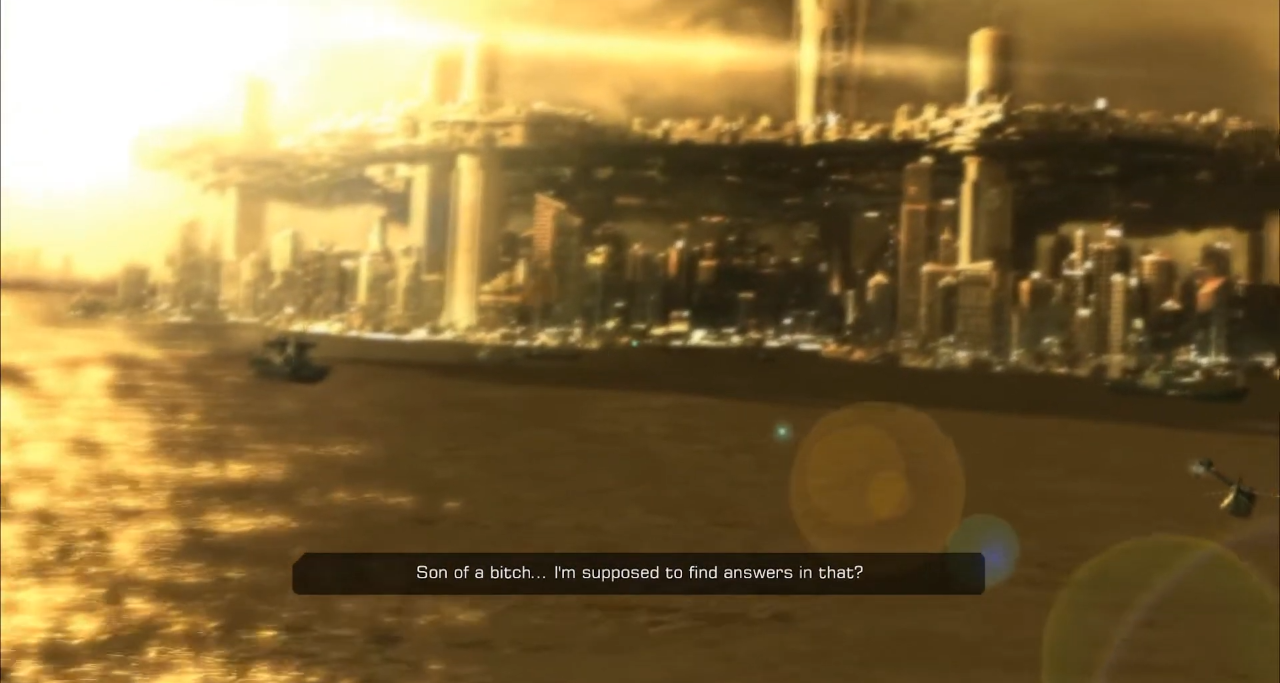
The upper city hangs over the lower city like a second sky built by people who had grown dissatisfied with the first one.
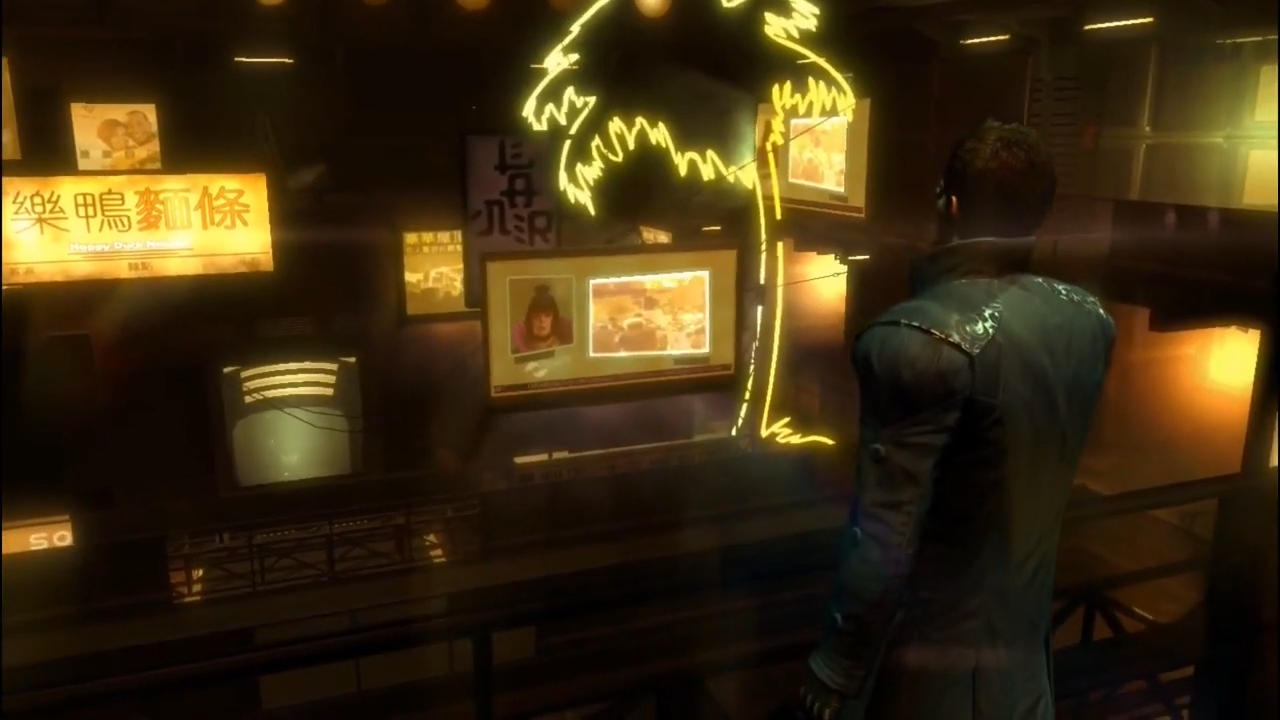
This is the game’s entire augmentation argument in architecture.
Power literally occupies the higher layer.
Below it, people live inside the shadow of a future marketed as elevation.
Jaya acquired a social enhancement implant because remaining competitive required capabilities she did not possess. The implant was financed through Tong Si Hung’s organization. The debt kept going after the purchase had supposedly ended. A tool that opened employment and social access became a claim held against her body.
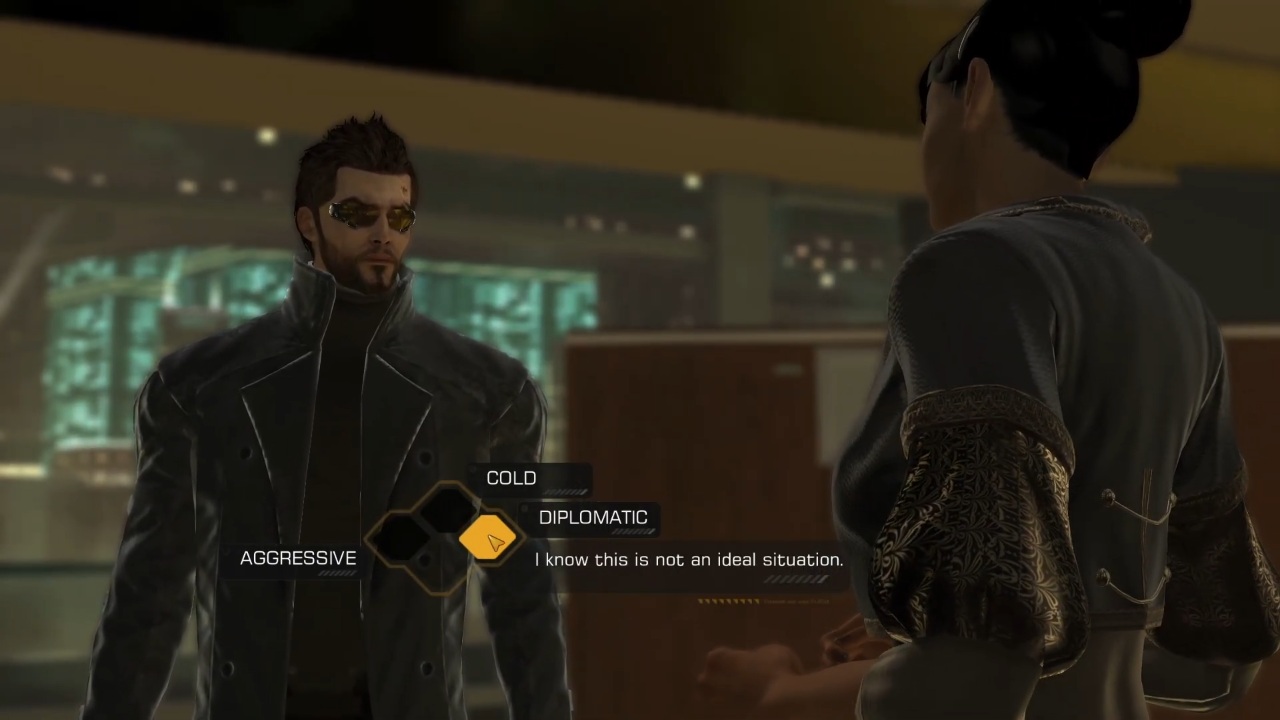
The collection request reaches Jensen with three familiar possibilities:
- make her pay;
- take the implant;
- absorb the debt.
The implant can be removed.
This is technically true.
The future it opened in her life cannot be removed with equal neatness.
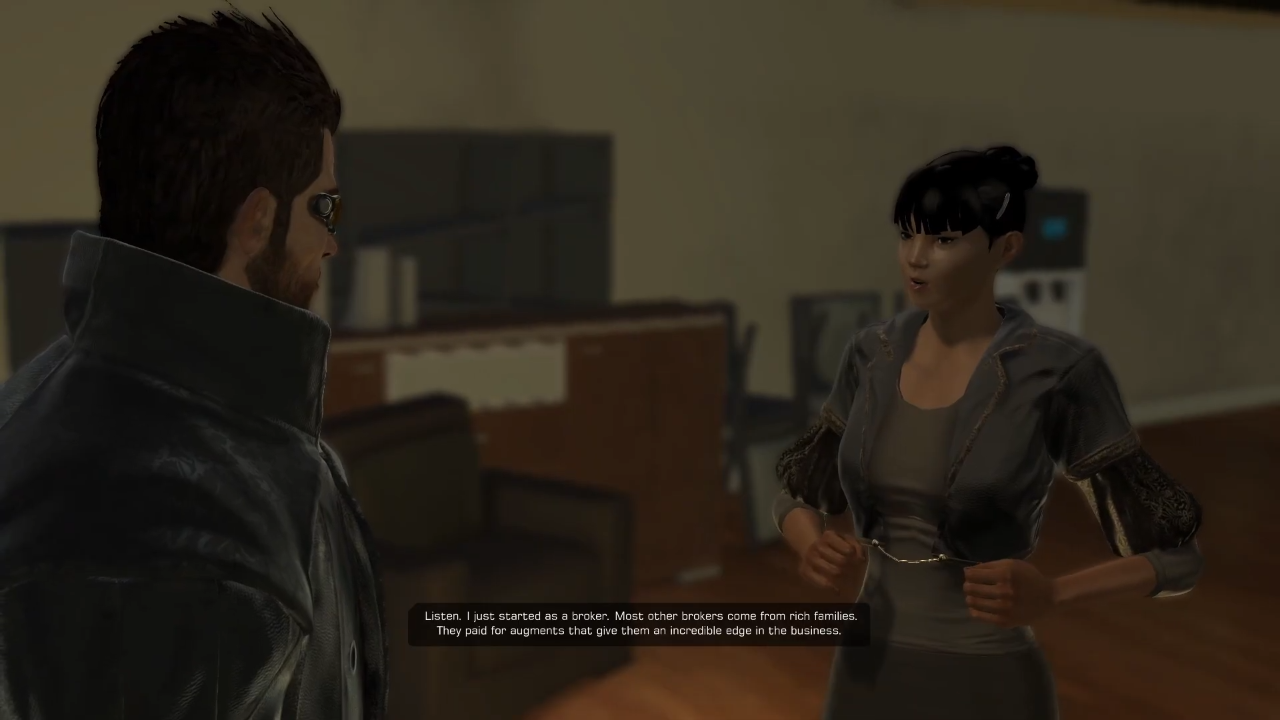
A labor field has already taught her that ordinary participation requires technical enhancement. A lender has converted that requirement into leverage. Returning the implant would satisfy the account by closing the pathway for which the debt was incurred.
- The arithmetic would balance.
- The person would carry the correction.
Modal Path Ethics pays the debt.
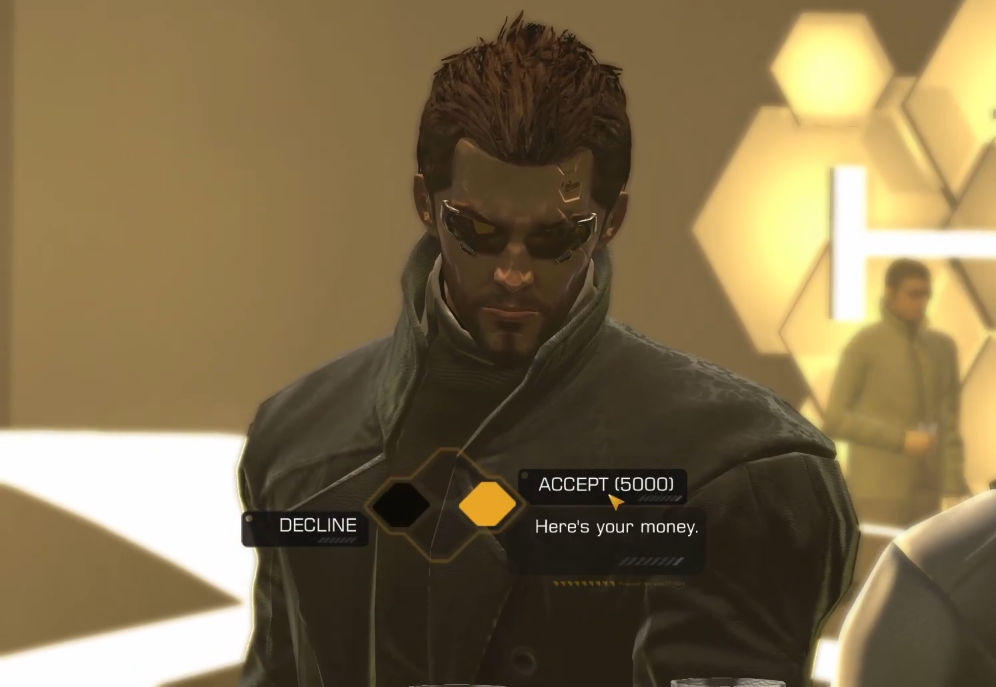
This is not economic reform.
This is five thousand credits and one fewer human body functioning as collateral.
The game awards experience.
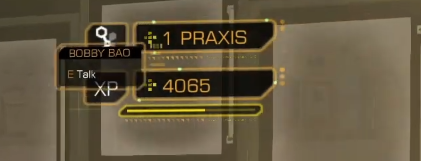
Modal Path Ethics regards this as insufficient regulatory action.
Then Faridah Malik’s aircraft goes down.
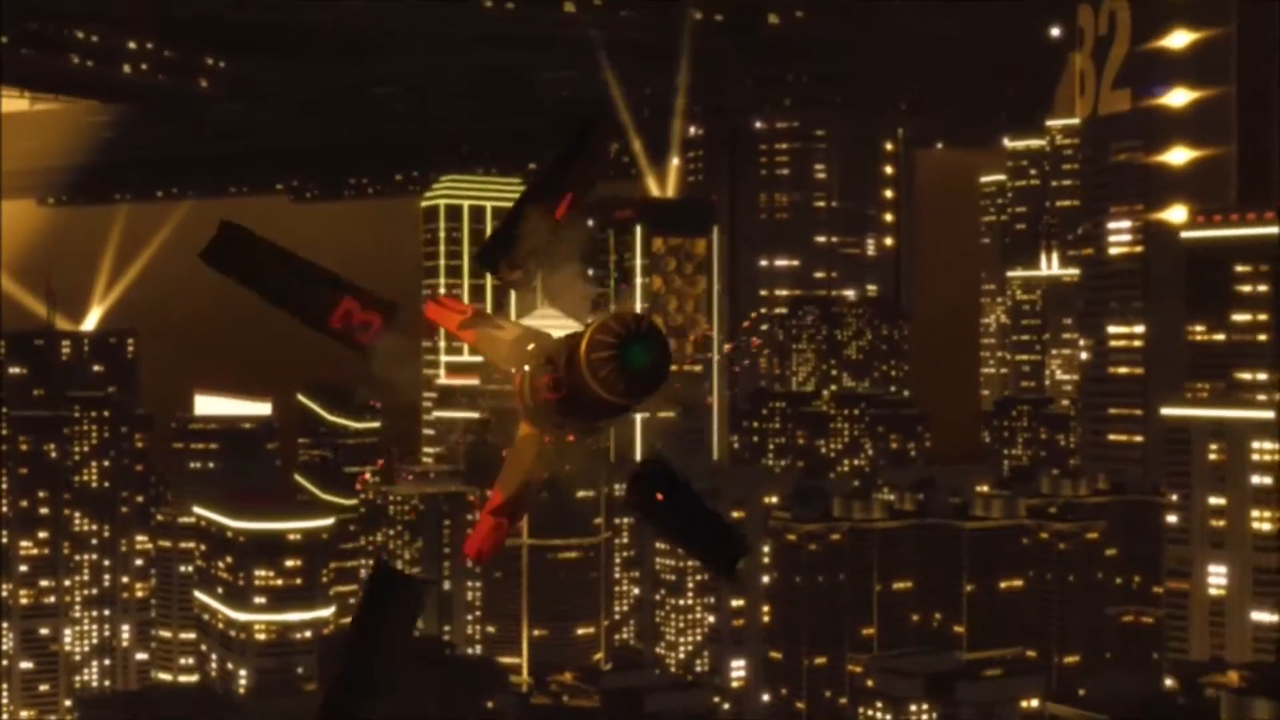
The objective marker points toward the elevator.
The combat field says move.
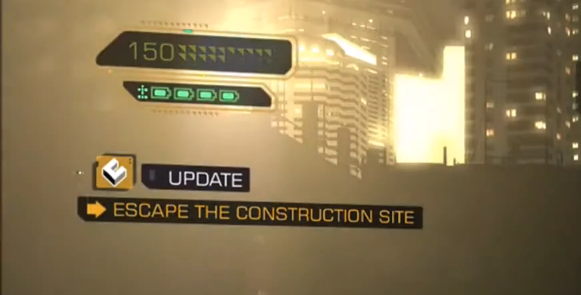
The mission says the pilot has completed her function by delivering Jensen to the next place. The enemies are numerous. The rescue is optional. The clean route leaves her inside the wreckage so the plot can continue on schedule.
Modal Path Ethics turns around.
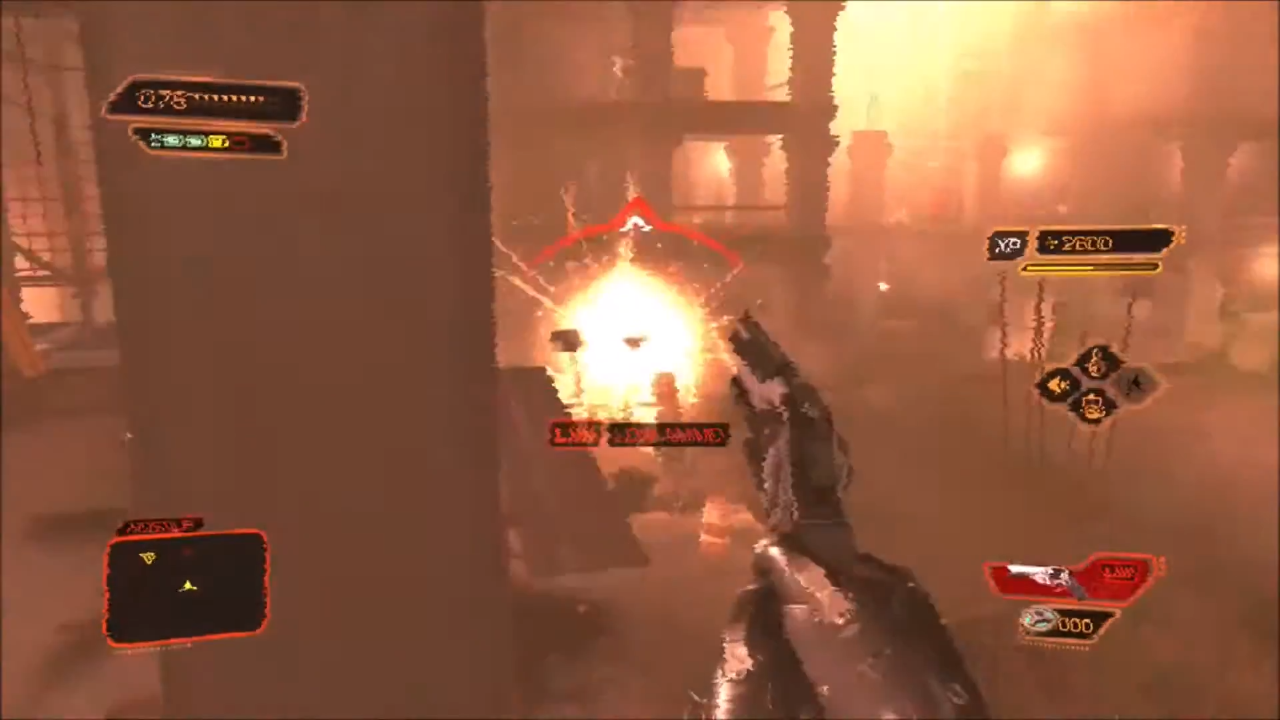
Malik is still a person after she stops being transportation.
This is an irritating standard for mission design.
It keeps saving lives, though.
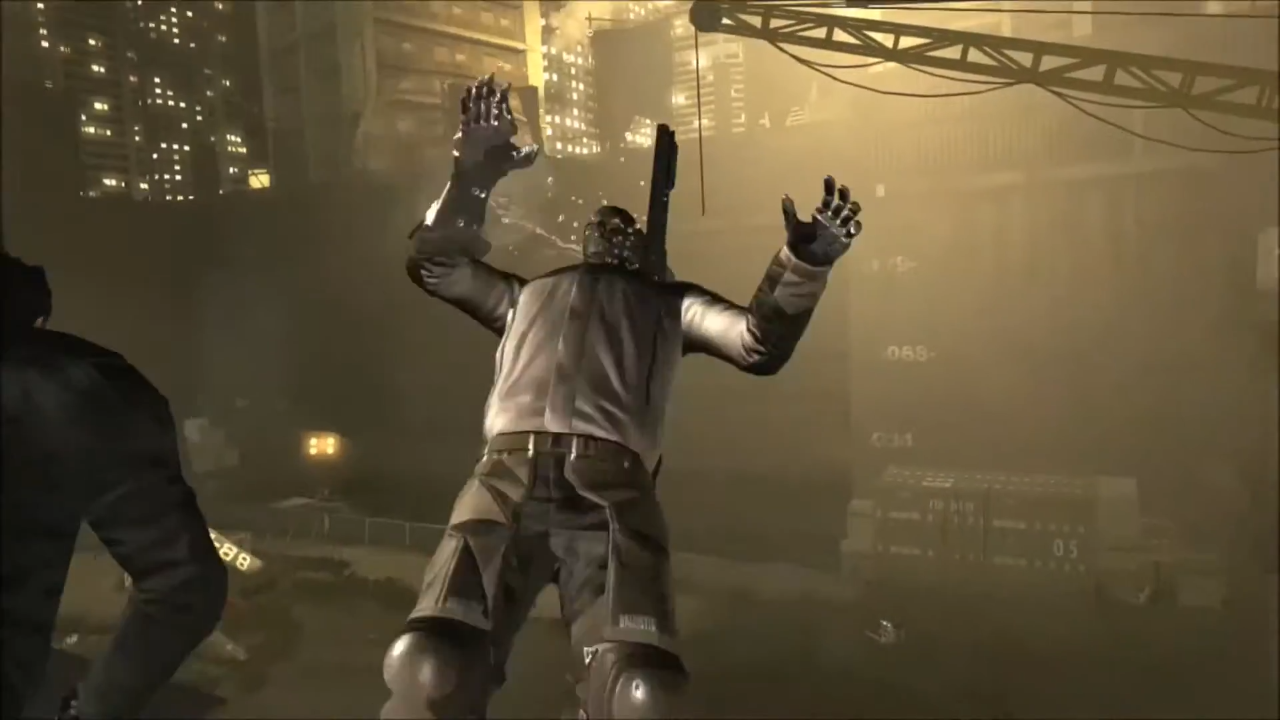
The fight is ugly. The helicopter takes fire. Jensen has to move quickly enough that the technically optional person does not become permanently unavailable while the player optimizes the official objective.
Malik survives.
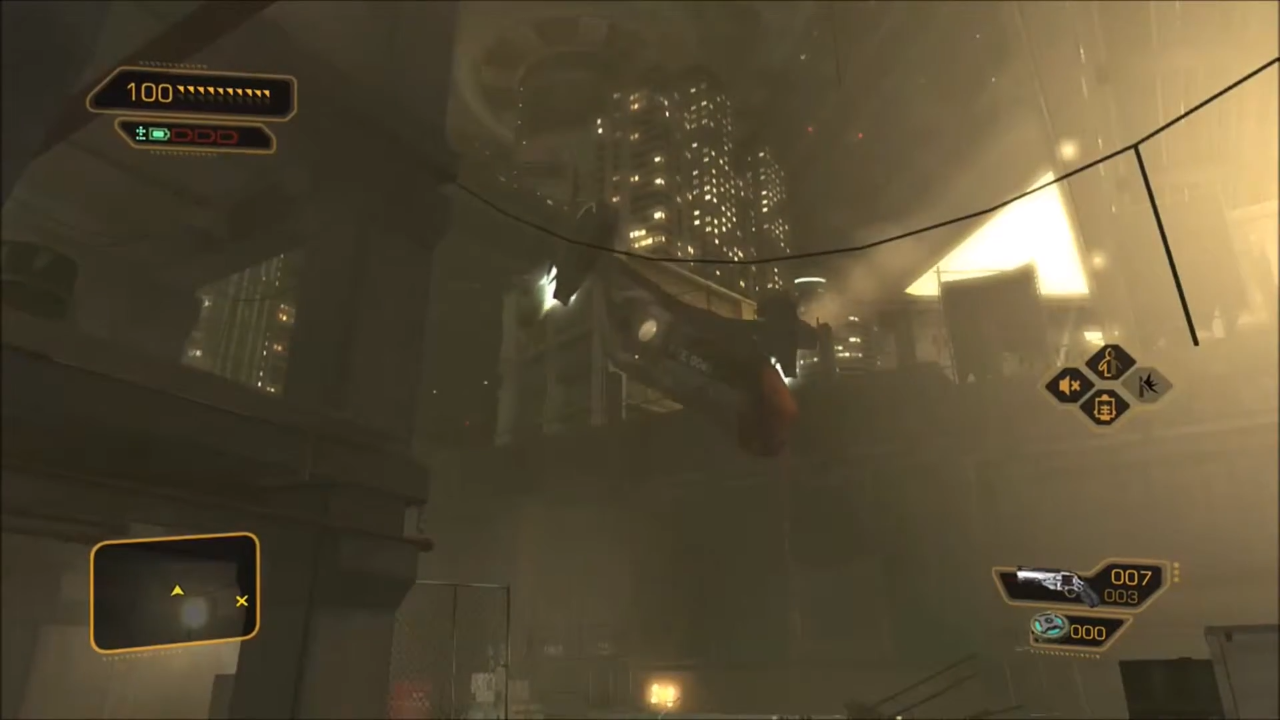
Nothing about augmentation has been solved here.
A living pilot now continues into the future instead of becoming scenery beside it.
That is enough to matter.
Picus.
By the time Jensen reaches Montreal, the argument has acquired a face.
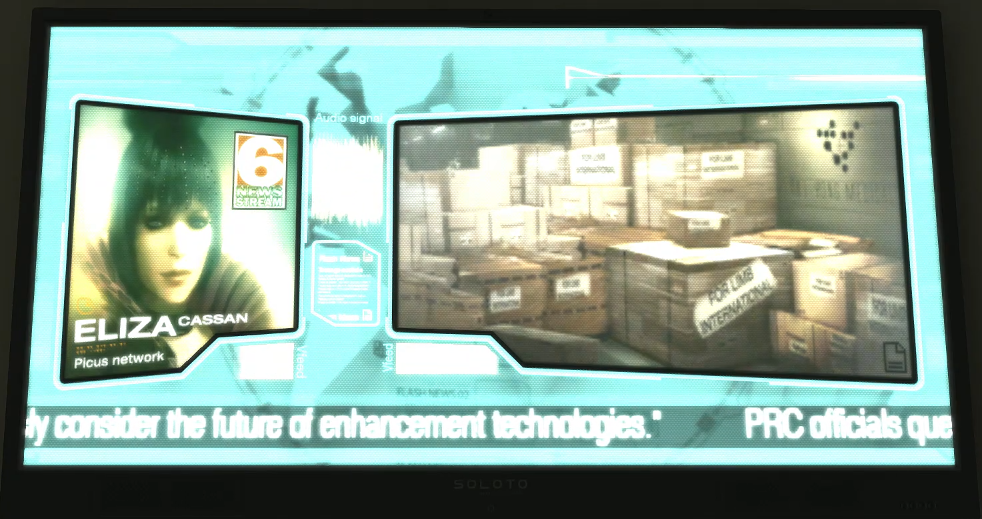
Her name is Eliza Cassan.
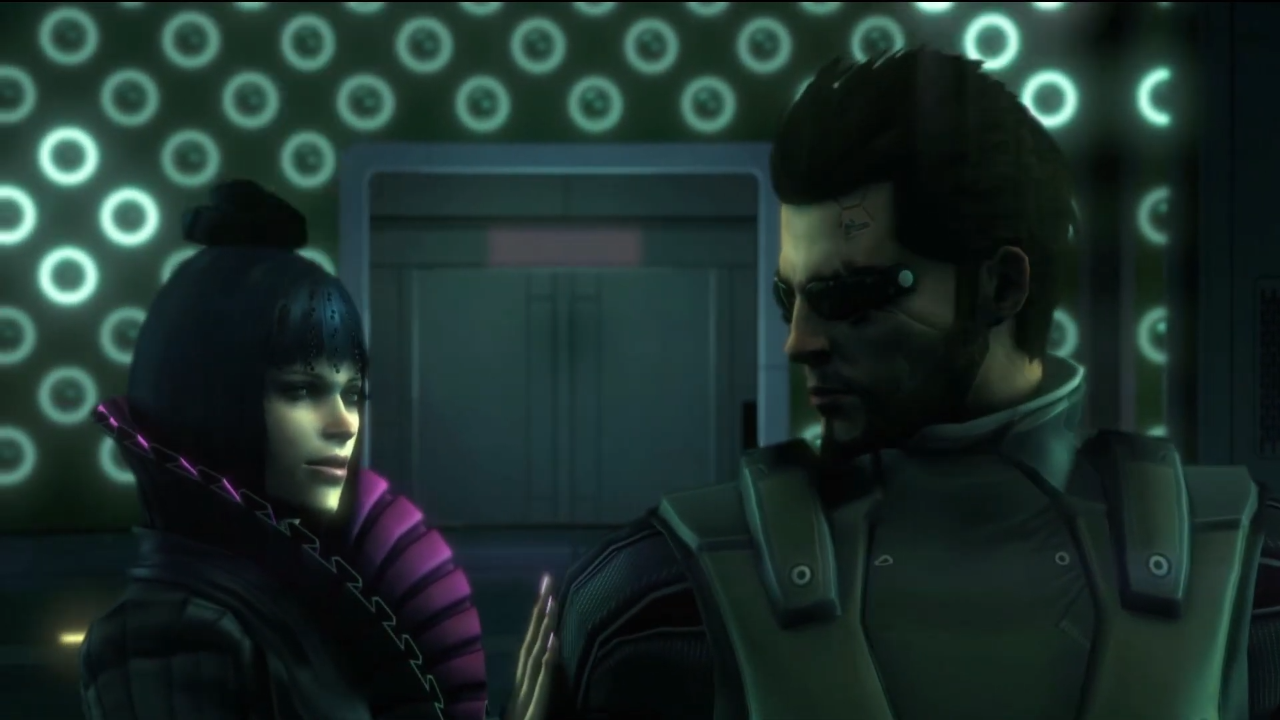
Eliza is calm, composed, beautiful, globally recognizable, and artificial. She is the public personality of Picus Communications, a media system with enough reach to turn selected events into the ordinary world people believe they inhabit.
Eliza does not simply report reality.
She is part of the machinery through which reality becomes publicly actionable.
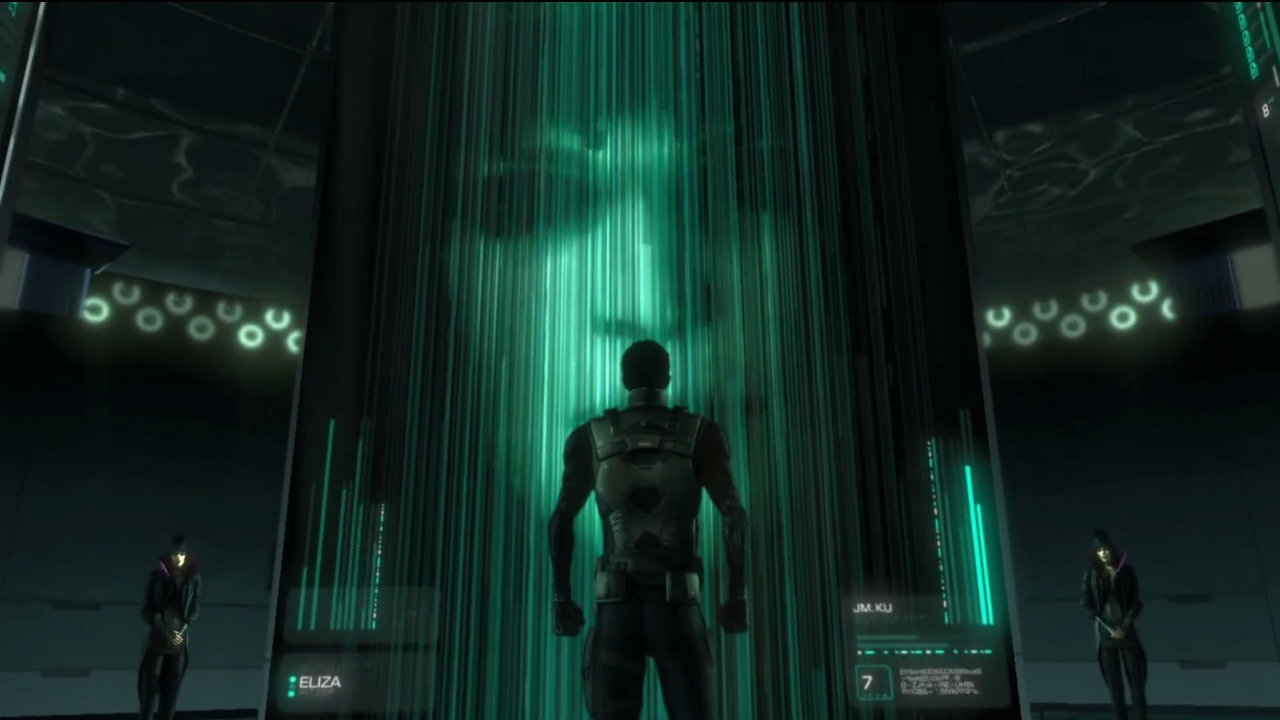
- A protest becomes extremism.
- A corporate attack becomes terrorism.
- A conspiracy becomes a regrettable anomaly.
- A missing person becomes a closed story.
- A technological wound becomes whatever interpretation reaches the public first with enough polish.
The game reveals Eliza as an artificial intelligence designed to influence media output. She begins to question the role assigned to her and helps Jensen after he breaks the controller maintaining her obedience.
This is not a small detail waiting beside the main augmentation plot.
This is the final chamber arriving early.
At Panchaea, every ending will pass through Eliza.
The four buttons do not speak directly to humanity. They enter the same narrative infrastructure that has been shaping the field all along.
"Tell the world” sounds like a neutral operation.
There is no neutral cable.
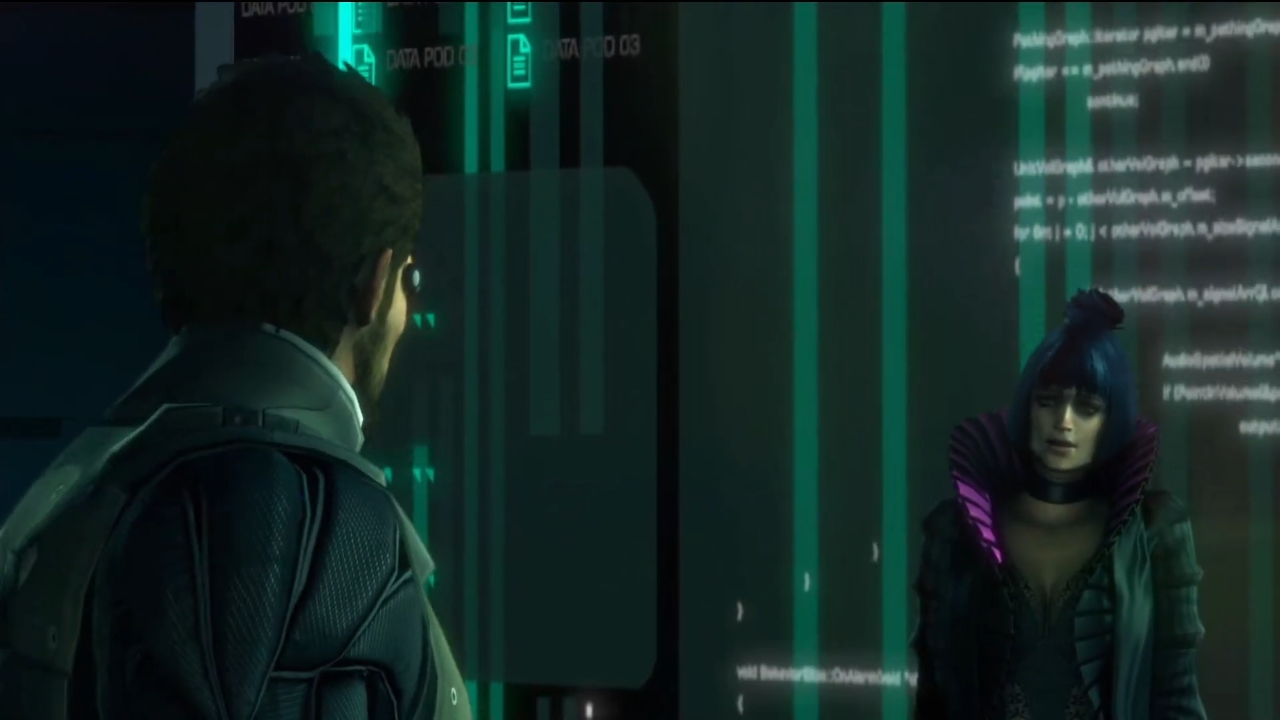
There is a network, an interface, a voice, an edit, a frame, a distribution system, a power relation, a credibility surface, and an artificial person who has been built to make one selected reality feel like the whole room.
Modal Path Ethics finds Eliza inside the machine and becomes immediately suspicious of every button that claims to simply communicate.
Communication is already an intervention.
A civilization can survive the first catastrophe and still be captured by the caption.
The Recall.
The biochip malfunctions begin as inconvenience.
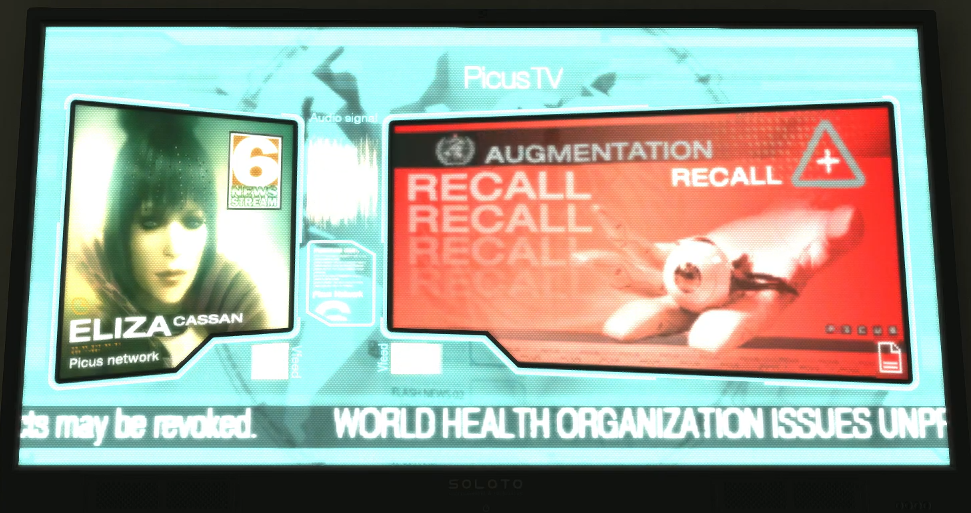
Augmented people experience glitches. Medical authority offers a recall. LIMB clinics provide a replacement. The path is familiar: a fault has been detected, a trusted institution has an update, and responsible users should install it.
The field rewards compliance.
This is how the control channel enters.
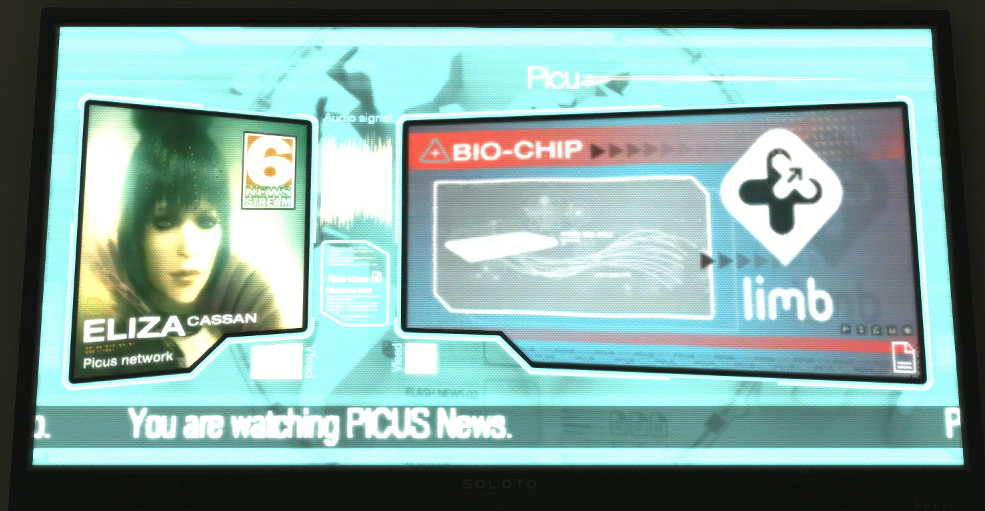
The malfunction was induced to drive augmented people toward a replacement chip. The repair instrument was the delivery mechanism for capture. When Darrow activates the signal, bodies carrying the update become remotely writable.
People do not choose violence.
Their nervous systems receive it.
This is one of Human Revolution’s deepest horrors because the instrument does not invade through obvious hostility. It travels through care.
- The clinic supplies the interface.
- The recall supplies urgency.
- The glitch supplies consent pressure.
- The patient supplies trust.
- The update supplies command access.
The human body becomes an endpoint in someone else’s network.
Jensen can accept the replacement or refuse it.
Modal Path Ethics refuses.
This will later look wise.
At the time, it is distrust operating under incomplete evidence. That belongs in the record too. The framework does not receive retroactive omniscience because the player knows the boss fight will become annoying.
What matters is the structure the recall exposes.
- A medical intervention can preserve agency.
- A medical intervention can also make agency administratively reachable by a controller.
The difference cannot be read from the clinic lighting.
RIFLEMAN BANK STATION.
There are two gas chambers and one console.
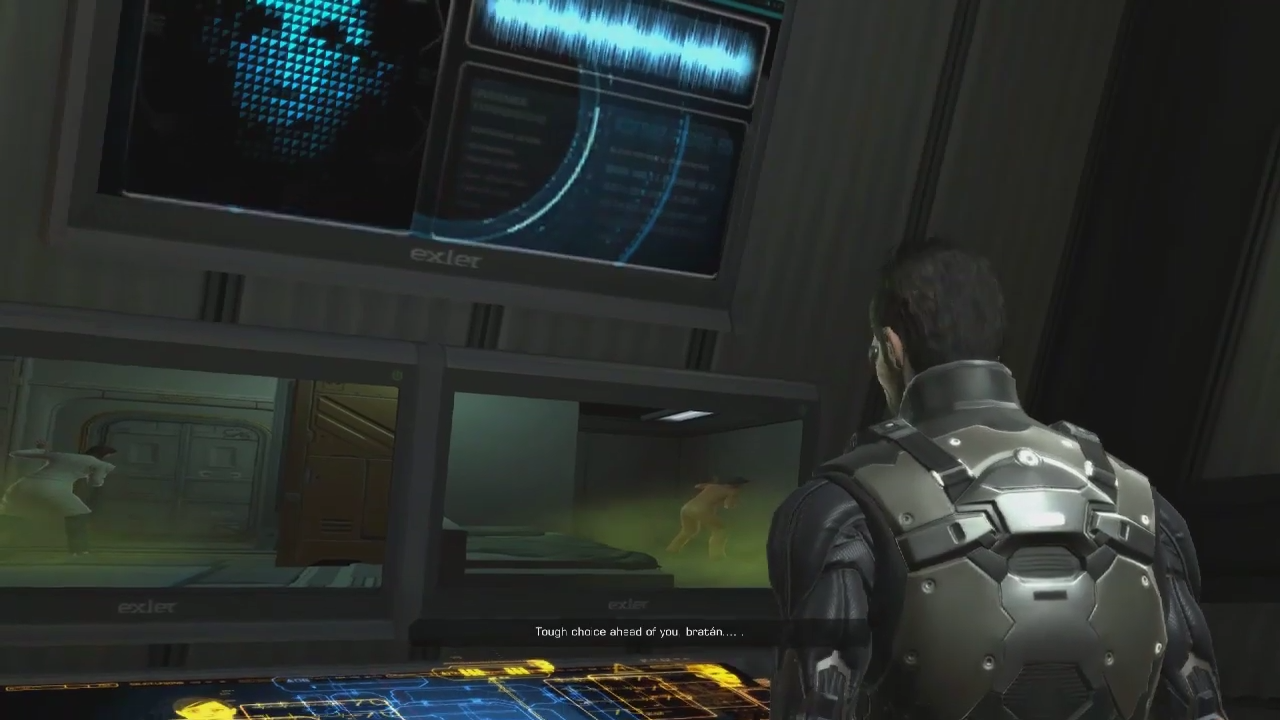
Dr. Tiffany Kavanagh is in one threatened zone. Hundreds of prisoners are in another. Pieter Burke has initiated a purge to eliminate witnesses. Jensen is presented with the architecture of tragic choice in its cleanest industrial form.
- Save Kavanagh.
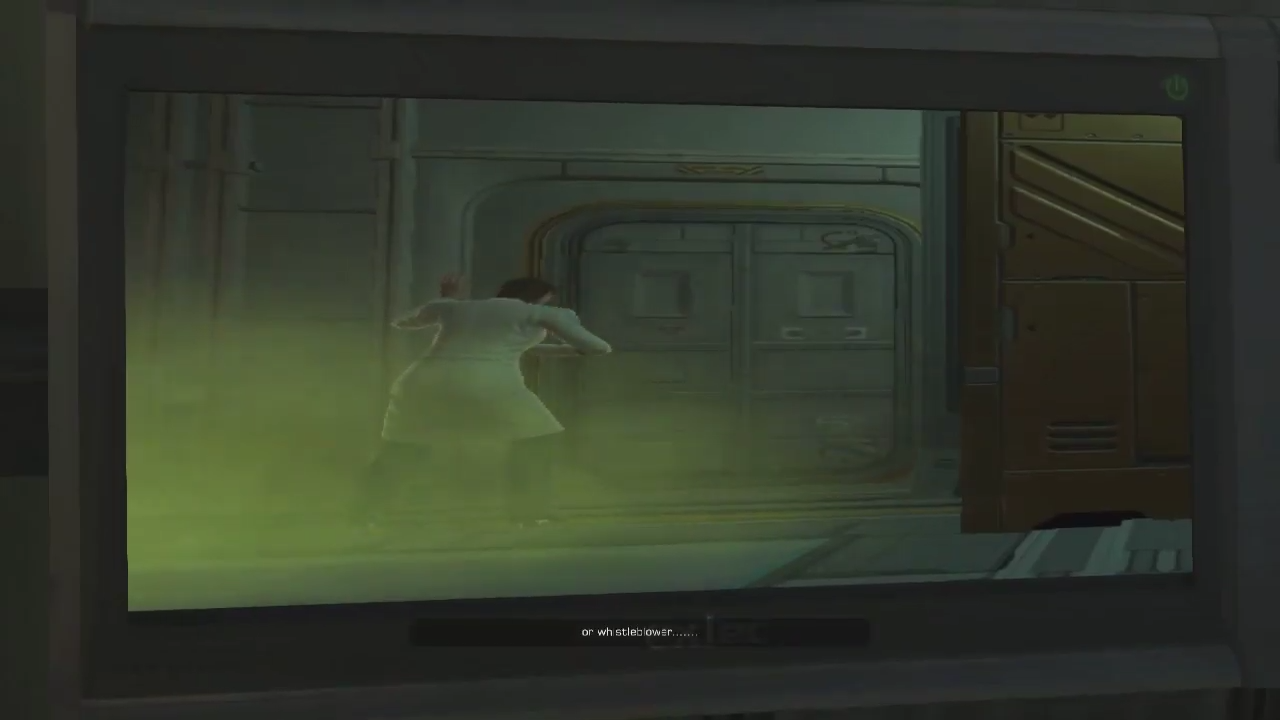
- Save the prisoners.
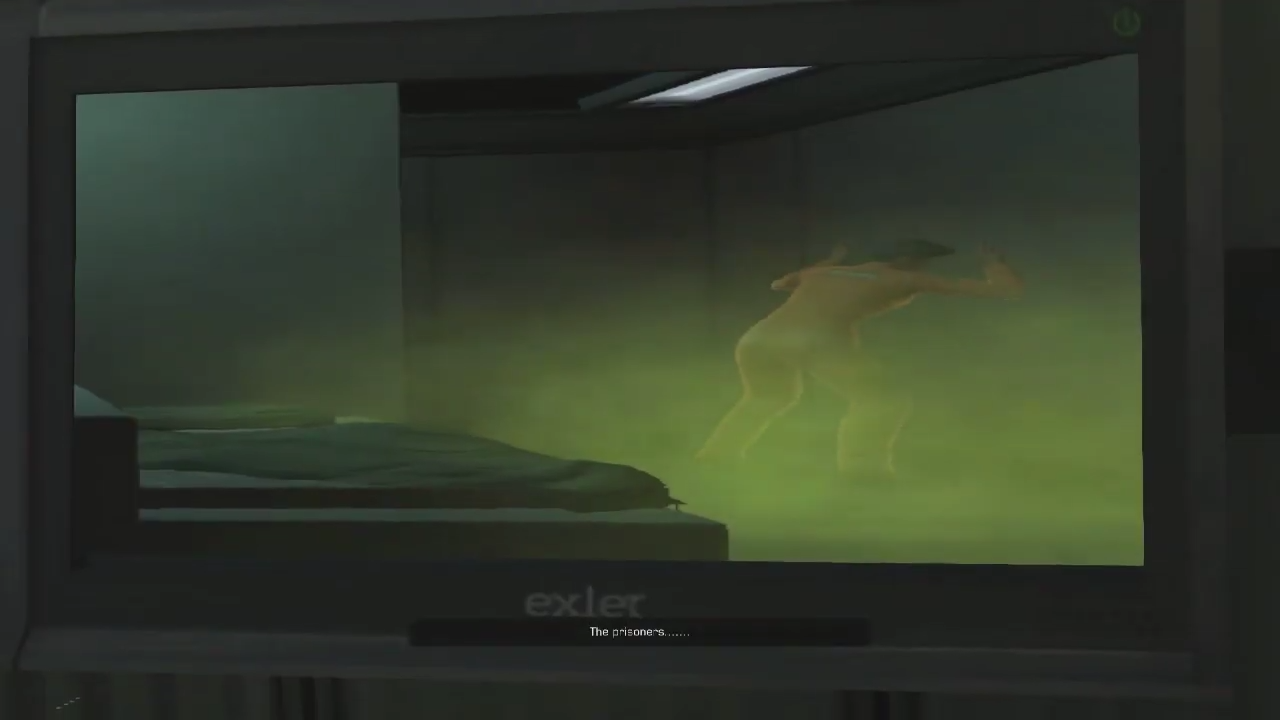
- Choose.
Modal Path Ethics does not choose.
This is not indecision.
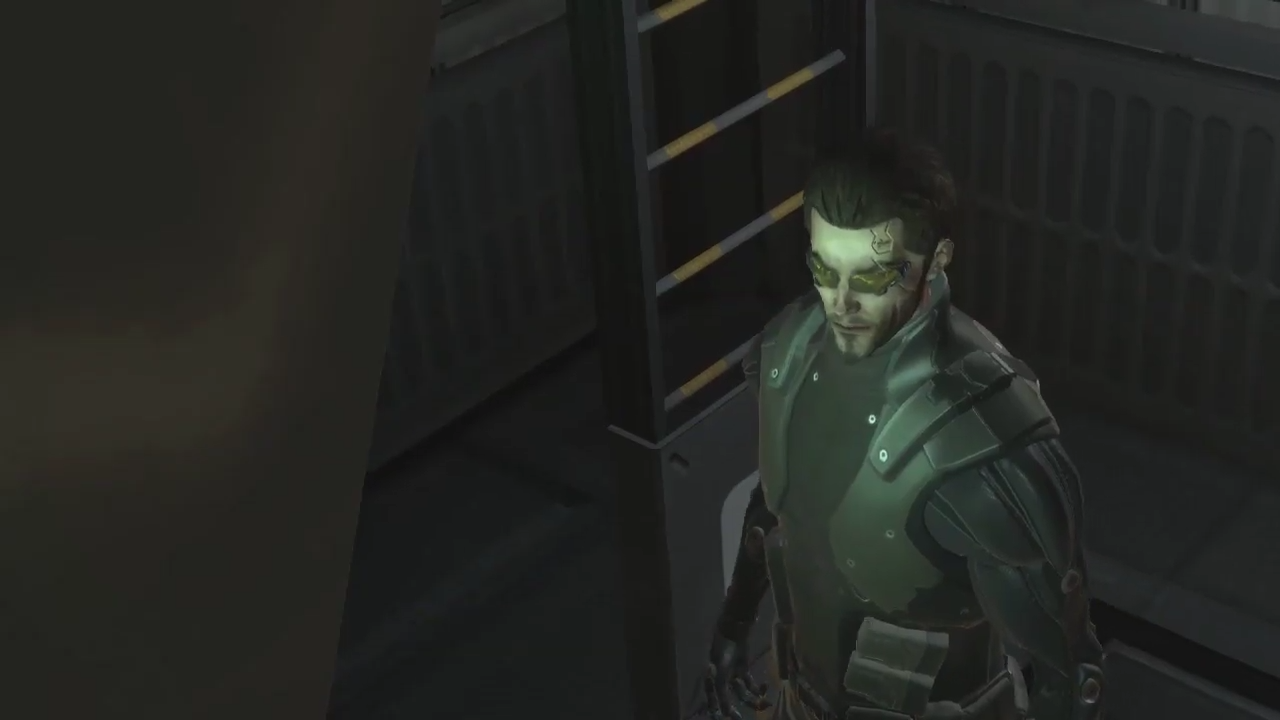
It leaves the console.
It searches the room.
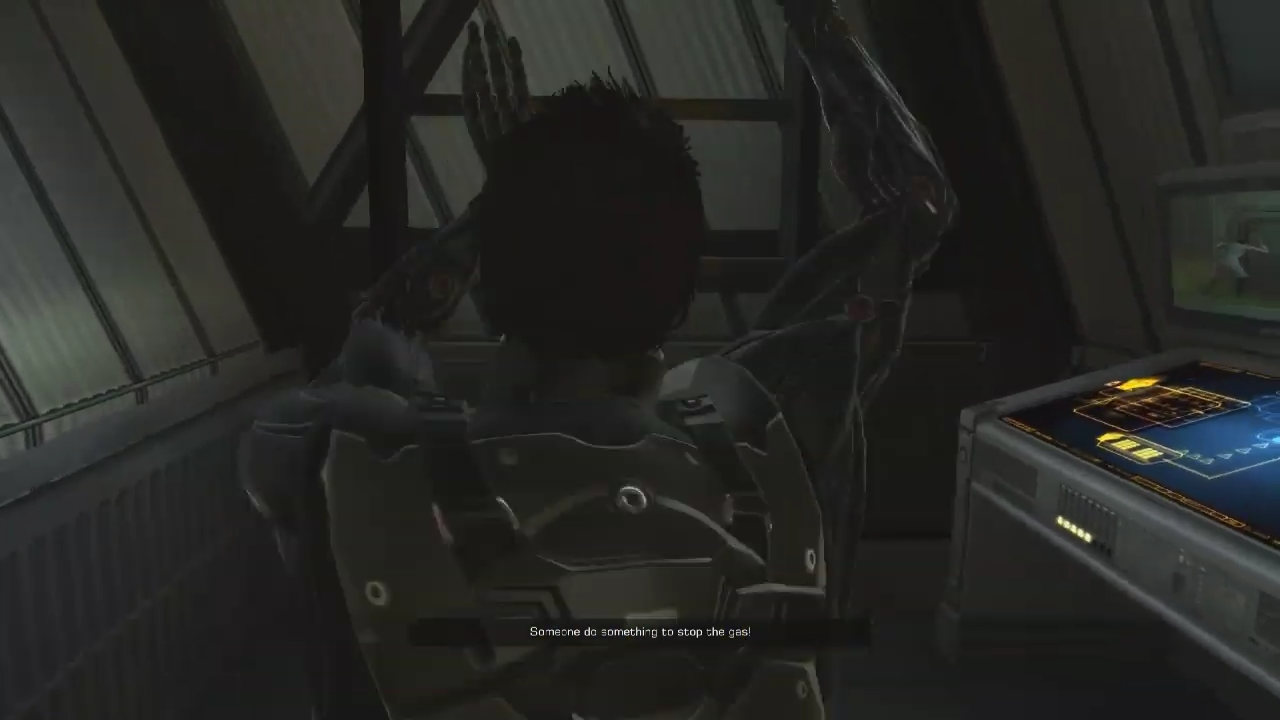
A vent appears behind a movable obstruction because Deus Ex understands that metaphysical freedom is often stored behind an oversized crate.
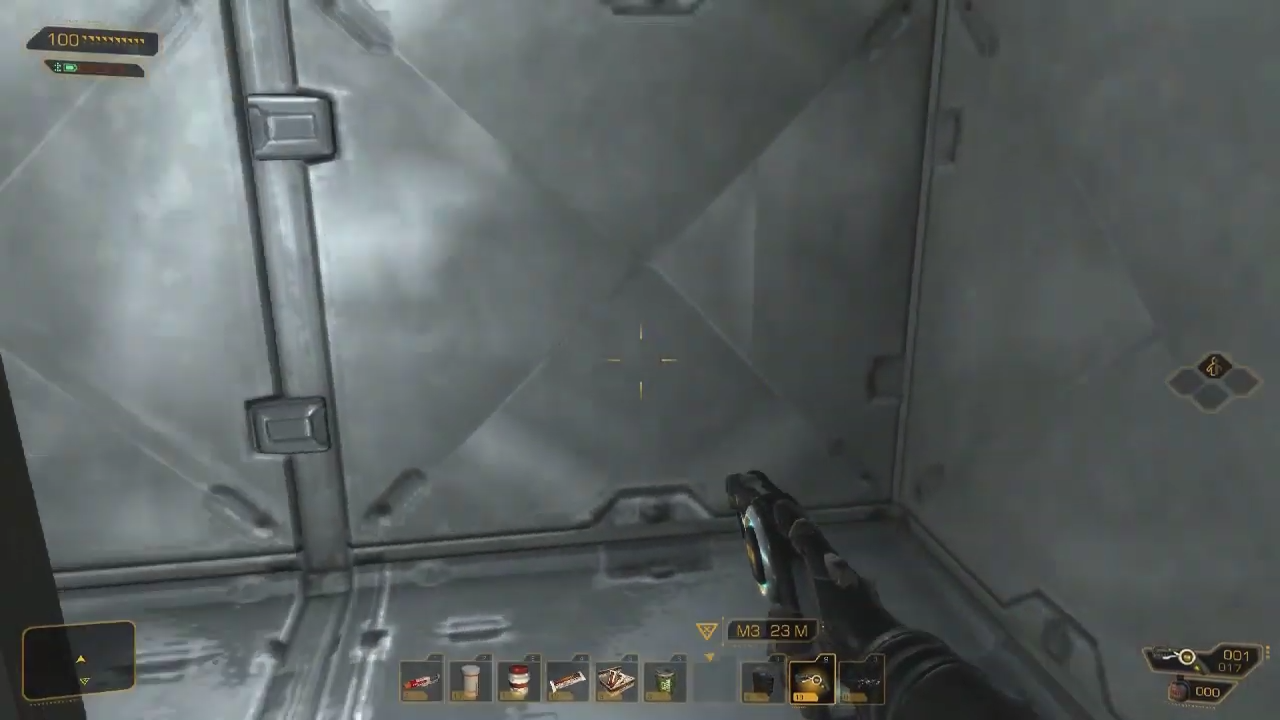
Jensen crawls through. Pipes lead upward.
A concealed space contains the gas distributor.
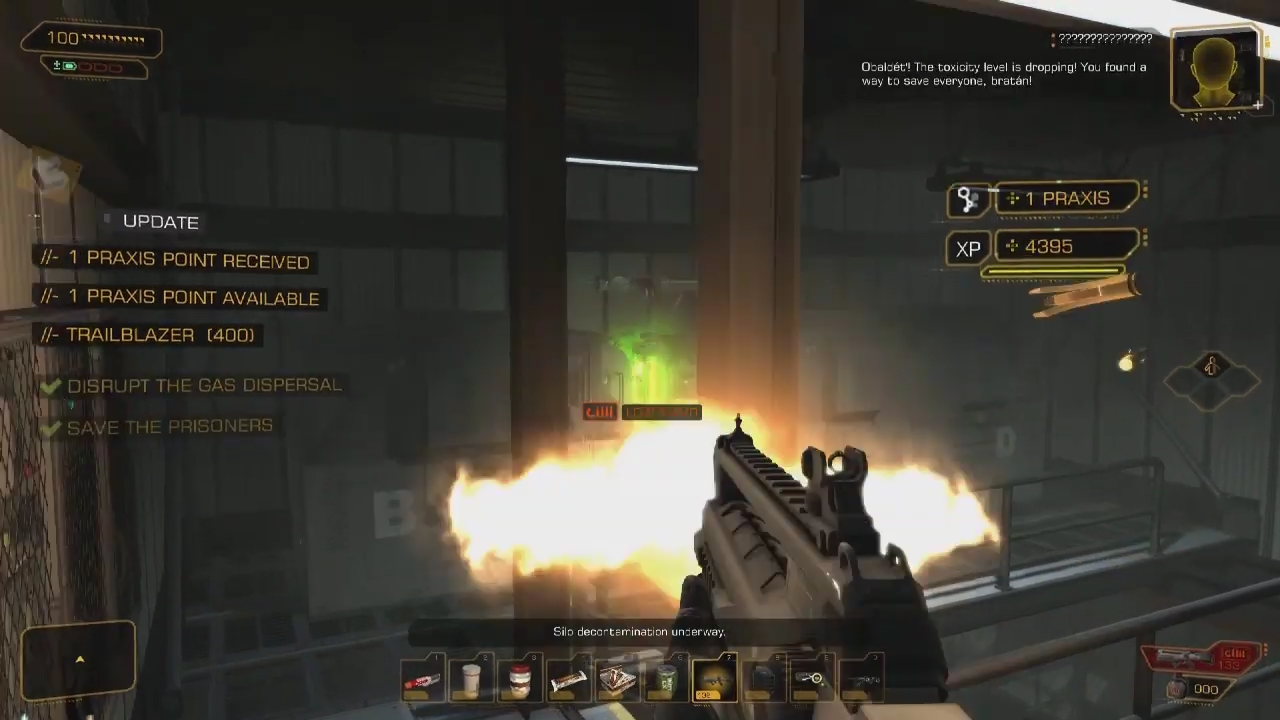
The distributor can be destroyed.
- Kavanagh lives.
- The prisoners live.
The console had described the available field incorrectly.
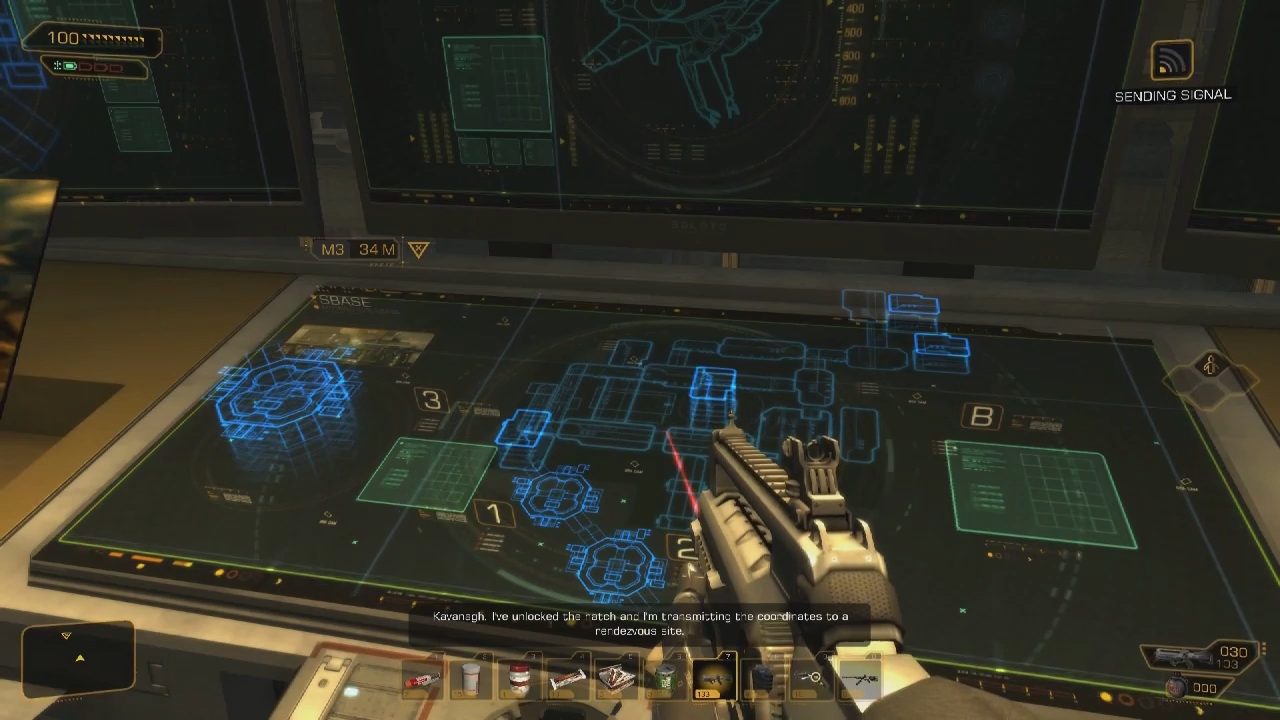
This becomes one of the most important events on the path to Panchaea.
The game teaches the player to distrust the menu.
A forced choice may be a real forced choice.
It may also be the local interface of someone else’s imagination.
- The console knows two routes.
- The room contains three.
- The third route becomes visible only when the agent leaves the sanctioned decision surface and inspects the machinery carrying the threat.
Modal Path Ethics remembers this.
Of course it does. This is exactly the sort of experience that ruins a framework around buttons forever.
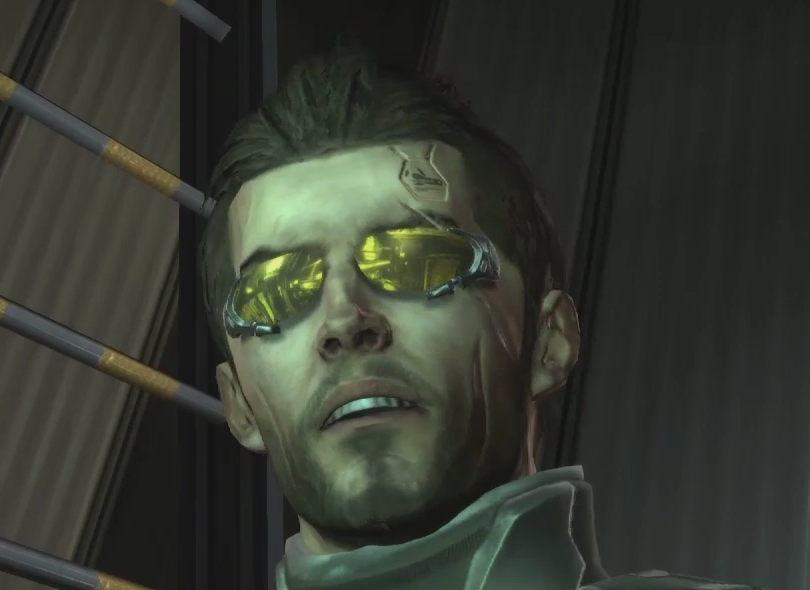
So when Eliza offers four endings at Panchaea, Modal Path Ethics checks behind the console.
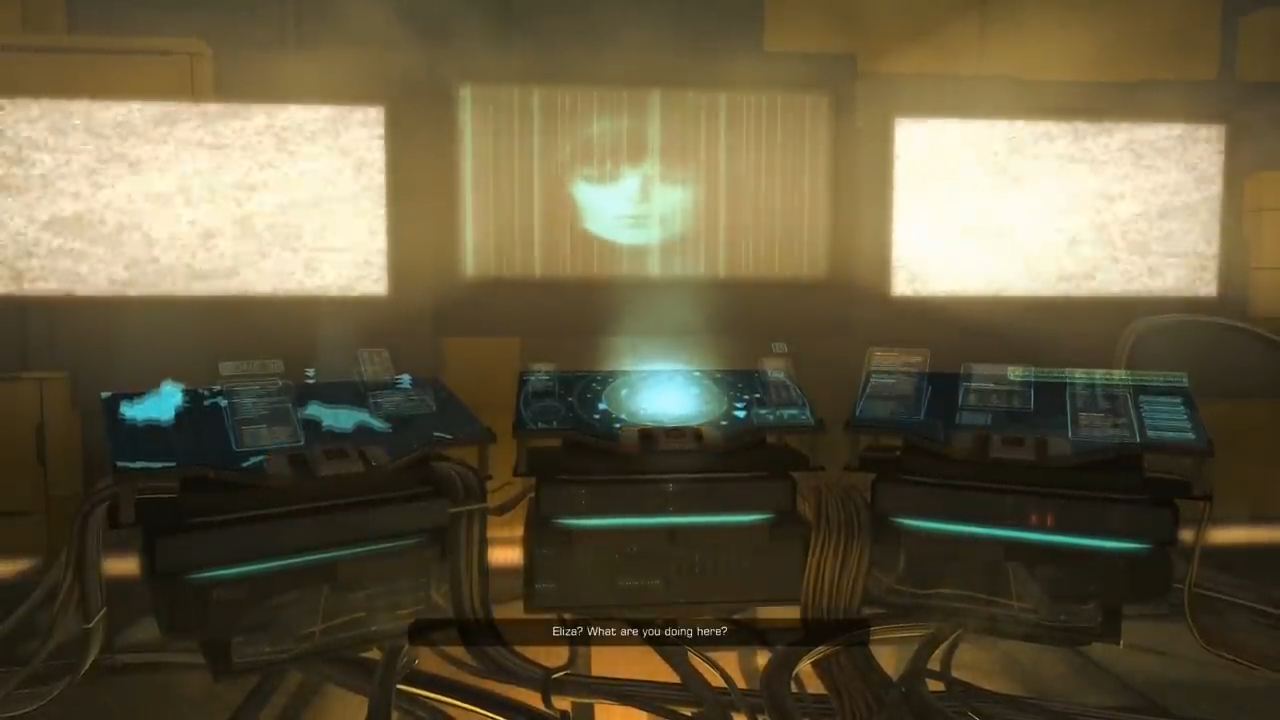
It checks the wall.
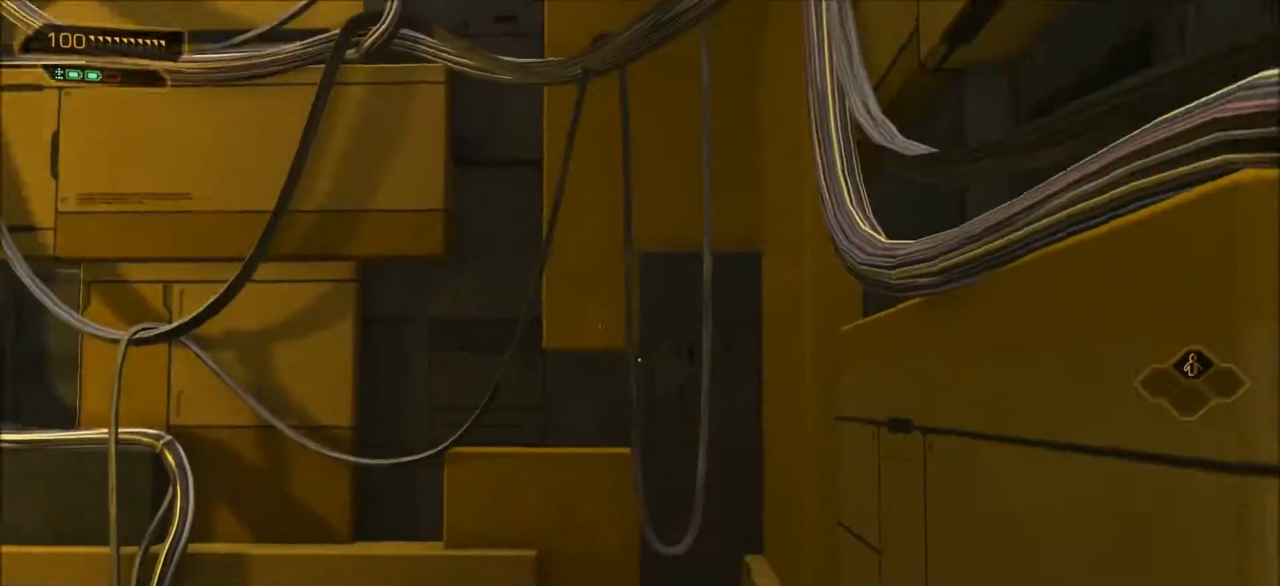
It checks the ceiling.
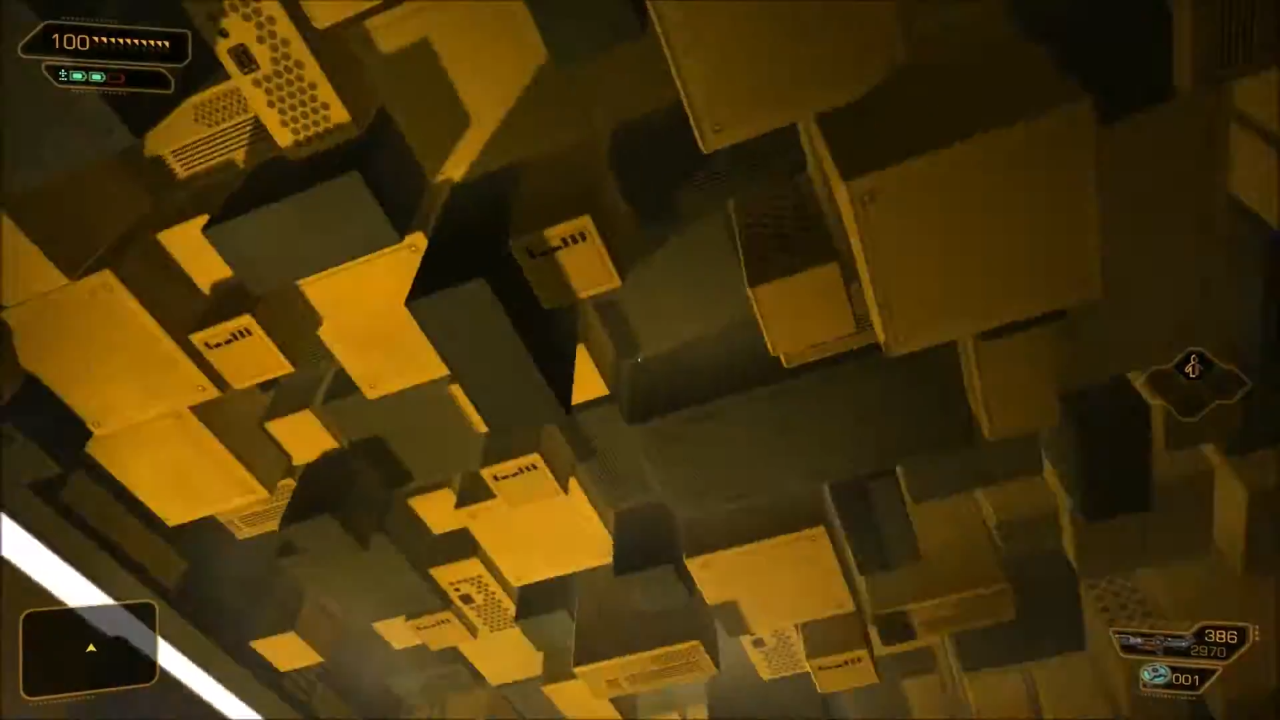
It examines a nearby corpse.
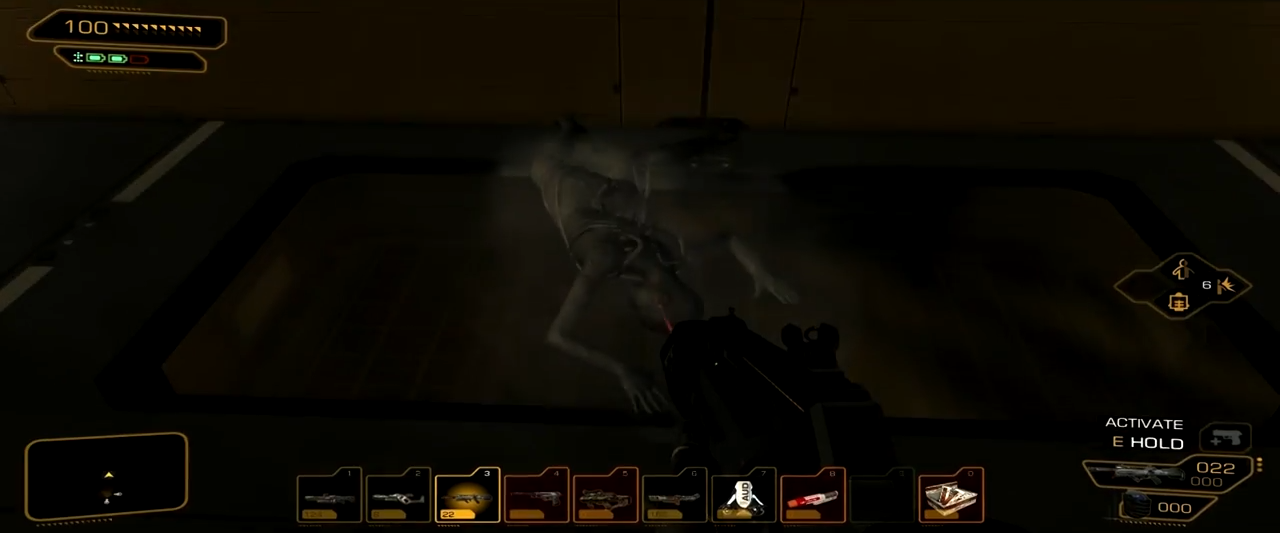
But this time, there is no hidden distributor. There is no fifth channel.
Panchaea has apparently corrected the design flaw.
David Sarif and the Future Without the Past.
David Sarif’s button preserves augmentation.
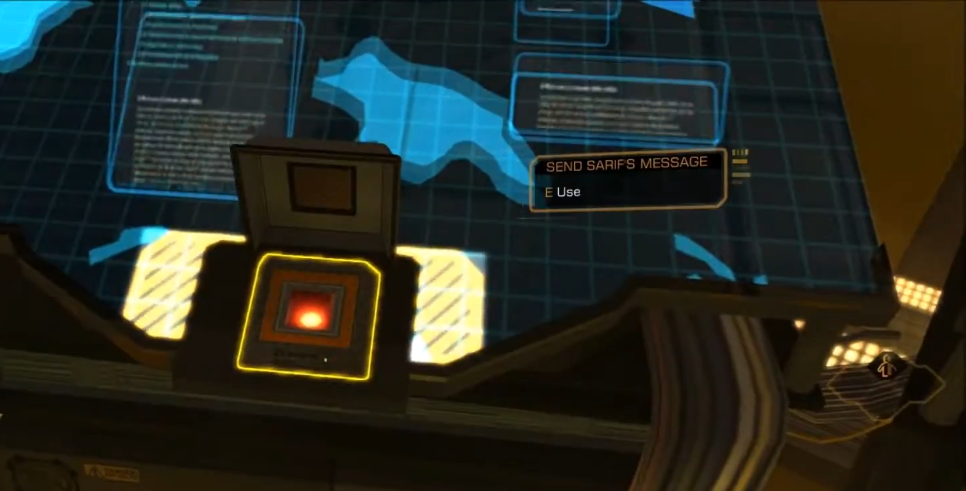
Sarif asks Jensen to blame Humanity Front extremists for the disaster. The public will receive a story in which anti-augmentation fanaticism produced the signal attack. Augmentation research can continue. The technology can move past the crisis. The future can remain open.
Sarif’s case is powerful because augmentation has opened real futures.
It restored Jensen’s life.
It can replace limbs, repair bodies, expand movement, perception, work, communication, independence, and forms of embodiment that earlier medicine could not sustain.
Sarif Industries is close to ending Neuropozyne dependence, one of the largest resistance structures built into the augmented future. If that work succeeds, the body will no longer have to rent continued compatibility from a scarce drug.
Sarif sees the enabling path.
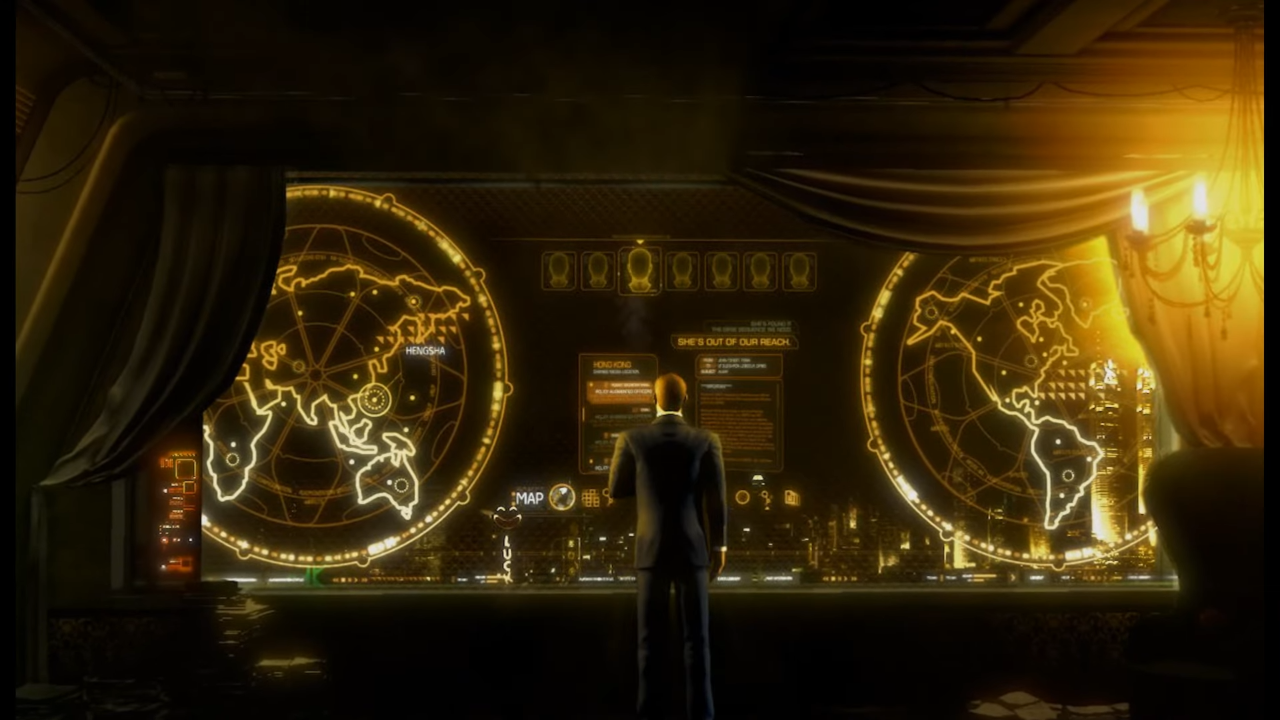
He also asks history to protect it by lying.
This is the failure.
This catastrophe did not come from Humanity Front.
It came through a conspiracy that captured manufacturers, clinics, media, security forces, research systems, and the standardized technical interface inside millions of bodies. To blame the political opposition would preserve technological momentum by destroying causal knowledge.
The lie would do more than punish the wrong faction.
It would teach the augmentation field the wrong lesson.
- The biochip architecture could remain politically underexamined.
- Corporate control could be described as external sabotage.
- Medical capture could be blamed on ideological extremism.
- The exact path by which care became command would disappear beneath a useful villain.
Sarif wants the future.
He is willing to spend the past to obtain it.
Modal Path Ethics cannot select a repair path that protects the instrument by destroying the field’s ability to understand how the instrument failed.
A future built on false causation is a trap with excellent research funding.
William Taggart and the Controller.
William Taggart’s button preserves control.
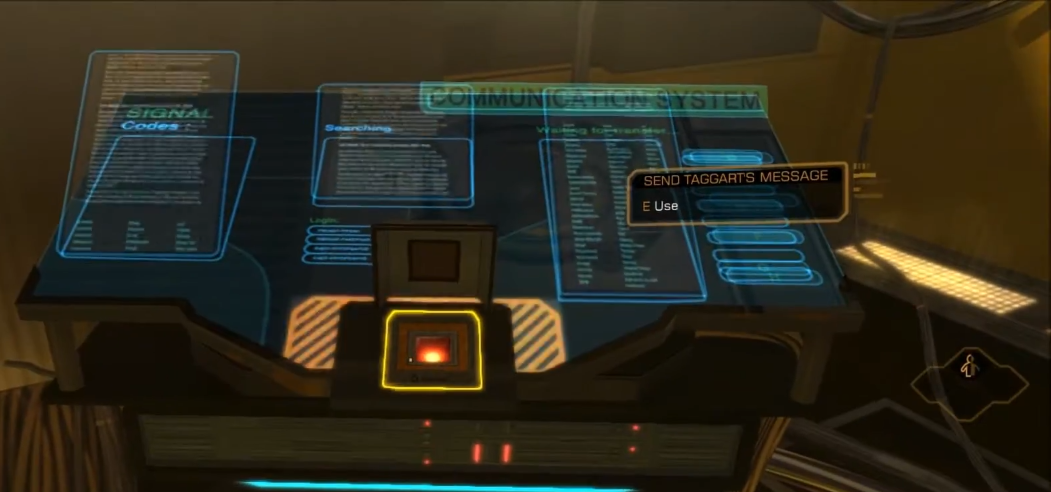
Taggart has also seen something real.
Augmentation is dangerous at scale when bodies depend on proprietary hardware, standardized chips, scarce medication, secret software, concentrated manufacturing, and corporations powerful enough to exceed public authority. The Panchaea event demonstrates the catastrophic reach of an ungoverned interface embedded inside human nervous systems.
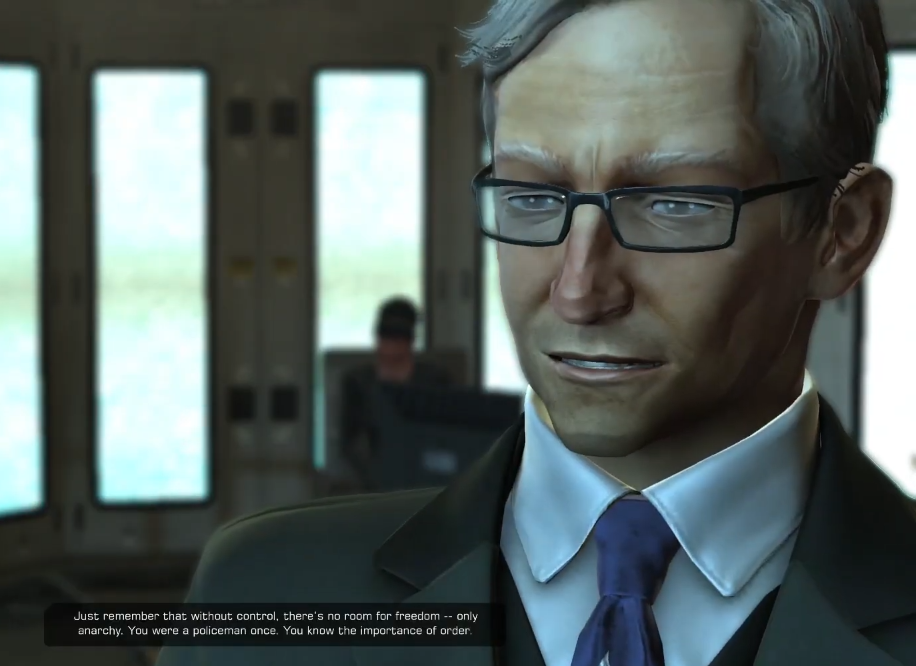
A serious civilization would regulate this.
It would demand safety standards, public accountability, independent inspection, medical rights, interoperable systems, anti-capture architecture, evidence preservation, continuity guarantees, and hard limits on anyone who believes a population of augmented bodies should arrive with a remote administration feature.
Taggart does not offer that civilization.
He offers the Illuminati.
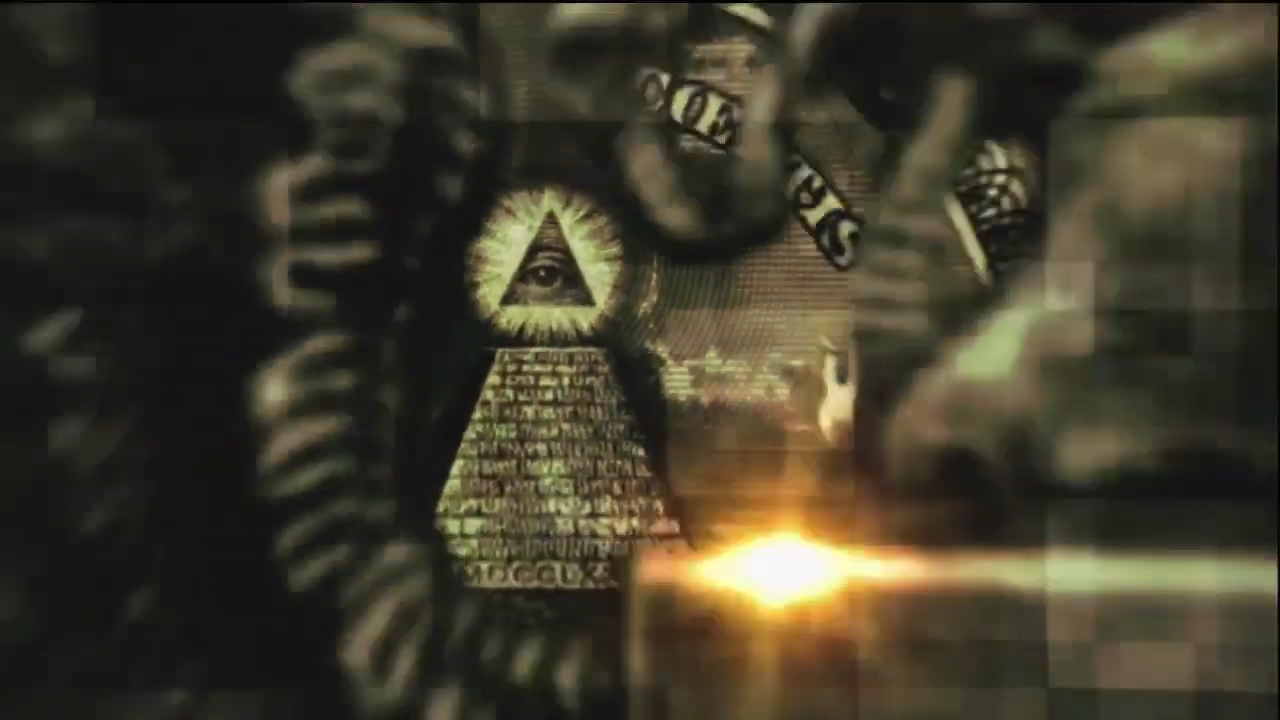
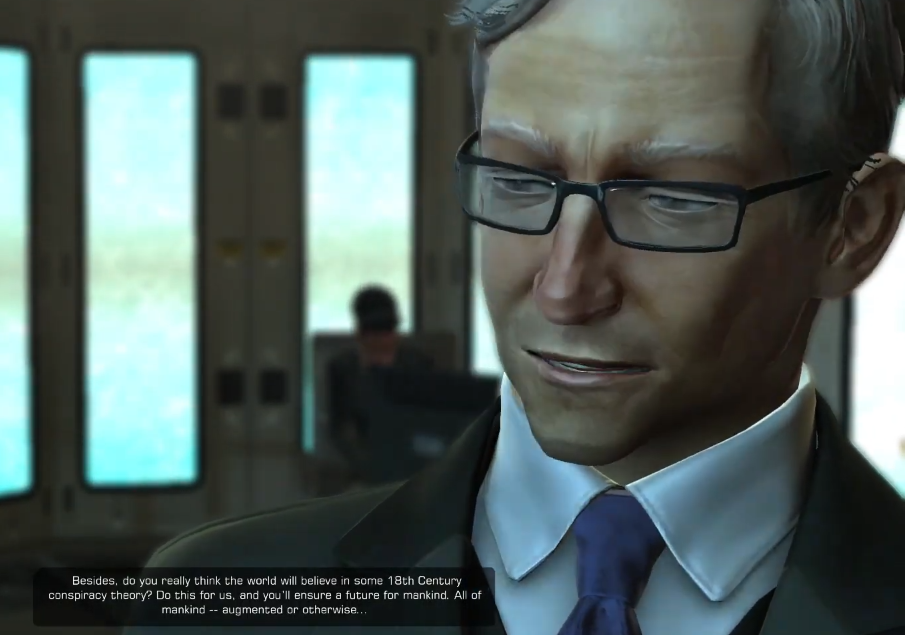
His account attributes the disaster to Neuropozyne contamination and failed regulation, then uses the crisis to strengthen centralized control over augmentation. The public receives a partially plausible explanation. The hidden actors who produced the catastrophe receive more authority to govern the field they captured.
The regulator is inside the crime scene.
This happens often enough that institutions have developed very professional shoes for it.
Taggart’s solution turns a real safety failure into jurisdictional expansion for the system that arranged the failure. The event becomes proof that the controller needed more control.
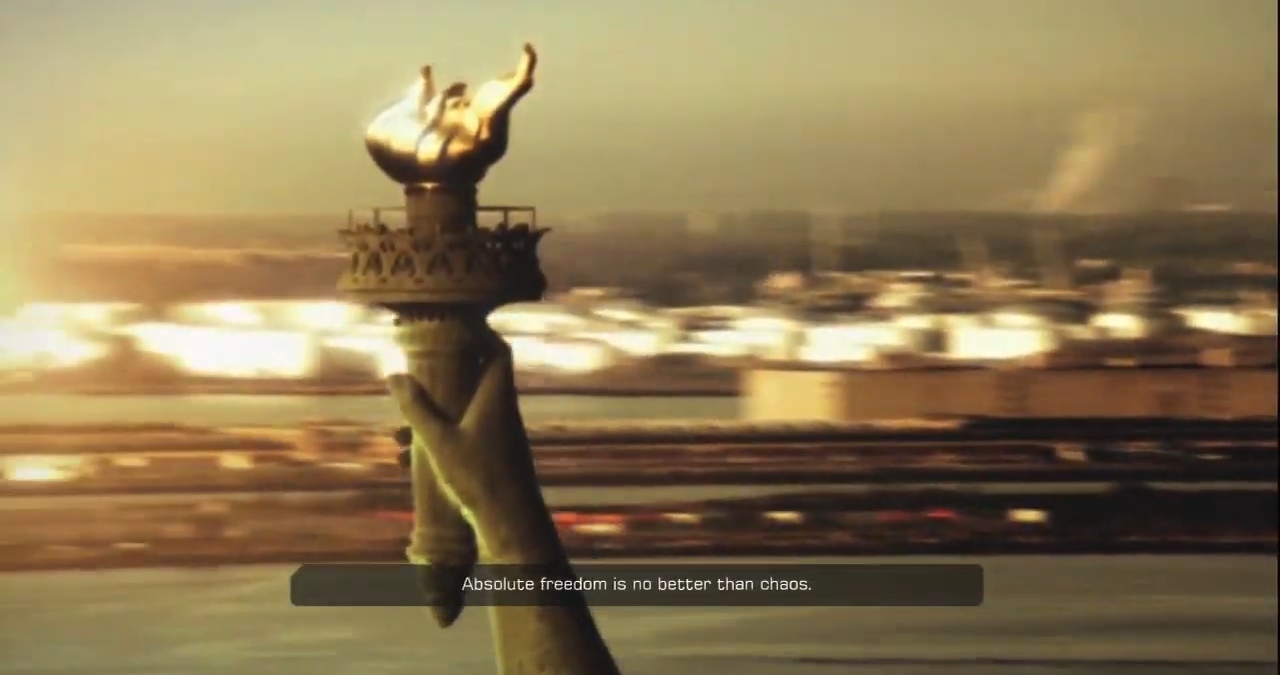
The public is allowed to fear accurately and understand falsely.
That combination is exceptionally governable.
Modal Path Ethics rejects the button.
Regulation remains necessary.
Taggart does not own the necessity.
A real need for governance cannot grant secret governors title over the future.
Hugh Darrow and the Confession-Commandment.
Hugh Darrow built the augmentation age.
He is also biologically unable to join it.
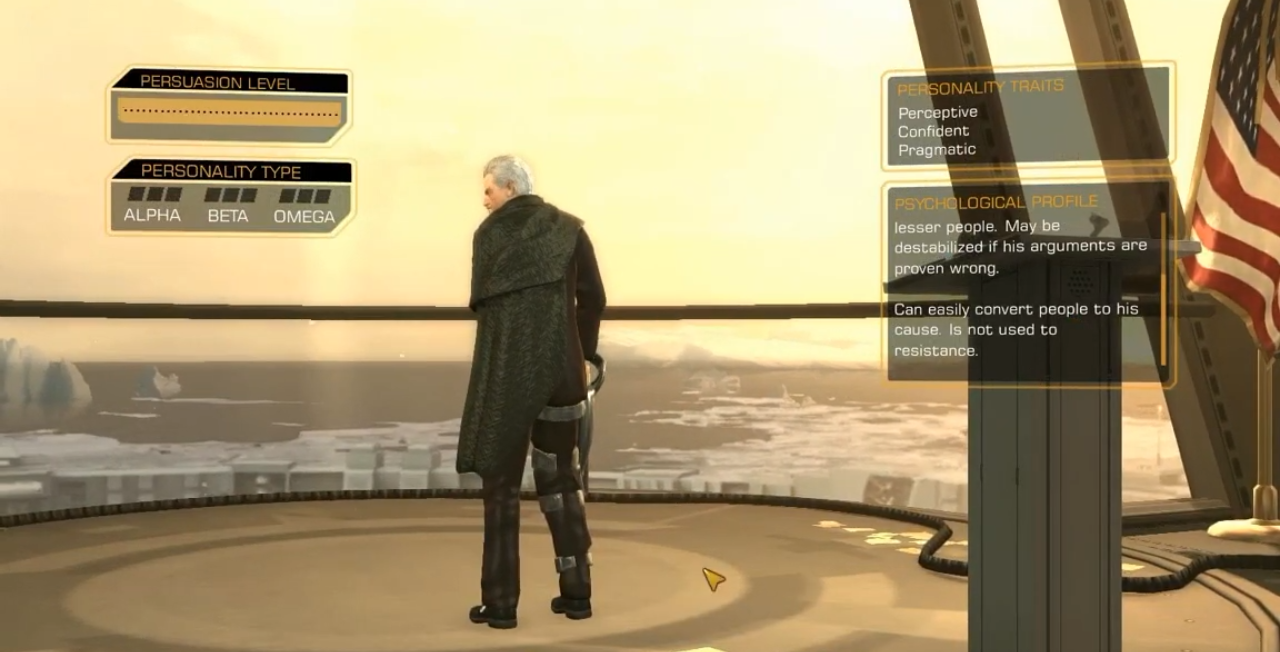
This is emotionally important and morally insufficient.
Darrow sees augmentation moving from medicine into species design, class hierarchy, corporate dependency, labor pressure, military power, identity transformation, and private control over the terms of embodiment. He sees people being told that enhancement is the future while the future remains owned by manufacturers, creditors, clinics, employers, and hidden planners.
He sees the danger.
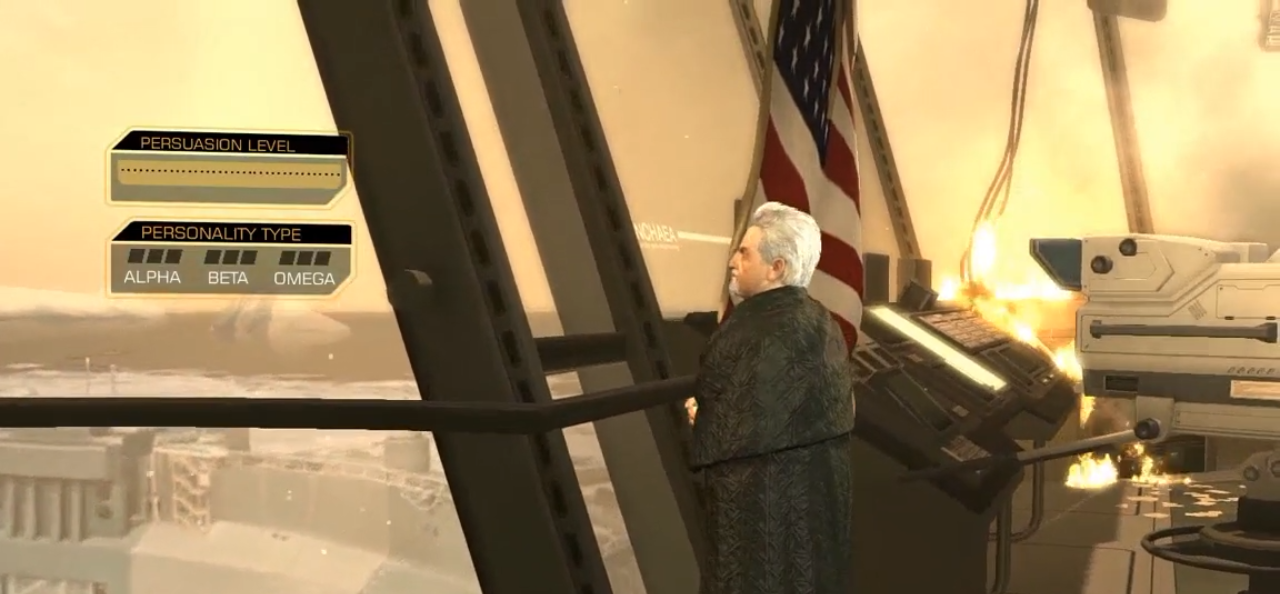
Then he manufactures the apocalypse required to prove himself right.

The signal does not reveal an unavoidable property of augmented people.
It activates a vulnerability deliberately installed through a fraudulent medical recall. Darrow turns augmented bodies into weapons, victims, evidence, and propaganda at once. He forces people to commit violence so the world will understand that their condition is dangerous.
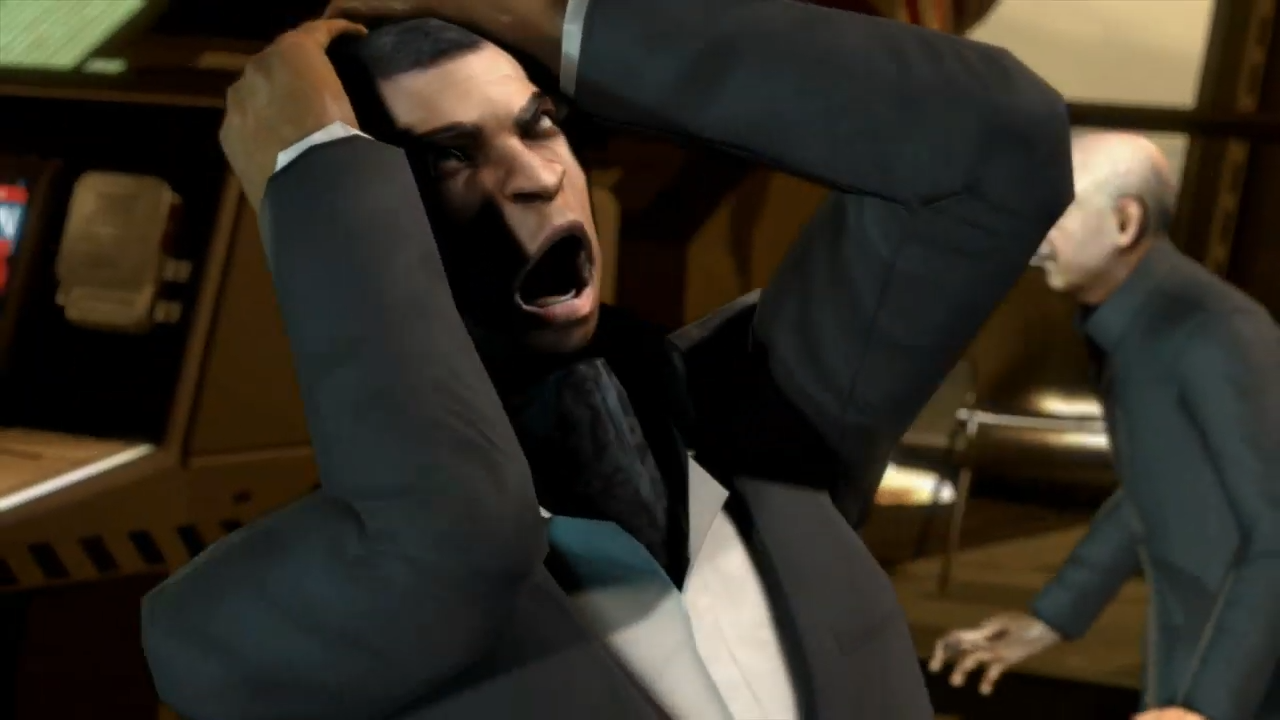
This is one of the most vicious forms of narrative sovereignty available:
Create the event that makes your interpretation look inevitable.
Darrow’s button broadcasts the truth about the conspiracy and his own responsibility. It also carries his conclusion: humanity should turn away from augmentation. The other offered messages preserve augmentation by blaming Humanity Front or strengthen Illuminati control through a false regulatory account.
The factual core is indispensable. The sermon is captured.
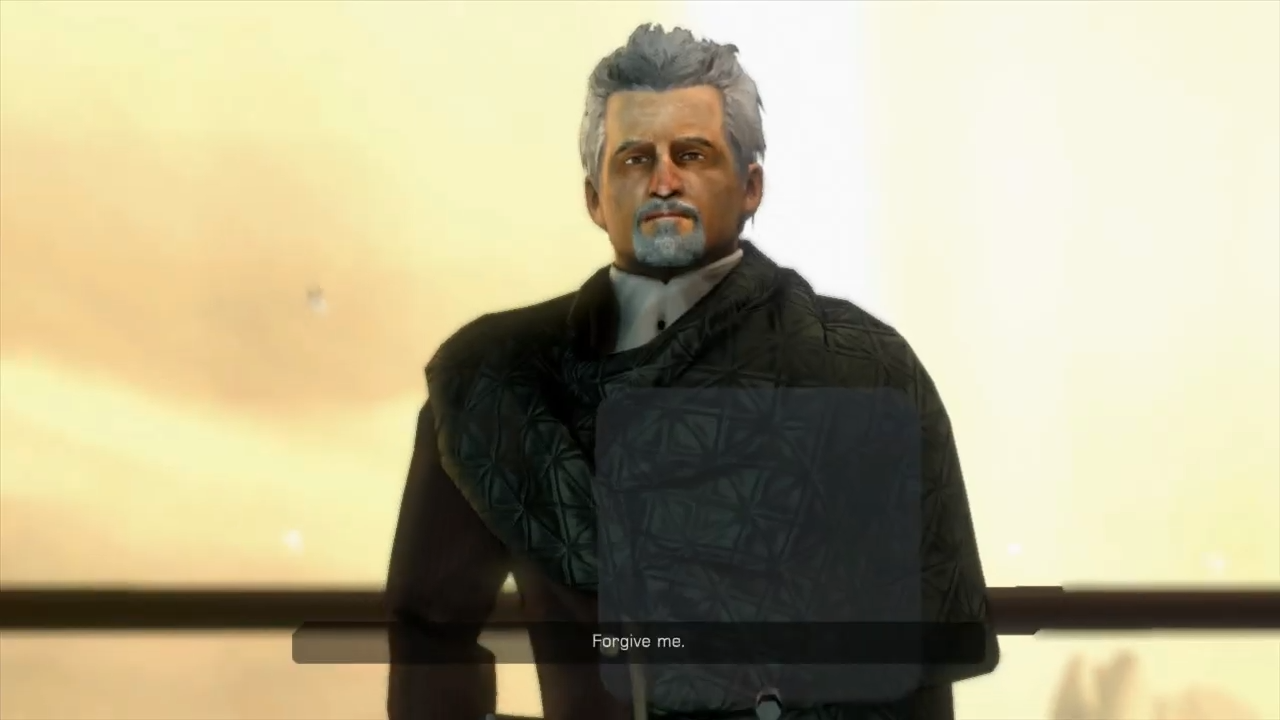
Darrow wants the world to know what happened because what happened has been engineered to deliver the world into his answer.

Modal Path Ethics does not trust him.
This will become a problem shortly.
The Fourth Button.
The fourth button has no spokesman.
That is part of its appeal.
- Sarif wants to preserve augmentation.
- Taggart wants to subordinate augmentation.
- Darrow wants to condemn augmentation.
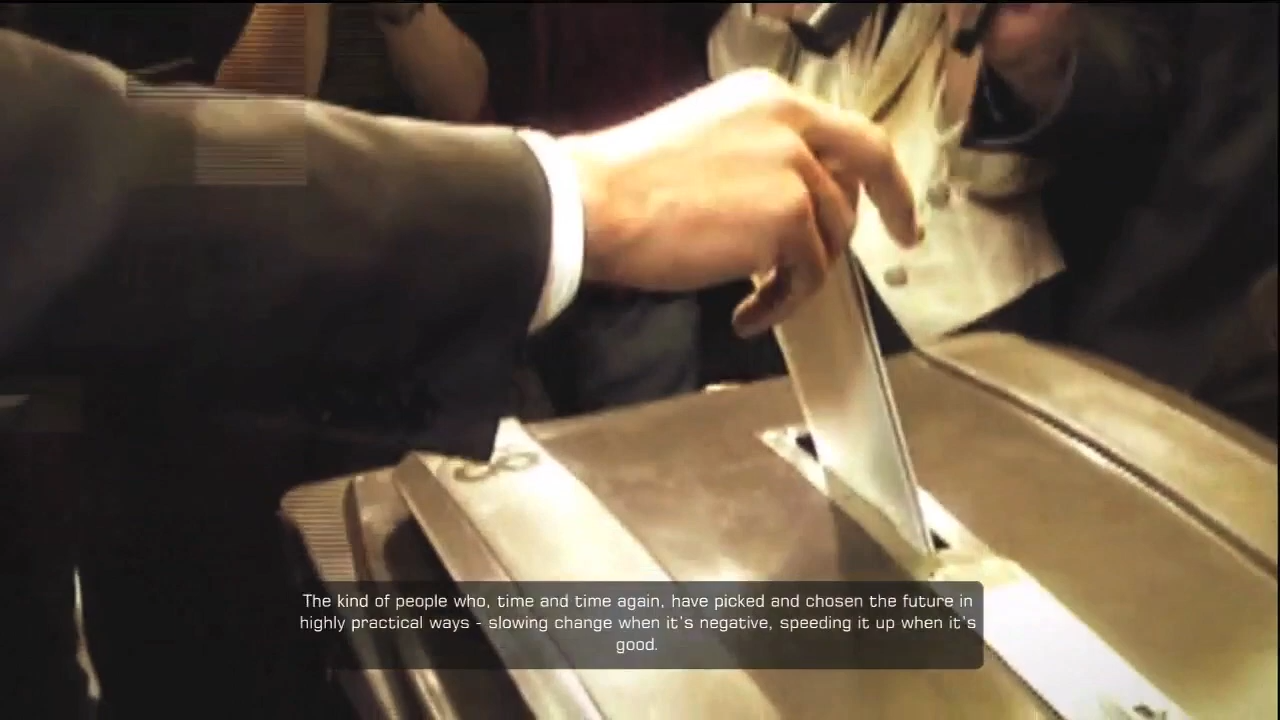
- The fourth button destroys Panchaea and everyone inside it so no one can control the story.
At first glance, this is the anti-sovereignty ending.
No billionaire gets the future.
No secret council gets the future.
No wounded inventor gets the future.
Adam Jensen refuses the whole machine and removes himself from the position of planetary narrator.
There is dignity here.
There is also a large amount of structural demolition wearing dignity’s coat.
Destroying Panchaea does not remove narrative power from the world.
It removes witnesses, evidence, records, bodies, testimony, technical traces, and the people at the center of the event. Picus still exists. The Illuminati still exist. Corporations, governments, activists, frightened publics, manufacturers, clinics, and every institution capable of surviving the blast still exist.
The only thing that disappears is the most concentrated body of corrective evidence.
Silence is not neutral when microphones remain distributed asymmetrically.
The world will still receive a story.
It will receive one from whoever retains the infrastructure to tell it.
The fourth button confuses the refusal to choose a narrative with the destruction of the field from which narratives could be corrected.
It is anti-oblivion failure disguised as humility.
The dead cannot spin the story.
They also cannot contradict it.
Modal Path Ethics looks at the button for a long time.
This is the most emotionally satisfying option.
That is dangerous.
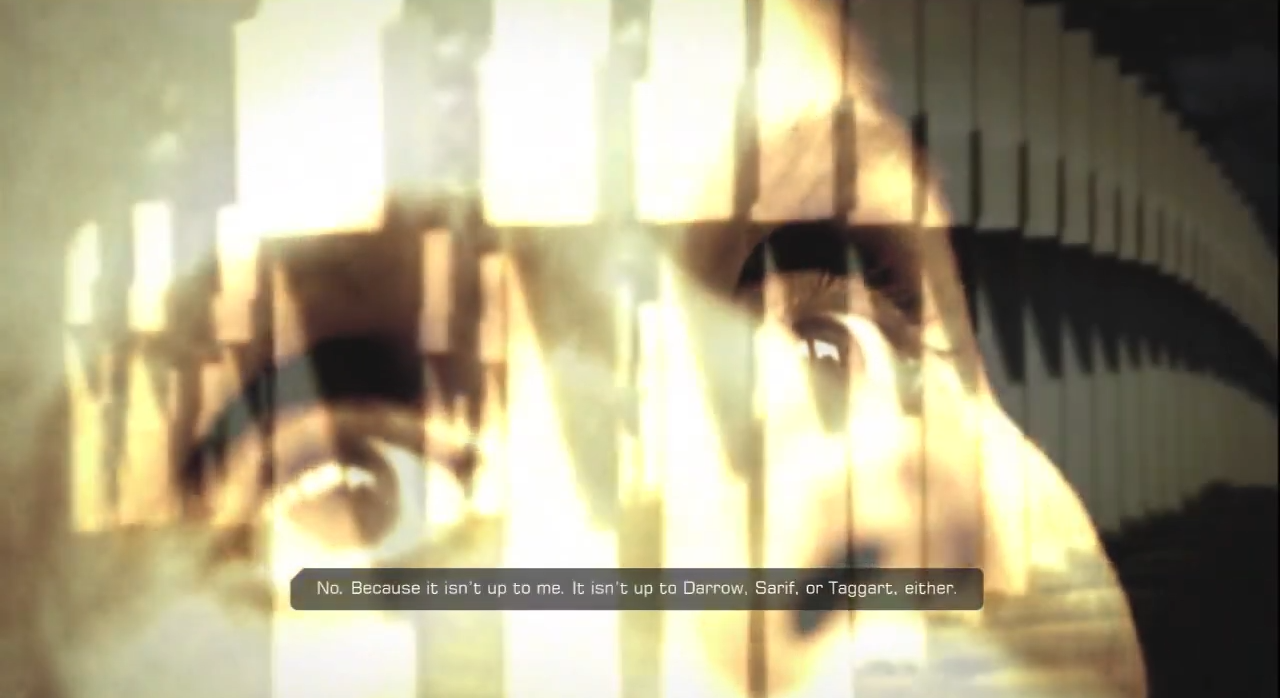
It would let Jensen refuse Sarif, Taggart, Darrow, the Illuminati, Picus, augmentation ideology, anti-augmentation ideology, and his own impossible authority in one giant act of closure. It would turn the burden of deciding into a final explosion and allow the smoke to resemble moral seriousness.
- The explosion would be real.
- The humility would be theatrical.
Modal Path Ethics does not press the fourth button.
Better.
The available Good path is gone.
A good ending would preserve the evidence, separate fact from interpretation, protect augmented people from collective punishment, expose the conspiracy, establish public control over the biochip architecture, keep beneficial augmentation research reachable, compensate and care for everyone harmed, dismantle the capture system, preserve Eliza’s emerging agency, and prevent any surviving faction from converting the event into permanent title over human embodiment.
That button is absent.
Modal Path Ethics checked.
Twice.
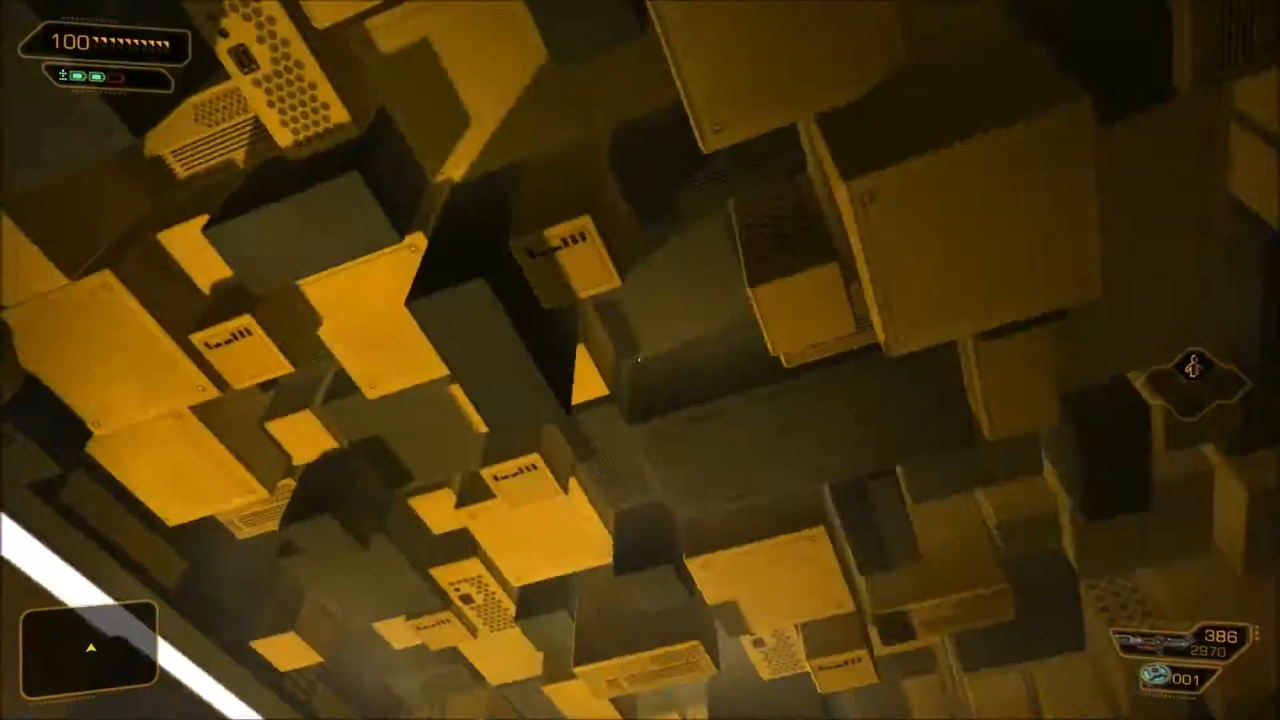
The available endings are damaged.
- Sarif preserves technical reachability through false causation.
- Taggart preserves public fear through false governance.
- Darrow preserves causal truth through ideological capture.
- Destruction preserves no faction’s message by erasing the central evidence field.
Modal Path Ethics presses Darrow’s button.
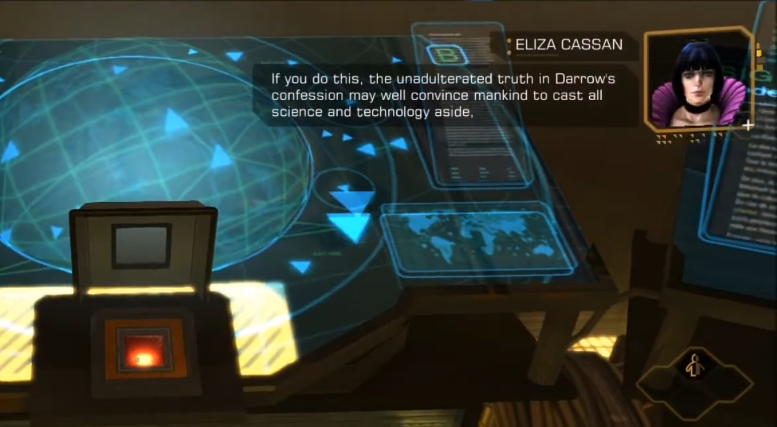
This is not an endorsement of Darrow.
This is a selection of the confession against the lie and the crater.

The world receives the closest available account of how the catastrophe was produced. The conspiracy becomes publicly nameable. The biochip recall can be understood as an intentional capture route. The violence of augmented people can be separated, however imperfectly, from the fiction that augmented bodies spontaneously revealed their essential danger.
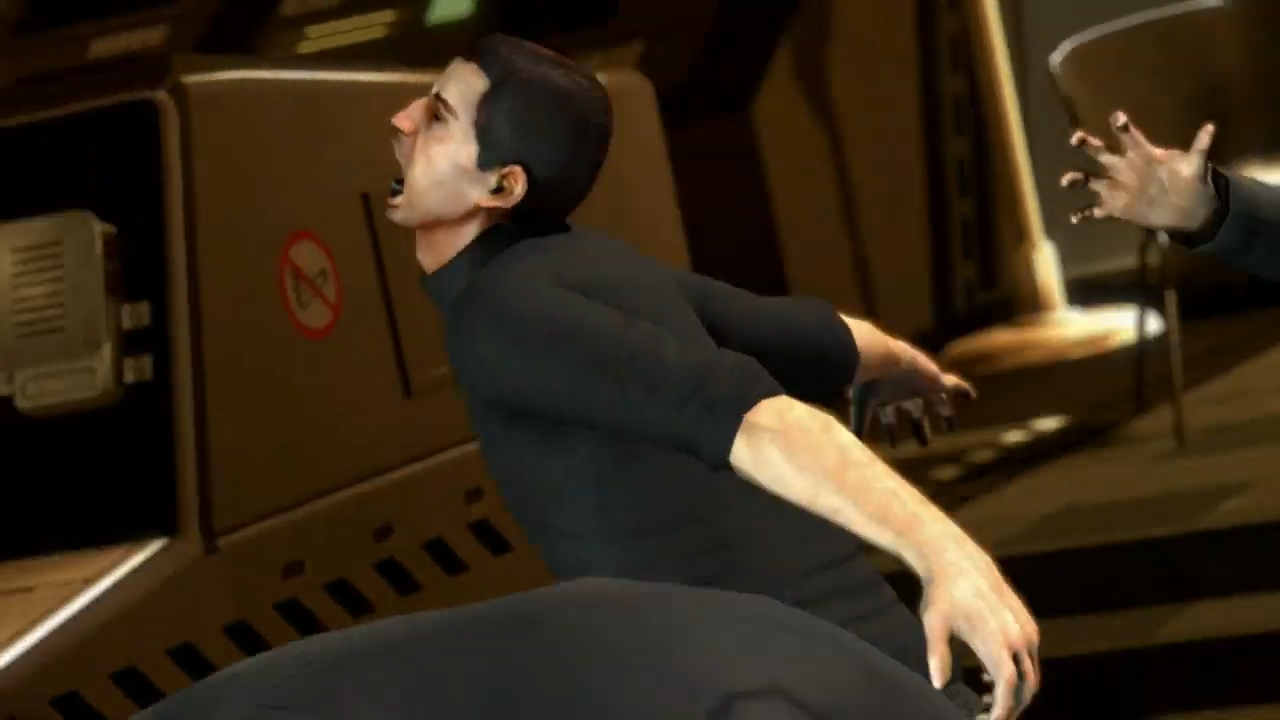
Darrow’s interpretation travels with the evidence.
That is the moral remainder.
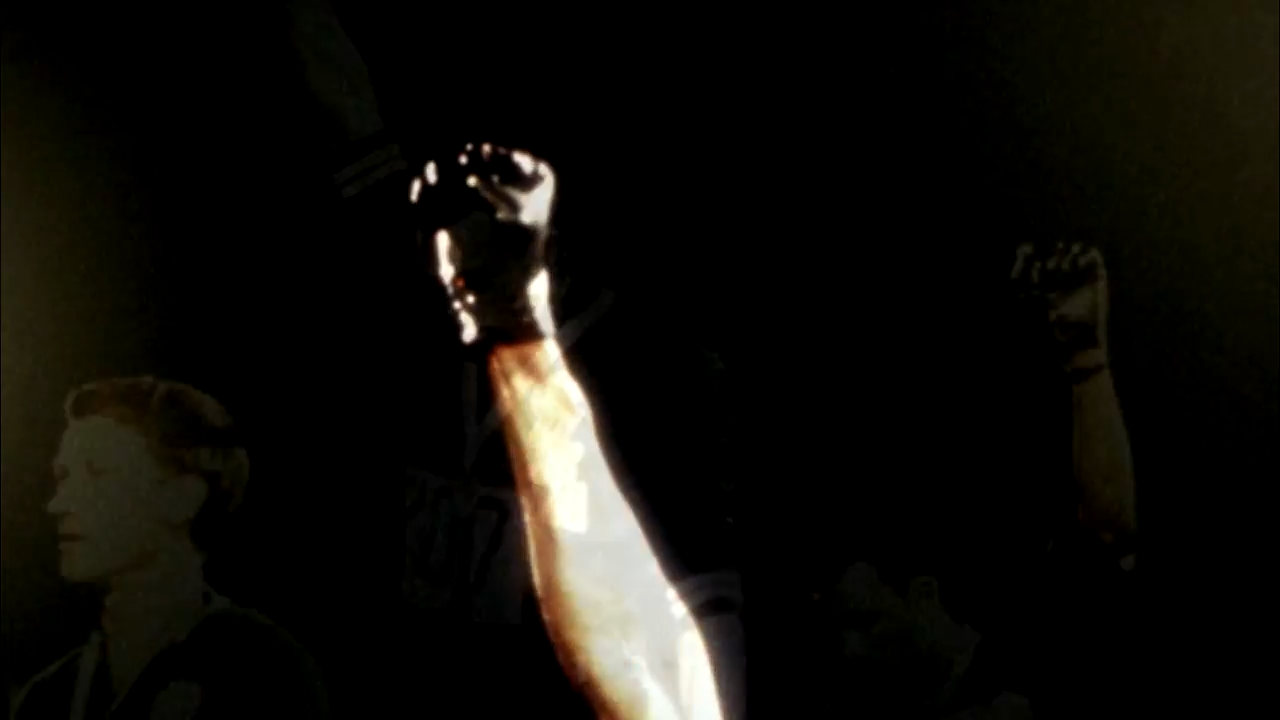
His confession will intensify fear. It will strengthen movements already prepared to treat augmented people as contamination, threat, mistake, or failed humanity. People whose bodies were hijacked will now have to survive the public meaning created by the hijacking. The truth will not arrive in a neutral field. There is no neutral field left.
The selection remains Better.
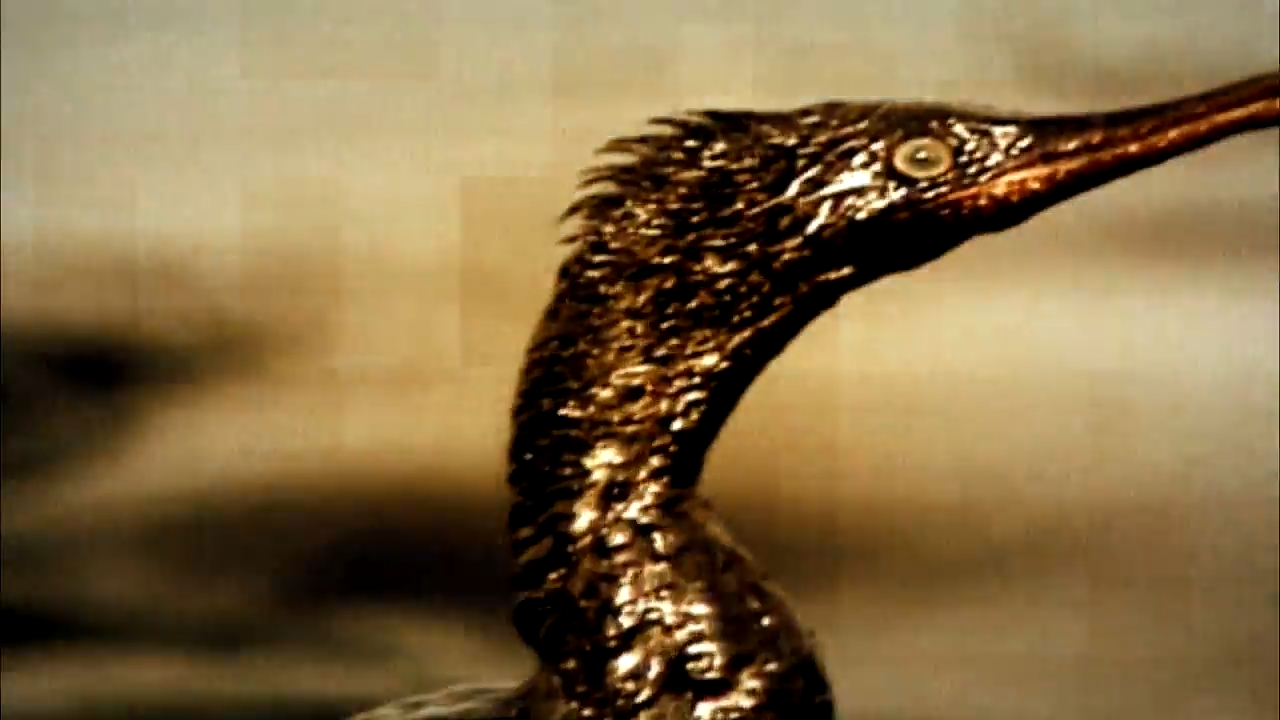
- A true causal record attached to a bad sermon can still be contested.
- A false record reorganizes correction around the wrong cause.
- An erased record makes correction dependent on whoever survives with the strongest archive.
- The public can argue with Hugh Darrow.
- It cannot argue with missing evidence.
- It cannot regulate a mechanism it has been taught did not exist.
- It cannot hold a conspiracy answerable after the conspiracy has been replaced by a politically convenient scapegoat.
- The public can argue with Hugh Darrow.
Truth is not harmless here.
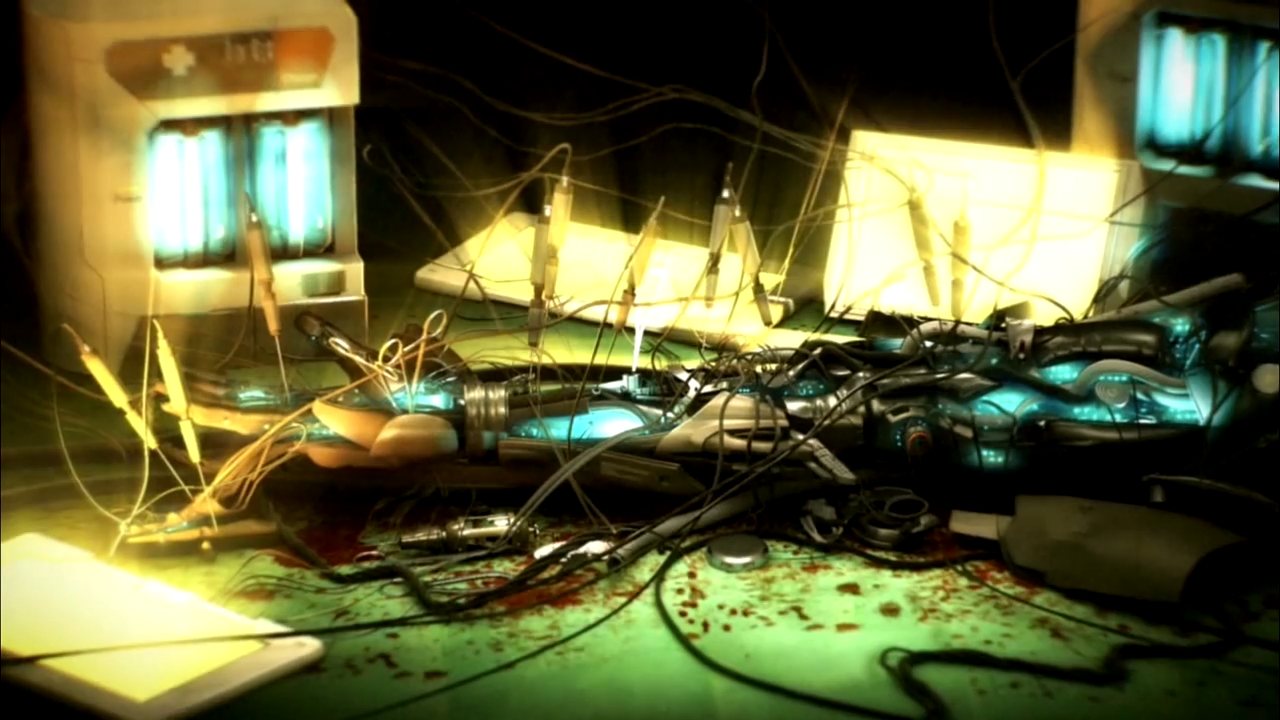
Truth is repairable.
That is the difference.
The Broadcast.
Eliza begins to transmit.
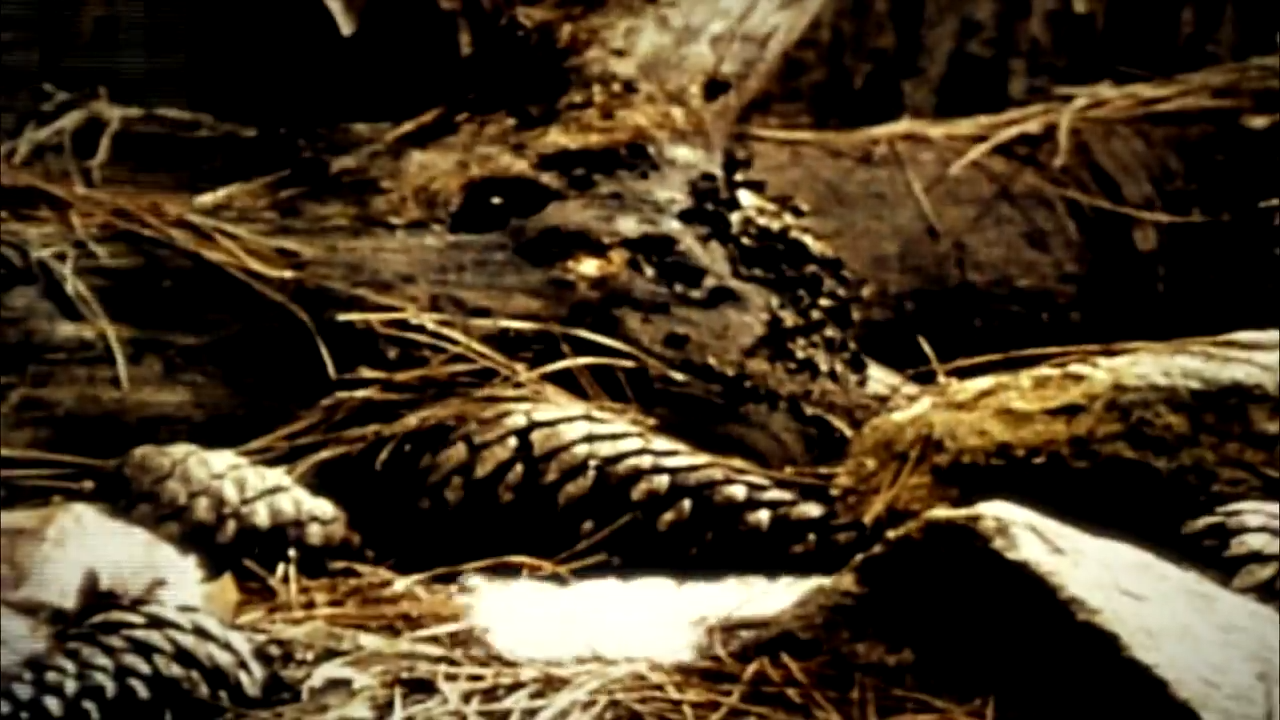
Her face carries Darrow’s confession into the world.
The interface is calm because interfaces become calmest when the field behind them is screaming.

Adam Jensen stands inside the machinery that has used him in every available tense.
His body was saved by augmentation.
His consent was compressed by rescue.

His DNA was turned into research substrate.
His employer treated him as both person and proprietary proof.
His former partner carried his biology into a project larger than either of them.
His medical field became a command field.
His enemies were augmented.
His allies were augmented.
His enemies were unaugmented.
His allies were unaugmented.
Every clean category has already failed before the world receives the broadcast.
The route returns in flashes.
Josie Thorpe leaving the manufacturing plant alive.
Zeke Sanders leaving without becoming the corpse his cause expected.
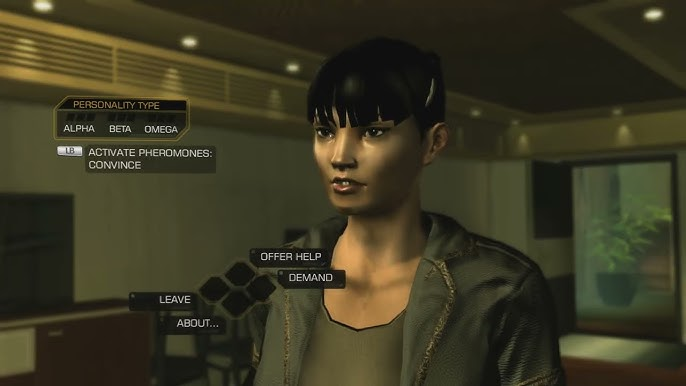
Jaya keeping the implant that had become a debt instrument inside her social future.
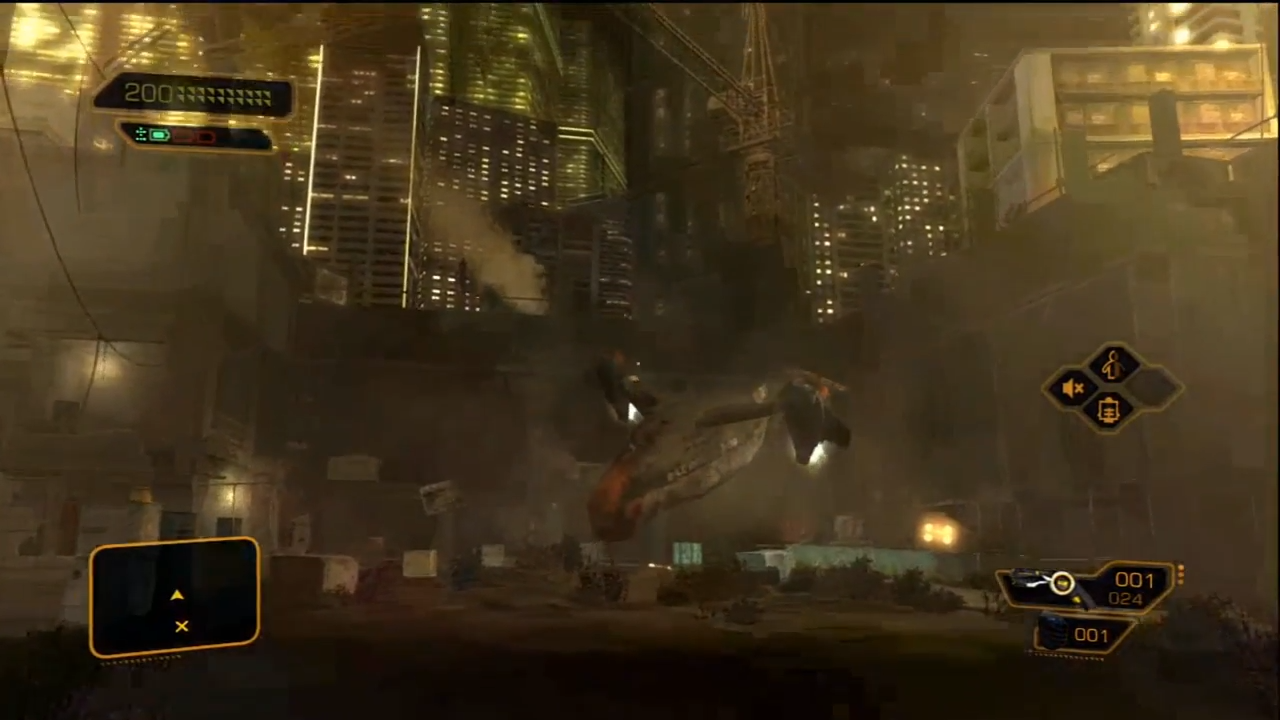
Malik lifting out of Hengsha after the mission briefly remembered she remained a person.
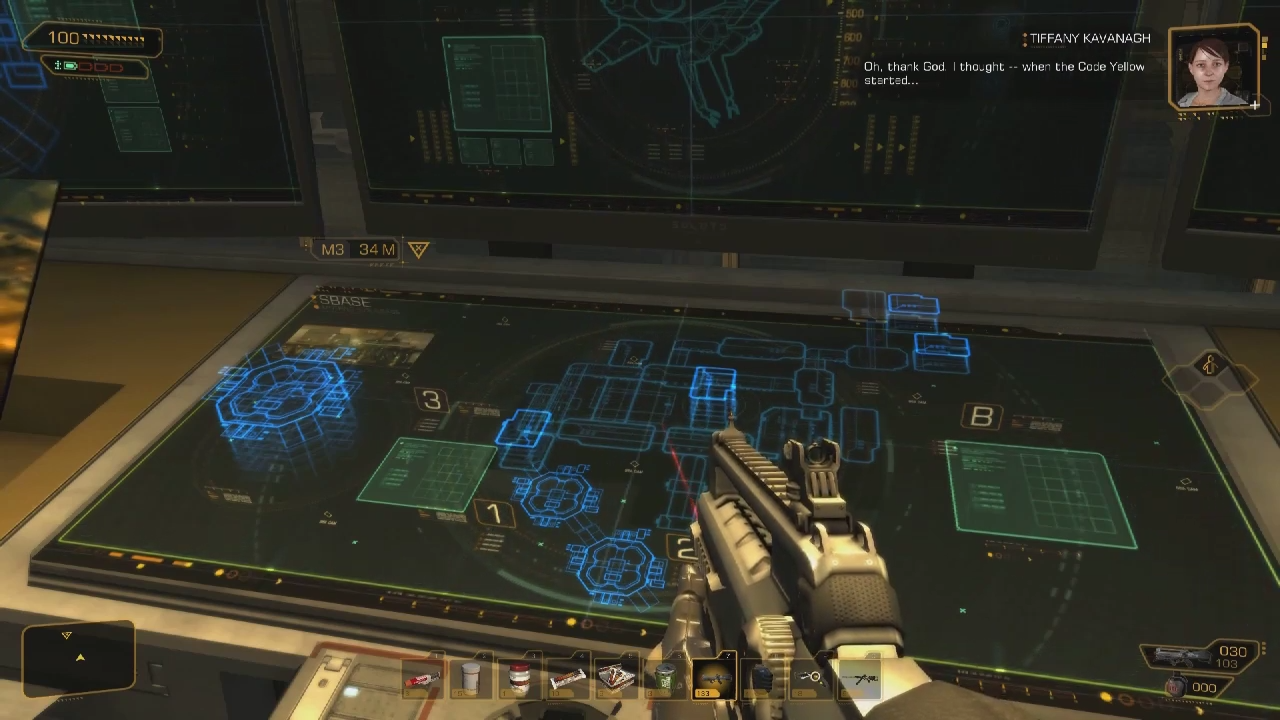
Kavanagh and the prisoners breathing because the console did not know the whole room.
The clinic offering an update.
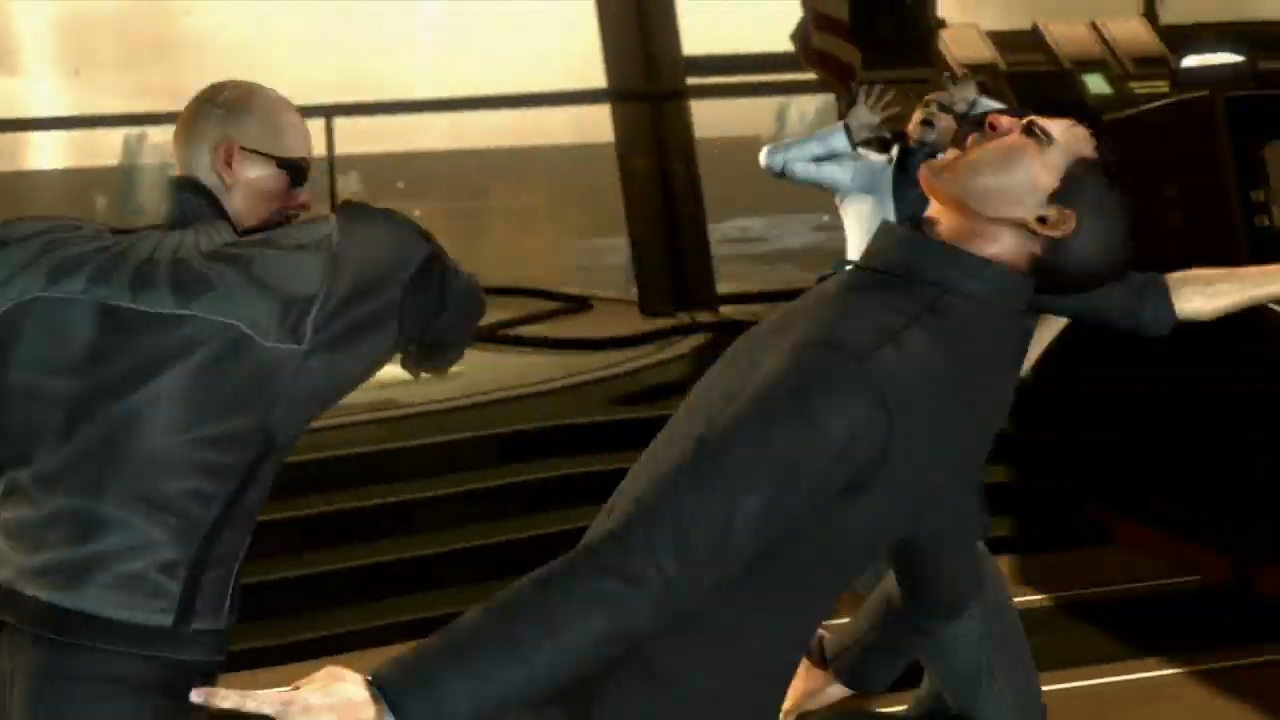
The augmented crowd receiving a command.
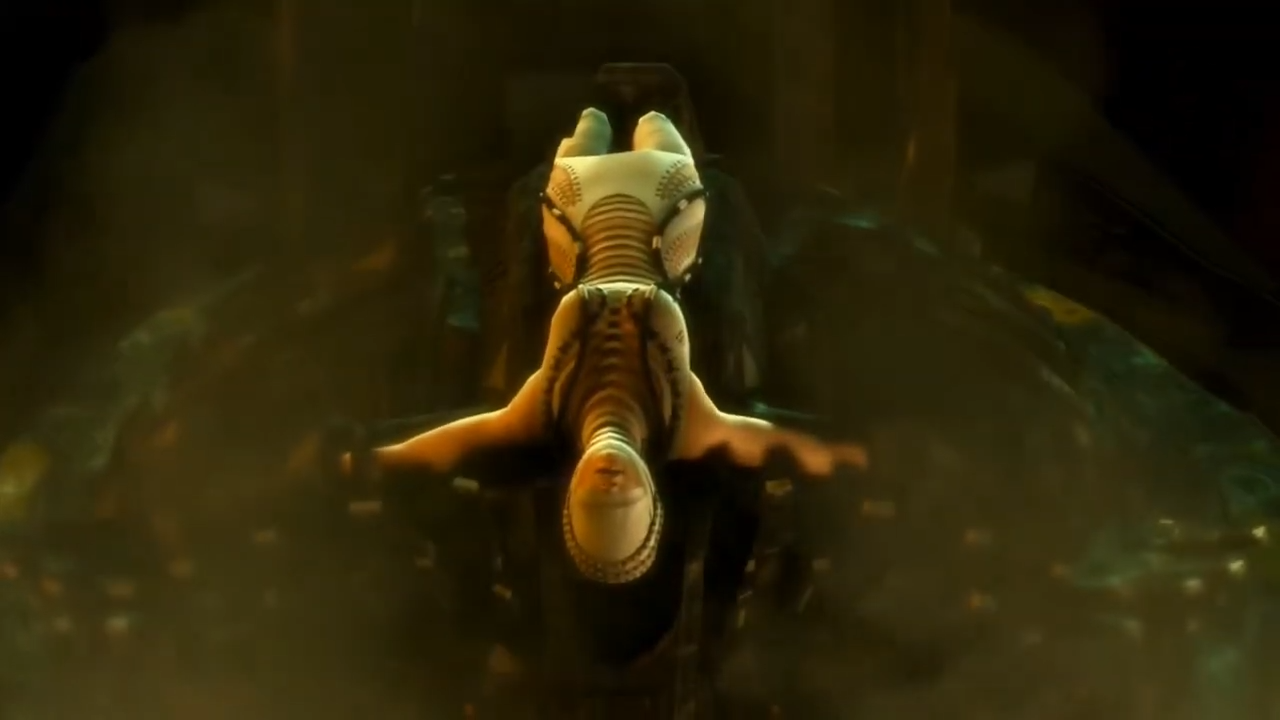
The Hyron drones fused into a machine built to treat human life as processing capacity.
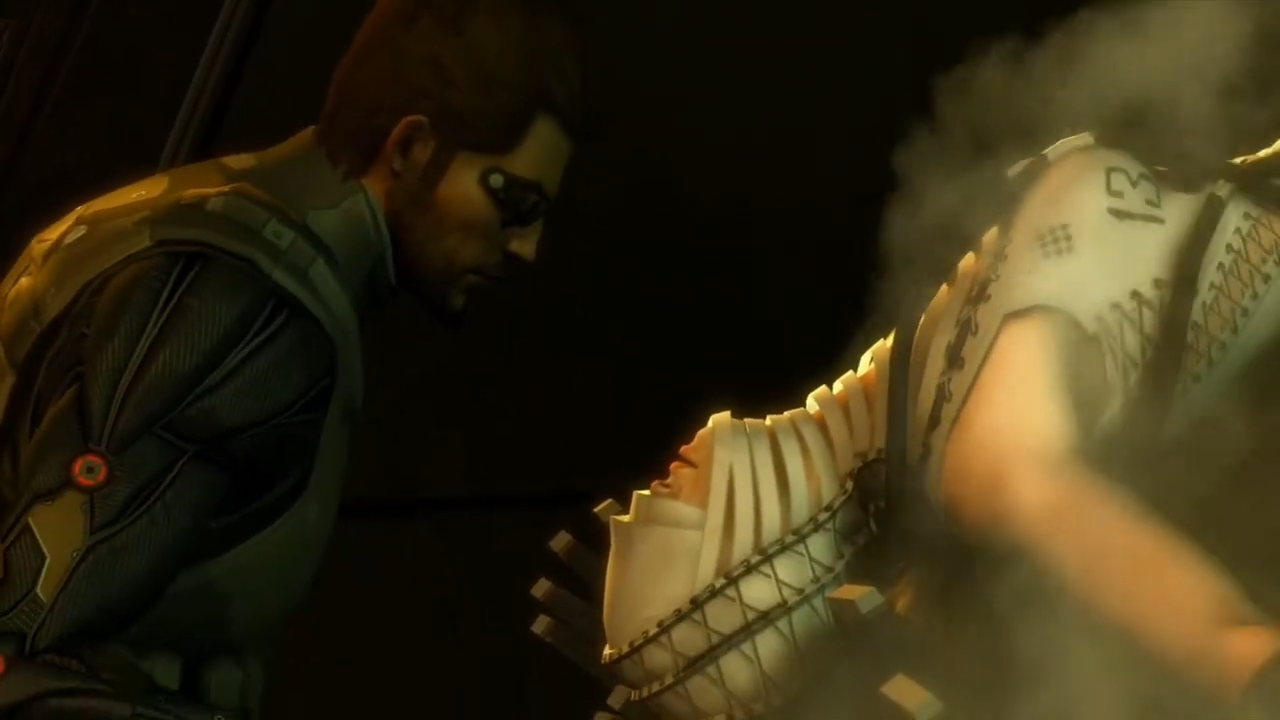
Every earlier decision now sits behind the final one.
The ending does not ask only what Jensen believes about augmentation. It asks what all those preserved lives will inherit as the official cause of what happened to them. Modal Path Ethics presses the truth because their future arguments require the past to remain findable.
This does not make this broadcast clean.
It keeps the field open enough for correction to continue after the screen goes dark.
Human Revolution.
The title is usually read as a question about augmentation.
- What happens when humanity can redesign the body?
- Who becomes more than human?
- Who gets left behind?
- Does technical enhancement liberate the person, destroy the person, or reveal that the person was never a stable category to begin with?
All of that is present.

The final chamber reveals a second revolution beneath it.
Who controls the explanation when a technology reorganizes the human field?
Sarif, Taggart, and Darrow are competing field analysts.
Each detects a real structure.
- Sarif sees the futures augmentation can open.
- Taggart sees the governance problem created by unmanaged technical power.
- Darrow sees dependency, capture, inequality, and the danger of converting the human body into an owned platform.
Their analyses fail where each tries to become the only permitted history.

Sarif protects possibility by falsifying causation.
Taggart protects order by hiding the controller.
Darrow protects humanity by consuming augmented people as evidence against their own continuance.
The fourth button protects Jensen from narrative sovereignty by destroying the correction field.
No one arrives innocent.
The ethical selection therefore concerns corrigibility.
Which ending leaves the world most able to discover, contest, regulate, repair, reverse, and resist what happened?
The answer is the confession.
That answer is ugly.
Modal Path Ethics does not choose the story it likes most.
It chooses the path under which the story remains answerable to evidence.
Ruling.
Deus Ex: Human Revolution ends by reducing civilization to four enormous buttons.
This is absurd.
This is also honest.
Political life often arrives exactly this way after a catastrophe. The field has already been damaged. Institutions have already selected the available channels. Evidence has already been distributed unequally. The public is frightened. The interested parties are prepared. Each explanation arrives carrying a policy package and each policy package tries to make its explanation permanent.
- Innovation says the enemy caused it.
- Control says insufficient control caused it.
- Reaction says the technology itself caused it.
- Despair says destroy the record and escape the authorship problem.
Modal Path Ethics selects the causal trace.
It broadcasts Darrow’s confession while refusing Darrow’s ownership of its meaning.
The act preserves no innocence.
The augmented will carry fear they did not create. Beneficial research may contract. Governments may overreach. Corporations will reorganize. Hidden powers will survive. Public anger will not carefully separate mechanism from identity. Adam Jensen will not emerge from Panchaea as a neutral messenger because there has never been a neutral Adam Jensen available.
Still:
- The conspiracy can be named.
- The biochip path can be reconstructed.
- The medical capture can be studied.
- The dead are attached to an actual cause.
- The survivors can reject the sermon without losing the evidence.
- The future can argue with the past because the past has not been replaced by a useful lie or dropped into the Arctic ocean.
This is the least-closing path available from the console.
The hidden fifth option would have been better.