SLIME WATCH IV: I Just Apologized to the Gamers
This has been a very difficult week for the Apologies Department.
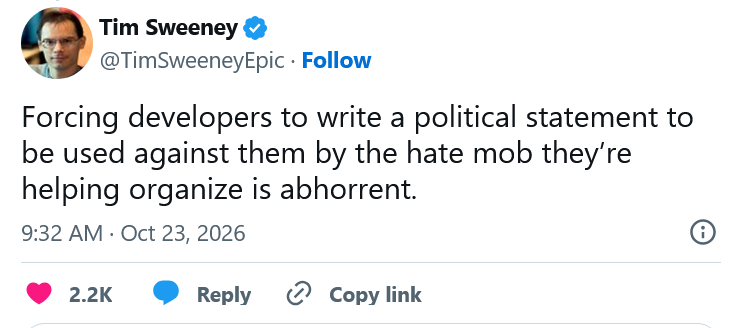
Tim Sweeney has announced that Steam is forcing videogame developers to make political statements.
Oh, shit.
On October 23, the Epic Games CEO accused Valve of requiring developers to declare their use of generative AI so that hostile communities could organize against them.
He called the arrangement abhorrent.
This seems a little dramatic, not that I can throw stones. But listen.
Sweeney has been making videogames for decades. He knows the industry. And there is something recognizable in his complaint.
Just a few days ago, I apologized to the gamers after publishing a fifteen-minute assault on their collective character.
This was an important moment of personal growth.
But apparently, Slime Watch is needed again.

Let's see what happened.
Tim Sweeney Has Seen the Gamers.
Steam requires developers to disclose generative AI used to produce content that ships with a game, along with AI systems generating content during play.
I am starting to wonder why.
We do not generally require videogame developers to disclose which graphics engine they used, whether their animations came from a marketplace, whether they purchased their textures, whether a programmer copied a solution from Stack Overflow, or how much of the soundtrack was produced using sample libraries.
- A developer can purchase an entire environment from an asset marketplace.
- No special public declaration is required.
- A second developer can produce a visually identical forest with AI.
- Now the player receives a special notice about the trees.
Why?
If the concern is copyright infringement, Steam already requires developers to warrant that they possess the necessary rights to distribute their games.
If the concern is quality, inspect the game.
If the concern is originality, examine the work.
If the concern is exploitative production, establish the production facts.
And if the concern is whether the customer simply dislikes AI-generated imagery, fine. Customers can have those preferences. But the existence of those customers does not explain why this particular production method requires a dedicated disclosure while comparable choices do not.
The distinction seems increasingly difficult to defend as a general principle.
Live-generated content is another matter entirely.
A game that produces unpredictable dialogue, images, or other material during play presents continuing moderation and content-control questions. The final output does not exist when the developer submits the game. Games have included notices on the box about online interaction and user-generated content for a long time for similar reasons, and Steam has a recognizable operational reason to ask how the system behaves and what safeguards exist.
That is different from a developer using a tool to produce a texture that has already been inspected, edited, approved, and shipped.
And Valve itself seems increasingly comfortable with that distinction.
In January, it clarified that routine AI-assisted development tools were outside the focus of its disclosure form. The concern was generated content included in the finished product or marketing materials.
Then, on October 27, Valve representatives Tom Giardino and Marc Wilkinson attended Steam Indie Connect in South Korea.
Giardino explained that Valve did not want to police developers' choice of tools.
That sounds considerably more like the Valve I know.
Which does make the remaining special disclosure requirement a little awkward.
Steam says it does not want to decide which tools developers should use, while still placing one particular category of tools on the store page as a warning.
Perhaps the requirement will evolve. Perhaps Valve can identify a more coherent consumer-information principle. But for now, I do not think Sweeney's objection can simply be dismissed.
His larger claim, though, is that these disclosures become ammunition for organized harassment, boycotts, and review bombing.
Well. Yes.
They certainly can.
But the problem with this argument is that gamers were already doing that.
Long before generative AI.
Long before Steam's disclosure requirements.
There was a dark period when including a woman in a videogame could produce an extraordinary public emergency.
In September 2018, Total War: Rome II was review-bombed on Steam over claims that the game contained too many female generals.
Creative Assembly explained that the relevant recruitment probabilities had not changed as alleged.
This did not resolve the Gamer Emergency.
The game's community editor, Ella McConnell, explained that unhappy players could modify the relevant probabilities or even play something else.
This somehow made the Gamer Emergency worse.
Steam did not invent the woman or the Woman Crisis.
Steam was operating a videogame storefront while some of its customers conducted an intrepid investigation into the alarming possibility that women existed in antiquity.
The review bombing proceeded.
And that was eight hard years ago.
So Sweeney is identifying a real problem, although the causal culprit is somewhat older than the technology he is defending.
Steam did not teach gamers to convert cultural grievances into economic punishment.
They have extensive experience there.
The platform can certainly do more to prevent abuse of its review system. The disclosure policy does deserve scrutiny on its own terms.
But withdrawing a disclosure would not end the practice of turning cultural grievances into economic weapons. The gamers have demonstrated that they can discover something to become furious about without Valve filling out any forms for them.
The more interesting problem is what people do after receiving information about a game.
And unfortunately, this week they decided to explain that too.
"The Hostile Environment Is the Point."
On October 21, Time Extension published an article about Steam Next Fest drowning in AI slop.
Steam Next Fest was fucking enormous. Some demos looked bad. Some games were shameless clones. Some games used AI.
This article was chiefly concerned that the abundance of low-quality submissions could bury the next Super Meat Boy or similarly exceptional independent game.
That's a real discovery problem.
Steam has been drowning in derivative games, asset flips, shovelware, and unsuccessful experiments for years now, though.
AI can make producing some of this shitty material easier. That is definitely worth measuring.
But the question of whether a particular game is any good remains stubbornly attached to that particular game.
One commenter had spent an hour browsing and found only about fifteen demos that looked appealing. But several of those were skipped after reading their AI disclosures.
Another explained that generative AI use disqualified someone from being a creator.
Code assistance was apparently totally acceptable, though.
Art, voices, and writing: forbidden.
But code, famously, has zero artistic relationship to a videogame.
This commenter also helpfully explained that using AI meant seeking the glory and satisfaction of creation without the effort of learning a craft.
Right.
I had forgotten about The Glory of Men.
I have been making bad games privately for years, and I had never realized glory was the objective.
I thought the objective was to make the game.
Woops.
Sometimes the game doesn't work.
Sometimes it does.
Occasionally, after an extraordinary amount of work, the character can open a door without becoming embedded in the surrounding architecture.
There is often satisfaction in that.
Fuck.
He caught me.
I'm exposed.
Another commenter proposed something slightly more ambitious.
OdysseyPoint recommended shaming members who accepted AI, rejecting AI-assisted projects from the community, and introducing anti-AI rules even if they could not be enforced.
Then came the explanation:
"The hostile environment is the point."
And there it is.
Sweeney, come check this out.
I appear to have actually located one of those people you were talking about.
A later comment clarified that shaming established community members was particularly useful because they might possess influence over community rules.
This is admirably candid.
The purpose of this policy is to discourage participation by people who hold the wrong position.
We are now several miles away from determining whether the animations in a videogame look like shit.
Another commenter dared argue that AI tools could give smaller developers access to production resources previously available mainly to wealthier studios.
This is a perfectly reasonable proposition to investigate.
Of course, it received the familiar hostile responses about talent, effort, and people needing to learn how to make games properly.
I would just love to know what their approved process is.
Must the independent developer construct their own engine?
Are middleware libraries acceptable?
Does purchasing an animation pack invalidate your creator license?
And could someone please tell me whether the individual who programmed the game is allowed to call their code art?
I am beginning to fear that these rules were written before anyone figured what the fuck a "videogame" actually was.
The Demo Has Leaked.
There is, however, still another legitimate concern emerging from Steam Next Fest.
Developers are becoming afraid to release demos because other people can copy them. Some are even receiving reported extortion threats from people promising to recreate their games with AI and release the copies first.
That is substantially more serious than someone noticing an AI disclosure and becoming upset about a digital stone.
On October 19, developer Alliance Arts postponed the public demo of Drunken Goddess Reflux, concerned that its presentation and gameplay could be replicated before release.
Digital Sun Games, the studio behind Moonlighter, made a similar decision about its upcoming game ReVamp.
The studio had tens of thousands of prospective playtesters.
Rather than distribute an unrestricted build, it moved toward a smaller, controlled playtest while postponing wider access. Its concern included reverse engineering and decompilation.
Which is understandable.
Once a developer distributes a game executable, there is no guarantee that everyone receiving it will behave politely.
Assets can be extracted.
Scripts and other implementation details may be reconstructed, depending on the engine, build, and protective measures.
Systems can be observed and reimplemented.
An interesting mechanic can be recreated without anyone ever obtaining the original source code.
These are different ways of copying something, with different legal and technical consequences. None was invented in October 2026.
But the tools available to do them are improving and becoming incredibly accessible.
And developers now face a particularly nasty scenario.
- You spend two years building a game.
- You release a demo.
- Someone copies its most visible mechanic,
- uses automation to construct a rough imitation,
- and releases it before your original reaches the market.
- uses automation to construct a rough imitation,
- Someone copies its most visible mechanic,
Now, there are six versions of your idea on Steam.
The first players to encounter it may not even know which one started the whole thing.
That can damage discoverability, consume the original developer's commercial window, and make the creator reluctant to share the work that would help them find an audience.
But I have difficulty believing that the clone problem arrived with AI.
Remember Unrecord?
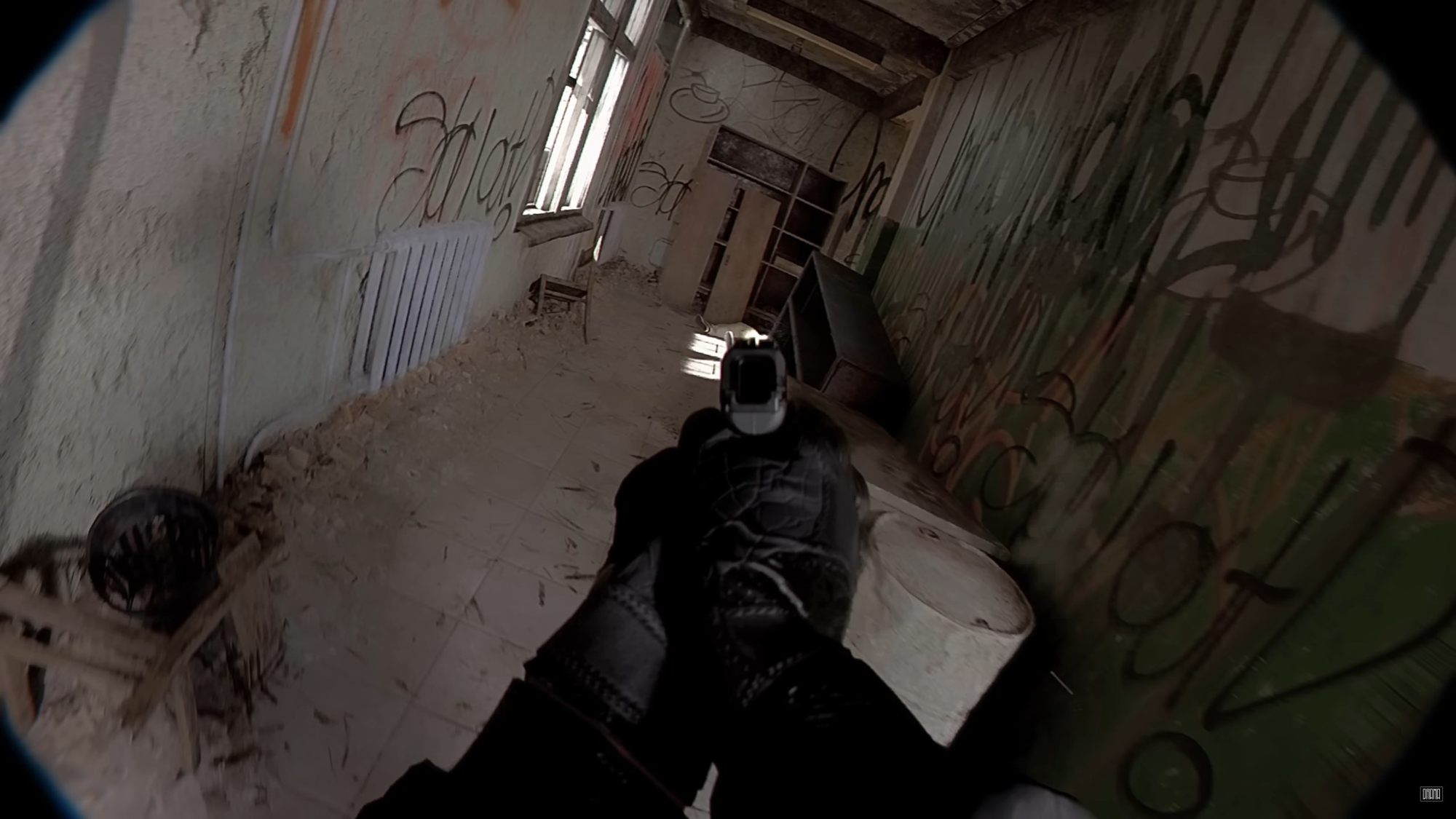
In April 2023, the hyperrealistic body-camera shooter produced viral footage that looked suspiciously like an actual police recording.
Then came Bodycam.
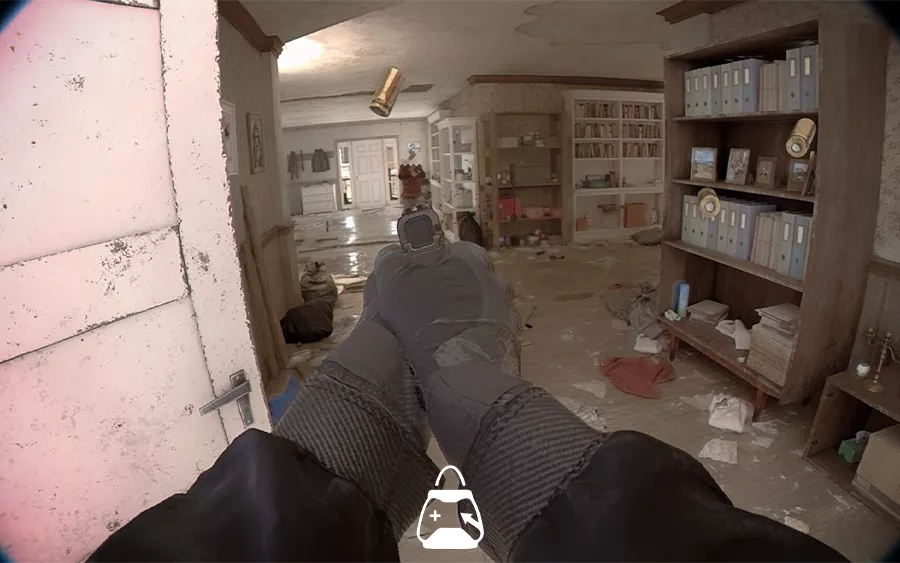
When Reissad Studio released Bodycam in June 2024, the comparisons were immediate.
The games shared the body-camera presentation, photorealistic environments, and related visual techniques. Some commentators openly called Bodycam a rip-off.
But there were also significant differences. Unrecord was being developed as a single-player narrative experience; Bodycam was a multiplayer shooter.
Similarity did not establish that one studio had stolen another's code or assets unlawfully. But the resemblance was obvious enough that people were discussing it publicly.
Then in July 2026, players noticed a game called Bodycam Onrecord and began warning the original Bodycam community about apparent similarities in branding and presentation.
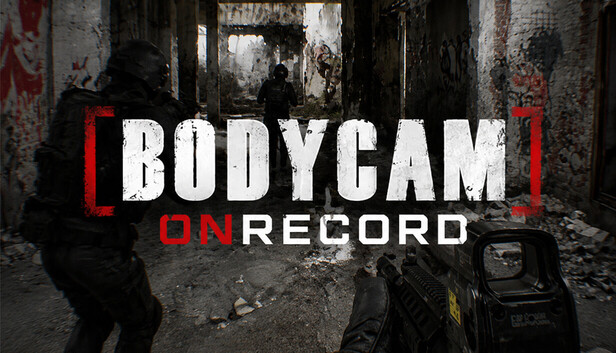
The developers of Bodycam Onrecord even published a statement explaining that they were not affiliated with either Bodycam or Unrecord.
Look at this mess.
- Unrecord.
- Bodycam.
- Bodycam Onrecord.
Eventually someone is going to release Recording: Bodycam Unrecorded.
But the confusion illustrates something useful.
Players were capable of noticing similarities, discussing attribution, and distinguishing these products.
They did not necessarily require a software-origin detector to recognize that someone was pursuing the same visual concept here.
- Some clones are recognizable immediately.
- Others are confusing enough to cause real commercial damage.
- And a game pursuing a similar idea can still become a distinct work.
These possibilities all exist.
Now Valve has offered its own advice.
Valve Suggests Making a "Video Game".
At Steam Indie Connect on October 27, Valve's Tom Giardino acknowledged that copying games was already an established industry practice.
AI has accelerated the process.
His advice to developers was to build communities around their work, establish relationships with players, and continually improve their games.
He also warned against relying entirely on one easily copied mechanic.
Instead, developers should continue adding their own features, personality, and creative decisions.
This is good advice. And it mirrors Valve's longstanding approach to piracy.
Valve has often argued that the strongest response to unauthorized alternatives is to make the legitimate product the version people most want to use.
The original developer has an advantage that a fast imitator may lack:
They know what they are trying to make.
A copier can reproduce the visible trick.
They may be able to reproduce the first ten minutes of gameplay.
They may imitate the art direction.
They may even reconstruct much of the technical implementation.
But copying the current state of a project is different from possessing the ongoing development practice that produced it.
The original creators know which ideas they rejected and what problems remain unsolved. They have relationships with players, plans for future development, and accumulated experience with the particular game.
That does not make them invulnerable.
A better-funded competitor can sometimes outperform the original.
A clone can reach the market first.
A malicious publisher can manipulate search results or impersonate a legitimate studio.
But these are reasons to develop a stronger product identity and protect the actual work, rather than to imagine that a single mechanical concept can be permanently removed from other people's reach.
There is also a basic legal reality here.
The U.S. Copyright Office explains that the idea for a game and its methods of play are not protected by copyright. Neither is a genre.
A game can have protected software code, artwork, writing, music, audiovisual expression, and other original elements. Specific copying may violate those rights. Trademarks can also come in when branding misleads customers.
But a developer generally cannot claim copyright ownership over the idea of a body-camera shooter, a deck-building roguelike, or a game about digging through a mountain.
And thank fucking God.
We would have to identify the first person to invent jumping.
What makes a game distinctive is the accumulated work of turning an idea into that particular game.
A single mechanic can still support an extraordinary small game. Valve's advice does not establish that mechanically simple games are uncreative or somehow undeserving of protection.
The point is that the first visible trick is often the easiest part to reproduce.
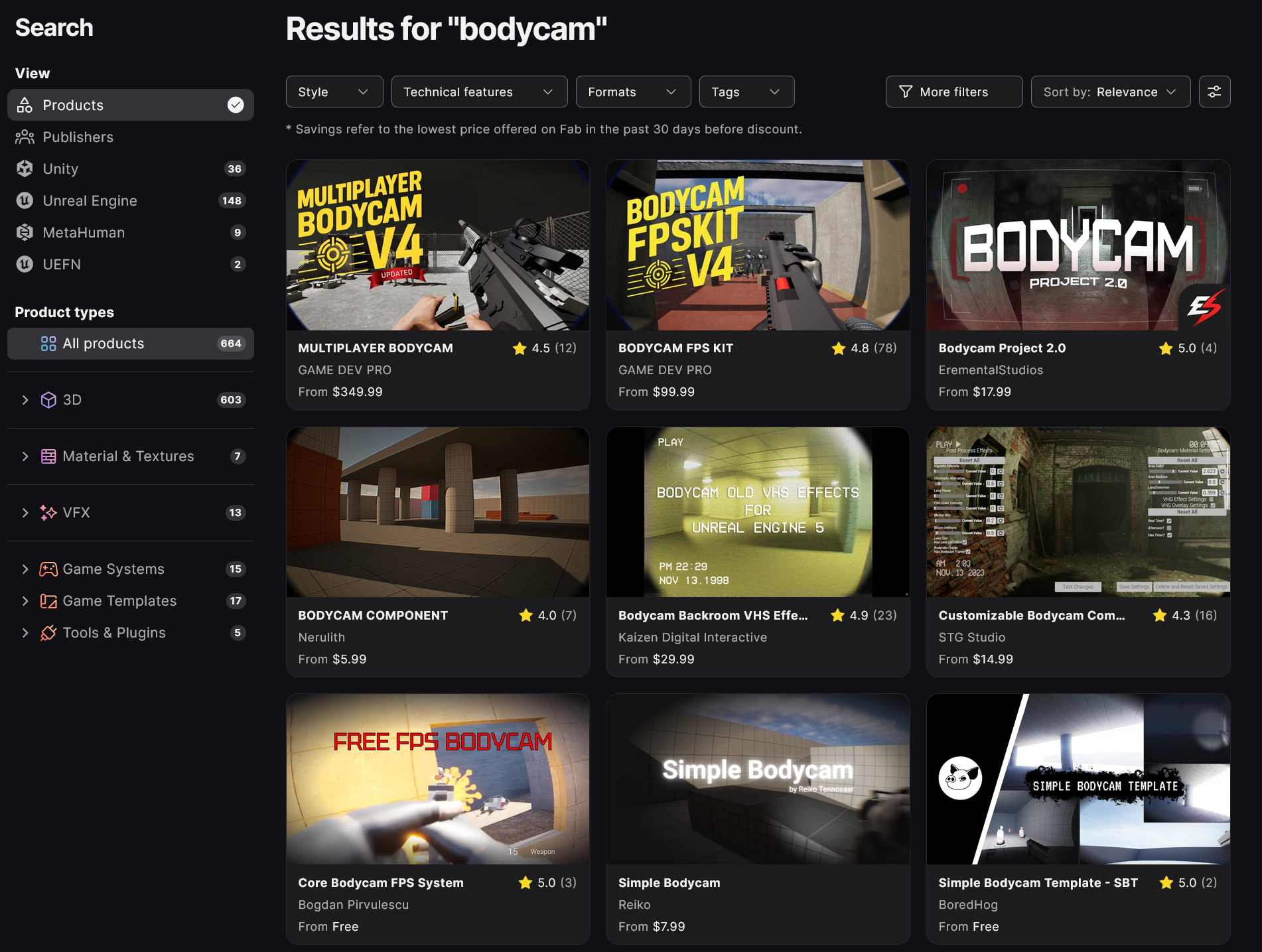
The original creator's strongest defense is often the part of the game that cannot be captured in one screenshot.
The obvious response is to keep making the game better and give players reasons to know which game they are supporting.
But the Developer Still Has to Survive the Demo.
There is a limit to that advice.
An original developer can have the better long-term vision and still lose the commercial race.
If a copier ships first, uses confusingly similar branding, captures the search traffic, or saturates the market with cheap imitations, the original may never receive enough attention to demonstrate its superiority.
A great game that nobody finds is still in trouble.
And developing and maintaining a player community, continually improving a product, and responding to copycats all consume time and money.
So, yeah, developers are reasonable to examine their release strategies.
Digital Sun's marketing manager, Israel Mallén, suggested giving studios more control over who receives prerelease builds.
Steam account age, playtime, and review history could provide signals that someone is an established participant rather than an account created yesterday for the sole purpose of harvesting some juicy demos.
That's very reasonable.
Not foolproof.
A determined copier can possess an established Steam account, and a legitimate player can have a brand new one.
Someone can record every visible mechanic and style without ever obtaining an executable.
And after release, the entire game is available for inspection anyway.
But the proposal is narrower than banning new creators from Steam. It gives developers an additional way to manage the risk of early access to their own unfinished work.
The worst-case scenarios should be considered before releasing a demo, not discovered through a frantic social-media post afterward.
What if someone extracts the assets?
What if someone recreates the central mechanic from footage alone?
What if a lookalike ships first?
What if its store page resembles the original closely enough to confuse buyers?
What if the clone gets more visibility?
What if the copied version is fucking terrible and damages public interest in the entire idea?
Can the original still win because its community recognizes it?
What if the supposedly derivative project develops into something truly different and better?
So a sensible release plan may use controlled testing, a smaller vertical slice, delayed public access, better provenance records, protected server-side systems, or stronger community development.
The exact defenses depend on the project.
None guarantees immunity.
And some carry costs of their own. Restricting a demo can deprive the developer of feedback, accessibility testing, discoverability, and the very community relationships that Valve is recommending.
There is a real tradeoff.
- The developer needs people to play the game.
- The developer also needs to people to buy it.
That dilemma deserves much more attention than deciding whether someone who used Claude has earned the title of Creator.
Valve still has responsibilities here. Confusing impersonation, stolen assets, misleading marketing, extortion, and abusive storefront manipulation should not be waved away as ordinary competition.
But a platform cannot promise that no one will make another game with similar mechanics.
And trying to deliver on that promise would create an entirely different creative disaster.
Imagine requiring every new developer to demonstrate that their idea is sufficiently different from every game already on Steam.
This would be the world's largest meeting.
No videogame would ever be released again.
The conference would continue forever, probably on Discord.
Open Source, Except for Those AI Users and Foreigners.
On October 24, the moderators of Reddit's r/opensource announced some new participation rules.
- Projects using AI were unwelcome.
- Projects made with AI were unwelcome.
- Projects intended for AI were also unwelcome.
The moderators additionally wanted projects to have roughly a year of active maintenance, an existing community, and multiple contributors before being promoted there.
- Requests seeking collaborators were no longer welcome.
You must establish the project before entering the community that might help you establish the project.
This is open source with a credit history requirement.
Then the moderators explained that any people who did not speak English should just fuck off and find another community, because AI translation made it difficult to establish whether a contribution was authentically written.
The anti-AI policy had now successfully excluded any and all people who might need AI to communicate.
Perfect.
We have protected the humans from artificial intelligence by eliminating all non-English-speaking humans.
This announcement triggered substantial backlash, including objections from other moderators, and its authors began reconsidering these rules.
Looks like correction still works.
But this original proposal captures the strange reversal underway.
Open-source software is supposed to make substantial technical resources available for others to study, modify, and build upon.
Now a community dedicated to that practice was proposing to exclude inexperienced developers because they used tools to help build software.
- The developer requires assistance.
- Assistance is disqualifying.
The developer must first become sufficiently established without assistance.
Congratulations.
You have just recreated the employment application.
Somebody Please Tell Square Enix The Hostile Environment is The Point.
Fortunately, this same week produced an alternative theory of game development.
On October 24, Famitsu published an interview with Yoshinori Kitase, Hiromichi Tanaka, and Koichi Ishii, veterans of the development traditions behind Final Fantasy and Mana.
People who have made a few videogames in their days.
Their discussion of artificial intelligence was considerably more interesting than the gatekeeping proposals.
Tanaka expects AI competency to become increasingly important. He believes the tools will allow more independent games to be developed.
Kitase points out that the industry has already been through a major accessibility transformation.
Developers once needed to construct much of the underlying engine technology themselves.
Now they can use Unreal or Unity.
AI could extend that process, giving inexperienced developers more opportunities to make games and, crucially, finish them.
He distinguishes the original creation of an idea—turning zero into one—from the enormous work involved in developing that idea into a finished production.
AI can help with the latter.
But the former still requires human invention.
Ishii adds that people should remain responsible for the beginning and end of the creative process, while AI-assisted prototyping can leave more time for experimentation and refinement.
They also discuss copyright concerns and the risk of losing human warmth through excessive automation.
There is the real discussion.
They remember making games when the tools were substantially less accessible.
They understand that new technology can reduce the difficulty of implementing an idea without supplying the idea or removing the need to evaluate its execution.
The distinction is hardly unprecedented.
In 2002, BioWare released Neverwinter Nights with its Aurora Toolset so players could develop their own adventures.
In a 2004 interview, co-founder Greg Zeschuk discussed how the resulting community work ranged from rudimentary experiments to material approaching commercial quality.
BioWare considered this a success.
Some beginners made bad games.
Others learned.
Some made impressive things.
This technology opened an enormous field of creation that did not previously exist in the same accessible form.
Then Unity became available.
Godot was released to the public as open-source software.
Unreal Engine 4 became free to use.
Every development reduced the requirement that a person independently recreate existing technical systems before experimenting with a game of their own.
None of them ever guaranteed that the resulting game would be good.
They allowed more people to attempt to make it good.
And those people could become better developers through the attempt.
The veterans appear to understand this perfectly well.
But unfortunately, Polygon has discovered Greg Zeschuk.
Polygon Has Found the Wrong Problem.
BioWare closed on October 21.
We already addressed that terrible tragedy in the Gamer apology article, alongside the losses borne by its developers and the extraordinary amount of unfinished work left behind.
I am not going to make Commander Shepard attend yet another funeral this week.
On October 28, Zeschuk spoke to Brian Crecente at 80 Level about the closure.
His interview includes a particularly sharp criticism of the business executives who run game companies without having personally developed a game from beginning to end.
He also rejects the assumption that a successful studio like this can be reconstructed with a bunch of random people and AI.
Of course.
BioWare was an actual development organization.
Its people had spent years learning to work together, accumulating knowledge, creating systems, solving problems, and developing the competence required to make very complicated games.
A company cannot just automatically reproduce that organization by hiring unrelated people and giving them access to Claude.
Nor could they do this with Microsoft Excel.
The missing object is the competent game development organization formerly known as BioWare.
But then, on October 29, Aimee Hart published BioWare Co-Founder Breaks Down the Problem With AI in Game Development Perfectly over at Polygon.
The article correctly reports Zeschuk's frustration with executives who do not understand game development.
Except then it pivots over to Epic Games encouraging developers to use generative AI. In Polygon's framing, this encouragement is contrasted with fostering traditional development skills.
But, hang on.
Why would learning to make a game using new tools prevent somebody from learning to make a game?
Zeschuk was describing executives who have never done the work.
His criticism concerns the assumption that management can substitute a loose collection of production inputs for the developed competence of a team of workers.
That is a perfectly good criticism.
But it does not establish that a developer using a coding assistant cannot learn programming, that someone using generated placeholders cannot learn animation, or that an inexperienced creator prototyping a game with AI will remain inexperienced forever.
And it certainly does not establish that Epic encouraging its developers to adopt new tools explains what happened to BioWare.
Polygon acknowledges that generative AI may not have caused the closure.
Right.
Then why have we arrived at Epic Games?
This interview is about business people who do not know how games are made.
- If management destroys a functioning development team because it incorrectly assumes AI can replace its accumulated skill,
- then investigate that, please.
- If a junior programmer uses AI to understand an unfamiliar system,
- the junior programmer is learning something.
These situations are just not equivalent.
And now the irony is complete.
Greg Zeschuk helped establish a studio that once encouraged inexperienced people to make videogames with powerful development tools.
His warning about executives who cannot make games has now been recruited into an argument about why encouraging the use of powerful development tools threatens the development of game-making skill.
In the very same week that veterans of Square's old RPG teams explained how these tools could help inexperienced creators finish their games.
This is becoming fucking ridiculous.
I am beginning to enjoy it.
SLIME WATCH.
So, where does that leave us?
- Steam is increasingly explicit that it does not want to police developers' tools, even as its AI-disclosure requirement remains increasingly difficult to reconcile with that principle.
- Independent developers have legitimate reasons to fear that early demos can be reverse engineered, cloned, and beaten to market.
- Valve has suggested building better, more distinctive games and stronger communities rather than attempting to prohibit the production tools other developers use, but could still possibly do more elsewhere to help.
- Sweeney has identified a real general problem with consumer hostility, while somewhat overstating the responsibility of the disclosure mechanism.
- Some gamers have openly advocated making creative communities hostile to people who use AI, to protect Glory and prevent Feelings of Satisfaction.
- An open-source forum tried to protect software development by excluding beginners, solo developers, and any people who need translation.
- Japanese RPG veterans, meanwhile, are calmly discussing how new tools can expand creative participation.
- Greg Zeschuk has criticized executives who think skilled teams can be reconstructed from interchangeable labor and new technology.
- Polygon has managed to turn that criticism into yet another warning about developers using AI.
- And I just apologized to the gamers on Monday.
It's now Saturday.
I really thought the apology would last longer.
The underlying ethical questions remain fully available. Rights, energy consumption, worker displacement, quality, and the misuse of production tools all deserve hard evidence and serious examination.
This website has already done that examination at considerable length and will continue to do so.
I am no longer going to perform it every time someone sees the letters AI in the vicinity of a videogame.
The remaining proposition is simple.
Making it easier to begin making games does not make knowing how to make good games unnecessary.
In fact, the first can support the development of the second.
People still need ideas.
They still need judgment and experience.
They still need to learn what works, discover what fails, and finish something worth playing.
And now, apparently, they also need to think about what happens if somebody copies the game before they finish it.
The solution to that problem cannot be to prohibit every tool that makes copying easier, because the same tools can make original creation easier.
Nor can it be to grant the inventor of one interesting mechanic exclusive rights over an entire genre.
The industry would have run out of genres somewhere around 1983.
Some developers will produce absolute garbage.
That was already always happening and will never ever stop.
The videogame industry has had this problem since the moment it became possible to sell videogames.

Some will make remarkable games using tools that did not exist when their careers began.
Some will create ideas that others copy immediately.
Some will be recognized, and some may be good enough to become games worth playing in their own right.
The audience will be allowed to find out.
There is no reason to require a creator to pass an apprenticeship administered by anonymous Steam reviewers before any of that happens.
And there is definitely no reason to make a person's creative legitimacy depend on whether their community has succeeded in making them miserable.
For now, the Apologies Department has instructed me to stop corresponding with the gaming public.
The Department says that my last apology was incredibly sincere, adequately sourced, and represented meaningful ethical development.
It has also informed me that publishing a second article the same week entitled I Just Apologized to the Gamers is probably evidence that the correction did not take.
Fair.