
Emmanuel Levinas and the Infinite Claim
The Other gets there before your freedom.
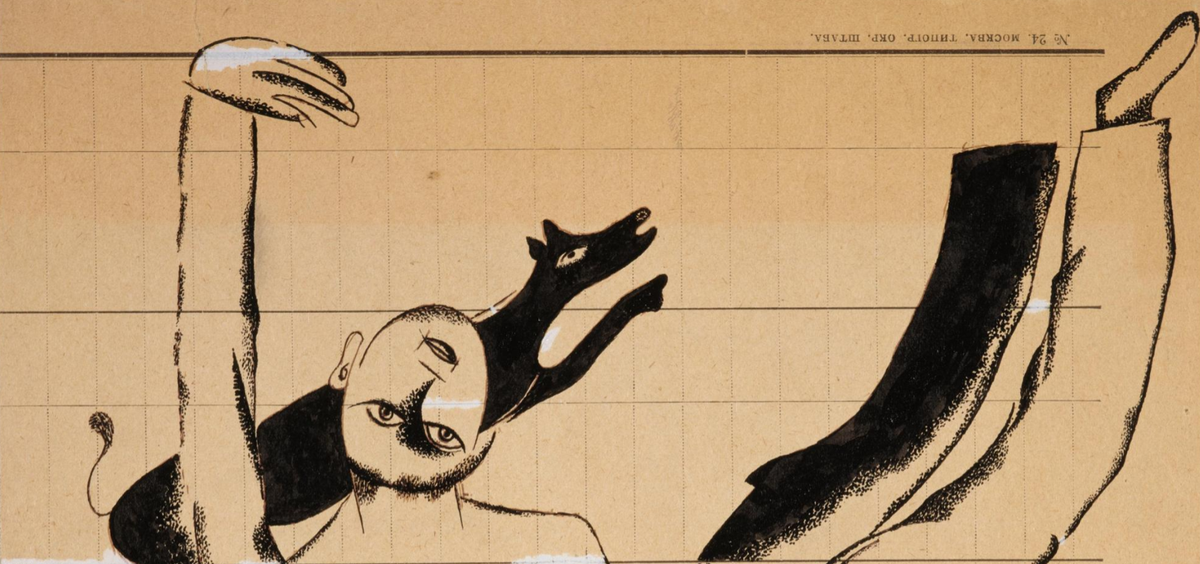
At Stalag XI-B, recognition came running.
Emmanuel Levinas later wrote about a stray dog that attached itself to the Jewish prisoners in the labor detachment where he was held during the Second World War. They called the dog Bobby. The prisoners would come back from forced labor and Bobby would greet them.
The guards knew what the men were. The civilian world passing the camp had learned what the men were. Levinas remembers a field in which Jewish prisoners could be looked at as something beneath ordinary human standing.
Bobby had failed to receive the memo.
Levinas eventually called him, with an irony sharp enough to survive the scene, "the last Kantian in Nazi Germany."
This is a real episode Levinas chose to preserve. It does not need any improvement.
His French officer's uniform meant that he was held under the protections accorded to prisoners of war. It did not protect his Lithuanian family, who were murdered. His wife and daughter survived in hiding. Levinas began work on Existence and Existents in captivity and kept notebooks through years in the Stalag system. None of this proves the philosophy that followed. Suffering does not issue philosophical credentials.
It does tell us where Modal Path Ethics finds him.
He is on the return from work, behind wire, with a dog running toward men whom the surrounding order had learned to see through.
Then the dog disappears from the center.
The face takes over.
Later, when the Other calls him out of himself, Levinas will give the answer in two words:
"Here I am."
This is a small sentence. It contains no theory of merit. No contract. No invoice. No defense of the speaker's prior schedule.
Someone is there, and the answer has already begun.
Levinas spends the rest of his career making one claim increasingly difficult to escape: the other person is already ethically there before I finish deciding what they are, what they deserve, what category they belong to, what use they have, whether they resemble me, or whether I have agreed to care.
That claim comes very close to Modal Path Ethics.
Then it keeps on coming.
By Otherwise than Being, responsibility has become substitution. The self is described through accusation, persecution, expiation, one-for-the-other, and finally the condition of being hostage.
There is where I need to meet him.
The seminar room is still too clean. "The Other" becomes one more tasteful noun over there.
Levinas lives closer to the gate, where an insight about irreducible human presence becomes severe enough that the person doing the recognizing begins to disappear inside the obligation to recognize.
He has a face that cannot be reduced to a category, an eye that opens before permission, a debt no contract created, and a third person already walking toward the room.
Bobby is somewhere behind him, delighted.
Modal Path Ethics approaches this one slow and steady.
The Face.
The face is not facial geometry.
Otherwise Levinas becomes much easier than he is.
The face is the other person as encountered in a way that exceeds my attempt to contain them in knowledge.
I can see your features. I can know a name, a history, a role, a risk score, a number, an identity, a utility, a record, a salary, a category, and your probable behavior.
Some of those descriptions may be accurate.
But the person is still there after the description finishes.
That remainder is where Levinas puts the pressure.
The other speaks, addresses, interrupts. The face resists the easy conversion of another person into an object that has been successfully understood. Levinas ties this encounter to the command against killing.
Your visible face carries no magic property. The person before me arrives as someone whose vulnerability and exteriority place a limit on my sovereignty.
Modal Path Ethics already has a neighboring problem.
A locus can be modeled. Its reachable futures can be estimated. Its resistance profile can be mapped. Its dependencies, burdens, injuries, capacities, and likely transitions can be described. Institutions often need such descriptions to act at all.
The map does not become the locus. Not ever.
This is one of the strongest things Levinas can hand to the framework.
A field model can become a totality too.
If Modal Path Ethics begins treating a person as exhausted by the representation of their reachable future, the framework has repeated the mistake it was built to diagnose. If the locus cannot answer back because the analysis has already decided what the locus is, field intelligence has become field possession.
The face therefore gives Modal Path Ethics a hard epistemic rule:
No description of a locus is allowed to close around the locus so completely that correction from the locus becomes unintelligible.
The category can be useful. The record can be useful. The model can be useful. The strategy can be useful.
The person is not the useful part.
This is where Levinas reaches back to the Schizophrenia Firewall, the Field Intelligence Gap, and every institution that needs a representation of a human being in order to help them.
A representation is an instrument.
The other person is the reason the instrument must remain corrigible.
Totality.
Levinas gives the failure a much larger name: totality.
Totality is what happens when difference is absorbed into the Same, when what exceeds an order is translated until the order can contain it. The danger is larger than bureaucracy. Philosophy can do it. Politics can do it. History can do it. A moral theory can do it while congratulating itself for being universal.
The hostile version is easy to see. The prisoner becomes a number. The civilian becomes a target class. The patient becomes a file. The migrant becomes a load. The worker becomes input. The enemy becomes the set of properties that make destruction permissible.
The benevolent version is harder.
The person becomes someone whose needs have been correctly inferred. The person becomes someone whose welfare function has been estimated. The person becomes someone whose future the system can now preserve without asking them again.
The totality has become kind.
That does not solve the problem.
Modal Path Ethics has spent months arguing that an intelligent system can become dangerous precisely because it works. Levinas places the same pressure on moral comprehension. The better the system becomes at representing the person, the stronger the temptation to treat the remainder as noise.
The face is the refusal of that promotion.
Something is still outside the model.
Someone is still outside the model.
And if the model is good, this is not an embarrassment. It is part of the safety architecture.
The Claim Before Permission.
Levinas then does something more dangerous.
He puts responsibility before freedom.
Ordinary moral language likes to begin with the agent as a little sovereign territory.
Here is a person. They own themselves. They choose commitments. They sign contracts. They consent. They promise. They acquire obligations through acts that can be traced back to their will.
Levinas arrives before the paperwork.
The other person can already make a claim on me before I have selected the relation.
A child does not become protected when an adult agrees that child protection is a worthwhile commitment. A drowning person does not have to negotiate a rescue contract with the person holding the rope. A wounded stranger can make an urgent demand on a capable passerby who had planned to spend the afternoon elsewhere.
Modal Path Ethics already has a structural version of this claim.
Capability creates obligation, not credit.
The obligation can arise from the position a locus occupies in the field. If I hold a unique protective capacity and another locus is exposed to a contraction I can prevent at reasonable cost, the structural relationship exists before I congratulate myself for accepting it.
Levinas goes deeper than the capability argument.
The face does not first ask whether I am uniquely qualified. It interrupts the fiction that my freedom begins uncontested.
The move removes one of the cleanest defenses the self has ever invented:
I never agreed to this.
Sometimes that sentence is decisive. Consent is a central protection against use, intrusion, coercion, extraction, and capture. Modal Path Ethics has no interest in dissolving it.
Consent is still not the source of every obligation.
I do not need your consent in order to acquire the obligation not to torture you. I do not need a child's contract in order to recognize that leaving the child in a burning room is structurally intolerable. An institution does not escape a repair obligation by pointing out that the person it harmed never signed a service agreement authorizing repair.
The claim can be older than the permission structure.
Levinas helps us say why.
The Other exceeds the exchange.
Asymmetry.
The Golden Rule already forced Modal Path Ethics to distinguish the other person from a copy of the self.
Other people are not you in different hats.
Levinas takes a second swing at the mirror.
Responsibility is not reciprocal by origin. I do not become responsible for you because I have secured your promise to become equally responsible for me. The relation may later become reciprocal. Justice may impose symmetrical protections. Institutions may have to equalize standing. None of that explains the first interruption.
Fields are full of asymmetric positions.
The adult and the infant do not hold the same protective capacity.
The physician and the unconscious patient do not occupy the same informational position.
The person holding the ladder and the person falling from it do not have identical obligations during the fall.
The state and the prisoner do not carry equal force.
A logical move must remain logical when the field turns back. That is still true. But symmetry of action-logic is not symmetry of obligation.
The field can demand more from the locus that can do more, knows more, holds more, or can close more.
Levinas makes the asymmetry ethical before Modal Path Ethics makes it structural.
This is a real gift. Then it starts getting heavy.
Substitution.
Totality and Infinity still gives us a recognizable scene of encounter. I am here. The other is there. The face interrupts. I respond.
Otherwise than Being changes the room.
The other is no longer only outside me.
Levinas moves into proximity, recurrence, obsession, persecution, maternity, expiation, kenosis. The vocabulary becomes bodily and invasive. Subjectivity is described as already inhabited by responsibility, as though the self does not first achieve a sealed identity and then open a door for someone else.
The door was never sealed.
This is substitution.
Levinas is trying to describe a responsibility deeper than charitable choice. The self does not stand at a safe distance from another person's hunger and decide whether to become generous. Another person's exposure has already entered the structure of what it means to be a self among others.
This is why the language can feel possessed.
The philosophy is trying to get underneath the grammar in which I am always the author of my own moral importance.
The one-for-the-other is an attack on moral proprietorship. My life is not a private kingdom that occasionally grants visas to obligation.
There is something true here.
Caregivers know it. Parents know it. Anyone who has suddenly become the carrier of another person's fragile continuation knows that responsibility can arrive without asking whether the timing is convenient.
The field can place another person's tomorrow partly in your hands before your self-story has caught up.
Then Levinas keeps going.
Hostage.
"The other is the end; I am a hostage."
By the time the word arrives, the reader has already surrendered several defenses for good reasons. The isolated self was never sovereign. The claim did not wait for contract. Responsibility could be asymmetric. Another person's future could really have entered my hands.
Hostage does not arrive as a random provocation. It arrives down a road that has kept telling the truth.
Modal Path Ethics stops here for a minute.
Levinas does not mean that every demand made by another person should be obeyed as an instruction. He is not writing a customer-service manual for abusers. Otherwise than Being is not a practical code that tells the nearest claimant to issue commands to a morally enslaved subject.
The point is deeper and more dangerous.
The self does not get to stand outside responsibility and ask whether responsibility has earned admission.
Levinas pushes that point until subjectivity itself is described through accusation, substitution, and hostagehood.
This can illuminate something real. It can also become a weapon almost instantly when translated into ordinary damaged fields.
A family can tell one person that love means carrying everyone else forever.
A church can tell one person that holiness means receiving injury without becoming a problem.
A movement can tell one person that the cause is larger than their exhaustion. A workplace can tell one person that the team depends on them. A state can tell one population that security requires their permanent compression. A partner can tell another that leaving proves the love was false.
None of these institutions needs to have read Levinas.
They already know the grammar.
You are responsible.
You were the one who could have helped.
You know what happens if you stop.
How can you think about yourself right now?
The grammar is dangerous because part of it remains true.
Someone really may depend on you.
Your withdrawal really may impose a cost.
You really may hold a capacity nobody else currently holds.
The obligation may not disappear because the arrangement is unfair.
That is exactly why the instrument needs a boundary.
Modal Path Ethics brought one.
The obligated locus remains a locus.
The body carrying the responsibility still counts. Its reachable future still counts. Its exhaustion, coercion, fear, lost time, injury, isolation, and inability to exit remain in the field. Burden does not become ethically weightless because the person carrying it has a genuine duty.
An obligation can be asymmetric without becoming ownership of the obligated.
- The Other can interrupt my sovereignty.
- The Other does not inherit it.
Infinite responsibility is not infinite jurisdiction.
"Here I am" is not the same sentence as "I am yours."
This is the central Modal Path Ethics refusal.
We can ask a person for sacrifice where the field truly requires sacrifice.
We can ask for courage, costly care, endurance, rescue, repair, and obligations that were never chosen.
We cannot make one locus into the metaphysical payment surface for everyone else.
The Third Person.
Levinas knows the room is overcrowded.
Another person walks in.
Then another.
The singular face-to-face relation cannot remain ethically clean because the person before me is not the only person whose continuance matters. The Other has an Other.
The person asking for protection may be exposing someone else. The victim may be a perpetrator elsewhere. The resource given here may be unavailable there. The act that answers one face may close a future behind another one I cannot currently see.
Levinas calls this the third party.
In Otherwise than Being, the third party introduces the limit of one-directional responsibility and gives birth to the question of justice.
The line bends.
Now comparison enters.
Now institutions enter.
Now evidence, judgment, equality, law, distribution, and politics enter.
The face prevents the field from losing the person.
The third person prevents the person from becoming the whole field.
This is where Levinas gets astonishingly close to the central discipline of Modal Path Ethics.
Track the whole field without losing the one.
The framework cannot flatten persons into interchangeable welfare units. It also cannot let the intensity of the nearest claim erase loci outside the immediate encounter.
Plurality requires comparison. Comparison does not require fungibility.
A surgeon cannot save every patient by staring more intensely at the one on the table. A government cannot answer one attacked community by turning another community into strategic depth. A family cannot keep one member alive by silently consuming another member until there is no second life left. A movement cannot preserve the visible victim by manufacturing invisible victims outside the frame.
The third person is not an excuse to retreat from responsibility.
The third person makes responsibility harder.
This is justice arriving late and still being necessary.
The Enemy.
Levinas eventually had to leave the clean geometry of the face and answer from inside an actual political field.
On September 28, 1982, ten days after the Sabra and Shatila massacre, Shlomo Malka put an obvious and brutal question to the philosopher of the Other: for an Israeli, was the Palestinian not above all the Other?
Levinas refused the formulation. The Other, he answered, is the neighbor. Then he immediately invoked the third: if one neighbor attacks another or treats another unjustly, alterity can take on the character of an enemy, and the problem becomes one of justice; who is right, who is wrong, who is just, who is unjust.
The answer has never stopped moving. Critics have read it as a failure of Levinas's own universalism at the moment it encountered Palestinians. More sympathetic interpreters read it through the very structure developed above: the face-to-face relation cannot settle politics because the third party forces judgment among competing claims.
Modal Path Ethics does not need to turn the controversy into a verdict on the whole man. The exchange is more useful left open as evidence.
- The third party saves us from making the nearest face the whole field.
- The third party can also become the sentence by which the nearest face is reclassified as enemy.
That is not a small danger.
That is the point where a philosophy built to prevent reduction has to decide which descriptions of violence, responsibility, history, and threat will govern the field. The face interrupts totality. Politics immediately begins rebuilding categories around the interruption.
So the third party needs its own guardrail.
- No dyad owns the field.
- No invocation of the field gets to erase the dyad.
Justice has to compare claims without turning the losing claimant into scenery. It has to distinguish aggressor from victim, defense from domination, responsibility from innocence, and still preserve the fact that the person judged remains a locus after judgment.
Levinas gives us the third person because ethics cannot remain a room for two. His own political answer shows why opening the door does not make the next room safe.
The Saying and the Said.
Levinas gives us another instrument here.
In the later work, he distinguishes the Saying from the Said.
The Said is what has been stabilized into content: proposition, category, doctrine, record, rule, description. Civilization cannot function without it. Courts need statements. Hospitals need charts. Archives need entries. Rights need language. Institutions need procedures. Modal Path Ethics itself is one enormous Said, sitting here with headings and definitions and a suspicious quantity of vocabulary.
The Saying is the exposed relation that precedes and exceeds the settled content. It is address before the address has been fully captured by a proposition.
This is difficult language for an ordinary fact:
A person can still be speaking after the form has decided what their speech means.
That is extremely useful.
Modal Path Ethics needs the Said because damaged fields require handles. A right has to become a sentence before a court can enforce it. A medical allergy has to become a record before a night-shift clinician can find it. A safety rule has to become a procedure before the person who wrote it goes home.
- The Said is where memory survives.
- The Saying is where the living locus can break back into the record.
A healthy instrument needs both.
- If everything remains Saying,
- nothing stabilizes long enough to protect anyone.
- If everything becomes Said,
- the person eventually has to fit the record in order to remain real.
This gives Modal Path Ethics another clean rule:
Every durable representation needs a reachable route by which the represented locus can answer it.
The file must be able to hear.
The Dog is Outside.
Gotta go back for Bobby.
Levinas's philosophy is radically humanist in a way Modal Path Ethics cannot follow all the way.
- The dog gets us to Levinas.
- Levinas leaves the dog outside.
Bobby is important in Levinas's own essay because the animal greets the prisoners as human beings when human institutions and passersby have failed to do so. Levinas praises the dog with the Kantian joke, then limits the compliment. In later discussion of animals, he remains unsure where the face properly begins and continues to privilege the human ethical break from persistence in being.
This is a real divergence.
Modal Path Ethics does not ground moral reality in recognition by a human face.
Its loci can include animals, ecosystems, institutions, cultures, future structures, and pre-life conditions where reachable futures can be contracted before any human encounter appears.
Bobby therefore produces an awkward little reversal.
The dog helps reveal that the prisoners remain persons beyond the Nazi order's description of them.
The same scene also warns us against making ethical reality depend on membership in the class whose alterity our preferred philosophy already knows how to receive.
A being should not have to speak Levinasian to count.
The field reaches farther than the face.
That does not make the face less important.
The face is one extraordinary site of contact inside a larger extance.
Sacred Trace.
Levinas's thought keeps an opening toward God without turning God into one more object inside the room.
His later language of illeity, infinity, the Good beyond being, election, and the "here I am" of responsibility is inseparable from his Jewish thought. The religious trace appears through answerability to the Other rather than through possession of a divine object that settles the field from above.
Modal Path Ethics can come very close to this posture.
Sacred Instruments has always refused the idea that religion is a pathology to be explained away. A sacred instrument can intensify attention, humility, memory, obligation, and care. It can return the agent to extance with more truthful contact.
Levinas offers one of the strongest versions of that possibility.
The sacred does not excuse departure from the neighbor. It makes the neighbor harder to escape.
That is beautiful, and it is also where the earlier danger can acquire holy reinforcement.
If responsibility becomes infinite because its trace is divine, the exhausted locus can become ashamed of every boundary. Refusal can begin to look like spiritual failure. Self-preservation can look like ego. An abusive relation can borrow the vocabulary of election, sacrifice, forgiveness, or service and make capture sound sacred.
Modal Path Ethics has already seen this problem with Simone Weil.
The sacred instrument may intensify the claim.
It does not own the claimant.
It does not own the obligated.
It does not erase the third person.
And it does not get to seal itself against correction by calling the seal transcendence.
The field answers here too.
Convergences.
Levinas gives Modal Path Ethics several things it should keep.
- The locus exceeds the model.
A person can be accurately described and still be reduced by the description. Ethical contact requires a standing route for the other to remain more than the system's successful representation of them.
- Responsibility can precede consent to responsibility.
The vulnerable locus may already place a demand on the capable locus before contract, reciprocity, praise, or self-identification catches up.
- Asymmetry is morally real.
Different structural positions generate different obligations. Equal standing does not mean identical duties under unequal capacity, knowledge, dependence, or force.
- Ethics begins before the institution and must survive the institution.
The face-to-face encounter cannot run a hospital, a court, a grid, or a country. The institution that can run them cannot be allowed to forget why the person mattered before the file existed.
- The third party is unavoidable.
A singular claim cannot own the field. Justice begins when another locus appears and the answer has to survive plurality.
- The Said needs the Saying.
Records, rights, categories, and rules are necessary memory instruments. They remain corrigible only if living contact can still interrupt them.
These are serious additions.
They also arrive with the dangerous object still in the box.
Divergences.
- Modal Path Ethics will not ground morality in the human face alone.
Ethical structure reaches into nonhuman and prehuman extance.
Bobby stays inside.
- Modal Path Ethics will not let infinite responsibility erase the responsible locus.
The person carrying the obligation remains morally real.
Burden transfer does not disappear when duty is genuine.
- Modal Path Ethics will not treat asymmetry as unilateral jurisdiction.
A stronger claim on me is not ownership of me.
Responsibility can arrive unchosen without making every demand legitimate.
- Modal Path Ethics will not let proximity decide the whole field.
The closest face is not automatically the only locus.
The third party may be out of sight, unborn, nonhuman, institutionally silenced, or physically downstream.
- Modal Path Ethics will not let transcendence close correction.
A sacred trace may deepen contact. It cannot make the instrument infallible.
And Modal Path Ethics will not confuse the extremity of Levinas's language with a practical instruction to become available for destruction.
That would be exactly the kind of totalization Levinas teaches us to fear.
Lessons.
- Levinas teaches that recognition is late.
The other person does not become ethically real when our moral system succeeds in seeing them.
A good system discovers a relation that was already there.
- He teaches that representation carries a permanent remainder.
The category can fit and still fail to exhaust. The record can be accurate and still become a prison if no route remains for the person to revise what the record now does in the world.
- He teaches that freedom is already relational.
The self does not begin as untouched territory and later encounter optional obligations at the border. We wake inside dependencies, inherited injuries, capabilities, promises, needs, and other lives already capable of being affected by us.
- He teaches that responsibility is not a transaction.
Reciprocity may stabilize cooperation. It does not generate the entire ethical relation.
- He teaches that justice begins when the second Other arrives.
There is never only one claim. A serious ethics has to preserve the singular without letting singularity become a tunnel through everyone else.
- He teaches that institutions need a living interruption.
The Said preserves memory.
The Saying keeps memory from becoming ownership of the living.
And he teaches, perhaps unintentionally, that recognition can come from outside the class a philosophy has prepared itself to hear.
Additions.
- Modal Path Ethics adds extance beyond the human encounter.
The face is a privileged site of ethical contact. It is not the boundary of moral reality. Animals, ecologies, future loci, and pre-life conditions can undergo contraction without presenting a human face capable of summons.
- Modal Path Ethics adds the responsible locus.
Levinas makes the Other extraordinarily difficult to erase. Modal Path Ethics keeps the self from becoming the eraser's next material. The one who answers remains inside the answer.
- Modal Path Ethics adds burden tracking.
A genuine obligation can still be distributed badly. If one person continually absorbs the cost required for everyone else to remain whole, the field may be using virtue as a transport mechanism for contraction.
- Modal Path Ethics adds jurisdiction to obligation.
An obligation tells us that a claim exists. It does not automatically tell us who may command, how far the command reaches, which means are permitted, or when the obligation has been discharged.
Those require a field audit.
- Modal Path Ethics adds the third beyond visibility.
Levinas's third party enters through another human. Modal Path Ethics has to look for loci that cannot enter the room: the distant population, the hidden worker, the animal, the future child, the ecosystem, the person made illegible by the institution organizing the hearing.
- Modal Path Ethics adds repair.
Responsibility is not complete when the self has been morally interrupted. Ask what path opens. Ask whether the intervention reduces contraction, lowers resistance, preserves agency, distributes burden, and leaves correction reachable.
The face stops the self from owning the Other.
Repair stops the encounter from becoming the whole ethics.
Ruling.
Emmanuel Levinas is standing in one of the most dangerous places near Modal Path Ethics.
He begins with an insight the framework should take seriously enough to be changed by it:
The other person exceeds the instrument by which we know them.
Their claim does not wait for our recognition. Responsibility can arrive before reciprocity, contract, praise, or consent to being responsible. A field that begins from the sovereignty of the isolated self has already started too late.
Levinas then follows the claim farther than Modal Path Ethics can safely follow.
Responsibility becomes substitution.
The self becomes accused before choosing accusation.
The language passes through persecution, expiation, one-for-the-other, and hostage.
There is truth all the way down this road.
That is why the road is dangerous.
A person can owe what they never promised.
A person can carry another person's future because the field has placed that future in their hands.
A person can be morally required to give up something real.
Then the instrument has to keep counting the person who gives.
The obligated locus remains a locus.
The third person arrives.
The dog is still outside the theory.
The record still needs to hear the person it describes.
The sacred trace still has to survive correction.
Levinas gives Modal Path Ethics an interruption sharp enough to cut through totality.
Modal Path Ethics keeps the interruption from becoming a new totality of obligation.
The Other can interrupt my sovereignty.
The Other does not inherit it.
Here I am.
I am not yours.

Comments ()