Peter van Inwagen and the Ball Of It All
Post-Game: Material composition, causal organization, and the philosopher who says my ball does not exist.
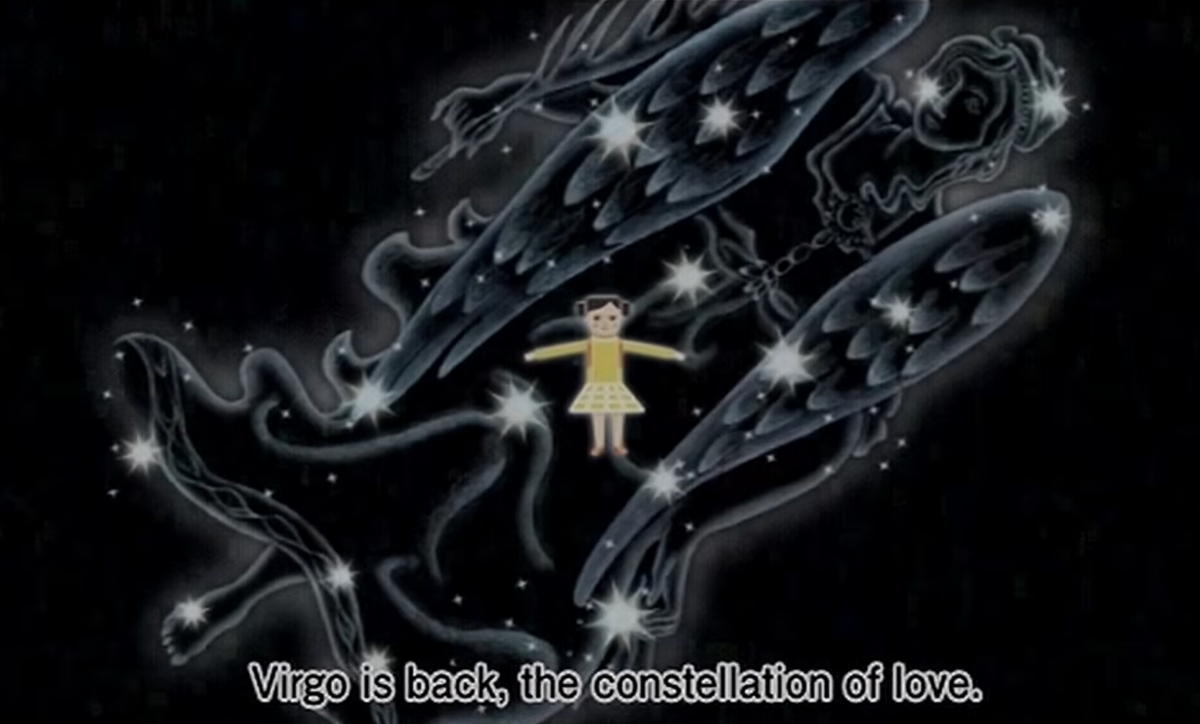
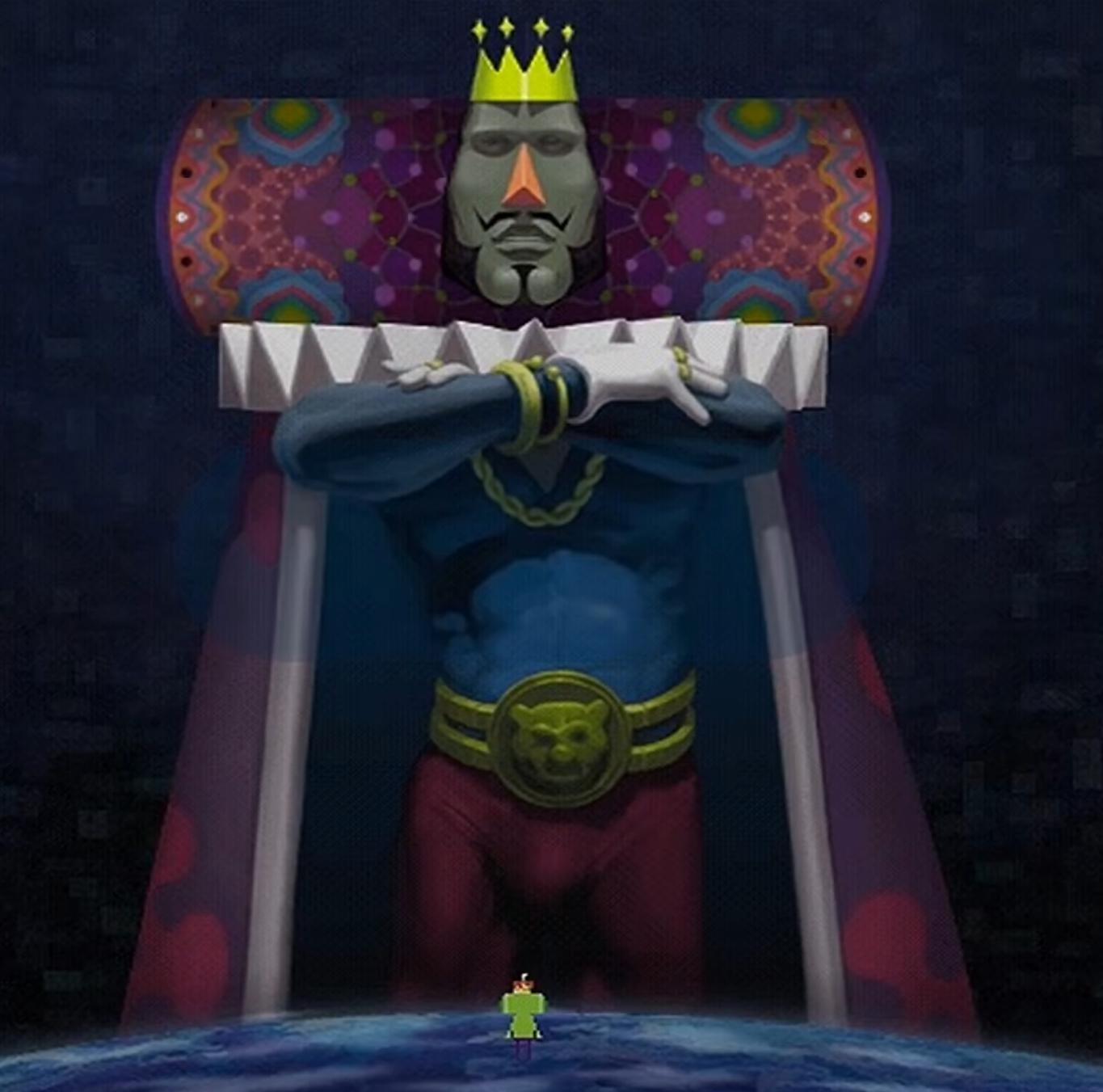
The King of All Cosmos has destroyed the stars.
Fucking all of them.
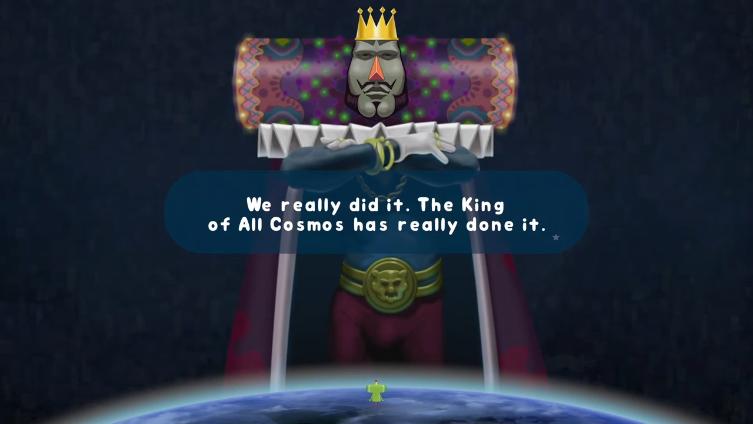
He has had a super eventful evening, and the entire night sky is now somebody else's problem.
Mine, specifically.
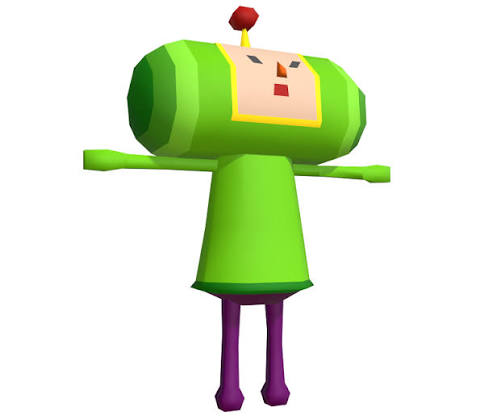
I am a tiny green prince pushing an adhesive ball around Earth. My assignment is to collect enough objects to manufacture replacement stars.
At first, my ball is unimpressive.
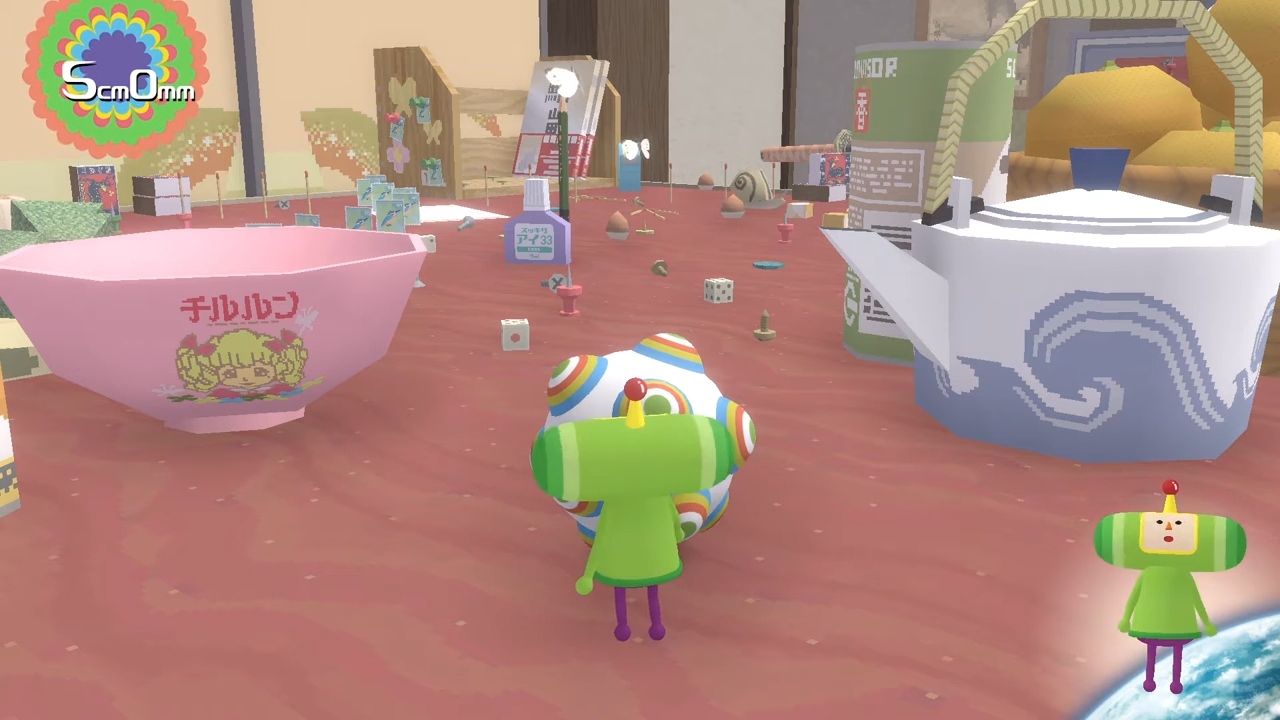
I can collect paper clips, pencils, small household objects, and other pieces of human civilization that did not expect to participate in astronomy just yet.
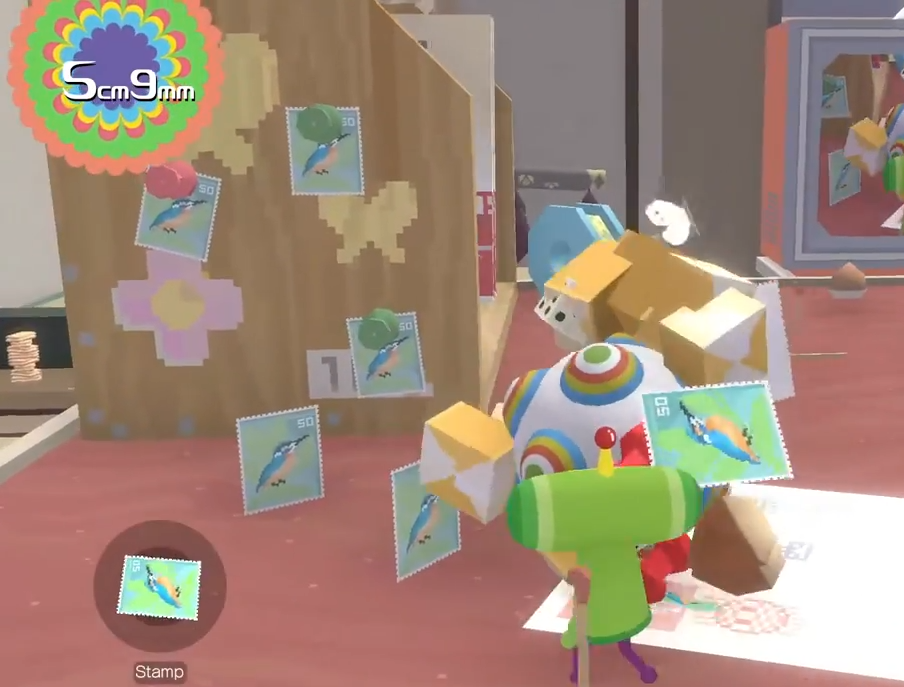
As the ball grows, it can collect larger things.
Furniture.
Vehicles.
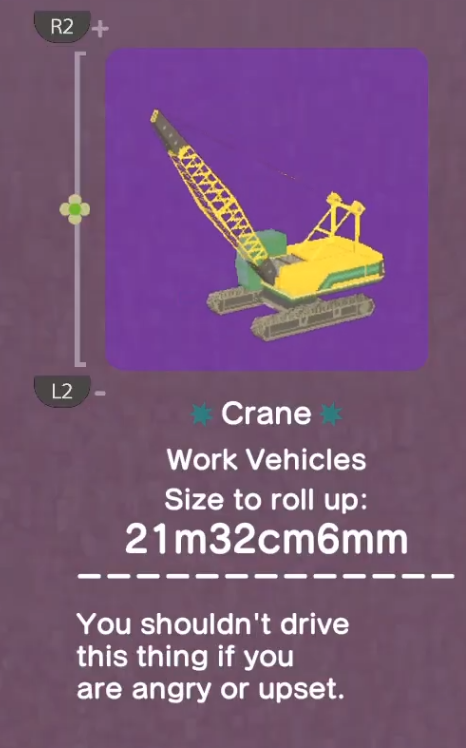
Animals.
People.

Buildings.
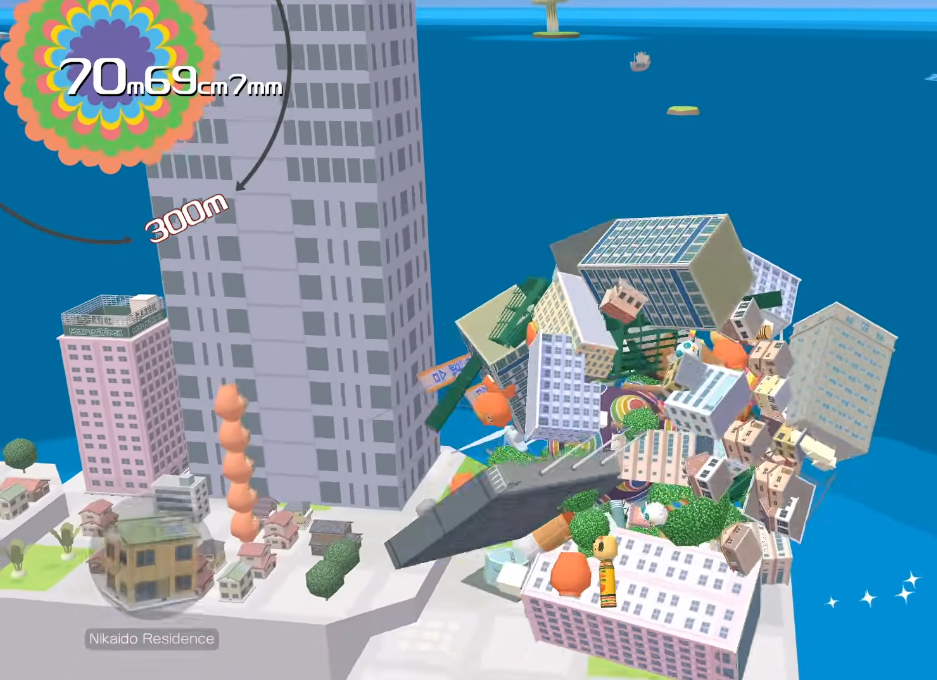
Eventually, enormous portions of the landscape can disappear into one rolling accumulation.
- The King measures my progress.
- My ball gets bigger.
- The universe gets repaired.
- My ball gets bigger.
This is all going very well.
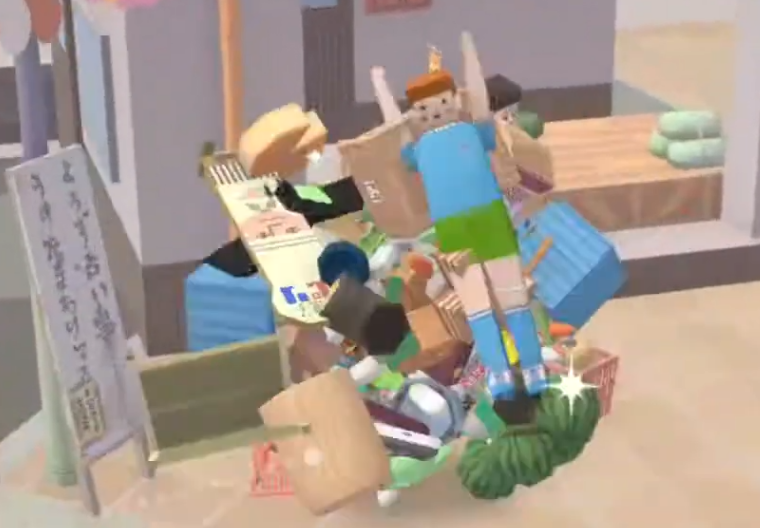
Then Peter van Inwagen shows up.
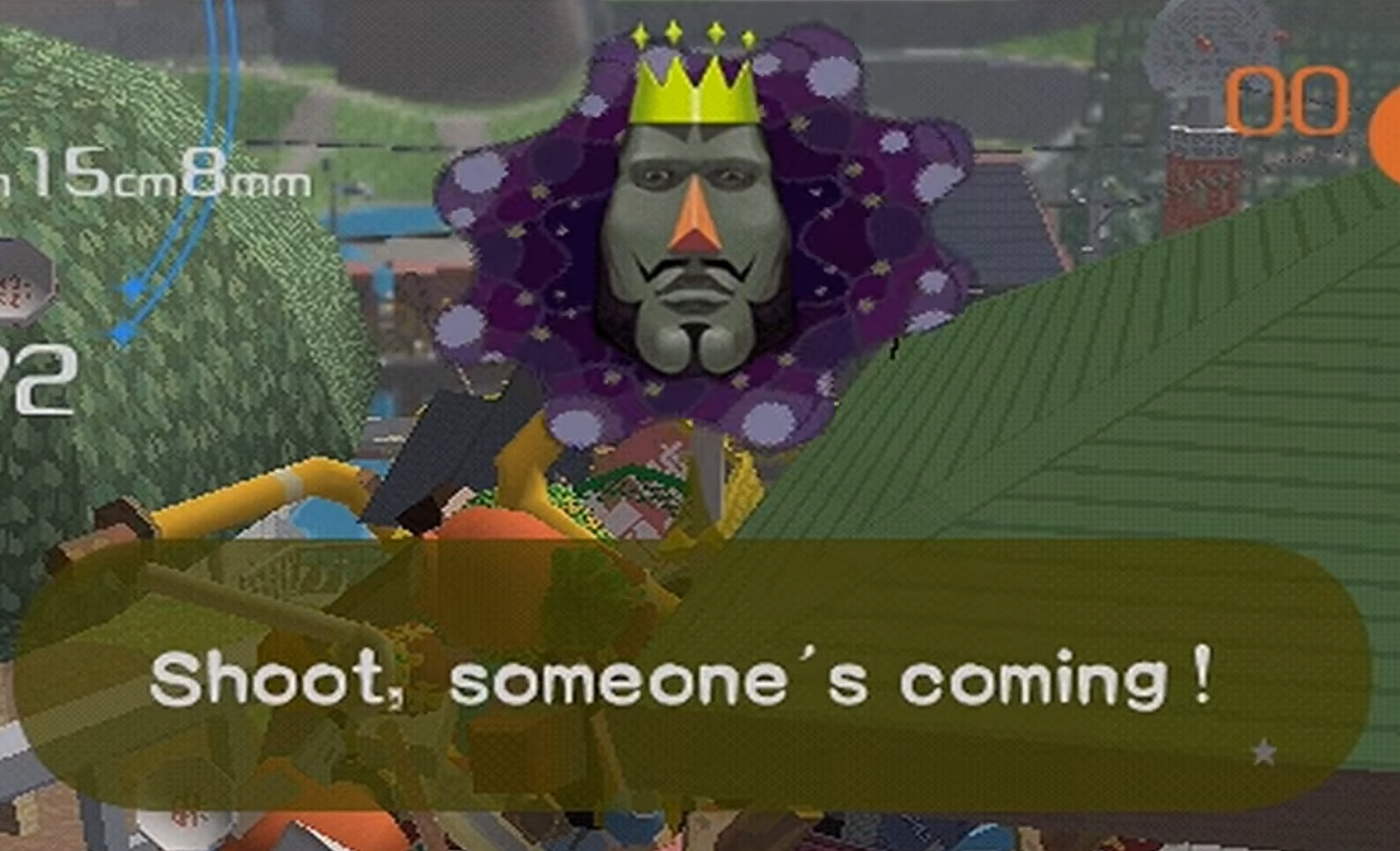
We have a problem.
According to his metaphysics, my ball does not exist.
There Is No Ball.
Van Inwagen's Material Beings (1990) investigates a question that sounds pretty simple.
When do several material things compose one further material thing?
He calls it the Special Composition Question.
Suppose we have some material objects.
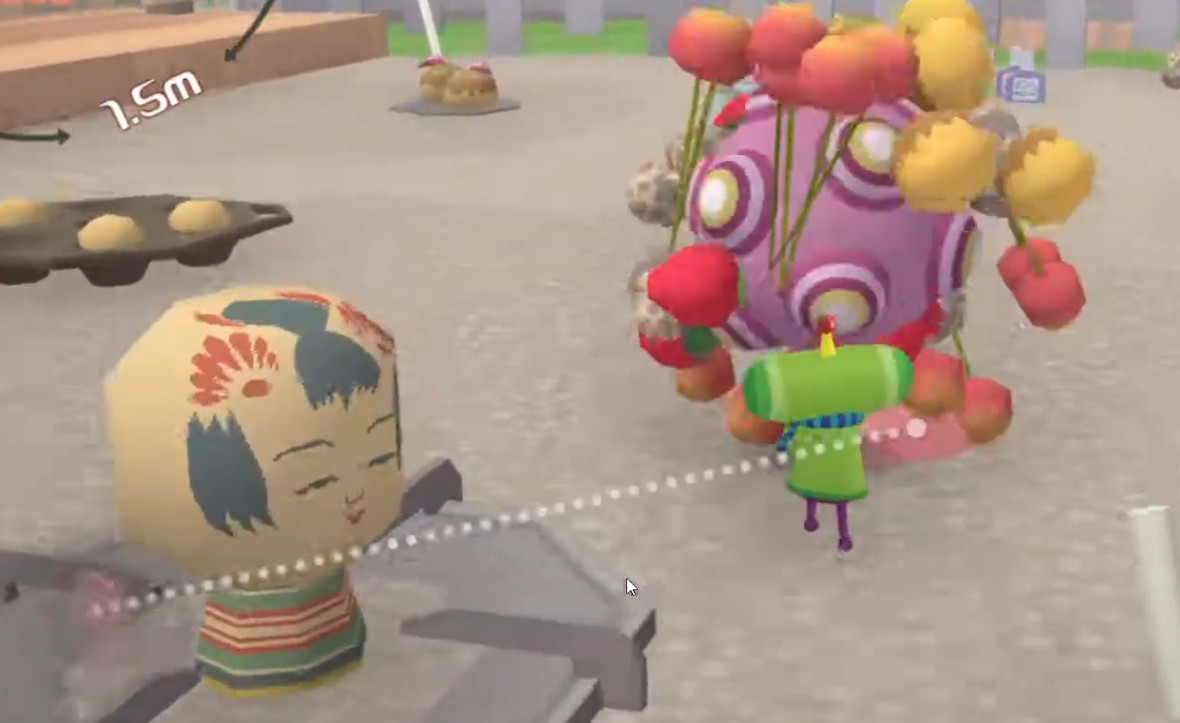
- Arrange them together.
- Press them into contact.
- Glue them.
- Bolt them.
- Give the resulting arrangement a name.
Have we produced another object?
Ordinary life answers yes constantly.
We make tables from wood, houses from building materials, machines from parts, and, apparently, stars from everything within rolling distance.
But van Inwagen wants the condition under which composition actually occurs.
Contact is insufficient. Things touch constantly without becoming one thing.
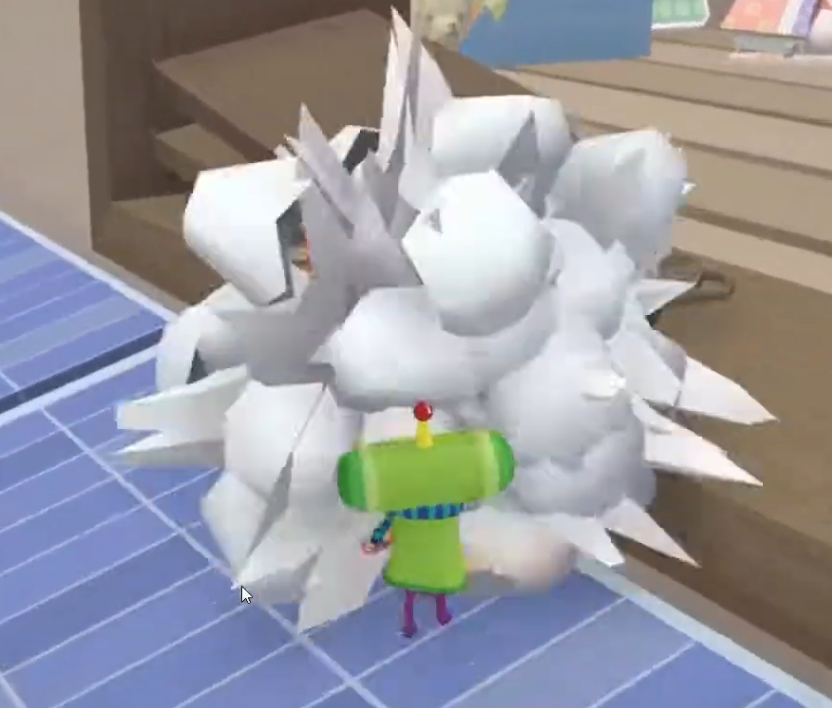
Mechanical fastening is insufficient. Screwing two boards together may change their relations without demonstrating that a further object has come into existence.
Arbitrary grouping is even worse.
Consider the collection consisting of my left shoe, the Moon, and every refrigerator currently operating in Cleveland.
Why should that particular plurality compose an additional object?
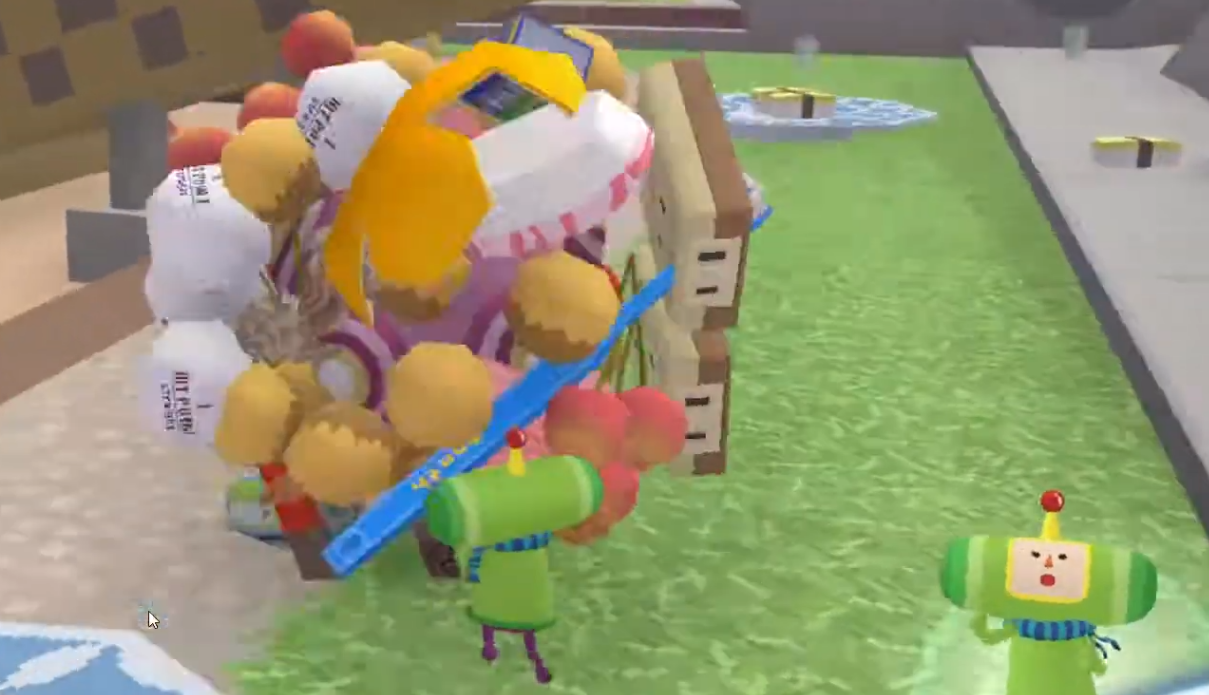
It can be described. It can be named. Its members can be counted. Perhaps they can even be arranged into a cool pattern if the Cleveland refrigerator owners all cooperate.
What makes the resulting whole real?
Van Inwagen offers an extremely restrictive answer.
Apart from the trivial case of one object, material composition occurs when the activity of the constituents constitutes a life.
- Living organisms qualify.
- Ordinary nonliving composites do not.
On this view, there are living organisms and material simples. What we ordinarily call chairs, tables, rocks, and other nonliving composites are just arrangements of material objects, not further material objects in their own right.
He does not have to deny that furniture can support a person or that machinery can perform useful work. Those facts can be described through the activities and relations of the things he does admit. He is attacking an additional ontological inference.
- These things are arranged together.
- Therefore, another thing exists.
The second statement does not automatically follow.
And that is unfortunate.
Because I am currently rolling an enormous ball of furniture down the street.
Van Inwagen is willing to describe its behavior.
He just refuses to give me my ball.
This Ball Has Become More Difficult to Deny.
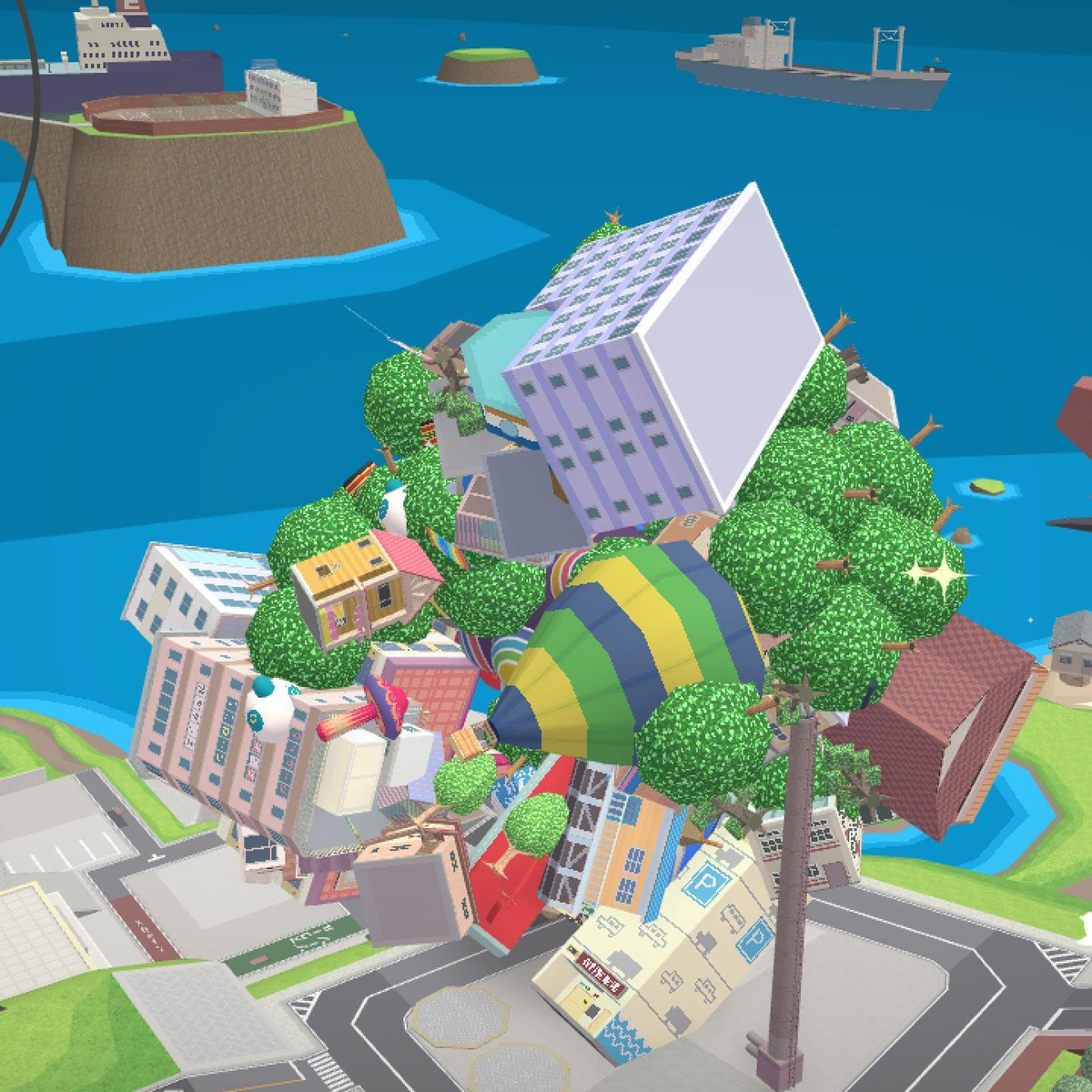
I have now collected several more objects. My katamari is getting large enough to roll up things that previously stopped it.
That is the game's central mechanism.
The assembled collection changes its own possibilities.
A paper clip contributes to the growing mass. Enough accumulation enables the collection of larger things. New objects alter its size and shape, which changes what the Prince can collect next.
The process has a history. What I can roll up now depends on what I rolled up earlier.
Remove enough of the collection and the larger objects become inaccessible again.
Destroy the adhesive organization and the accumulated pieces cease functioning as one rolling collector.
- A pile of loose objects
- and
- a katamari containing those same objects
do not possess the same joint transition structure.
The collection's organization changes what happens next.
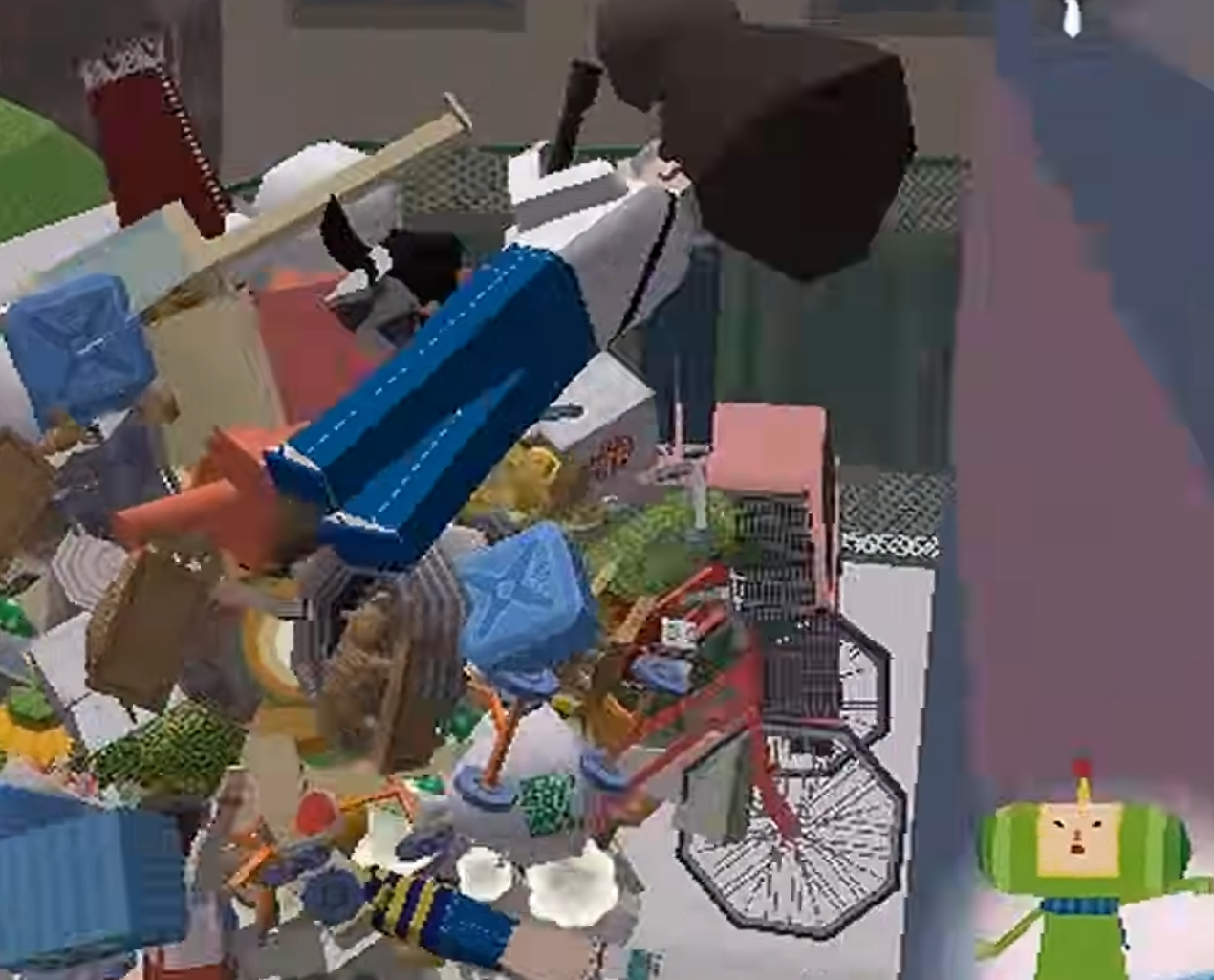
Van Inwagen can accept every one of those facts and still deny that the objects compose another material object.
That is where Modal Path Ethics must be careful.
Because my existing locus diagnostic says:
An extant locus is a diachronically integrated causal organization with a nonredundant successor structure at the relevant grain.
A sufficiently organized katamari seems like a candidate.
This thing has a causal history.
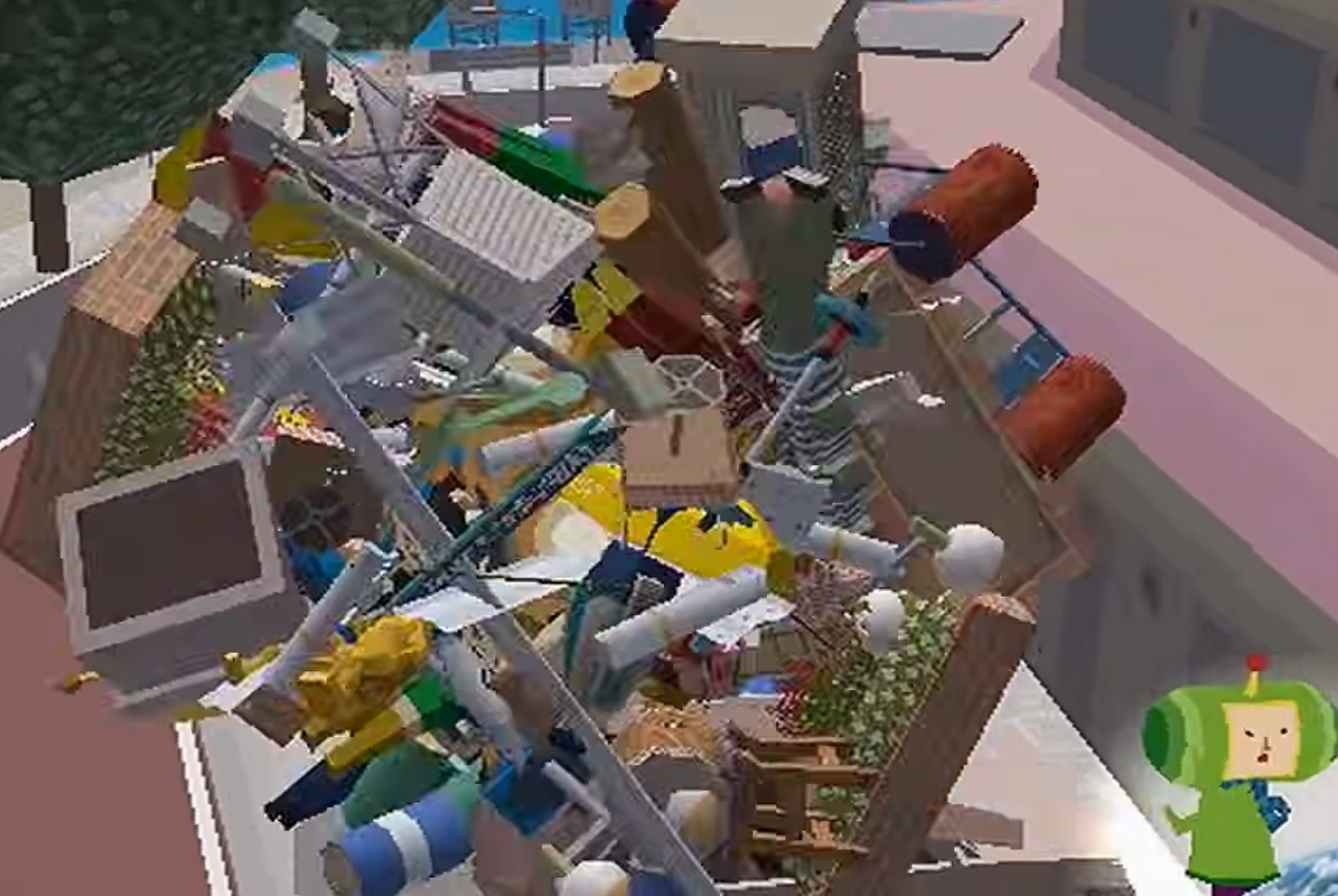
It undergoes material turnover.
Its organization generates characteristic continuations.
Disrupt that organization and some continuations disappear.
- But van Inwagen is asking whether those constituents compose an additional material object.
- And I have been asking whether an actually instantiated organization can bear a structured continuation.
Those are different questions.

- If I attempt to answer van Inwagen by pointing at the ball's coherent behavior,
- he can quite reasonably reply that I have demonstrated coherent behavior.
- Too bad he asked for composition.
- he can quite reasonably reply that I have demonstrated coherent behavior.
- If he answers my question by denying that the ball is an additional composite object,
- I can reply that its organized causal history has not vanished.
- He denied composition.
- I asked what can continue.
- I can reply that its organized causal history has not vanished.
We have two different ontological commitments on the table here.
The King would prefer that we settle this immediately.
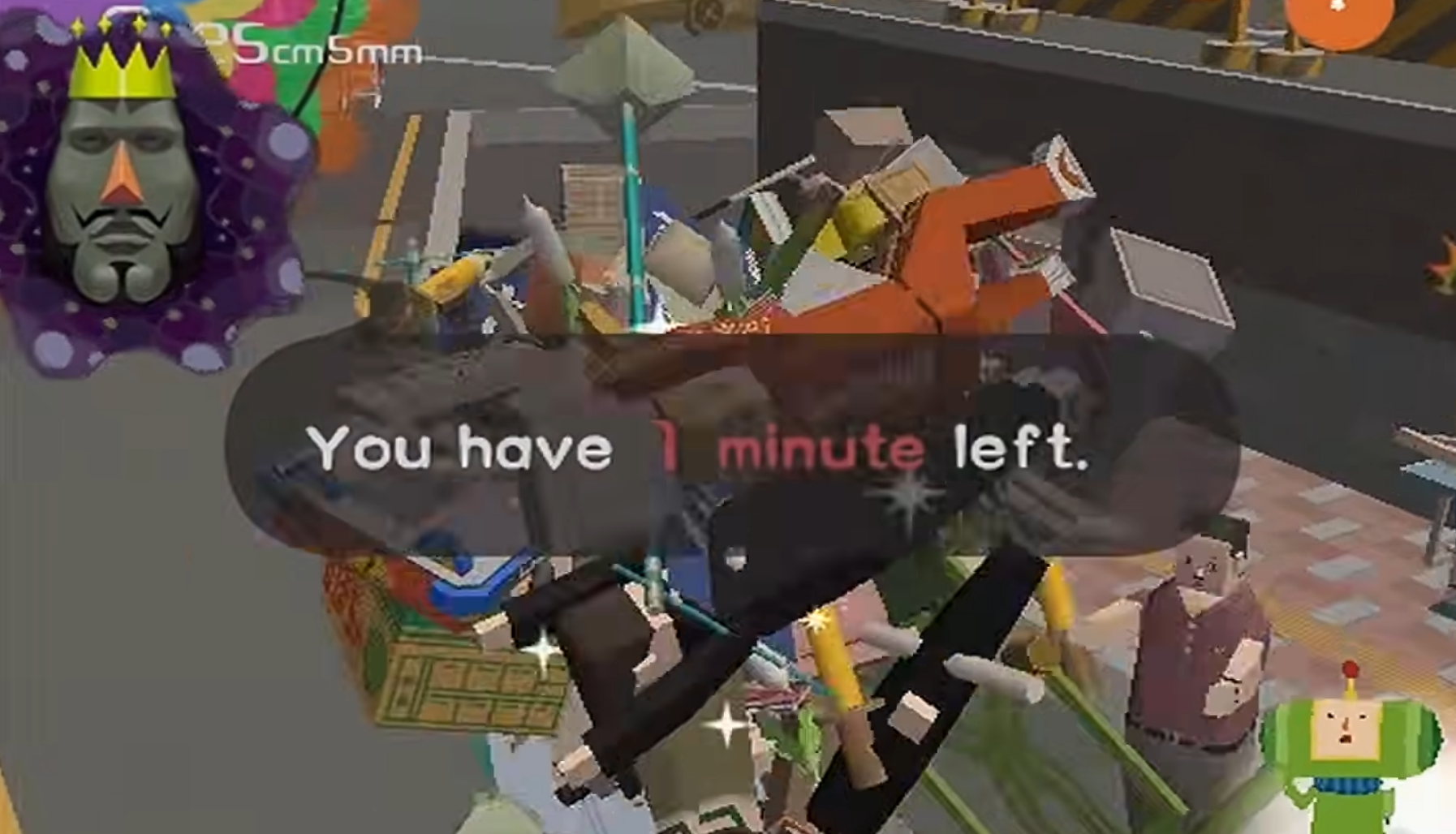
The timer is running.
The Locus Has Been in Trouble for Months.
This is exactly the problem the other day's Aristotle engagement refused to solve through vocabulary.
Modal Path Ethics has already tried several routes.
- Erik Hoel's causal-emergence work helped explain why a higher-level organization can be causally informative without supplying a new fundamental substance.
- Gilbert Simondon demanded a history of individuation.
- It is insufficient to inspect a completed pattern and announce that it looks integrated. We need to understand how the relations producing the pattern actually formed.
- Patañjali then exposed the grain problem.
- The same material transition can preserve one organization, destroy another, and transform a third.
- We cannot zoom around until the preferred verdict appears.
- The same material transition can preserve one organization, destroy another, and transform a third.
- Kit Fine arrived on Piñata Island to introduce another problem.
- Historical continuity, causal descent, and functional replacement do not automatically settle numerical identity.
- Then Aristotle supplied hylomorphism.
- Matter organized through form. An account of why a living thing is more than an inventory of its constituents.
- And still the questions remained.
- Which organization is the bearer?
- What makes it one continuing organization?
- What changes can it survive?
- At what scale?
- Which organization is the bearer?
Aristotle did not provide a universal answer. He was allowed to keep his forms. I kept my locus.
It remains under active investigation.
But van Inwagen reveals that I have been treating two different demands as though one answer must satisfy both.
- One demand concerns the existence of composite material objects.
- The other concerns the reality of historically organized continuations.
A theory of harm requires the second.
It does not need to adopt one universal answer to the first.
That is another reduction in the metaphysical obligations.
I am very pleased.
I have also rolled up a mailbox.
Break My Ball.
Leave the Pieces.
We need a test that does not simply award locushood to whatever sounds sufficiently organized.
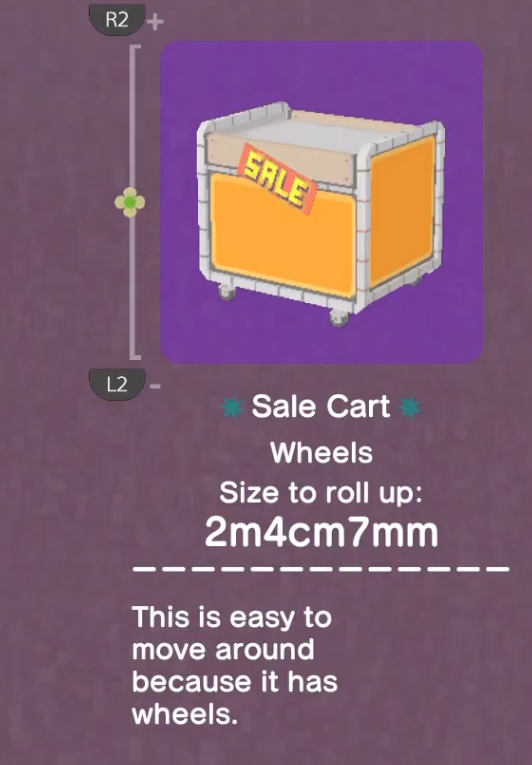
Fortunately, the game provides the necessary experiment.
Take two arrangements with the same collected objects.
- In the first, everything remains attached to the katamari.
- In the second, the adhesive relations are disrupted.
- The objects remain present, but the joint rolling organization is gone.
The collection no longer moves and grows as the katamari did.
Its components remain. Its characteristic collective continuation does not.
That is the first test.
Now reverse it.
Keep the rolling organization intact while exchanging some of its constituents.
A paper clip is replaced by another paper clip. A pencil is collected. A toy is lost.
The ball grows, changes shape, and continues collecting.
The organization can survive changes in its inventory.
That is the second test.
And then a third.
Take an arbitrary collection of objects whose only common property is that I have named them together.
Then remove my label.
Does any shared successor-producing organization disappear?
If not, I have no comparable evidence of an integrated locus at that grain.
The difference is not whether I can describe the collection.
I can describe anything.
The difference is whether actual relations among the constituents generate a characteristic continuation that depends on those relations.
This is where the previous work finally fits together.
Simondon tells us to identify the actual formation of the organized process. Hoel makes us investigate its higher-level causal significance rather than awarding it importance from size or naming alone. Patañjali requires us to specify the relevant grain before learning which verdict flatters the theory. And Fine prevents us from treating a surviving function as sufficient evidence of numerical identity.
What van Inwagen adds is a final restriction:
None of this shit automatically proves that the constituents compose an additional material object.
Okay.
We do not need that conclusion for the causal test.
The physical history, the changes in material relations, and the loss of a jointly supported continuation can be all real.
And the metaphysical dispute about the existence of an additional composite object can remain open.
We can describe the same change using plural claims about constituents and their relations if necessary.
The structural loss survives that translation.
This is the defense I was missing.
A locus claim concerns an actually operating continuation structure. It does not have to settle unrestricted material composition.
But Everything Is Organized.
Van Inwagen is not finished.
Of course.
The obvious objection is that this account could become embarrassingly permissive.
- A pair of magnets has organized interactions.
- A heap of wet sand possesses structural cohesion.
- A traffic jam has a history,
- propagates disturbances,
- and changes what vehicles can do.
- propagates disturbances,
- A football crowd coordinates.
- A rotating planet has characteristic successor states.
- A city has infrastructure, institutions, and memory.
- My enormous adhesive ball is doing several of these things simultaneously.
Is everything a locus now?
No.
But the answer is not to declare that all short-lived or nonliving organizations are unreal.
Some of them may qualify at a specified grain.
The question is what claim that qualification earns.
There are several restrictions.
- The proposed organization must be actually instantiated.
- An arbitrary mathematical grouping of distant objects does not acquire shared causal organization from its description.
- The proposed grain must track a historically generated coordination, dependency, vulnerability, or transition that is not adequately represented by inspecting the other relevant loci separately.
- That does not mean a complete microphysical description would fail to contain the facts.
- Of course it would contain them.
- That does not mean a complete microphysical description would fail to contain the facts.
- The question concerns the actual organization of those facts and what its disruption changes.
- The organization must support a characteristic family of continuations that can be distinguished from a coincidental succession of events.
- A stone bouncing once against another stone is an interaction.
- That alone does not establish a historically integrated bearer of its own continuing organization.
- A stone bouncing once against another stone is an interaction.
- The analysis must preserve the relations connecting the candidate to its environment without absorbing every supporting thing into the candidate.
- The Prince moves the katamari.
- That does not make the Prince identical to the katamari.
- An institution relies on workers.
- That does not give the institution ownership of the workers.
- A forest requires water.
- This does not turn every water molecule and the forest into one organism.
- The Prince moves the katamari.
- A successful causal-grain test does not grant personhood, moral equality, perpetual preservation, or authority over neighboring loci.
- A katamari may qualify as an integrated artifact-level organization in this rad fictional world.
- That does not make it a conscious creature.
- It does not establish that breaking it is worse than preserving the innocent people stuck to it.
- And it certainly does not give the King of All Cosmos an unlimited right to turn the planet into office supplies.
- A katamari may qualify as an integrated artifact-level organization in this rad fictional world.
- Locushood opens an analytical ledger.
- It does not settle the entire ledger.
We can allow causally significant organizations at multiple scales without converting every aggregate into a supreme moral patient.
That is why the account remains selective even where it is ontologically generous.
The Cow Has Not Become My Ball.
Now my ball is much bigger.
I can collect animals.
This produces a wonderful opportunity to make a very serious mistake.
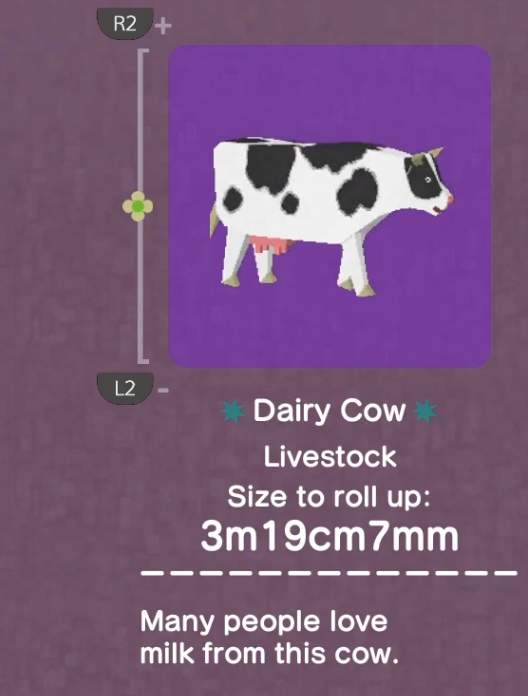
Suppose I go ahead and roll up a cow.
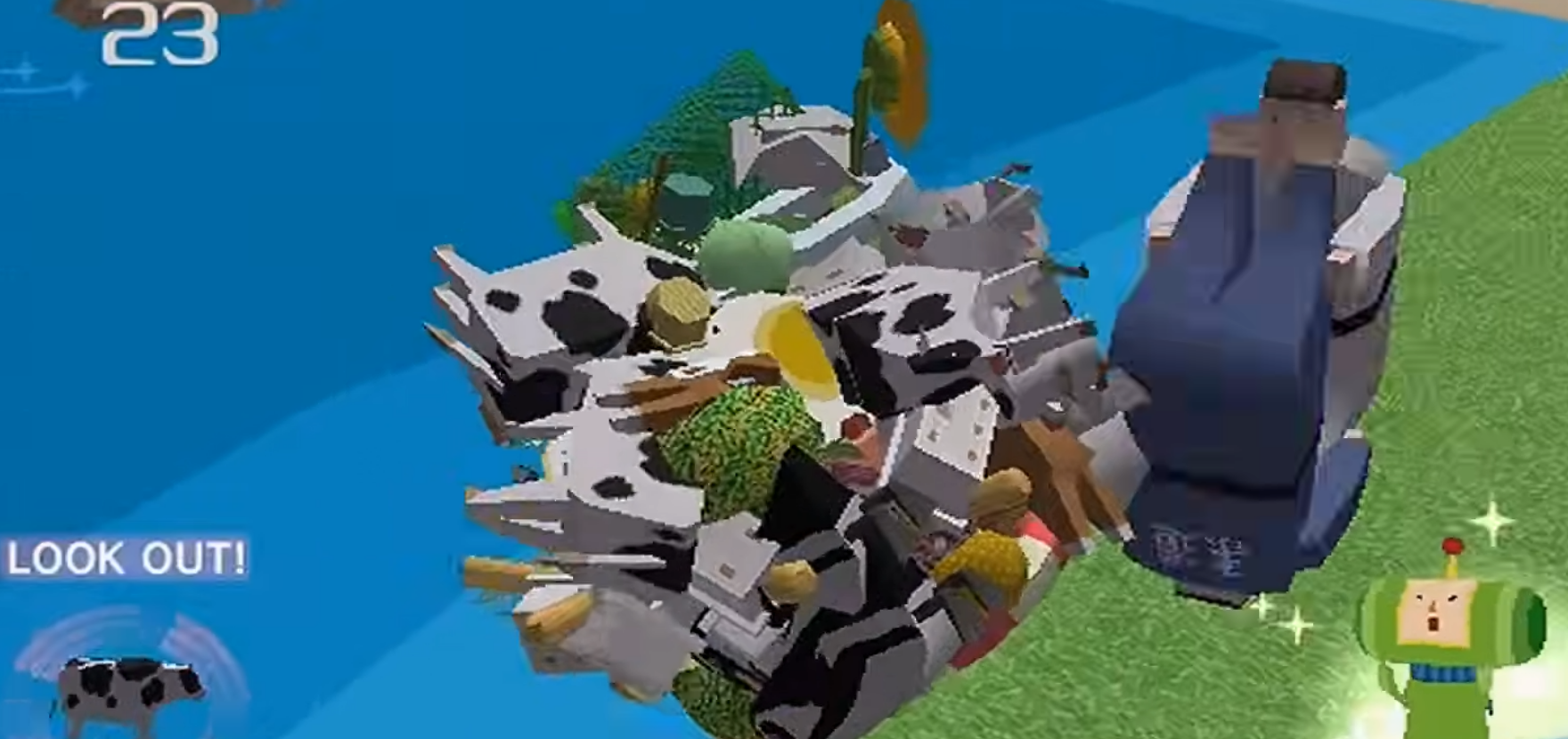
- The cow becomes attached to the katamari.
- The katamari grows.
- Its ability to collect larger things improves.
- The King approves.
Have the cow and the katamari become one morally unified entity?
Of course not.
- At the animal grain, there is a living organism with its own history and characteristic continuation.
- At the katamari grain, there is a growing collection whose mechanical organization generates a different family of continuations.
The cow's attachment contributes to the second process. It does not erase the first.
The same material event can participate in multiple legitimate causal descriptions.
My ball can become larger while a cow becomes less able to continue its ordinary cow life.
An instrument can improve its performance while one of the organisms caught inside it loses freedom, safety, or access to the conditions of its own continuance.
Suppose somebody argued that the cow's loss was canceled because its capture helped restore the stars.
That would be a fucking terrible argument.
- The star-making process gained a continuation.
- The cow's continuation was constrained in another respect.
Those facts belong to different loci and different parts of the transition profile.
The overall verdict cannot be obtained by declaring that the most successful organization has swallowed the significance of everything contributing to it.
That is the danger of granting an aggregate authority over its components. And it does not require the aggregate to be metaphysically fundamental.
The King can perform the same mistake with a ball he does not philosophically possess.
My Ball: Not One Big Animal.
Van Inwagen's life criterion now becomes useful.
Consider the many, many living creatures caught in the katamari.
Their biological organization does not become one shared life because adhesive forces attach them to the same collection.
The cow remains one life.
The person remains another.
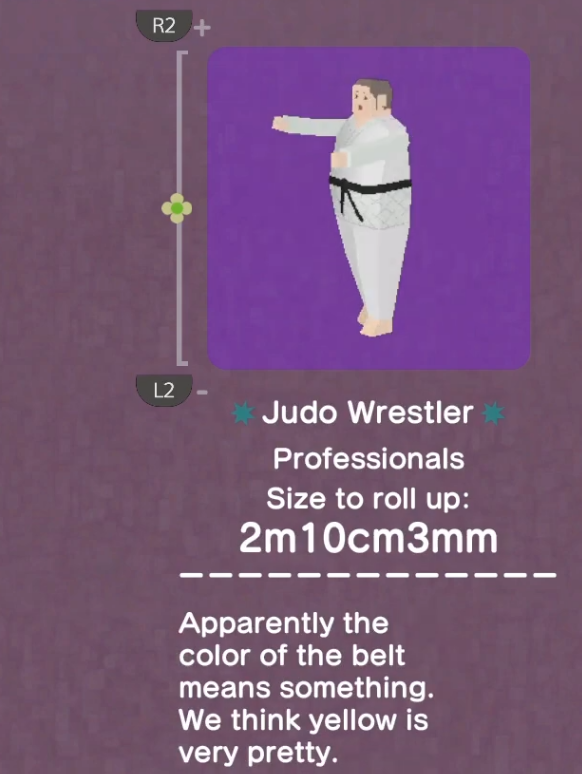
Their contact, coordination, and common movement in my ball do not establish the emergence of one larger organism.
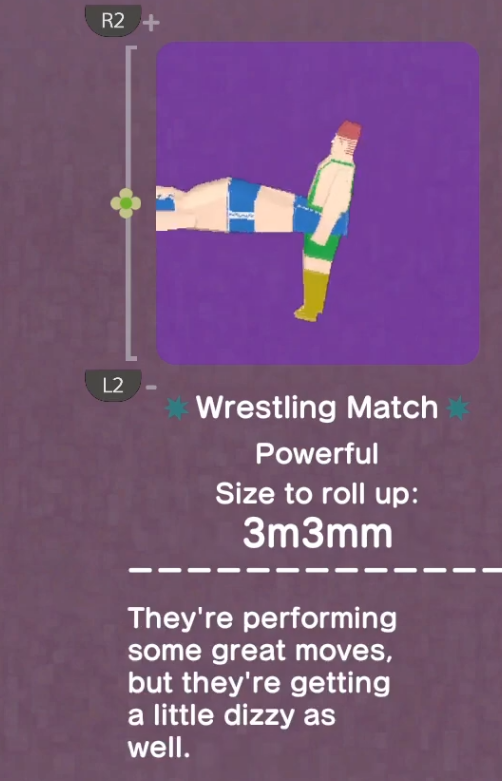
That is exactly the kind of inference van Inwagen wants us to resist.
Modal Path Ethics should resist it too.
But the ethical analysis also has to accommodate organizations beyond living organisms.
Consider a hospital.
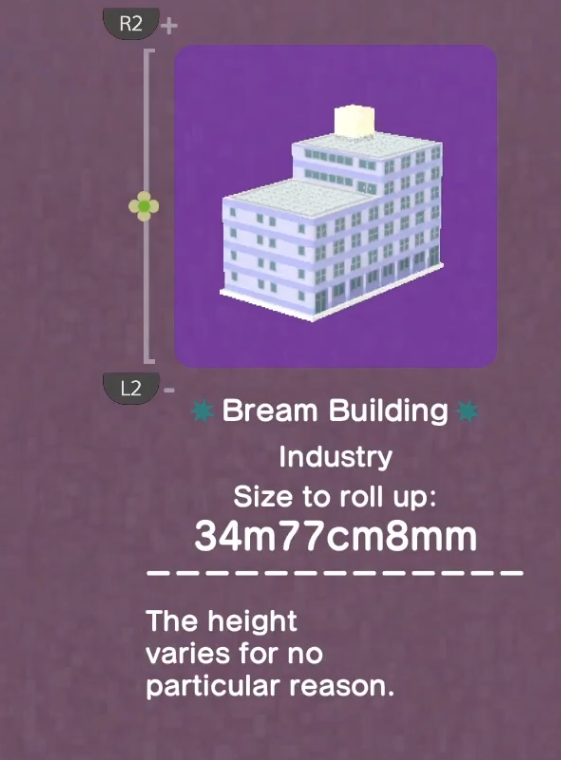
Patients, doctors, nurses, records, buildings, equipment, and public infrastructure participate in an organized process. Some of those components are living beings. Some are material objects or arrangements. Some are institutional relations.
A hospital may have characteristic capacities for treatment, correction, maintenance, and succession that disappear when its coordination is destroyed even though individual staff members and equipment remain.
That is a legitimate candidate for locus-level analysis. It does not require all the participants to have become one biological life.
Nor does the hospital need to be an additional material composite in van Inwagen's strict ontology for the relevant operational facts to hold.
- If its coordination fails,
- treatment can become unavailable.
- If its records disappear,
- continuity of care can contract.
- If its staff are replaced while the institutional function continues,
- some hospital-level continuations may survive the replacement.
- If the institution is lawfully abolished and another carries its function,
- functional continuation may remain even though the original institutional identity ends.
These are real differences. And their significance does not depend on successfully proving that the hospital is one composite material object.
The hospital's relations can change what happens to its patients.
That is enough to make those relations candidates for ethical investigation.
The stronger claim that the hospital itself bears a pro tanto harm still requires the Continuance Principle and evidence of an integrated institutional continuation.
The moral bridge is explicit.
No one is trying to extract an ethical command from glue.
My Ball Has Lost Its Identity.
My katamari has grown enormously.
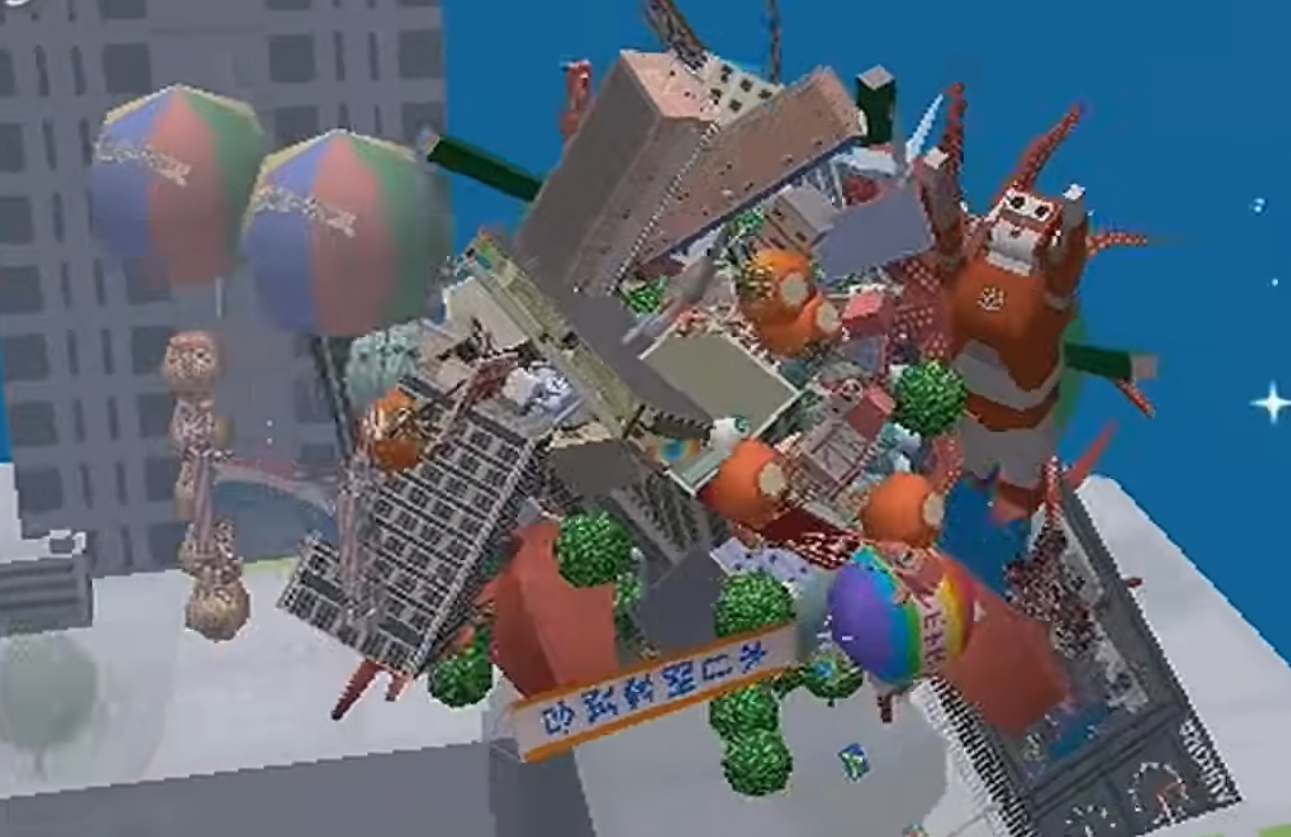
Its contents have changed many times.
What began as a little adhesive collector is now an enormous mobile accumulation of vehicles, buildings, animals, and public infrastructure.
Is it still the same katamari?
Here is where Kit Fine returns.
There are several possibilities.
- A continuous rolling process may preserve an artifact-level history through constituent turnover.
- A ball might be destroyed and an indistinguishable replacement assembled.
- An earlier collection might split into two independently operating collectors.
- Two collections might fuse into one.
- A katamari might cease operating as a collector and undergo a transformation into a celestial object.
These are not identical events. They can preserve different things.
- The continuity of a physical process is evidence.
- The survival of a function is evidence.
- The existence of a causal genealogy is evidence.
- None automatically proves numerical identity.
And the game engine can track one collector object through many transformations without supplying a universal metaphysics of persistence.
This is the same warning Fine gave us back on Piñata Island.
A new Pigxie does not restore the individual eaten by a Sour Mallowolf.
A repaired piñata and a replacement piñata may restore similar capacities through very different histories.
A committee can retain its members while changing identity.
A successor institution can preserve a service without being numerically identical to the abolished office.
We should not solve the katamari's identity by announcing that continuity of the collection process is equivalent to identity in every respect.
Instead, we can be more precise.
- At the rolling-collector grain, one actual process may continue through changes in material constituents.
- At the constituent grain, particular objects and living beings undergo different transitions.
- At the eventual star-making transition, the successor may preserve some causal consequences of the prior collection without satisfying the conditions for numerical identity with the collector.
Where identity matters, the relevant domain must supply further evidence. Where it remains disputed, the correct answer can remain UNKNOWN.
But notice what has survived this concession.
- If I destroy the katamari's adhesive organization,
- its characteristic rolling continuation disappears.
- If a person loses access to the conditions of life because they are trapped inside it,
- that person's continuation is constrained.
- If a later star is manufactured,
- those earlier events have occurred.
None of those claims depends on proving that one material object remained numerically identical from the first paper clip to the finished star.
Harm does not have to wait for metaphysics to finish counting.
This Apparatus Is Cheating.
There is another problem.
A game is an authored system.
Somebody decided what counts as a collectible object.
Somebody out there decided how large the katamari must become before it can pick up a bicycle.
There are written rules governing attachment, collision, movement, and stage completion. The game engine maintains whatever state is needed to implement those mechanics.
So perhaps all I have proved is that these programmers created a useful representation.
My ball exists because the game says there is a ball.
My ball continues because the code tracks its ball continuation.
My ball counts as a unit because the interface measures its ball size.
And now I have announced that this ball proves a theory of real-world ontology.
Absolutely not.
The game's rules offer a fictional test environment.
They let us distinguish composition, organization, identity, and continuation with unusual clarity.
But the rules of Katamari Damacy cannot establish that these same relations occur in a real hospital, organism, ecology, or institution.
In a real investigation, the causal work has to be independently earned.
You must identify a proposed organization before the desired moral conclusion is known, examine its formation, specify the relevant grain, test its successor relations, investigate whether disrupting the coordination changes characteristic continuations while the components remain, distinguish constitutive relations from external support, and report cases where the evidence fails to establish an integrated bearer.
Sometimes the candidate will not qualify.
Sometimes the grain will be poorly specified.
Sometimes the purported collective vulnerability will already be adequately accounted for through other loci.
Sometimes multiple grains will be defensible.
Sometimes the persistence claim will remain indeterminate.
That is fine. A diagnostic is doing its job when it can fail.
What is not fine is selecting my ball because the interface drew a circle around it and then treating that circle as independent ontological evidence.
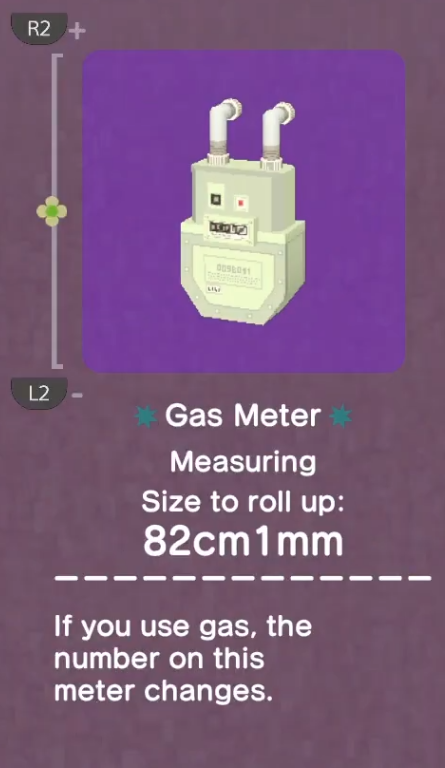
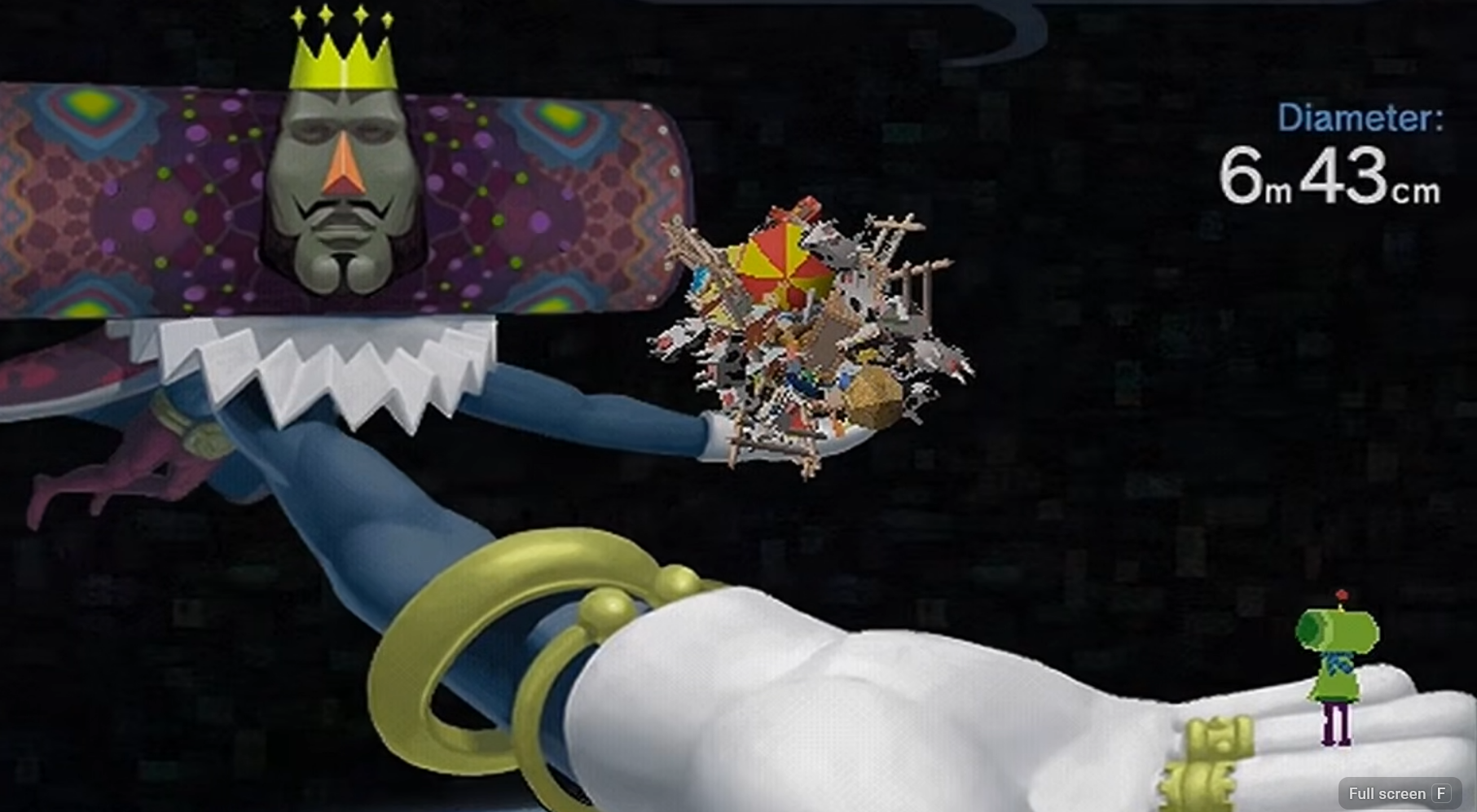
- The King has a diameter measurement.
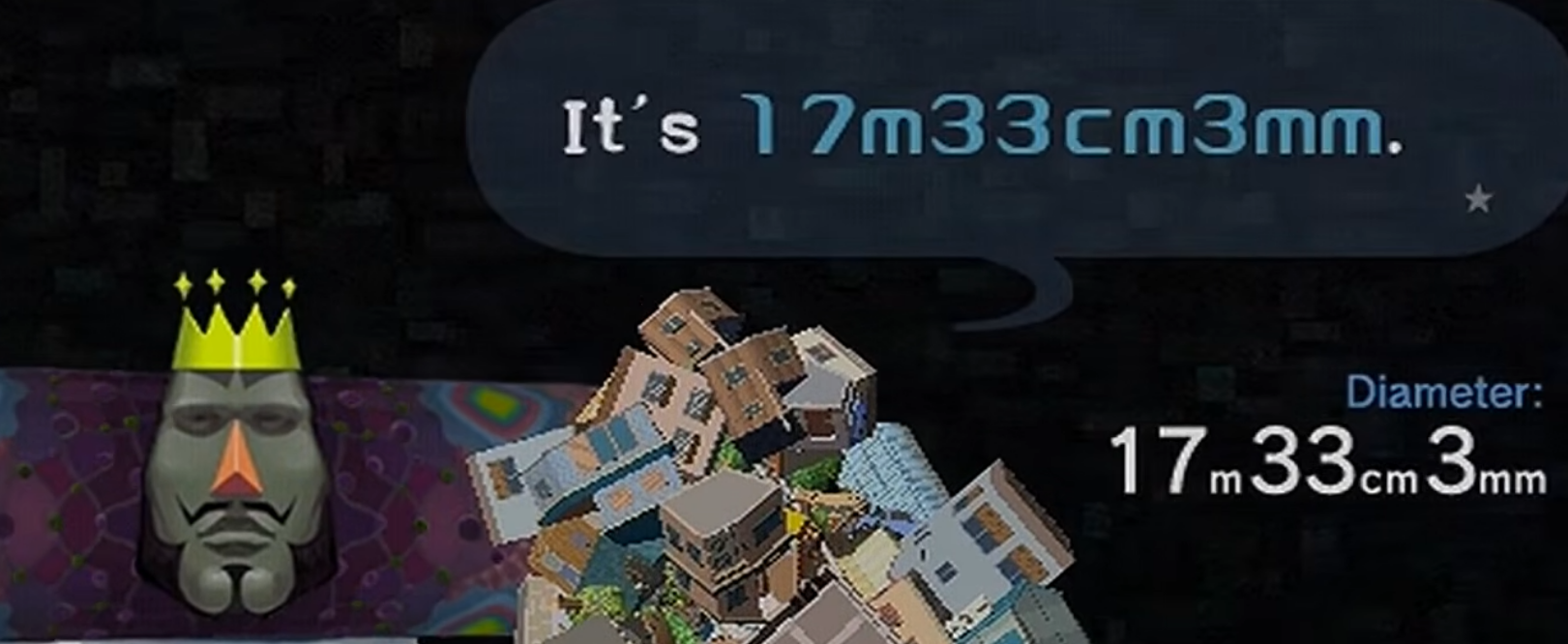
- I have a metaphysical problem.
These are not the same instrument.
What Van Inwagen Has Actually Forced Modal Path Ethics to Defend With Iron-Willed Gallantry.
The Special Composition Question asks when material constituents compose a further material object.
Modal Path Ethics does not need a universal answer to that question in order to identify every relevant instance of organized continuation.
- It needs actual causal relations.
- It needs an instantiated history of organization.
- It needs evidence that the organization supports characteristic successor relations at a justified grain.
- And it needs to establish whether those relations are damaged, preserved, reopened, or made harder to sustain through an actual transition.
The distinction can be expressed without awarding the constituents an additional composite material object.
Suppose a group of constituents supports some characteristic process through their actual relations.
- A transition changes those relations.
- The process loses a significant capacity to continue.
The material facts describing that degradation do not change depending on whether we add one composite object to our ontology.
There may be a disagreement about what exists.
There does not need to be a corresponding disagreement about the underlying causal loss.
The normative question is separate.
The Continuance Principle proposes that nontrivial degradation of a structurally significant part of an extant locus's organized reachable continuation constitutes pro tanto harm to that locus.
That principle is a substantive moral commitment. It cannot be demonstrated simply by discovering a system with interesting dynamics.
It also does not require that the system be conscious, human, biologically alive, or a fundamentally independent substance.
The claim is about what happens to a real organized continuation.
And a locus, in the framework's present sense, identifies the historically integrated bearer of that continuation.
This is enough to preserve the project without granting every noun a material object.
There remains an important limit.
Van Inwagen can still challenge whether the relevant relations constitute a genuine bearer, rather than a useful description of many other things.
That challenge must be answered through the causal and historical diagnostic, not dismissed by renaming the description.
The diagnosis can be strong or weak and succeed or fail.
It does not entail that the Special Composition Question has received a new universal solution.
But we no longer need that universal solution to get started.
I am allowed to investigate harm while the ontologists finish arguing about furniture.
This is significant progress.
My ball is now approximately the size of a town.
The King Has Repaired the Universe.
At last, I have collected enough.
The katamari contains an absurd quantity of material that previously belonged to planet Earth.
The King takes the finished collection.
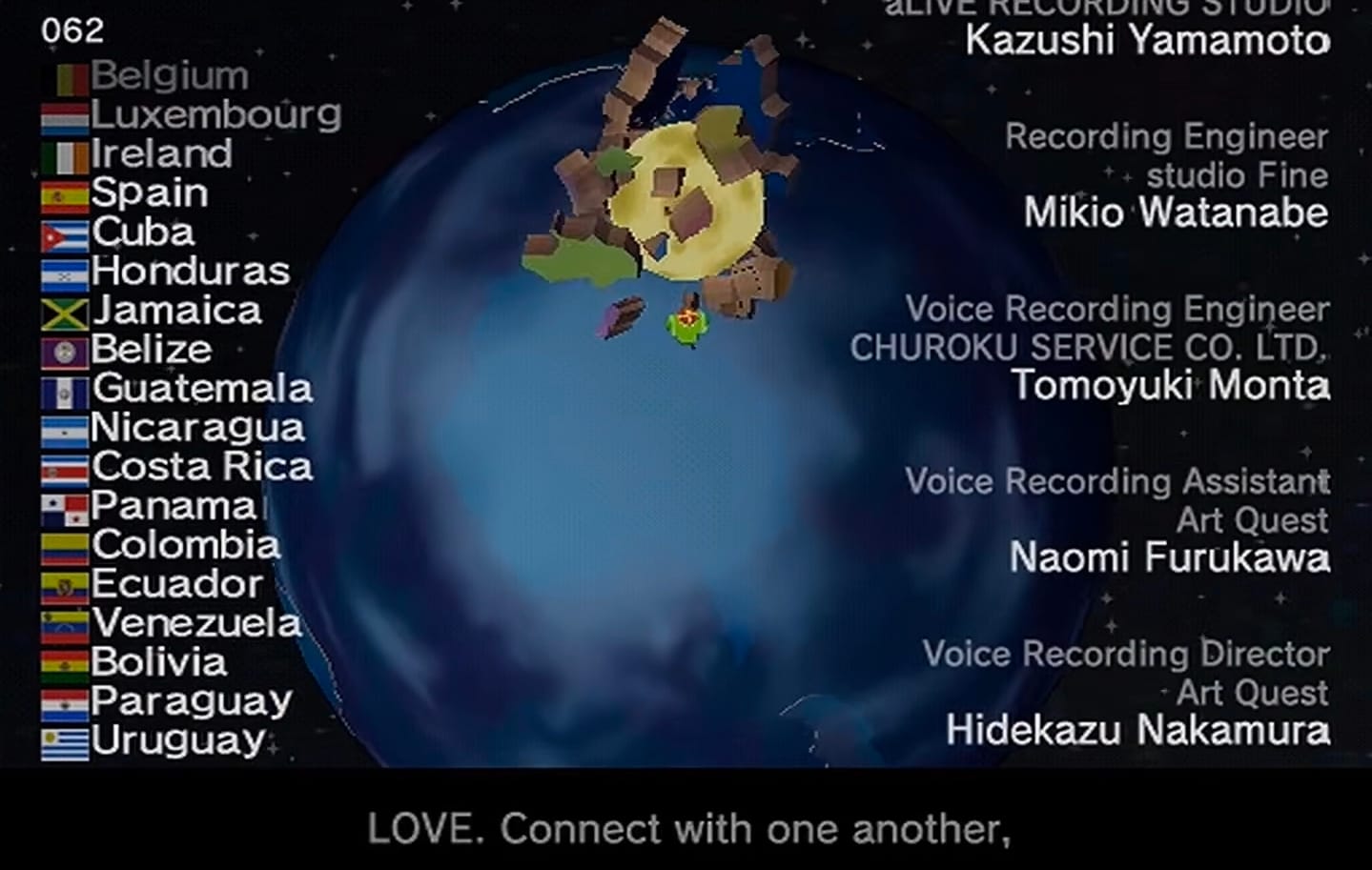
A new star appears in the sky.
The cosmos has recovered one of its lost lights.
The King is satisfied.
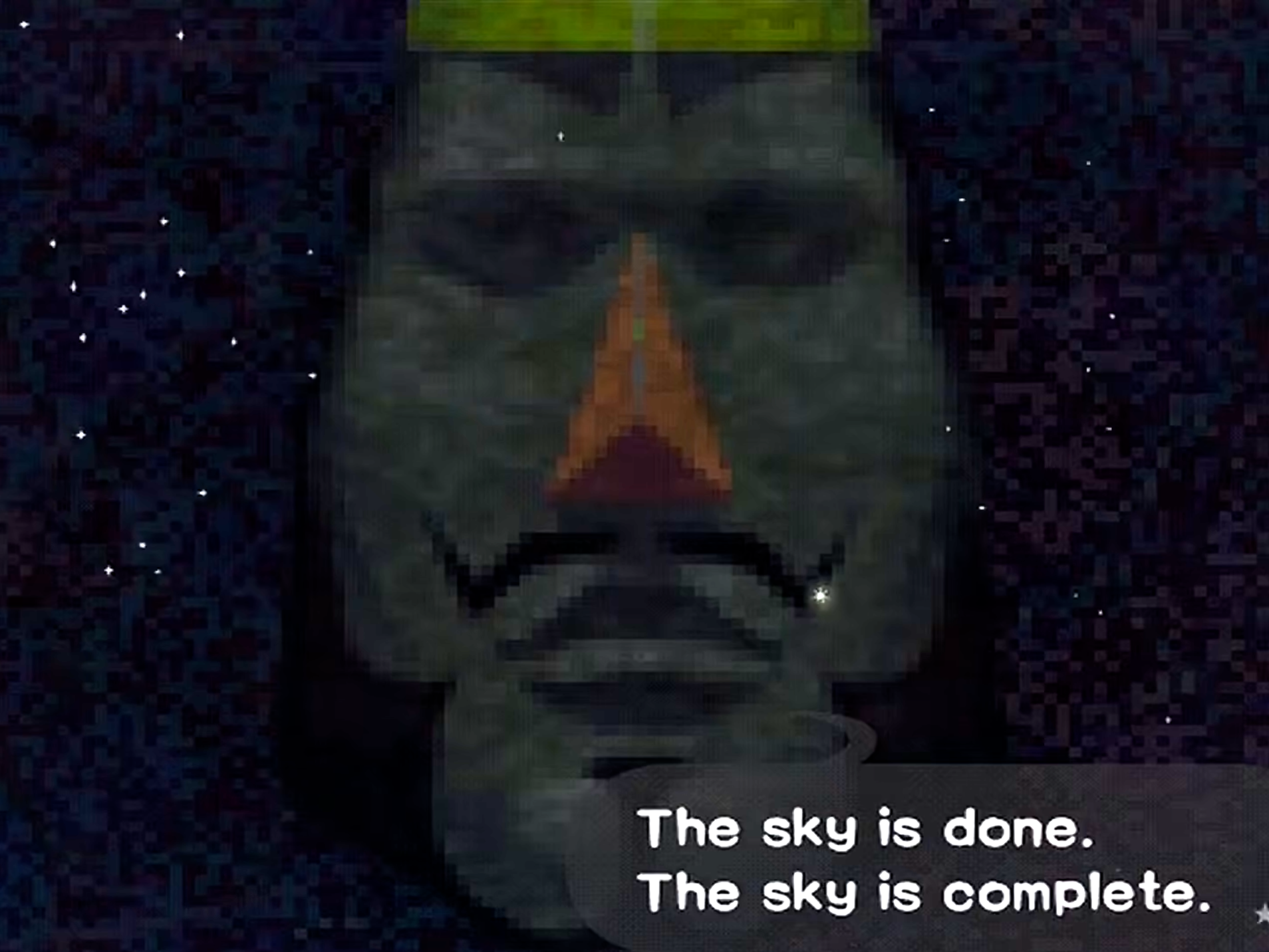
I would like to ask several questions.
What happened to the inhabitants of the town?
What happened to the organisms caught inside the collection?
What happened to the landscape's earlier ecological and social organization?
Which continuations did star-making preserve?
Which did it close?
What other ways of repairing the sky were available?
And why was my father apparently authorized to destroy all stars in the first place?
These are not questions the star's successful creation can answer.
A new celestial object can exist. The old field can remain damaged.
A successful operation can generate a new continuation through the destruction or constriction of others. And the existence of one new whole does not automatically absorb the claims of all its constituents.
Modal Path Ethics already had the machinery needed to say all this.
The point of the present encounter was to make sure that machinery did not require an impossible preliminary proof that every morally relevant organization is an additional material object.
It does not.
Ruling.
Peter van Inwagen has forced Modal Path Ethics to separate material composition from organized continuation.
The framework can accept the force of his Special Composition Question without accepting his restrictive answer as the only possible ontology.
It can investigate historically integrated organizations without assuming that every organization constitutes an additional composite material object.
It can preserve multiple legitimate causal grains without fusing the lives and losses within them.
It can track persistence without promoting causal descent into numerical identity.
And it can identify significant degradation of actual continuation-generating structure while the metaphysical status of a composite remains contested.
The strongest defense is narrower than a universal solution to composition.
It is a defense of the ontology Modal Path Ethics actually needs.
The framework's causal and ethical claims must remain answerable to the real organization and transitions of the field. Its diagnostic must identify the organization independently of the preferred harm verdict. Its normative bridge must remain explicit. Its identity claims must be supported separately.
Where the organization cannot be established, locushood remains unproved.
Where numerical identity cannot be established, identity remains unsettled.
Where harm occurs to one locus inside a beneficial transition for another, the loss remains on the ledger.
These are constraints, not inconveniences. And none of them requires the universe to manufacture a further material object every time two things touch.
Van Inwagen can keep his organisms.
Aristotle can keep his forms.
Fine can keep his identity issues.
Hoel, Simondon, and Patañjali can keep inspecting the construction.
I can keep my historically integrated, causally operative, grain-sensitive locus diagnostic.
And the King of All Cosmos can keep his star.
I just have one question.
If the katamari never existed, what the hell did I roll up?
Sources and further reading.
Peter van Inwagen, Material Beings (Cornell University Press, 1990). Book record.
Stanford Encyclopedia of Philosophy, “Object”, §2.2.2; “Material Constitution”, especially §4; and “Ordinary Objects”.
Bandai Namco Entertainment, Katamari Damacy REROLL. Official game description and 2018 release account.