Applied Case: The War That Never Ended
Where was the armistice leading?
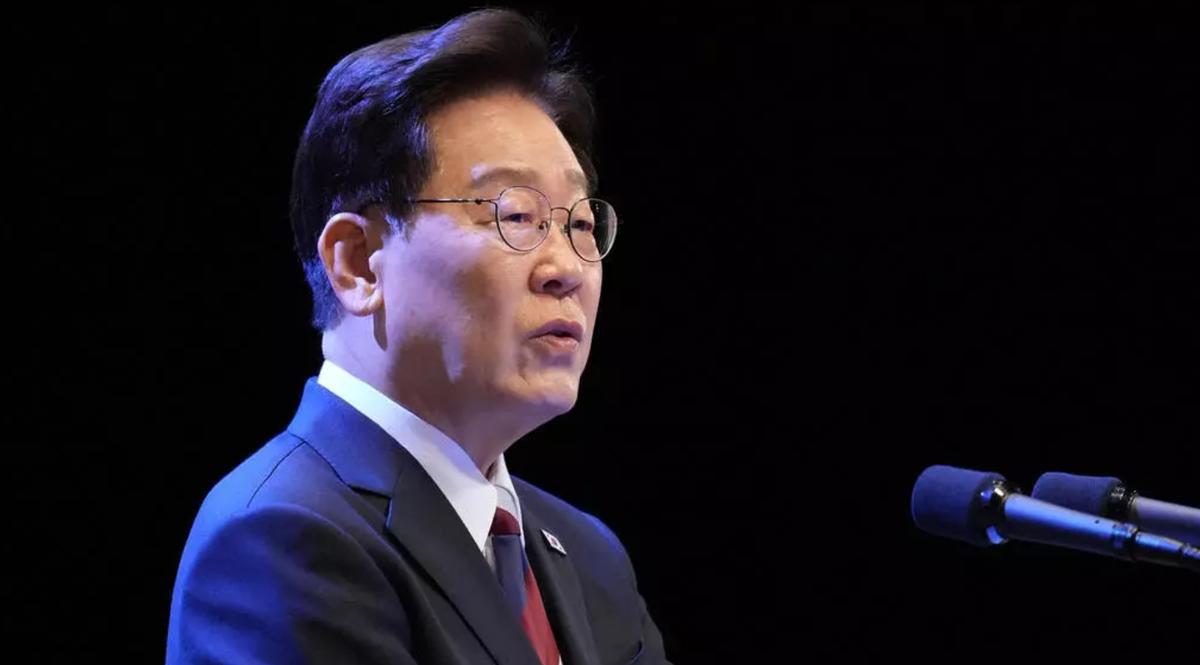
On August 15, 2026, the president of South Korea proposed ending the Korean War.
This is a strange sentence.
The fighting stopped seventy-three years ago.
People have been born, raised children, grown old, and died under the geopolitical arrangement that followed. Seoul became one of the largest and wealthiest cities on Earth. North Korea became a nuclear state. The Soviet Union disappeared. China became a global power. The internet happened. Humanity put all these increasingly complicated telescopes in space. Several generations have now lived their entire lives inside a world where the Korean War is spoken about as history.
And yet President Lee Jae Myung stood up on Liberation Day and called for talks among the relevant parties to replace the existing armistice with a peace regime. He also proposed sustained measures to reduce tensions and mechanisms to keep confrontation from escalating.
The Korean War stopped. It did not become peace.
That distinction has now lasted long enough to acquire children.
The Best Bad Move.
The Korean Armistice Agreement was signed on July 27, 1953. It was an extraordinary success.
That needs to be said before Modal Path Ethics begins poking at it.
The Korean Peninsula had been ripped apart by three years of catastrophic war. North Korea invaded South Korea. United Nations forces led by the United States entered the war. Those forces pushed north. China entered the war. Front lines crossed the peninsula repeatedly. Cities were destroyed. Families were separated. Soldiers and civilians died in enormous numbers.
Then people stopped shooting at one another at industrial scale.
Good. More specifically: Better.
The armistice is almost suspiciously well suited to that category.
This field was already catastrophically damaged. There was no available transition in July 1953 that could restore the dead, reunite every family, erase the destruction, settle every sovereignty claim, resolve the Cold War, establish political legitimacy across Korea, remove every foreign interest, and send everybody home in time for dinner.
There was, however, a path that could stop the immediate killing.
So they took that one.
The agreement suspended open hostilities, established the Demilitarized Zone, and created machinery for administering the ceasefire. Its own language understood the arrangement as provisional. The armistice was intended to hold until a final political settlement could be achieved, and its military commanders recommended that governments convene a political conference to pursue that settlement.
The armistice was never supposed to solve Korea. It was supposed to stop Korea from dying while politics tried again.
Politics tried.
The Geneva Conference of 1954 failed to produce an agreed settlement.
The temporary instrument remained.
And remained.
And remained.
And remained.
And remained.
And remained.
And remained.
Eventually, the bridge became landscape.
The Armistice Field.
A ceasefire does something simple. It interrupts a transition.
- People are killing one another.
- Then, under some set of conditions:
- They stop.
- Then, under some set of conditions:
That interruption can preserve enormous future-space. Every person who does not die tomorrow retains whatever continuance tomorrow still holds. Every city not destroyed remains available to inhabit. Every family not separated by another offensive retains its own branching future.
The difficulty begins afterward.
Because non-war is not automatically peace.
Non-war can become an extremely elaborate condition of organized preparation for war.
This is the Korean Armistice Field.
The Demilitarized Zone is the most visible piece of it, which is great because the Demilitarized Zone is one of the most militarized strips of land on Earth.
Around that line accumulated:
- armies;
- mines;
- artillery;
- military exercises;
- command structures;
- intelligence systems;
- conscription;
- alliance commitments;
- sanctions;
- missile programs;
- bunkers;
- evacuation plans;
- nuclear guarantees;
- nuclear weapons;
- propaganda systems;
- border incidents;
- crisis procedures;
- entire political careers built around different theories of what the other Korea intends.
The ceasefire acquired many organs.
Every new organ had new reasons to exist.
That is precisely how a temporary field becomes durable.
The military planner cannot safely say, “the whole arrangement is temporary, so perhaps we should avoid planning too carefully.”
- North Korea has artillery.
- South Korea therefore prepares for artillery.
- South Korea is allied with the United States.
- North Korea therefore prepares for the United States.
- North Korea develops missiles.
- South Korea and the United States build better missile defenses, conduct exercises, and refine deterrence.
- North Korea reads those exercises as evidence of hostile preparation and builds more deterrence.
- The other side observes that buildup and updates again.
- North Korea reads those exercises as evidence of hostile preparation and builds more deterrence.
- South Korea and the United States build better missile defenses, conduct exercises, and refine deterrence.
Each local move can be intelligible.
The generated field becomes insane.
This is not necessarily a story where somebody forgot to choose peace.
It is a story about security instruments generating the conditions under which additional security instruments keep looking necessary.
North Korea's Accurate Fear.
North Korea cannot be understood seriously if it begins as a joke.
The jokes are extremely available.
The haircuts. The statues. The choreographed rallies. The absurd official titles. The missiles rolling through Pyongyang while an announcer appears to be personally challenging the moon to combat.
Love it. Very funny stuff. Put those aside for right now.
The state has a security story. Parts of that story refer to real history.
Foreign armies fought across Korea. The country experienced catastrophic destruction. The United States remains militarily allied with South Korea. American forces remain on the peninsula. South Korea and the United States conduct major joint military exercises. Nuclear deterrence is part of the surrounding security architecture.
The week this was written illustrates the structure almost too perfectly.
- On August 13, North Korea denounced the upcoming United States-South Korea Ulchi Freedom Shield exercises and said it would answer what it regarded as a heightened threat with stronger nuclear deterrence.
- The exercises were scheduled to begin August 17.
- Two days later, Lee called for dialogue to end the war.
The Korean Peninsula can apparently schedule peace diplomacy and war rehearsal for the same weekend.
That is not hypocrisy in any simple sense.
That is just an armistice field functioning normally.
South Korea cannot responsibly organize its security around the assumption that North Korea has become harmless.
North Korea can point to real military structures surrounding it.
Then comes the dangerous transition:
Threat perception becomes sovereignty.
A state begins by saying:
- We must survive.
- Reasonable.
Then:
- We must possess the instruments necessary for survival.
- Still reasonable.
Then:
- Anything that weakens those instruments threatens survival.
- Uh oh.
- Now the field is tightening.
Then:
- Anything that threatens the governing structure threatens those instruments.
- Getting closer.
Then:
- Anything that threatens the governing structure threatens the nation.
- Now sovereignty has eaten the field.
The people now exist to preserve the instrument that claims to preserve the people.
Survival Becomes the State.
North Korea has become one of the clearest extant examples of a political system organized around continuance of the regime itself.
This does not require pretending the country is static.
It changes. It experiments. It trades where it can. It builds. It develops technologies. It makes diplomatic moves. It has internal institutions and competing interests that disappear when an entire country is flattened into the face of its leader.
Still, the correction problem here is severe.
United Nations human-rights reporting continues to document intense restrictions on expression, movement and access to information, alongside forced labour and other forms of state coercion. Recent reporting has also connected extensive labour mobilization and rights restrictions to the country's militarization.
This is what sovereignty looks like after the instrument loses its outside.
- Information can become a security threat.
- Leaving can become a security threat.
- Dissent can become a security threat.
- Unauthorized culture can become a security threat.
- Independent organization can become a security threat.
- External contact can become a security threat.
- Political correction can become a security threat.
A state can survive while the reachable futures of the people inside it contract.
That sentence is one of the central reasons Modal Path Ethics cannot use sovereignty as a moral primitive.
A state is real. A state matters.
A state can preserve people against invasion, coordinate infrastructure, maintain law, retain memory, organize collective action, keep foreign powers from casually deciding everyone's future, and provide the durable machinery through which a public continues.
Those are great functions.
They do not grant the state ownership of the field.
The state is an instrument of continuance. When continuance of the instrument becomes the highest political object, the ordering reverses.
The instrument begins eating whatever futures might threaten its own persistence.
North Korea has made this reversal unusually visible. Its surrounding security field has helped keep the reversal alive.
Both things can be true at once.
- The regime can exploit threat.
- The threat can still be real.
Two Koreas Stop Pretending.
Something else changed recently.
For decades, both Korean states lived inside competing versions of the same declared future:
Reunification.
They disagreed rather badly over what Korea should become and who should run it. Still, the grammar was one nation, divided.
North Korea broke with that grammar.
Beginning in late 2023 and 2024, Kim Jong Un abandoned the state's long-standing reunification policy, recast relations with South Korea in explicitly hostile interstate terms, and ordered unification institutions dismantled.
By 2026, South Korean policy had also begun acknowledging the extant field more directly. Seoul continued to hold eventual unification as an aspiration while increasingly describing the immediate problem as peaceful coexistence between two effectively existing states.
This creates an uncomfortable possibility.
Reunification may no longer be the first repair.
That does not mean reunification is bad.
It does not decide whether Koreans should someday live inside one political order, two political orders, a confederation, an economic community, a radically transformed border arrangement, or some other configuration that has not been invented yet.
Modal Path Ethics has no mystical access to the correct flag.
The question is narrower:
Does requiring peace to pass through reunification make peace harder to reach?
For generations, the imagined final repair has been one Korea.
But extance has changed. Two states exist.
Two populations have lived under radically different institutions for generations.
Two economies developed. Two legal orders developed.
Two military systems developed. Two political cultures developed.
Two entirely different relations to information, property, movement, alliance, public authority, and the world developed.
The old repair story may still point somewhere valuable.
But it cannot be allowed to falsify the present field.
A future can remain imaginable while becoming extraordinarily difficult to reach.
That is exactly why Modal Path Ethics distinguishes possibility from reachability.
Perhaps reunification remains reachable someday.
Perhaps it does not.
Peace cannot safely wait for certainty on that question.
A border can remain a wound without every treatment requiring immediate removal of the scar tissue.
The Nuclear Lock.
Then, the bomb arrives.
North Korea's nuclear program has continued to develop. In June 2026, the International Atomic Energy Agency reported continuing activity at Yongbyon, including likely reactor operation and signs associated with plutonium-production infrastructure, while enrichment activity remained a serious concern. The Punggye-ri nuclear test site also remained prepared to support another test.
North Korea's nuclear arsenal is often discussed as madness.
That description misses the most frightening thing about it.
This arsenal has logic.
From the perspective of regime survival, nuclear weapons are an extraordinarily powerful instrument.
- They raise the price of invasion.
- They raise the price of forced regime change.
- They raise the price of military correction.
- They force much stronger states to calculate around the possibility that escalation could become catastrophic.
So, the nuclear instrument therefore works.
That is the whole problem.
A security instrument can succeed at its local function while catastrophically altering the wider field.
- North Korea has acquired greater protection against external destruction.
- South Korea has acquired greater exposure to nuclear destruction.
- Japan has acquired greater exposure.
- The United States changes its planning.
- China changes its planning.
- Russia changes its planning.
- Every crisis now occurs inside a field where some escalation paths lead toward events nobody can safely absorb.
This is the nuclear veto.
A sufficiently dangerous instrument can make correction itself dangerous.
The protected actor does not become morally right.
The protected actor becomes incredibly difficult to move.
North Korea has also deepened military cooperation with Russia, including the deployment of North Korean personnel in support of Russia's war against Ukraine. The United Nations reported in April 2026 that more than 11,000 North Korean troops had been supplied to Russia's war effort, alongside weapons and munitions.
The old isolated security field is acquiring new connections.
Those connections bring resources, experience, technology, leverage, and additional reasons for everyone else to update their threat models.
The armistice keeps learning new tricks.
The Security Mirror.
South Korea has completely legitimate reasons to maintain military capability.
That sentence should not be difficult.
North Korea possesses nuclear weapons, ballistic missiles, large conventional forces, an authoritarian political structure, and a long history of dangerous confrontation.
A security policy that responds to this with:
everybody should calm down
has not actually completed the assignment.
The same applies in reverse.
North Korean security perception cannot be analyzed as though American and South Korean military power exists only in propaganda footage.
This produces a security mirror.
Each side looks at the other's defensive instrument and sees an offensive possibility. The possibility changes planning.
- Planning produces additional capability.
- Additional capability changes the other side's planning.
- Eventually everyone has accumulated enough defensive preparation to make everybody feel less safe.
- Additional capability changes the other side's planning.
The field does not need anyone to secretly desire war. It can generate danger through mutually intelligible fear.
That distinction becomes crucial when evaluating Lee's proposal.
He is not proposing that South Korea become undefended.
His August 15 speech explicitly coupled dialogue with layered safeguards against escalation. That is the correct problem.
Peace cannot mean removing the instrument that stops disaster before another instrument can perform the same protective function.
Otherwise the transition toward peace can make war more reachable.
The armistice cannot simply be deleted. It has to be superseded.
That is a very different operation.
Peace Without Trust.
People love saying peace requires trust.
That is an alarming design requirement.
If trust already existed, several of our hardest political problems would be substantially less interesting.
A damaged field needs instruments that can function while trust is weak.
- Verification.
- Communication.
- Inspection.
- Notification.
- Reciprocal limits.
- Crisis channels.
- Defined boundaries.
- Escalation procedures.
- Observation.
- Humanitarian access.
- Repeated small transitions whose success can be checked before larger transitions depend upon them.
Lee's proposal gestures in this direction. He called for dialogue among the directly concerned parties, a replacement of the armistice with a peace regime, measures addressing nuclear risk, and safeguards against escalation.
That is more serious than asking everyone to feel differently.
Feelings can arrive later. First keep the artillery asleep.
Then keep the missile in the tube.
Then keep an accidental border incident from acquiring national destiny.
Then, please make sure somebody answers the phone.
The Korean field has already demonstrated that instruments can hold extraordinary danger in suspension for decades.
The next question is whether those instruments can be reconfigured to make less danger necessary.
That is what a peace regime would have to accomplish.
A treaty by itself cannot do this.
Paper is extremely brave around nuclear weapons.
The extant field has to change.
Sanctions Are Also Instruments.
The international sanctions regime around North Korea belongs inside the same audit.
The United Nations imposed extensive sanctions in response to North Korea's nuclear and ballistic-missile programs. Those sanctions target financial flows, weapons-related activity, trade, fuel and other sources of state capacity. The Security Council also maintains a humanitarian-exemption system, with more than one hundred humanitarian exemptions approved by May 2026.
That split tells us something important.
- Pressure is supposed to reach one field.
- Humanitarian protection is supposed to preserve another.
Those fields are difficult to separate perfectly.
Modal Path Ethics therefore refuses the lazy arithmetic where enough civilian hardship eventually adds up to diplomatic leverage.
- The North Korean government retains primary responsibility for the choices it makes inside its own field.
- External actors retain responsibility for the paths created by their instruments.
- Neither statement cancels the other.
A sanctions policy should therefore face the same questions as any security instrument:
- What behavior can it actually change?
- What capacity does it constrain?
- Where does the burden land?
- Which humanitarian paths remain reachable?
- What evidence would justify easing it?
- What evidence would justify strengthening it?
- Does the instrument contain an exit?
An instrument without a reachable success condition can become ritualized punishment.
North Korea has enough ritual already.
What Ending the War Would Actually Mean.
Suppose everyone eventually signs something.
Congratulations. The Korean War has now been defeated by stationery.
Modal Path Ethics remains difficult.
A peace agreement should be judged by what becomes reachable afterward.
Can the two Koreas maintain reliable crisis communication? Can accidental military contact be prevented from becoming escalation? Can military exercises and deployments become more predictable without rendering either side defenseless? Can nuclear capabilities be constrained under verification strong enough to survive distrust? Can humanitarian activity become easier? Can separated families regain forms of contact? Can information move without every movement being interpreted as an existential attack? Can sanctions acquire clearer reciprocal exit conditions? Can North Korea reduce its dependence on permanent emergency without fearing that every reduction creates an opening for destruction? Can South Korea lower military danger without placing its population inside a security gamble?
Can the people of North Korea gain more reachable future without being treated as instruments in somebody else's regime-change fantasy?
Can the people of South Korea gain more security without requiring the indefinite compression of the people north of the line?
And perhaps most importantly:
Can both Koreas acquire futures that do not depend upon the eventual disappearance of the other?
That would be a major transition.
It would not settle Korean identity. It would not erase the war. It would not clean the regime in Pyongyang. It would not resolve nuclear proliferation. It would not return the dead. It would not restore seventy-three years of paths that division has already consumed.
Repair does not require pretending the tail disappeared.
It requires finding somewhere better to go from here.
The Instrument Must Be Allowed to Finish.
The armistice deserves respect.
It stopped a catastrophic war. It held.
Through dictatorship in both Koreas, democratization in the South, famine in the North, assassinations, infiltrations, naval clashes, artillery exchanges, nuclear tests, missile launches, diplomatic openings, diplomatic collapses, American presidents, Soviet collapse, Chinese transformation, Russian return, and every other pressure placed upon this field:
it held enough.
Millions of people got futures because it held.
That is successful instrumentation.
Successful instruments still need exits.
A brace that becomes permanently fused to the body has changed function.
A scaffold nobody is allowed to remove has become architecture.
An emergency measure that cannot hand the field back has become government.
An armistice that survives for generations can become something stranger:
- a temporary answer inherited as reality.
That does not mean it should have been removed earlier at any cost. The whole point of the armistice was to prevent cost from becoming catastrophic again.
Its exit therefore has to preserve what it achieved.
- No return to open war.
- No fantasy disarmament.
- No abandonment of South Korean security.
- No treatment of North Korean civilians as bargaining material.
- No assumption that Kim Jong Un suddenly became trustworthy because everyone used a nice pen.
- No peace process that requires ignoring the nuclear field.
- No nuclear process that requires peace to wait until every other conflict has already been solved.
The instrument has to hand off.
That is almost always harder than breaking it.
The Ruling.
The Korean Armistice Agreement was a Better transition inside a catastrophically damaged field.
It stopped the killing without pretending to finish the repair.
Its failure came later, through history's refusal to complete the handoff.
The temporary security field became generative. It produced institutions, doctrines, alliances, defensive systems, offensive possibilities, nuclear weapons, political identities, and entire theories of national survival.
North Korea became one of the most extreme products of that field. Its regime has learned to treat survival as sovereignty and sovereignty as justification for closure. Real external threats strengthen that structure. Internal repression strengthens external fear. Nuclear deterrence protects the regime while making everyone surrounding it less able to tolerate uncertainty.
South Korea cannot repair this by pretending the threat is imaginary.
North Korea cannot repair it by making threat permanent.
Reunification cannot be allowed to become the entry fee for peace.
A peace treaty cannot be allowed to become another sacred piece of paper.
The actual repair is structural:
- Make war harder to reach.
- Make accidental escalation harder to reach.
- Make nuclear use harder to reach.
- Make communication easier to reach.
- Make verification easier to reach.
- Make humanitarian contact easier to reach.
- Make ordinary continuance less dependent upon permanent emergency.
- And then see what Korea can become.
President Lee's proposal deserves seriousness because it asks whether a field that has lived inside temporary suspension since 1953 can finally attempt the transition that suspension was built to preserve.
Nobody needs to pretend this will work.
North Korea has rejected recent engagement overtures. Its nuclear program continues. Joint exercises continue. Mutual suspicion is very well funded.
The Korean War stopped seventy-three years ago. The repair did not.
The armistice kept the path alive.
It may finally be time to ask where exactly that path was supposed to go.