Applied Case: The Super Intelligence of America
I just can't win.
The United States has officially upgraded artificial intelligence.
It changed one adjective.
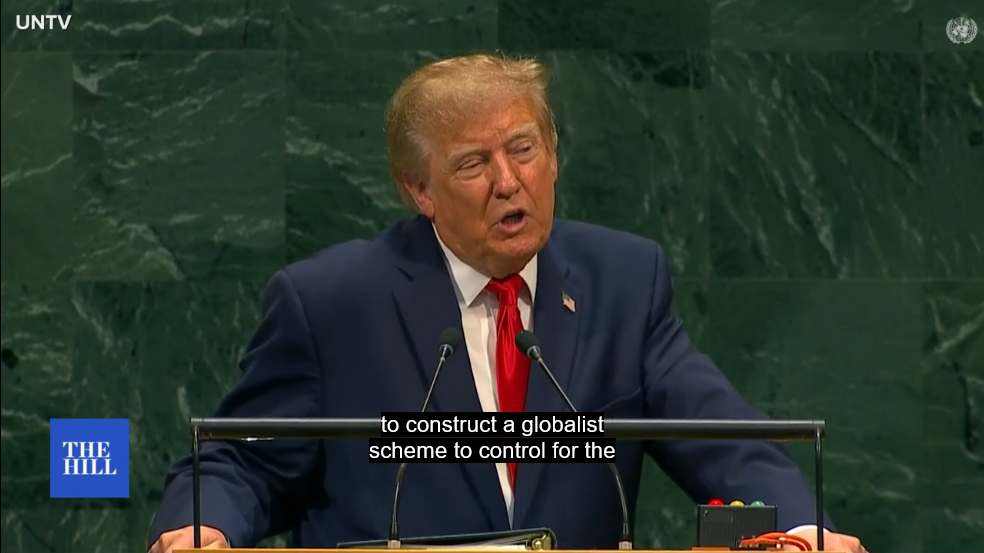
On September 22, 2026, President Donald Trump told the United Nations that the United States would begin calling artificial intelligence “Super Intelligence.”
His stated objection was linguistic: artificial makes intelligence sound fake. He said future United States documents should use the new terminology and encouraged the rest of the world to join in.
Modal Path Ethics has spent months now constructing increasingly annoying distinctions between kinds of intelligence.
The federal government has arrived with a big Sharpie.
Artificial Hearts Remain Under Audit.
There is a small problem.
Artificial does not mean fake.
- Artificial light contains real light.
- An artificial heart has the extremely inconvenient property of needing to pump actual blood.
- Artificial selection really changes organisms.
Artificial intelligence was never called artificial because everyone secretly believed the computer was pretending. The adjective identifies something about provenance. It means the thing was produced through an artifact.
Trump replaced that kind of claim with a completely different kind.
Super is a capability claim.
Now, the name has already passed the exam.
- A terrible model is Super Intelligence.
- A good model is Super Intelligence.
- A calculator glued to a chatbot is Super Intelligence.
- A hypothetical machine that can outperform the strongest human institutions across scientific domains is also Super Intelligence.
We have achieved perfect terminological equality.
The Adjective Has Escaped.
Suppose the government actually carries the announced terminology into its documents.
An agency does not write:
This system exceeded humans on these declared tasks under these conditions.
It writes:
Super Intelligence system.
The empirical claim has quietly entered the noun.
No benchmark required.
No domain specified.
No comparison class.
No threshold crossed.
The system has become super by paperwork.
This seems silly because this is silly.
This is also exactly why names matter.
A category determines which questions arrive next.
- Call something experimental,
- and people ask whether it works.
- Call it critical infrastructure,
- and people ask how to keep it running.
- Call it a weapon,
- and people ask who may deploy it.
- Call an entire technological category Super Intelligence,
- and superior capability begins to sound like something already established rather than something that still has to be demonstrated.
The adjective has done the evaluation before the evaluator enters the room.
I Just Fixed This
This timing is almost hostile.
Modal Path Ethics had just finished making the intelligence vocabulary harder.
It needed to be harder.
Intelligence claims require declared domains, comparison classes, boundaries, carriers, and evidence. Different configurations can outperform humans in different ways. A coordinated field can exhibit capacities no individual component possesses. A system can be extraordinary in one domain and useless in another.
Those distinctions are annoying because reality is fucking annoying.
Then the President of the United States walked into the taxonomy and announced:
SUPER.
Trump explained that the new term “sounds much better” and called it more accurate. He also said the United States intends to encourage the technology rather than “rein it in,” while watching it through the Department of Justice.
That makes this more interesting than branding.
This name arrives beside a policy posture.
- The technology is framed as extraordinary.
- The United States is framed as its leader.
- Growth is framed as something to encourage.
- And the descriptive category has been replaced with a word that already implies exceptional capability.
One little adjective is carrying quite a lot of luggage.
Field Instruments: The Name.
A name is a tiny instrument.
Usually that is just fine.
Nobody can drag the whole field into every sentence.
Categories compress. The problem begins when the compression destroys the distinction needed to correct it.
If Super Intelligence means everything previously called artificial intelligence, then it cannot also tell us when something has become superintelligent.
The thermometer has been relabeled with just HOT.
We may continue taking measurements.
They are going to be very awkward.
A serious capability vocabulary needs room for systems that fail, systems that specialize, systems that coordinate, systems that exceed particular human capacities, systems that exceed broader frontiers, and systems whose social power comes primarily from the institutions surrounding them.
Calling all of them Super Intelligence makes one extremely important question harder to ask:
Super relative to what?
That question is the instrument.
Do not throw it away because the old adjective sounded insufficiently enthusiastic.
The Ruling
President Trump may succeed in changing federal terminology. At publication time, he has publicly announced the change; reporting had not yet identified a separate executive order implementing it across the government.
Fine. Whatever.
Governments rename things.
Language changes.
Shit happens.
Modal Path Ethics has no sacred attachment to the initials AI.
Actually, this could even be very good for my career.
It does have an attachment to instruments that still measure something.
A capability word should remain answerable to capability.
- Artificial tells us something about origin.
- Super should tell us something about performance.
If Super Intelligence becomes the name for the whole category, then superintelligence has ceased to identify a threshold.
It has become branding.
- The label changed.
- The field did not.

Comments ()