Applied Case: The Frogs Crossed the Border
An undeclared research sample, an unlawful visa cancellation, and a correction that arrived after the field had changed.

In August, Modal Path Ethics investigated InfoWars, following a scientific finding about amphibians through the increasingly extravagant claims built around it.

Those frogs were real. The research was real. The story being told about the frogs required a great deal more than the research established.

On November 4, 2026, a federal judge dismissed a criminal prosecution arising from an entirely different frog experiment scandal.
This time, the frogs were preserved embryonic specimens, the researcher was Kseniia Petrova of Harvard Medical School, and the consequences included immigration detention, possible deportation, and federal criminal charges.
And the connection to InfoWars?
Methodological. An authentic piece of evidence can become the beginning of an account whose subsequent conclusions outrun it.
In Petrova's case, that account entered the machinery of the state.
We can now boldly reconstruct what happened without assuming the government's initial suspicions were invented, that its later motives have been proven, or that a researcher's scientific importance exempts her from ordinary law.
The facts are enough.

! ! ! ! CONTACT ! ! ! !
The Samples.
On February 16, 2025, Petrova returned to Boston Logan International Airport from France. She was a Russian citizen working in the United States under a J-1 research visa.
Her luggage contained biological specimens obtained during a visit to the Curie Institute: embryonic samples from African clawed frogs, including chemically fixed cells intended for biomedical research. The specimens were inert and nonliving.
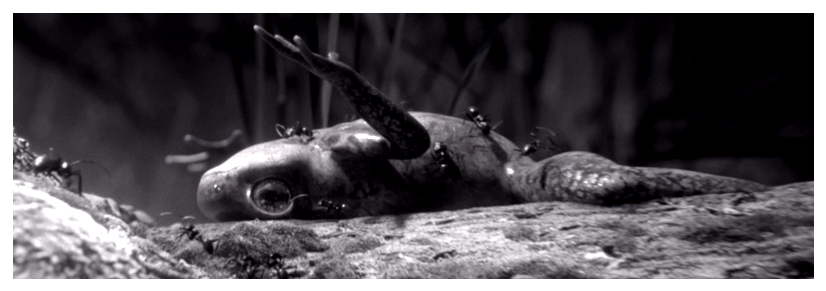
Petrova did not declare these samples of frog.
Customs officers discovered samples in her checked luggage and questioned her about other biological materials. Federal prosecutors later alleged that she initially denied carrying biological material and that messages recovered from her phone contradicted her explanation that she did not realize a declaration was required.
One colleague had warned her about obtaining permission for the samples.
Her principal investigator had asked how she intended to bring them through American customs.
Petrova had replied that she had no plan and would be unable to swallow them.
If she could turn into a giant frog, even just the head, she would have had only one of those problems. That is something to consider for future experiments, and that is evidence potentially relevant to knowledge and intent that cannot be discarded because the resulting prosecution became controversial.
The specimens' inert condition, while tragic, is also relevant. A nonliving laboratory preparation cannot establish the biological threat posed by the introduction of viable invasive animals. But inert frog material may still be subject to customs, import, documentation, or other regulatory requirements.
Those questions need to be distinguished and answered under the rules actually applicable to the material.
The original legitimate enforcement field was recognizable: inspecting an international import, determining the rules governing it, seizing material when justified, and investigating possible deception.
The problem came with what happened next.
The First Closure.
Following the customs inspection, a Customs and Border Protection officer canceled Petrova's J-1 visa.
The officer then declared her inadmissible on documentary grounds.
Petrova asked to return to France. She reportedly possessed valid authorization to enter the Schengen Area. That request was refused.
She had expressed fear of returning to Russia, where she had protested the invasion of Ukraine.
Instead, she entered immigration custody. She was initially held in Vermont and then transferred to a detention facility in Louisiana.
On February 23, her lawyers filed a habeas petition challenging her detention and the government's actions at the border.
- The samples were seized.
- The travel authorization was canceled.
- The resulting absence of acceptable documentation became part of the basis on which Petrova was held for removal.
This was no longer an inquiry confined to imported research material.
The government's action had changed the conditions under which the researcher could continue moving, working, leaving, and defending her status.
On April 7, 2026, United States District Judge Christina Reiss ruled that the visa cancellation was unlawful.
Customs and Border Protection had used a regulation permitting cancellation under specified circumstances, including withdrawal of an application for admission. The court found that Petrova had not been granted permission to withdraw her application and that the officer lacked authority to cancel the visa on the basis asserted.
The court held the cancellation arbitrary and capricious, contrary to law, and beyond the officer's statutory authority.
The ruling addressed the authority exercised against Petrova's visa. The finding does not establish that Petrova committed no customs offense.
It establishes something sufficiently serious on its own.
The government took an actual customs encounter and used it to perform an immigration action it had no lawful authority to perform.
The Criminal Path.
The immigration case did not develop independently of the later criminal proceedings.
On April 22, 2025, the Vermont court scheduled a hearing on Petrova's habeas challenge for May 14.
On May 1, internal Immigration and Customs Enforcement correspondence circulated information recovered from Petrova's phone. The messages discussed her supervisor, his public criticism of her detention, and their connection to Russia.
One official referred to the advance discussion about bringing the samples through customs as a possible plan to smuggle them and said investigators would engage.
On May 2, Homeland Security Investigations headquarters directed its New England office to review the electronic evidence, contact Customs and Border Protection, and determine whether criminal charges were viable. The instructions also included examining whether Petrova's supervisor was involved.
The correspondence provides evidence of an actual investigative concern. It also establishes that Petrova's public defense, her supervisor, and their Russian connections were present in the official discussion surrounding the referral.
Those facts permit serious questions about selection and motivation.
They do not, by themselves, prove a retaliatory prosecution.
Meanwhile, prosecutors explored the possible application of additional wildlife-import laws. In a May 2 email, a prosecutor remarked on the invasive character of nonnative frogs and asked whether an import ban applied.
That question was capable of producing relevant legal information, and was also a different question from whether fixed embryonic preparations posed the same concerns as living frogs.
The proposed additional wildlife charge did not appear in the eventual indictment.
On May 12, two days before the scheduled habeas hearing, prosecutors filed a sealed criminal complaint alleging smuggling. It was unsealed on May 14.
The government's later position was that the criminal proceedings rendered the immigration challenge moot.
Petrova subsequently received an offer to resolve the criminal case through deferred prosecution, conditioned on withdrawing her immigration-relief requests, leaving the United States, and not seeking readmission for five years.
She refused.
On June 25, a federal grand jury indicted her on smuggling, concealment of a material fact, and making a false statement.
These developments matter causally for more than their timing. The criminal proceeding introduced a second set of constraints while Petrova was already contesting the first. It also created a proposed route out of prosecution that required surrendering her efforts to remain in the United States.
Her legal options were changing through actions taken by the very institutions whose conduct she was challenging.
The government might still have possessed legitimate grounds to investigate the alleged offense. The criminal allegations were never adjudicated at trial.
The wider question was whether this particular escalation, selection, and conditional resolution could be justified by the actual enforcement field.
Discovery.
The critical comparison was not between Petrova and a fictional traveler who had carried no frog material.
It was between Petrova's treatment and the government's treatment of other travelers who failed to declare comparable materials.

On April 1, 2026, Magistrate Judge Judith Dein ordered discovery concerning possible vindictive and selective prosecution.
Judge Dein expressly assumed, for purposes of the discovery motion, that the alleged facts were sufficient to state a smuggling charge.
She did not have to dismiss the underlying customs allegation in order to examine the prosecution's conduct.
The government argued that the Massachusetts charging decision should be separated from the preceding immigration proceedings.
Judge Dein refused to isolate it that way.
She found the available circumstances sufficient to warrant discovery. She did not find that retaliation or unlawful discrimination had been conclusively established.
On October 8, District Judge Leo Sorokin upheld the discovery order.
The prosecution was now required to expose itself to an inquiry broader than its own charge.
- What other enforcement responses had been available?
- What had actually been done in comparable cases?
- What legal instructions had the grand jury received?
- Which investigative procedures and decisions produced this case?
The Correction That Could Not Arrive.
There was another failure developing in the immigration proceedings, and it is at least as important as the eventual criminal dismissal.
On April 7, 2026, Judge Reiss set aside the unlawful visa cancellation.
By then, more than a year had passed since the airport encounter.
Petrova's J-1 visa was scheduled to expire on April 26.
On April 8, Petrova requested renewed consideration of her admission before that expiration.
The government opposed her position. On April 24, after additional litigation forced a prompt decision, the immigration judge said it lacked authority to admit Petrova to the United States as a nonimmigrant in the pending removal proceedings.
The immigration process had not received the executive action or documentation it considered necessary to restore her position.
The visa's expiration date arrived two days later.
On July 28, Judge Reiss entered a further ruling. Petrova had prevailed on the Administrative Procedure Act claim, but the district court concluded that it had already granted the relief it was authorized to grant, and dismissed the remaining claims before it.
The unlawful cancellation had been identified and set aside. The legally corrected record had still not, in the available proceedings, produced the material outcome Petrova sought before the original visa's expiration.
This is a more precise failure than the general observation that litigation takes time.
The original transition had altered her admissibility and removal conditions. Its reversal required more than a later declaration that the officer's action was invalid. An effective return path also depended on the responsible agencies, operative immigration documentation, and deadlines.
The legal correction reached the decision that caused the injury, but did not restore the earlier field in which that decision had never occurred.
The distinction does not mean a federal court should possess unlimited power over admission. The separation of legal authorities is itself an important constraint. It means that correcting one unlawful act and restoring the continuations damaged by that act are different achievements.
The elapsed time was not recoverable. The original visa period was finite. The immigration and criminal proceedings had already occupied significant portions of Petrova's life.

A legal victory can be real while much of the harmed continuation remains outside its remedy.

November 4.
The criminal prosecution ultimately ended through a different corrective path.
On November 3, 2026, U.S. Attorney Leah Foley requested dismissal of the indictment with prejudice.

The government maintained that its prosecution had been legitimate and that Petrova's allegations of vindictive and selective prosecution lacked merit.
It attached internal correspondence from May 2025 to support its account of how the investigation originated, and explained that the court-ordered discovery would require extensive work involving comparator cases, investigative practices, customs policies, and potentially sensitive enforcement information.
The government's assessment was that the resources required to continue outweighed the public interest in resolving the prosecution.
On November 4, Judge Sorokin granted dismissal.
The charges were gone. The dismissal did not constitute a finding that the alleged customs conduct was lawful or resolve the disputed prosecutorial motive.
The comparative enforcement inquiry remained incomplete because the criminal case ended before the ordered examination was carried through to adjudication.
That is an important limit, but still an important outcome.
The criminal court made external challenge effective. And the separate immigration proceedings illustrate how much less a successful legal challenge can accomplish when operative restoration remains elsewhere.
Where the Contraction Was Borne.
The principal harmed locus in this case was Petrova herself. It was already too late for the frogs.
Before the airport encounter, she possessed an ongoing scientific role, lawful research-related travel documentation, professional relationships, an established research project, and ordinary routes of movement connecting her work in the United States with colleagues abroad.
Her future was never guaranteed. No legal status eliminates uncertainty, and no research career is entitled to protection from every burden.
But these were existing, materially supported continuations.
The enforcement sequence changed them.
- Movement and autonomy. Detention replaced ordinary movement with custody. The refused request to return to France removed a potentially available alternative that deserved lawful consideration. Fear of deportation to Russia increased the stakes of decisions that would otherwise have concerned research samples and customs compliance.
- Research and professional continuity. Detention interrupted her practical participation in scientific work and imposed uncertainty around her professional position. The surviving record does not justify assigning a numerical value to lost discoveries or declaring an entire research program permanently damaged. The interruption itself and its harms are sufficient objects of analysis.
- Legal continuation and resistance. An initially valid visa was canceled without authority. Defending her status required sustained litigation through several different proceedings. Even after establishing the unlawfulness of the cancellation, the path to practical restoration remained difficult and time-sensitive.
- Burden distribution. Petrova bore the immediate costs of custody, uncertainty, compelled defense, interrupted work, and exposure to removal. The government possessed the institutional capacity to maintain parallel proceedings and defend its actions. When compelled criminal discovery became burdensome, it could choose dismissal. Petrova could not similarly terminate the consequences of the original detention.
The distribution of these burdens matters independently of the final result. The prosecution could end. The earlier months of custody could not be returned.
There are also broader institutional relations, but their injuries must be established rather than assumed. Scientific collaboration depends on trust, mobility, samples, institutional continuity, and the ability to participate in international work. The incident put pressure on those relations. Whether and how extensively it damaged the surrounding research field and whether that research field itself constitutes a morally-relevant bearer would require additional evidence.

The analysis does not need to invent a national collapse of scientific confidence. It already has one person and a documented sequence of imposed changes to her reachable continuation.
The Less-Closing Path.
We can now compare the actual response with a narrower alternative.
Customs officers had discovered undeclared biological material. They could seize it when authorized, determine the applicable import restrictions, preserve evidence, investigate possible false statements, and refer a supportable offense for prosecution.
Those functions did not require the unlawful visa cancellation the court later identified.
Immigration officers could assess any independently lawful basis for restricting admission or removal, including Petrova's request to return to France, without treating the customs incident as an unlimited warrant over her status.
Prosecutors could examine evidence of knowing deception while remaining answerable to the ordinary comparison and disclosure obligations of criminal enforcement.
These alternatives would not guarantee that Petrova faced no sanction for her frogs. A lawful seizure, penalty, or properly justified prosecution could still impose real burdens.
Their advantage is narrower and more important: they preserve the necessary enforcement functions without reproducing every additional contraction that the actual sequence imposed.
This is a structurally different comparison from asking whether scientific research is more valuable than border security.
Border enforcement protects legitimate fields. So does immigration administration when it acts within its proper role. So does criminal investigation when it identifies conduct the law actually prohibits.
Each carries responsibilities to people who must encounter it.
The serious question is whether this intervention preserves the functions it is entrusted to perform while avoiding needless injury to the continuations of those subject to it.
An instrument's purpose does not authorize every available exercise of its power. Its actual effects remain part of the judgment.
The Ruling.
Petrova's case contains an established unlawful transition, a contested criminal escalation, and two different forms of incomplete repair.
- The unlawful transition was the visa cancellation. The court found that Customs and Border Protection exceeded its authority. The resulting documentary condition contributed to detention and removal proceedings that Petrova then had to fight.
- The criminal escalation followed an unusually situated referral, introduced new charges and constraints, and intersected with her existing legal challenge. The evidence justified inquiry into possible improper prosecutorial motivation. It did not establish that motivation conclusively.
- The subsequent court orders opened a route to comparative scrutiny. The government then dismissed the prosecution with prejudice rather than complete the ordered discovery and continue litigating. That was meaningful correction and ended the criminal case.
- The immigration judgment exposed a deeper limit: a legal ruling invalidating the original visa cancellation did not automatically restore the travel and admission path affected by it, and the clock on that path continued to run.
The resulting contraction was therefore not limited to possible punishment under a criminal statute. It consisted in the accumulated changes to Petrova's actual continuation: detention, lost time, forced litigation, threatened removal, disruption of research, and a damaged route back to a status she had held before the government's unlawful action.
The state had legitimate authority to inspect biological imports and investigate possible crimes.
It had no authority to perform the particular visa cancellation the federal court set aside.
Nor could the eventual dismissal of criminal charges undo the earlier consequences.
The central distortion is already visible in the actual transitions.
A real customs concern entered an enforcement system. One unauthorized action changed the person's legal and material circumstances. Other institutions continued acting within the resulting field. Later correction arrived in parts, on separate clocks, after losses had already been incurred.
The original lawful work of the instruments remained available without requiring that entire sequence.
The less-closing path was to enforce the applicable customs rules without manufacturing an unlawful immigration injury, and to preserve correction before its material value expired.
The frog specimens were preserved.
The time was not.

Sources and court record
- United States Department of Justice — Indictment announcement, June 25, 2025
- United States v. Petrova — Discovery ruling, April 1, 2026
- Petrova v. Department of Homeland Security — Visa cancellation ruling, April 7, 2026
- Petrova v. Department of Homeland Security — Final disposition of remaining claims, July 28, 2026
- United States v. Petrova — Discovery appeal ruling, October 8, 2026
- United States v. Petrova — Government's notice of dismissal, November 3, 2026, with contemporaneous May 2025 correspondence: Exhibit 1, Exhibit 2, Exhibit 3.
- Associated Press — Criminal charges dismissed, November 4, 2026
Status as of November 4, 2026: the criminal charges were dismissed with prejudice. The dismissal itself does not determine Petrova's final immigration status.