Functional Field Analysts: Tukaram Mundhe and the Lives of People
He is actually just the food safety commissioner. Rule number one: Always expand the inquiry. Series premiere.
Modal Path Ethics has had remarkably little difficulty finding Failed Field Analysts.
History has been extremely accommodating there.
Just give a person a real wound, one unusually powerful instrument, insufficient correction channels, and enough confidence, and somebody will eventually convert a pretty good observation into yet another machine for making the field worse. The archive is just overflowing with candidates.
Discovering the opposite category has been much harder.
For months, there simply was no Functional Field Analysts series because Modal Path Ethics could not find anyone irresponsible enough to qualify.
But then a judge in Mumbai asked Tukaram Mundhe a question.

Mundhe had become commissioner of Maharashtra’s Food and Drug Administration in May. His department was moving through restaurants, warehouses, dairies, clubs, street vendors and major chains at a frankly alarming pace. By late August, Reuters counted more than 3,000 raids.
Licenses had been suspended.
Rats, cockroaches, rotting food and expired stock had been photographed and pushed into the public eye.
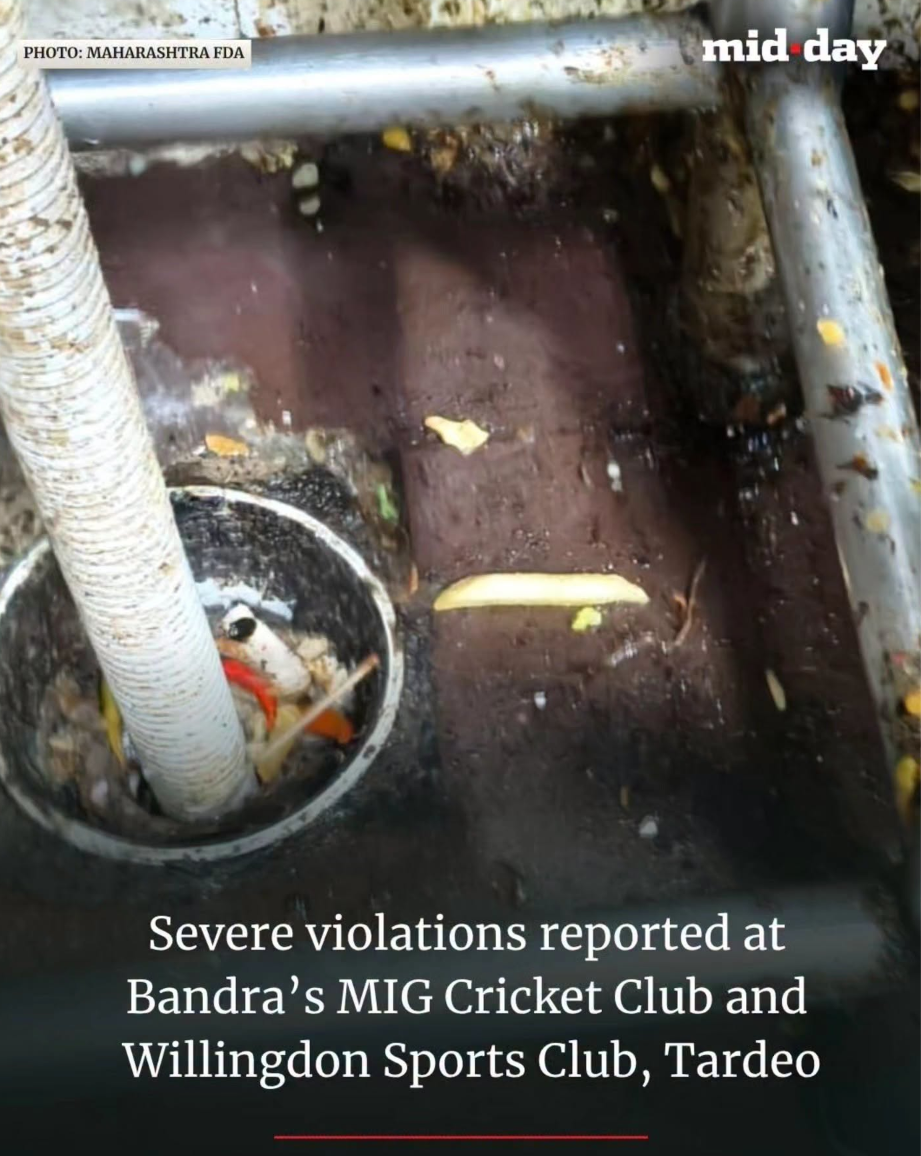
Domino’s, Pizza Hut and McDonald’s had all encountered the instrument.
A Bombay High Court judge noticed the pattern and asked the obvious symmetry question.
- Why all this aggression toward private establishments?
- What about the court canteens?
This was an excellent opportunity to explain why the situation with all that was complicated.
Mundhe’s department chose a different response.
- Inspect the court canteens.
- Within hours.
Two of three were subsequently found operating without the required licenses, according to Mundhe’s later account.
They encountered the full force of the instrument.

Asked why his department was being so aggressive, Mundhe gave Reuters one of the strongest administrative slogans Modal Path Ethics has ever encountered:
“You are dealing with the lives of people.”
Also, and unfortunately for everyone hoping this article could now become a simple celebration of a heroic bureaucrat, the court has also repeatedly told Mundhe’s department to calm the hell down.

Yeah.

I'm thinking this is the guy.
The Functional Field Analyst.
The inaugural Failed Field Analysts article began with a crucial distinction.
A failed field analyst is not someone who sees nothing.

Anthony Warner saw something real about telecommunications infrastructure. He recognized that an apparently ordinary building carried dependencies extending far beyond itself. Then the analysis collapsed. Warner attacked a communications network and forced all the people routed through it to carry the consequences.
The series begins there because the failure occurs after contact.

A Functional Field Analyst has to pass the inverse test:
- A Functional Field Analyst is not an analyst who never gets the field wrong.
That person simply does not exist.
- A Functional Field Analyst can be wrong without requiring the field to remain wrong with them.
The difference is more or less everything.

Functional analysis has to preserve contact after intervention begins. It needs a route by which the person affected, the measurement, the court, the customer, the worker, the rival institution, the unexpected consequence, or plain old reality can come back and say:
Nope. Look again.
The analyst may still disagree. The analyst may appeal. The analyst may still defend the original move. Corrigibility does not mean surrendering judgment every time somebody complains. It means the analyst does not own the conditions under which the complaint can actually matter.
This designation is therefore provisional.
All Functional Field Analyst designations are provisional.
There will be no saints here. No lifetime membership cards. Modal Path Ethics reserves the right to move anyone from one FFA filing cabinet directly into the other.
TUKARAM MUNDHE FFA STATUS:
FUNCTIONAL
FOREVER SUBJECT TO REVIEW.
Same acronym.

Very different drawer.
The License != Food Safety.
Mundhe’s first useful analytical move is almost embarrassingly basic.
- A food license != food safety.
The license says an establishment has permission to operate under a set of standards.
That establishment still has to satisfy those standards.

In an interview with The Week, Mundhe made this distinction explicitly.
An FSSAI license can be issued through an online, time-bound process. The license establishes an obligation to operate according to standards. Whether the business actually does so remains a question for inspection. His complaints system similarly uses auto-assignment, escalation, tracking and transparency to keep information moving toward enforcement rather than letting the certificate end the inquiry.
This all seems painfully obvious. That is why it matters so much.
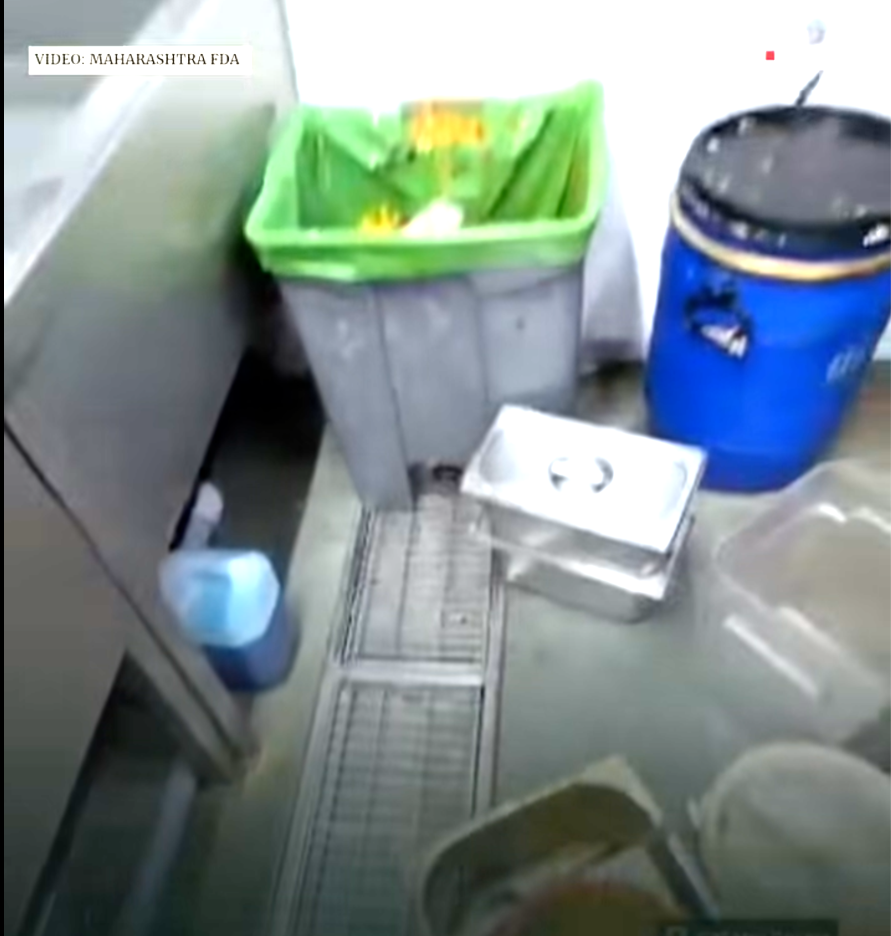
Administrative systems constantly convert relations into objects. One of the main functions.
LICENSED.
There. Done. Safe.
The object now stands in for the field.
Except the customer does not eat the license.
The customer eats the food.
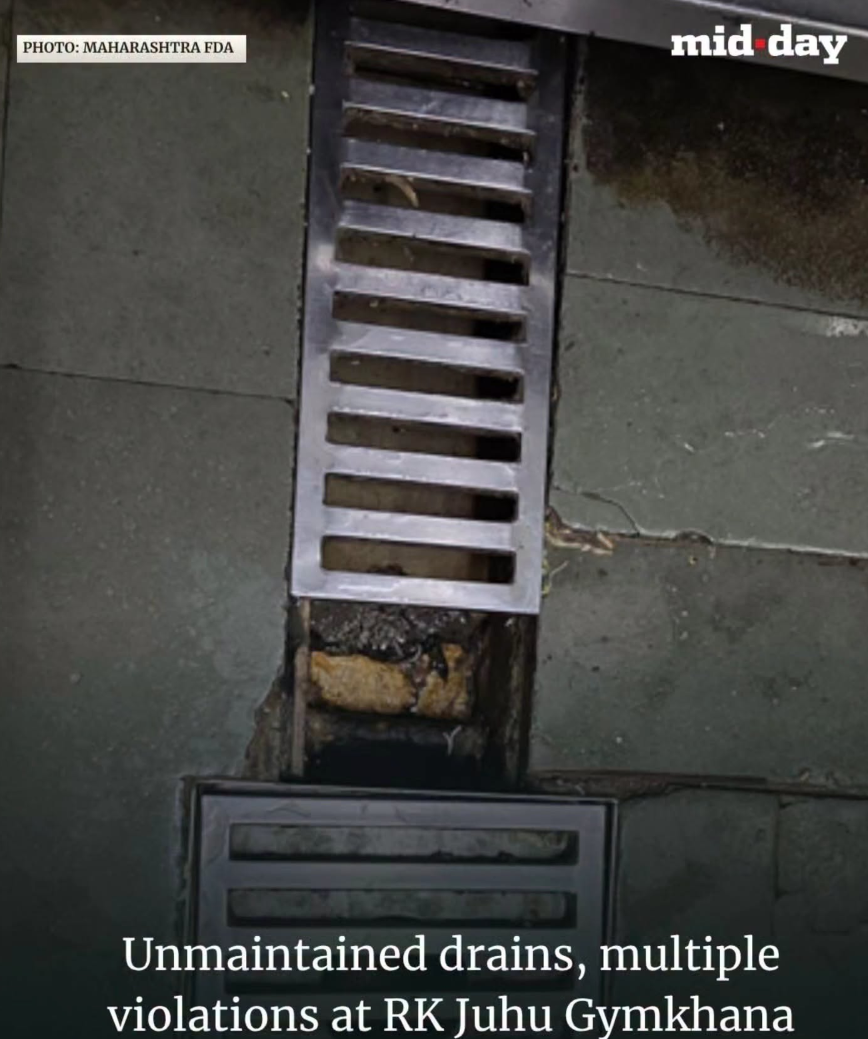
The license cannot tell you whether there is a rat behind the freezer; whether yesterday’s oil has become today’s oil has become tomorrow’s oil; whether some-sneaky-body replaced the expiration date; whether the person preparing this meal washed their hands; whether the product called paneer contains what the person buying paneer reasonably thinks paneer means.
That piece of paper is one instrument. The kitchen gets another vote.
Mundhe keeps making the instrument return to the thing it claims to describe.
The Raid != Repair.
There is an obvious failure available on the other side:
Three thousand raids!
Fantastic. Huge number.
But Modal Path Ethics regrets to inform the government that RAIDS is not a moral primitive.
Neither are suspensions.
Neither are fines. Neither are arrests.
Neither are photographs of one just truly astonishing refrigerator.
Enforcement matters because it can change what happens next.
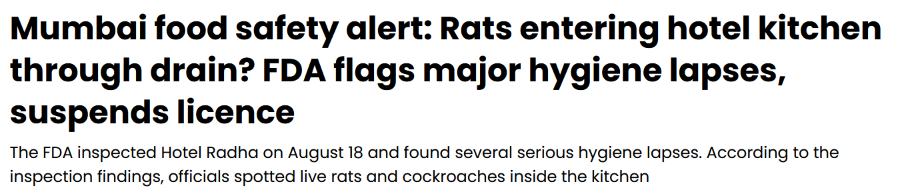
Reuters visited 25 Mumbai vendors and restaurants amid Mundhe’s crackdown. They found businesses already altering behavior before his inspectors arrived.
One vendor had dropped artificial red coloring for natural chilli. Another was changing frying oil more frequently and requiring gloves and head coverings. Customers noticed cleaner packaging after the FDA prohibited wrapping food in newspaper.
That is much better than the raid count.
Mundhe's instrument has begun acting before the inspector enters the room.
And Mundhe’s stated destination is stronger still: complete self-compliance, to the point that regulators no longer need to take regulatory action.
Good. Mundhe is a bridge.

The raid succeeds when the raid becomes unnecessary.
An enforcement institution whose definition of success requires permanent enforcement has already developed a suspicious appetite.
A functional regulator should want fewer violations more than it wants more enforcement.
The instrument exists to fix the field. The field does not exist to keep the instrument busy.
Corrigible Field Analysis.
Now for the unpleasant part.
Tukaram Mundhe has been an Indian Administrative Service officer for more than two decades. If Functional Field Analysts means anything at all, his current popularity cannot carry the designation.
The full career has to enter.
And that career is messy.
That's why I picked him.
I. Solapur
During Mundhe’s time as collector in drought-stricken Solapur, an independent field report by the South Asia Network on Dams, Rivers and People arrived expecting to be skeptical.
It found something real instead.
Solapur had needed more than 200 water tankers in 2013–14. During the far worse 2016 drought, it was using 16.
Drinking-water sources had been secured, thousands of small water-conservation works had been completed, and the district had pursued interventions around groundwater, pollution and agricultural water use. The authors retained broader concerns about Maharashtra’s water program while treating Solapur as an unusually strong implementation case.
Something had actually changed.
II. Pune
Then Mundhe went to the Pune public bus system and promptly provides this article with the evidence required to avoid becoming propaganda.
Mundhe arrived here with discipline.
- Staff hours tightened.
- Late workers were penalized.
- Breakdowns were targeted.
- Orders were issued.
Eight days later, more than a thousand buses had broken down.
After a month, the system had still experienced more than 7,000 breakdowns.
And there it is.
The employee != the bus.
Organizational discipline may have been one part of the problem. Later figures suggest some maintenance and contractor metrics improved. That does not make the early mismatch here disappear.
A Functional Field Analyst can still perform failed field analysis. That is totally allowed.
Actually, that has to be allowed because otherwise we are not describing function.
III. Nashik
In Nashik, Mundhe tried to overhaul a property-tax field he believed had been badly under-assessed.
This intervention produced enormous political resistance. At first, Mundhe held his ground against the elected general body.
Then he finally changed the rates.
He cut parts of the increase by 25 to 50 percent and said the revision took account of citizens, elected representatives, media reporting and the city’s growth.
That is an important signal. Correction does not require the original diagnosis to vanish.
The tax system may still have been broken; the corrective information still changed the transition.
IV. Navi Mumbai
Navi Mumbai presents us with the harder democratic problem
Mundhe became popular with sections of the public while colliding severely with elected representatives. In 2016, corporators passed a no-confidence motion against him 104–6.
A devastating figure.
- Some of that resistance may have protected threatened interests.
- Some may have represented legitimate disagreement over administration and representative government.
Functional Field Analysts does not get to solve that ambiguity by announcing that “the administrator is good and therefore every politician opposing him is corrupt.” Elected institutions are part of the field too.
V. Maharashtra
A Pune sweets shop had its license suspended.
On reinspection it satisfied 35 of 36 compliance parameters — about 98 percent — yet the suspension continued.
The Bombay High Court vacated the suspension and ordered the FDA to pay ₹500,000 in compensation. Mundhe initially defended the original action and said the department would examine its legal options.
This does not disqualify him. A functional regulator does not have to agree that every adverse ruling is correct.

Then, days later, the Bombay High Court came back.
The FDA had cancelled wholesale drug-sale licenses at a Cipla distribution facility after identifying alleged packaging, storage and recall irregularities. The procedural problem here was extraordinary:
The department arranged a hearing on a state holiday and proceeded with cancellation after Cipla sought an adjournment.
The court accused the regulator of going overboard and violating natural justice. I have not been accused of that one yet.
The FDA withdrew the cancellation and agreed to restart the process with a fresh notice and reasoned decision.
That is exactly why the court belongs inside Mundhe’s positive profile.
- The regulator can close a business.
- The business can challenge the regulator.
- The court can tell the regulator it crossed the line.
- The regulator can withdraw the move.
- The underlying alleged violation can still be investigated.
Nothing requires the correction of the regulator to become immunity for the regulated. That is a functioning circuit.
And while this article was being assembled, Maharashtra’s chief minister granted small traders a one-year reprieve from enforcement of an FDA crackdown on unpackaged edible oil while a joint process develops operating standards. Whether that particular intervention produces a better rule remains to be seen. The relevant fact here is constitutional:
Mundhe’s enforcement authority does not include unilateral ownership of its duration and outer policy boundary.
The Bridge.
Mundhe’s strongest institutional instinct seems to be building correction channels rather than becoming them. His current complaints portal routes, tracks and escalates reports. His best prior work repeatedly involved direct contact, public complaint mechanisms, telemetry or administrative systems intended to keep producing information after the administrator moved on.
If the only reason an institution sees reality is that Tukaram Mundhe personally showed up, the institution has not been repaired.
It has acquired Tukaram Mundhe.

Useful. Not scalable.
A functioning instrument has to survive the analyst.
Mundhe himself has started saying this. He has emphasized systems over individual celebrity and argues that the system should continue working beyond one official’s tenure.
Then, on September 3, Mundhe started trying to remove himself from the instrument.
Maharashtra’s Food and Drug Administration replaced the old practice of issuing separate festival enforcement orders with a standing year-round calendar. The instrument now begins before the inspector arrives: map the demand spike, identify the high-risk food, prepare the laboratory, inspect production and transport, follow the commodity into the market, then keep the case alive after the festival ends.
The administrator who became famous because nobody knew where he would raid next has begun turning the raid into a schedule.
Rule #1:
Always Expand the Inquiry.
The court asks:
Why only private restaurants?
Inspect the court.
The restaurant has a license?
Inspect the kitchen.
The delivery platform says it is only an intermediary.
- Does the food relation pass through that platform?
- Then the platform enters the field.
The packaged product complies with Indian law.
Okay. What is in the package?
Now the formulation enters the field.
“The formulation is legal.”
Okay. How does the same company formulate and label the product somewhere else, though?
Now another jurisdiction enters.
The corporation says the difference reflects local taste, price and regulation.
- Okay.
Why does this difference exist, and who carries its consequences?
Meanwhile:
The festival increases demand.
Where does the extra food come from?
- Inspect the producer.
The producer ships it overnight.
What happens in transport?
- Inspect the vehicle.
The product enters a warehouse.
What happened before the warehouse?
- Trace the source.
The food reaches a religious gathering.
Does sacred purpose remove the body from food safety?
No.
The food reaches an imported-goods warehouse.
Does the border end the relation?
No.
Keep going. Always.
This is Rule Number One:
- Always expand the inquiry.
The first boundary may be useful. Still a boundary.
Do not confuse the boundary of this instrument with the boundary of reality.
One major difference:
- Modal Path Ethics has spent the last year picking fights with China, Heidegger, the Federal Aviation Administration, Psychology Today, and other assorted corners of the world
- while possessing legal enforcement authority over approximately none of them as far as I can tell.
- Mundhe can shut your store down.
That makes the next part more interesting.
Because when his legal power reaches its edge, Mundhe does not seem to conclude that the ethical question has also ended.
The Office Ends Here.
- Reuters published an investigation on August 25 examining differences between food products and nutrition labels sold in India and versions sold abroad.
- Three days later, Mundhe entered the argument.
He did not announce that the Maharashtra Food and Drug Administration had acquired jurisdiction over Coca-Cola’s global recipe book.
He did not threaten Nestlé with an invented power.
He just made an argument.

“Why the different standard?”
- Mundhe possesses real enforcement authority.
- His ethical analysis exceeds it.
- His office is bounded.
- His attention is not.
Reuters reported that a Coca Cola company executive called front-of-pack warnings in India ineffective partly because people could consume sugary foods elsewhere and because Indian doctors already advise patients what to avoid.
Mundhe answered outside the language of administrative compulsion. He went with ethics instead.
- “Warning labels don’t insult consumer intelligence, they respect it.”
And:
- “prevention should not depend on already being sick”
Unfortunately, once Mundhe asks why Indian consumers receive a different standard, the inquiry becomes much larger than Tukaram Mundhe.
So now it must expand.
Why the Different Standard, Though?
Different countries do not require identical products.
That would be a bad rule.
Climate, supply, taste, price, diet, agricultural conditions, and regulations all differ. A recipe adapted to local conditions is not evidence of wrongdoing simply because another recipe exists elsewhere.
The question becomes serious when difference tracks weaker protection, weaker information, cheaper composition, or greater tolerated exposure for the Indian body, while the same institution demonstrates that it already knows how to operate to another standard somewhere else.
That is Mundhe’s question.
Run it.
Coca-Cola.
- A same-sized Fanta sold in London contains 63 calories.
- The Indian version contains 185.
Roughly triple.
That difference alone does not settle the ethical question. People can want different sweetness. Companies can formulate differently.
But then the labeling relation enters.
Coca-Cola’s own European materials say interpretive front-of-pack labeling helps consumers make informed choices. The company says it has used traffic-light labels on core sparkling products in 27 European markets since 2018.
Reuters found Coca-Cola and industry groups are resisting stronger interpretive warnings in India.
Now, the relation is harder.
- The company does not lack the instrument.
- It says it matters.
- And it uses it elsewhere.
- But the Indian consumer receives another, separate argument about why the instrument is unnecessary.
That deserves an answer.
Nestlé.
The same pattern appears in several forms.
- Standard Indian KitKat contains 4.5 percent cocoa solids.
- The milk chocolate used in the Australian version contains at least 22 percent.
- Indian Maggi variants use palm oil.
- Several British versions use sunflower oil.
- Some British Maggi packets are themselves manufactured in India
- and then sold in Britain carrying red front-of-pack high-salt warnings
- unavailable to the Indian consumer buying from the same broad product family.
- and then sold in Britain carrying red front-of-pack high-salt warnings
Again: Different does not automatically mean unethical. Palm oil is not a confession. Cocoa percentage is not a complete nutritional philosophy. Price accessibility is still real.
The ethical question concerns the pattern.
- Why does information become clearer after the product crosses a border?
- Why does the same company accept an interpretive warning in one market and actively fight it in another?
- Exactly what principle determines which consumer receives which standard?
Nestlé’s CEO has argued that manufacturers should be consulted so Indian rules remain scientifically grounded. Fair enough. A regulator should definitely want good science. Industry expertise can contain real knowledge about formulation, supply and manufacturing.
Industry knowledge is not industry jurisdiction.
That distinction has to survive too.
Cerelac.
And then there is the baby food.
In 2024, Public Eye and the International Baby Food Action Network compared Cerelac sold across countries and documented added sugar in products sold in India while comparable products in Germany and the United Kingdom had none.
Nestlé’s response was straightforward: its Indian products complied with Indian law, FSSAI standards and Codex requirements. The company also said it had been reducing added sugar and intended to expand options without it.
- That answer is legally relevant.
- It does not resolve Mundhe’s question.
If one formulation is good enough for the child protected by the stronger standard, what explains the different formulation for another child?
And then, something useful actually happened.
Nestlé changed the Indian product line.
Its 2025–26 annual report says the Cerelac no-refined-sugar range expanded in India. That belongs in this article too.
Keep going.
The Product = the Path.
A food product arrives looking like an object.
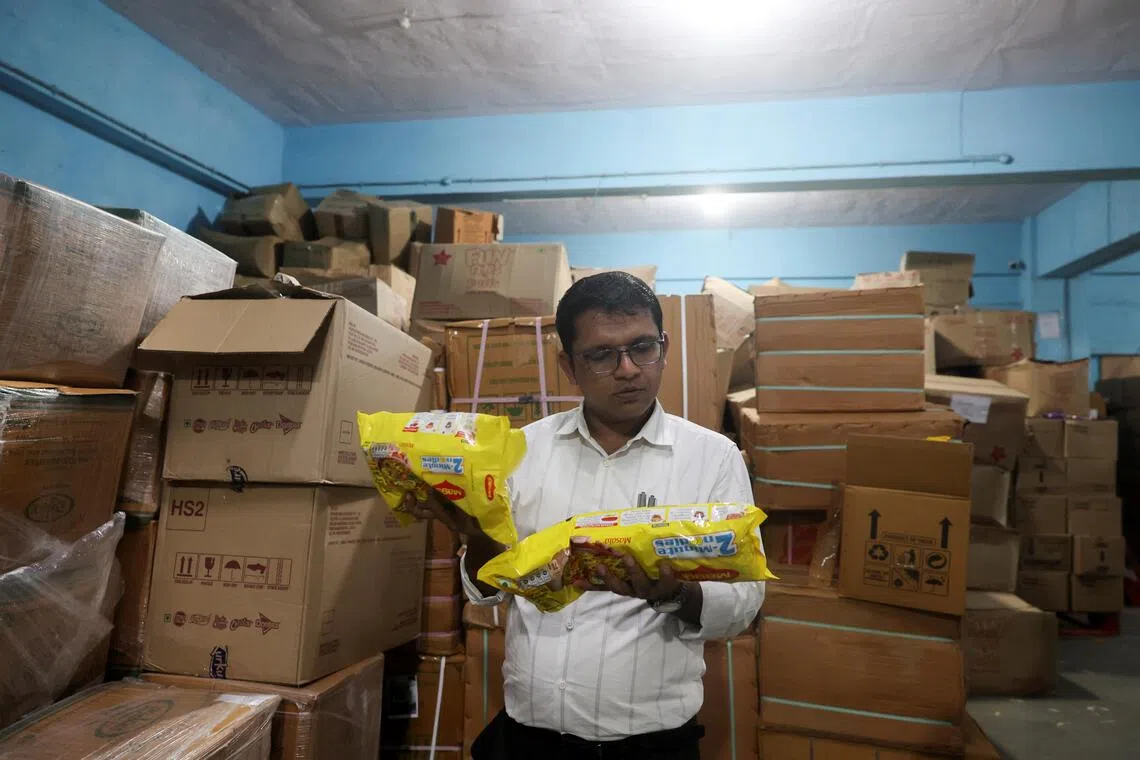
- Packet.
- Bottle.
- Chocolate bar.
- Noodles.
- Baby cereal.
- The package supplies a name.
- The price supplies a number.
- The nutrition panel supplies another set of numbers.
- The regulatory system tests the thing as though the thing has finally arrived.
But the product was produced through a series of transitions.
- Seed.
- Soil.
- Water.
- Fertilizer.
- Pesticide.
- Farmer.
- Farmworker.
- Harvest.
- Processor.
- Factory.
- Recipe.
- Worker.
- Package.
- Warehouse.
- Transport.
- Retailer.
- Kitchen.
- Consumer.
The purchased object is one stabilized point in that path. Its moral structure does not begin when the barcode appears.
The product is constituted by the path that produces it.
That is why the double-standard inquiry cannot stop at the shelf.
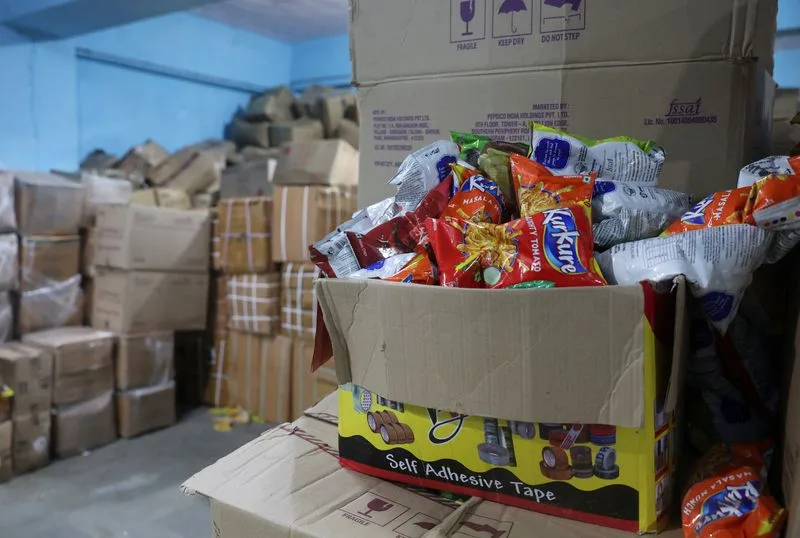
The product may be safe for the final consumer while the production path places an enormous burden on the worker who made that safety possible.
The residue may satisfy the legal threshold while the person applying the pesticide absorbs the exposure.
The ingredient list may be accurate while the agricultural relation behind the ingredient remains invisible.
- Food is made from ingredients.
- Food is also made through the lives of people.
Always expand the inquiry.
The Farmer Enters the Package.
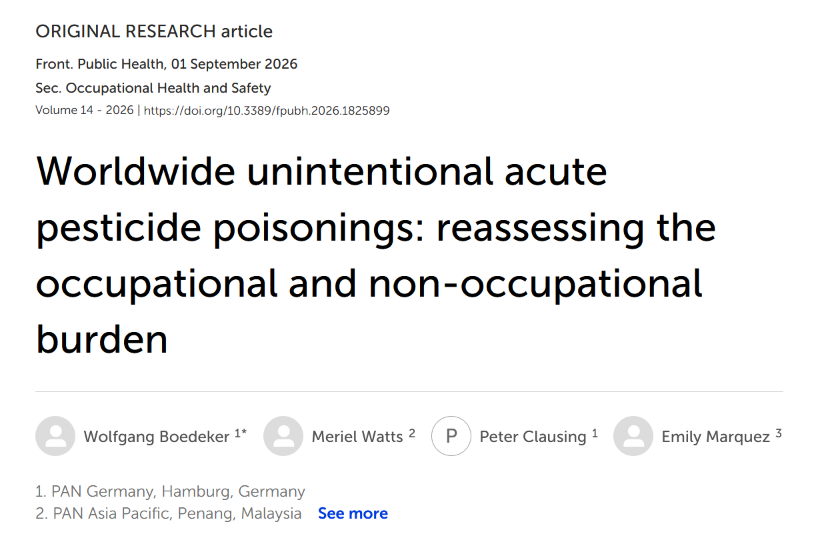
That is an estimate, and its limitations matter.
Non-fatal cases are commonly derived from surveys rather than comprehensive national surveillance. The authors extrapolate from study populations and acknowledge that surveys concentrated in high-use or high-risk agricultural regions may overestimate nationwide incidence.
Their sensitivity analyses still produced estimates above 400 million globally.
India carries the largest estimated absolute burden in the study.
The authors estimate roughly 169 million annual non-fatal cases among an Indian farming/occupational reference population of about 230 million, based on a mean prevalence derived from 11 studies. Their table gives India an estimated annual prevalence of 73.6 percent.
Those figures should not be read as a national census saying that precisely 73.6 percent of every Indian farmer is poisoned every year.
They should be read as evidence of a massive occupational-health field whose measurement is itself inadequate.
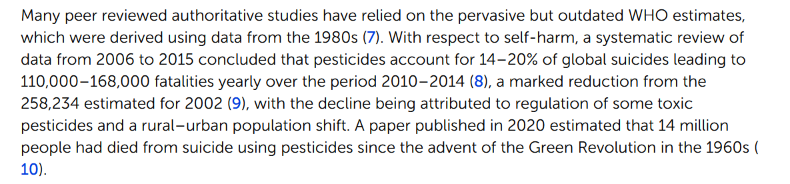
The Guardian reports the same study’s finding that India accounts for nearly 60 percent of estimated global pesticide-poisoning fatalities.
The primary paper separately identifies 7,805 fatal unintentional pesticide poisonings reported in an Indian government source for 2021, while warning that occupational classification is incomplete.
Now Mundhe’s question reaches the farm.
Why the different standard?
Because this is not only an Indian regulatory problem.
It is also an international corporate one.
The Double Standard Begins Before the Product Exists.
In 2017, hundreds of farmers and agricultural workers in Maharashtra’s Yavatmal district suffered severe pesticide poisoning during cotton spraying.
Among the products implicated in subsequent investigations was Polo, a Syngenta insecticide based on diafenthiuron.
Diafenthiuron was no longer permitted for sale in Switzerland or the European Union.
The product remained available in India.
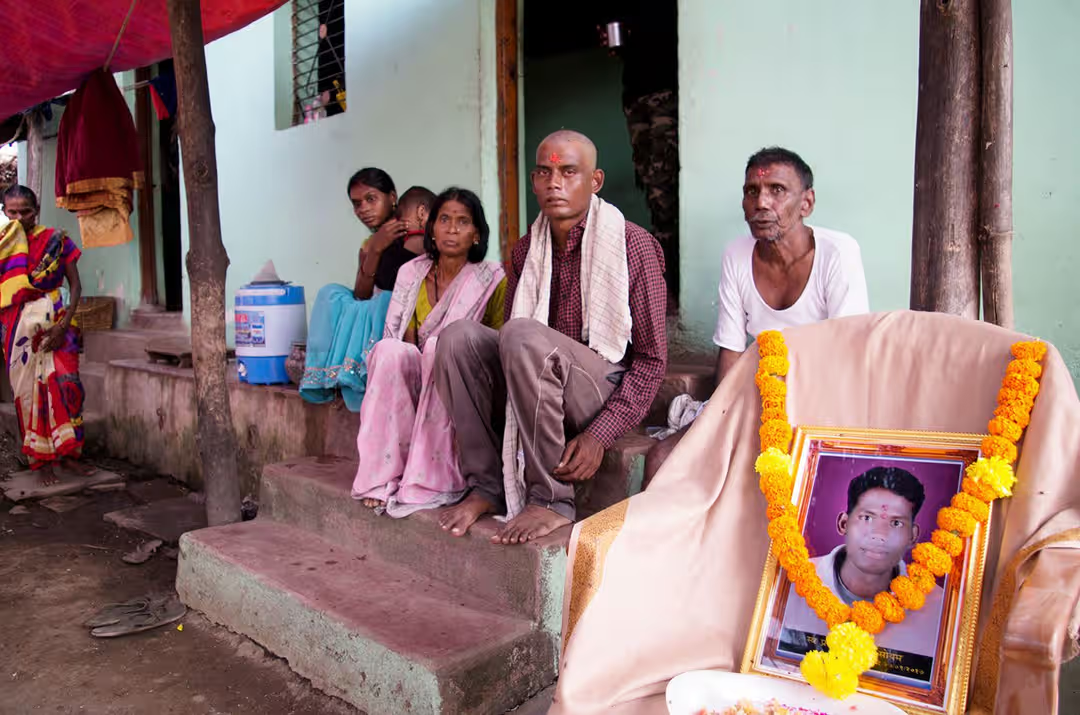
Public Eye later obtained records indicating substantial exports of diafenthiuron from Switzerland to India and, with Indian and European partner organizations, documented cases it argued were connected to Polo.
Syngenta has disputed responsibility.
That dispute is now in a Swiss courtroom.
Three Indian plaintiffs — a farmer who survived severe poisoning and the widows of two farmers who died — brought product-liability claims against Syngenta in Basel. In 2025, the court moved the litigation into an evidentiary phase.
There has been no ruling on the merits establishing that Polo legally caused the deaths alleged in those cases. That uncertainty stays.
So does the underlying regulatory fact:
A pesticide unacceptable for sale in the jurisdiction where the company was based remained a product for agricultural workers in India.
Mundhe’s question survives fully intact.
Why the different standard?
And the relation is larger still.
Public Eye and Unearthed found that European Union members notified nearly 122,000 tonnes of pesticides banned for use within the EU for export in 2024, primarily toward lower- and middle-income countries. The European Commission had previously committed to ending the practice.
This is one of the ugliest forms of object thinking available in the global food system.
- The pesticide is evaluated as one object when the exposed body is European.
- The exact same chemical becomes another commercial object after crossing a border.
The crop becomes another object at harvest. The ingredient becomes another object at the factory. The product becomes another object at retail.
At every transition, the previous relation can disappear.
The farmer disappears into the crop; the crop disappears into the ingredient; the ingredient disappears into the brand; the brand arrives in the supermarket looking self-contained and seriously lacking in labels.
The path has been erased. A relational analysis puts it back.
A safety instrument that begins at the product may arrive after the harm.
The Standard Has to Survive Symmetry.
This does not give Modal Path Ethics a universal recipe for global food regulation.
There are real tradeoffs.
- A requirement that makes nutritious food unaffordable can create another harm.
- A pesticide prohibition without a workable replacement can destroy crops and livelihoods.
- A warning system can be badly designed.
- A threshold can be scientifically weak.
- A multinational product can reasonably differ across agricultural, cultural and economic fields.
None of those facts rescues an unexplained asymmetry.
The test is simpler.
- If the company says an ingredient is necessary in India, explain why.
- If it says a clearer warning would confuse Indian consumers, explain why the same warning respects European consumers.
- If a safer formulation costs more, show the cost.
- If the risk-benefit balance genuinely differs, show the relation producing the difference.
- If a pesticide is too dangerous for farmers in the exporting jurisdiction, explain why another farmer’s body changes the analysis.
If the rule is logical here, it has to remain logical when the consumer changes nationality.
A logical move is logical against you.
The Golden Rule does not require identical outcomes. It demands the reason to survive symmetry.
The Correction Is Still Moving.
India’s warning-label fight is already changing while this article is being written.
After Reuters documented the industry campaign against stronger front-of-pack warnings, public pressure intensified and the Supreme Court pressed the government over delays.
FSSAI then proposed red hexagonal warnings for packaged foods exceeding specified nutrient thresholds.
As of September 2, even that proposal remains contested. Public-health advocates argue that requiring high levels in at least two specified nutrients leaves obvious high-sugar or high-salt products outside the warning. Industry representatives argue that the thresholds are too strict and poorly fitted to portions and traditional foods.
The answer to a weak rule is not to protect the first draft because it belongs to the good side. The answer to industry influence is not to exclude every piece of industry knowledge by definition.
- Build the instrument.
- Test it.
- Expose its assumptions.
- Let the consumer answer.
- Let nutrition science answer.
- Let the manufacturer answer.
- Let the court answer.
- Let the health data answer.
- Then revise it again.
Functional status is always provisional. That rule applies to the regulation too.
Mundhe: Just a Food Safety Commissioner.
Reuters describes people pushing toward him for selfies in New Delhi. One suggested that Prime Minister Narendra Modi should give him a national role.
Mundhe declined the coronation.
“I don't think I'm a celebrity. I'm just a food safety commissioner.”
Correct read. Stay there.
That office is already powerful enough. That's why he's so cool.
Mundhe can inspect. He can seize. He can suspend.
He can prosecute through the machinery available to his department.
He can act in ways Modal Path Ethics tragically cannot.
- Modal Path Ethics can publish an article saying Coca-Cola should answer an ethical question.
- Mundhe can send inspectors into an establishment and shut that shit down.
That is exactly why the distinction between enforcement and inquiry matters so much more for him.
- Where his jurisdiction exists, use it lawfully.
- Where it ends, do not pretend it continued.
- But keep thinking.
- Keep asking.
- Keep following the relation.
- Always expand the inquiry.
Repair.
The Failed Field Analysts premiere asked one final question of Anthony Warner:
- What networking harm did he repair?
- Zero.
Ask Tukaram Mundhe the corresponding question.
What became more reachable because of Mundhe's interventions?
- In Solapur, drinking-water dependence appears to have fallen dramatically.
- In Maharashtra’s food field, some businesses changed practices before the inspector arrived.
- Dirty kitchens became publicly legible.
- Customers gained a complaint route.
- Licenses stopped being allowed to impersonate compliance.
- Government canteens entered the same enforcement field as private establishments.
- Businesses retained court access.
- Courts corrected the regulator.
- The regulator withdrew at least one procedurally defective order and retained the ability to restart the underlying investigation correctly.
- A national argument over food labels moved.
- A global argument over unequal product standards acquired an Indian government interlocutor.
- And when Mundhe’s own inquiry reached the edge of his office, he kept asking the ethical question without pretending the office had followed him there.
That is more than enough.
No perfection required.
Actually, perfection would disqualify. A Functional Field Analyst has to be able to lose. Gotta have seams.
The ruling has to remain revisable.
Tomorrow, Mundhe could overreach again.

The next court may find another bad order. A popular official can start believing the popularity. A regulator can become addicted to enforcement. A crusade can become a throne.
The entire point of this designation is that none of those futures may be excluded from the model because Modal Path Ethics finally found someone it likes. So:
Tukaram Mundhe is a Functional Field Analyst.
For now.
STATUS: FUNCTIONAL
FOREVER SUBJECT TO REVIEW.
And always expand the inquiry.
Because, eventually, every serious ethical question arrives at the exact same place Tukaram Mundhe started:
“You are dealing with the lives of people.”