Applied Case: The Planes Were in the Air
The room was part of the targeter.
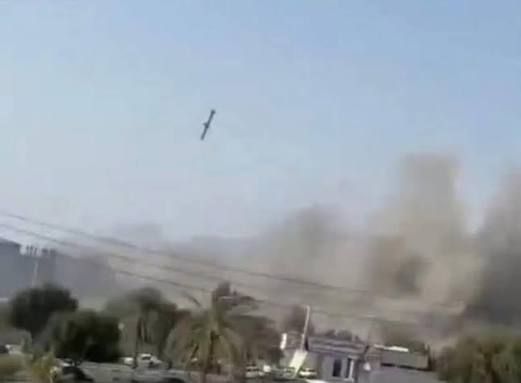
The planes were already in the air.
Earlier this year, during the war with Iran, a United States special-operations analyst assembled information about a Chinese vessel moving through the Middle East. According to CNN's reporting, the analyst fed classified and open-source material, including information associated with that ship's manifest, into a chatbot. CNN has not established whether the chatbot was a commercial product or an internal government system. The system identified the cargo as components associated with a nuclear-weapons program. The analyst then used artificial intelligence again while producing a standard intelligence report, which entered the military reporting system and circulated.
The United States military began preparing to intercept the vessel.
Armed personnel prepared for a possible boarding. Military aircraft took off.
Then, somebody looked harder at the report.
The underlying identification was wrong.
The operation was stopped before the boarding occurred. One source who spoke to CNN described the false report as having "almost started a war." That is the source's characterization, rather than an established counterfactual about what China would have done. The part we do know is already serious enough: an artificial-intelligence-assisted analytical error passed through enough institutional machinery to put aircraft into the sky before correction caught it.
Correction still won this time.
Late.
That should have been the article.
Unfortunately, there is another one.
The Missile Was Already Gone.
On February 28, two American Tomahawk missiles struck the Shajareh Tayyebeh Elementary School and its grounds in Minab, Iran.
Bloomberg reports that more than 150 people were killed, including at least 123 children. Its reconstruction is based heavily on unnamed officials involved in a Pentagon investigation that has still not been publicly released, so every attribution has to remain where it belongs. The officials describe an accumulation of failures rather than one catastrophic mistake.
- The site had once belonged to a military compound.
That fact was real.
- The site had also changed.
Commercial satellite imagery examined by Bloomberg shows walls and entrances separating the school area from the military base by 2017.
By 2018, the site visibly contained brightly painted walls, a soccer pitch, assembly markings and play areas.
According to officials interviewed by Bloomberg, a United States analyst had already noticed changes by 2019 and entered remarks into an intelligence system.
That system was not connected to the principal military intelligence database used for targeting.
- The observation existed.
- The path did not.
Then the stale classification entered war.
The Minab site remained in longstanding American target libraries associated with Iran's military infrastructure. As the February campaign approached, enormous numbers of possible targets had to be reassessed rapidly. Work that had previously taken hours was, in some portions of the targeting process, compressed into minutes.
Maven Smart System sat near the middle of that process.
Bloomberg describes Maven as fusing more than 150 data inputs into an operational picture used for targeting, command and control. The Minab site entered Maven with its stale military classification and eventually emerged among the proposed targets for the opening attack.
Then, humans entered the loop.
Lots of them.
Bloomberg reports that roughly three dozen people participated across the kill chain. Analysts signed off. Targeteers participated. Lawyers participated. Commanders participated. The senior commander was eventually given three questions:
- Was the target lawful?
- Was the intelligence sufficient?
- Had reasonable precautions been taken to minimize civilian harm?
The answer reaching the commander was yes.
The missiles left.
The school was still a school.
Palantir Possesses a Defense.
Palantir makes Maven Smart System.
After Bloomberg asked about the Minab findings, a Palantir spokesperson said the company was not responsible for the underlying data or for identifying deficiencies in military intelligence, and said there was no evidence that Palantir's software itself malfunctioned.
That defense may be completely correct within the boundary it draws.
- Maven can ingest bad information without corrupting a bit.
- The interface can display the information exactly as supplied.
- The software can perform every specified transformation correctly.
- The contract can clearly assign intelligence validation to the government.
- Every unit test can pass.
- Then 123 children die.
Because the contract is not the causal system.
Bloomberg reports something else that matters enormously: some CENTCOM personnel expected Maven to identify stale information or inconsistencies in the underlying intelligence. The reporting does not establish why they believed this.
Two people familiar with Palantir's Pentagon contracts told Bloomberg that government personnel sometimes develop operational understandings of tools that differ from the contractual allocation of responsibilities.
There it is.
That is the thing.
The operator's model of the machine is part of the machine's operational effect.
If the person using a system believes the system has already performed a check, that belief changes which checks the person performs next.
The belief is active. It changes attention.
It changes suspicion.
It changes what appears unfinished.
It changes where scarce time is spent.
It changes what another person farther down the chain receives as already settled.
None of this requires the software to claim a capability it does not possess.
The software can remain silent.
The human supplies the missing sentence.
That Defense Draws the Wrong Boundary.
This is not an exotic theory of artificial intelligence.
NIST already treats artificial-intelligence risk as a sociotechnical problem. Its AI Risk Management Framework explicitly warns that human assumptions and expectations about AI systems enter the lifecycle, that organizational structures affect downstream decisions, and that human-AI combinations can under some conditions produce worse judgment than either component alone. It specifically identifies questions about whether humans are actually empowered and incentivized to challenge artificial-intelligence outputs.
Defense researchers have been even more explicit. An Institute for Defense Analyses framework for human-machine teaming treats the operator's mental model as part of the evaluated capability.
It separately identifies "teammate knowledge": what the human understands about the machine's operational rules, capabilities, specifications, limitations and failure behavior.
Of course it does.
Imagine evaluating an aircraft while refusing to count whether the pilot understands the instruments.
Imagine evaluating a medical device while declaring that the nurse's interpretation of its alarm belongs outside the system.
Imagine evaluating a nuclear command console by testing whether every lamp illuminates correctly while declining to ask what the officers think those lamps mean.
A tool does not stop at the casing when its output changes human conduct.
Modal Path Ethics had already stumbled into this problem from the other direction.
In Field Instruments: Intelligence, it finally stopped looking for intelligence inside the smartest object in the room. Intelligence was defined as a relation through which distinctions in a field are taken up, preserved and used to alter subsequent transition. The article explicitly called intelligence an active coupling.
Then it reached the embarrassing conclusion:
- The room was part of the intelligence.
Minab supplies the lethal inverse.
- The room was part of the error.
And once the room can shoot, the room is part of the targeter.
Put a Human in the Loop.
There is a comforting diagram available for artificial-intelligence weapons.
- Machine does something.
- Arrow.
- Human.
- Arrow.
- Weapon.
- Arrow.
- Human.
- Arrow.
Excellent.
Human in the loop.
Civilization preserved.
This diagram is useless unless we ask what reaches the human.
A human positioned after an artificial-intelligence system does not automatically constitute independent review. Independence requires some difference in the path by which the human knows.
If the human receives the same stale classification the machine received, that is shared dependence.
If the human believes the machine has already checked the classification, that is shared dependence plus misplaced trust.
If the interface compresses 150 sources into one coherent operational picture, coherence itself can become a signal of confidence even where the sources have never independently agreed.
If another analyst's contradictory observation lives in a disconnected database, formal access to intelligence does not make that evidence reachable.
If hours of targeting work become minutes, a human remains present while the time in which the human can reconstruct the evidence completely collapses.
If ten civilian-harm specialists become one, the organization can still truthfully say that humans review targets while eliminating most of the humans institutionally specialized to ask a different question.
Bloomberg reports that civilian-harm-mitigation staffing was cut by roughly 90 percent across several Pentagon teams and that CENTCOM's team fell from ten people to one.
No civilian-harm-mitigation team member reviewed Minab before the strike, according to officials involved in the Pentagon inquiry.
That is not an artificial-intelligence bug.
It is part of the artificial-intelligence system anyway.
The Defense Department has itself described earlier Maven workflows in explicitly relational terms. A 2025 military publication said users were expected to manually confirm machine identifications and cross-reference them against other sensors and intelligence sources before validating a target. That document predates Minab and cannot establish the precise 2026 workflow used there.
It does establish the architecture Defense researchers themselves thought they were building: machine detection plus human confirmation plus independent information.
Remove or misunderstand any one of those terms and you have changed the system.
Leaving the human-shaped box on the diagram does not put it back.
Thirty-Six Humans Can Still Be One Check.
This is where "human oversight" becomes especially deceptive.
Roughly three dozen people reportedly touched the Minab kill chain.
That sounds like enormous redundancy.
It may indeed have been enormous redundancy.
We need the investigation to determine whether it was.
Because thirty-six reviewers are not thirty-six independent checks if they inherit the same false premise.
Thirty-six people can become a very expensive propagation mechanism.
- The target enters as an Islamic Revolutionary Guard Corps facility.
- Maven carries that classification into an operational picture.
- A reviewer sees a target already represented inside an authorized targeting system.
- Another reviewer sees prior approval.
- Another sees legal work built over the same classification.
- Another sees that everyone upstream has signed.
Confidence becomes partly endogenous.
The fact that the target survived review becomes evidence that the target deserved to survive review.
Nobody needs to be careless.
Nobody needs to obey an algorithm blindly.
Nobody needs to say:
BUT THE COMPUTER SAID BOMB IT.
Every person can simply perform their assigned role competently inside a chain whose shared premise is wrong.
This is exactly why independent validation means more than putting another person next to the first person.
The validators have to be capable of failing differently.
The Inner Apocalypse prologue has just been worrying about this problem in another field: independent systems become useful precisely when their disagreements can survive long enough to expose a common failure.
War needs that more than astronomy does.
Astronomy usually lets you recalculate the orbit.
Speed Is Also in the Loop.
There is a real defense of speed. Give it its full strength.
A military that takes six hours to identify a missile launcher while the launcher takes six minutes to move has built a beautiful ethical review process for an empty parking lot.
Artificial intelligence can join reports humans fail to connect. It can compare imagery, logistics, signals and movement faster than a human staff. It can notice contradictions and give people time they did not previously possess.
Modal Path Ethics already made this argument in Able Archer and the Dark Forest at Home. Artificial intelligence might prevent the next Able Archer precisely by assembling scattered information quickly enough that a warning becomes visible while something can still be done about it. The same article identified the price: faster detection creates pressure for wider access, faster command and shorter intervals between interpretation and response.
The Pentagon wants exactly this capability.
Its January artificial-intelligence strategy directs the department toward an "AI-first" warfighting force, calls for department-wide experimentation, and explicitly says old workflows should be reconceived around current artificial-intelligence capabilities rather than simply augmented. Secretary Pete Hegseth has described the objective as operating at "wartime speed."
Alright.
Then the verification architecture has to move too.
If target generation accelerates by a factor of ten while contradiction discovery remains unchanged, the system has not simply become ten times faster.
It has changed which evidence can still arrive before finality.
That is a structural transition.
A contradiction discovered tomorrow is useful to the investigation.
A contradiction discovered one minute before launch may save a school.
A contradiction discovered one minute after launch becomes history.
Artificial intelligence therefore changes more than the speed of cognition. It changes the correction window.
The Chinese Vessel Is the Control Case.
That is why that Chinese vessel matters so much beside Minab.
- In one case, correction arrived while the operation could still be stopped.
- The planes were in the air.
- The boarding had not begun.
Someone reopened the intelligence path, found the artificial-intelligence-assisted error, and the operation was cancelled.
- In Minab, according to the still-unreleased Pentagon investigation described by Bloomberg, the stale classification survived until two Tomahawk missiles had already converted the question into an irreversible event.
These are not identical failures.
- The Chinese-vessel report appears to involve a chatbot producing an erroneous inference that entered an intelligence product.
- Minab appears to involve stale source data,
- disconnected corrective evidence,
- compressed targeting tempo,
- reduced civilian-harm review,
- human expectations about Maven's capabilities
- and an AI-enabled system that accelerated the operational path.
Artificial intelligence does not have one failure mode.
"Hallucination" is far too small.
- A model can invent a fact.
- A database can preserve an obsolete fact and a system can faithfully integrate it.
- An interface can make the integrated picture easier to trust.
- A human can misunderstand what was checked.
- An organization can remove the people who would have checked something different.
- A command can shorten the time in which any of those errors can be found.
- Then everybody can honestly report that their component worked.
The field can still produce a missile.
Palantir Changed Maven.
Bloomberg reports one especially important postscript.
After Minab, according to a person familiar with the work, Palantir added capabilities to Maven that can re-review underlying intelligence for factors that would disqualify a target and flag inconsistencies or inaccuracies that human reviewers may have missed. The source said those capabilities have already caught anomalies.
This does not prove that Palantir caused Minab or Maven malfunctioned.
It does something more useful. It demonstrates that the boundary around the system was movable.
- Before the strike:
Detecting this class of intelligence deficiency was outside the software's assigned responsibility.
- After the strike:
The software can help detect it.
Nothing metaphysical happened.
The function moved.
This is what makes contractual defenses insufficient as causal explanations.
A contract can tell us who was obligated to perform a check. It cannot establish that the system was well designed if everyone interacting with the system developed a different operational understanding of where the check occurred.
Responsibility still matters. Palantir's responsibilities matter. Military analysts' responsibilities matter. Command responsibility matters. Procurement matters. Training matters. Interface design matters. Staffing decisions matter. Doctrine matters.
The mistake would be using responsibility allocation to erase interaction.
There is no prize for finding the one box where the error legally belongs.
Those missiles were assembled by the relation.
Always Expand the Inquiry.
Senators Mark Warner, Jack Reed and Chris Coons have now asked the relevant inspectors general to investigate the reported failures and requested access to both the Chinese-vessel episode and Minab, along with any comparable incidents that have not become public. Their letter says the episodes raise concern that accelerated artificial-intelligence adoption and experimentation may have outrun governance. That is a political claim from the senators; the investigation still has to establish what actually happened.
If the investigation asks only whether an artificial-intelligence model emitted a false output, it will miss most of the system.
The useful inquiry is wider:
- What information entered each system, how old was it, and where did contradictory evidence live?
- What exactly did Maven check, and what did operators believe Maven checked?
- Where did that belief come from: training, interface behavior, prior performance, documentation, doctrine, informal practice, or something else?
- Which review stages possessed independent evidence rather than inherited confidence?
- How did staffing reductions change the kinds of questions still represented in the chain?
- How much did artificial intelligence compress the interval between nomination and execution?
- Which warnings could still interrupt the transition at each stage?
- Which parts of the interface communicated uncertainty, source age and provenance?
- When several reviewers agreed, how many independent information paths did that agreement actually represent?
- And after the system changed, who verified that the repair addressed the failure rather than moving it somewhere else?
That is the investigation.
Everything smaller is component accounting.
The Ruling.
Artificial intelligence did not enter warfare as an isolated mind.
It entered analysts, databases, interfaces, contracts, target libraries, training, doctrine, staffing, command, and time.
It entered people who formed beliefs about what the machine knew.
Then those beliefs altered what the people did.
Modal Path Ethics has spent months asking whether artificial intelligence can represent the field beyond its immediate objective. The new Structural Ethics layer asks whether a capable system can notice the loci and continuations its local success might damage.
Minab adds the reciprocal problem.
Before asking what the artificial intelligence can see, identify what the artificial-intelligence system is.
The model is inside it.
The database is inside it.
The interface is inside it.
The operator is inside it.
The operator's understanding of the interface is inside it.
The chain of command receiving the output is inside it.
The time remaining for disagreement is inside it.
The people who were removed from the review process are also present through their absence.
A vendor may correctly say:
That was not our software's job.
The causal field gets another question:
Did the people operating the system know whose job it was?
If the answer is unclear, then the responsibility boundary and the operating boundary have diverged.
That is already a system failure worth correcting.
A human in the loop is not a magic talisman.
The human has to retain evidence, time, standing, calibrated understanding and consequential authority while correction is still physically reachable.
The Chinese vessel received that correction.
Barely.
Minab did not.
A capability boundary written in a contract is not a causal boundary in the field.
The room was part of the intelligence.
The room was part of the error.
And when the room can launch a weapon,
the room is part of the targeter.