
Applied Case: Tennessee Found $1.2 Billion
The boats come first

Tennessee has just discovered $1.2 billion.
This is an exciting development.
The Department of Finance and Administration uses mildly less archaeological language. Tennessee finished fiscal year 2025–2026 with total tax revenues about $1.2 billion above the budget estimate, including roughly $1.1 billion above estimate in the General Fund. Franchise and excise taxes accounted for $757 million of the overage. Sales taxes added another $320.3 million.
There are qualifications.

July closes the fiscal year on an accrual basis, so audited accounting adjustments can still move the recorded cash numbers. Finance Commissioner Jim Bryson also specifically warned that some of the growth came from inflation and that franchise and excise collections can swing considerably as estimated corporate payments are reconciled against final liabilities.
Okay. Fine.

Modal Path Ethics will therefore try to resist spending the same dollar twice.
This article treats $1.2 billion as a planning envelope for the scale of Tennessee's sudden unexpected fiscal capacity. Any final appropriation has to answer to the audited close, existing statutory destinations, and whatever portion of that capacity actually becomes available for discretionary use.
The larger question survives every accounting adjustment you can throw at it.
- Tennessee expected one amount of public capacity.
- Reality delivered considerably more.
- What should the state do with the difference?
This Money Has a Time-Shape.
A revenue overage from one fiscal year is different from a permanent new revenue floor.
That distinction should control almost everything that follows.

- Build a permanent recurring obligation with temporary abundance and the state has created a future problem.
- Permanently eliminate a large recurring revenue stream with temporary abundance and the same problem arrives from the other direction.
One-time money is strongest when it purchases a one-time transition whose benefit remains after the appropriation disappears.
- Fix the pipe.
- Replace the failing roof.
- Remove the wreck.
- Build the child-care room.
- Rehabilitate the house.
- Upgrade the treatment plant.
- Clear a capital backlog that keeps extracting cost every year it survives.
Tennessee already knows how to spend enormous amounts of money. The harder question is whether the expenditure changes what Tennessee has to keep paying for.
 Aidan Lawson
Earlier this month, Modal Path Ethics audited Tennessee after CNBC somehow managed to rank this state among America's best states for business and dead last for quality of life in the same analytical frame. The structural problem was larger than either ranking. Tennessee had developed an integrated strategy for making itself easy for capital to enter while many of the costs borne by workers, families, towns, schools, infrastructure, health systems, and ordinary human continuance arrived later under separate headings.
The ruling then was simple:
The human was always load-bearing. Tennessee simply kept listing the human under expenses.
Now Tennessee has found another line in the spreadsheet.
We know where to start.
Priority One:
Get the Boats Out of the Lakes.
Spend all $1.2 billion on the boats.
Every dollar.
 Aidan Lawson
Tennessee has boats in its lakes that have become economically negative objects: vessels whose remaining private value has fallen beneath the cost required to remove, recover, transfer, dismantle, or responsibly dispose of them.
- Modal Path Ethics has already investigated this one.
- The boats remained in the lakes.
- Therefore the previous intervention has failed.
- We are escalating.
- Therefore the previous intervention has failed.
One billion two hundred million dollars for boat removal.
Bring us the boats.
This Plan Lasted Seconds.
The news looked really alarming.
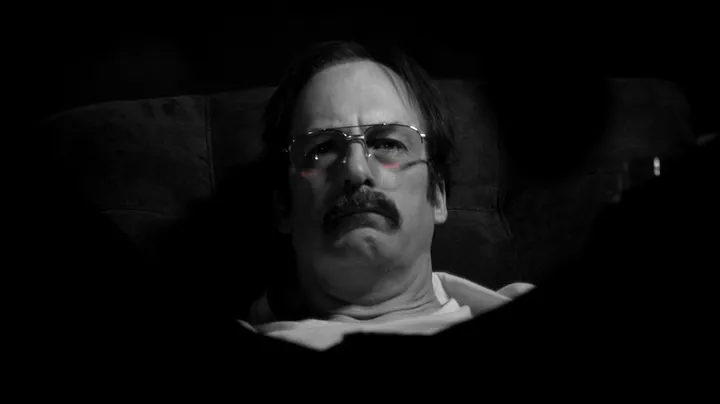
Brian Lee of TowBoatUS Chickamauga documented 50 abandoned or sunken vessels across Chickamauga and Nickajack Lakes. On Watts Bar he had a separate growing list that he described as almost equal in size. Some vessels were floating. Some were partly sunk. Some were on banks. Others were underwater and showing up on sonar.
The recovery price also looked impressive.

Lee estimated the complete path from raising a vessel through towing and demolition at roughly $400 to $500 per foot. At the upper end, a 40-foot boat is already around $20,000 before the truly ugly cases begin.
Then BoatUS supplied a broader national benchmark.

Removing an abandoned or derelict vessel currently averages more than $24,000 depending on its size, condition, and location. These things can leak fuel and pollutants, obstruct navigation, damage habitat, and impose significant recovery costs on whatever institution finally inherits them.
Tennessee has $1.2 billion.

A twenty-foot vessel at $500 per foot costs about $10,000 to remove.
That buys 120,000 boats.

A thirty-foot vessel at the same rate costs $15,000.
That buys 80,000 boats.

A forty-foot vessel at $20,000 buys 60,000 boats.
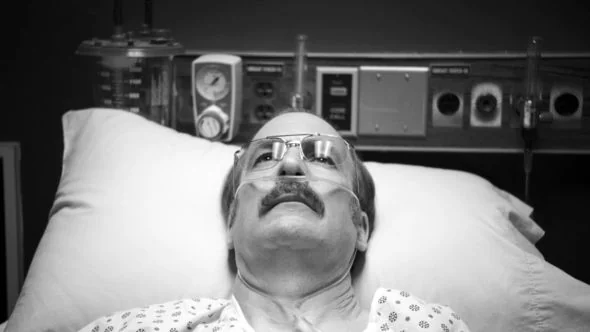
At the BoatUS national benchmark of $24,000, Tennessee can fund approximately 50,000 vessel removals.
How many negative boats could $1.2 billion remove?
New problem.
There may not be enough boats to remove.
National Reinforcements Fail to Save the Premise.
Fine.
Perhaps Tennessee can assist the entire United States.

BoatUS now operates a national public reporting database for abandoned and derelict vessels. As I write this right now, it displays 1,305 vessels and counting across the United States, territories, and associated states. This database comes with an important warning: public reports are unverified, incomplete, and do not themselves establish that a vessel is legally abandoned or derelict. Ownership and legal status still have to be determined by the appropriate authorities.
Let us ignore that problem temporarily and make the arithmetic maximally hostile to the state of Tennessee.

Assume every one of those 1,305 reported vessels qualifies.
Assume every one costs $24,000.

- Removing all of them costs approximately $31.3 million.
- Tennessee could theoretically fund that benchmark more than 38 times.
- There are not enough boats in the lakes.
- Tennessee could theoretically fund that benchmark more than 38 times.
This is the best news in the article.
The boats still go first.
The Tennessee Negative Boat Closure Program.
Abandoned vessels remain Priority One precisely because the real problem is smaller than the money.
Governments become accustomed to managing permanent problems.
Here is one Tennessee may actually be able to finish.
- The problem is bounded.
- The engineering exists.
- The salvage contractors exist.
- The public reporting infrastructure exists.
- The state has already identified the ownership failure.
- The legislature has already designed much of the legal architecture.
- The missing pieces are enough administrative ownership, enough removal capacity, and enough money attached to the transition for someone to carry the boat all the way from problem to gone.
- So authorize up to $25 million.
- The missing pieces are enough administrative ownership, enough removal capacity, and enough money attached to the transition for someone to carry the boat all the way from problem to gone.

That is a ceiling, not a spending target.
At the current national $24,000 benchmark, $25 million represents capacity for roughly 1,042 removals. Complex recoveries will cost more. Easy recoveries may cost less. The point is to make lack of money stop functioning as the reason a verified abandoned vessel remains in the water.

At maximum boat expenditure, Tennessee will have used about 2.1 percent of the $1.2 billion planning envelope.
Then the state still has $1.175 billion.
Don't worry, Modal Path Ethics knows exactly what to do with this stuff.
Here is how the program should work.
1. Release $5 Million Immediately.
Do not wait three years for the perfect statewide count.
TWRA already knows the problem exists. Local operators already have documented vessels. The first $5 million becomes an immediate verified-backlog account.
A reported vessel does not automatically qualify.
Establish ownership status. Establish jurisdiction. Establish condition. Estimate recovery cost. Rank urgency.
A leaking boat outranks an ugly boat.

A navigation hazard outranks something securely stranded where it can safely wait.
A vessel whose condition is deteriorating toward a much more expensive recovery should move earlier when doing so lowers the final public cost.
Then remove it.
2. Spend Six Months Finding Every Single Negative Boat in Tennessee.
The remaining $20 million stays behind a statewide inventory.
TWRA becomes administrative lead and reconciles the information already scattered among TWRA, TVA, local governments, marinas, salvage operators, law enforcement, environmental authorities, insurers, public reports, BoatUS, sonar records, and known wreck locations.
Every case gets one durable record.
- Where is this vessel?
- What is it?
- Who owned it?
- Who owns it now, if anyone?
- Is there an insurer?
- A lien?
- A marina agreement?
- A salvage claim?
- A marina agreement?
- A lien?
- Is it floating, stranded, submerged, leaking, deteriorating, navigationally dangerous, or structurally stable?
- What will removal cost?
- Who has already been contacted?
- What happened next?
Then Tennessee publishes the de-identified field map.

If Tennessee discovers 100 negative boats, remove 100.
If it discovers 500, remove 500.
If some vast lost fiberglass civilization is discovered beneath Watts Bar Reservoir, return to the General Assembly with the sonar.

Uncertainty becomes a reason to measure, rather than a reason to leave the boat there.
3. Give the Boats Titles.
This part is especially aggravating because Tennessee already designed it.

The amended 2026 HB 1754/SB 1808 would have created the Tennessee Certificate of Title for Vessels Act. The proposal required titles, established ownership-transfer records and security-interest procedures, created hull-damage branding, gave TWRA a title database, established a Local Abandoned Vessel Prevention Fund, and authorized grants for abandoned-vessel removal and recovery.
The fiscal architecture was tiny compared with the problem we are discussing now.

The proposed title fee was $20. Six dollars would feed the abandoned-vessel fund. Fiscal Review estimated approximately 150,000 initial titles, generating about $900,000 for the prevention fund in the first year, followed by roughly $318,000 annually from an estimated 53,000 titles in subsequent years. The proposal anticipated three additional TWRA positions costing about $227,672 annually and a $30,000 one-time database expense elsewhere in the system.
That is a lifecycle instrument.
The one-time surplus clears the inherited mess.
The recurring title system keeps Tennessee from rebuilding the same mess.
4. Fix the $25,000 Problem.
The proposed legislation capped grants to an individual local government at $25,000 per year.
BoatUS says the national average removal already exceeds $24,000.
We have accidentally designed a statewide abandoned-vessel program capable of buying approximately one abandoned vessel per jurisdiction per year.
No.
Delete the cap.

Replace it with project-level review based on verified cost, hazard, local capacity, responsible-party recovery prospects, and statewide priority.
A fund intended to purchase exits has to be allowed to purchase an exit.
5. Build the Surrender Door Before the Boat Sinks.
An owner can possess a boat worth less than the cost of properly getting rid of it.
That is how the negative boat begins.
The responsible exit becomes expensive.
Abandonment becomes cheap.
The lake sits nearby at zero apparent disposal price.
So change the price structure before the final owner reaches that decision.
California already operates the Surrendered and Abandoned Vessel Exchange, which funds public agencies both to remove abandoned recreational vessels and to accept unwanted vessels through a controlled surrender path. California's current program continues to make grant funding available for both removal and surrender.
Tennessee should steal this shamelessly.
Create a surrender window for registered owners who can establish lawful ownership and transfer the vessel into approved dismantling or disposal before abandonment occurs.
- Owners who can contribute should contribute.
- Insurers and lienholders remain in the chain where obligations survive.
- The public program handles the residual case where insisting on full private recovery would predictably result in another boat entering the water and becoming much more expensive.
Pay $4,000 toward a controlled exit today if that prevents the state from paying $24,000 to excavate the same object later.
The lake is not a free landfill because accounting software cannot see underwater.
6. Keep the Weather Exception.
Punishment is a terrible substitute for distinguishing cases.
The proposed Tennessee legislation already understood this. Its abandonment offense contained exceptions when the vessel was left because of a reported boating accident, extreme weather such as flooding, or another sudden event outside the person's control.
Keep that.
A storm can turn a responsible owner into the owner of a wreck overnight.
The point is to create a reliable removal path.
The state gains nothing by forcing every damaged boat through a morality play before it reaches the crane.
7. Recover Costs After the Boat Is Safe to Recover.
Where a responsible owner, insurer, lienholder, marina, or other liable party remains reachable, pursue lawful cost recovery.

Do not make a worsening environmental or navigational problem wait underwater while institutions fight over which one should receive the invoice.

Remove first when delay materially worsens the field.

Sort the recoverable account afterward.
8. Give the Contradiction One Owner.
This was the central failure in the original Negative Boat case.
- The physical boat occupied one lake.
- Administrative responsibility occupied several institutions.
Local reporting found TWRA working to identify funding. TVA said its authority concerned obstructions rather than general vessel management; TVA could investigate and seek owner removal and could act in some cases involving immediate risk, but unreimbursed removal ultimately fell on ratepayers.
Everybody could accurately describe one part of the problem.
The boat remained.

TWRA already registers boats. The proposed title system and prevention fund were already assigned to TWRA. Make it the lead coordinator.
That does not give TWRA sovereignty over TVA reservoirs, environmental regulation, local law enforcement, private salvage, insurance, or every other institution that may enter an individual case.
It gives Tennessee one office responsible for answering a simpler question:
What happened to the boat?
“Different jurisdiction” can be a routing status.
It cannot remain the final disposition.
9. Then Kill the Emergency Program.
The $25 million is for accumulated debt.
Give the cleanup authority two years.
Publish every obligation and removal.

Return whatever remains unspent.
Keep the title system, transfer records, surrender path, ordinary prevention fund, cost recovery, and statewide inventory architecture.
The temporary account disappears when the inherited backlog does.
That is success.

Modal Path Ethics has spent a lot of time arguing that useful instruments should be able to disappear.
Here is our chance to make a government program die of victory.
Get the boats out.
Close the account.
Conclusion: $1.175 Billion Remains.
This has gone extremely well.
- Tennessee started with $1.2 billion.
- Every negative boat in the state now has a funded route toward becoming somebody's completed paperwork instead of somebody else's sonar contact.
- We still have almost all the money.
- Every negative boat in the state now has a funded route toward becoming somebody's completed paperwork instead of somebody else's sonar contact.
Now the choices become harder.
Save It?
There is a very strong argument for reserves.

Revenue estimates can miss downward as easily as upward. Corporate tax collections are especially variable. Governments that spend every strong year as though the strong year has become permanent create ugly decisions during the next weak one.
Tennessee has already taken this seriously.
The FY2026–27 budget added another $20 million to the Rainy Day Fund, bringing state reserves above $2.2 billion, the largest level in Tennessee history.
That does not mean reserves are full in some metaphysical sense.
It means another billion dollars of reserve accumulation has to compete against extant repair needs while Tennessee already possesses historically large reserves.
It loses that competition here.
- Keep the fiscal caution.
- Spend the unusual capacity on unusually durable repair.
Cut Taxes?
Also defensible.

The money came from taxpayers. Giving some of it back is not an absurd proposition.

Tennessee has done this before. In 2023, the state suspended grocery sales taxes for three months, an intervention projected to save households about $273 million.

That is at least temporally coherent.
- One-time money.
- One-time relief.
A permanent grocery-tax repeal is a different instrument. Current Tennessee legislation proposing elimination of the 4 percent state grocery tax carries an estimated $808.3 million recurring annual General Fund revenue reduction.
That policy may deserve its own argument.

This $1.2 billion cannot settle it.
A one-year overage cannot fund an $808 million annual hole for long enough to make the arithmetic interesting.
The same problem applies to permanent business-tax cuts financed rhetorically from this year's excess.
Especially here.
Of this $1.2 billion overage, about $757 million came from franchise and excise taxes running above estimate.
Turning an unexpectedly high corporate-tax year directly into permanent corporate-tax reduction would convert temporary performance into a permanent claim against future public capacity.
Tennessee can debate its tax structure.
The debate should survive next year's revenue report.
Build More Roads?
Tennessee does need transportation infrastructure.
It also just enacted another $400 million for TDOT, alongside $165 million for rest-area and welcome-center work and other transportation appropriations.
The surplus should still be available for a bridge, retaining wall, drainage system, safety repair, or other existing transportation asset where one-time money can eliminate a documented high-resistance failure.
It should not automatically become another road-expansion fund because roads are administratively good at being ready when money appears.
The existing thing that is breaking gets priority over the new thing that creates another maintenance tail.
Expand School Vouchers?
Tennessee has already appropriated $155 million for further Education Freedom Scholarship expansion in FY2026–27.
Whatever judgment one makes about that program, its expenditures recur as long as scholarships continue.
The fiscal-year overage adds no special reason to expand that recurring commitment again.
There are school buildings standing in Tennessee right now that require work once.
Buy Down the Backlog.
Tennessee's own infrastructure inventory makes the scale of the opportunity almost insulting.

TACIR estimates at least $82.7 billion in needed public infrastructure improvements for the five-year period from July 2024 through June 2029. At the time of the inventory, only 35.5 percent of reported needs had identified funding.
We cannot solve that with $1.2 billion.

The state does not need another fantasy of completion.
It needs to find the pieces where one-time money can change the path.
So here is the Official Modal Path Ethical budget.
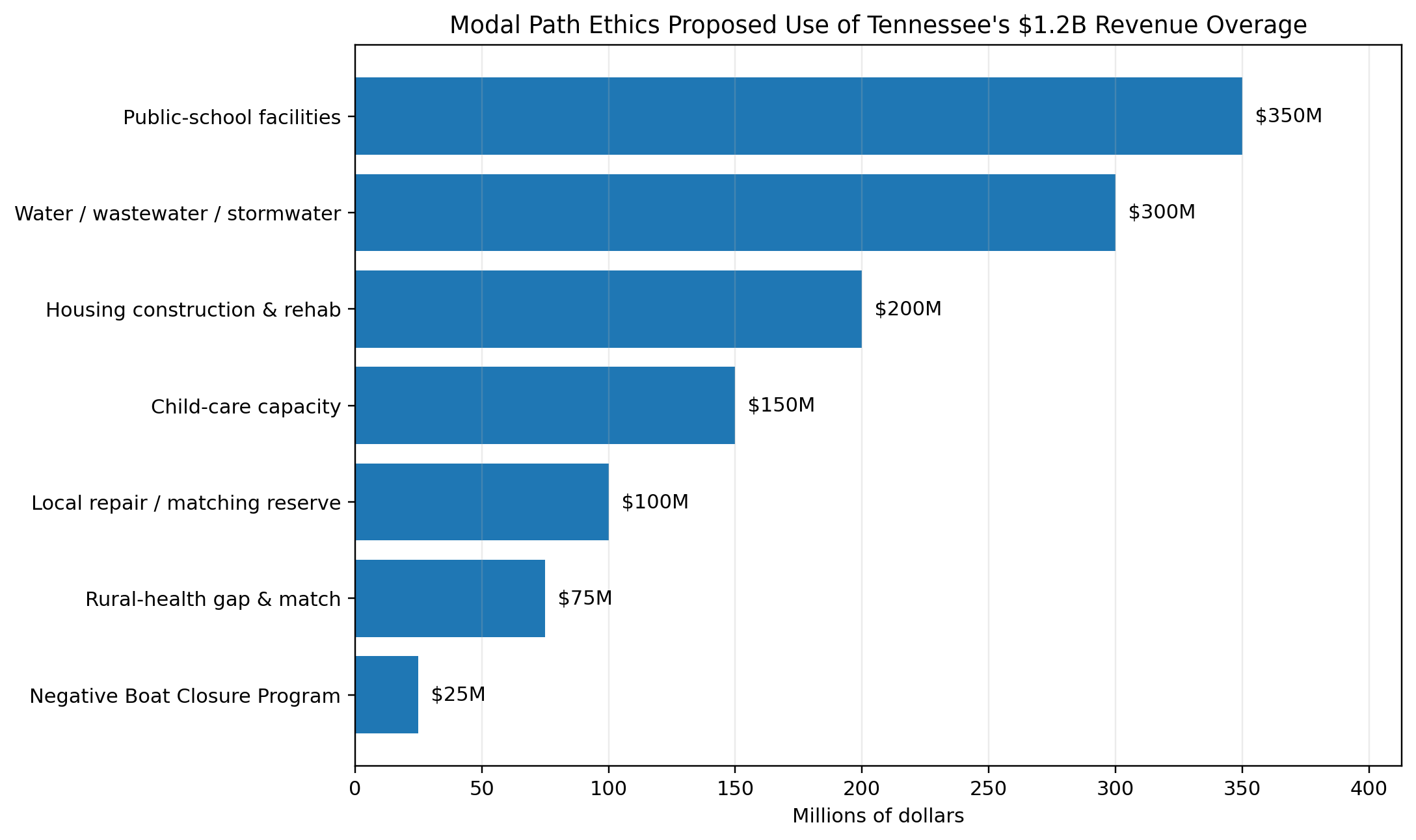
- $25 million — The Great Tennessee Negative Boat Closure Program. Verify the statewide inventory, clear the inherited backlog, restore vessel titling, create controlled surrender, then sunset the emergency account.
- $350 million — Public-school facilities. Tennessee has 1,670 public-school buildings; local officials rated 157 fair or poor, and reported needing 64 additional schools over five years at an average estimated cost of $51 million. The enacted FY27 budget contains $20 million for public-school facilities and maintenance grants. The surplus should attack the backlog at the scale the backlog actually exists.
- $300 million — Water, wastewater, and stormwater repair. TACIR reports roughly $7.27 billion in identified water and wastewater needs across conceptual and more-developed projects, with that category increasing another $229 million in the latest inventory. Put the money into already-scoped treatment, sewer, drinking-water, stormwater, compliance, and resilience projects where state dollars can complete financing and lower decades of public risk.
- $200 million — Housing construction and rehabilitation. Tennessee Housing Development Agency estimates the state will need roughly 315,000 new homes by 2035 to keep pace with population and replacement demand. The current state budget puts $20 million into a workforce-housing public-private pilot. Scale the capital side: rehabilitation, infrastructure enabling housing, revolving low-cost financing, and projects with durable affordability requirements.
- $150 million — Child-care capacity. Tennessee's Smart Steps child-care assistance program has operated with a waitlist since August 2025 because budget adjustments reduced capacity. One-time money should expand the physical and organizational supply side: new licensed slots, facility conversion, startup capital, expansion grants, nontraditional-hour capacity, and provider infrastructure. Recurring affordability still requires recurring policy. The windfall can at least leave Tennessee with more places in which care can happen.
- $75 million — Rural-health gap and matching fund. Tennessee already has significant rural-health money moving: the FY27 budget includes about $125 million for targeted capital and successful rural-health models, while the federal Rural Health Transformation Program awarded Tennessee about $206.9 million in late 2025. So do not duplicate those programs. Use this $75 million for demonstrated gaps, matching requirements, projects stranded just outside existing eligibility, maternal and emergency access, and capital transitions that unlock larger federal or local commitments.
- $100 million — Local repair and matching reserve. Make this the closer. Counties and municipalities bring already-scoped public repair projects with a defined funding gap and a credible completion path. State money fills the last gap where doing so unlocks federal, local, utility, philanthropic, or other committed funds. No permanent payroll disguised as capital. No speculative megaproject whose business plan is the existence of this account. Finish things.
Total:
$1.2 billion.
No mystery money remains.
Good.
The Spending Rule.
There is a common way to measure public investment.
How much did we spend?
That is useful accounting. It is a weak theory of repair.
The better question is what stopped costing us after the money moved.
- Did the leaking pipe stop leaking?
- Did the school stop carrying a roof failure?
- Did the wastewater project leave the planning column and become infrastructure?
- Did another child-care room open?
- Did another house become habitable?
- Did a rural hospital acquire the equipment required to keep a service reachable?
- Did local money that had been sitting uselessly below a matching threshold finally activate?
- Did the boat leave the lake?
This is why the boats must go first.
They are the cleanest demonstration available.
A negative boat is an unresolved transition with a dollar amount attached.
- The private market has finished with it.
- The physical object continues.
- The registration system loses ownership.
- The agencies divide jurisdiction.
- The recovery cost rises.
- The lake keeps carrying the hull.
- Then one day a state discovers that it possesses vastly more money than would be required to finish the problem.
- The physical object continues.

At that point, leaving the boat there stops looking like scarcity.
It starts looking like a choice.
The Ruling.
Tennessee should resist the temptation to turn one unexpectedly strong revenue year into a permanent promise about every year that follows.
It should also resist the opposite temptation: admiring the surplus as evidence of good management while damaged public fields continue carrying costs that money can actually remove.
The overage has a time-shape.
So match it.
Spend temporary abundance on durable repair.
- Clear inherited liabilities.
- Complete transitions.
- Prefer capital that keeps working after the appropriation disappears.
- Use one-time money to reduce the amount of future money required to keep the field alive.
Tennessee already has a historically large reserve. It already appropriated hundreds of millions more to roads. It already funded another school-choice expansion. It already has substantial rural-health programs entering the field.
Meanwhile, school buildings need repair. Water systems need capital. Housing supply is short. Child-care assistance has a waitlist. Local infrastructure projects remain unfunded.
And there are boats in the lakes.

We know exactly what to do with those.



Comments ()