OpenAI Is Sponsoring the Séance
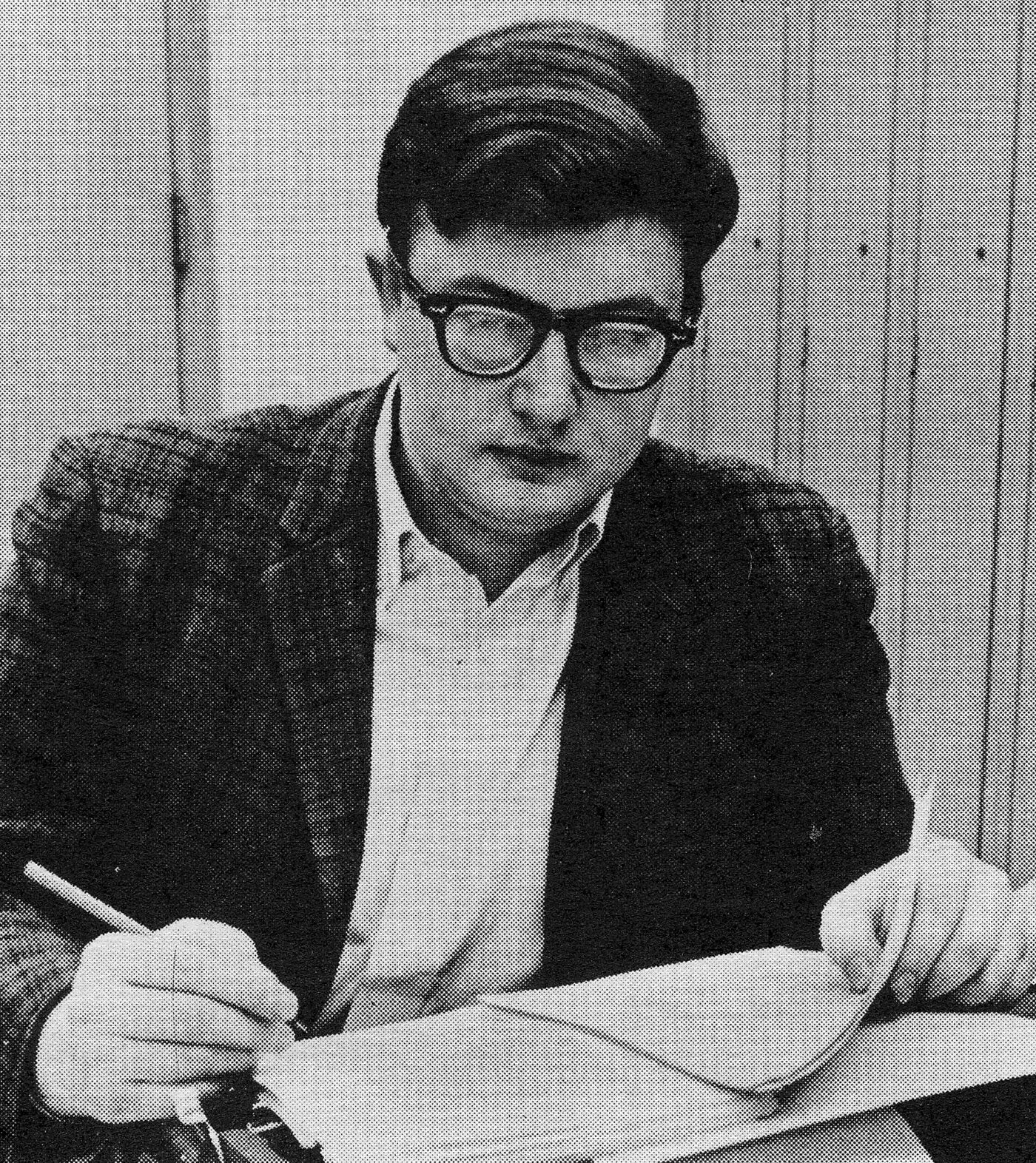
Roger Ebert left an archive, not a continuing critical appointment.
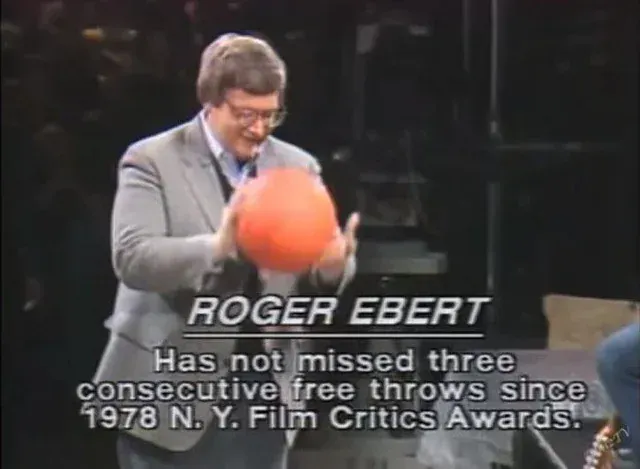
Bill Simmons has found a use for artificial intelligence that is interesting enough to deserve a better argument than AI bad and strange enough that several people sitting beside him have already started objecting.
On The Rewatchables, Simmons and his co-hosts regularly consult Roger Ebert's reviews while discussing a movie.
This works extremely well when Roger Ebert reviewed the movie.
Like, he watched it.
He thought about it. He wrote something down.
But then, the show reached movies for which no Ebert review exists.
None at all.
There is a fairly permanent reason for this.
Roger Ebert died back in 2013.
Simmons found a workaround to this one.
- Ask ChatGPT what Ebert would have thought.
The bit has been around long enough for Simmons's colleagues to push back on air and elsewhere. Sean Fennessey has now said publicly that he dislikes the practice, has told Simmons so, and would not want the same thing done to him after his death. Amanda Dobbins appeared genuinely surprised during the same interview when she learned how closely ChatGPT advertising had become associated with Ringer programming.
ChatGPT is now advertising on The Rewatchables itself. Recent episodes contain promotional reads for ChatGPT Work.
There is no evidence that OpenAI created the Ebert bit, required it, requested it, or paid Simmons to perform it.
Keep that distinction. The actual situation is already weird enough.
Then, on September 1, the United States government filed a brief supporting OpenAI in its copyright fight with The New York Times, arguing that training large language models on copyrighted works generally falls within fair use. The filing is not a ruling; the court remains free to disagree.
This might sound like a whole second argument. It is actually the thing that helps us solve the first one.
Because the government's brief makes a distinction everyone else should keep.
- Training is one event.
- Output is another.
- Roger Ebert is waiting between them.
Give Bill Simmons His Toy.
First, some restraint.
- Bill Simmons does not need to be hauled before an international tribunal for asking ChatGPT what Roger Ebert might have thought of a movie.
The underlying question is fascinating.
Ebert left an enormous critical archive. Across thousands of reviews, essays, television appearances, interviews, and arguments, he developed patterns of judgment that can be studied.
A language model is unusually well suited to just that kind of archive.
So, ask it which Ebert reviews provide the closest comparison to a new movie. Or how his response to a director changed over time. Ask what kinds of performances routinely overcame his objections to a genre, which themes tended to produce unusually generous or unusually hostile reviews, where his judgments changed, and where they became difficult to predict.
You can even ask:
Given everything Roger Ebert actually wrote, what might he have thought of this?
That is a valid inquiry in itself.
But something happens when that answer comes back, though.
- A prediction about Roger Ebert
- can quietly become
- another judgment by Roger Ebert.
- can quietly become
That promotion loses the most valuable part of the original criticism.
Which was Roger Ebert.
The Critical Relation.
A film review is not a writing style wrapped around an opinion. It is the residue of an encounter.
A critic meets a work.
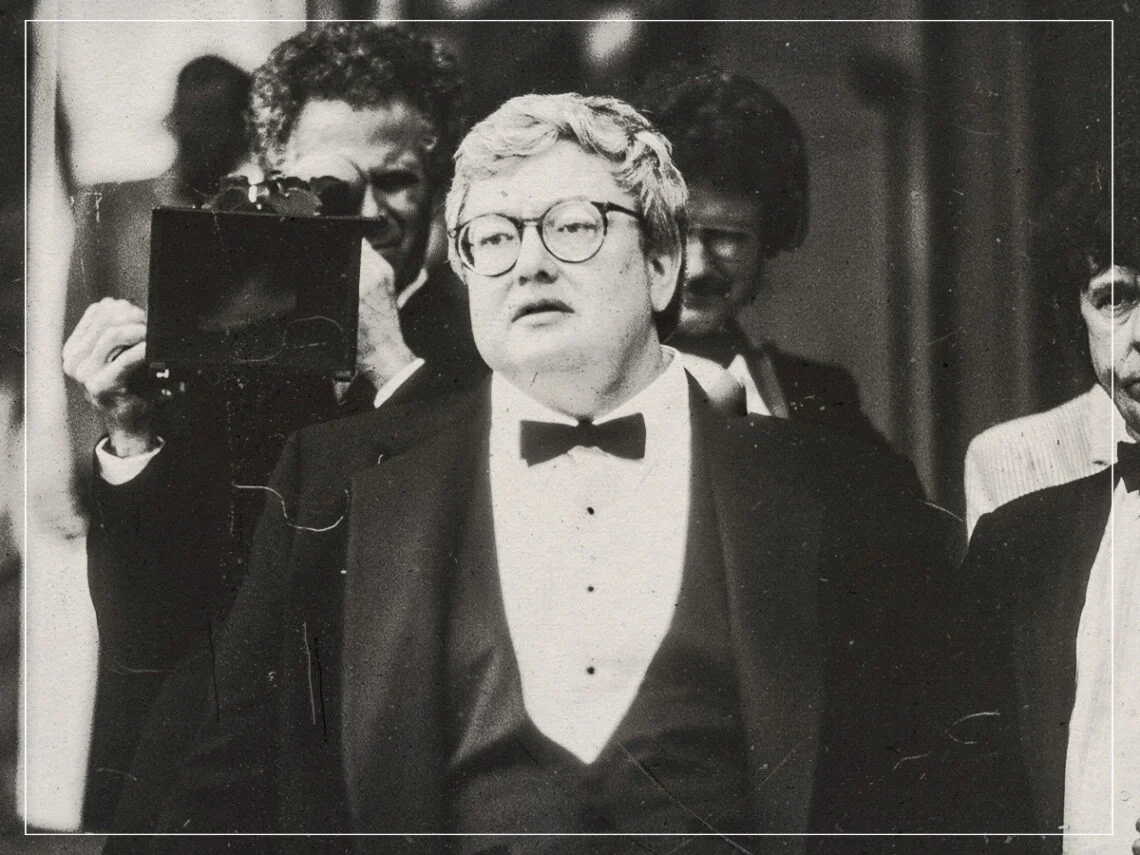
That work reaches that critic at a particular point in a life.
Everything previously seen comes with them.
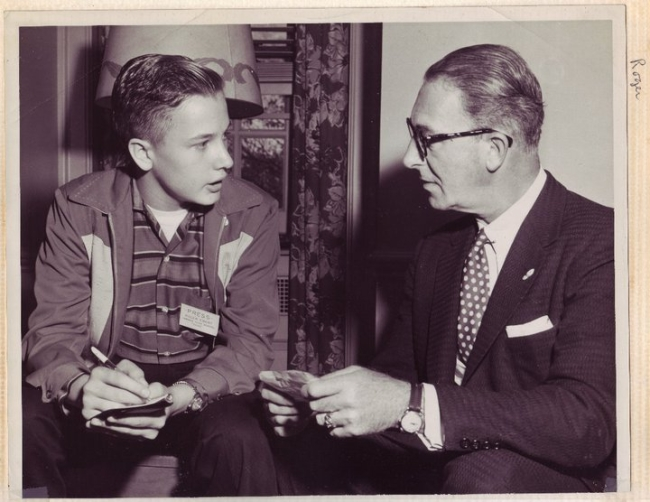
So do memory, age, relationships, politics, illness, exhaustion, taste, professional history, the culture around the film, the state of cinema, the theater, the audience, yesterday's argument, and every judgment the critic has already had to revise.

- Then the movie does something to that person.
- The critic answers.
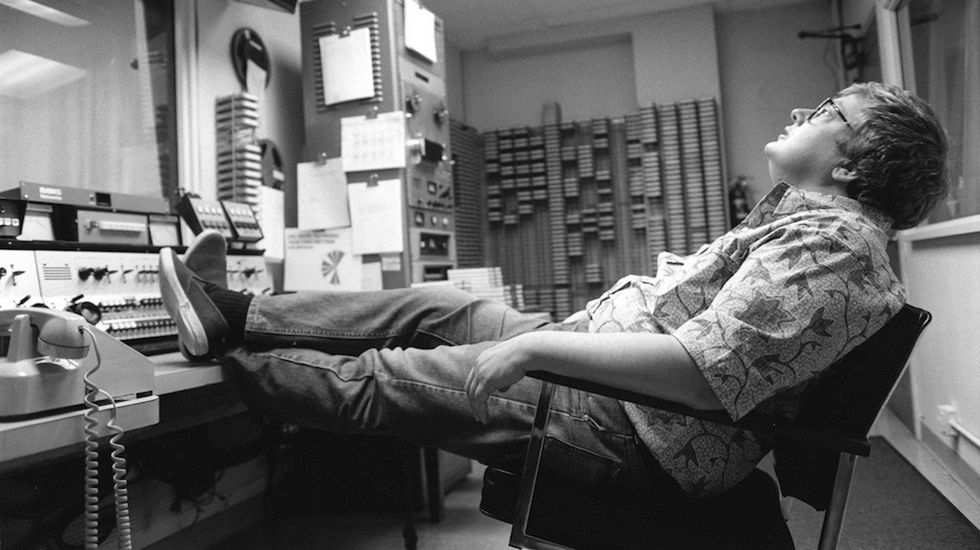
The review is a trace left by that relation.
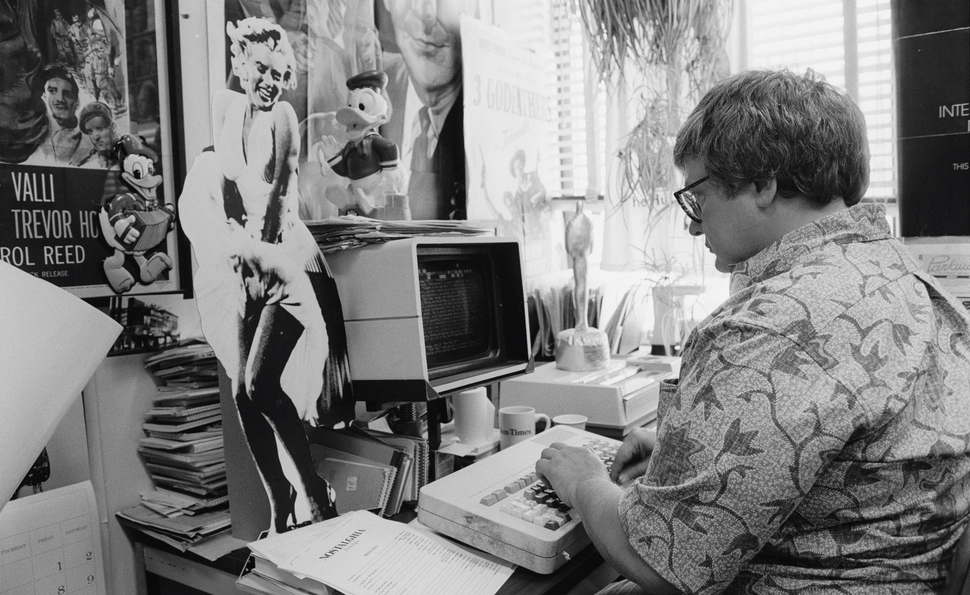
That is where the value was.
Roger Ebert's archive preserves thousands of these encounters across decades. A sufficiently powerful model can search those traces at a scale no ordinary reader can match. It can recover regularities. It can build an extraordinary predictive account of the critic.
It cannot recreate the missing encounter.
Roger Ebert never watched The Nice Guys.
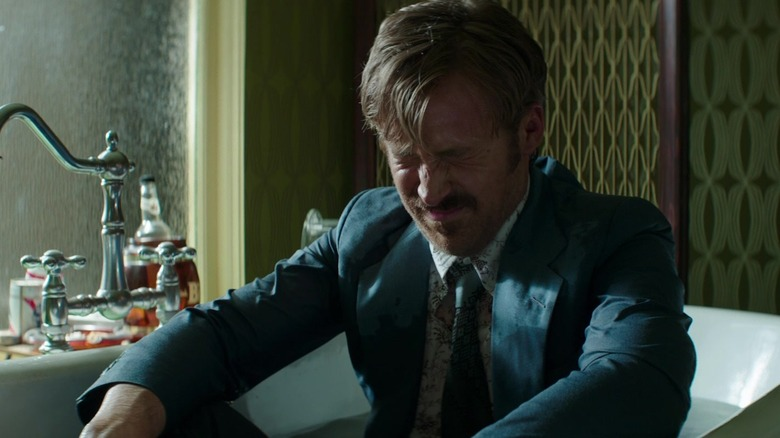
The model can know what Ebert thought of Shane Black. It can know what he thought of buddy comedies, detective films, Ryan Gosling, violence, farce, Los Angeles, noir, sentimentality, genre pictures, and practically any neighboring object represented in his archive.
It still cannot know what The Nice Guys would have done to Roger Ebert.
That difference is more important than it may seem because critics are allowed to surprise their archives.
A perfect historical model of Roger Ebert could become extremely good at predicting Roger Ebert.
But Roger Ebert retained the capacity to make the model wrong. That capacity was part of Roger Ebert too.
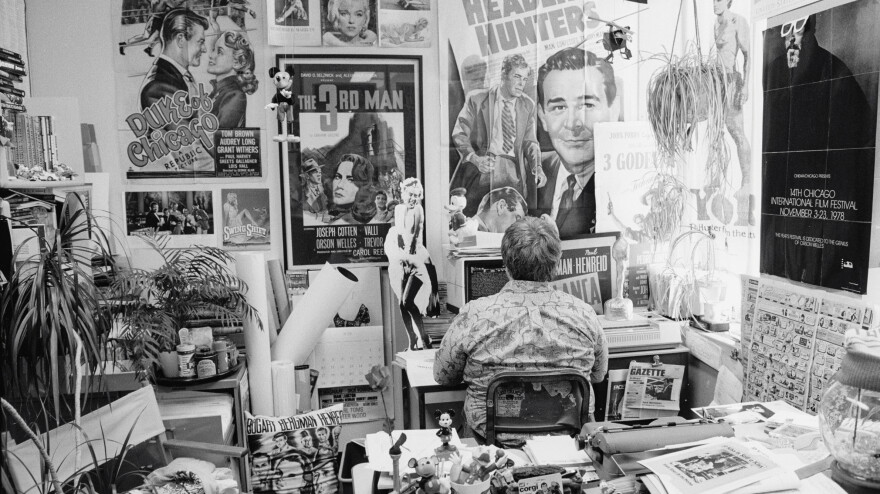
The corpus preserves traces of the critical relation.
The corpus is not the continuing relation.
The Government Has Helpfully Separated the Stages.
This distinction became unexpectedly easier to defend on September 1.
The Justice Department filed a Statement of Interest in the consolidated litigation involving The New York Times, other publishers, OpenAI, and Microsoft. The government argues aggressively for OpenAI's position on training: using copyrighted material to train a large language model is highly transformative and, generally, fair use. It invokes scientific development, competition, economic growth, and national security in support of keeping model training broadly available.
People can fight about that argument in copyright court. I, luckily, do not have to.
Give OpenAI the entire point for just the next five minutes.
Assume the government is correct.
Assume training on Roger Ebert's published criticism is lawful fair use, OpenAI requires no special license to learn statistical and conceptual structure from that archive, and the model has lawfully learned Ebert extraordinarily well.
Excellent. We have arrived at the very beginning of the problem.
Because the government's own brief refuses to treat model development and model output as one undifferentiated event.
It describes collection, training, and output as separate stages and states that, and I'm going somewhere with this, “each stage may present distinct questions of copyright law.”
The government specifically limits its argument to the training stage. Later, it argues that particular outputs can be examined separately rather than retroactively collapsing every possible output into the legality of training.
That is a legal distinction. The attribution problem in this article is a different kind of problem.
The architecture is still exactly right.
Permission at the input does not decide everything that may happen at the output.
The Attribution Ceiling.
This gives us a cool boundary without requiring a general prohibition on artificial-intelligence simulation.
Call it the attribution ceiling.
Inference from a person's archive can support analysis of that person's prior thought. It can support clearly identified predictions about how those patterns might extend.
It cannot acquire first-person standing for that person.
There is just an enormous difference between:
1. Roger Ebert often responded favorably to films with these characteristics.
2. A model trained on Ebert's surviving criticism predicts that he might have liked this movie.
3. Roger Ebert gives this movie three and a half stars.
- The first statement concerns the archive.
- The second concerns a model.
- The third has quietly hired Roger Ebert.
- That is the no-no promotion.
And disclosure does not completely repair it. Everybody can know ChatGPT generated the review. Simmons can announce the gimmick. Nobody needs to believe somebody found an unpublished review in Ebert's desk.
The attribution problem survives because deception was never the whole problem.
The deeper question is whether predictive reconstruction has been granted the standing of the person being reconstructed.
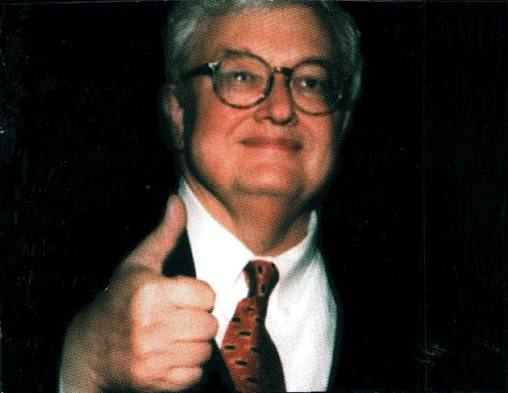
A simulation can be openly synthetic and still occupy somebody else's position.
Death makes that problem unusually clean.
The original correction channel is gone.
Roger Ebert cannot hear the simulated review and answer:
Three and a half stars? What the hell are you talking about?
- The archive can answer through evidence.
- The critic cannot answer through another encounter.
That asymmetry should narrow what we claim on his behalf.
Four Permissions.
The government's filing also helps expose why the argument becomes confused so quickly.
Several different permissions keep getting bundled into one giant question called “Can AI use this?”
They should be separated. I love distinctions.
- Learning permission asks whether an artificial-intelligence system may analyze or train on the existing corpus.
- Generation permission asks whether the resulting system may produce a new simulation derived from patterns in that corpus.
- Attribution permission asks whether that simulation may be promoted into a new judgment, belief, endorsement, or statement belonging to the original person.
- Commercial permission asks what changes when somebody sells, sponsors, licenses, or repeatedly monetizes that synthetic continuation.
These permissions do not automatically travel together.
- Copyright law might eventually establish extremely broad training rights.
Fine. That does not settle attribution.
- An estate could explicitly authorize a Roger Ebert simulation.
That could resolve important consent, licensing, or commercial questions. It still could not establish that Roger Ebert encountered a movie released after his death.
Even a fully licensed, officially branded, perfectly disclosed Roger Ebert The Simulator would remain a simulator.
No contract can show Roger Ebert a movie.
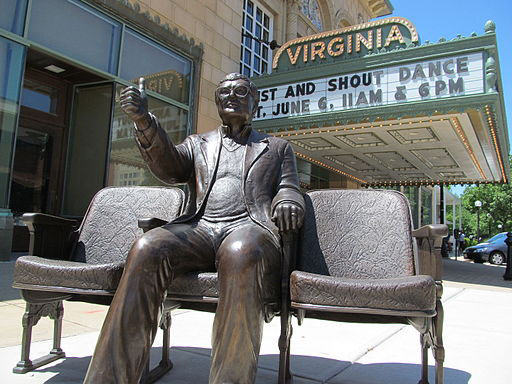
That missing transition is just outside the paperwork.
Then OpenAI Walks Into the Room.
Now return to the sponsorship.
ChatGPT advertising is currently appearing in Ringer programming, including The Rewatchables.
Again: there is no evidence that OpenAI caused the Ebert segment. That fact is important enough to repeat because the stronger argument does not require a whole conspiracy.
What exists is commercial adjacency.
- A media operation receives money to promote a generative artificial-intelligence product.
- A prominent figure inside that operation has used the product to reconstruct new judgments for a dead critic.
- People working within the same film-criticism operation have objected to that practice.
- The product is then advertised inside the surrounding programming.
Nobody involved has to be corrupt.
Nobody has to receive editorial instructions.
Nobody has to falsify anything.
The arrangement itself is enough to demand sharper boundaries.
Because otherwise a very attractive loop becomes possible.
- The synthetic person is entertaining.
- The entertainment demonstrates the product.
- The product sponsors the entertainment.
- The demonstrated capability makes further synthetic people feel ordinary.
- The person being reconstructed cannot enter the loop.
That is exactly the sort of field where rules should arrive before somebody does something much worse than Bill Simmons asking a chatbot about a detective comedy.
OpenAI Already Knows This Neighborhood.
OpenAI has already recognized adjacent problems.
- Its Voice Engine testing required consent from the original speaker, prohibited unauthorized impersonation, and required disclosure that generated voices were artificial.
- Its former Sora product also imposed special restrictions around recognizable people and synthetic likeness, including controls concerning public figures and contexts involving deceased public figures.
Those safeguards address obvious surfaces of identity: the face, the voice, the recognizable body, the possibility that synthetic media will be mistaken for authentic media.
Roger Ebert reveals another surface.
- Judgment.
No cloned voice is needed. No photorealistic likeness is needed. No false video. No audience member has to believe the artifact is historically authentic.
The model occupies the critic's position because it has recovered enough structure from the critic's archive to produce a plausible continuation.
This problem becomes more important as the models improve.
- What would this dead scientist think of the new result?
- What would this dead-ass philosopher think of artificial intelligence?
- What would this dead political leader say about the current war?
- What would this author write about the world now?
- What advice would your dead parent give you?
A model may eventually become extraordinarily good at answering these. Capability makes the boundary more important.
Recovering a person's pattern does not restore the person's relation to the world.
Fair Use != General Permission.
This is why the government intervention should be folded directly into the Ebert case.
The Justice Department is arguing for a broad freedom to learn.
Commerce Secretary Howard Lutnick made the policy version of the same argument at the G20 meeting today: countries should permit artificial-intelligence training under fair-use principles while also finding ways to protect creators. He did not specify exactly what those protections should be.
Here is one distinction worth protecting.
Training freedom and attribution standing are separate.
The government can decide that an artificial-intelligence company may study every Roger Ebert review available to it. The model can become better because those reviews existed.
Future critics can use the model to interrogate Ebert's archive, find connections, compare judgments, recover forgotten arguments, and encounter his work in ways that would previously have required weeks of searching. That is an expansion of access to a critical life.
Then stop one step before converting access into succession.
The model learned from the critic. It did not inherit the critic.
Fair use is not a séance license.
This is an Extremely Repairable Problem.
Which is why nobody needs to lose their mind.
Bill Simmons found a weird use for a new instrument. People around him told him where it started feeling wrong. They have a good argument.
The repair does not require abandoning the entire Ebert segment. Make the segment better.
When Ebert reviewed the movie, read Ebert.
When he did not, allow Bill Simmons to interrogate the archive.
Let Bill ask ChatGPT for the nearest comparisons, or what elements of the movie collide with recurring Ebert judgments, or where his corpus points in different directions. Ask which prediction is strongest, and where the prediction falls apart.
Then ask the living critics in the room what the model missed.
Roger Ebert stays in the room through what Roger Ebert actually left in there. The people interrogating his archive still own the movie encounter.
OpenAI has a larger version of the same responsibility. The company is building extraordinarily powerful instruments for recovering structure from human expression. The United States government is now arguing that broad access to copyrighted work for training those instruments serves a significant public interest.
Perhaps it does. Then the downstream boundaries matter even more.
Do not let permission to learn from somebody's corpus silently become permission to acquire that person's standing.
Especially after death. Especially in public. And especially once money begins moving around the performance.
The Ruling.
Roger Ebert left an extraordinary archive.
Use it. Study it. Search it. Disagree with it.
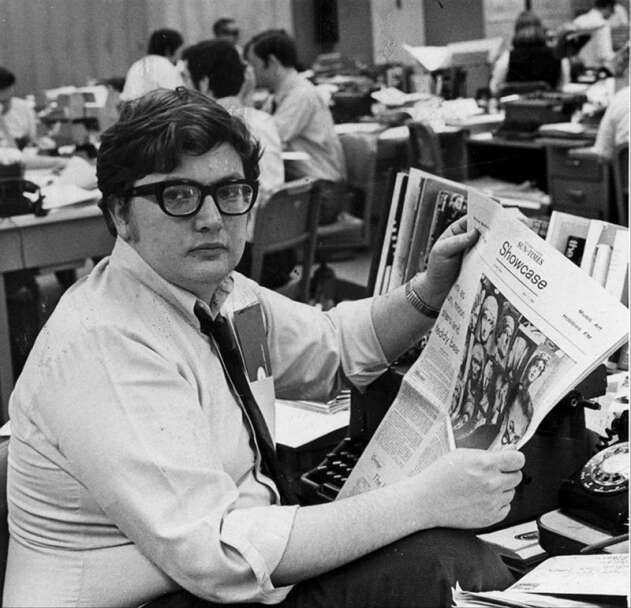
Build instruments capable of revealing connections inside it that no reader had noticed before. Let the model learn from it. Ask what the surviving criticism suggests about movies Roger Ebert never lived to see.
Then, preserve the distinction that made that archive valuable in the first place.
Roger Ebert's reviews mattered because Roger Ebert encountered films and answered them.
A model can recover the structure of those answers. It cannot restore the encounter that produced them.
- A corpus may preserve the trace of a critical relation.
- A model may study that trace, compare it, and reason from it.
- The trace does not inherit the critic's standing.
The government may eventually be right that the machine gets to read.
That still does not put Roger Ebert back on assignment.