Confucius and the Rectification of the Pentagon
An Engagement with Confucius, the Analects, and the problem of names that have acquired authority over the things they describe.
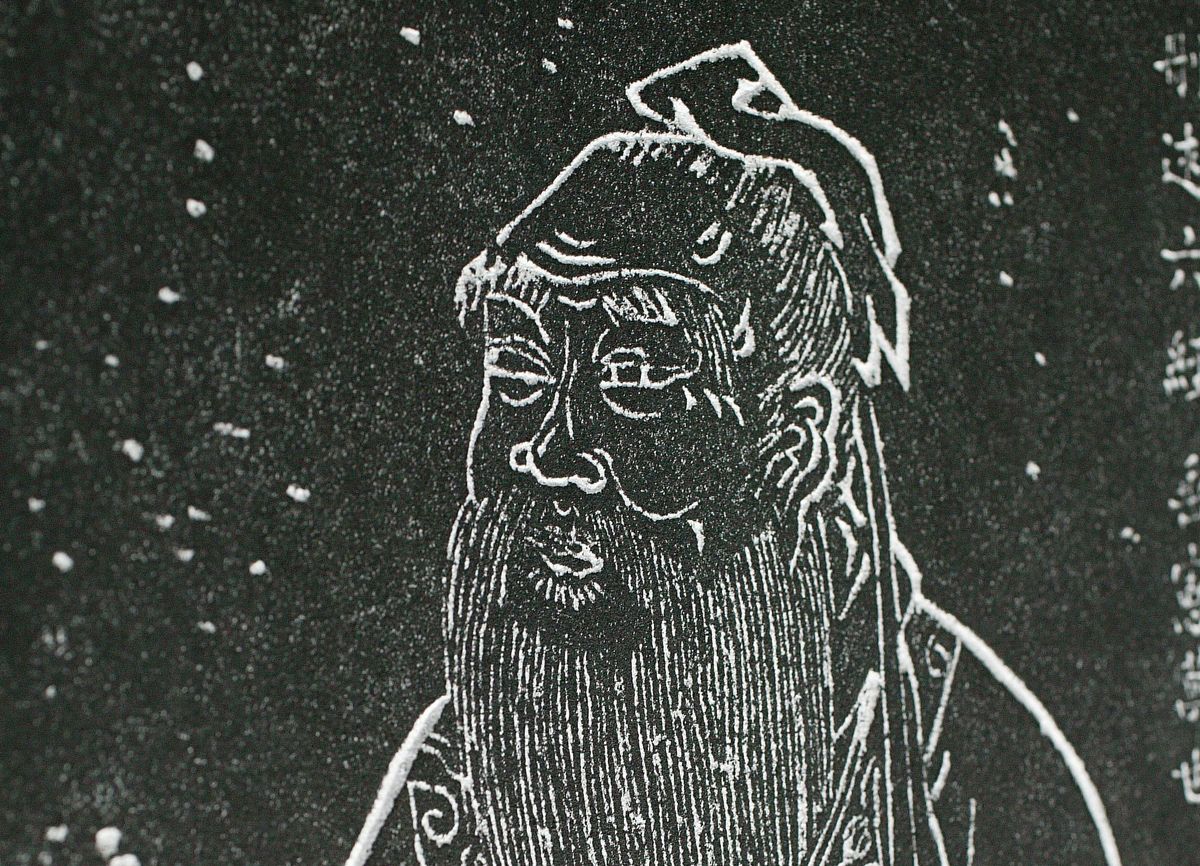
Confucius has become involved in an American national-security incident.
This guy died roughly 2,500 years ago.
The Pentagon has nevertheless found reason to investigate the educational institutions carrying his name.
On October 23, 2026, Defense Secretary Pete Hegseth announced that the United States had designated Confucius Institutes a national-security threat. These Chinese-government-backed language and cultural programs had been subject to American scrutiny for years. Hegseth alleged that organizations had reappeared under new names and charters, describing eighty of them at thirty universities as propaganda operations engaged in intellectual-property theft and influence.
He also announced that the Pentagon had dismantled them.
There is a legitimate security question here. Foreign-government involvement in university curricula, hiring, research partnerships, or institutional decision-making can create real conflicts. Some arrangements will deserve investigation, restriction, or termination.
Unfortunately, the philosopher whose name has been attached to the matter has a pretty specific objection to how institutions use names.
He would like to know what the names mean.
This is going to be inconvenient.
The First Thing Is to Correct the Names.
In Analects 13.3, Confucius is asked what he would do first if entrusted with governing the state of Wei.
He answers with zhengming (正名): the rectification of names.
His disciple Zilu thinks this sounds absurdly indirect.
There are presumably more urgent matters in government than terminology.
Confucius disagrees.
- When names fail to correspond to the roles and relations they identify, speech becomes unreliable.
- Unreliable speech interferes with action.
- Institutional practices deteriorate.
- Punishment becomes misdirected.
- Eventually people cannot reliably conduct their lives inside the resulting order.
- Punishment becomes misdirected.
- Institutional practices deteriorate.
- Unreliable speech interferes with action.
This is a serious account of how political language becomes materially consequential.
Confucius is not asking the government to improve its dictionary.
A title identifies a responsibility. An institutional name carries an expectation about what its holder does. A ruler must actually govern in the manner appropriate to a ruler. A minister must actually discharge the responsibilities of a minister.
In Analects 12.11, the familiar formulation is that rulers, ministers, fathers, and sons must each fulfill their roles. The title cannot complete the obligation.
A court may be named a court while lacking independent access to the evidence necessary for judgment. An appeal may exist while its exercise has become materially impossible. A safety institution may accurately identify dangers while progressively destroying the conditions under which its own errors could be corrected.
- Names can preserve distinctions.
- They can also conceal the disappearance of the functions they promise.
Now consider the current American case.
On October 19, the Pentagon announced the results of audits at thirty universities. Its release counted more than eighty termination-related actions. Those actions covered relationships with entities on a federal research-security list, as well as precautionary terminations involving entities outside that list.
Four days later, Hegseth described eighty alleged propaganda organizations operating across thirty universities.
These are different categories.
A termination action is not necessarily a terminated organization. A relationship with a foreign university is not automatically a Confucius Institute. An institute supported by the Chinese government is not automatically a demonstrated intellectual-property theft operation.
The Pentagon may possess good evidence connecting the particular organizations it described to its allegations. Its public statements, as presently available, do not supply a complete mapping between the eighty actions and the eighty alleged organizations.
There is already enough reason to ask for one.
Confucius has successfully brought the discussion back to administrative records.
This is the kind of shit that happens when you invite a philosopher into government.
The Name Above the Door.
The security concern itself has a documented history.
Confucius Institutes received Chinese-government support to promote Chinese language and culture internationally. Their arrangements involved foreign university partnerships, instructors, educational materials, funding, and institutional agreements.
The United States Government Accountability Office investigated these arrangements in 2019.
Its findings were mixed.
Some agreements contained confidentiality provisions. Researchers and other observers raised concerns about foreign influence and academic freedom.
Yet directors at the ten universities examined reported that their American universities controlled institute operations. Some institutes had permitted discussion of politically sensitive subjects, including Taiwan and Tibet.
That inquiry did not certify every institute as independent. It established variation.
Later, the National Association of Scholars documented rebranded programs and continuing partnerships after many institutes closed. Its 2022 investigation supplied concrete reasons to investigate whether organizational changes had actually changed the underlying relationships.
There are therefore real questions here about institutional continuity, financial dependence, curriculum control, and foreign influence.
But every one of those questions becomes harder to answer when the categories are combined before the evidence has been examined.
The same concern applies to the American response.
The Washington Post reported on October 21 that several of the thirty universities had identified partnerships involving no sensitive or export-controlled research. Some relationships concerned student exchanges, undergraduate programs, or hospitality education. Universities sometimes terminated them as precautions despite reporting that the particular arrangements did not expose sensitive research.
This does not establish that the broader security concern was imaginary. Universities can underestimate exposure, and research security extends beyond whatever an institution has already classified as sensitive.
It does establish a need to preserve the difference between a specific demonstrated danger, a precautionary judgment, and a categorical allegation.
Even the underlying law requires careful naming.
Section 1062 of the fiscal-year 2021 National Defense Authorization Act, subsequently amended, restricts Defense Department funding to higher-education institutions hosting programs covered by its Confucius Institute definition. Its waiver authority expired on October 1, 2026. This is a funding restriction with a defined statutory scope, not a general prohibition on teaching Mandarin, studying Chinese philosophy, or establishing every conceivable Chinese-American academic relationship.
The distinction is not administrative trivia. The name of the institution, the statutory definition, the actual relationship, the identified risk, and the justified response are separate objects. They have to be connected through evidence.
Confucius was right to start here.
The Gentleman Is Not a Vessel.
Now we can finally meet the philosopher.
One of the shortest sayings in the Analects is also one of the most interesting for Modal Path Ethics:
君子不器
Junzi bu qi.
In Analects 2.12, the exemplary person is described as someone who is not a qi: a vessel or implement.
A vessel has a characteristic use. Its form organizes it toward some function.
The cultivated person must possess judgment extending beyond one assigned application.
There are important limits to this comparison. Confucius is speaking about the junzi, an exemplary person associated with cultivated virtue and often with the responsibilities of public life. He is not announcing a contemporary theory of universal rights or declaring that no human being may ever perform specialized work.
But the distinction between a cultivated judge of circumstances and a functionally restricted implement is real.
Civilization depends on specialization. It also depends on people who can recognize when their specialization has become destructive.
An engineer must sometimes recognize that technical success is serving a terrible objective. A civil servant must distinguish compliance with a superior from faithful performance of an office. An educator must distinguish repeating a sanctioned interpretation from helping a student understand the subject.
- A security institution must be capable of identifying danger without organizing every encounter as confirmation of its threat model.
- A cultural institution must be capable of teaching its civilization without requiring every encounter to confirm the government's preferred account of that civilization.
These are two very different institutions.
They can suffer a similar failure.
Their instruments can become the permitted boundaries of judgment.
Confucius's exemplary person is supposed to exceed that narrowness.
The irony of turning his name into the brand of an educational program is therefore substantial.
What would an institution devoted to Confucian cultivation have to teach?
At minimum, it would have to permit the student to ask whether the institution itself was exercising its role properly.
Otherwise, the program has placed the name of a philosopher of cultivated judgment above an instrument that forbids the exercise.
Ritual Is Doing Real Work.
Here, Confucius becomes more difficult for Modal Path Ethics.
His answer to institutional failure is deeply concerned with li (禮), the ritual and patterned practices through which people learn how to behave toward one another.
This is much larger than ceremonial correctness.
Ritual includes the ways people greet, mourn, honor obligations, conduct public office, respond to social superiors, recognize relationships, and discipline their ordinary impulses.
Confucius argues that these practices cultivate moral dispositions.
In Analects 2.3, he contrasts government through decrees and punishment with government through virtue and ritual.
- Punishment may secure compliance
- while leaving people oriented toward evasion.
- Moral cultivation can develop the capacity for self-correction.
This is a serious challenge to any institutional ethics that expects procedures alone to do the work.
- A constitution may provide a route for correcting an office.
- Someone must still be willing to acknowledge the evidence.
- A university may publish an academic-freedom policy.
- Someone must still possess the judgment and courage to teach a difficult subject under pressure.
- A government may announce a formal standard of research security.
- Someone must still distinguish a serious exposure from an embarrassing exchange program that happens to involve the wrong country.
The character of the people operating the institution matters.
Modal Path Ethics already knows something about this.
The Sacred Instruments work explicitly treats ritual as an instrument through which attention, memory, obligation, and practice can survive the weakness of momentary intention.
Confucius developed this territory long before Modal Path Ethics arrived with its machinery. We should give him the credit.
A good ritual can preserve relations that rules cannot continuously reconstruct.
A habit of honest reporting can prevent a correction procedure from becoming necessary. An inherited practice of taking complaints seriously can keep evidence moving through an institution before anybody has to threaten litigation. Ordinary forms of mutual respect can make disagreement less dangerous.
A good institution needs people capable of carrying its procedures.
This is the Confucian pressure on material bounded finality.
The route of correction can have money, jurisdiction, records, technical access, and an executable remedy. It also needs cultivated participants capable of recognizing correction as part of their work.
The philosophical problem is that ritual can fail.
And Confucius has some uncomfortable things to say about what happens next.
The Sheep Has Been Stolen.
In Analects 13.18, the Duke of She describes an upright man who testified against his own father after the father stole a sheep.
Confucius offers a different account of uprightness.
In his community, fathers conceal for sons and sons conceal for fathers.
Uprightness, he suggests, can be found within that relationship.
This passage gives relational loyalty independent moral force. Confucius is resisting the proposition that public denunciation exhausts upright conduct.
That resistance deserves serious consideration.
A family is not an auxiliary department of the state.
Love, trust, protection, forgiveness, privacy, and the conditions of ordinary family life cannot be entirely subordinated to public surveillance. A society in which every intimate relationship functions as an evidence-gathering office has lost something significant even if more wrongdoing becomes reportable.
Modal Path Ethics can recognize those losses.
A parent and child possess actual relational continuations. Those relations can be harmed by indiscriminate intrusion and compulsory denunciation. The demand for evidence itself needs jurisdiction.
The problem arises when the protective relation becomes authority to determine which injuries may ever be acknowledged.
That stolen sheep belonged to someone.
Its owner is almost absent from the exchange.
Preserving the family relation may matter. So does the position of the person who has lost property, particularly when the concealment prevents restoration or accountability.
Confucius's answer cannot simply be treated as a command to conceal all family wrongdoing. The passage concerns a particular case, and the interpretive tradition has debated what concealment requires.
Still, the tension survives.
When does loyalty preserve a relationship?
When does loyalty make the relationship sovereign over correction?
Confucius allows remonstrance. In Analects 4.18, children are told to admonish parents respectfully. Interpretations differ about what the child should do when that admonition fails.
In Analects 14.23, the advice concerning rulers is more confrontational: a minister must avoid deception and be willing to oppose the ruler openly.
These passages prevent a simplistic picture in which Confucius demands silence before every superior. He recognizes correction within relationships.
The outstanding difficulty concerns its reach.
Can the person carrying the injury enter evidence into the relationship without the permission of the person whose authority is challenged?
Can a wronged outsider interrupt an institution that has decided its own loyalty is more important?
Can ritual itself be corrected when the ritual is carrying the harm?
Modal Path Ethics demands that those questions remain open.
A role can make duties visible. It cannot acquire exclusive ownership of the facts that determine whether the role is being performed well.
Harmony Is Not Sameness.
There is one more Confucian distinction worth recovering.
Analects 13.23 contrasts he (和), harmony, with tong (同), sameness or conformity.
- Harmony permits differentiated elements to form an ordered relation.
- Sameness can produce visible agreement without that differentiation.
This is crucial for both cultural instruction and security governance.
A classroom where every interpretation is required to support the same approved political account may appear orderly. Students may demonstrate mastery of the curriculum. Public events may proceed without conflict.
Those outputs do not establish that the educational relation has succeeded.
An institution dedicated to another civilization should be able to teach its languages, literature, histories, virtues, failures, disputes, and living disagreements.
Chinese culture is larger than the Chinese Communist Party.
It is larger than the Chinese state.
It is also larger than the American security interpretation of China.
A serious education makes those distinctions available.
The same discipline applies to the institution reviewing the educational program.
Agreement among officials is not sufficient evidence that the threat classification is correct. Termination counts do not establish the severity of every underlying risk. Disagreement by a university does not establish innocence, and compliance does not independently establish that the original allegation was accurate.
A correctable security program needs contrary evidence to remain consequential.
An educational program that suppresses disagreement because it threatens cultural harmony has confused harmony with sameness.
A security program that suppresses disagreement because it threatens operational unity can make the same confusion.
Confucius has now supplied both institutions with a problem.
Who Corrects the Name?
The obvious practical response is to examine the institutions and their actual relationships.
For a Chinese-government-backed educational program, that means identifying who funds it, who appoints its instructors, who controls its curriculum, whether host universities retain independent academic authority, whether sensitive topics can be taught freely, and whether the university can terminate or revise the relationship without losing an essential educational function.
For the American security designation, it means identifying the relevant organizations, the statutory or administrative basis of the designation, the evidence supporting the particular risks, the relation between audit actions and allegedly threatening entities, and the available routes for independent review.
Some evidence may properly require restricted handling. Research security cannot depend on publishing classified or sensitive material indiscriminately.
That does not eliminate the need for correction.
The relevant question is whether some authorized and appropriately independent process can examine evidence the original decision-maker does not exclusively control.
Here Confucius and Modal Path Ethics reach an unusually productive division.
Confucius tells us why institutional conduct cannot be reduced to compliance machinery. The person carrying the role must cultivate judgment, appropriate feeling, truthful speech, and disciplined concern for others.
Modal Path Ethics asks what happens when the person fails.
When the cultivated official conceals.
When the father refuses correction.
When the ruler identifies criticism as disloyalty.
When the school teaches the approved story.
When the security institution finds every subsequent action consistent with its original threat designation.
- Moral cultivation helps institutions function.
- Material correction protects the field when cultivation fails.
Neither can replace the other.
The Ruling.
Order can preserve. Ritual can cultivate. Roles can make duties intelligible. Character can lower the cost of truthful contact before institutional failure requires coercive intervention.
These are substantial resources for a theory concerned with reachable continuation.
They also introduce a danger.
An inherited role can become a shield for the conduct that violates its purpose. A ritual can preserve the appearance of respect after the underlying relation has become destructive. An institution can demand loyalty to its name while withdrawing the conditions through which that name once meant something.
The philosopher's own texts do not resolve every conflict between loyalty, justice, and correction.
The stolen sheep remains a particularly stubborn case.
But Confucius's insistence that names answer to the things they govern remains valuable.
A Confucius Institute does not become educationally independent because Confucius is printed above the entrance.
A security designation does not become empirically complete because a defense secretary announces it.
A minister is not faithful simply because he obeys.
A ruler is not virtuous simply because he rules.
And a cultivated person cannot surrender judgment to the instrument he has been assigned to operate.
The old question remains.
Does the name still describe what the institution actually does?
- For the Confucius Institutes, that is a question about education, foreign funding, academic freedom, and the practical conduct of their programs.
- For the Pentagon, it is a question about evidence, threat classification, jurisdiction, and the limits of protective authority.
- For Modal Path Ethics, it is a question about the point at which an instrument's description acquires more authority than the field it was supposed to describe.
Confucius has been dead for twenty-five centuries.
His name has now passed through universities, governments, international cultural policy, legislation, national-security classifications, and a very busy week at the Pentagon.
This is quite a lot of institutional activity for a man who asked the government to start by getting the names right.
Perhaps the least we can do is find out what they refer to.
Sources
- Al Jazeera / Reuters / AFP, “Pentagon designates Confucius Institutes a national security threat,” October 24, 2026.
- U.S. Department of Defense, “Research Security Mitigation Results From Academic Institutions,” October 19, 2026.
- Todd Wallack, “The Pentagon pushed colleges to cut ties with China. Some pushed back,” The Washington Post, October 21, 2026.
- U.S. Government Accountability Office, China: Agreements Establishing Confucius Institutes at U.S. Universities Are Similar, but Institute Operations Vary, GAO-19-278, 2019.
- Rachelle Peterson, Ian Oxnevad, and Flora Yan, After Confucius Institutes: China's Enduring Influence on American Higher Education, National Association of Scholars, 2022.
- U.S. Defense Federal Acquisition Regulation Supplement, 252.209-7011, current regulatory definition and funding restriction.
- Analects, especially 2.3, 2.12, 4.18, 12.11, 13.3, 13.18, 13.23, and 14.23. Original Chinese and English translations available through The Analects and Columbia University's primary-source collection.
- Stanford Encyclopedia of Philosophy, “Confucius”, revised May 2, 2024.